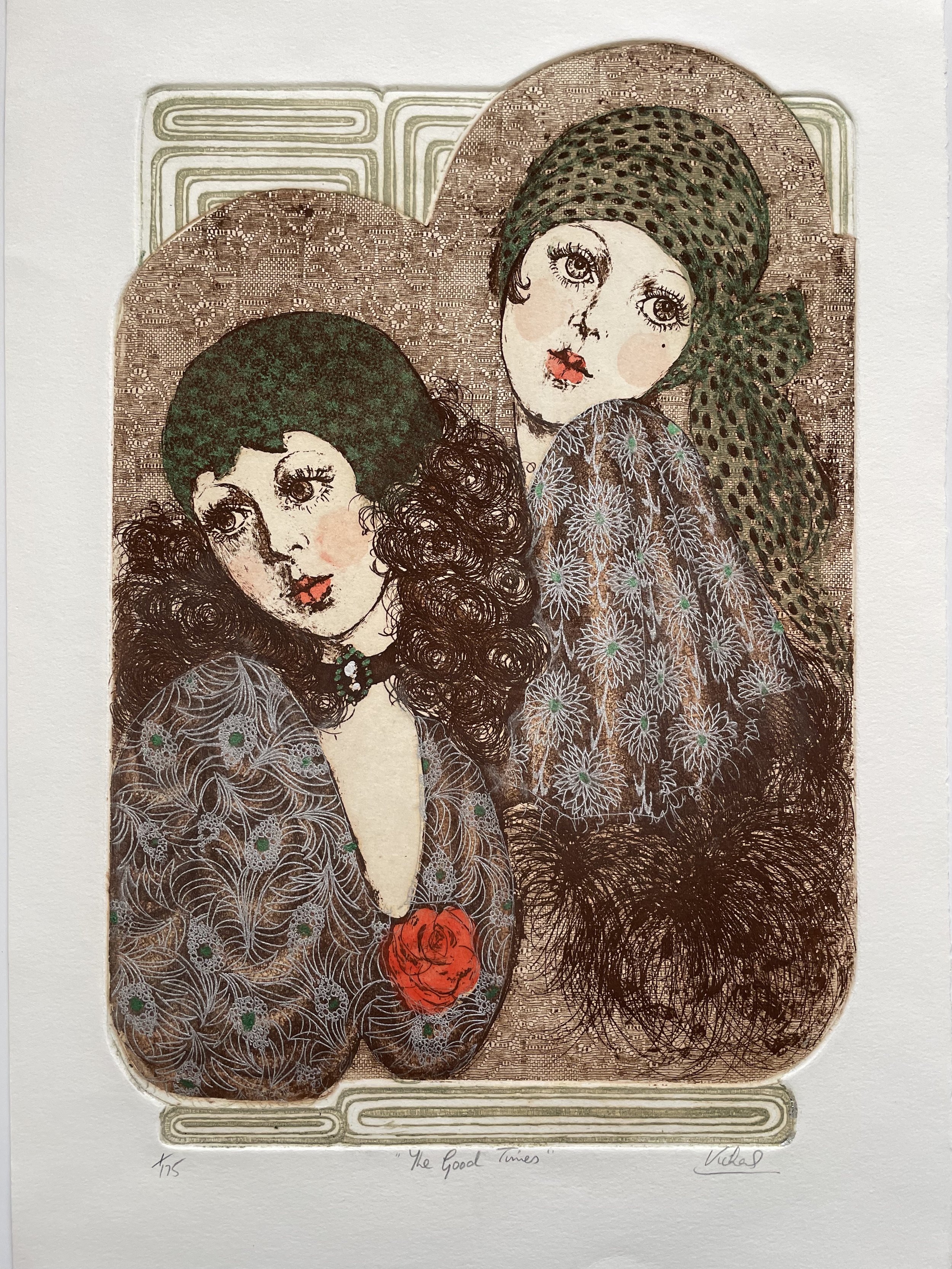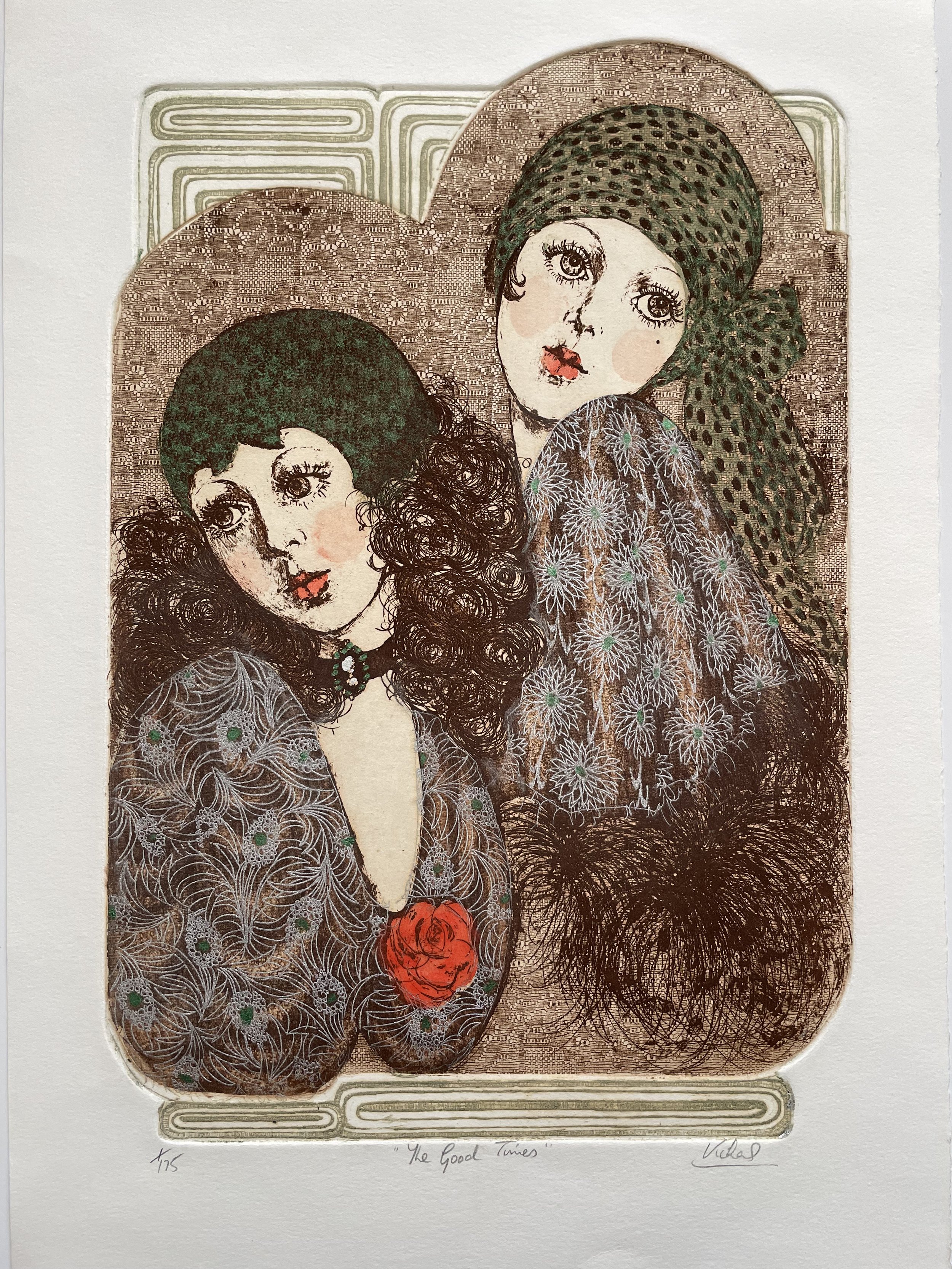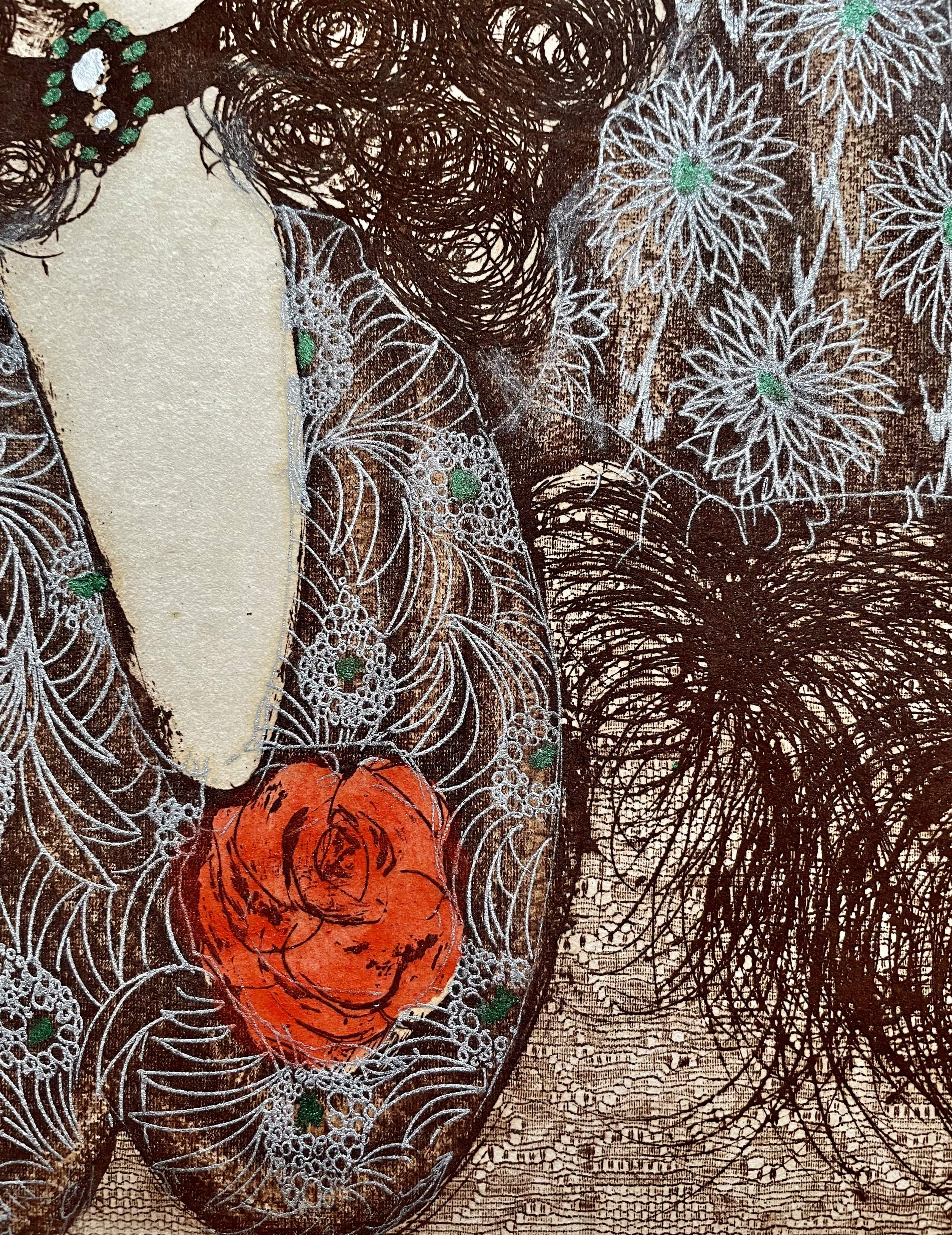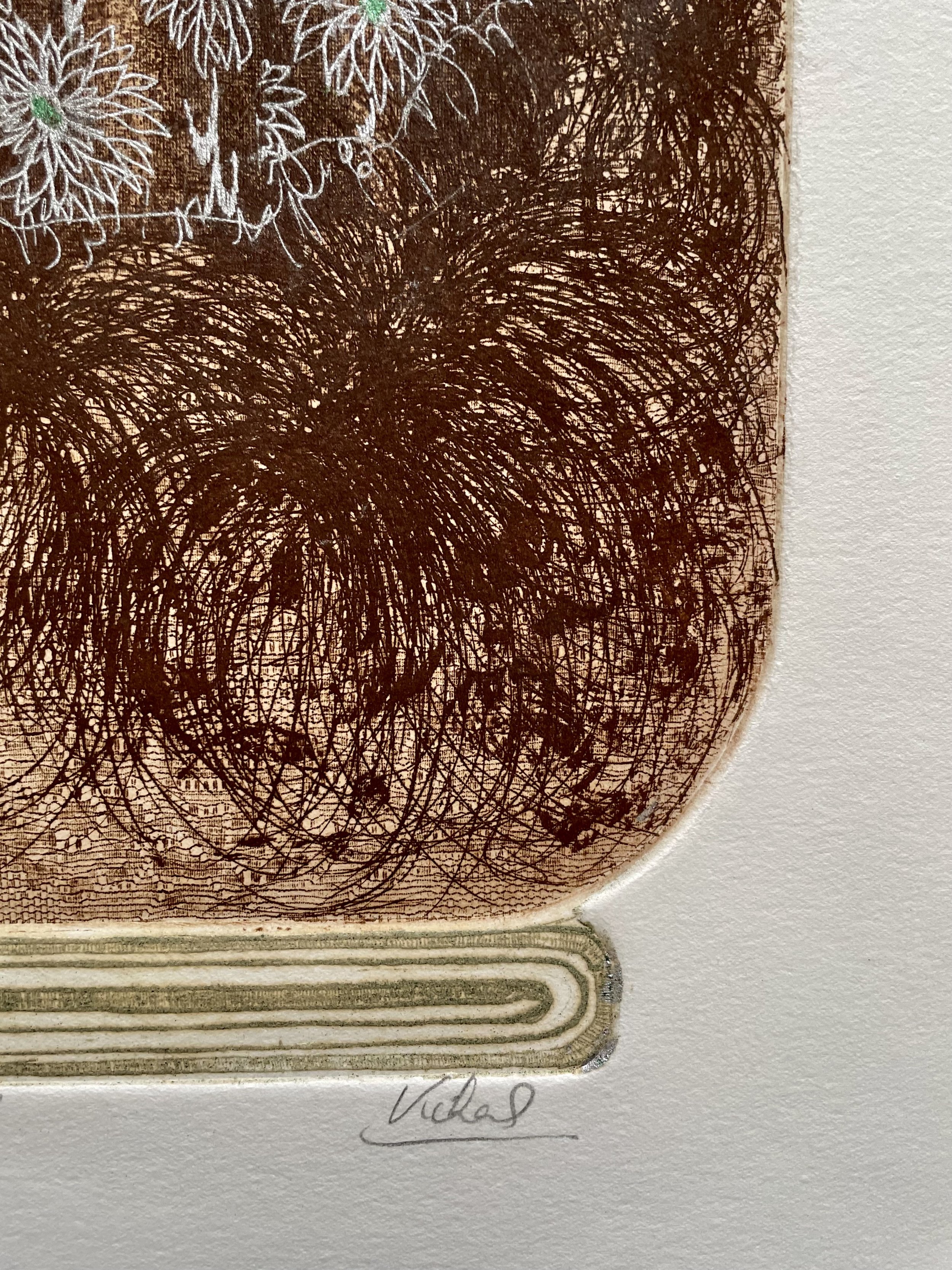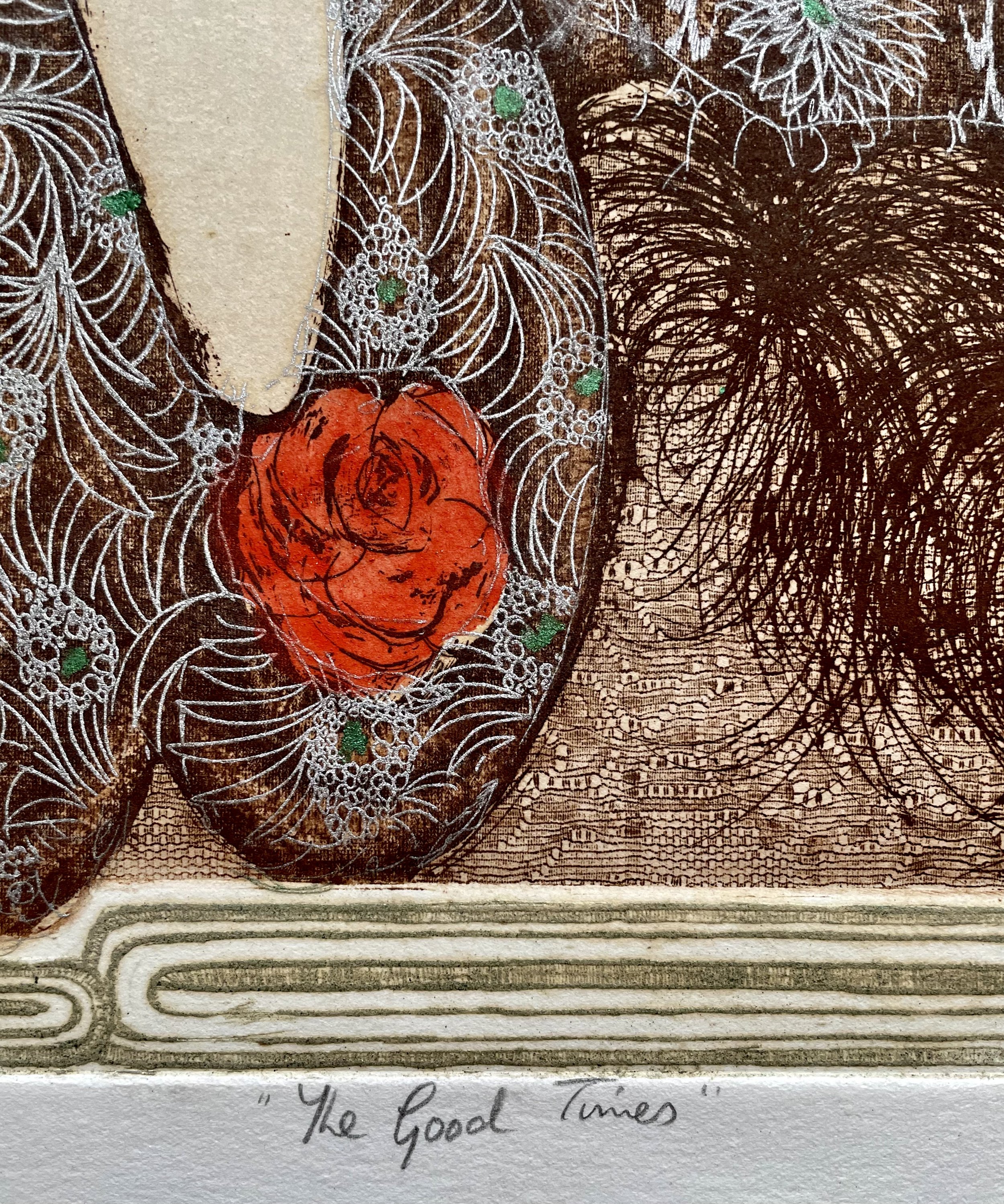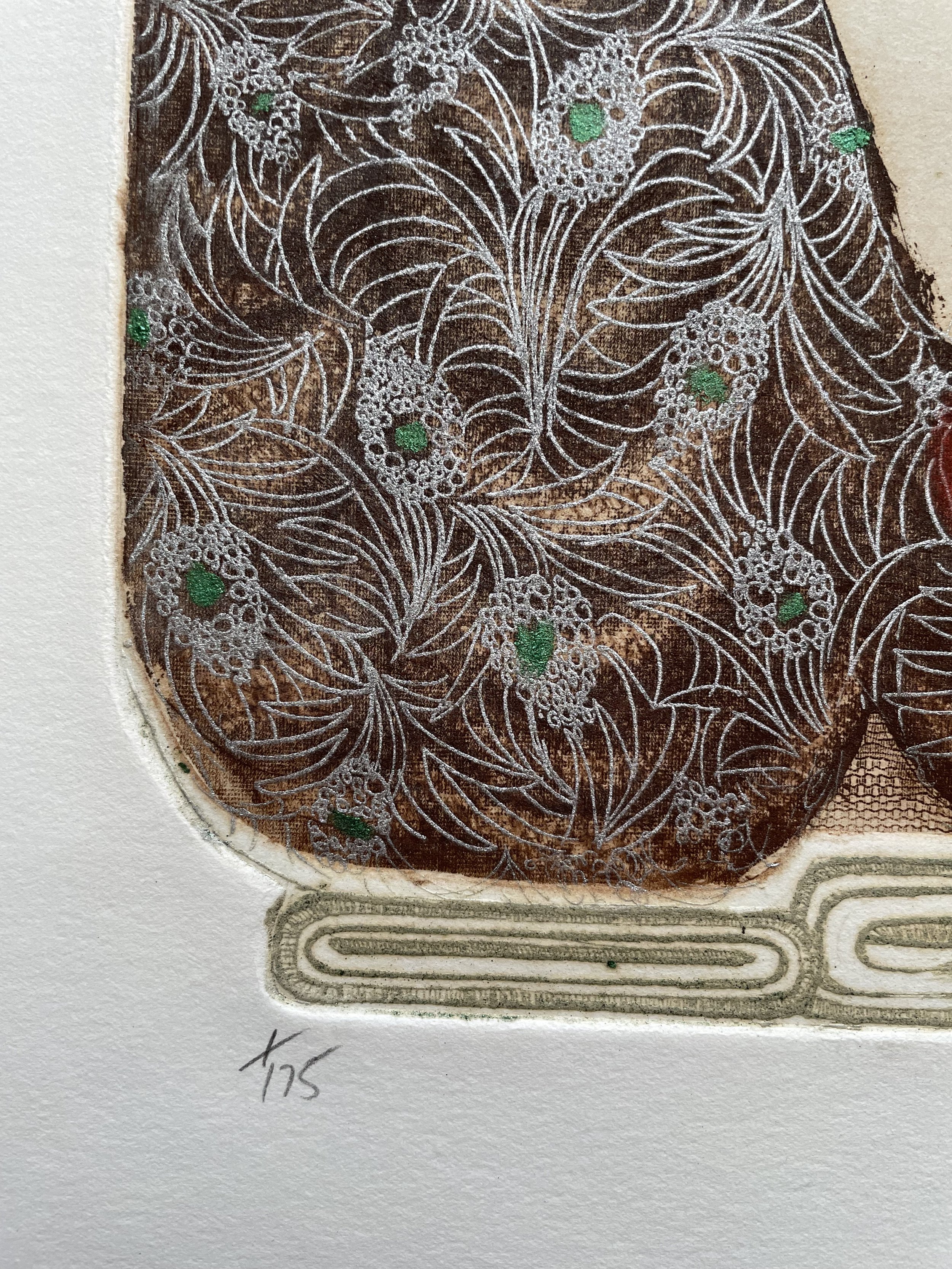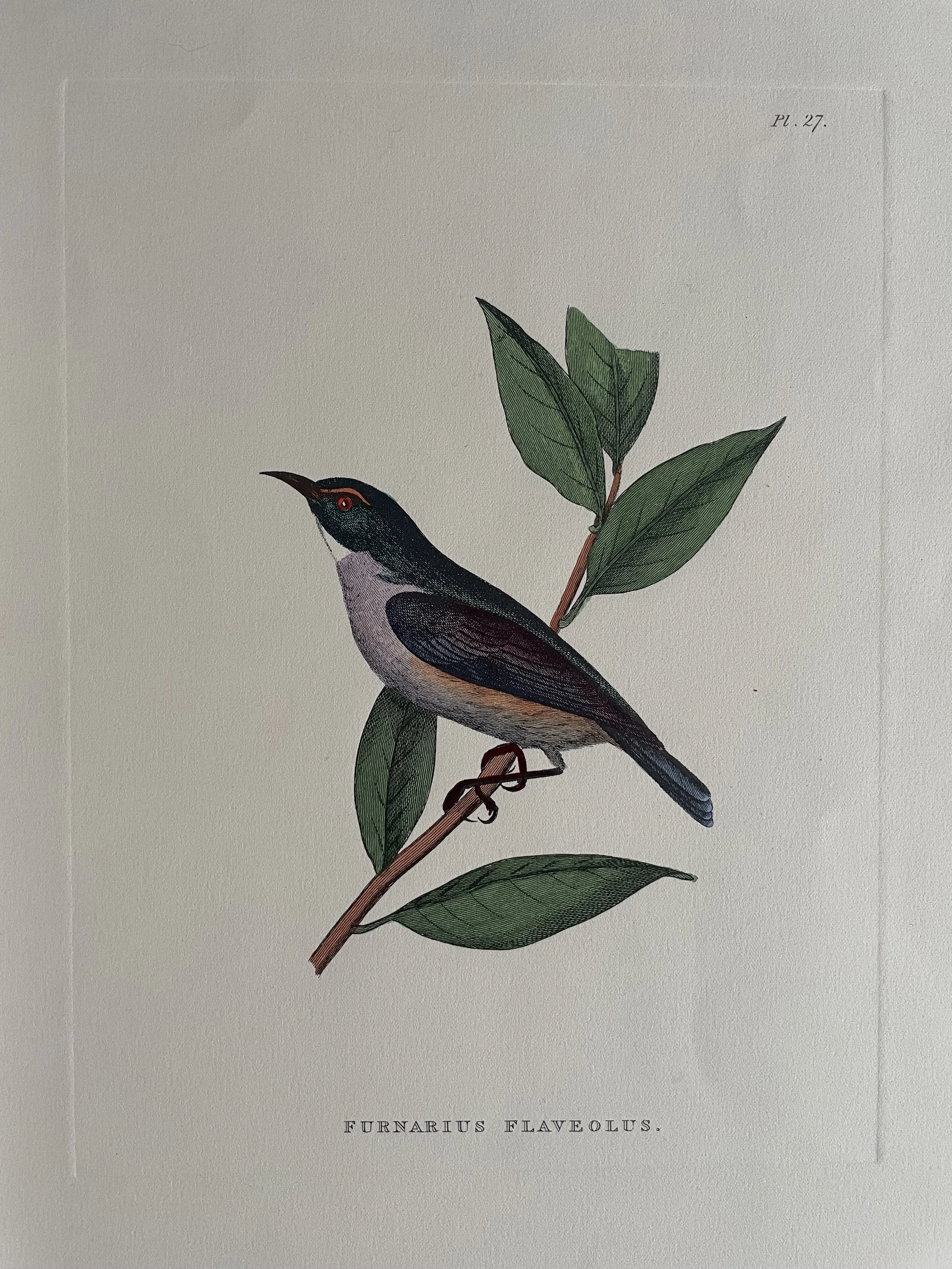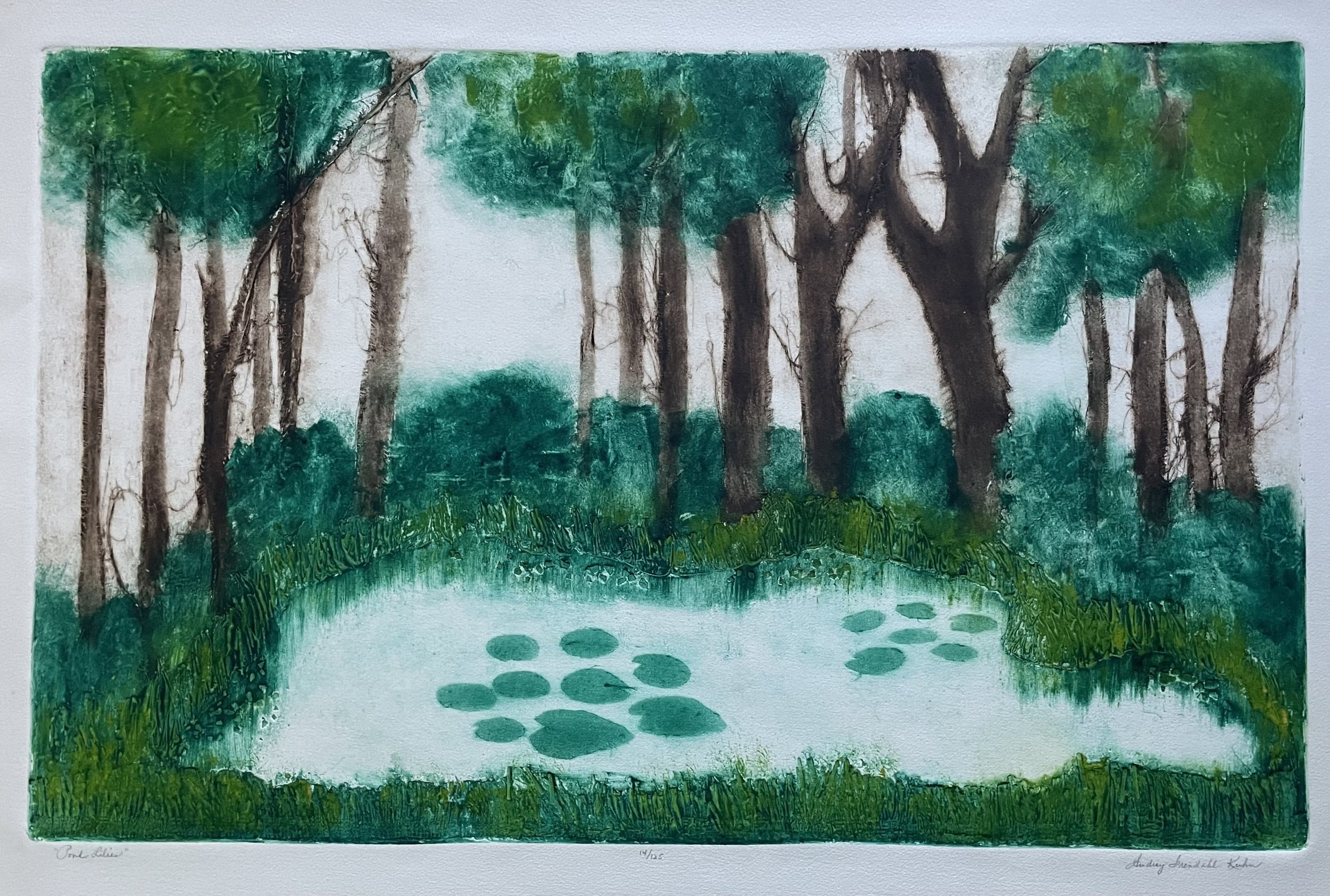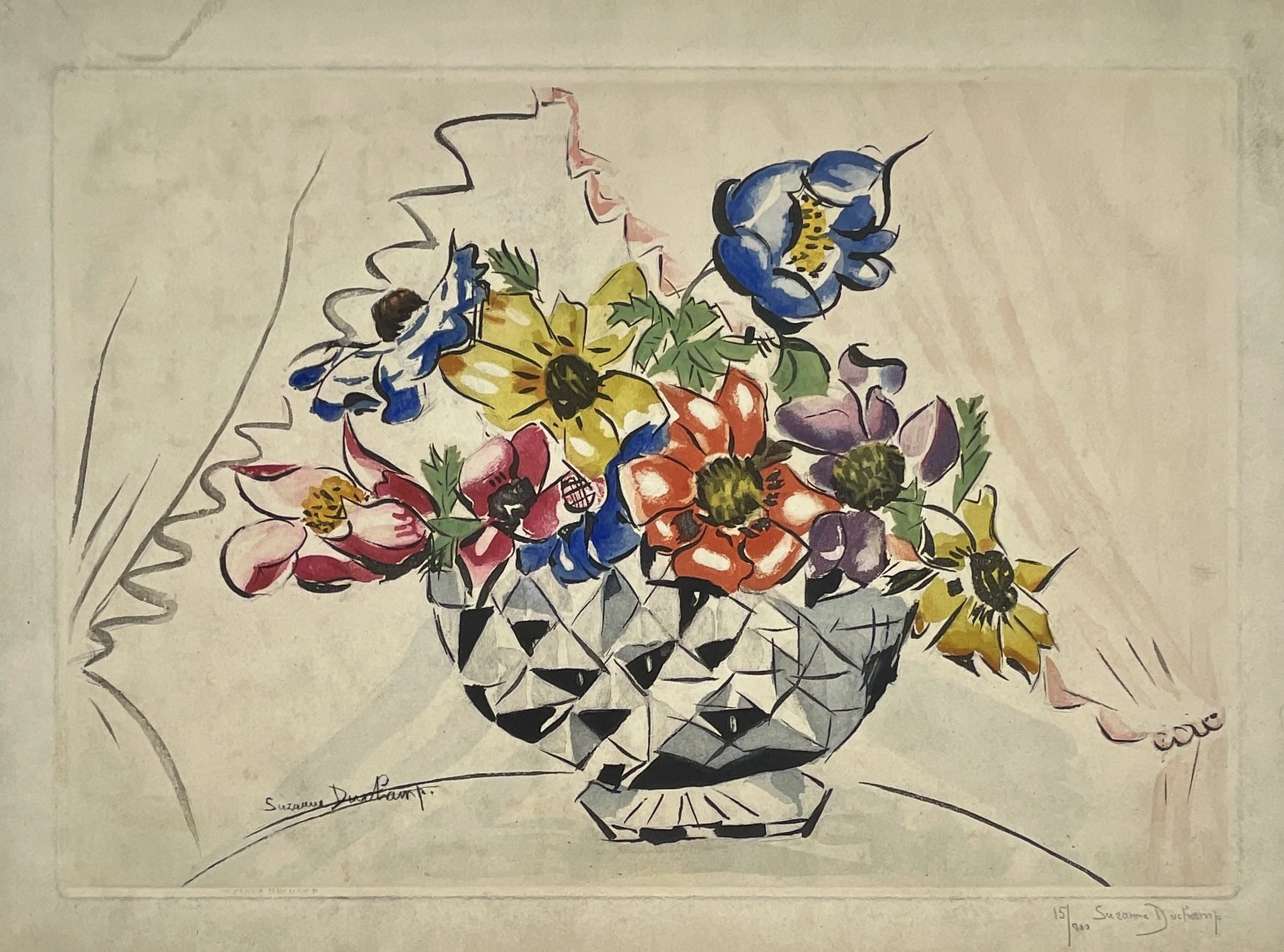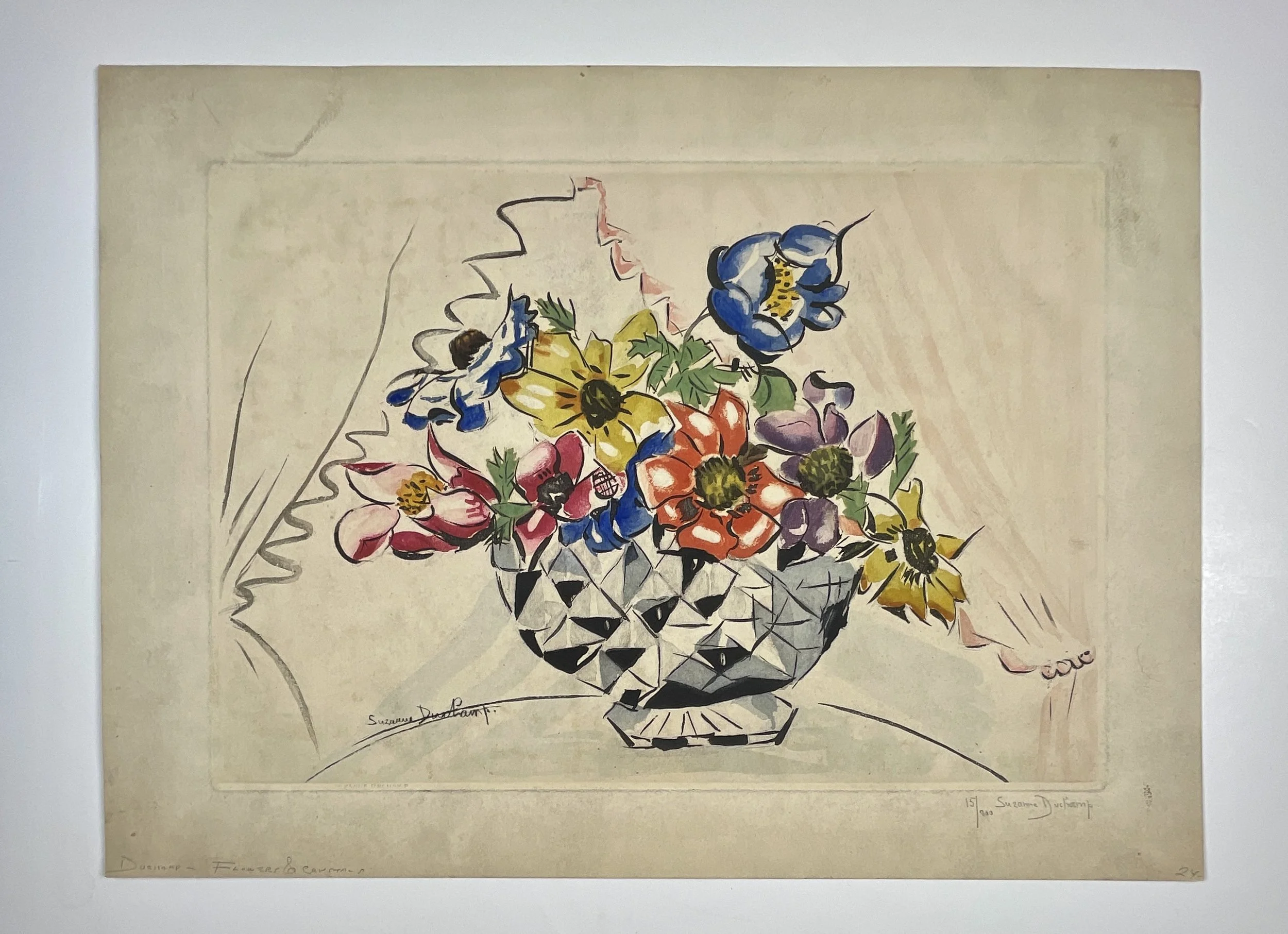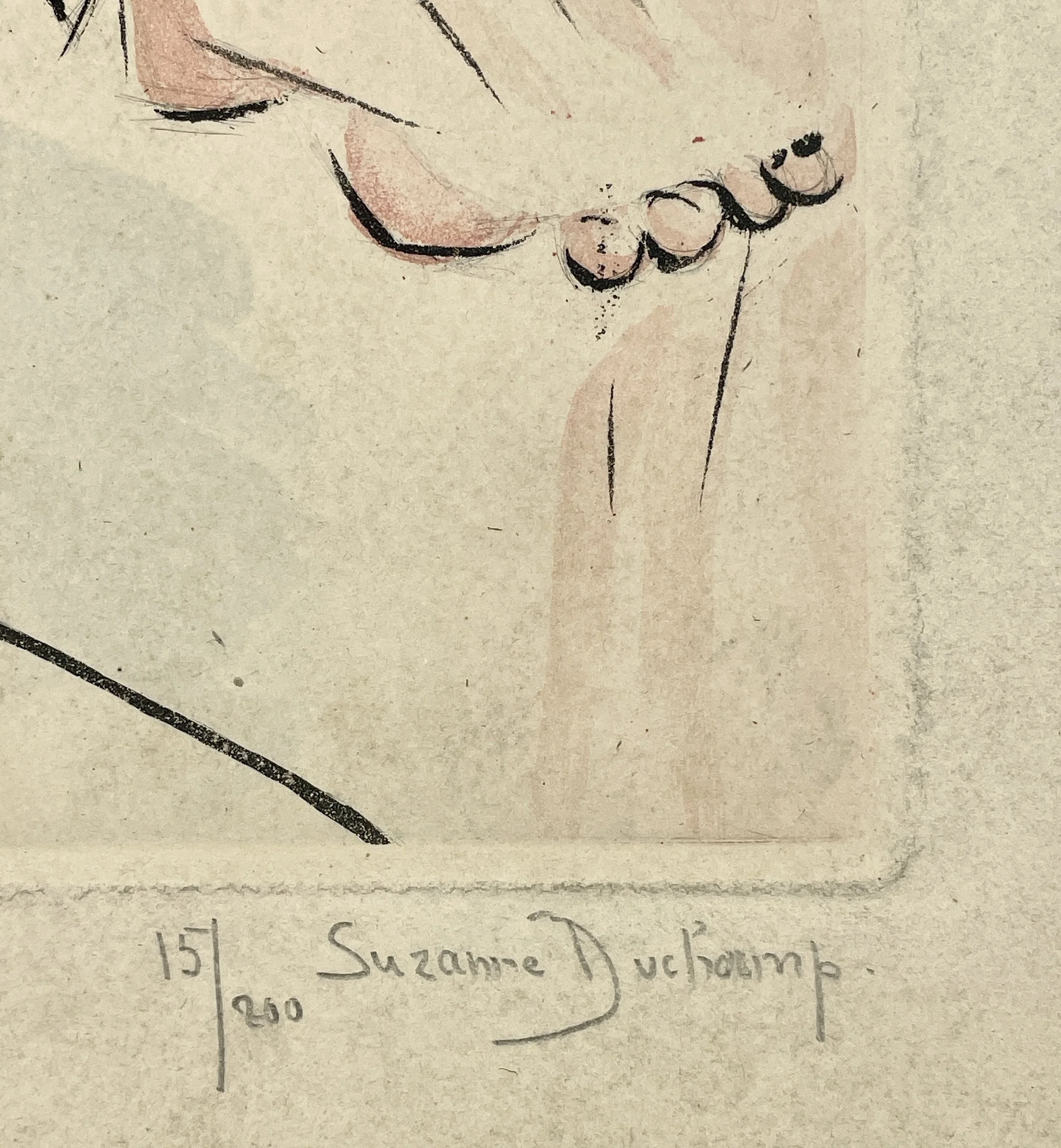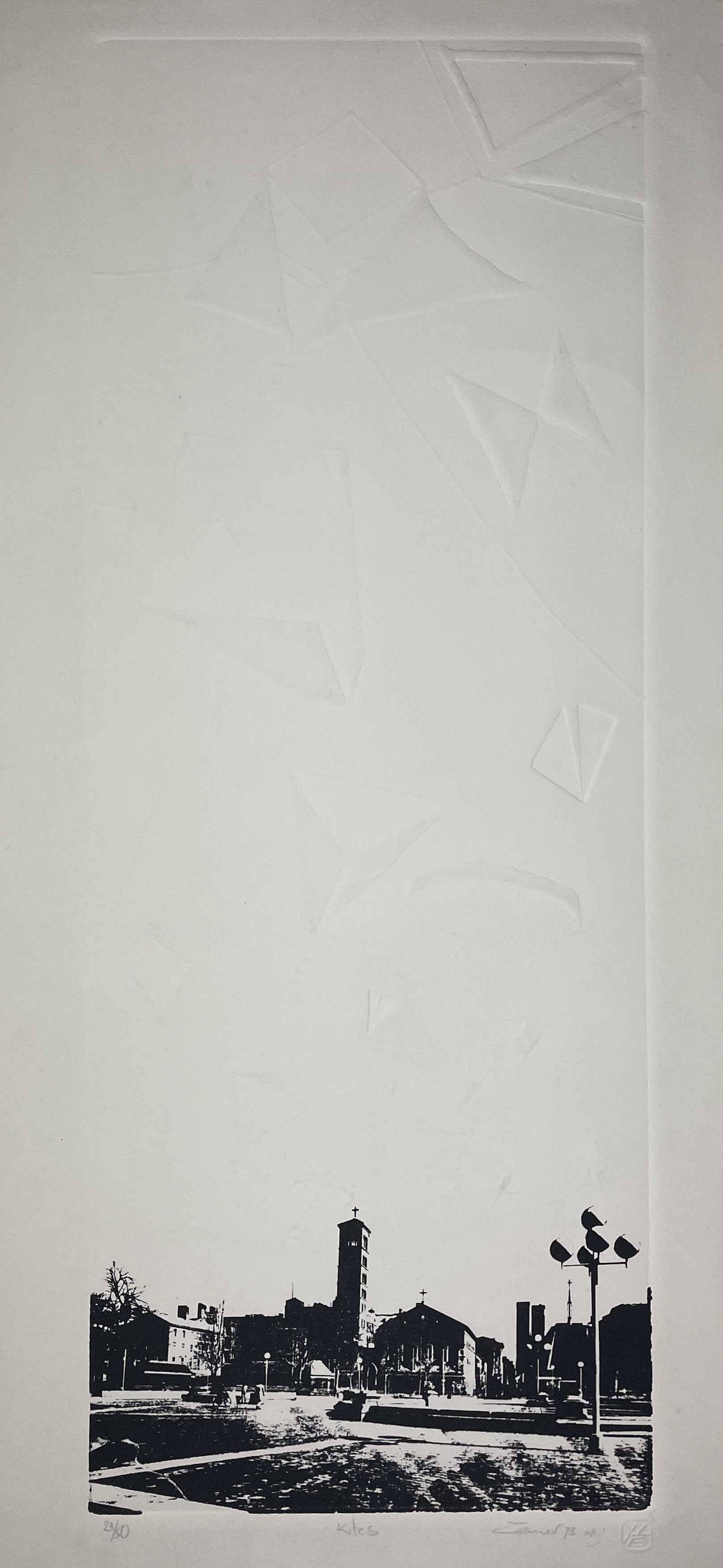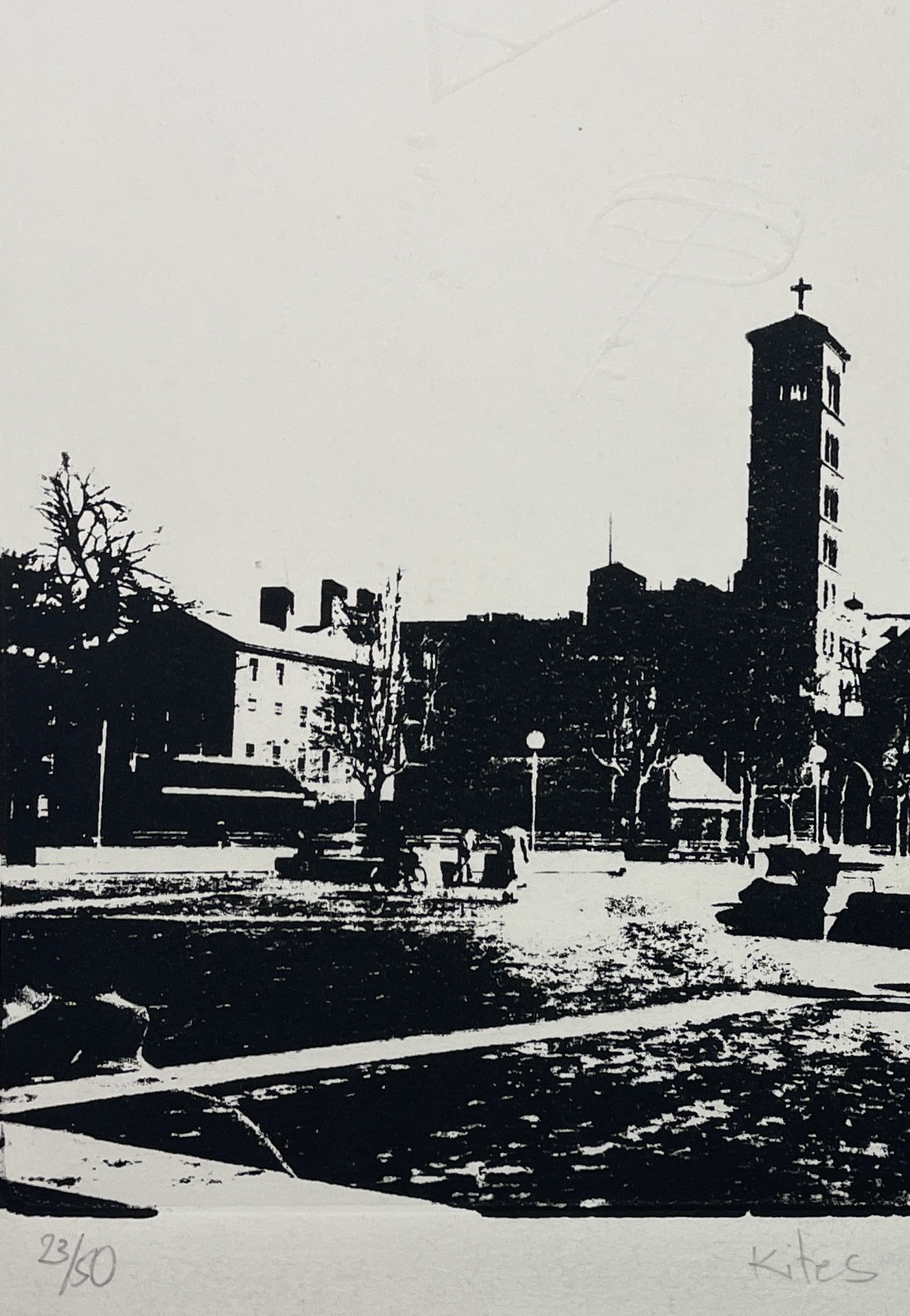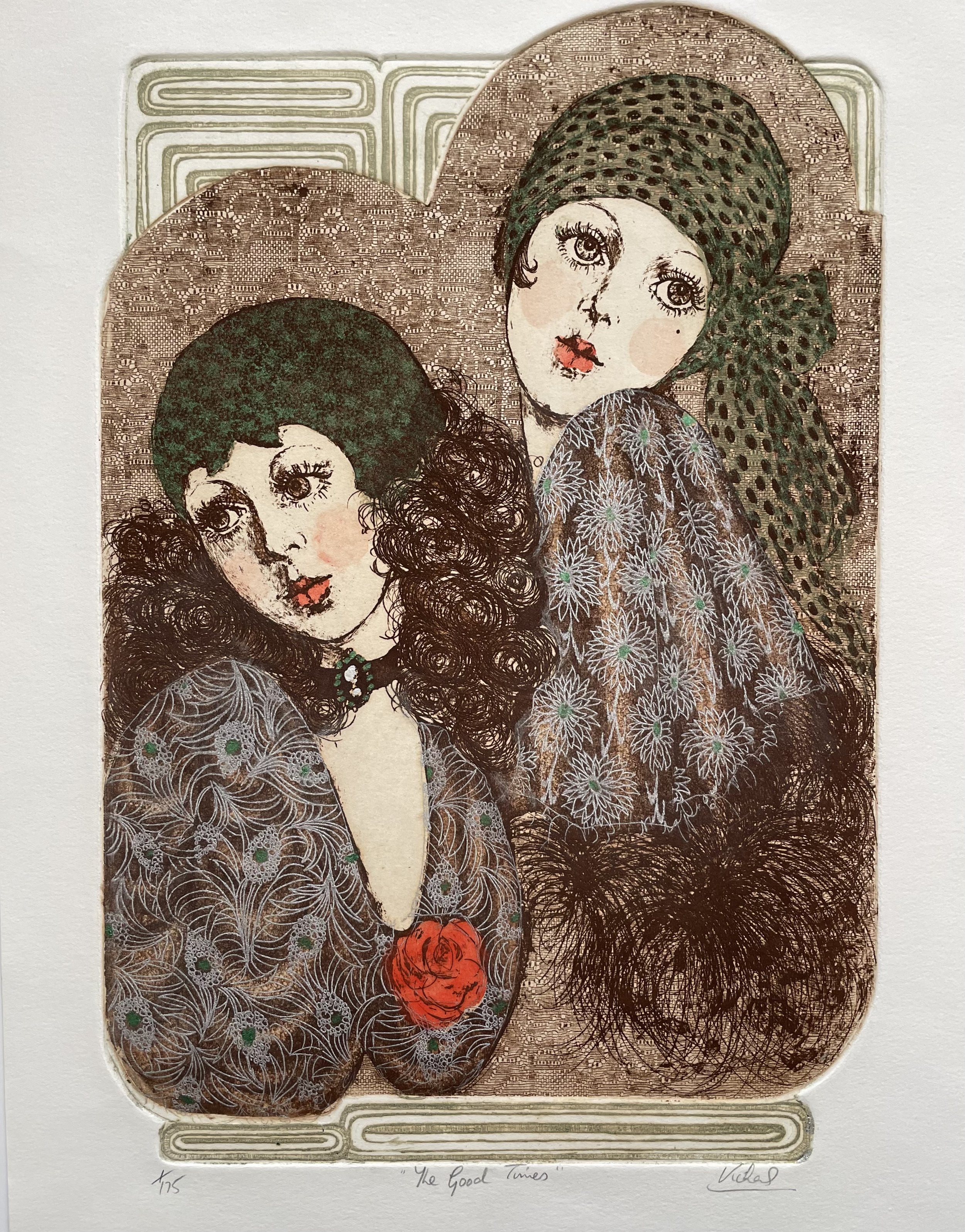
“The Good Times,” Mary Vickers (b. England), 1976 hand-colored etching, 22x15 in., signed lower right and numbered 1/175.

$1,400.00

The Good Times,” Mary Vickers (b. England), 1976 hand-colored etching, 22x15 in., signed lower right and numbered 1/175.

A rare early edition Mary Vickers hand-colored etching from 1976, The Good Times captures the artist’s signature romanticism through delicately rendered faces, ornate period patterns, and expressive emotional warmth. Created directly on the etched metal plate and enhanced by hand-applied color, this limited edition (1/175) is a quintessential example of Vickers’ internationally celebrated style—where beauty, tenderness, and human connection unfold with luminous grace. Ideal for collectors of 20th-century figurative art, Romantic revivalism, British printmaking, and highly decorative hand-finished etchings.
Artwork Description

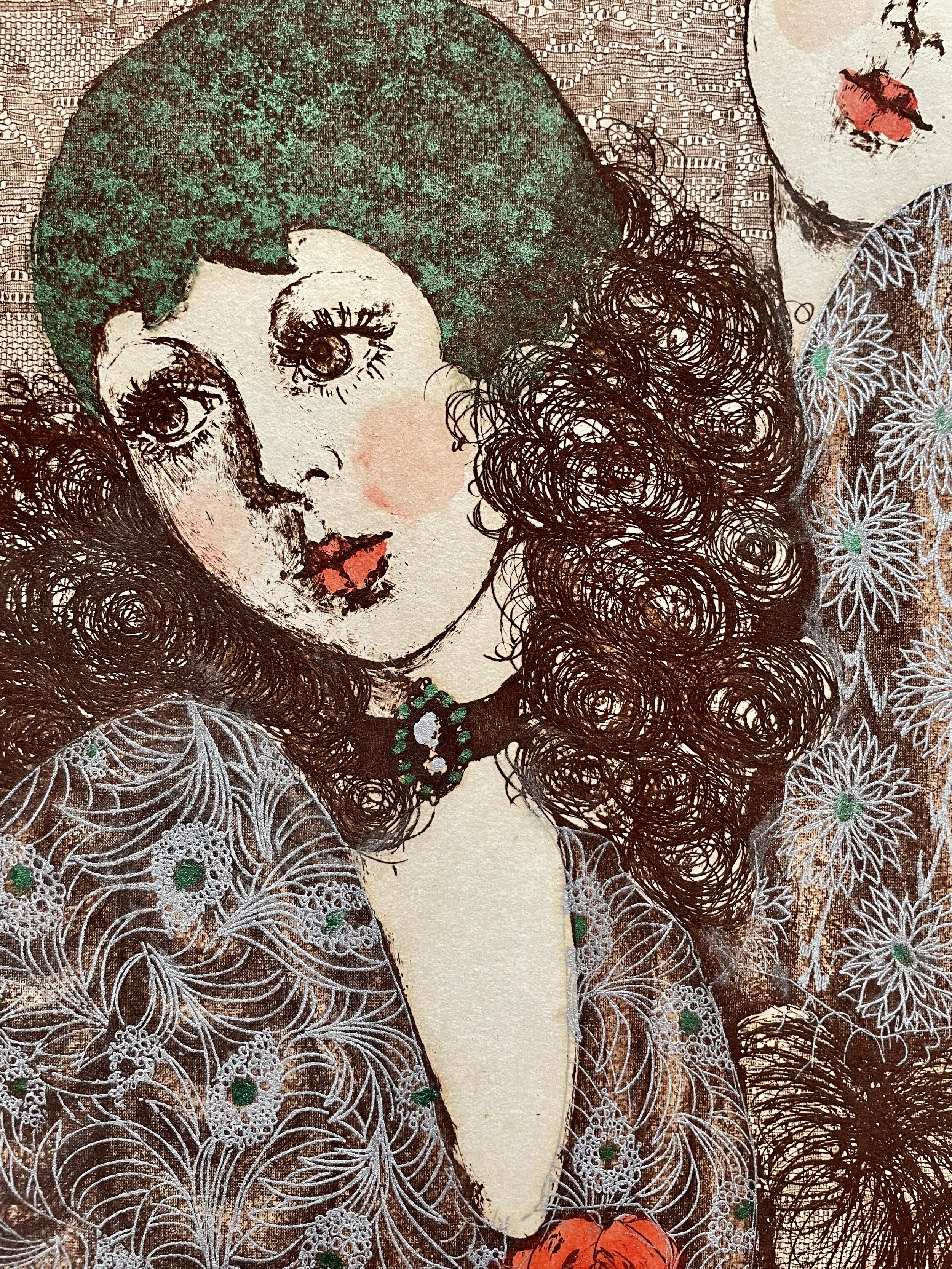
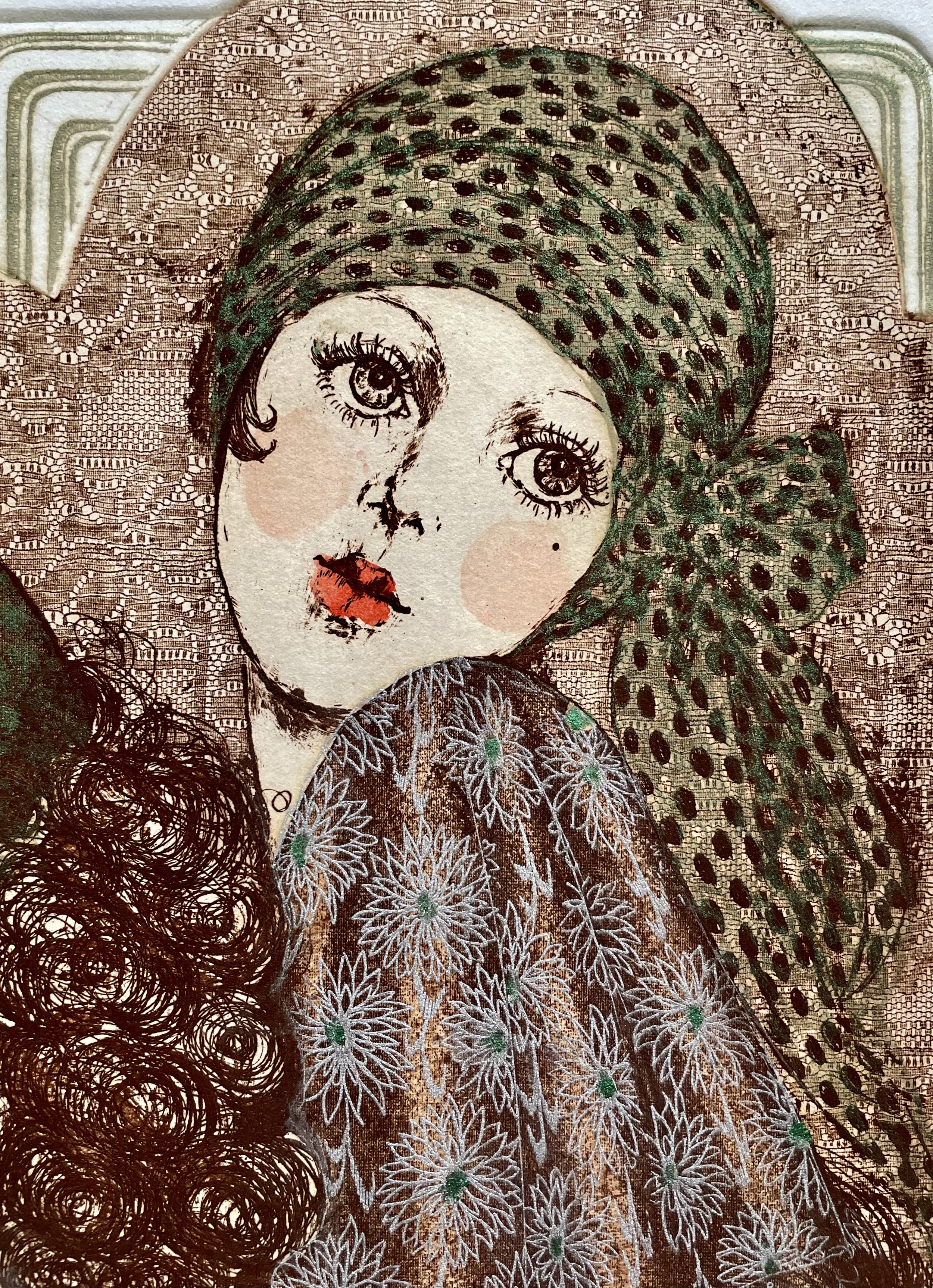
The Good Times epitomizes Mary Vickers’ deeply emotional and romantic vision, expressed through her masterful use of the hand-colored etching medium. Two elegantly stylized women—one wistful, one dreamlike—share the frame in a composition rich with 1970s European decorative sensibilities. Their softly modeled faces are rendered with the delicate brush-influenced linework for which Vickers is known, while their garments bloom with intricate floral patterns etched into the copper plate.

Vickers’ process involved coating the plate with a photo-sensitive or resin-hard ground, drawing directly into it, and then biting the design with acid to form the textured matrix. She then printed the image intaglio and hand-colored select areas—such as the red rose, green headscarves, and pale floral motifs—in watercolor and ink, giving each impression a unique warmth.

The palette is characteristically Vickers: soft browns, muted greens, gentle blues, and a pop of red that symbolizes vitality and emotional depth. The figures’ stylized eyes and elongated features echo the Romantic lineage Vickers absorbed during her studies in London museums. The background’s decorative geometry suggests an Art Nouveau or Art Deco influence filtered through contemporary 1970s aesthetics.

The work celebrates companionship, feminine beauty, and emotional intimacy—central themes in Vickers’ oeuvre. Its title, The Good Times, reinforces her lifelong intention to depict love, optimism, and human connection in a world that often feels otherwise.

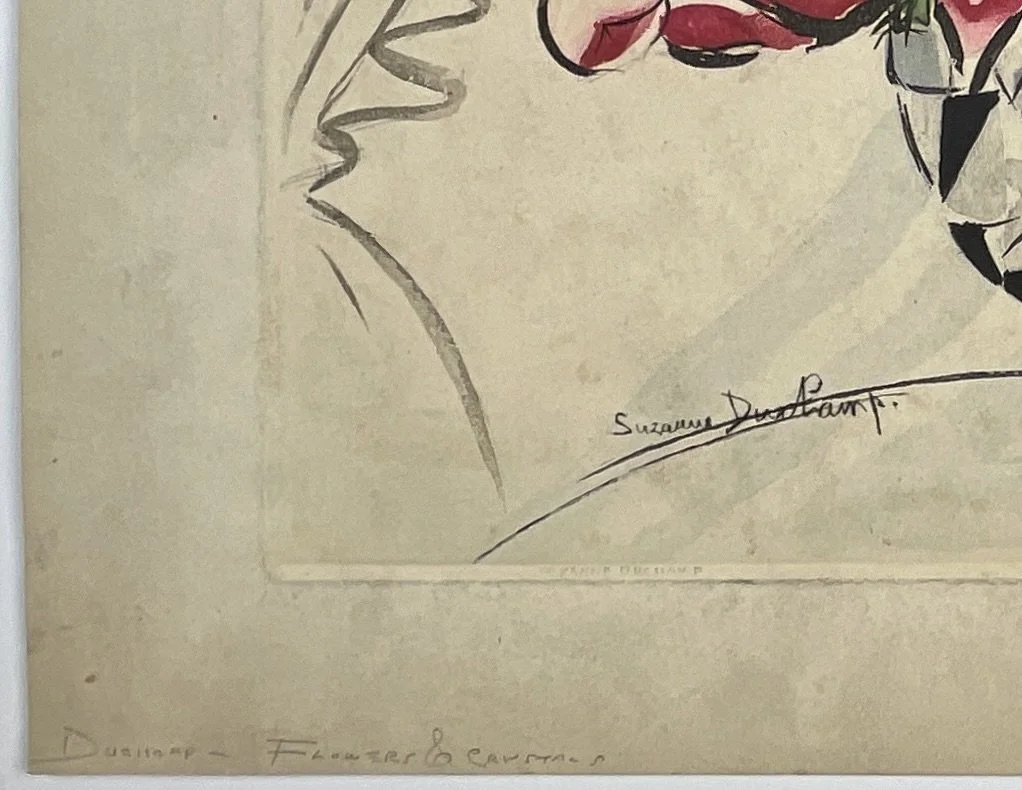
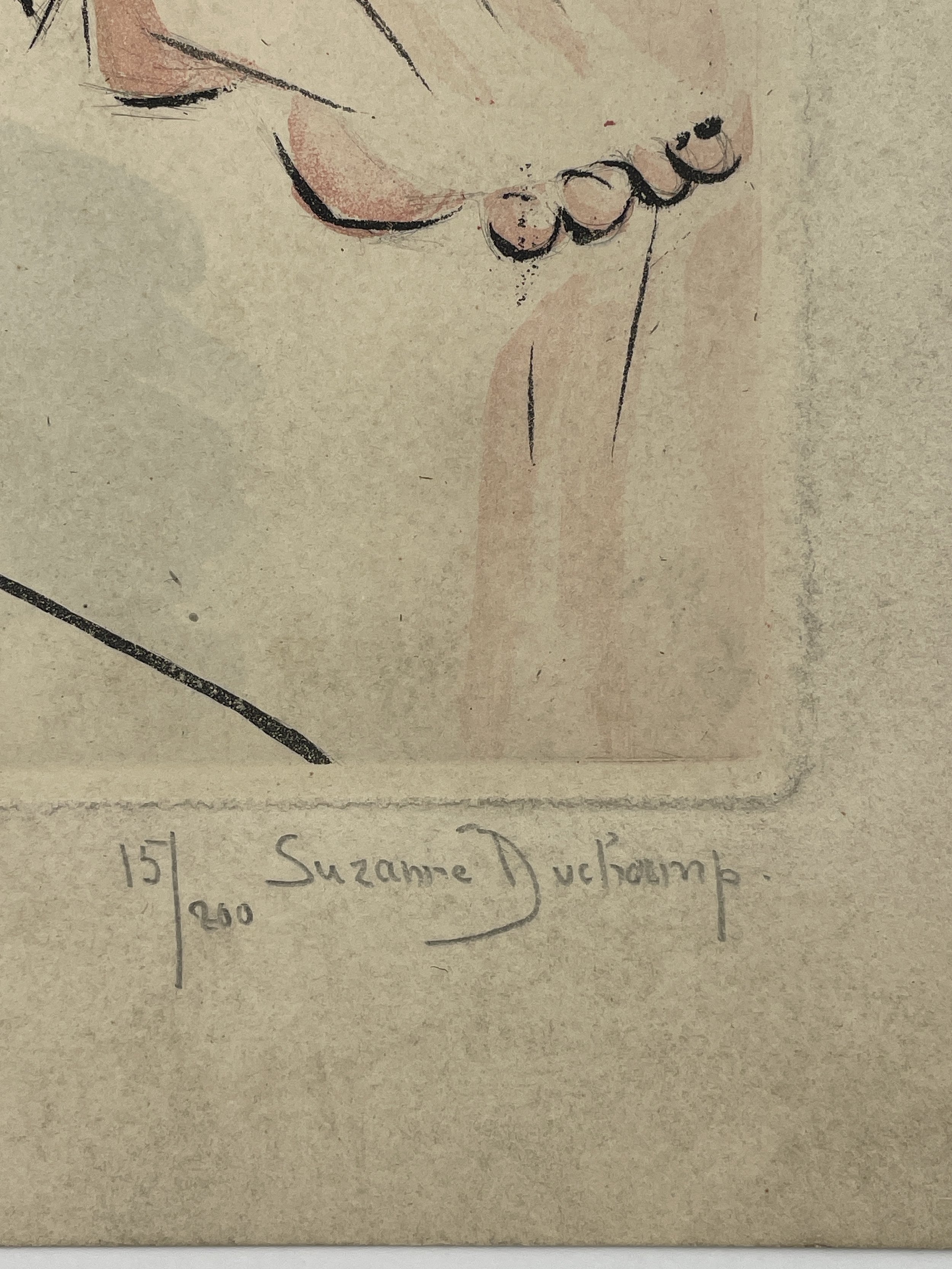
Signed in pencil lower right, titled center, numbered 1/175 lower left, this is an important early collectible example of her printmaking period.

Biography of Mary Vickers

(British/American, born early 1940s)

Mary Vickers is a British-born Romantic figurative artist celebrated for her emotionally expressive portraits, tender human themes, and richly decorative hand-colored etchings. Born in the early 1940s in a small village outside London, Vickers demonstrated exceptional artistic sensitivity from childhood, particularly in capturing the subtle emotional states of the human face. Her early environment—rooted in the English countryside and steeped in the cultural heritage of London’s museums—established the foundation of her lifelong commitment to portraying love, intimacy, and the beauty of human connection.

Vickers received her formal art training at the S.E. Essex School of Art and the prestigious St. Martin’s School of Art in London, where she was deeply influenced by the Romantic and Pre-Raphaelite masters she studied in the Tate and National Gallery. These influences became central to her style: delicate facial modeling, idealized expressions, softly luminous features, and an emphasis on emotional sincerity. After moving to the United States, she continued advanced studies at the Art Students League of New York and the Graphic Center at Pratt Institute, where she discovered the medium that would transform her career—original printmaking.

In 1969, Vickers shifted decisively into the creation of original etchings and lithographs, working directly onto metal plates and stones. She developed a distinctive hybrid process combining finely drawn, brushlike facial detail with textured, impasto-inspired backgrounds and hand-applied coloring. Her editions were notably small—often only 100–175 impressions—each uniquely enriched with hand-tinting, which heightened the emotional presence of her figures. This discovery, she noted, had a “profound influence” on her development as an artist and provided a catalyst for the deeply resonant works that followed.

Throughout the 1970s, Vickers achieved international acclaim, exhibiting at major galleries throughout New York, Chicago, Paris, Kentucky, Puerto Rico, and across the United States. Her work became a cornerstone of the Romantic Revival movement of the era, and she developed a devoted collector base drawn to her vision of idealized tenderness and transcendent human affection. Her art entered prominent private collections, including those of Sarah Churchill, the Duke & Duchess of Marlborough, Robert Alda, Peggy Lipton, Leonardo Nierman, and other public figures across Europe and the United States.

Her reputation expanded further when her paintings were selected for international porcelain editions by Josiah Wedgwood & Sons and distributed worldwide through The Bradford Exchange, which described her as “one of the leading Romantic painters of our time.” These editions introduced her artwork to a global audience and solidified her standing as a major figure in late 20th-century figurative romantic art.

Vickers’ philosophy is rooted in the belief that art is an act of emotional connection:

“There is no mystique—just a simple, direct statement of love. The painting isn’t complete until it has been loved by the person it was meant for.”

Her subjects—lovers, children, families, and gentle domestic moments—embody this perspective, depicting beauty as a form of compassion and tenderness. Her emphasis on emotional purity and romantic idealism sets her apart from both modernist trends and academic realism, aligning her instead with a lineage of artists devoted to expressive humanism.

Today, Mary Vickers is believed to be alive but retired from public artistic life, with her early etchings and limited-edition prints considered the most collectible works of her career. Her legacy endures through her distinctive visual language: eloquent eyes, softly rendered faces, ornate patterned textiles, and an unwavering commitment to portraying love as an essential aesthetic force. Her artworks remain cherished by collectors who seek not only beauty, but emotional truth—captured with grace, warmth, and profound sincerity.

Mary Vickers (British/American)
The Good Times, 1976. Hand-colored etching on paper, 22 x 15 in. Signed, titled, and numbered 1/175. Excellent impression from a scarce early edition. Romantic figurative composition with intricate linework and hand-applied color.

CERTIFICATE OF VALUE & AUTHENTICATION
Artist: Mary Vickers (British/American)
Title:The Good Times
Date: 1976
Medium: Hand-Colored Etching on Paper
Image Size: 22 x 15 inches
Edition: 1/175
Signature: Signed in pencil lower right; numbered lower left; titled center
Provenance: Acquired in New York City; currently Artfind Gallery, Washington, DC
Authenticity: This work is an original, hand-signed, limited-edition etching created directly from the artist’s metal plate and individually hand-colored by the artist or under her supervision.
Condition: Excellent vintage condition
Estimated Fair Market Value: See ranges below
Issued By: Artfind Gallery, Washington DC

Provenance Chain

  1. Artist: Mary Vickers

  2. Acquired Through: Gallery purchase, New York City (1970s)

  3. Private Collection: NYC

  4. Current Owner:Artfind Gallery, Washington, DC

The Good Times,” Mary Vickers (b. England), 1976 hand-colored etching, 22x15 in., signed lower right and numbered 1/175.

A rare early edition Mary Vickers hand-colored etching from 1976, The Good Times captures the artist’s signature romanticism through delicately rendered faces, ornate period patterns, and expressive emotional warmth. Created directly on the etched metal plate and enhanced by hand-applied color, this limited edition (1/175) is a quintessential example of Vickers’ internationally celebrated style—where beauty, tenderness, and human connection unfold with luminous grace. Ideal for collectors of 20th-century figurative art, Romantic revivalism, British printmaking, and highly decorative hand-finished etchings.

Artwork Description

The Good Times epitomizes Mary Vickers’ deeply emotional and romantic vision, expressed through her masterful use of the hand-colored etching medium. Two elegantly stylized women—one wistful, one dreamlike—share the frame in a composition rich with 1970s European decorative sensibilities. Their softly modeled faces are rendered with the delicate brush-influenced linework for which Vickers is known, while their garments bloom with intricate floral patterns etched into the copper plate.

Vickers’ process involved coating the plate with a photo-sensitive or resin-hard ground, drawing directly into it, and then biting the design with acid to form the textured matrix. She then printed the image intaglio and hand-colored select areas—such as the red rose, green headscarves, and pale floral motifs—in watercolor and ink, giving each impression a unique warmth.

The palette is characteristically Vickers: soft browns, muted greens, gentle blues, and a pop of red that symbolizes vitality and emotional depth. The figures’ stylized eyes and elongated features echo the Romantic lineage Vickers absorbed during her studies in London museums. The background’s decorative geometry suggests an Art Nouveau or Art Deco influence filtered through contemporary 1970s aesthetics.

The work celebrates companionship, feminine beauty, and emotional intimacy—central themes in Vickers’ oeuvre. Its title, The Good Times, reinforces her lifelong intention to depict love, optimism, and human connection in a world that often feels otherwise.

Signed in pencil lower right, titled center, numbered 1/175 lower left, this is an important early collectible example of her printmaking period.

Biography of Mary Vickers

(British/American, born early 1940s)

Mary Vickers is a British-born Romantic figurative artist celebrated for her emotionally expressive portraits, tender human themes, and richly decorative hand-colored etchings. Born in the early 1940s in a small village outside London, Vickers demonstrated exceptional artistic sensitivity from childhood, particularly in capturing the subtle emotional states of the human face. Her early environment—rooted in the English countryside and steeped in the cultural heritage of London’s museums—established the foundation of her lifelong commitment to portraying love, intimacy, and the beauty of human connection.

Vickers received her formal art training at the S.E. Essex School of Art and the prestigious St. Martin’s School of Art in London, where she was deeply influenced by the Romantic and Pre-Raphaelite masters she studied in the Tate and National Gallery. These influences became central to her style: delicate facial modeling, idealized expressions, softly luminous features, and an emphasis on emotional sincerity. After moving to the United States, she continued advanced studies at the Art Students League of New York and the Graphic Center at Pratt Institute, where she discovered the medium that would transform her career—original printmaking.

In 1969, Vickers shifted decisively into the creation of original etchings and lithographs, working directly onto metal plates and stones. She developed a distinctive hybrid process combining finely drawn, brushlike facial detail with textured, impasto-inspired backgrounds and hand-applied coloring. Her editions were notably small—often only 100–175 impressions—each uniquely enriched with hand-tinting, which heightened the emotional presence of her figures. This discovery, she noted, had a “profound influence” on her development as an artist and provided a catalyst for the deeply resonant works that followed.

Throughout the 1970s, Vickers achieved international acclaim, exhibiting at major galleries throughout New York, Chicago, Paris, Kentucky, Puerto Rico, and across the United States. Her work became a cornerstone of the Romantic Revival movement of the era, and she developed a devoted collector base drawn to her vision of idealized tenderness and transcendent human affection. Her art entered prominent private collections, including those of Sarah Churchill, the Duke & Duchess of Marlborough, Robert Alda, Peggy Lipton, Leonardo Nierman, and other public figures across Europe and the United States.

Her reputation expanded further when her paintings were selected for international porcelain editions by Josiah Wedgwood & Sons and distributed worldwide through The Bradford Exchange, which described her as “one of the leading Romantic painters of our time.” These editions introduced her artwork to a global audience and solidified her standing as a major figure in late 20th-century figurative romantic art.

Vickers’ philosophy is rooted in the belief that art is an act of emotional connection:

“There is no mystique—just a simple, direct statement of love. The painting isn’t complete until it has been loved by the person it was meant for.”

Her subjects—lovers, children, families, and gentle domestic moments—embody this perspective, depicting beauty as a form of compassion and tenderness. Her emphasis on emotional purity and romantic idealism sets her apart from both modernist trends and academic realism, aligning her instead with a lineage of artists devoted to expressive humanism.

Today, Mary Vickers is believed to be alive but retired from public artistic life, with her early etchings and limited-edition prints considered the most collectible works of her career. Her legacy endures through her distinctive visual language: eloquent eyes, softly rendered faces, ornate patterned textiles, and an unwavering commitment to portraying love as an essential aesthetic force. Her artworks remain cherished by collectors who seek not only beauty, but emotional truth—captured with grace, warmth, and profound sincerity.

Mary Vickers (British/American)
The Good Times, 1976. Hand-colored etching on paper, 22 x 15 in. Signed, titled, and numbered 1/175. Excellent impression from a scarce early edition. Romantic figurative composition with intricate linework and hand-applied color.

CERTIFICATE OF VALUE & AUTHENTICATION
Artist: Mary Vickers (British/American)
Title:The Good Times
Date: 1976
Medium: Hand-Colored Etching on Paper
Image Size: 22 x 15 inches
Edition: 1/175
Signature: Signed in pencil lower right; numbered lower left; titled center
Provenance: Acquired in New York City; currently Artfind Gallery, Washington, DC
Authenticity: This work is an original, hand-signed, limited-edition etching created directly from the artist’s metal plate and individually hand-colored by the artist or under her supervision.
Condition: Excellent vintage condition
Estimated Fair Market Value: See ranges below
Issued By: Artfind Gallery, Washington DC

Provenance Chain

  1. Artist: Mary Vickers

  2. Acquired Through: Gallery purchase, New York City (1970s)

  3. Private Collection: NYC

  4. Current Owner:Artfind Gallery, Washington, DC

THE WORK OF MARY VICKERS AS SEEN THROUGH HER EYES

“One of the most important things to me is that people should feel and show love for each other. If I could embrace the world, I would. I am lucky though; I can reach many people through my work, and people tell me they feel love when they look at one of my paintings, and they are right, for I don’t feel that the painting is fully completed until it has been loved and owned by the person I really painted it for, even though I may never see the. I am not a person who can paint for myself alone; although I must paint something I like or feel is an extension of me. It gives me the ultimate pleasure when it has a loving owner, for in my mind, I feel that that person has accepted and loved me. It is almost like an actor who is stimulated by an approving audience. The public is a life-giving force essential for his work; so it is with mine.

I have painted many subjects during my career, appreciating all the beautiful things in life, and perhaps only seeing that side of them and ignoring the bad. My attitude is generally that way; for or bad depending on how one comes to look at it. I prefer to depict the beauty I see, maybe making it better than it really is, as in my way it works to combat the bad things that are a reality i life also.

My latest subject matter depicts the tender, loving side of a male-female relationship. My object is to show that this wonderful, natural relationship can be depicted in a tasteful, beautiful way—the way I feel we all would dream it should be—the way I know it is.

I have made many lovely friends from the people who admire my painting, for I feel they share my feelings on life, and it is encouraging to know that so many feel that way—with that attitude we have much going for us to achieve the ultimate we all must desire—“peace on earth.

EDUCATION

S.E. Essex School of Art

St. Martine School of Art

New York Art Student League

Pratt Institue Graphic Center, N.Y.

AS OF THE 1970’S

COLLECTIONS

Sarah Churchill, London, England

Duke & Duchess of Marlborough, London, England

T.  Huxley Jones, London, England

Mr. & Mrs. F.E. Willatts, London, England

Johnny Ray, London, England

Max Bygraves, London, England

Mr. & Mrs. Robert Alda, Rome, Italy

Sr. & Sra. Leonardo Nierman, Mexico City

Miss Peggy Lipton, Los Angeles, California

Frankie Land, Los Angeles, California

Guy Mitchell, Los Angeles, California

Mr. & Mrs. Harry Skleros, Commack, N.Y.

David Holliday, New York, N.Y.

Mr. & Mrs. James Leeds, Lexington, Kentucky

Mr. & Mrs. Jack Krauss, Nyack, N.Y.

Mr. & Mrs. G. King, Palm Beach, Florida

AWARDS

1967 -Lake Art Ass’n, N.Y. -Two first prizes in oils

1968 -Mystic Art Festival, Conn. -Second prize in oils

ONE WOMAN SHOWS

1969- Mitch Morse Gallery, Lawerence, N.Y.

1969- Verily Gallery, Northport, N.Y.

1970 -Mitch Morse Gallery II, New Hope, PA

1970- Priscilla’s Gallery, Pt. Washing, N.Y.

1971- Mitch Morse Gallery, New York, N.Y.

1971 -Loradel Gallery, Huntington, N.Y.

1972 -Lafayette Gallery, Lexington, Kentucky

1973

Marina Gallery, Nycak, N.Y.

Merrill Chase Galleris, Chicago, Illinois

Main Street Gallery, Kingston, PA

Art deL’ile, Paris, France

PERMANENT EXHIBITIONS

Mitch More Gallery, New York, N.Y.

Merrill Chase Galleries, Chicago, Illinois

Lafayetter Gallery, Lexington, Kentucky

Marina Gallery, Nysack, N.Y.

Montmartre Gallery, St. Louis, MO

Main Streng Gallery, Kingston, PA

Gallery Francesca, San Juan, P.R.

Stars and Stripes, Memphis, Tenn

Galeria Veronese, New Orleans, LA