The Leow Bridge Across Broadway, New York, hand-colored etching, c.1870s–1880s, 24×32 in, unsigned (engraver unknown).
This large 24×32 hand-colored etching titled The Leow Bridge Across Broadway, New York depicts one of the most iconic 19th-century intersections in Manhattan—Broadway at Fulton Street—showing the elevated “Leow Bridge” and the bustling street life below. Richly colored by hand, the print captures horse-drawn carriages, period architecture, early mass transit, and dense crowds typical of New York’s Gilded Age. A highly detailed and historically significant work, this etching brings to life an era of rapid urban growth and architectural transformation.
Artwork Description
This impressive hand-colored etching illustrates a panoramic view of Broadway at Fulton Street during the late 19th century, featuring:
Historical Elements Depicted
The Leow Bridge, one of New York’s early elevated pedestrian structures designed to relieve congestion on Broadway.
The New Herald Building, rendered in full architectural detail on the left.
A city alive with movement: horse-drawn omnibuses, delivery wagons, private carriages, and vendors navigating a crowded streetscape.
Fashion, gesture, and clothing characteristic of the 1870s–1880s.
Artistic Qualities
Finely engraved linework typical of the period’s illustrated newspapers and architectural prints.
Hand-applied watercolor tinting, adding warmth to stone façades, vibrancy to clothing, and atmospheric tonality to the sky.
High realism combined with documentary-style accuracy, a hallmark of 19th-century urban engravings.
Cultural Significance
During this period, New York experienced explosive population growth, and the introduction of elevated walkways like the Leow Bridge was part of a broader push to modernize the city. These images were widely circulated, helping define the visual identity of New York for audiences across America and Europe.
This print is a beautifully preserved example of historical New York City engraving and hand-coloring.
The Leow Bridge Across Broadway, New York. Large 24×32 hand-colored etching, c.1870s–1880s. Detailed architectural and street scene; excellent coloring and condition.
CERTIFICATE OF VALUE & AUTHENTICATION
Title: The Leow Bridge Across Broadway, New York
Date: c. 1870s–1880s
Medium: Hand-Colored Etching / Engraving
Dimensions: 24 × 32 inches
Signature: Unsigned (engraver/publisher unknown)
Description: A richly hand-tinted architectural and street-scene etching depicting Broadway at Fulton Street, including the elevated Leow Bridge and the New Herald Building.
Authenticity: Verified through plate characteristics, engraving technique, period paper type, and historic imagery associated with 19th-century New York City publications.
Current Owner: Artfind Gallery, Washington, DC
This document certifies the work as an authentic 19th-century hand-colored etching.
Provenance Chain
19th-Century Publisher / Print Distributor (United States)
Private Collection, Northeast U.S.
Artfind Gallery, Washington, DC — current owner
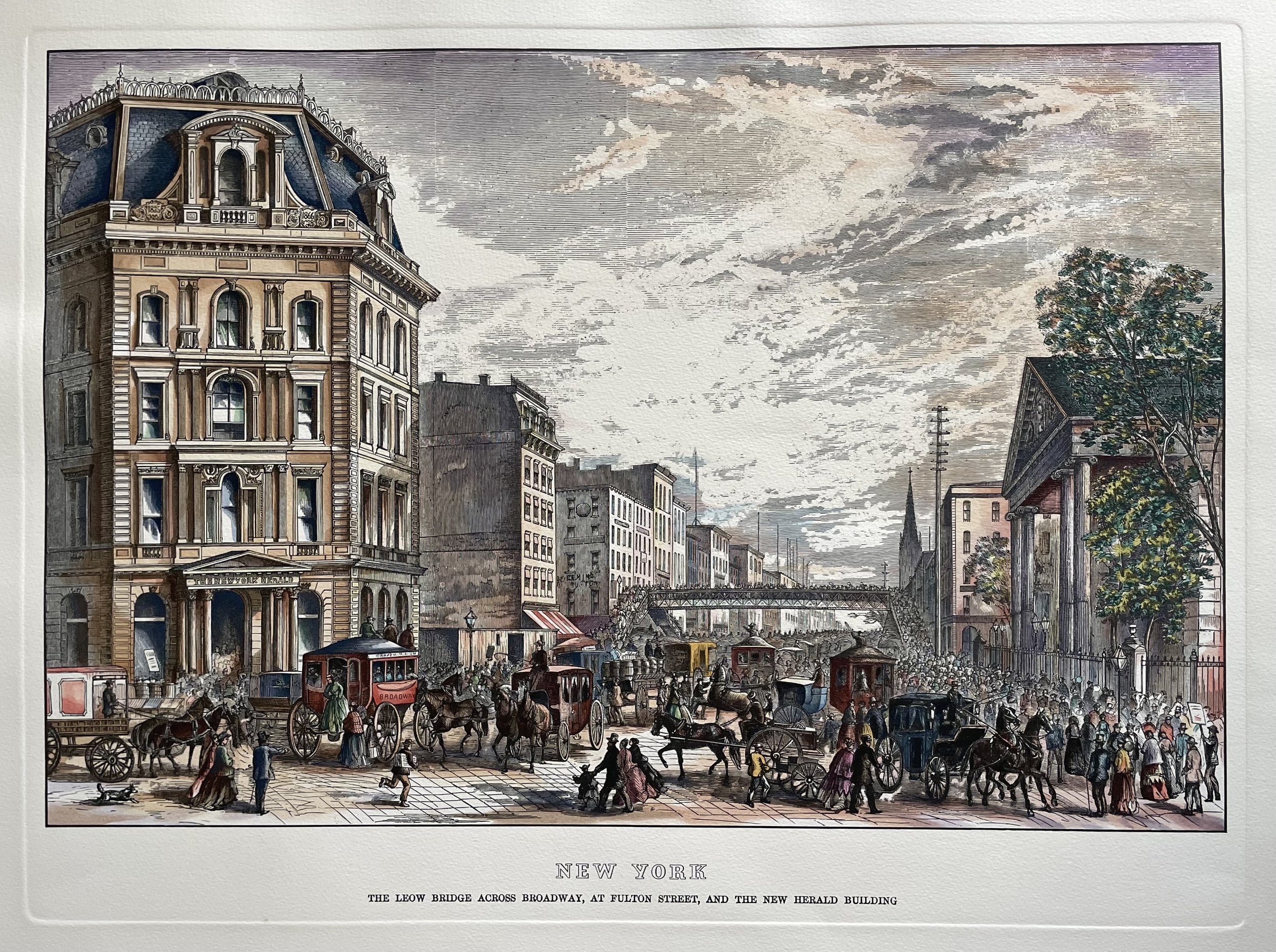 Image 1 of 10
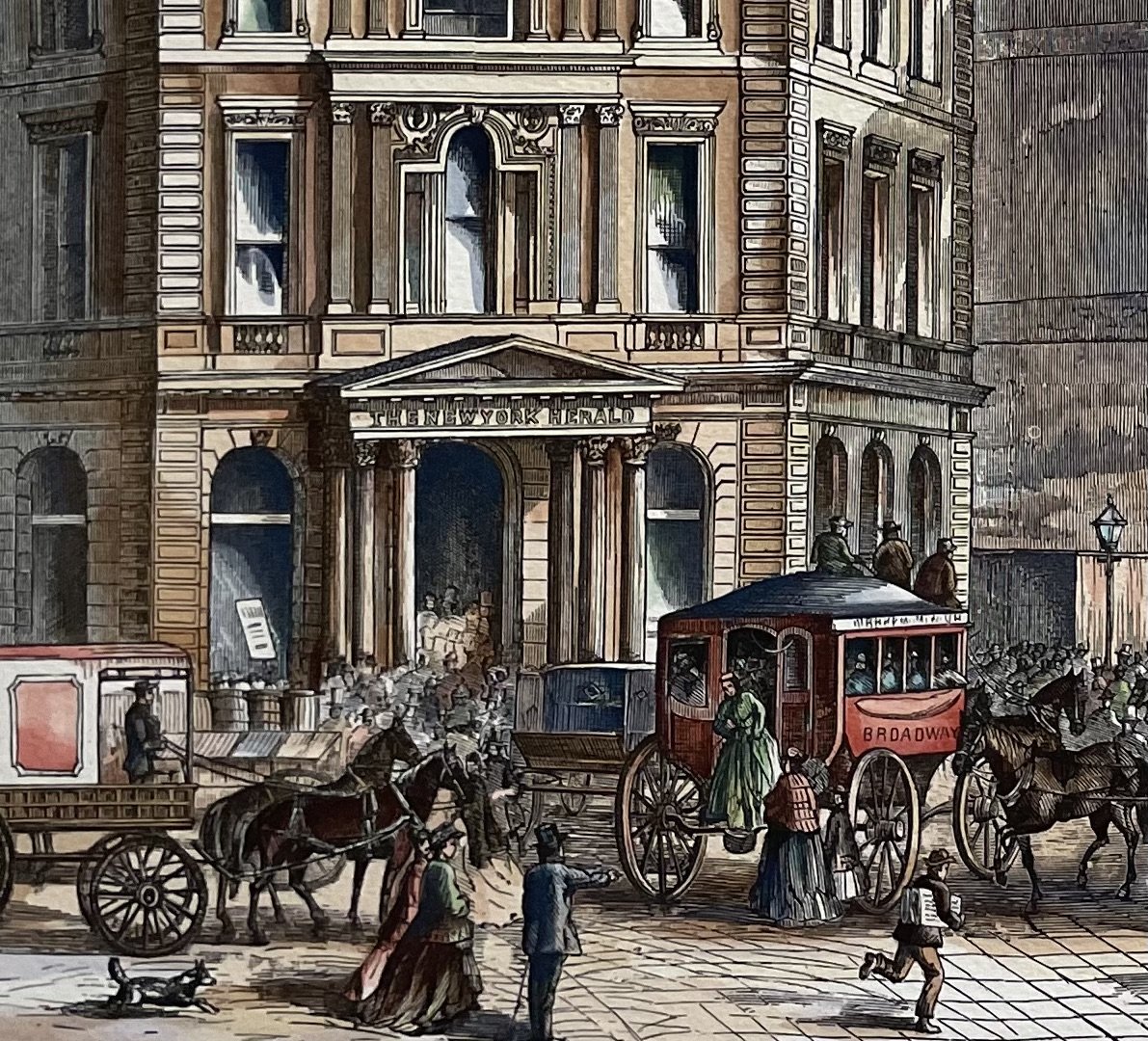 Image 2 of 10
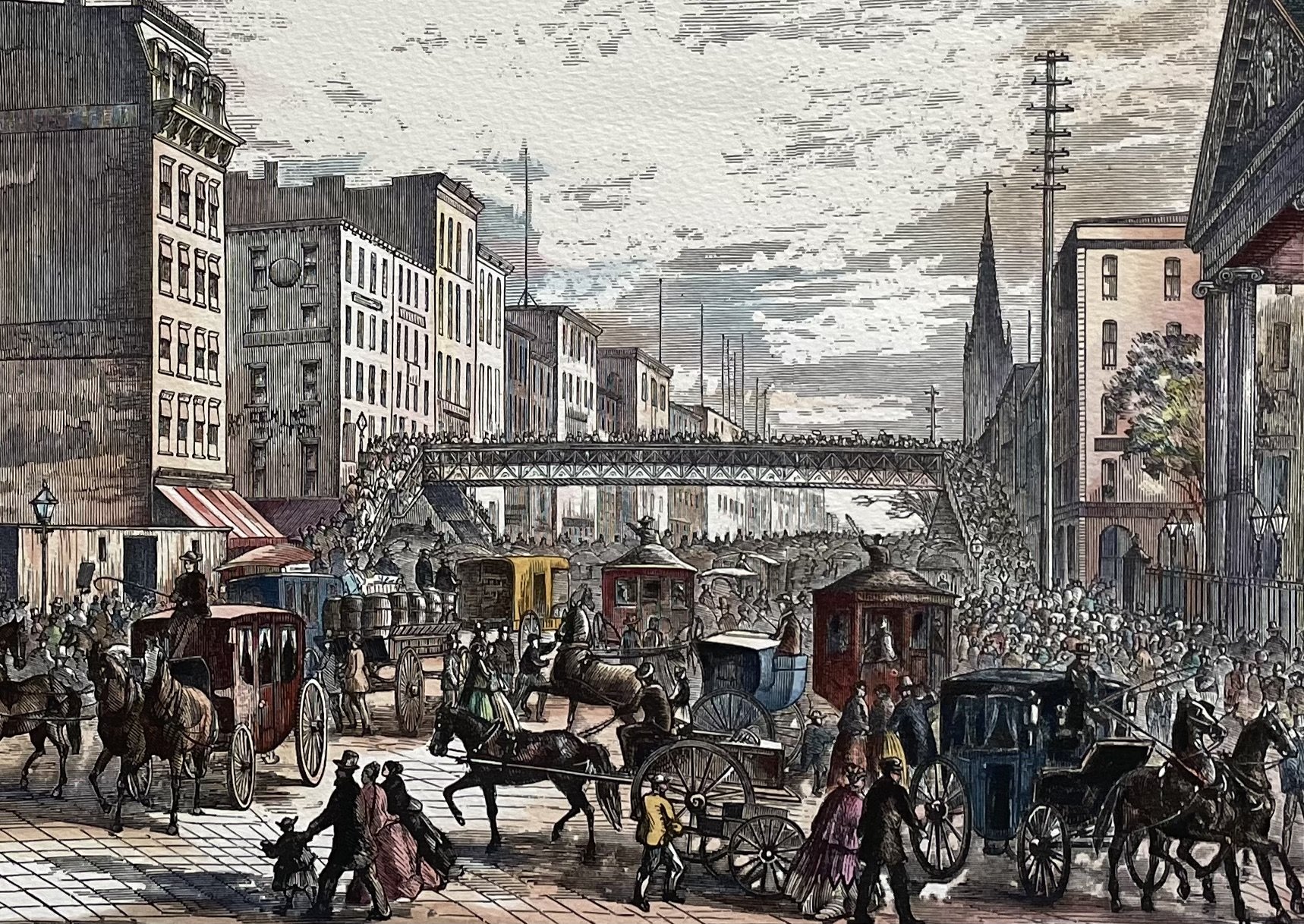 Image 3 of 10
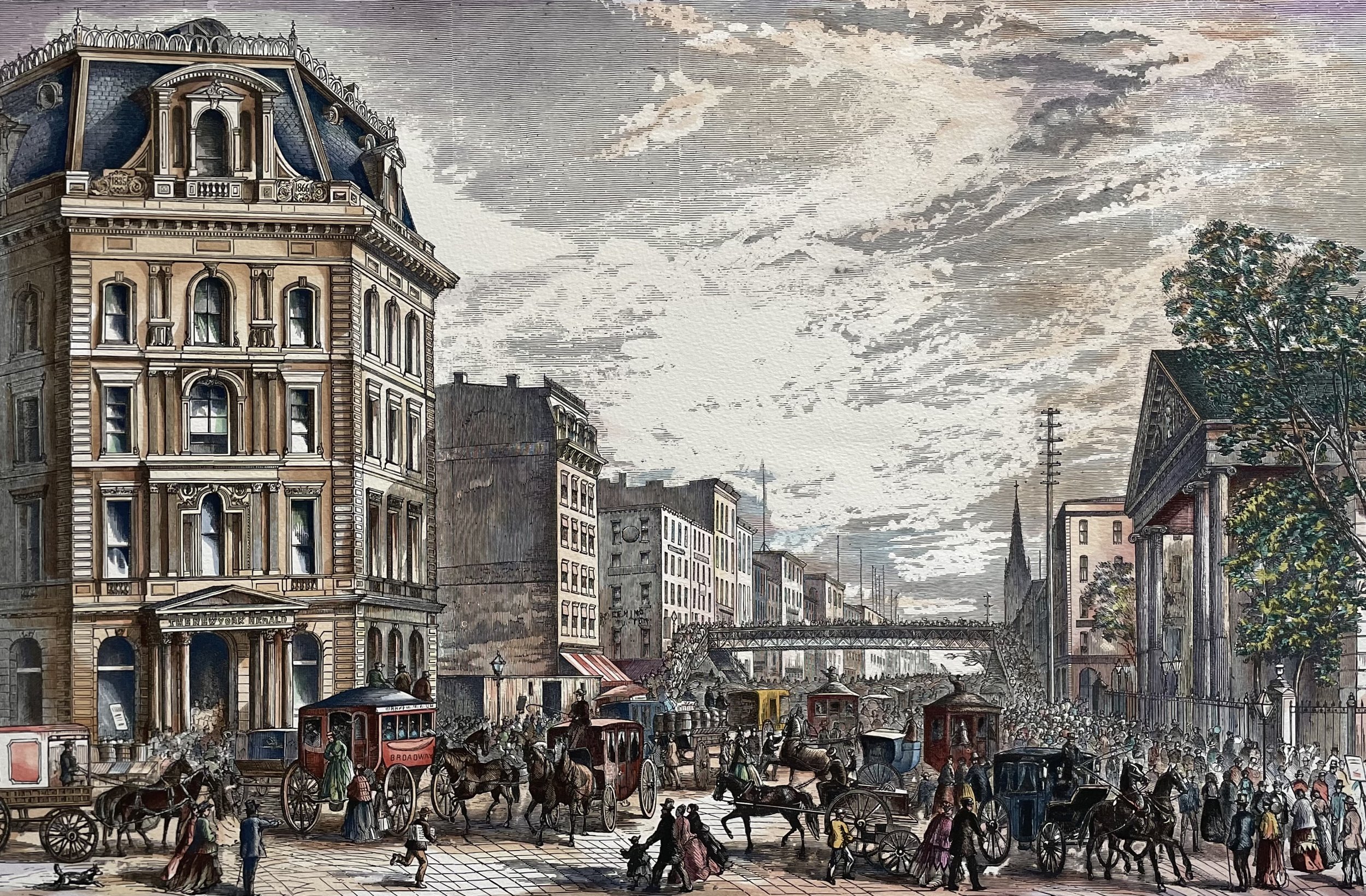 Image 4 of 10
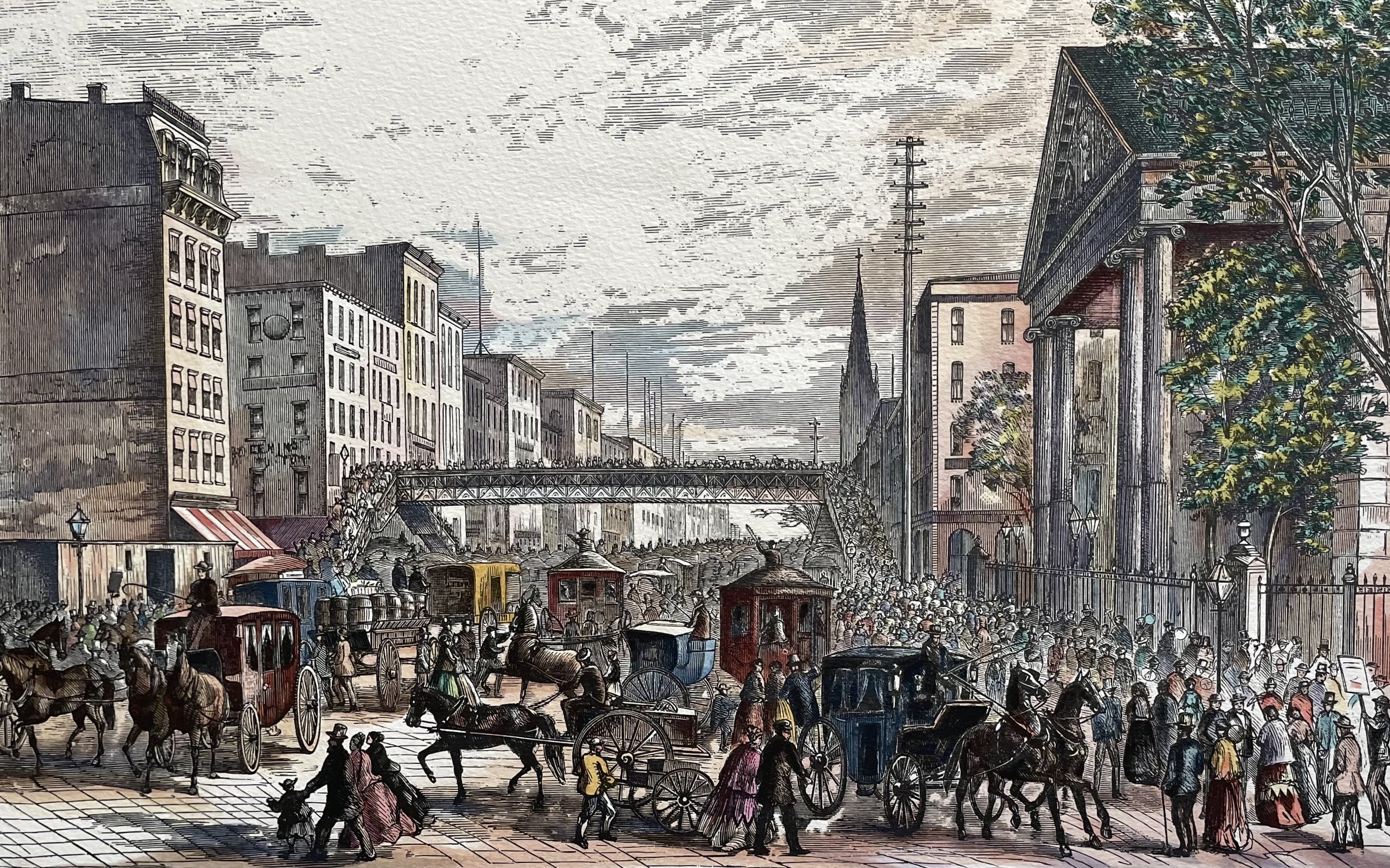 Image 5 of 10
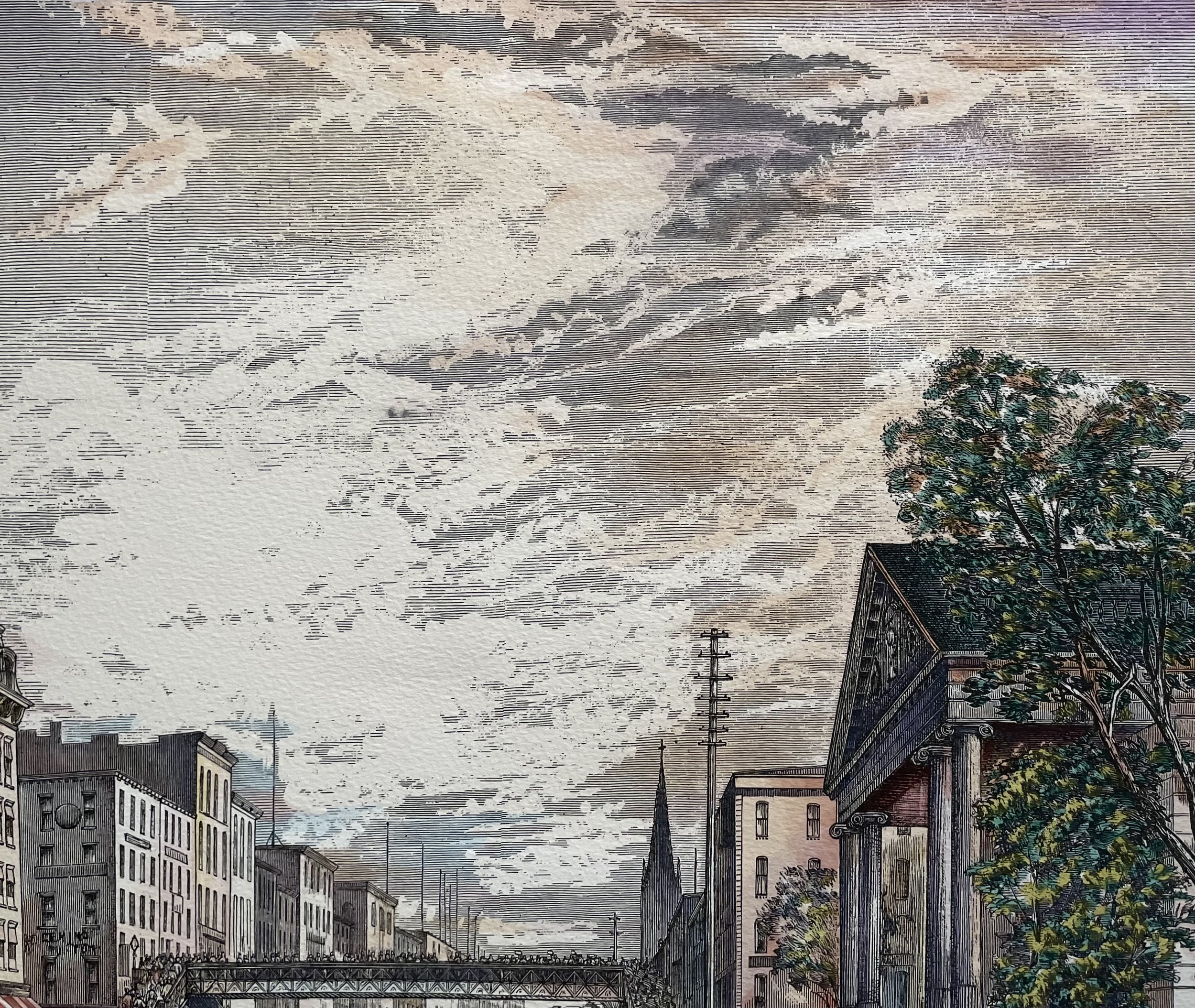 Image 6 of 10
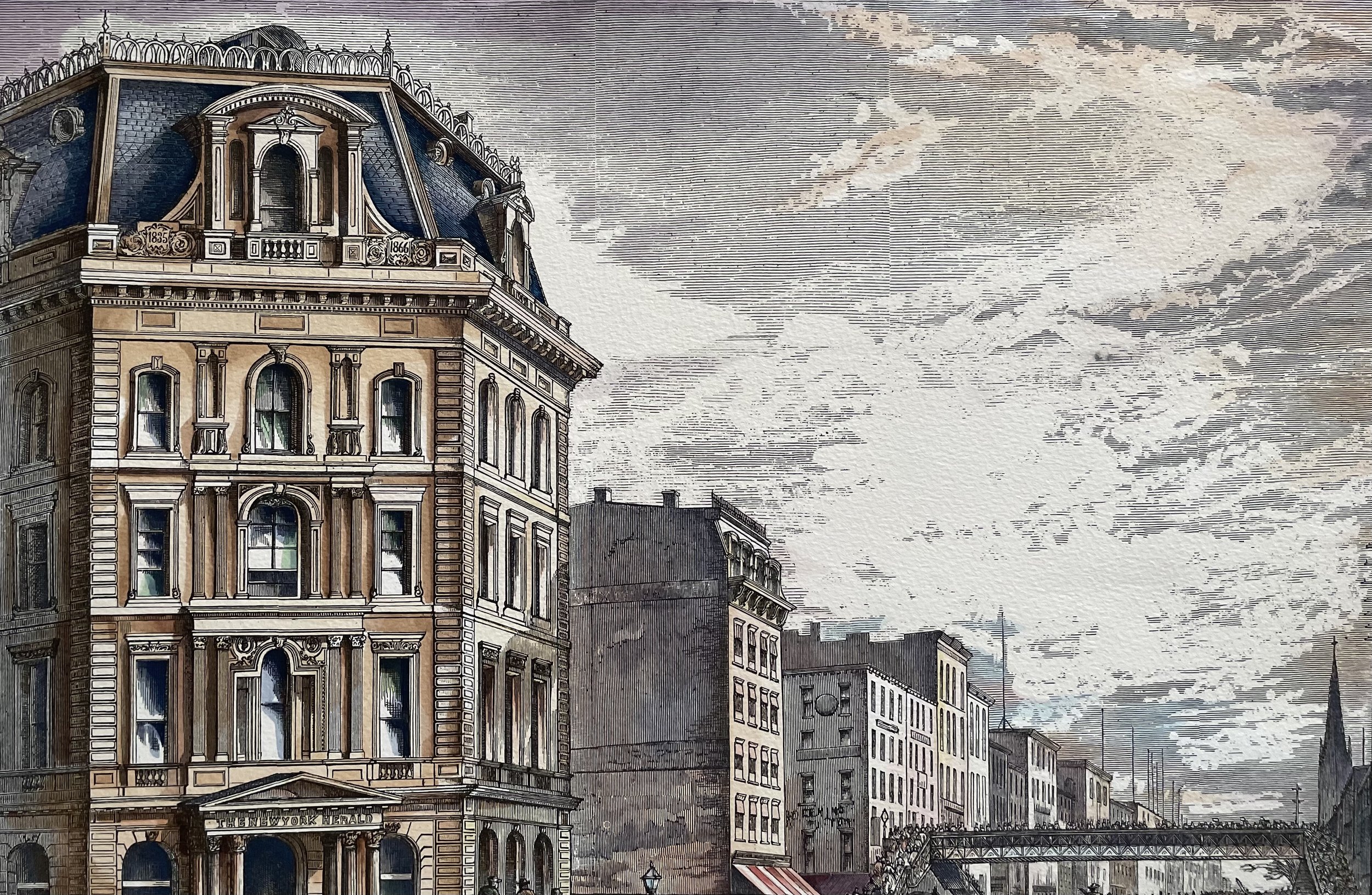 Image 7 of 10
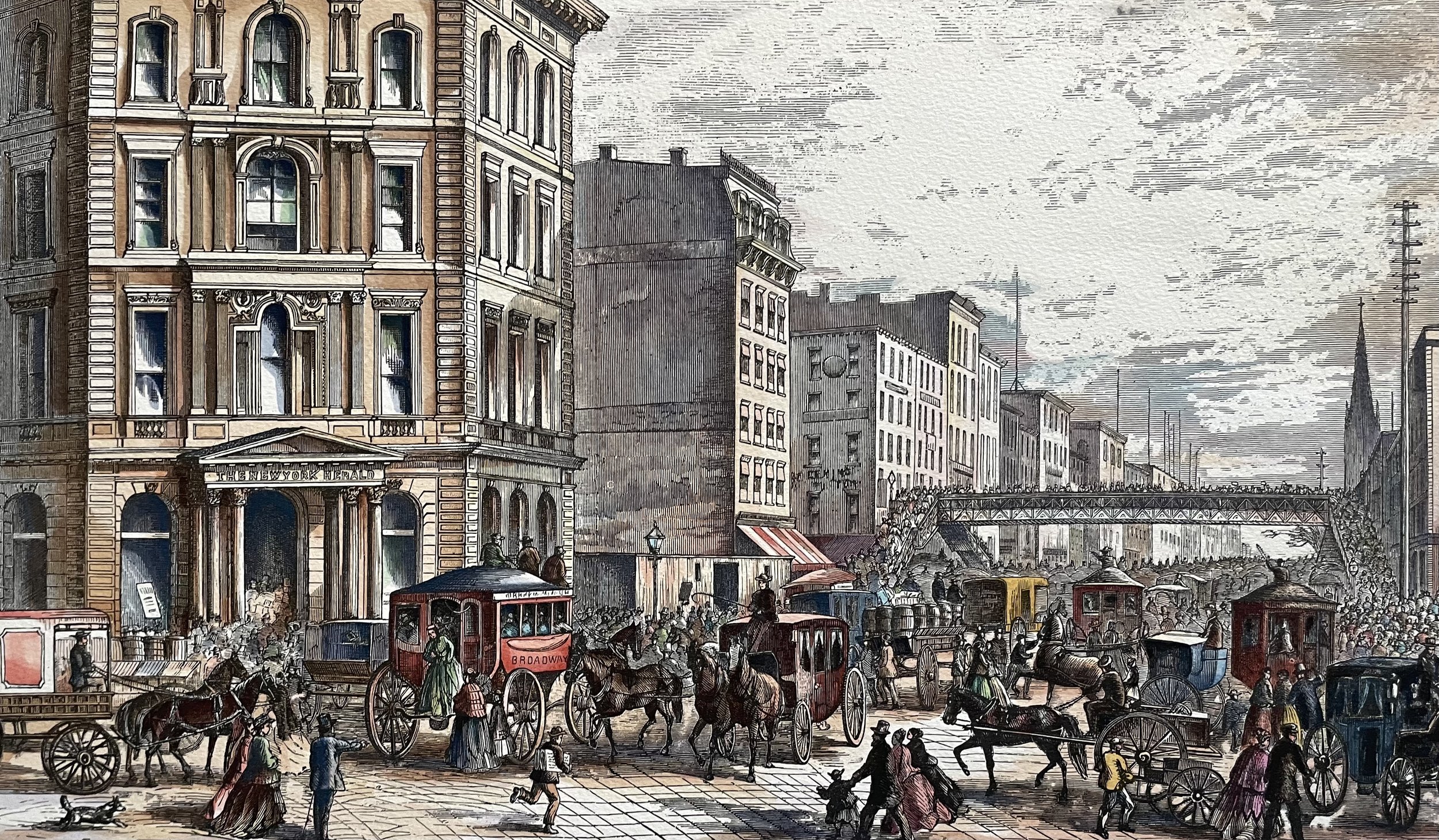 Image 8 of 10
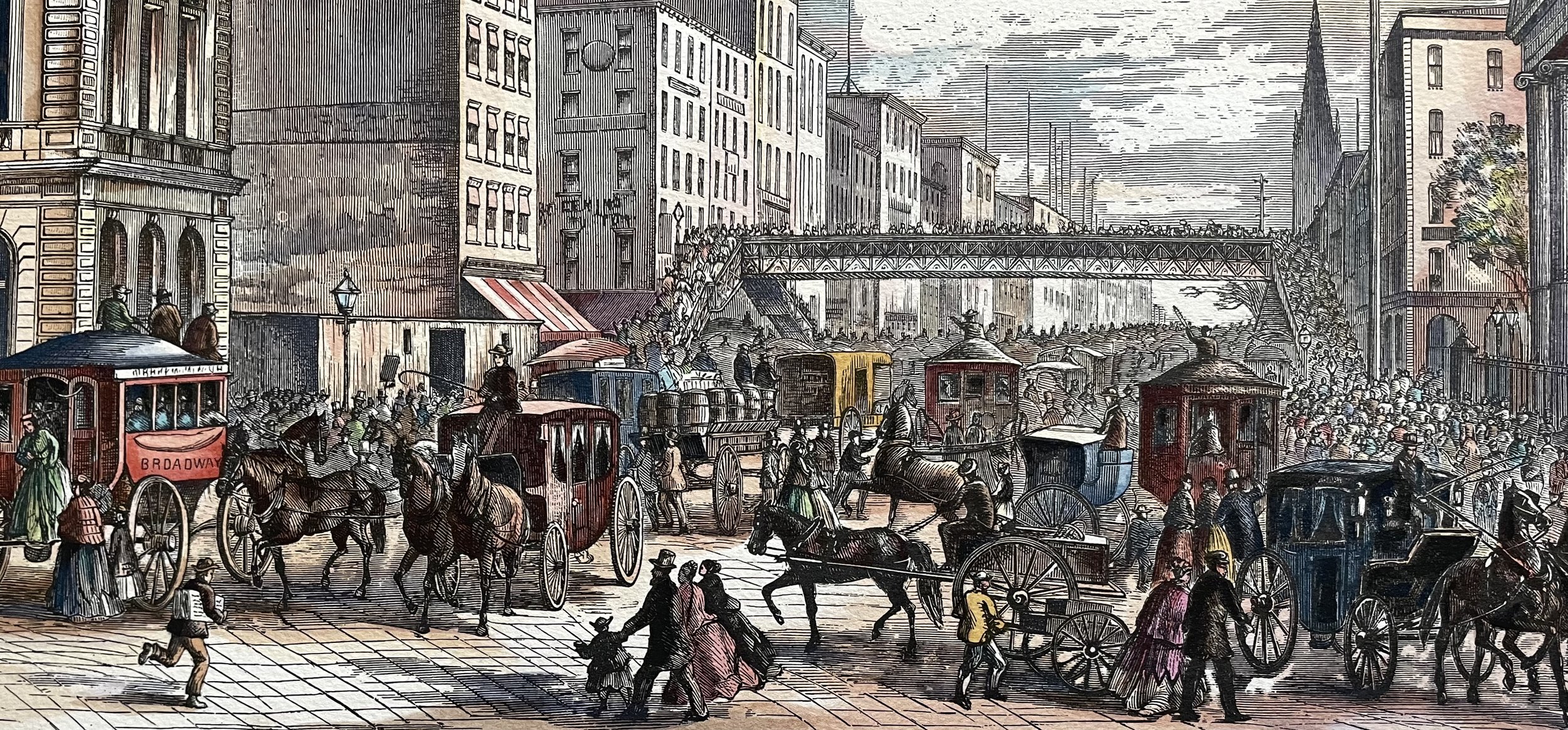 Image 9 of 10
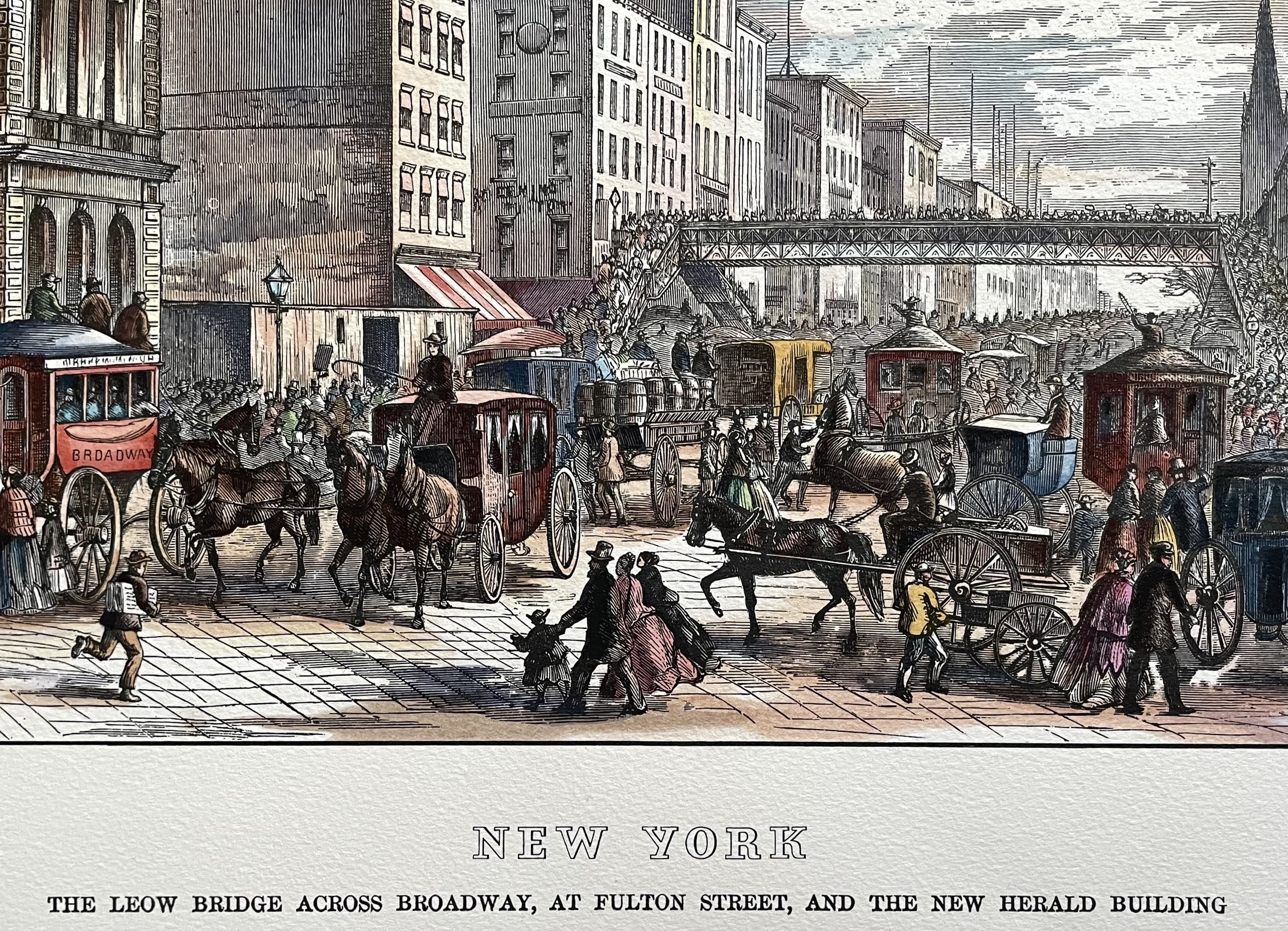 Image 10 of 10