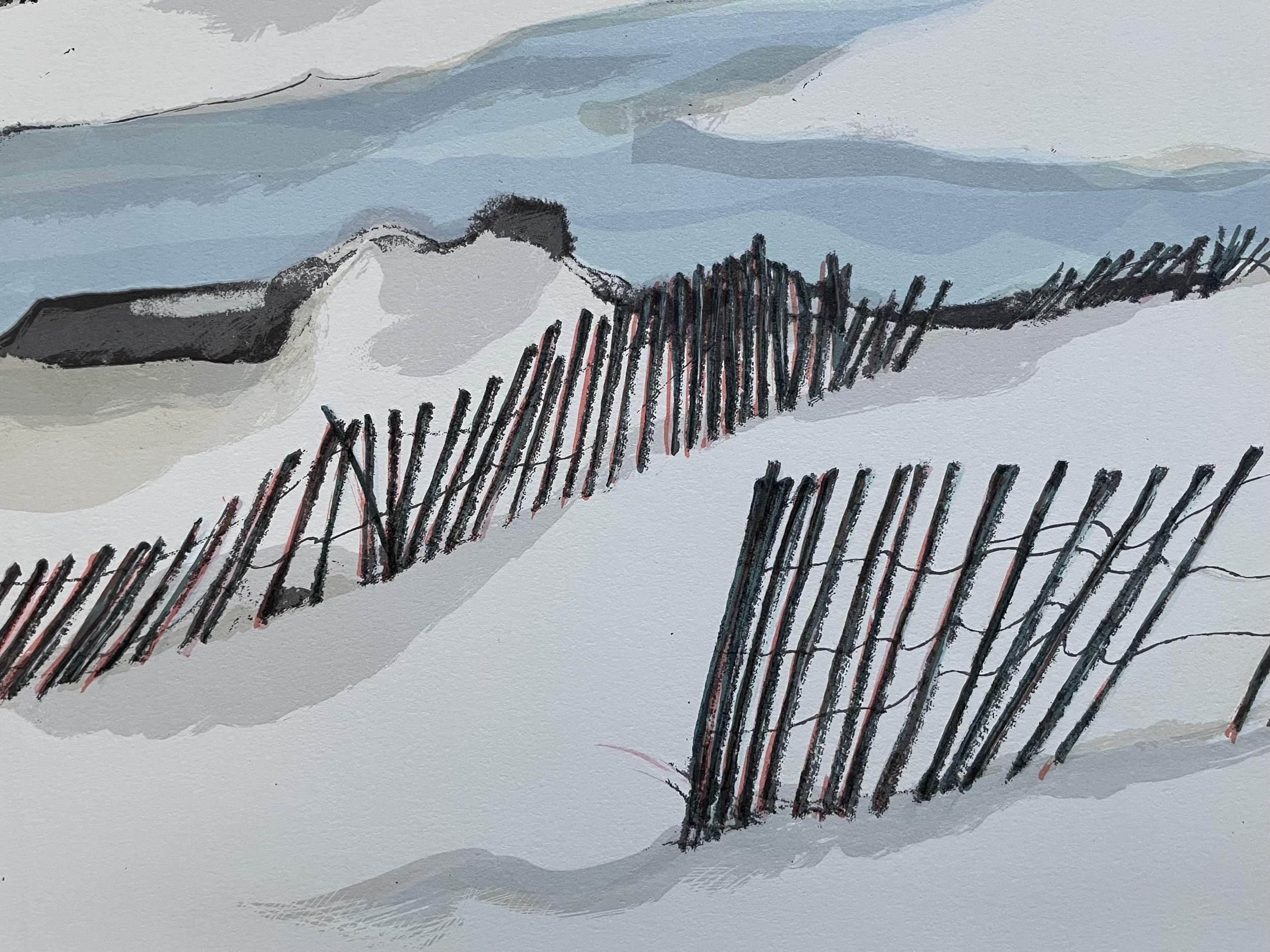
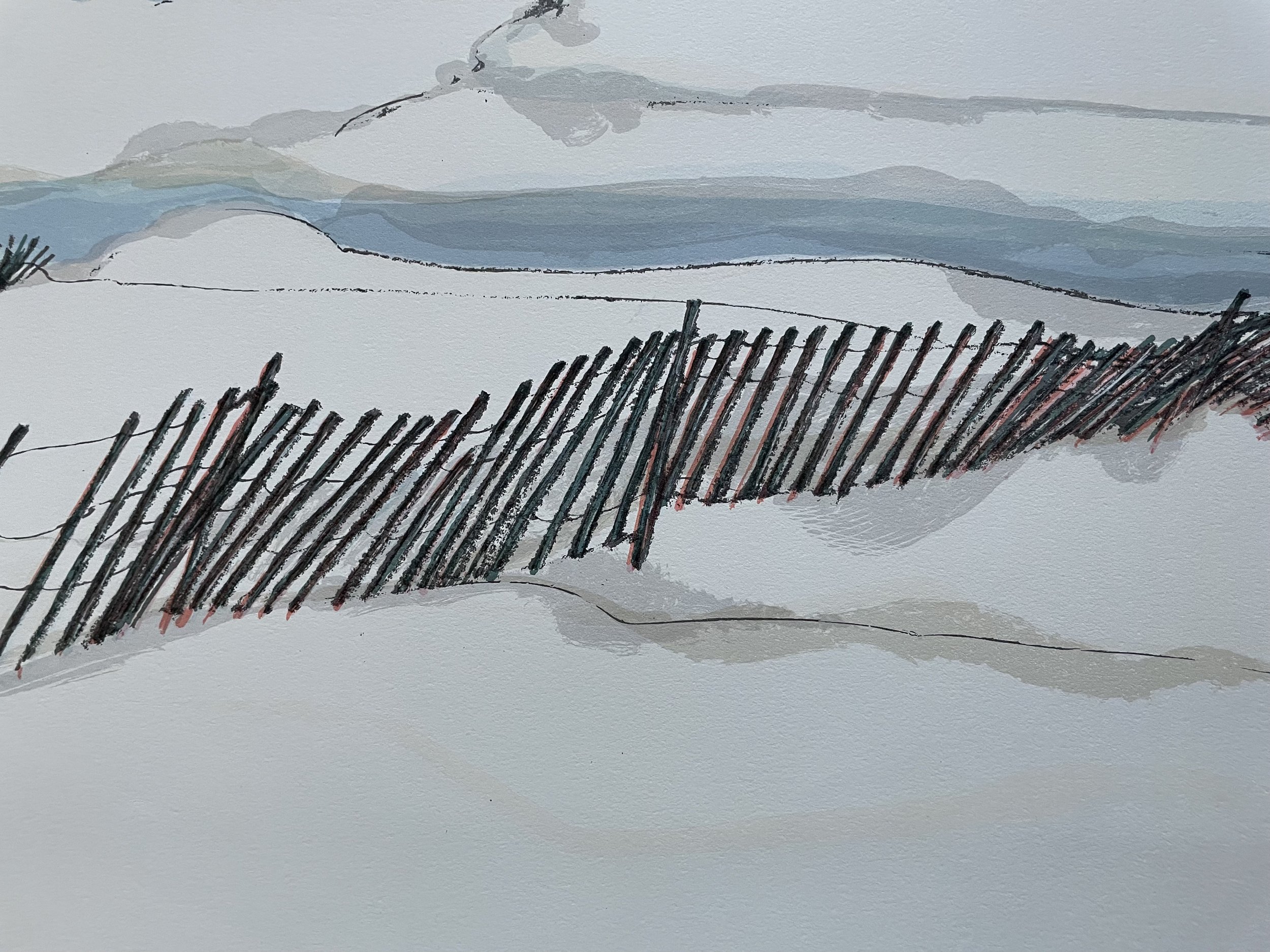
The Orange Bird, Gertrude Barrer (1921– ), c.1960s–1970s, color serigraph on paper, 36 × 26 in., signed lower right, edition 141/175.
Gertrude Barrer’s The Orange Bird is a striking mid-century modern figurative serigraph depicting an enigmatic gathering of stylized women in a dreamlike interior setting. Executed in layered tones of ochre, blue, olive, and charcoal, the work blends decorative abstraction with narrative symbolism—hallmarks of Barrer’s exploration of modern fresco aesthetics translated into printmaking. Signed and numbered from a limited edition of 175, this large-format print reflects the artist’s distinctive synthesis of Byzantine influence, modernist composition, and lyrical humanism.
Artwork Description
The Orange Bird presents a theatrical and contemplative scene populated by elongated female figures arranged around an ornate table within an architectural interior. Barrer employs a flattened spatial structure reminiscent of early modernist and Byzantine compositions, where figures appear both decorative and symbolic rather than strictly naturalistic.
At the center of the composition sits a woman in a striking orange garment whose presence anchors the visual rhythm of the image. Around her stand and sit several stylized figures rendered with elongated limbs and mask-like faces—an aesthetic that merges modernist abstraction with archaic figurative traditions. The title references the small bird perched near one of the figures, which functions almost like a narrative key within the otherwise mysterious tableau.
The color palette is particularly characteristic of Barrer’s work: layered blues, ochres, muted greens, and deep ink lines combine to create a textured surface that evokes the tactile qualities of fresco painting. The mottled background resembles aged plaster or stone, echoing the artist’s fascination with historic wall-painting traditions.
Although this work is a serigraph, its surface treatment intentionally mimics the stratified texture of fresco and plaster—techniques Barrer described in her own statements about mixing pigment into wet surfaces and building layers to achieve depth and luminosity.
Architectural arches and decorative elements frame the composition, reinforcing the sense of an interior sanctuary or imagined court. The figures appear absorbed in private contemplation, giving the image a timeless and almost mythological character.
The overall effect is both narrative and decorative: a poetic meditation on human presence, interior space, and symbolic storytelling rendered through modern printmaking techniques.
Signed “G. Barrer” in pencil at the lower right and numbered 141/175 at the lower left, this impression represents a limited edition example of the artist’s figurative graphic work produced during the height of her exhibition activity in the mid-20th century.
Artist Biography
Gertrude Barrer (b. 1921, New York City) is an American painter, printmaker, illustrator, ceramicist, and author whose work bridges modernist abstraction with figurative symbolism and decorative design traditions.
Born in New York City, Barrer pursued formal artistic training at the Art Students League, studying with Harry Sternberg and Will Barnet among other influential instructors. She later worked under the noted American painter Philip Guston while studying at the University of Iowa. These formative experiences exposed her to both modernist experimentation and rigorous academic discipline.
During the 1940s Barrer emerged within the New York avant-garde cultural scene as one of the founding editors of the literary and art magazine Iconograph, a publication that helped connect emerging writers and artists of the period. At the same time she began establishing herself as a practicing visual artist.
Barrer married painter and photographer Frank Russell, with whom she collaborated on several artistic projects, including ceramic painting works and exhibitions. Their partnership extended beyond visual art; both shared a deep interest in music and were accomplished pianists who performed the two-piano repertoire together.
Throughout the late 1940s and 1950s Barrer exhibited widely in galleries and museums across the United States. Her one-woman exhibitions included shows at Galerie Neuf in New York, Artists Gallery in New York, the Brooklyn Museum, the University of Maine, and the Sunken Meadow Life & Art Center on Long Island. Additional exhibitions were held at Zarick Galleries in Connecticut and in the influential art community of New Hope, Pennsylvania.
Her work was also included in important group exhibitions such as the Philadelphia Annual, the Brooklyn Museum International exhibition, the Whitney Museum Annual exhibitions, and the Chicago Art Institute Annual. In 1951 she was selected for the Kootz Gallery exhibition “Talent of 1951,” chosen by influential critics Meyer Schapiro and Clement Greenberg.
Barrer’s work has been shown at institutions including the New York University Loeb Center, Artists Equity exhibitions, the Woodstock Art Gallery, Hudson River Museum, Yonkers Museum, and Brown University, among many others. Her paintings and prints reside in numerous private collections and museum permanent collections.
Beyond painting and printmaking, Barrer also worked extensively in ceramic painting and architectural commissions. Among her notable projects was a ceramic mural installation in the lobby of “Picasso House” in New York City. Her ceramic work was featured in two House Beautiful issues highlighting “Houses of the Year.”
Barrer was also active as an illustrator, producing artwork for several children’s books. Her creative practice extended across multiple media including painting, fresco-inspired panels, ceramics, illustration, and printmaking.
Her artistic philosophy centered on the revival and reinterpretation of fresco traditions. Barrer modernized the ancient medium by mixing pigments into plaster surfaces and applying them with palette knives to create layered textures. She described her approach as building surfaces in layers that could be incised and glazed to produce subtle shifts in color and luminosity.
Many of her works begin as abstract compositions before evolving into semi-figurative imagery. She cited Byzantine, archaic, and modern influences in her work and sought to create images that conveyed elegance and beauty while also reflecting the complexities of the human condition.
Barrer’s art was also deeply intertwined with her social and political convictions. She was actively involved in early civil rights causes and strongly opposed the Vietnam War, believing that artists should engage with the moral and cultural issues of their time. These concerns informed both her writing and her visual work.
Despite the modernist currents around her, Barrer remained committed to imagination, mystery, and poetic narrative in art. She believed beauty and aesthetic experience were essential to human life and that art could offer moments of transcendence in a troubled world.
Her career represents an important strand of mid-20th-century American art where modernist experimentation, classical inspiration, and humanistic storytelling intersect.
Gertrude Barrer (b.1921)
The Orange Bird
Color serigraph on paper
Signed lower right; numbered 141/175 lower left
36 × 26 inches
Mid-20th century
Excellent impression with strong color.
Certificate of Authentication
Artwork: The Orange Bird
Artist: Gertrude Barrer (b. 1921)
Medium: Color serigraph on paper
Edition: 141/175
Dimensions: 36 × 26 inches
Signature: Hand signed lower right “G. Barrer”
This work is guaranteed to be an authentic limited edition print by Gertrude Barrer. Documentation and provenance confirm the print originated from Mitch Morse Gallery, a well-known publisher and distributor of original graphics.
Issued by:
Artfind Gallery
Washington, DC
Condition
Very good vintage condition. Paper is clean with strong color saturation. Minor handling marks consistent with age may be present but do not affect the image area. Unframed.
Provenance
Mitch Morse Gallery, New York / Europe
Artfind Gallery, Washington DC (current owner)
All works acquired by Mitch Morse Gallery through sources in New York, the United States, and Europe.
Citations
Artist biography sheets and exhibition list (Merrill Chase Artists’ Biographies archive)
Artist statements on fresco technique (Gertrude Barrer personal notes)
Miriam Schlicht, “Special Sort of Vision,” Roxbury artist profile newspaper article
Exhibition records and listings included in provided archival materials
The Orange Bird, Gertrude Barrer (1921– ), c.1960s–1970s, color serigraph on paper, 36 × 26 in., signed lower right, edition 141/175.
Gertrude Barrer’s The Orange Bird is a striking mid-century modern figurative serigraph depicting an enigmatic gathering of stylized women in a dreamlike interior setting. Executed in layered tones of ochre, blue, olive, and charcoal, the work blends decorative abstraction with narrative symbolism—hallmarks of Barrer’s exploration of modern fresco aesthetics translated into printmaking. Signed and numbered from a limited edition of 175, this large-format print reflects the artist’s distinctive synthesis of Byzantine influence, modernist composition, and lyrical humanism.
Artwork Description
The Orange Bird presents a theatrical and contemplative scene populated by elongated female figures arranged around an ornate table within an architectural interior. Barrer employs a flattened spatial structure reminiscent of early modernist and Byzantine compositions, where figures appear both decorative and symbolic rather than strictly naturalistic.
At the center of the composition sits a woman in a striking orange garment whose presence anchors the visual rhythm of the image. Around her stand and sit several stylized figures rendered with elongated limbs and mask-like faces—an aesthetic that merges modernist abstraction with archaic figurative traditions. The title references the small bird perched near one of the figures, which functions almost like a narrative key within the otherwise mysterious tableau.
The color palette is particularly characteristic of Barrer’s work: layered blues, ochres, muted greens, and deep ink lines combine to create a textured surface that evokes the tactile qualities of fresco painting. The mottled background resembles aged plaster or stone, echoing the artist’s fascination with historic wall-painting traditions.
Although this work is a serigraph, its surface treatment intentionally mimics the stratified texture of fresco and plaster—techniques Barrer described in her own statements about mixing pigment into wet surfaces and building layers to achieve depth and luminosity.
Architectural arches and decorative elements frame the composition, reinforcing the sense of an interior sanctuary or imagined court. The figures appear absorbed in private contemplation, giving the image a timeless and almost mythological character.
The overall effect is both narrative and decorative: a poetic meditation on human presence, interior space, and symbolic storytelling rendered through modern printmaking techniques.
Signed “G. Barrer” in pencil at the lower right and numbered 141/175 at the lower left, this impression represents a limited edition example of the artist’s figurative graphic work produced during the height of her exhibition activity in the mid-20th century.
Artist Biography
Gertrude Barrer (b. 1921, New York City) is an American painter, printmaker, illustrator, ceramicist, and author whose work bridges modernist abstraction with figurative symbolism and decorative design traditions.
Born in New York City, Barrer pursued formal artistic training at the Art Students League, studying with Harry Sternberg and Will Barnet among other influential instructors. She later worked under the noted American painter Philip Guston while studying at the University of Iowa. These formative experiences exposed her to both modernist experimentation and rigorous academic discipline.
During the 1940s Barrer emerged within the New York avant-garde cultural scene as one of the founding editors of the literary and art magazine Iconograph, a publication that helped connect emerging writers and artists of the period. At the same time she began establishing herself as a practicing visual artist.
Barrer married painter and photographer Frank Russell, with whom she collaborated on several artistic projects, including ceramic painting works and exhibitions. Their partnership extended beyond visual art; both shared a deep interest in music and were accomplished pianists who performed the two-piano repertoire together.
Throughout the late 1940s and 1950s Barrer exhibited widely in galleries and museums across the United States. Her one-woman exhibitions included shows at Galerie Neuf in New York, Artists Gallery in New York, the Brooklyn Museum, the University of Maine, and the Sunken Meadow Life & Art Center on Long Island. Additional exhibitions were held at Zarick Galleries in Connecticut and in the influential art community of New Hope, Pennsylvania.
Her work was also included in important group exhibitions such as the Philadelphia Annual, the Brooklyn Museum International exhibition, the Whitney Museum Annual exhibitions, and the Chicago Art Institute Annual. In 1951 she was selected for the Kootz Gallery exhibition “Talent of 1951,” chosen by influential critics Meyer Schapiro and Clement Greenberg.
Barrer’s work has been shown at institutions including the New York University Loeb Center, Artists Equity exhibitions, the Woodstock Art Gallery, Hudson River Museum, Yonkers Museum, and Brown University, among many others. Her paintings and prints reside in numerous private collections and museum permanent collections.
Beyond painting and printmaking, Barrer also worked extensively in ceramic painting and architectural commissions. Among her notable projects was a ceramic mural installation in the lobby of “Picasso House” in New York City. Her ceramic work was featured in two House Beautiful issues highlighting “Houses of the Year.”
Barrer was also active as an illustrator, producing artwork for several children’s books. Her creative practice extended across multiple media including painting, fresco-inspired panels, ceramics, illustration, and printmaking.
Her artistic philosophy centered on the revival and reinterpretation of fresco traditions. Barrer modernized the ancient medium by mixing pigments into plaster surfaces and applying them with palette knives to create layered textures. She described her approach as building surfaces in layers that could be incised and glazed to produce subtle shifts in color and luminosity.
Many of her works begin as abstract compositions before evolving into semi-figurative imagery. She cited Byzantine, archaic, and modern influences in her work and sought to create images that conveyed elegance and beauty while also reflecting the complexities of the human condition.
Barrer’s art was also deeply intertwined with her social and political convictions. She was actively involved in early civil rights causes and strongly opposed the Vietnam War, believing that artists should engage with the moral and cultural issues of their time. These concerns informed both her writing and her visual work.
Despite the modernist currents around her, Barrer remained committed to imagination, mystery, and poetic narrative in art. She believed beauty and aesthetic experience were essential to human life and that art could offer moments of transcendence in a troubled world.
Her career represents an important strand of mid-20th-century American art where modernist experimentation, classical inspiration, and humanistic storytelling intersect.
Gertrude Barrer (b.1921)
The Orange Bird
Color serigraph on paper
Signed lower right; numbered 141/175 lower left
36 × 26 inches
Mid-20th century
Excellent impression with strong color.
Certificate of Authentication
Artwork: The Orange Bird
Artist: Gertrude Barrer (b. 1921)
Medium: Color serigraph on paper
Edition: 141/175
Dimensions: 36 × 26 inches
Signature: Hand signed lower right “G. Barrer”
This work is guaranteed to be an authentic limited edition print by Gertrude Barrer. Documentation and provenance confirm the print originated from Mitch Morse Gallery, a well-known publisher and distributor of original graphics.
Issued by:
Artfind Gallery
Washington, DC
Condition
Very good vintage condition. Paper is clean with strong color saturation. Minor handling marks consistent with age may be present but do not affect the image area. Unframed.
Provenance
Mitch Morse Gallery, New York / Europe
Artfind Gallery, Washington DC (current owner)
All works acquired by Mitch Morse Gallery through sources in New York, the United States, and Europe.
Citations
Artist biography sheets and exhibition list (Merrill Chase Artists’ Biographies archive)
Artist statements on fresco technique (Gertrude Barrer personal notes)
Miriam Schlicht, “Special Sort of Vision,” Roxbury artist profile newspaper article
Exhibition records and listings included in provided archival materials
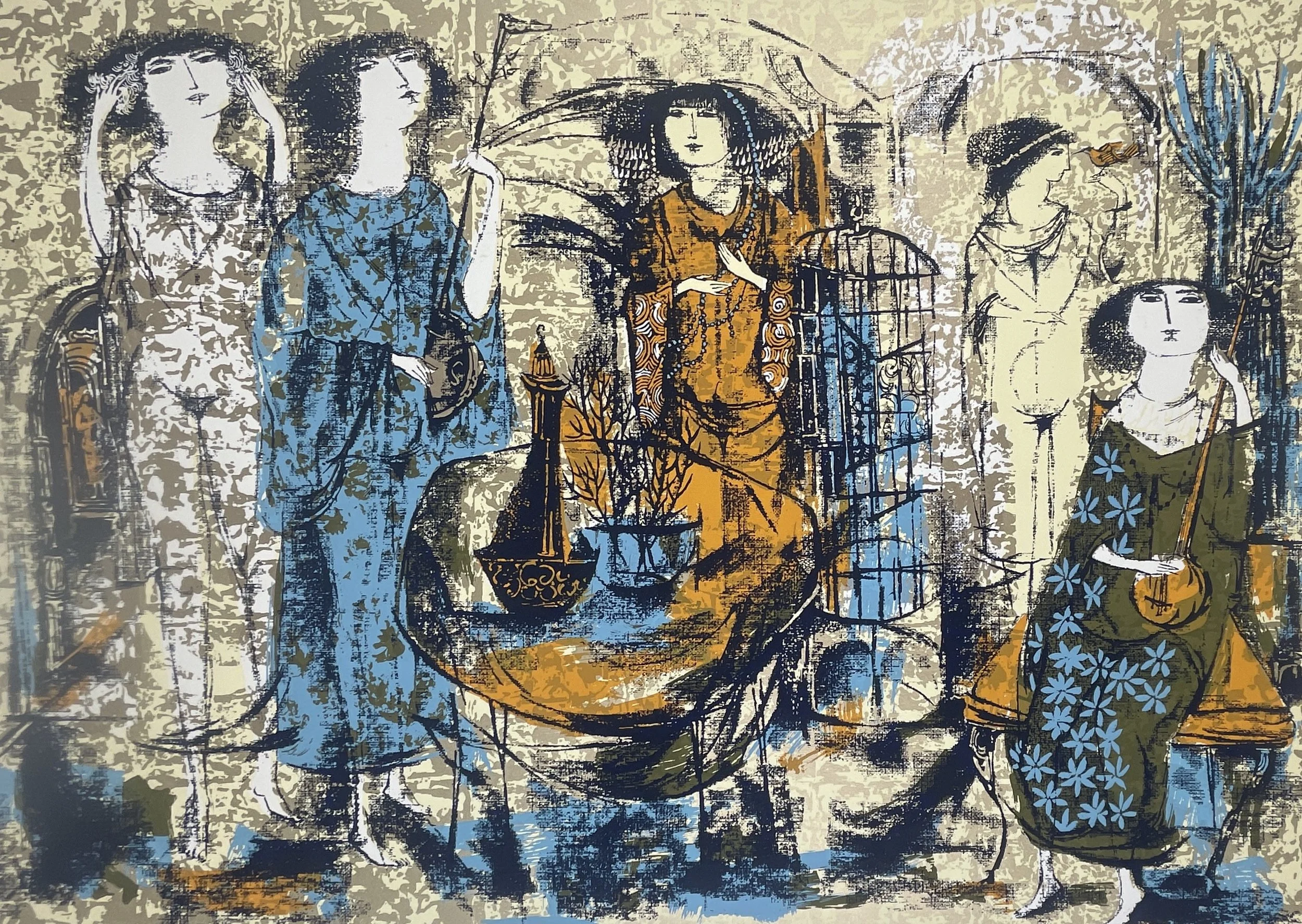 Image 1 of 7
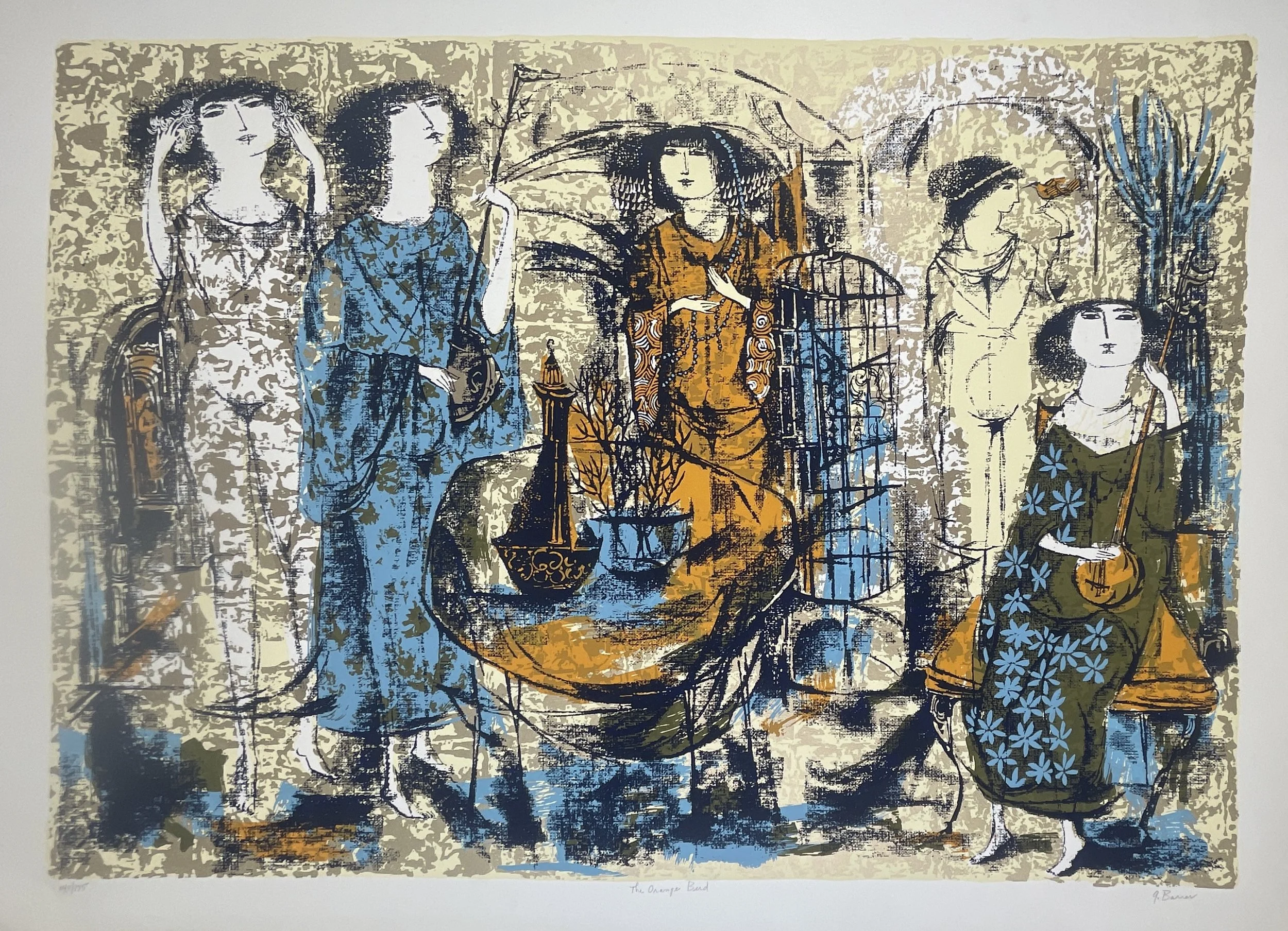 Image 2 of 7
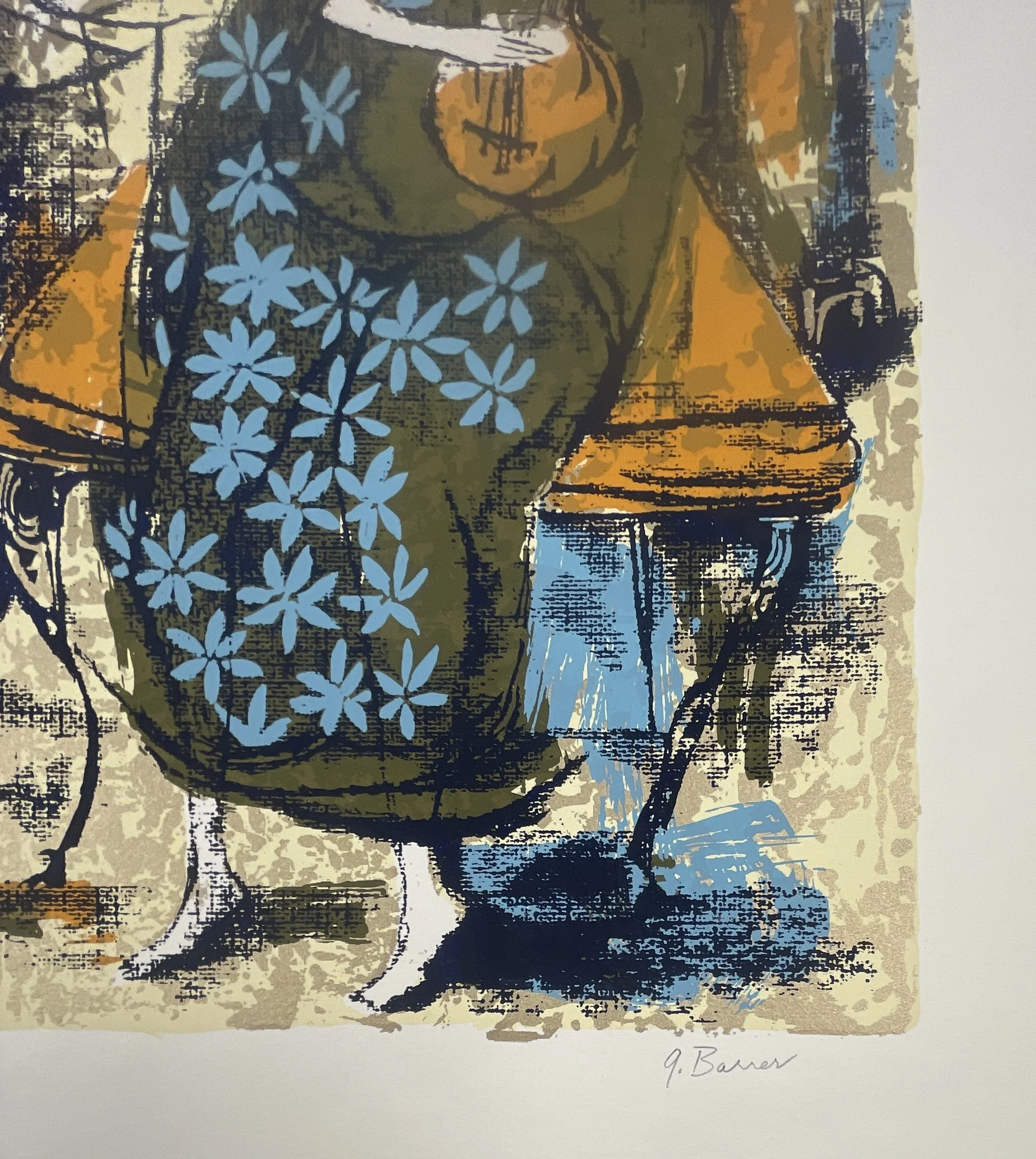 Image 3 of 7
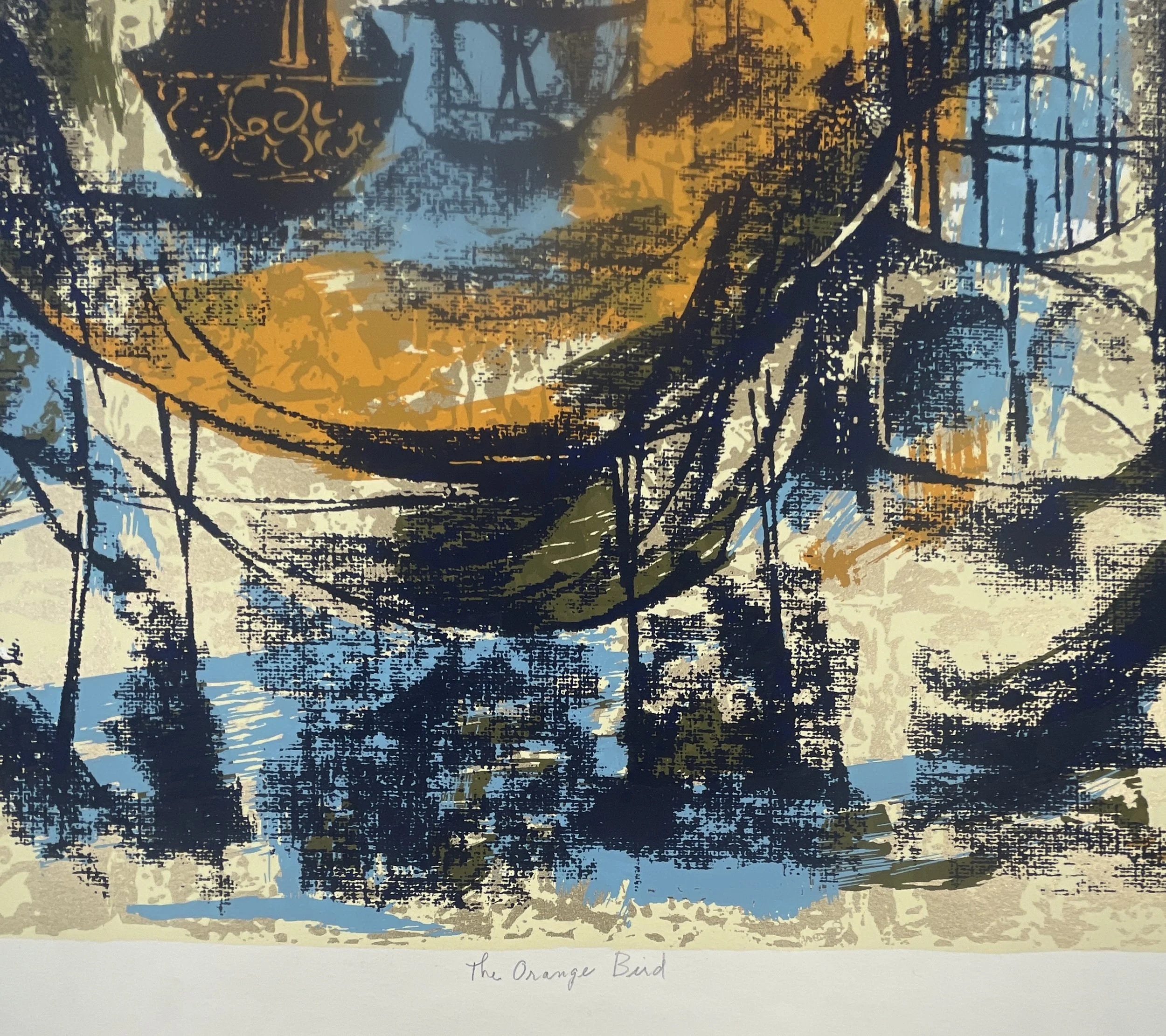 Image 4 of 7
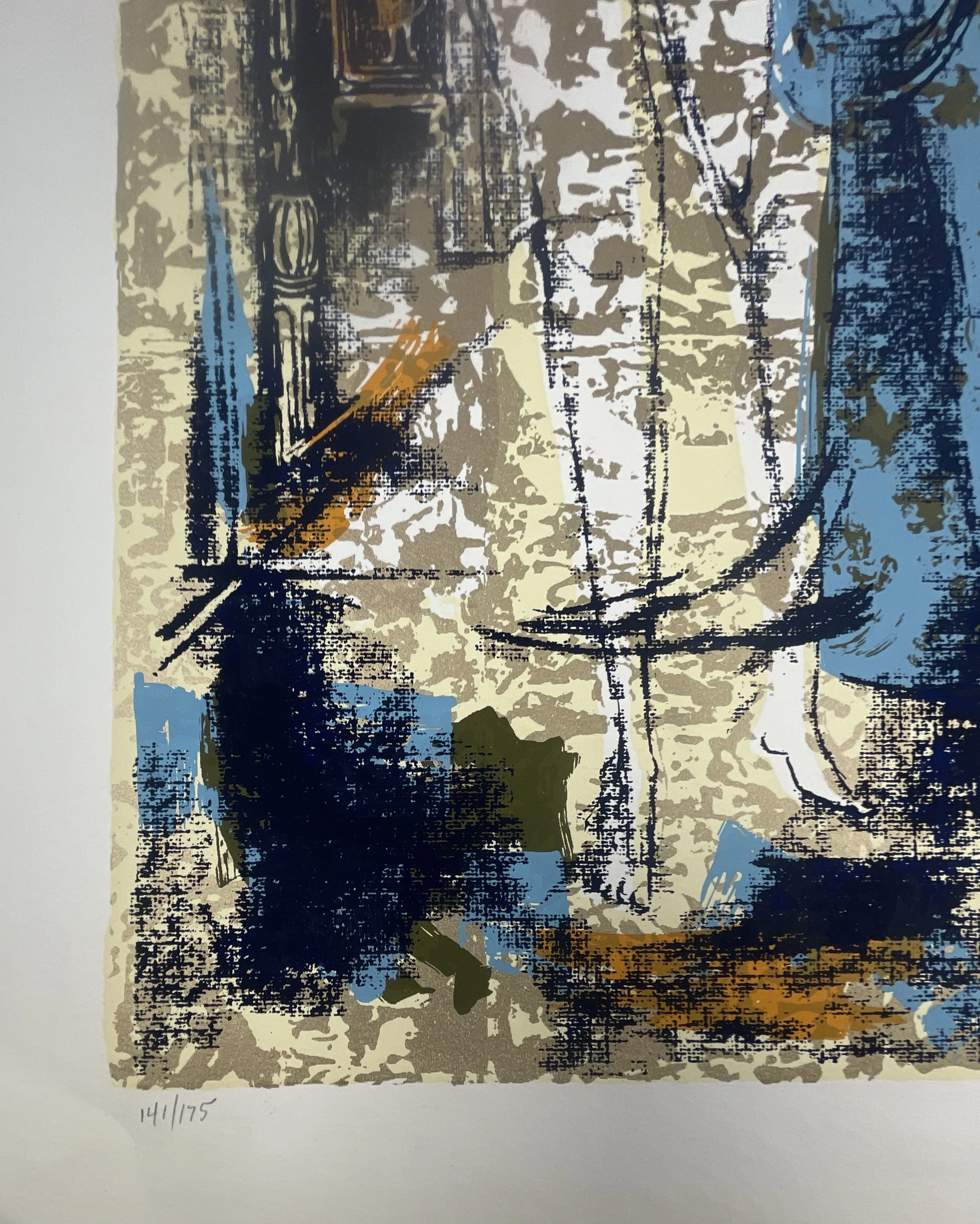 Image 5 of 7
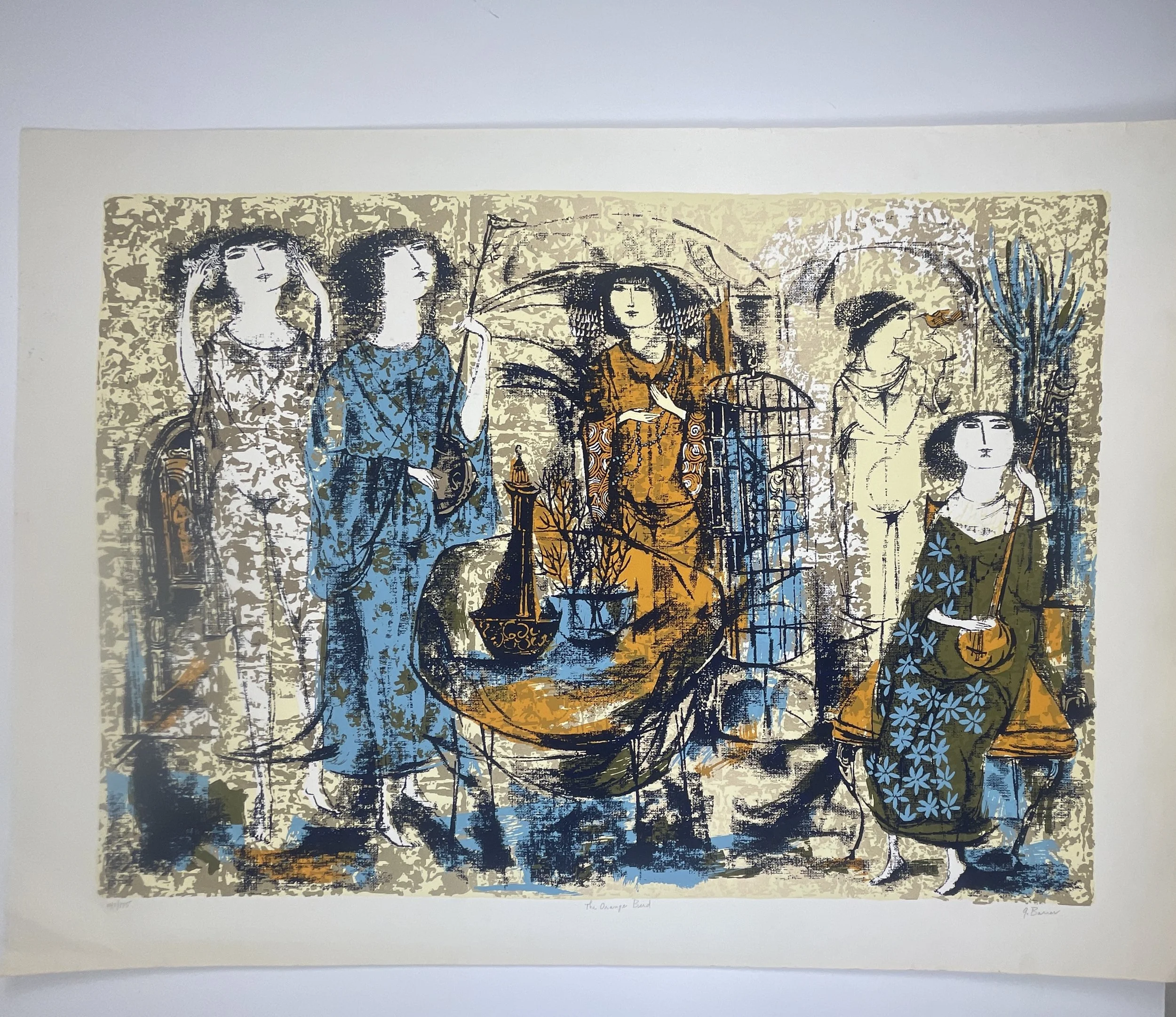 Image 6 of 7
 Image 7 of 7