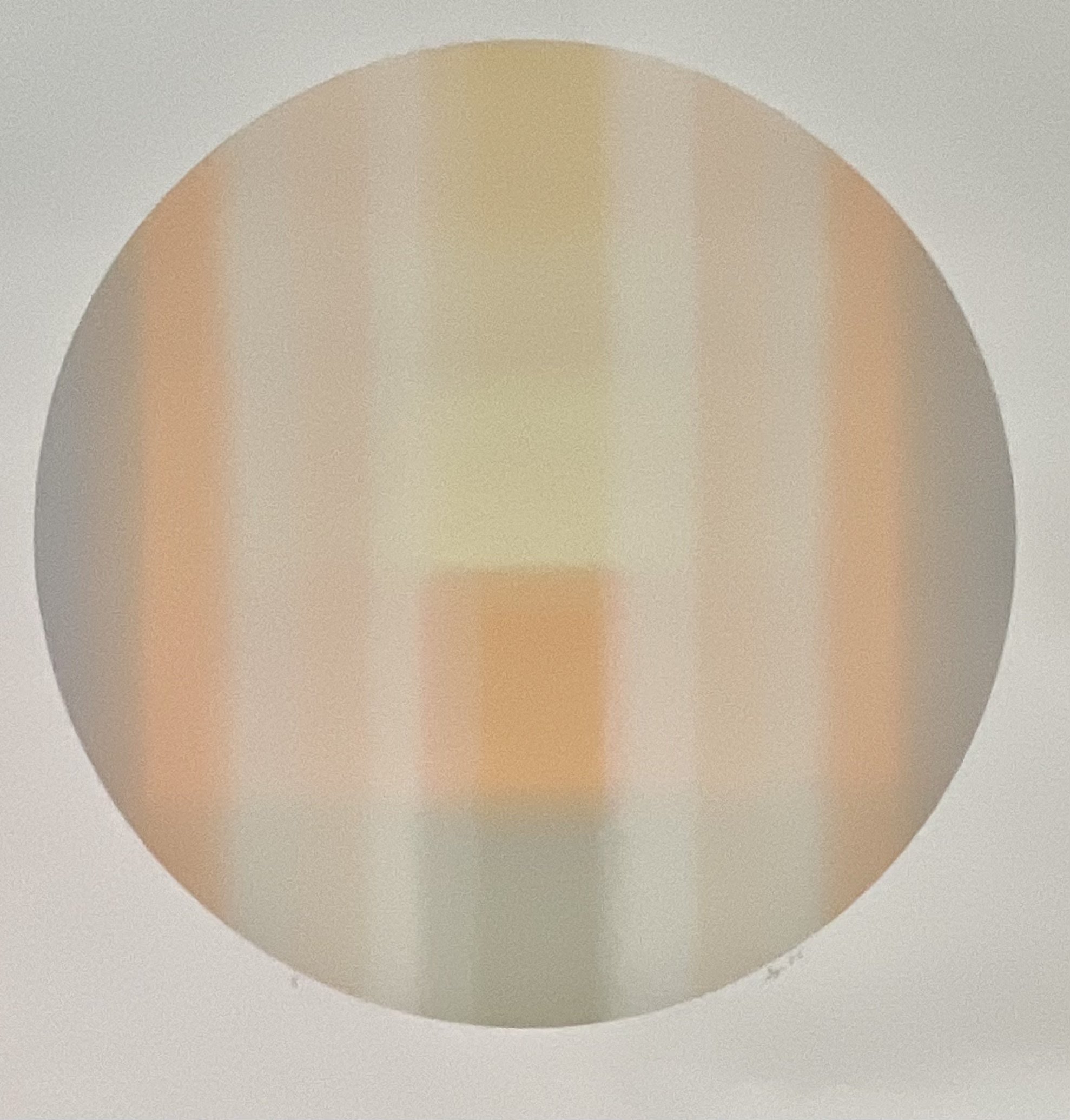
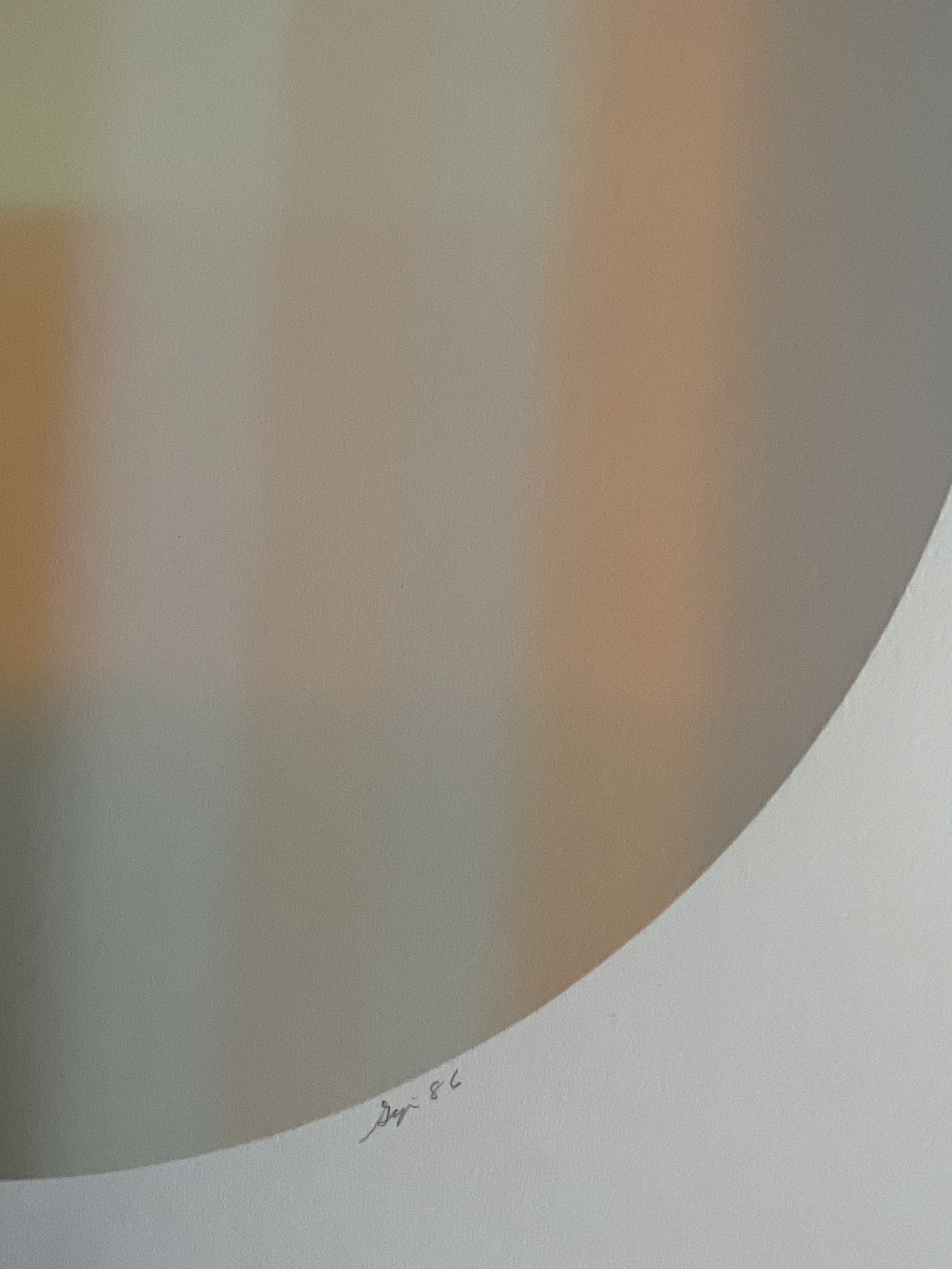
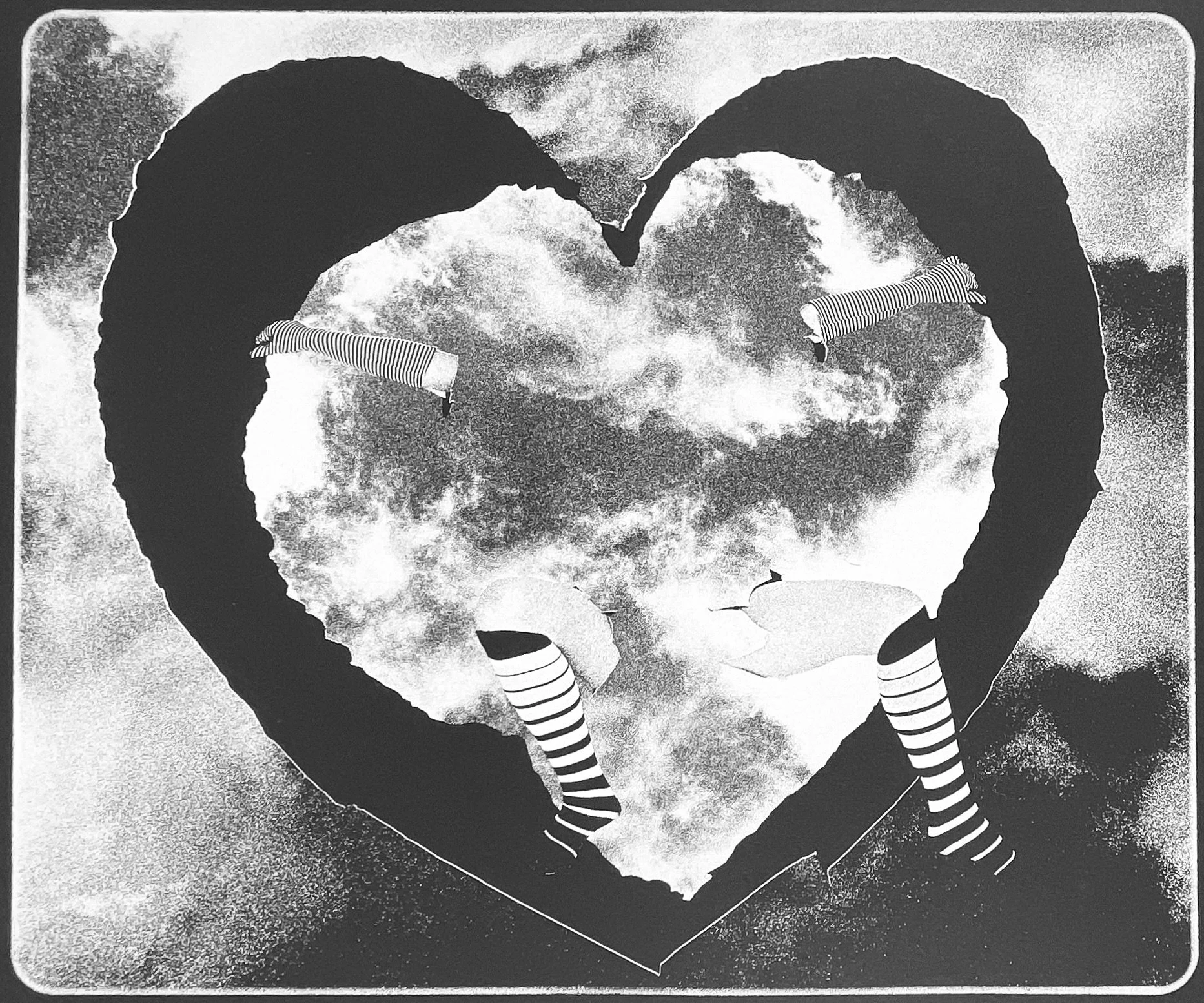
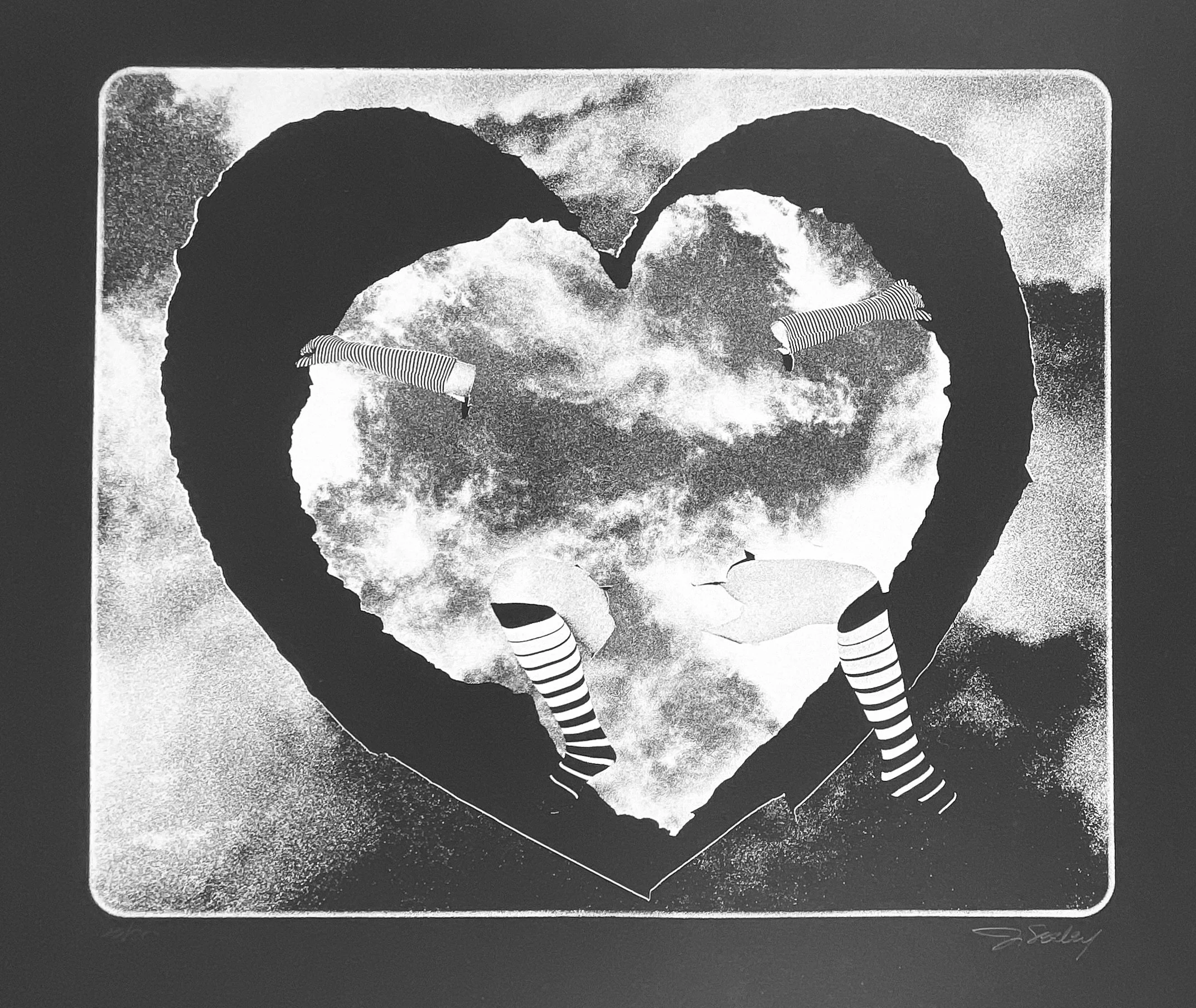
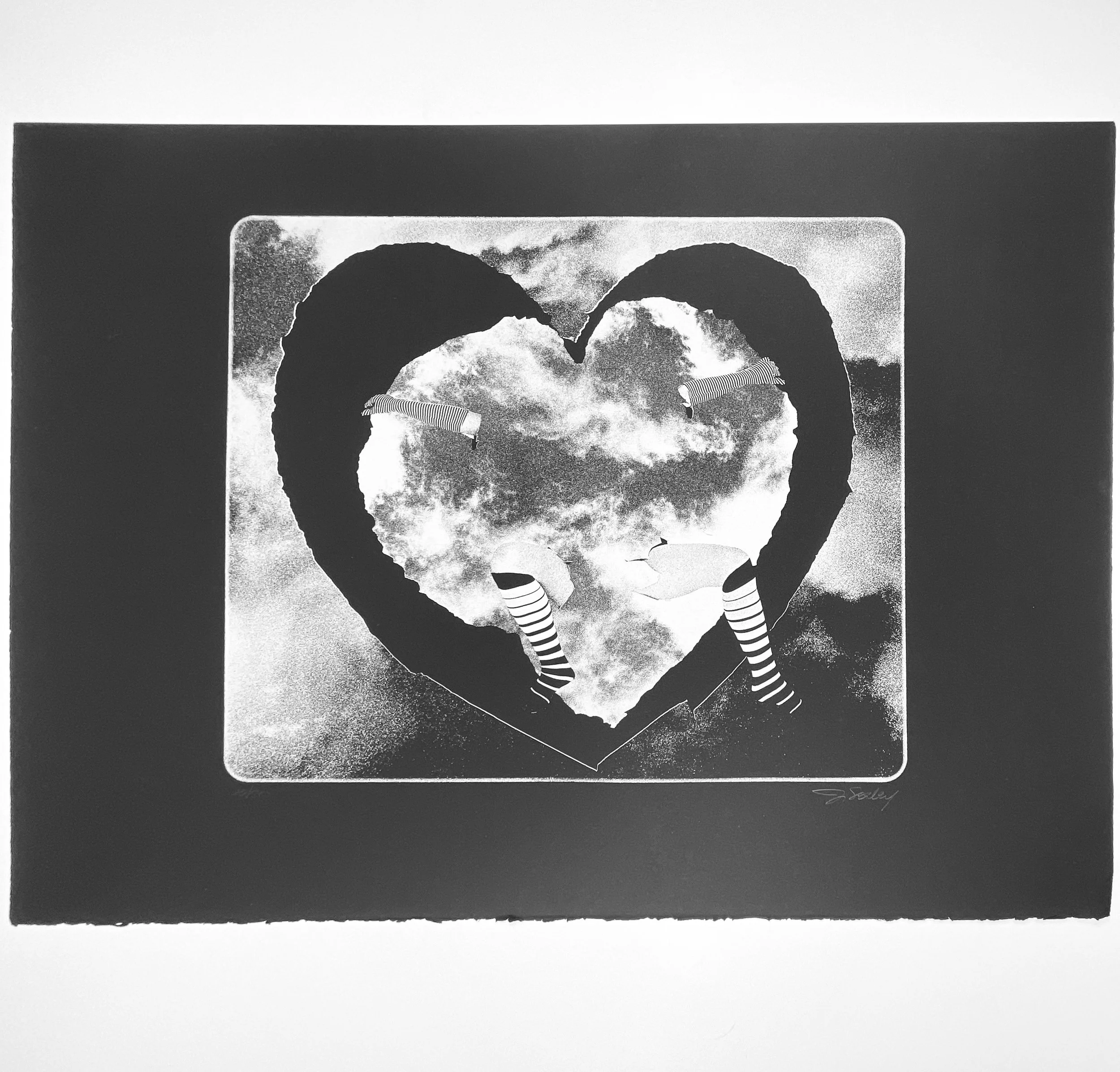
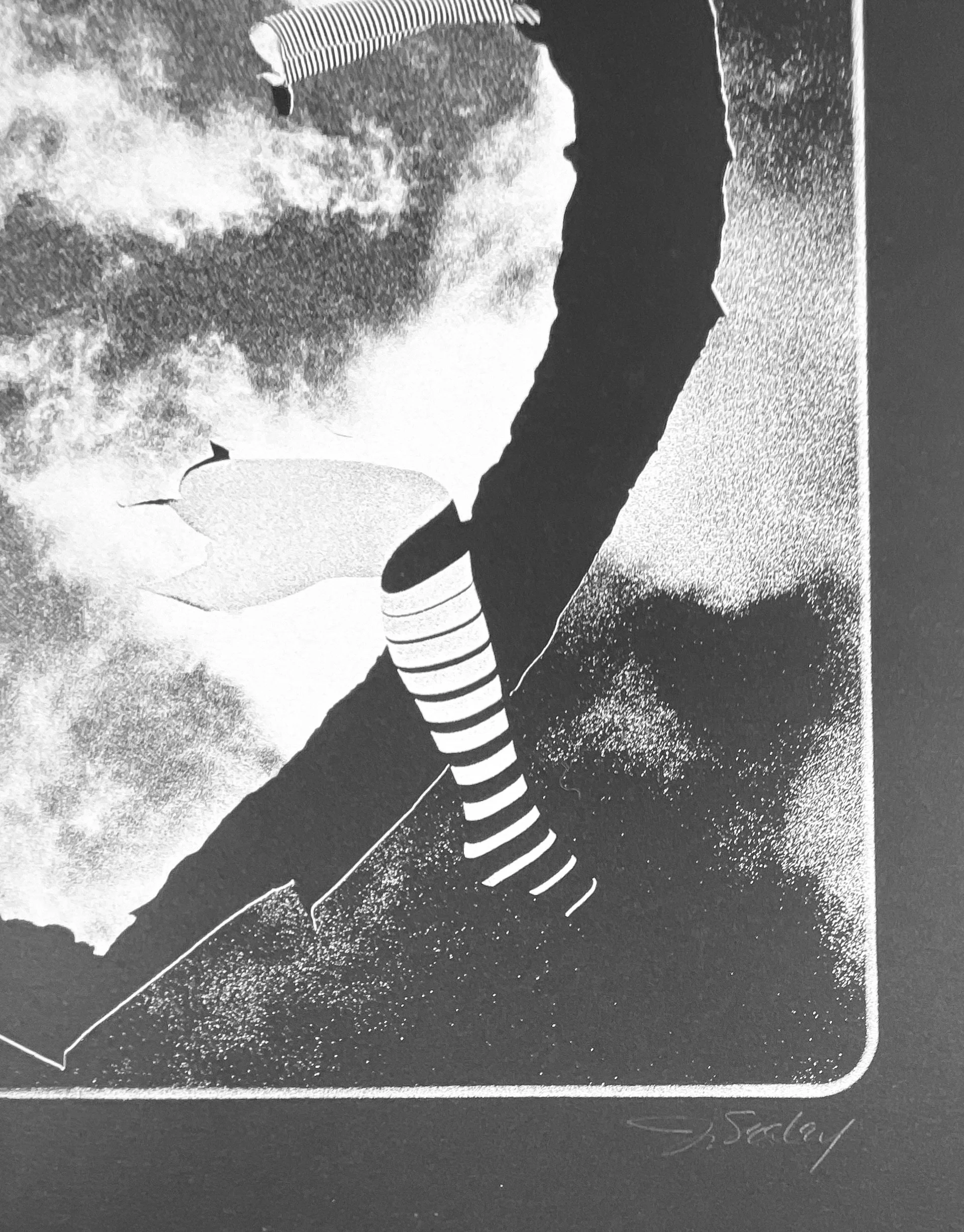
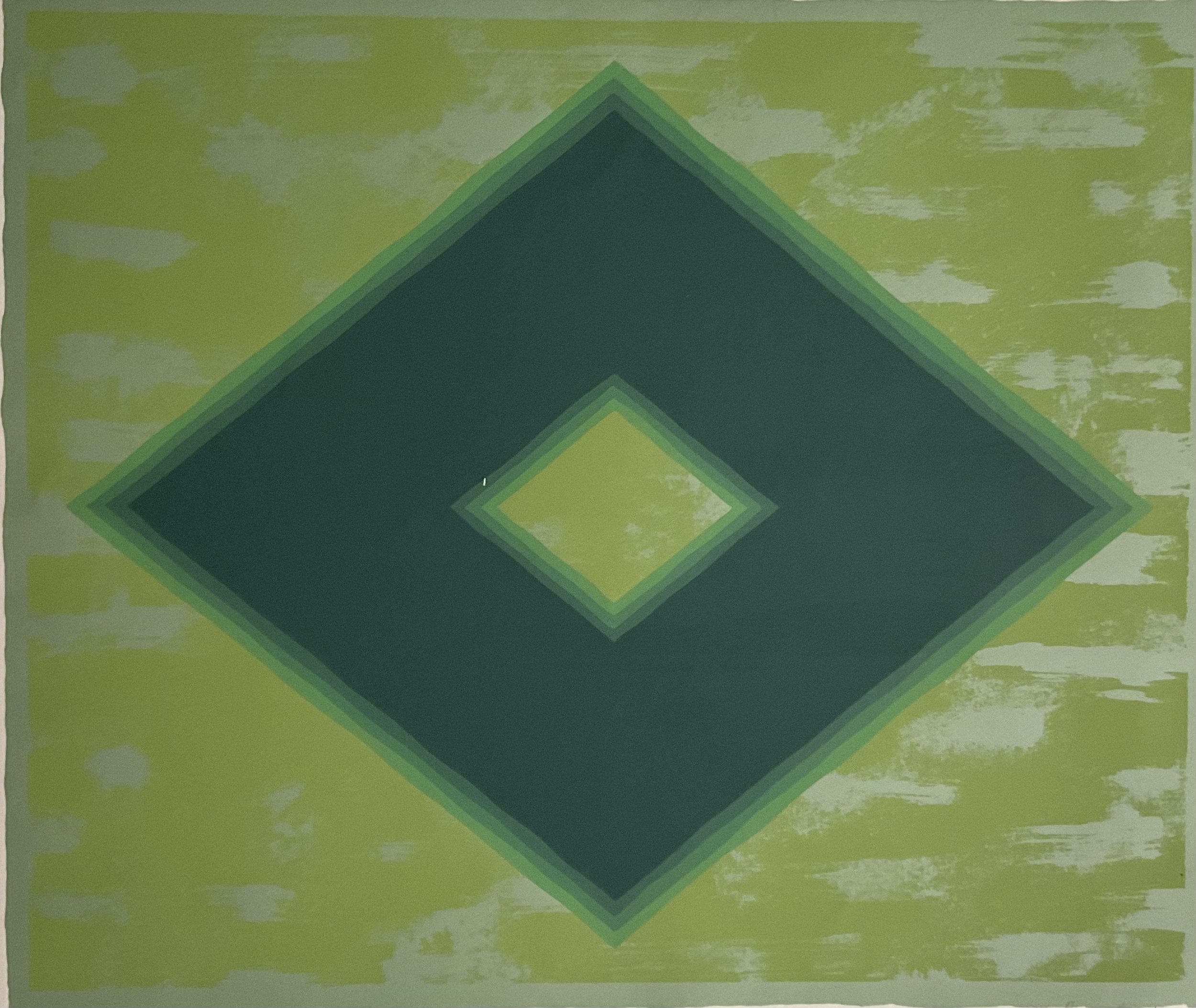
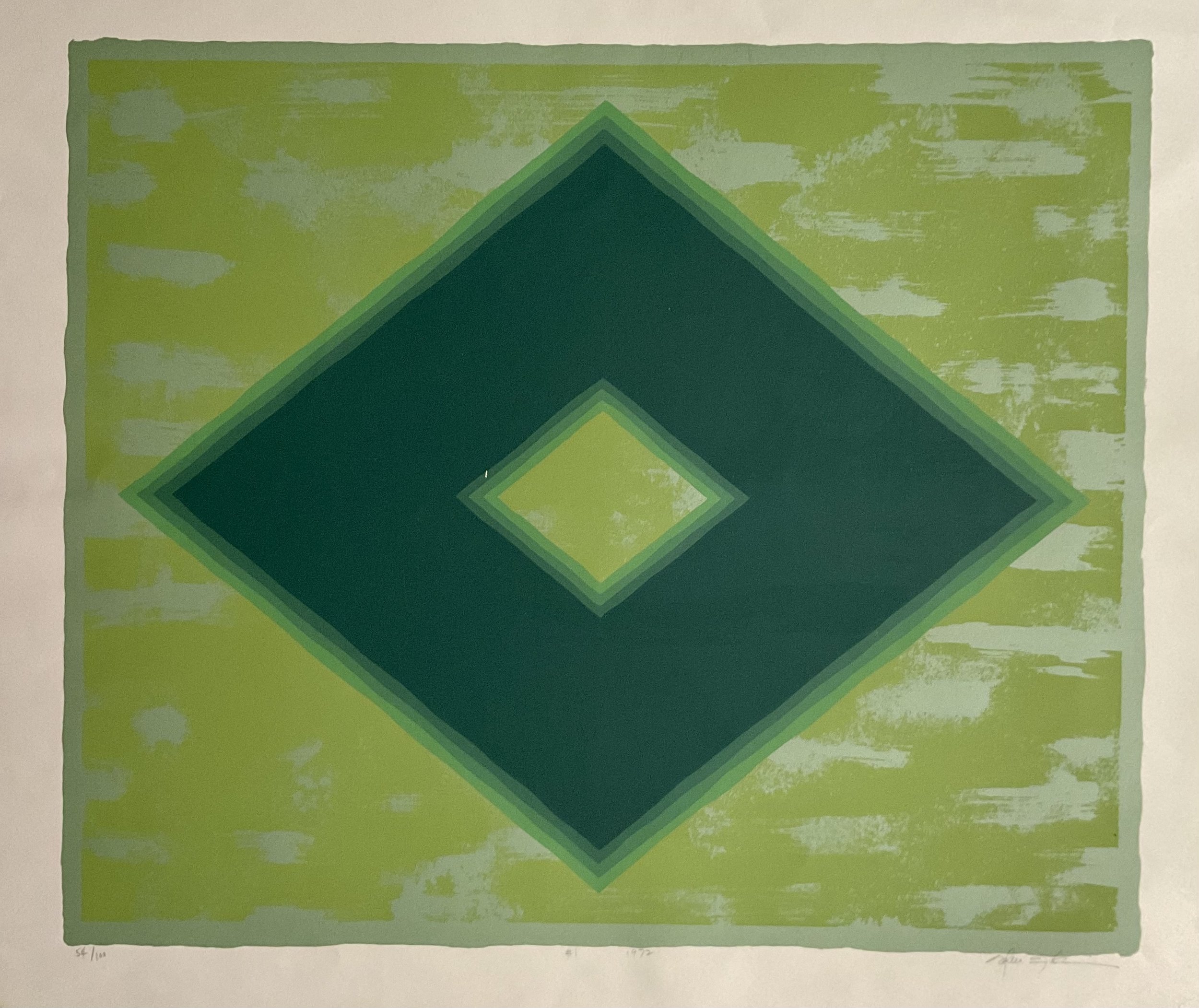
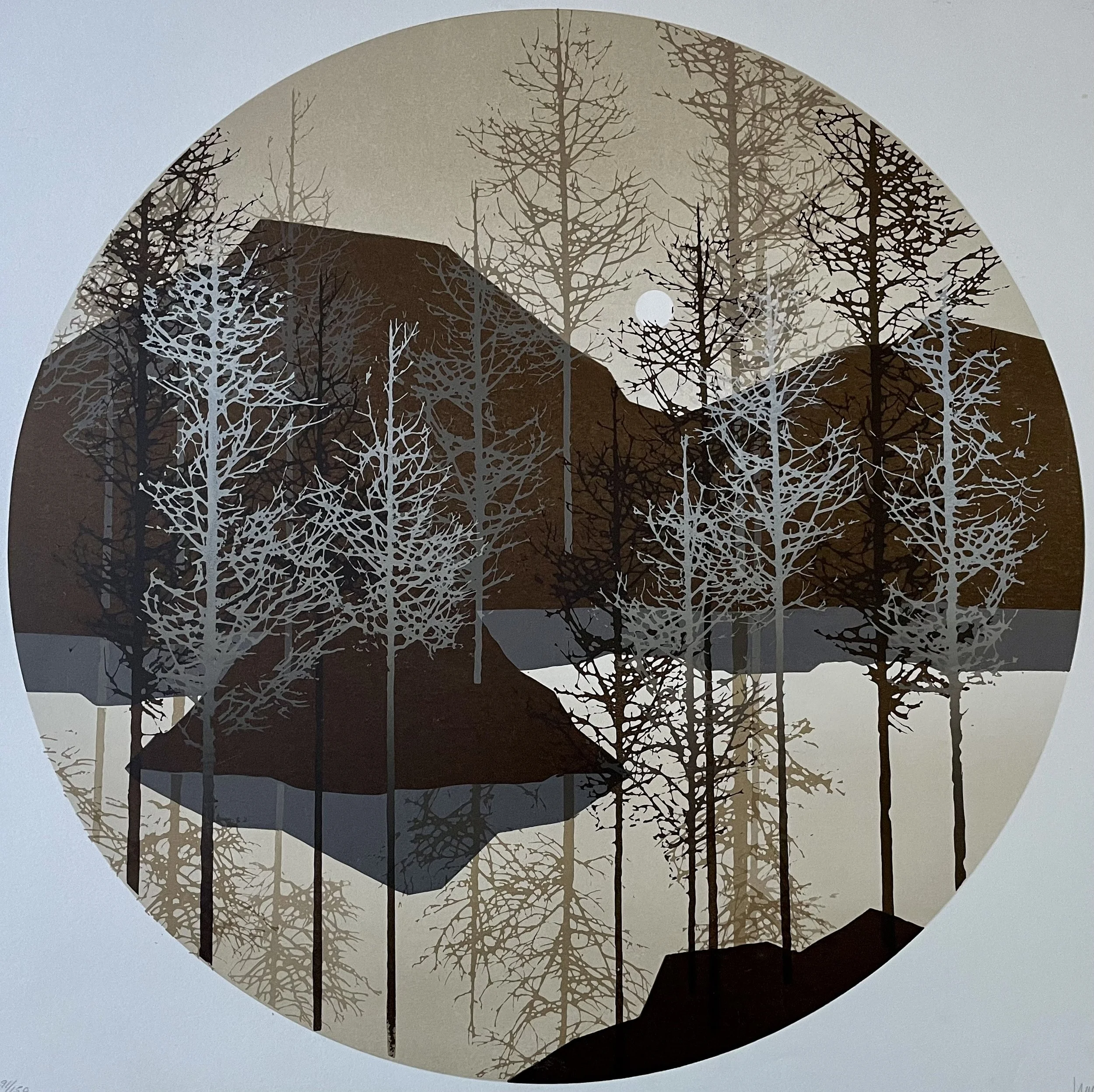
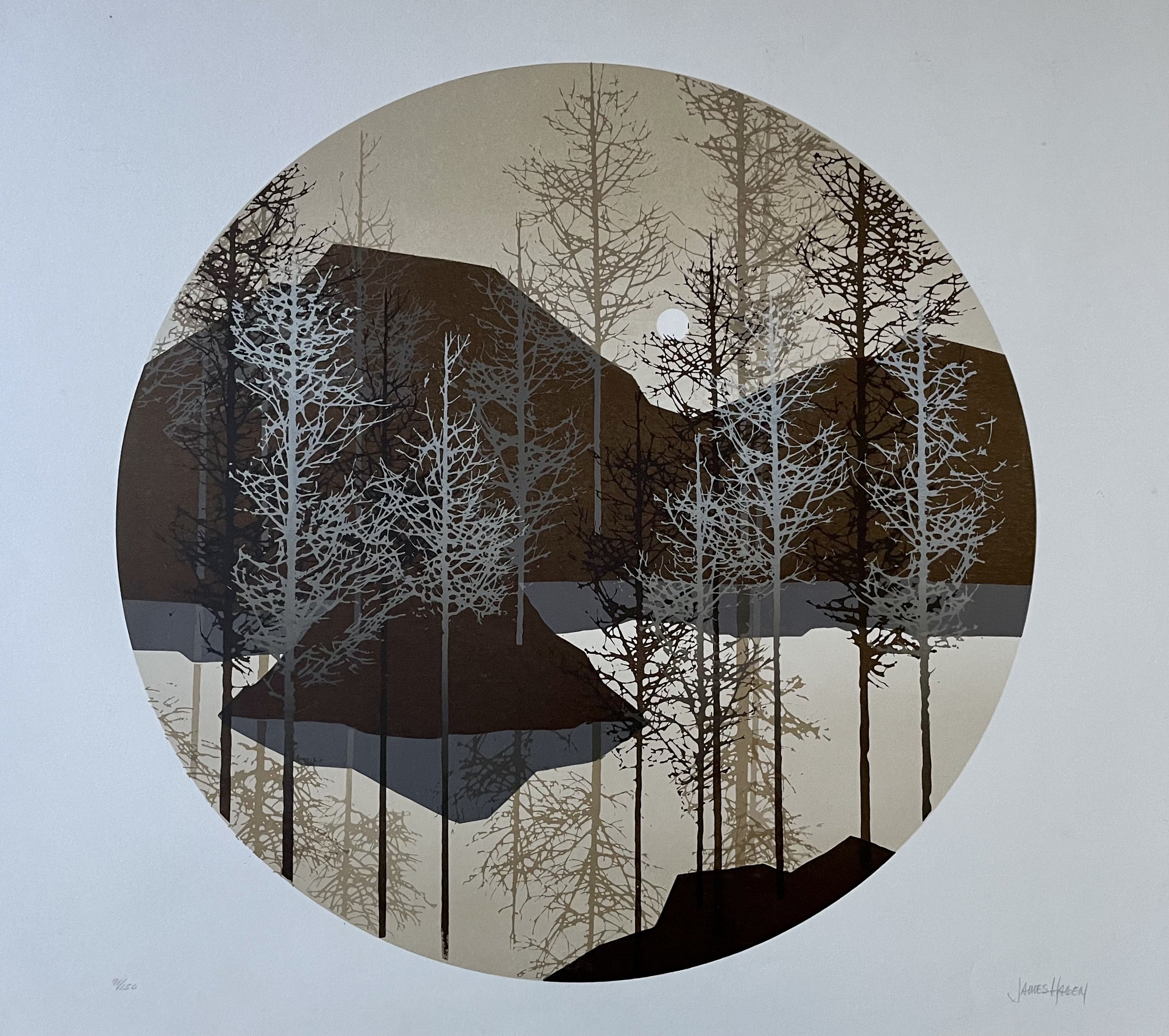
The Prime of Josephine, Antonio del Moral (b. 1941), c.1970s, serigraph on paper, 22 × 30 in., signed lower right, Artist’s Proof (A/P).
A striking modernist serigraph by Cuban-born artist Antonio del Moral depicting a mysterious female figure emerging from lush tropical foliage and butterflies, rendered with bold flat color and strong graphic line. The Prime of Josephineexemplifies the artist’s signature style—decorative, playful, and highly structured—blending botanical forms with figurative symbolism in a visually captivating composition.
Artwork Description
The Prime of Josephine is a vivid graphic composition in which a pale female visage emerges from a dense arrangement of stylized botanical forms. The subject appears partially concealed within layered foliage—broad tropical leaves rendered in graduated tones of emerald, olive, teal, and chartreuse. Two butterflies animate the composition, their wings patterned in black, gold, and crimson, introducing movement and symbolic transformation within the otherwise structured arrangement.
Executed as a serigraph (screenprint), the work relies on flat, opaque color fields outlined with strong linear contours. This technique produces the crisp edges and saturated hues that characterize the piece. The palette is carefully orchestrated: cool greens dominate the composition while accents of yellow and red provide rhythmic visual punctuation. Vertical stems create an architectural structure behind the figure, almost like columns or decorative screens, framing the central face.
The title suggests an allegorical or poetic interpretation. “Josephine” may reference an archetypal feminine figure—possibly evoking Josephine de Beauharnais, Napoleon’s empress, who was famously associated with botanical gardens and exotic plants. Within this context the composition can be read as a celebration of feminine beauty, growth, and transformation. The butterflies reinforce themes of metamorphosis and vitality.
Del Moral’s graphic language—flat planes, ornamental foliage, and precise contour lines—places the work within the decorative modernism and graphic figuration popular in the late 1960s and 1970s. It echoes elements of Art Nouveau botanical stylization while simultaneously aligning with the bold color strategies of Pop-era printmaking.
This impression is marked A/P (Artist’s Proof), indicating it was printed outside the numbered edition and reserved for the artist or publisher. Such proofs are often considered particularly desirable among collectors because they precede the standard edition and sometimes reflect early or preferred impressions.
Artist Biography
Antonio del Moral (born August 30, 1941, Havana, Cuba) is a Cuban-born American painter and printmaker whose work is recognized for its bold linear patterns, flat color structures, and decorative interpretation of figurative and botanical subjects.
Del Moral began his formal artistic training in Havana at the prestigious San Alejandro Academy of Art, one of the oldest and most influential art institutions in Latin America. There he studied under the guidance of artist Fe de Rosas, receiving rigorous instruction in classical drawing and painting.
In 1962, during a period of political upheaval in Cuba, del Moral emigrated to the United States and settled in Washington, D.C. The move marked a significant transition in his artistic career. He continued his studies at the Corcoran School of Art, where he trained in drawing and painting under prominent instructors including Schieffo Still and Professor Archer—one of the school’s most senior faculty members and an admirer of the Flemish master Peter Paul Rubens. This academic environment reinforced del Moral’s understanding of classical structure and composition.
Seeking further refinement, he enrolled at American University in Washington, D.C., where he pursued advanced coursework in sculpture, drawing, and painting. Under the instruction of Robert D’Arista and Ben L. Summerford, two teachers he later described as particularly influential, del Moral developed a stronger command of compositional design and color harmony.
Throughout the late 1960s and 1970s del Moral exhibited extensively in Washington, D.C. and beyond. His work appeared in exhibitions and galleries including Channel Art Gallery (Washington, D.C.), the Open Art Exhibit on the Ellipse in Washington, American University exhibitions, the Dupont Theater Lobby gallery space, the American Art League in Washington, and exhibitions sponsored by British Petroleum Inc. in the city. His work was also included in the International Art Exhibit at the Martin Luther King Jr. Memorial Library in Washington.
Beyond Washington, del Moral’s work reached audiences in Miami and New York. Exhibitions included Brickell Gallery in Miami, the Metropolitan Museum & Art Center group show in Miami, the Museum of Science in Miami, and presentations at Nena’s Choice Gallery located within Bergdorf Goodman in New York—an important retail and cultural venue that introduced many emerging artists to collectors during the period.
Critically, del Moral’s artistic identity developed around a distinctive graphic approach. His compositions are typically representational yet highly stylized. They feature flat planes of color, strong linear patterning, and carefully balanced contrasts between subject and background. This stylistic language allowed him to merge decorative modernism with figurative imagery.
During the printmaking boom of the late twentieth century, artists like del Moral increasingly turned to serigraphy as a medium capable of translating bold color and graphic precision into editioned artworks accessible to collectors. His prints frequently depict botanical environments, figures, or symbolic elements rendered in vibrant palettes.
As of 2026, Antonio del Moral remains recognized among collectors of Latin American-influenced modern graphic art and Washington D.C. regional artists of the mid-twentieth century. His work stands as a reflection of the artistic dialogue between Caribbean heritage and American modernism during a period when many immigrant artists reshaped the visual culture of U.S. cities.
Antonio del Moral (b.1941)
The Prime of Josephine
Serigraph on paper, Artist’s Proof (A/P)
22 × 30 inches
Signed lower right
Cuban-American modernist botanical figuration with butterflies and stylized foliage.
Certificate of Authentication
This certifies that the artwork titled The Prime of Josephine by Antonio del Moral is an original serigraph on paper, signed by the artist and designated as an Artist’s Proof (A/P).
Medium: Serigraph
Dimensions: 22 × 30 inches
Signature: Hand signed lower right
Edition: Artist’s Proof
The work was acquired through Mitch Morse Gallery and is presently held in the collection of Artfind Gallery, Washington, D.C.
This document confirms the authenticity of the artwork to the best of our professional knowledge.
Condition
Very good vintage condition. Strong color saturation and clean margins. Minor handling marks consistent with age and light edge wear visible on verso; no significant losses or structural issues observed.
Provenance
Mitch Morse Gallery, New York / international acquisitions (publisher and distributor)
Private inventory acquired through Mitch Morse Gallery
Artfind Gallery, Washington, D.C. (current owner)
Sources
San Alejandro Academy historical records
Corcoran School of Art archives
American University art program historical records
Artist biography sheet provided with the artwork
Washington D.C. exhibition listings and gallery records (1960s–1970s)
The Prime of Josephine, Antonio del Moral (b. 1941), c.1970s, serigraph on paper, 22 × 30 in., signed lower right, Artist’s Proof (A/P).
A striking modernist serigraph by Cuban-born artist Antonio del Moral depicting a mysterious female figure emerging from lush tropical foliage and butterflies, rendered with bold flat color and strong graphic line. The Prime of Josephineexemplifies the artist’s signature style—decorative, playful, and highly structured—blending botanical forms with figurative symbolism in a visually captivating composition.
Artwork Description
The Prime of Josephine is a vivid graphic composition in which a pale female visage emerges from a dense arrangement of stylized botanical forms. The subject appears partially concealed within layered foliage—broad tropical leaves rendered in graduated tones of emerald, olive, teal, and chartreuse. Two butterflies animate the composition, their wings patterned in black, gold, and crimson, introducing movement and symbolic transformation within the otherwise structured arrangement.
Executed as a serigraph (screenprint), the work relies on flat, opaque color fields outlined with strong linear contours. This technique produces the crisp edges and saturated hues that characterize the piece. The palette is carefully orchestrated: cool greens dominate the composition while accents of yellow and red provide rhythmic visual punctuation. Vertical stems create an architectural structure behind the figure, almost like columns or decorative screens, framing the central face.
The title suggests an allegorical or poetic interpretation. “Josephine” may reference an archetypal feminine figure—possibly evoking Josephine de Beauharnais, Napoleon’s empress, who was famously associated with botanical gardens and exotic plants. Within this context the composition can be read as a celebration of feminine beauty, growth, and transformation. The butterflies reinforce themes of metamorphosis and vitality.
Del Moral’s graphic language—flat planes, ornamental foliage, and precise contour lines—places the work within the decorative modernism and graphic figuration popular in the late 1960s and 1970s. It echoes elements of Art Nouveau botanical stylization while simultaneously aligning with the bold color strategies of Pop-era printmaking.
This impression is marked A/P (Artist’s Proof), indicating it was printed outside the numbered edition and reserved for the artist or publisher. Such proofs are often considered particularly desirable among collectors because they precede the standard edition and sometimes reflect early or preferred impressions.
Artist Biography
Antonio del Moral (born August 30, 1941, Havana, Cuba) is a Cuban-born American painter and printmaker whose work is recognized for its bold linear patterns, flat color structures, and decorative interpretation of figurative and botanical subjects.
Del Moral began his formal artistic training in Havana at the prestigious San Alejandro Academy of Art, one of the oldest and most influential art institutions in Latin America. There he studied under the guidance of artist Fe de Rosas, receiving rigorous instruction in classical drawing and painting.
In 1962, during a period of political upheaval in Cuba, del Moral emigrated to the United States and settled in Washington, D.C. The move marked a significant transition in his artistic career. He continued his studies at the Corcoran School of Art, where he trained in drawing and painting under prominent instructors including Schieffo Still and Professor Archer—one of the school’s most senior faculty members and an admirer of the Flemish master Peter Paul Rubens. This academic environment reinforced del Moral’s understanding of classical structure and composition.
Seeking further refinement, he enrolled at American University in Washington, D.C., where he pursued advanced coursework in sculpture, drawing, and painting. Under the instruction of Robert D’Arista and Ben L. Summerford, two teachers he later described as particularly influential, del Moral developed a stronger command of compositional design and color harmony.
Throughout the late 1960s and 1970s del Moral exhibited extensively in Washington, D.C. and beyond. His work appeared in exhibitions and galleries including Channel Art Gallery (Washington, D.C.), the Open Art Exhibit on the Ellipse in Washington, American University exhibitions, the Dupont Theater Lobby gallery space, the American Art League in Washington, and exhibitions sponsored by British Petroleum Inc. in the city. His work was also included in the International Art Exhibit at the Martin Luther King Jr. Memorial Library in Washington.
Beyond Washington, del Moral’s work reached audiences in Miami and New York. Exhibitions included Brickell Gallery in Miami, the Metropolitan Museum & Art Center group show in Miami, the Museum of Science in Miami, and presentations at Nena’s Choice Gallery located within Bergdorf Goodman in New York—an important retail and cultural venue that introduced many emerging artists to collectors during the period.
Critically, del Moral’s artistic identity developed around a distinctive graphic approach. His compositions are typically representational yet highly stylized. They feature flat planes of color, strong linear patterning, and carefully balanced contrasts between subject and background. This stylistic language allowed him to merge decorative modernism with figurative imagery.
During the printmaking boom of the late twentieth century, artists like del Moral increasingly turned to serigraphy as a medium capable of translating bold color and graphic precision into editioned artworks accessible to collectors. His prints frequently depict botanical environments, figures, or symbolic elements rendered in vibrant palettes.
As of 2026, Antonio del Moral remains recognized among collectors of Latin American-influenced modern graphic art and Washington D.C. regional artists of the mid-twentieth century. His work stands as a reflection of the artistic dialogue between Caribbean heritage and American modernism during a period when many immigrant artists reshaped the visual culture of U.S. cities.
Antonio del Moral (b.1941)
The Prime of Josephine
Serigraph on paper, Artist’s Proof (A/P)
22 × 30 inches
Signed lower right
Cuban-American modernist botanical figuration with butterflies and stylized foliage.
Certificate of Authentication
This certifies that the artwork titled The Prime of Josephine by Antonio del Moral is an original serigraph on paper, signed by the artist and designated as an Artist’s Proof (A/P).
Medium: Serigraph
Dimensions: 22 × 30 inches
Signature: Hand signed lower right
Edition: Artist’s Proof
The work was acquired through Mitch Morse Gallery and is presently held in the collection of Artfind Gallery, Washington, D.C.
This document confirms the authenticity of the artwork to the best of our professional knowledge.
Condition
Very good vintage condition. Strong color saturation and clean margins. Minor handling marks consistent with age and light edge wear visible on verso; no significant losses or structural issues observed.
Provenance
Mitch Morse Gallery, New York / international acquisitions (publisher and distributor)
Private inventory acquired through Mitch Morse Gallery
Artfind Gallery, Washington, D.C. (current owner)
Sources
San Alejandro Academy historical records
Corcoran School of Art archives
American University art program historical records
Artist biography sheet provided with the artwork
Washington D.C. exhibition listings and gallery records (1960s–1970s)
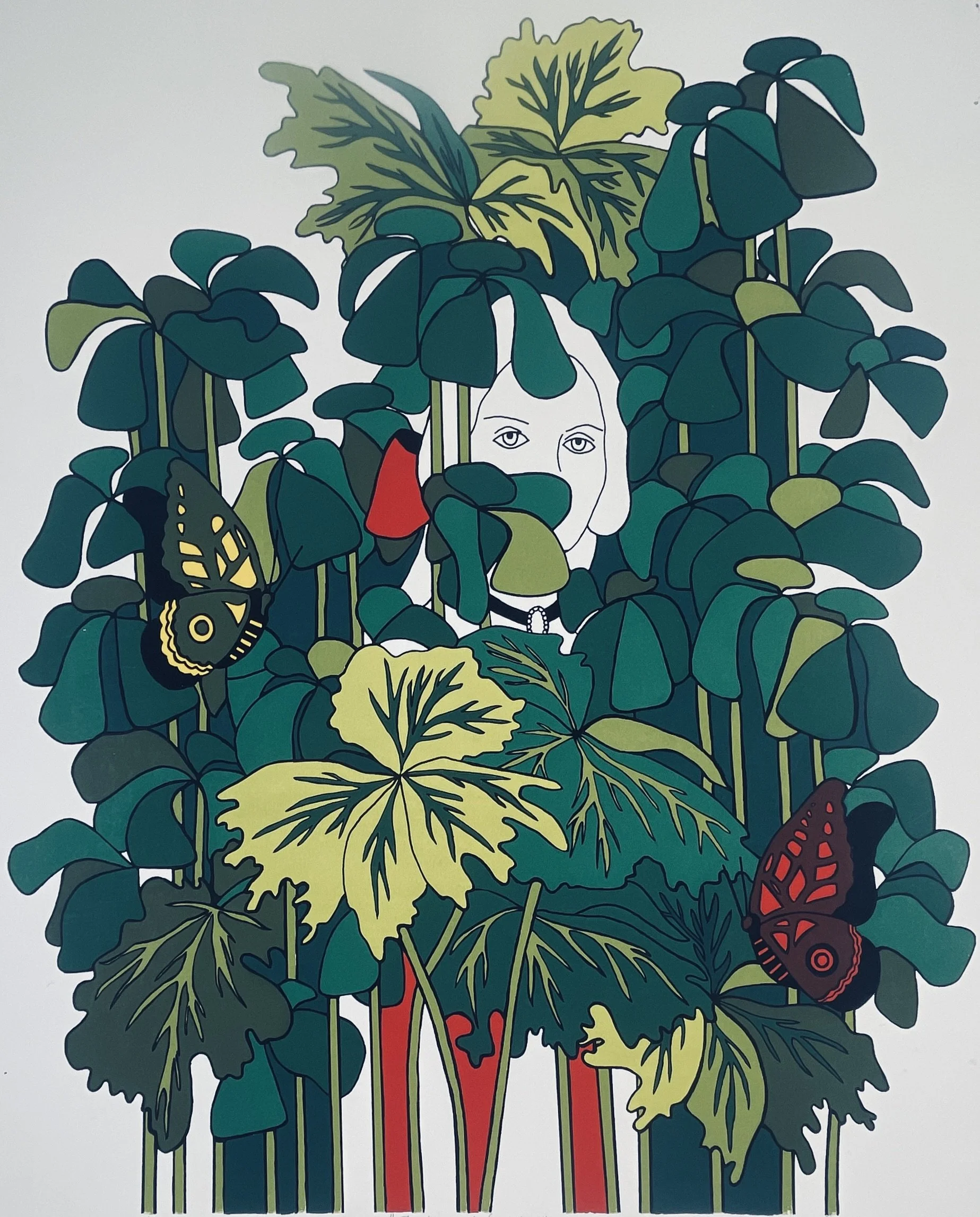 Image 1 of 7
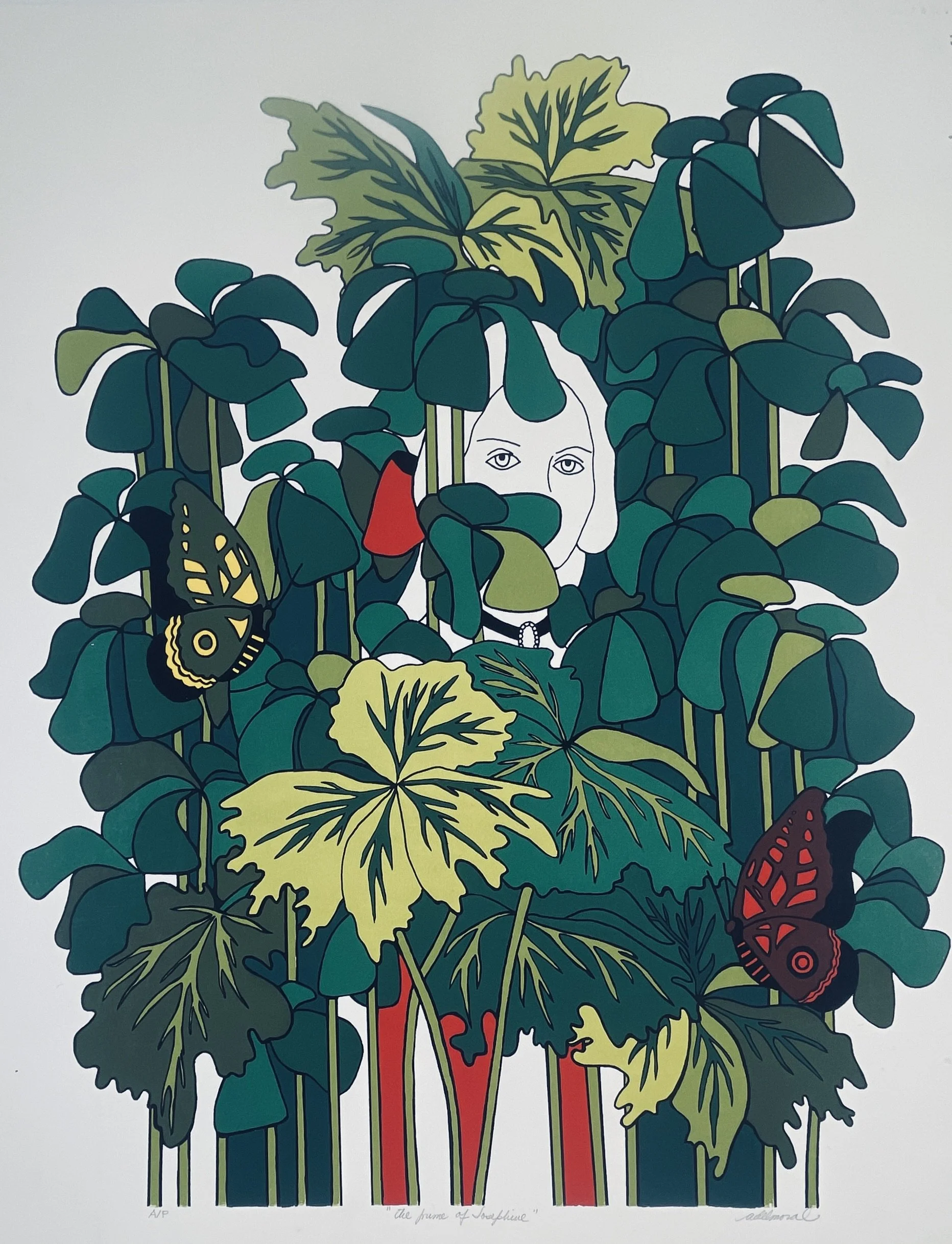 Image 2 of 7
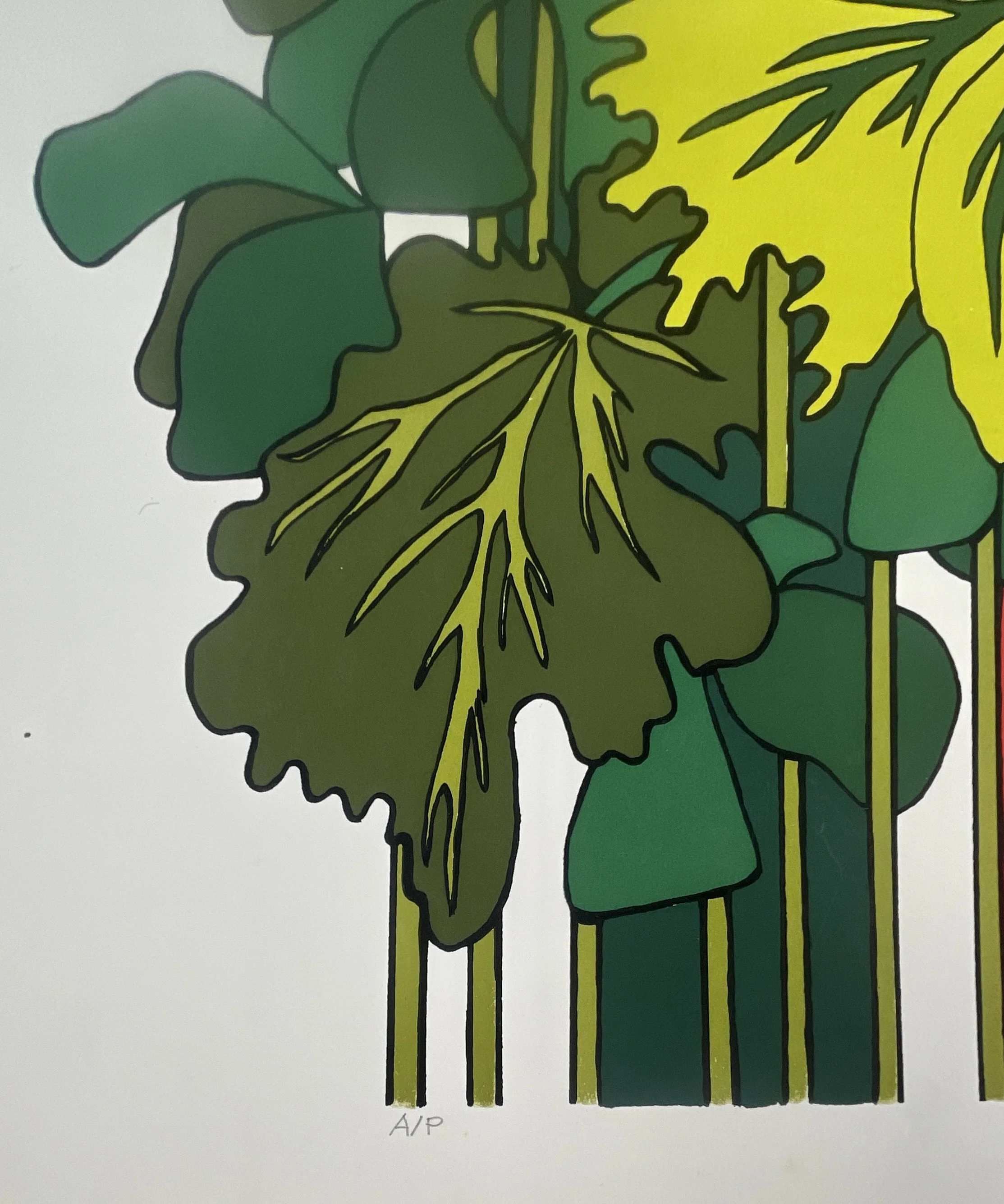 Image 3 of 7
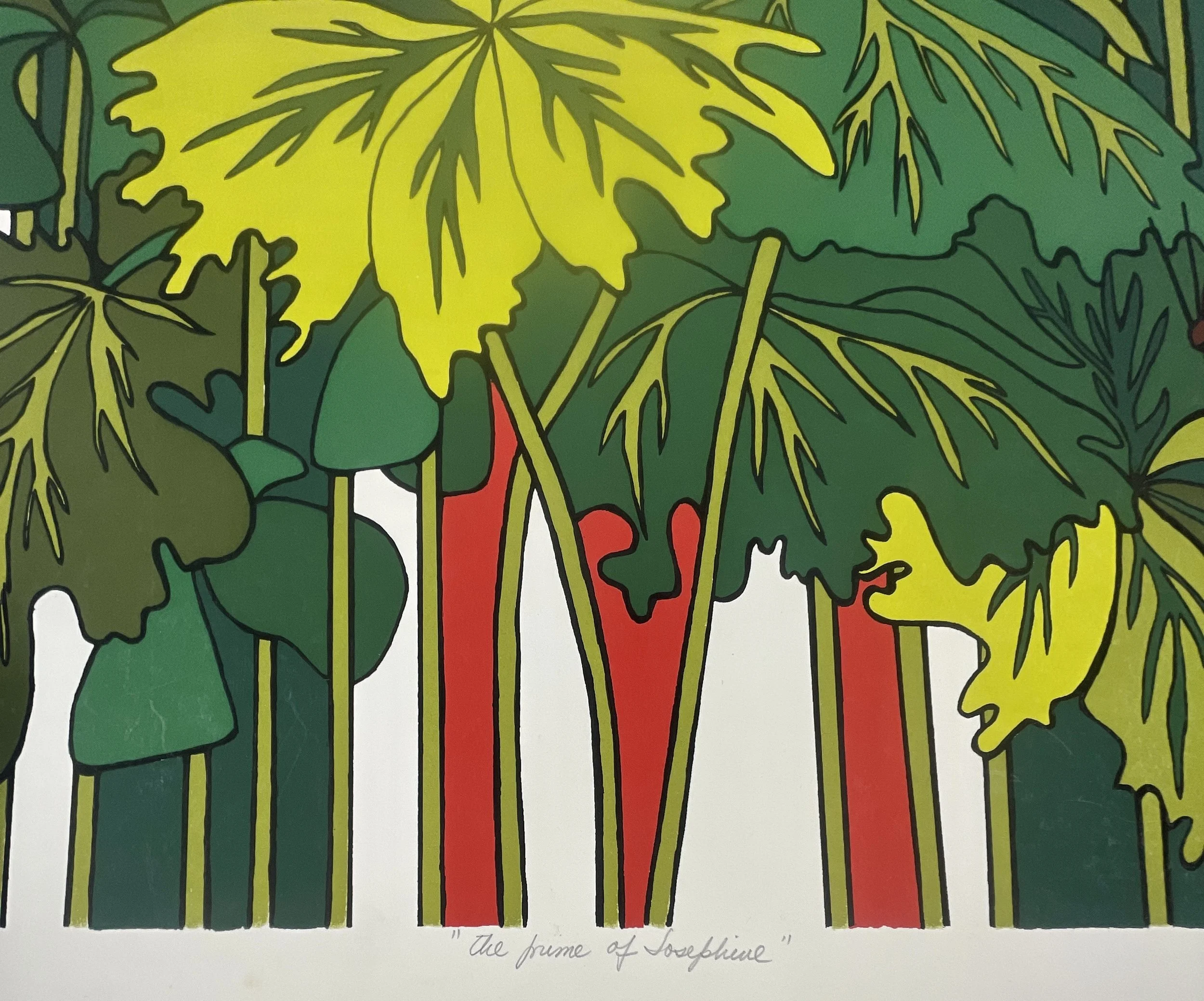 Image 4 of 7
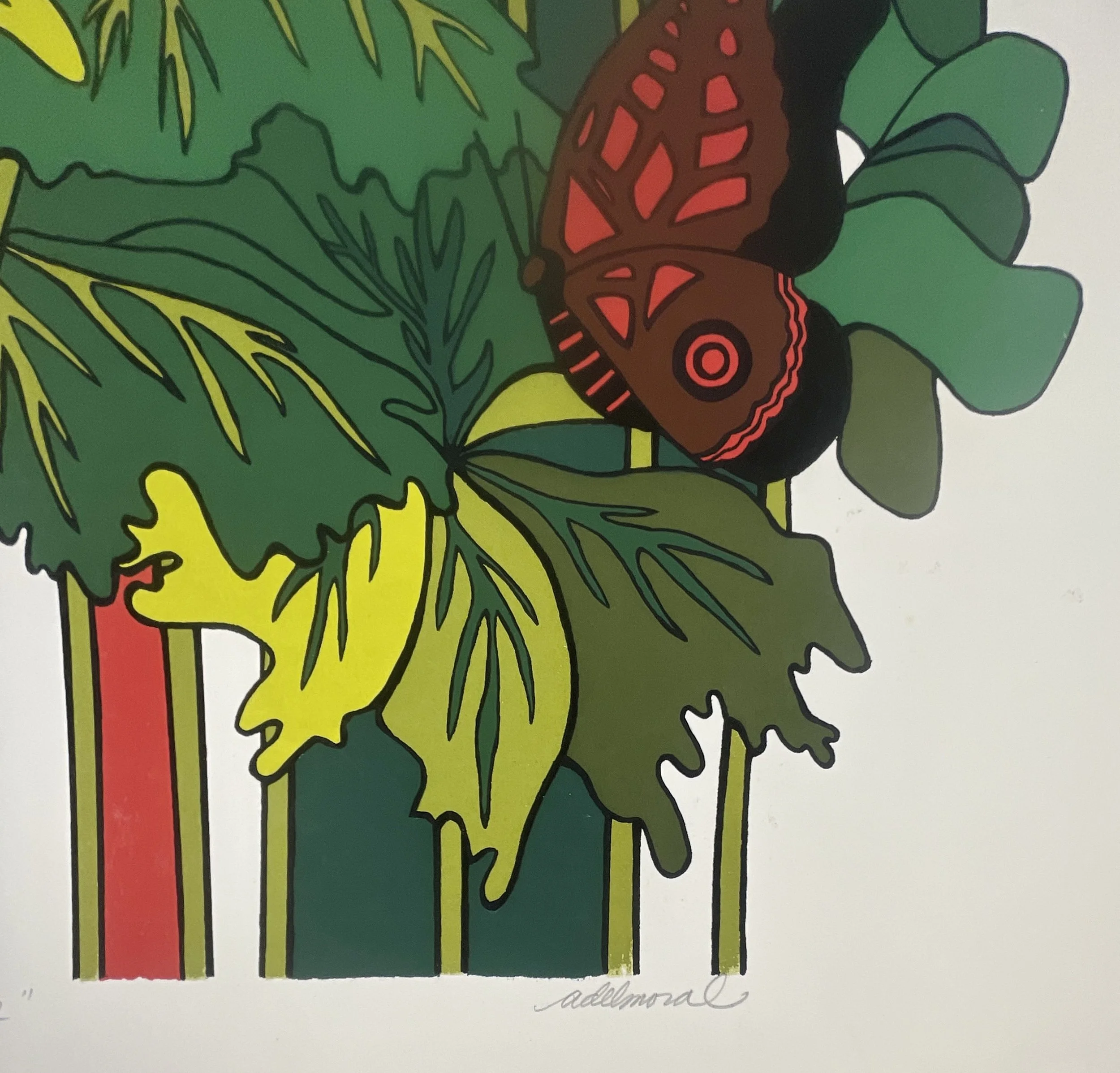 Image 5 of 7
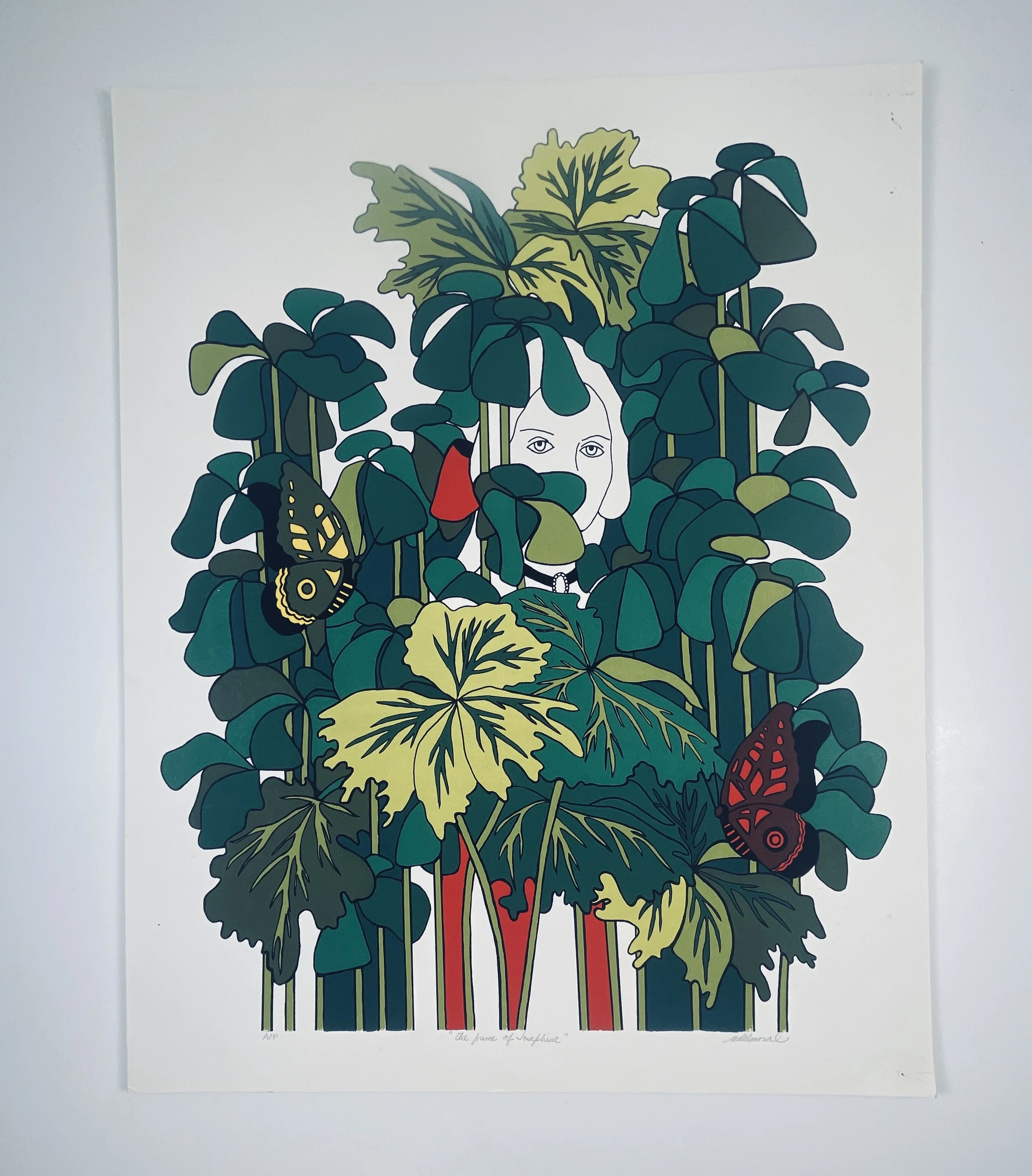 Image 6 of 7
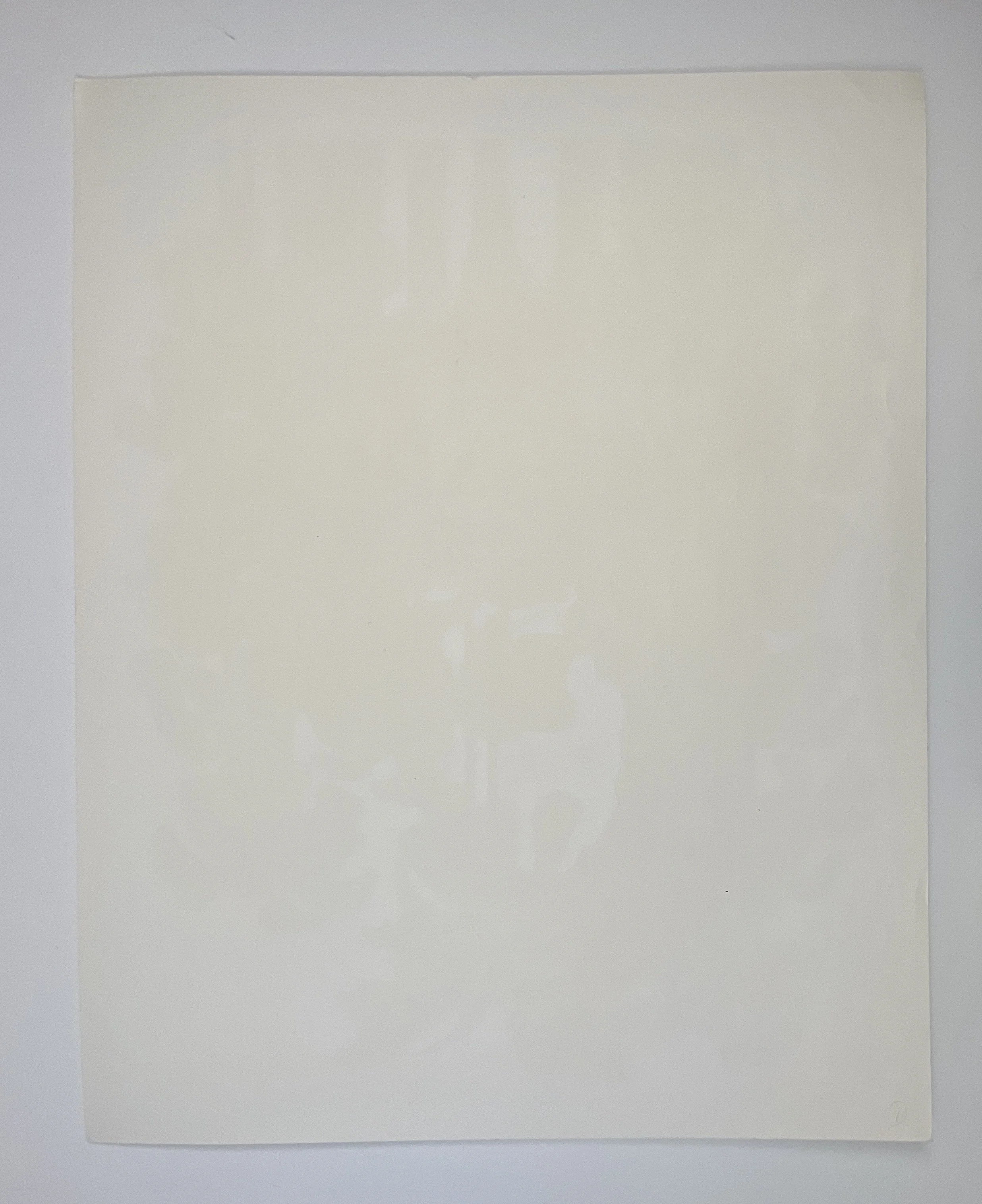 Image 7 of 7