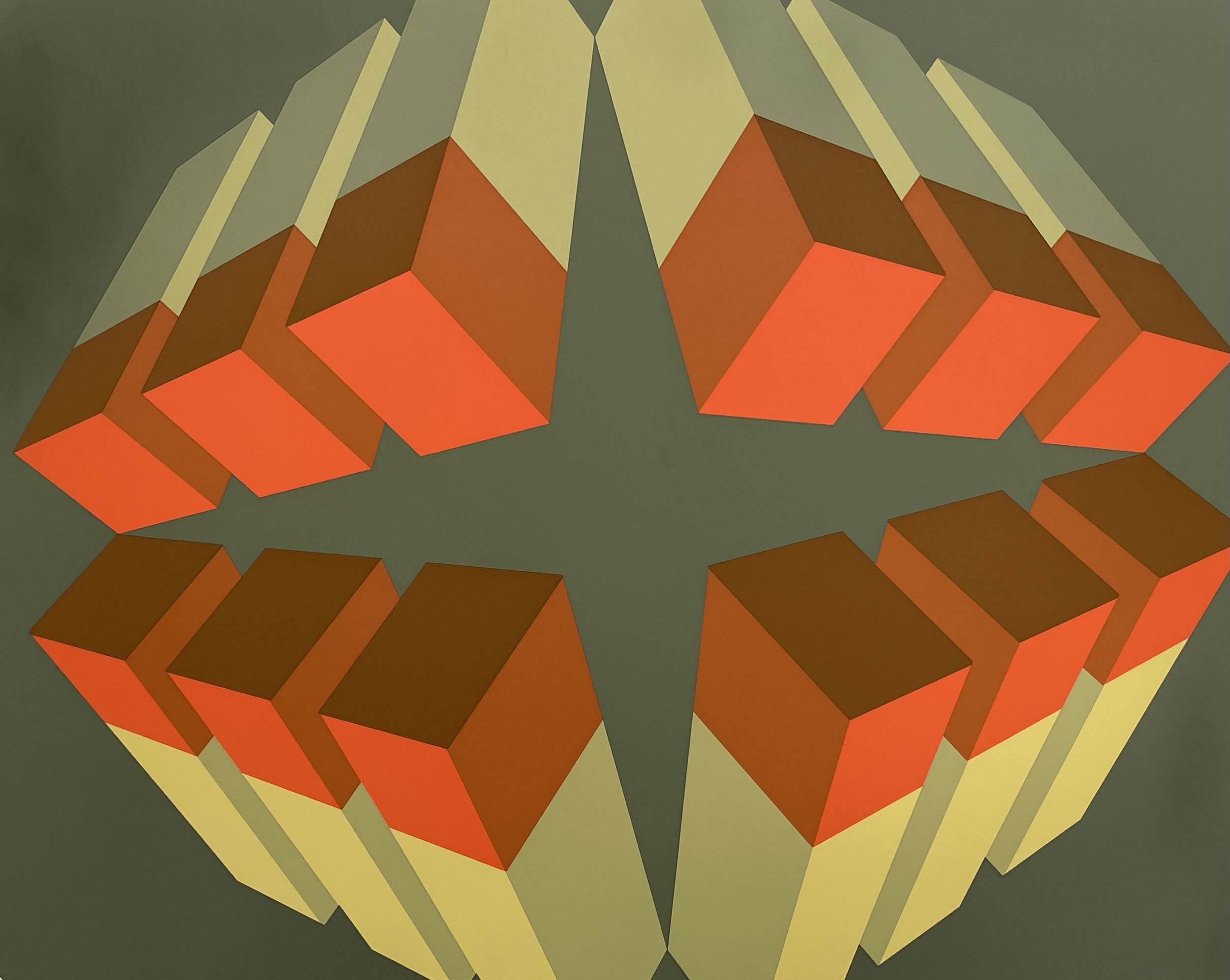
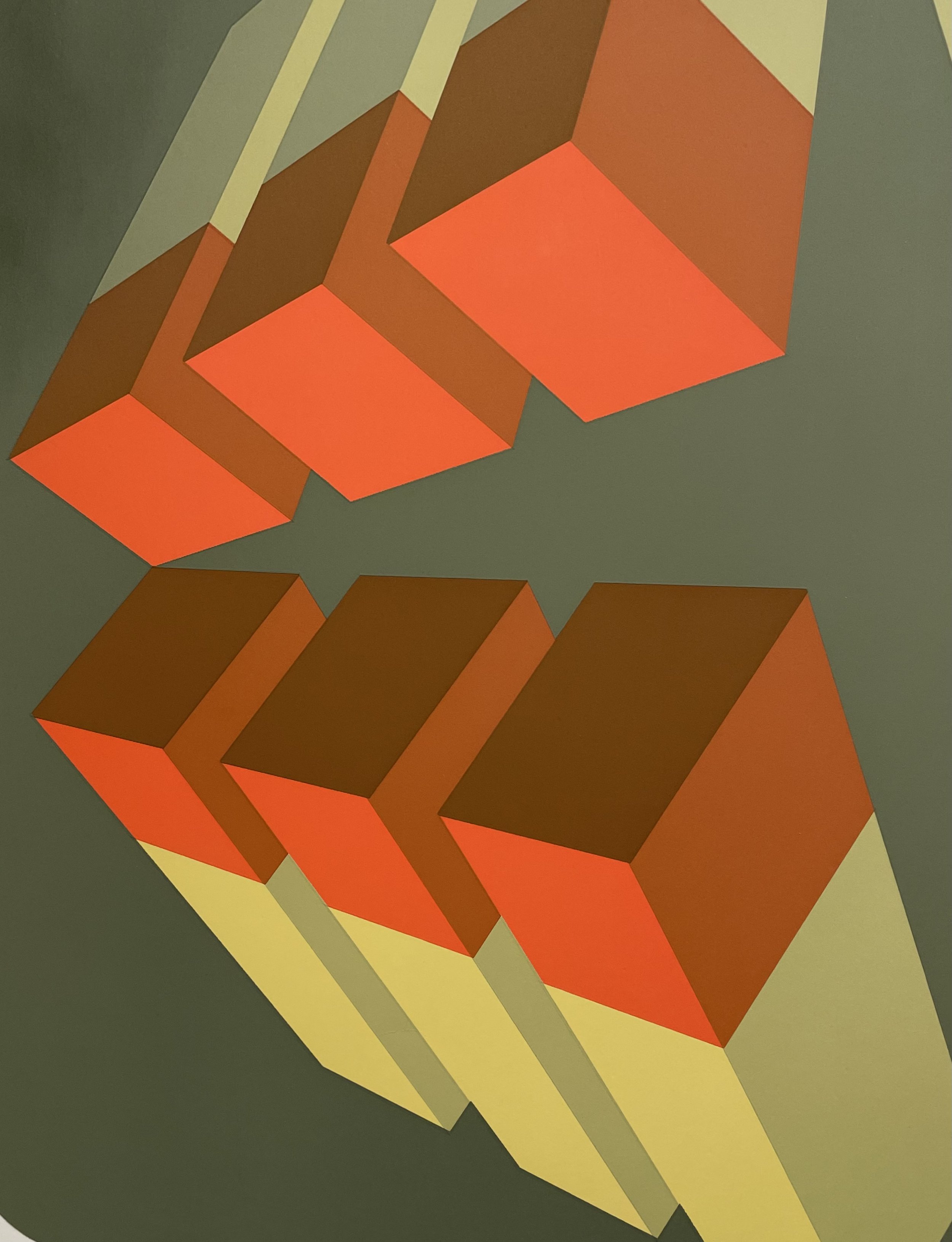
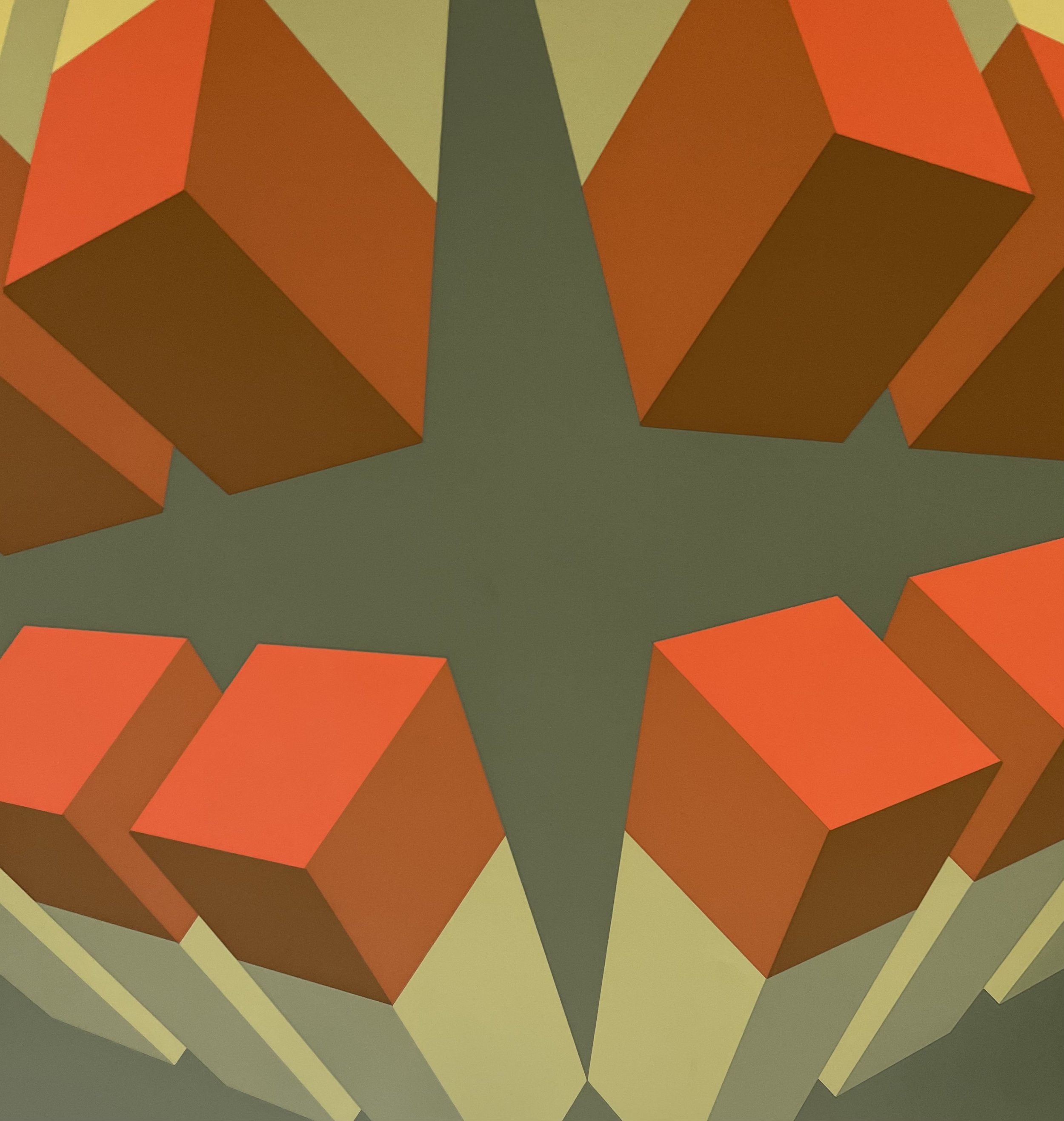
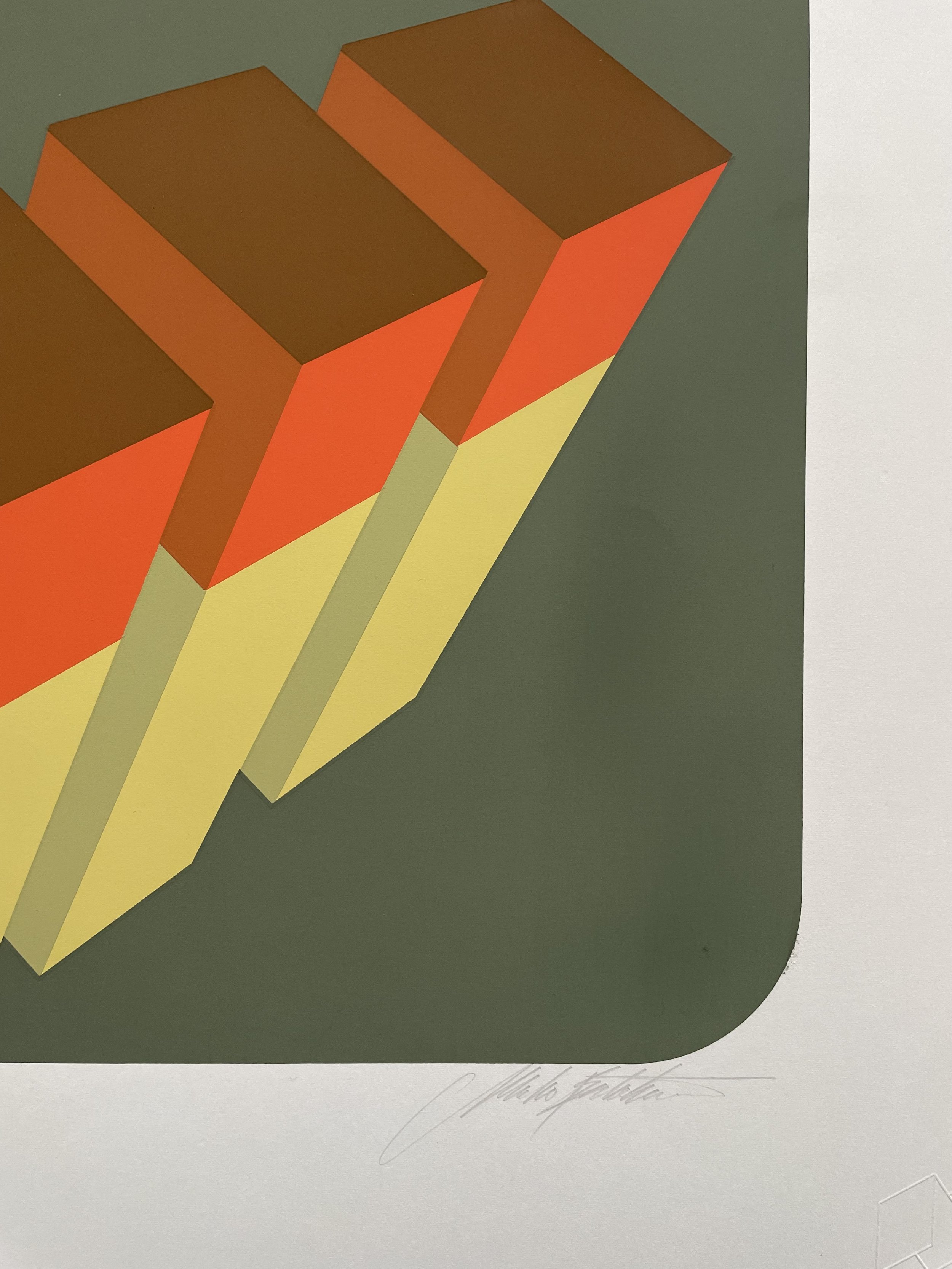
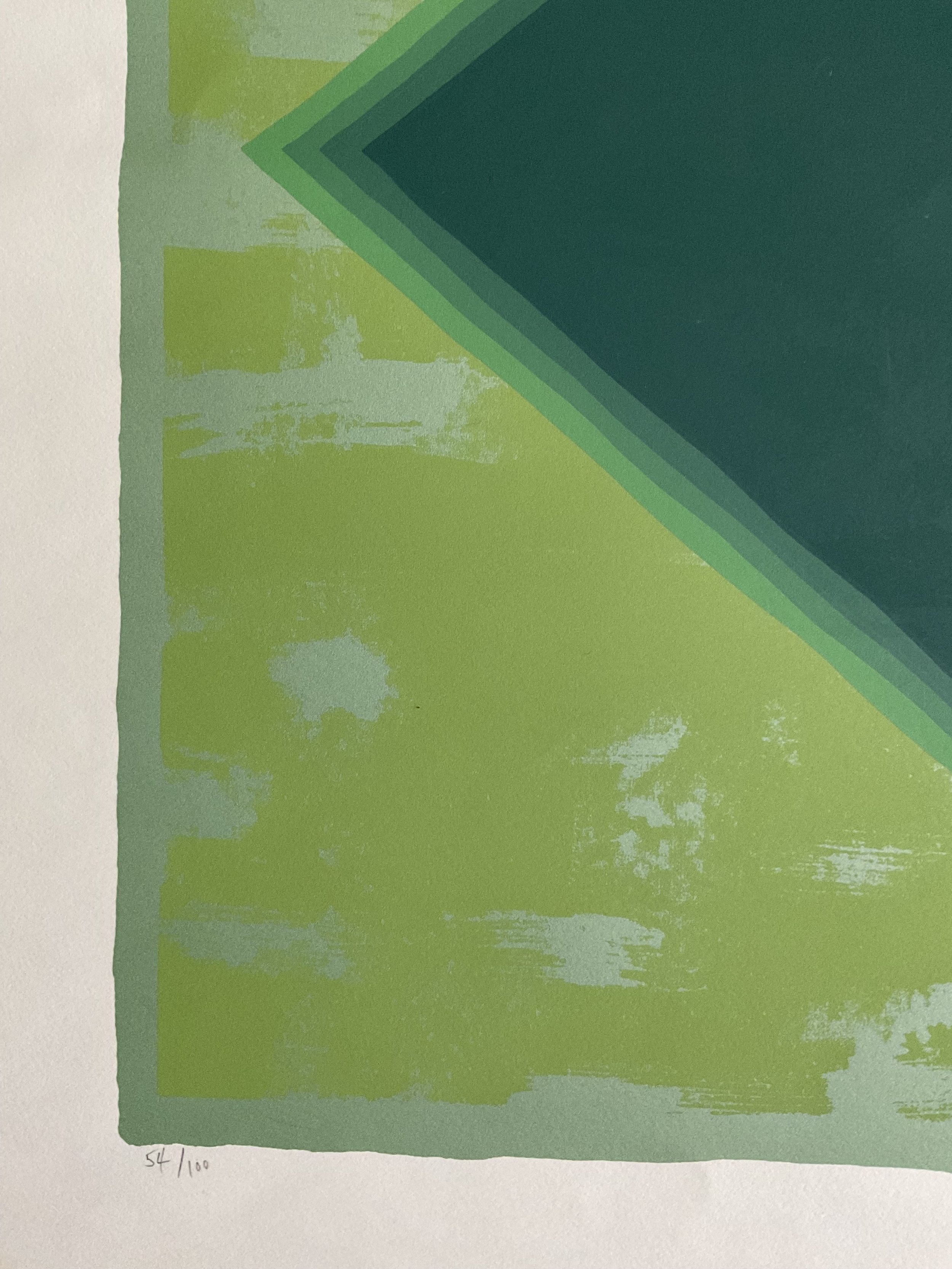
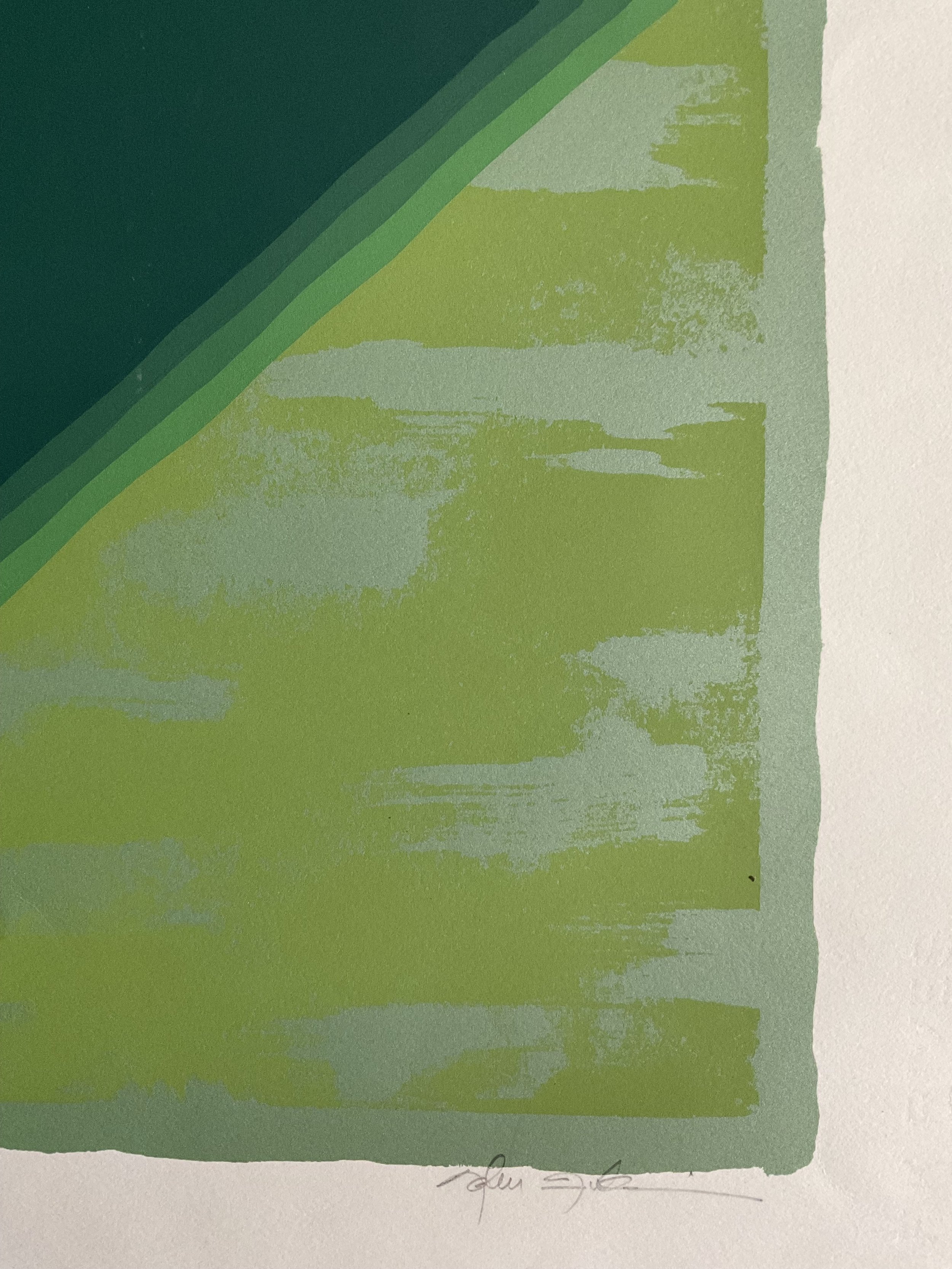
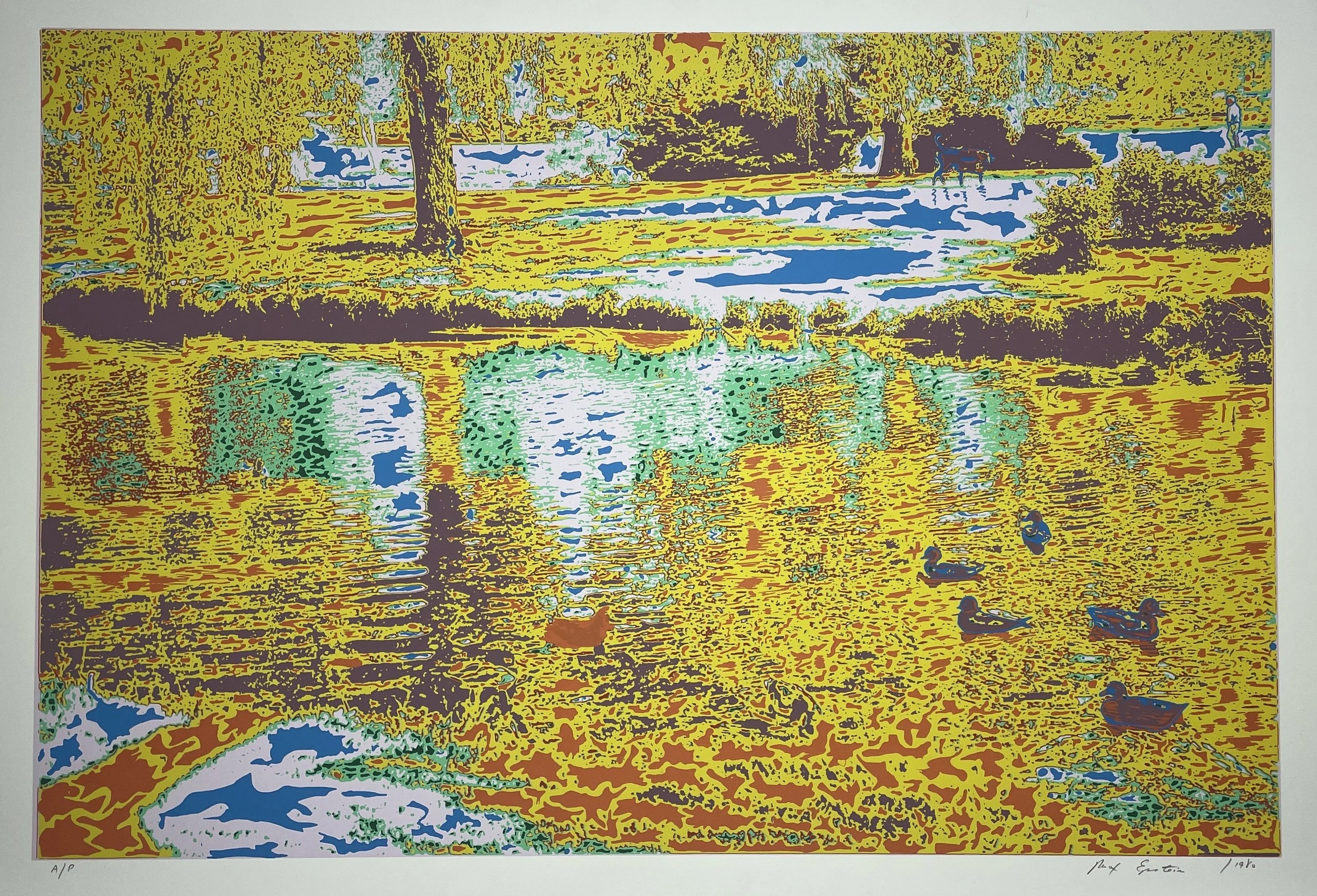
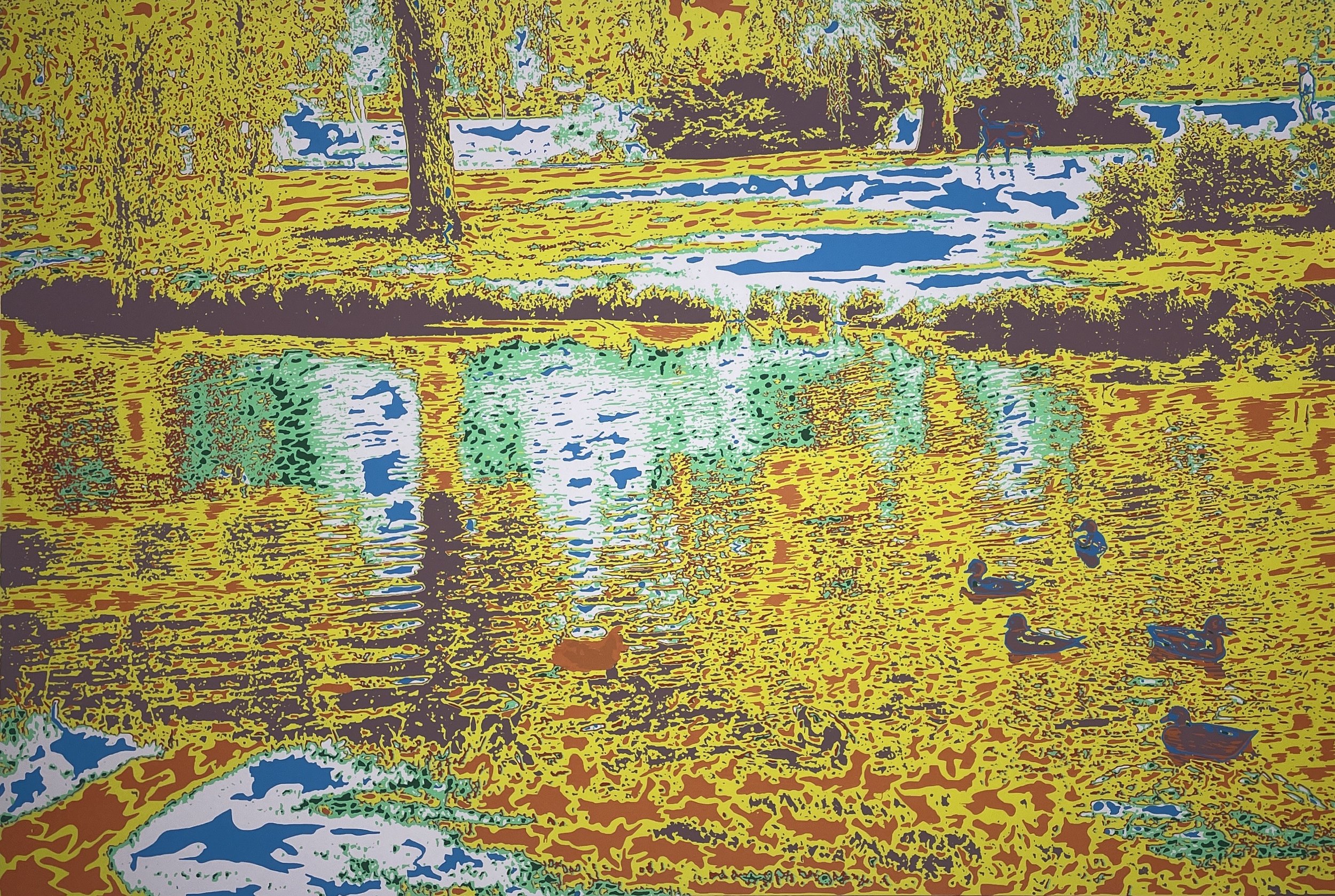
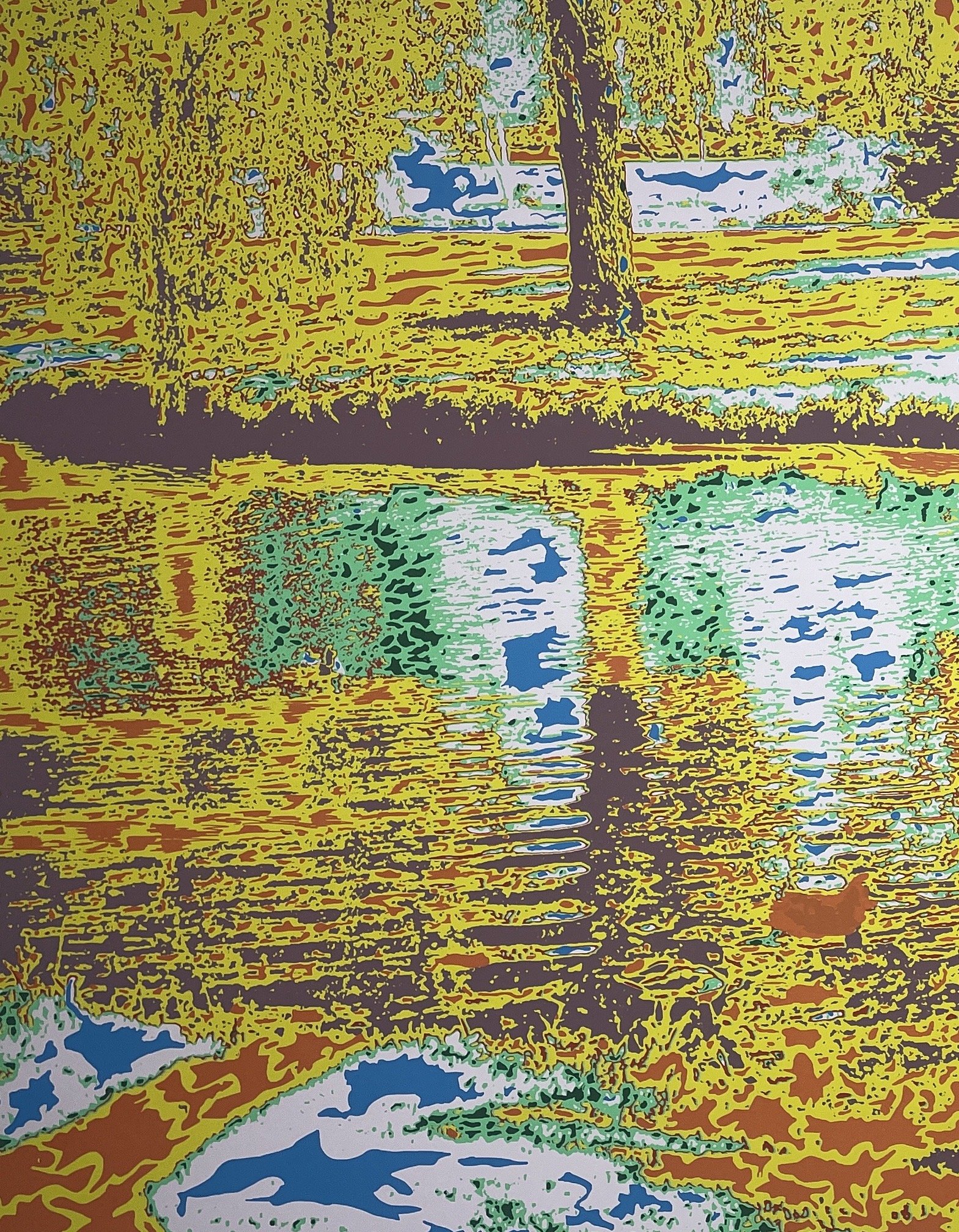
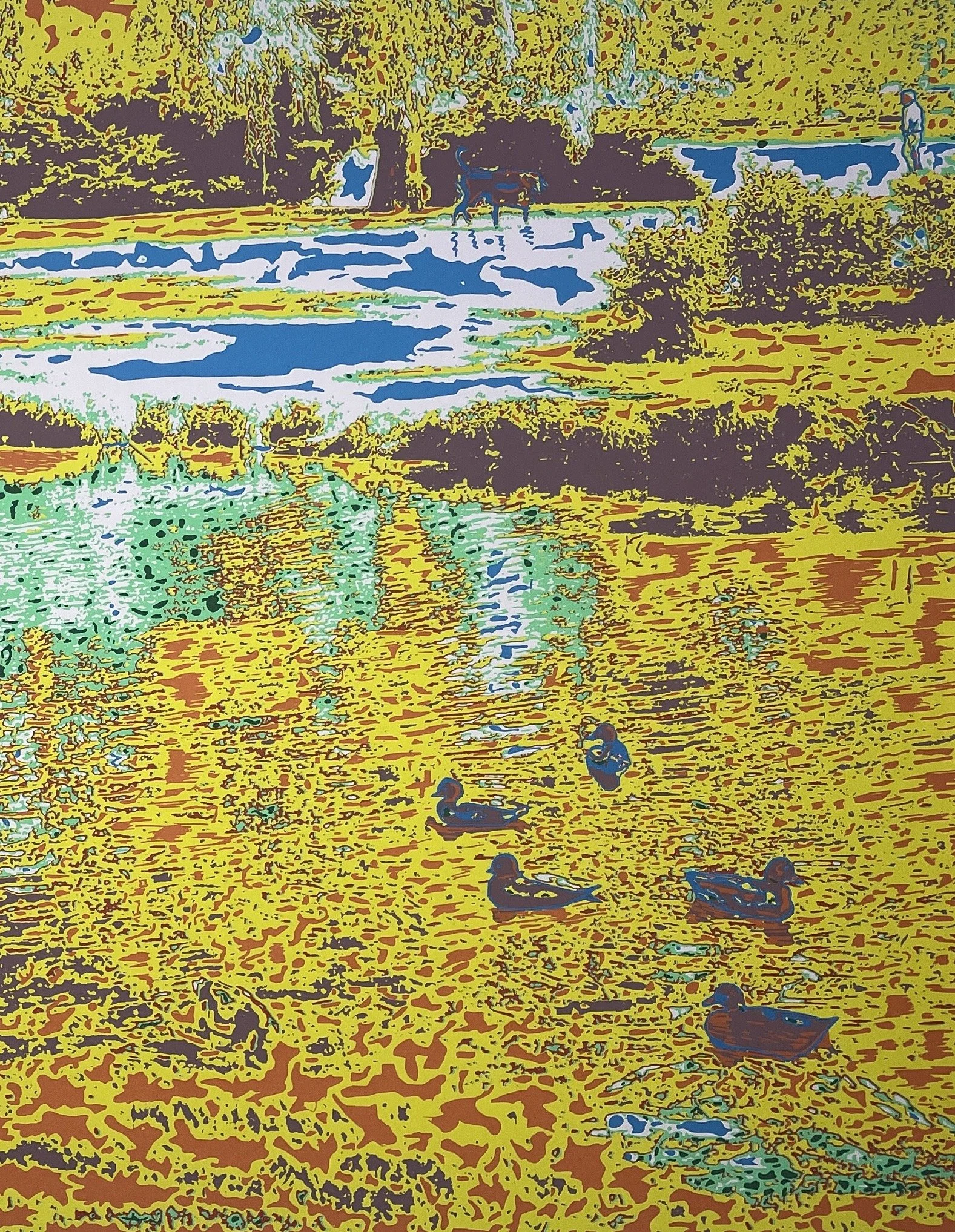
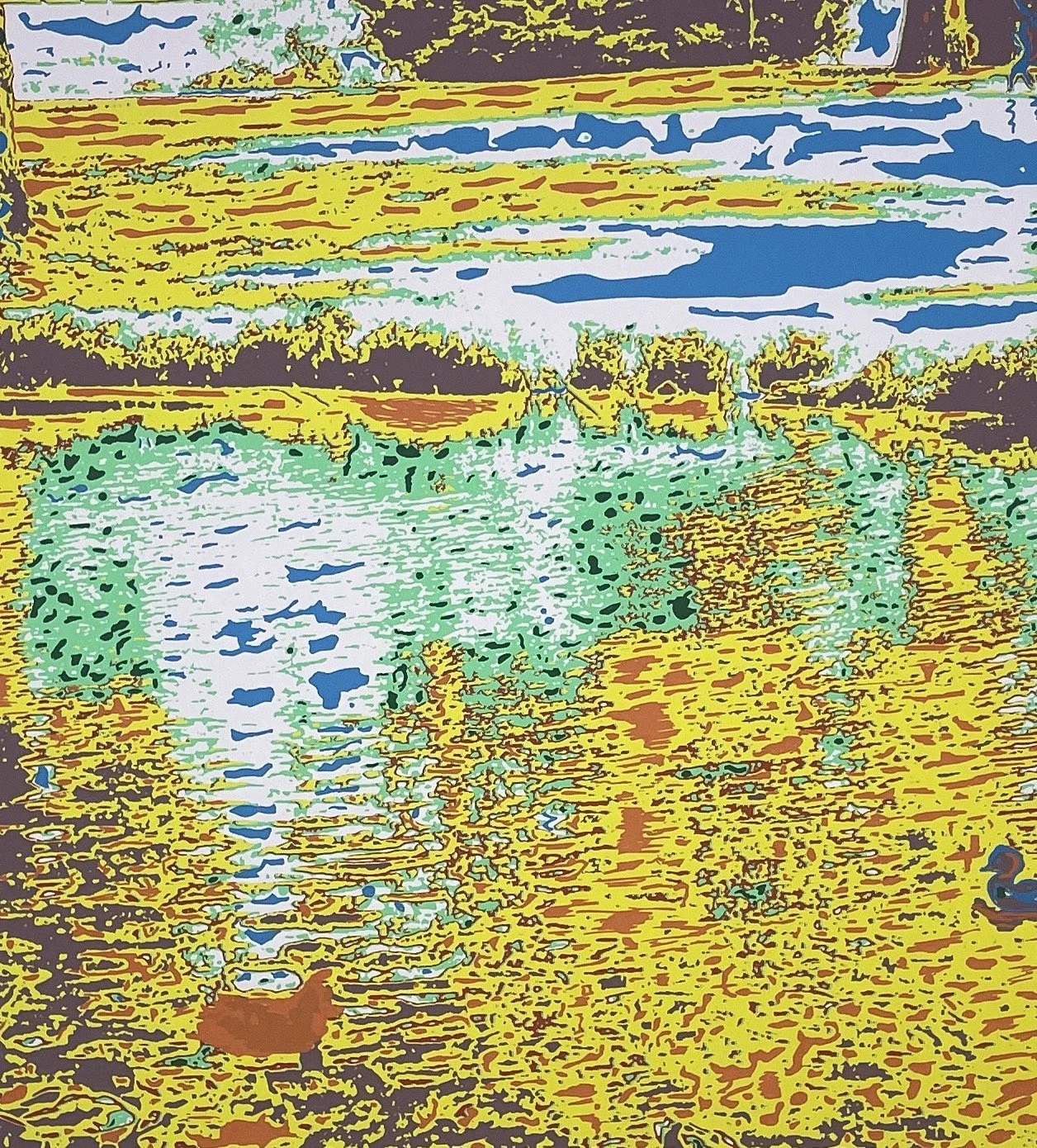
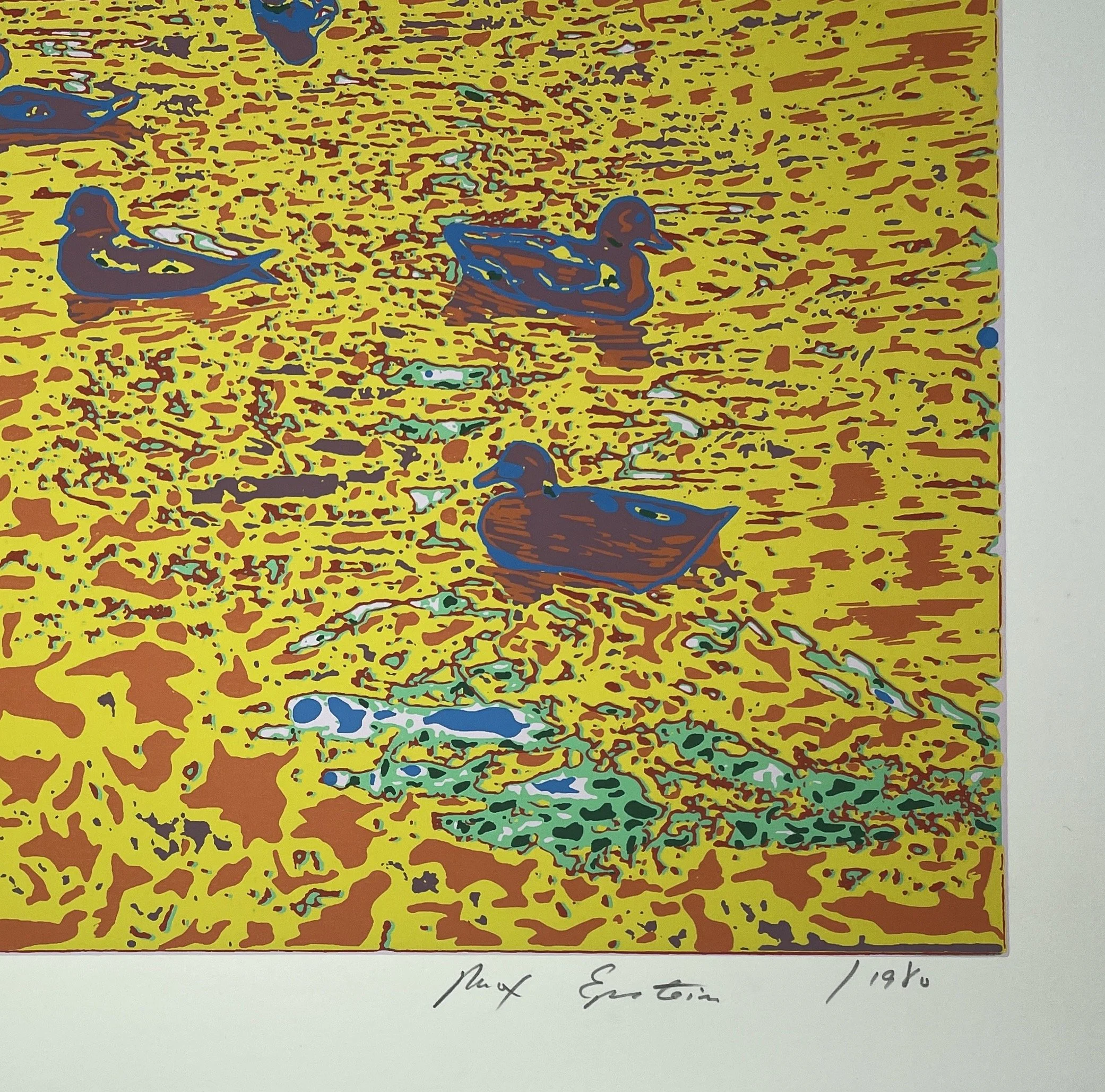
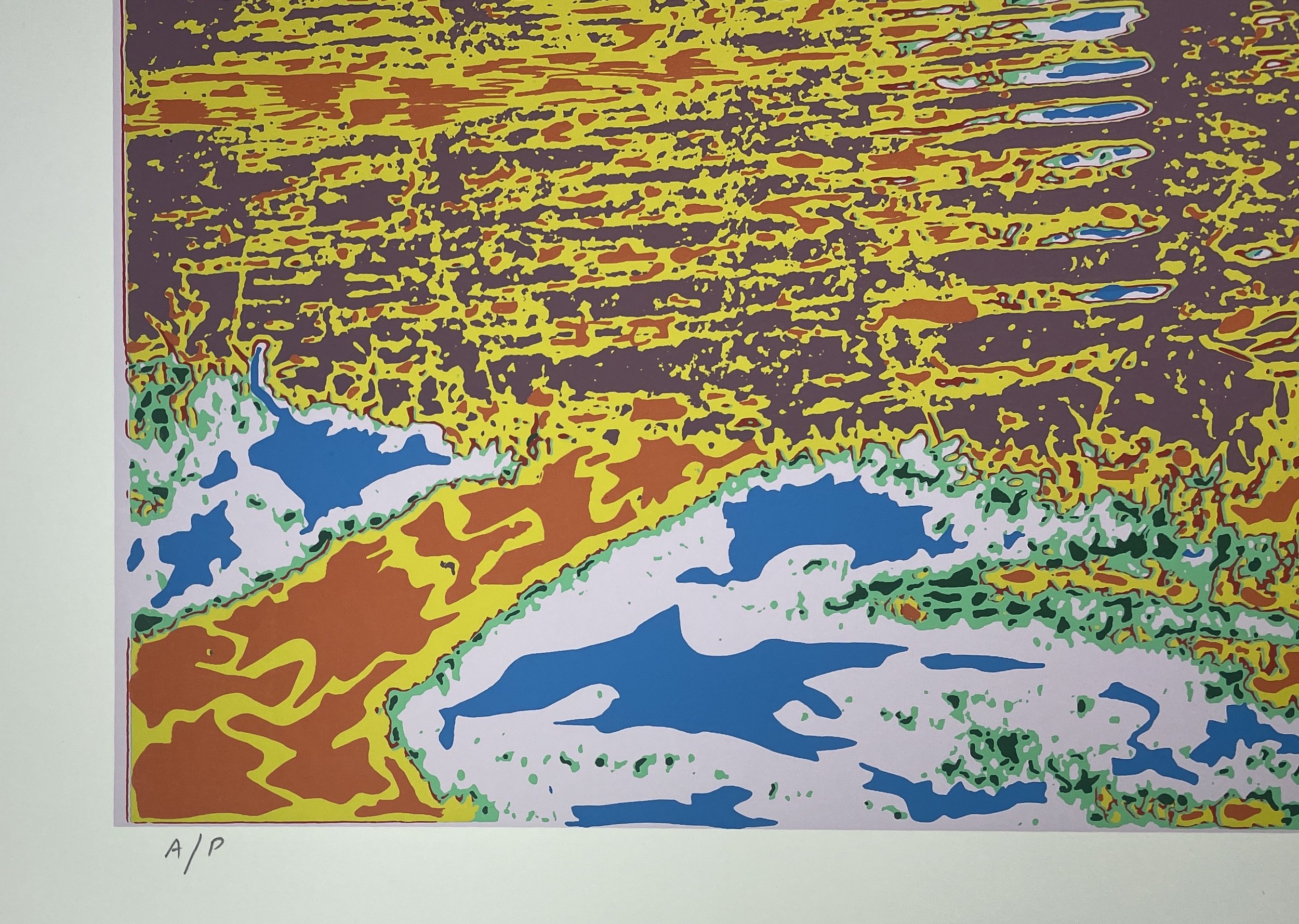
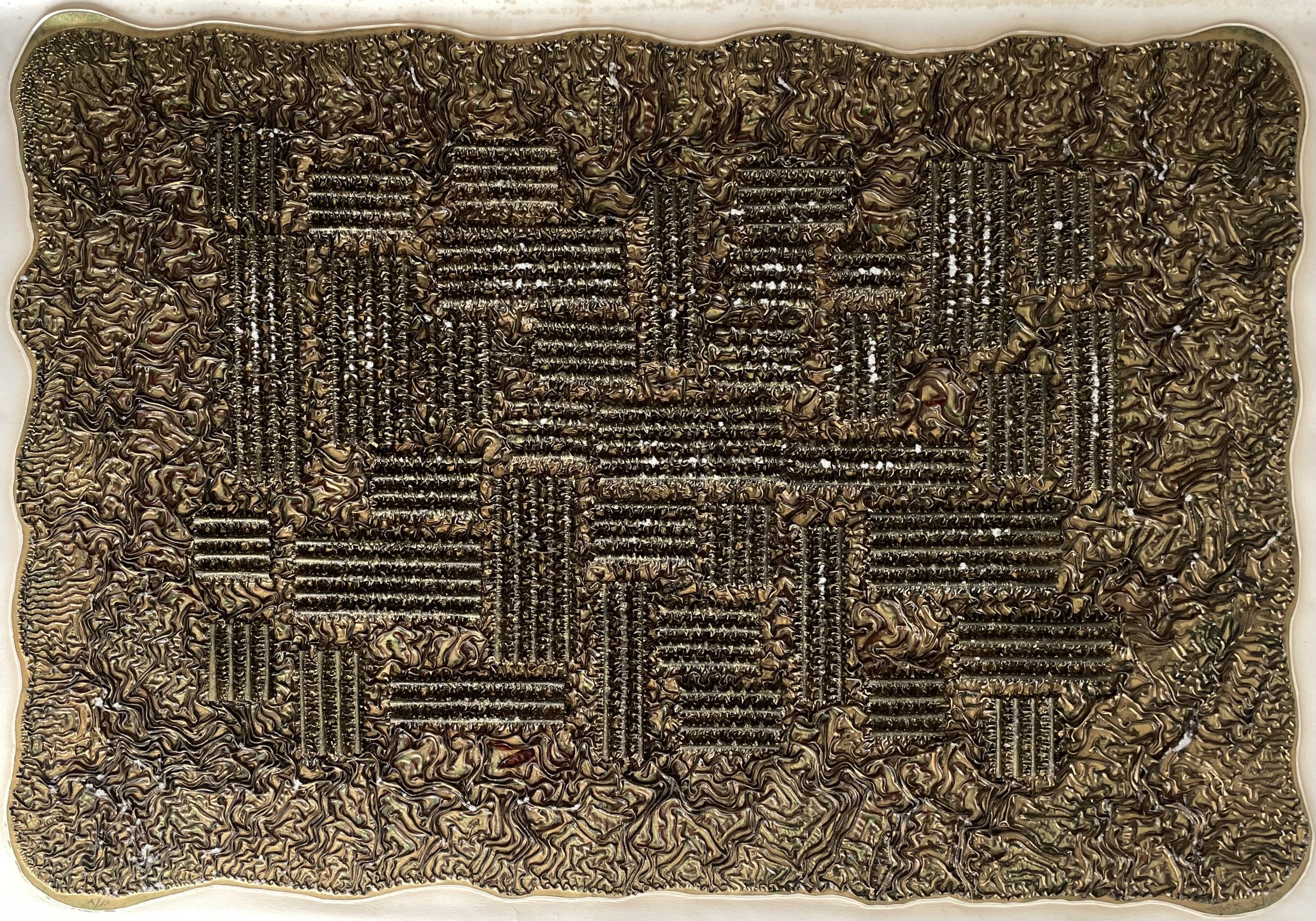
“Topiary” Jack Sher (American, 20th c.), c.1970s dimensional-relief serigraph 22×30, pencil-signed, titled & numbered 3/100.
A richly textured dimensional-relief serigraph by Jack Sher, Topiary presents a stylized tree rendered in raised metallic relief against a marbled, cellular ground. Created using Sher’s experimental Monostructure process, the surface glows with bronze, amber, and copper tones. Pencil-signed, titled, and numbered 3/100; 22×30 inches.
Artwork Description
What you’re looking at
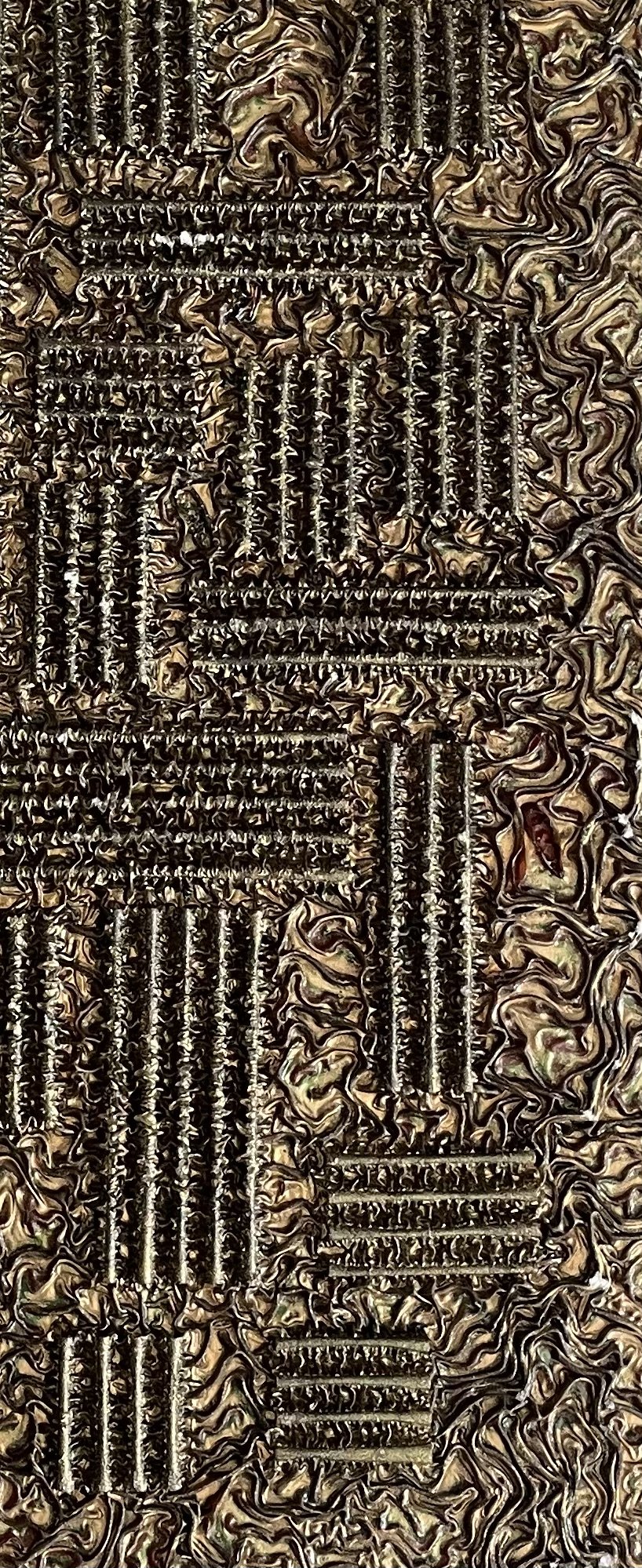
Topiary centers on a single, formally pruned tree whose branches radiate symmetrically from a sturdy trunk. The tree is rendered in shimmering raised relief, standing proud against an intricate, stone-like background composed of organic, cellular forms. The composition evokes both cultivated order and natural unpredictability—an ornamental tree growing from a living, mineral ground.
Style & period
This work belongs to Jack Sher’s late-20th-century process-based abstraction with figurative reference. While the imagery is clearly botanical, the emphasis lies in texture, material interaction, and surface depth rather than literal realism. The work bridges modern printmaking, low-relief sculpture, and decorative arts.
Medium & technique (Dimensional-Relief Serigraph / Monostructure)
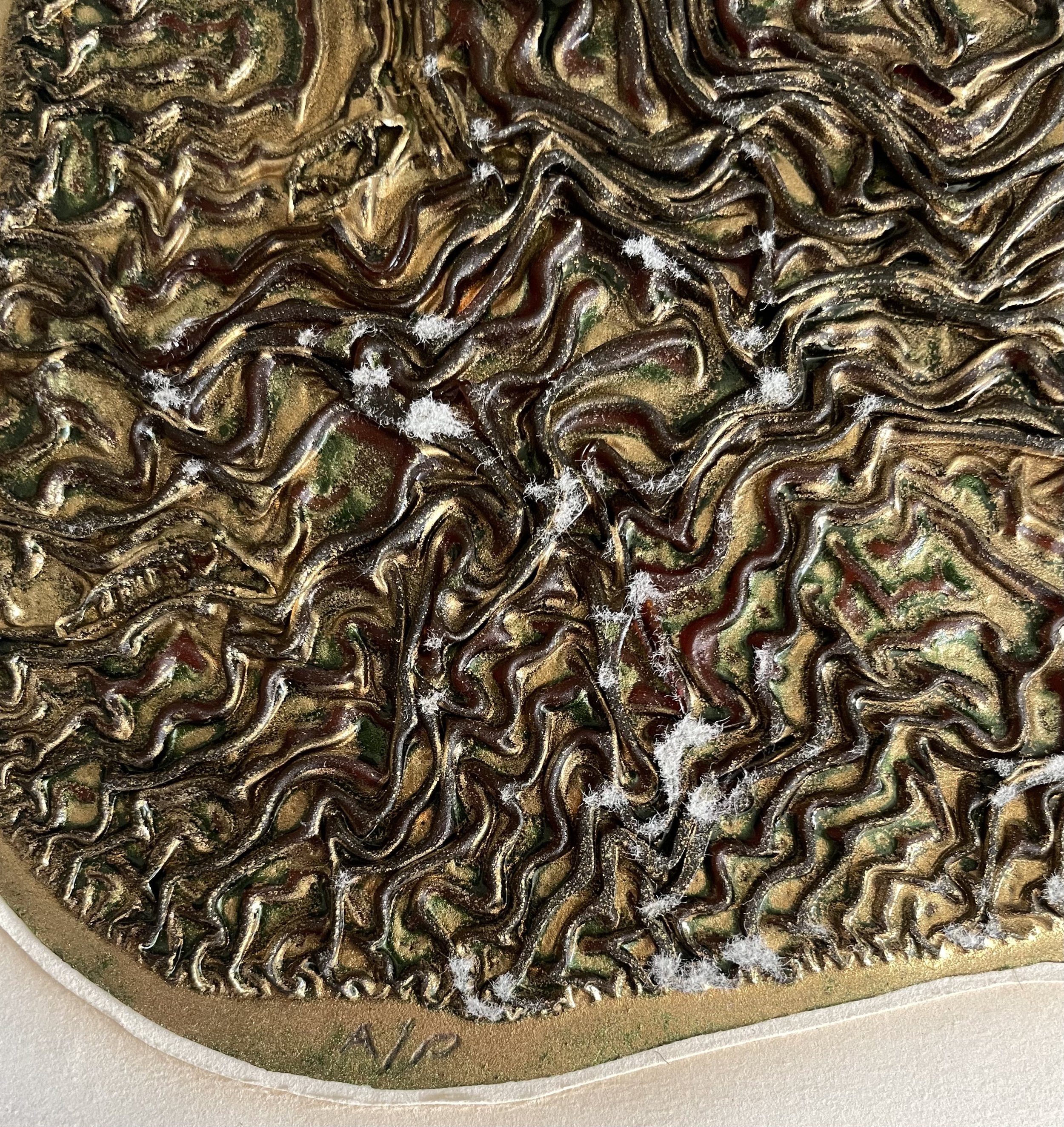
Topiary was produced using Sher’s proprietary Monostructure technique. Beginning with freehand drawing on mylar, the design is divided into raised, partitioned areas. Sher then applies custom epoxy and acrylic formulations that chemically interact over an extended curing period, creating the distinctive marbled, cellular background. The raised tree motif is hand-finished, giving the surface a tactile, metallic quality that changes with light and viewing angle. Though editioned, each impression exhibits subtle variation due to the reactive process.
Signature & editioning
The work is pencil-signed “Jack Sher,” titled, and numbered 3/100. The low edition number adds appeal, and the signature placement is consistent with Sher’s dimensional-relief works from this period.
Inspiration / story behind the work
The title Topiary references the human impulse to shape and order nature. Sher contrasts the controlled geometry of the tree with the organic, almost geological background, suggesting a dialogue between cultivation and natural mutation. The imagery aligns with Sher’s broader interest in growth, transformation, and the quiet intelligence of natural systems.
ARTIST BIOGRAPHY — JACK SHER (1934–2000)
Cooper Union School of Art • Wanamaker Medal Recipient • Inventor of “Monostructure”
Born: 1934, New York City
Died: 2000
Nationality: American
Training: Cooper Union School of Art, New York (Scholarship recipient; Wanamaker Medal)
Known for: Monostructure (original technique), experimental chemical art, relief-based abstraction, mylar-based compositions
Active: 1950s–1990s, primarily in NYC
Background & training
Jack Sher was an American artist active primarily in the mid-to-late 20th century. He was a graduate of the Cooper Union School of Art in New York, known for its rigorous foundation in fine art, design, and materials. Early recognition of his skill included the Wanamaker Medal, awarded for artistic excellence.
Multidisciplinary career
Sher’s career spanned fine art, design, and industrial innovation. He worked as a portrait painter, designer, letterer, and muralist before turning his attention to experimental surface techniques. His breadth of experience allowed him to merge artistic intuition with technical precision.
Industrial research & innovation
Sher later became deeply involved in the wall-covering and decorating industry, where he operated his own business creating exclusive dimensional surface effects. He collaborated with a major wall-covering manufacturer in a research and development role, inventing mechanical processes and proprietary chemical formulations intended to replicate the depth and hand-crafted irregularity of Old World artisan finishes.
The Monostructure process
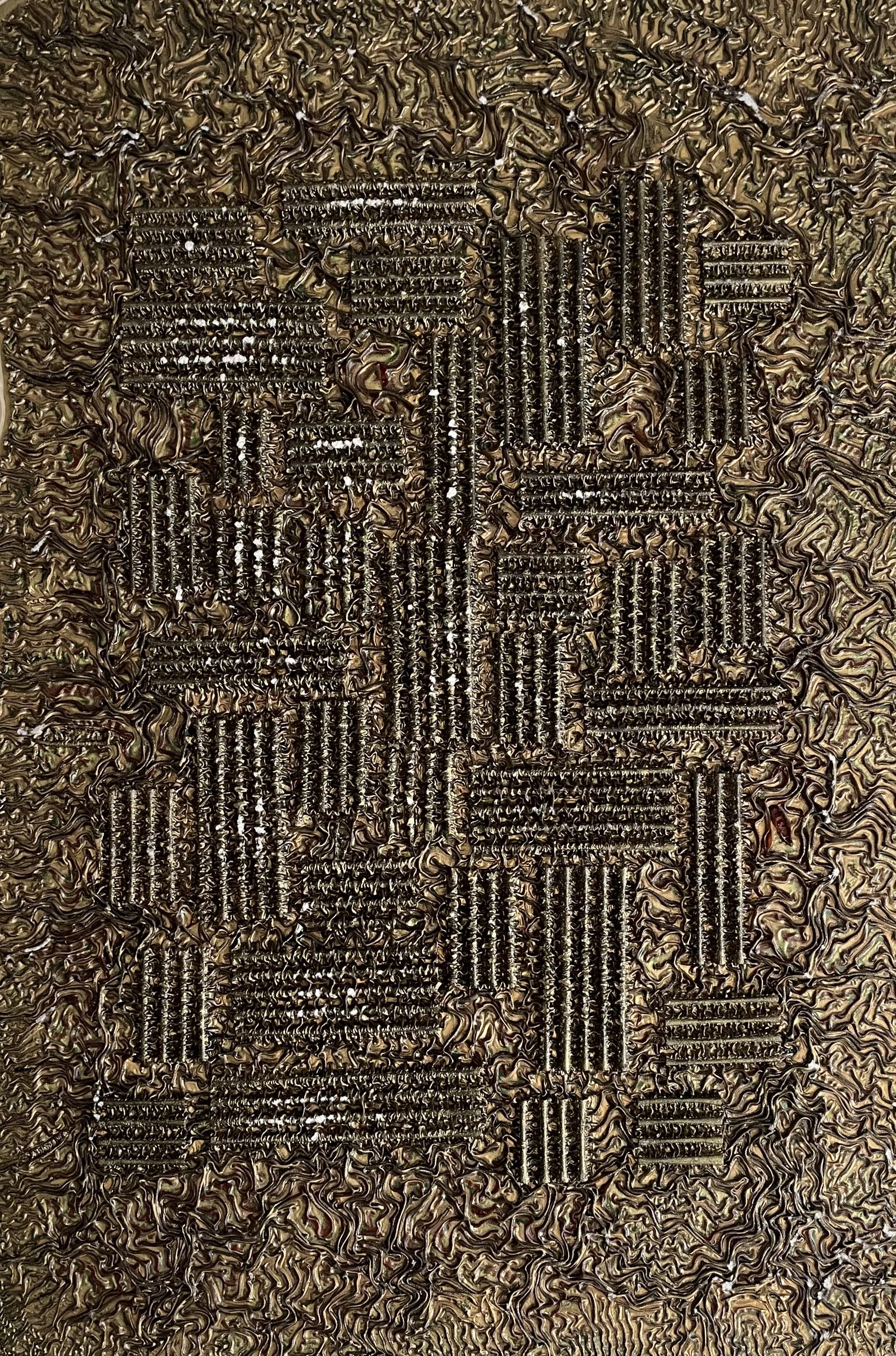
Sher’s most significant contribution is the Monostructure process—an avant-garde method combining drawing, chemical reaction, controlled curing, and hand finishing. Using as many as 26 custom-formulated chemicals, Sher allowed materials to interact over weeks, producing surfaces that feel grown rather than printed. This approach places him within a lineage of postwar artists who treated process and material behavior as central to artistic meaning.
Artistic philosophy & themes
Across Sher’s works, texture and color are inseparable. Natural motifs—trees, roots, flowing lines, reflective horizons—serve as metaphors for organic growth and transformation. His works are intended to engage both sight and touch, encouraging slow, contemplative viewing.
Exhibitions, collections & market presence
Many of Sher’s dimensional works were acquired by private collectors, particularly those interested in tactile modern art and innovative print processes. While Sher does not have a widely consolidated museum CV in public databases, his works circulate consistently through galleries and the secondary market, often accompanied by detailed documentation of the Monostructure method. His reputation rests on material innovation, surface complexity, and visual uniquenessrather than institutional scale.
Jack Sher (American, 20th c.), Topiary, c.1970s. Dimensional-relief serigraph in colors on paper, 22 × 30 in. Pencil signed, titled, and numbered 3/100. Raised metallic tree motif over marbled cellular ground; created using the artist’s Monostructure process. Provenance: Mitch Morse Gallery → Artfind Gallery, Washington DC.
Certificate of Value & Authentication
Artist: Jack Sher (American, 20th century)
Title:Topiary
Date: c. 1970s
Medium: Dimensional-relief serigraph (Monostructure process) on paper
Dimensions: 22 × 30 inches
Edition: 3/100
Signature/Marks: Pencil signed, titled, and numbered
Condition (visual): Metallic relief and marbled background appear intact; in-person inspection recommended for surface wear and paper condition
Provenance: Mitch Morse Gallery (acquired in NYC, United States and Europe) → Artfind Gallery, Washington DC
Authentication Statement: Based on signature, editioning, materials, and consistency with documented Jack Sher Monostructure works, this piece is authenticated as an original work by the artist.
Provenance Chain (Collector Format)
Jack Sher (artist) → Mitch Morse Gallery (publisher/agent; acquired in NYC, United States and Europe) → Artfind Gallery, Washington DC (current owner).
MONOSTRUCTURE is a fascinating creative process pioneered by artist Jack Sher. This method begins with freehand sketches rendered on Mylar—a robust alternative to standard paper that cannot withstand the chemical reactions at play. The designs are then meticulously outlined with 1/8th-inch high lines, creating distinct, partitioned areas. Sher's magician-like touch comes into play as he fills each segment with a unique blend of 26 chemicals he formulated through extensive experimentation. Over three weeks, the catalytic action of these chemicals leads to an organic evolution of the design, resulting in a symphony of unexpected shapes and forms. Once the chemical choreography concludes, Sher meticulously adds color and hand-finishes each piece, ensuring an artful touch that is both personal and engaging. Although each work is signed and numbered in the series, every piece is a one-of-a-kind marvel, differing uniquely from its siblings, epitomizing the delightful quirks of Sher's artistic vision.
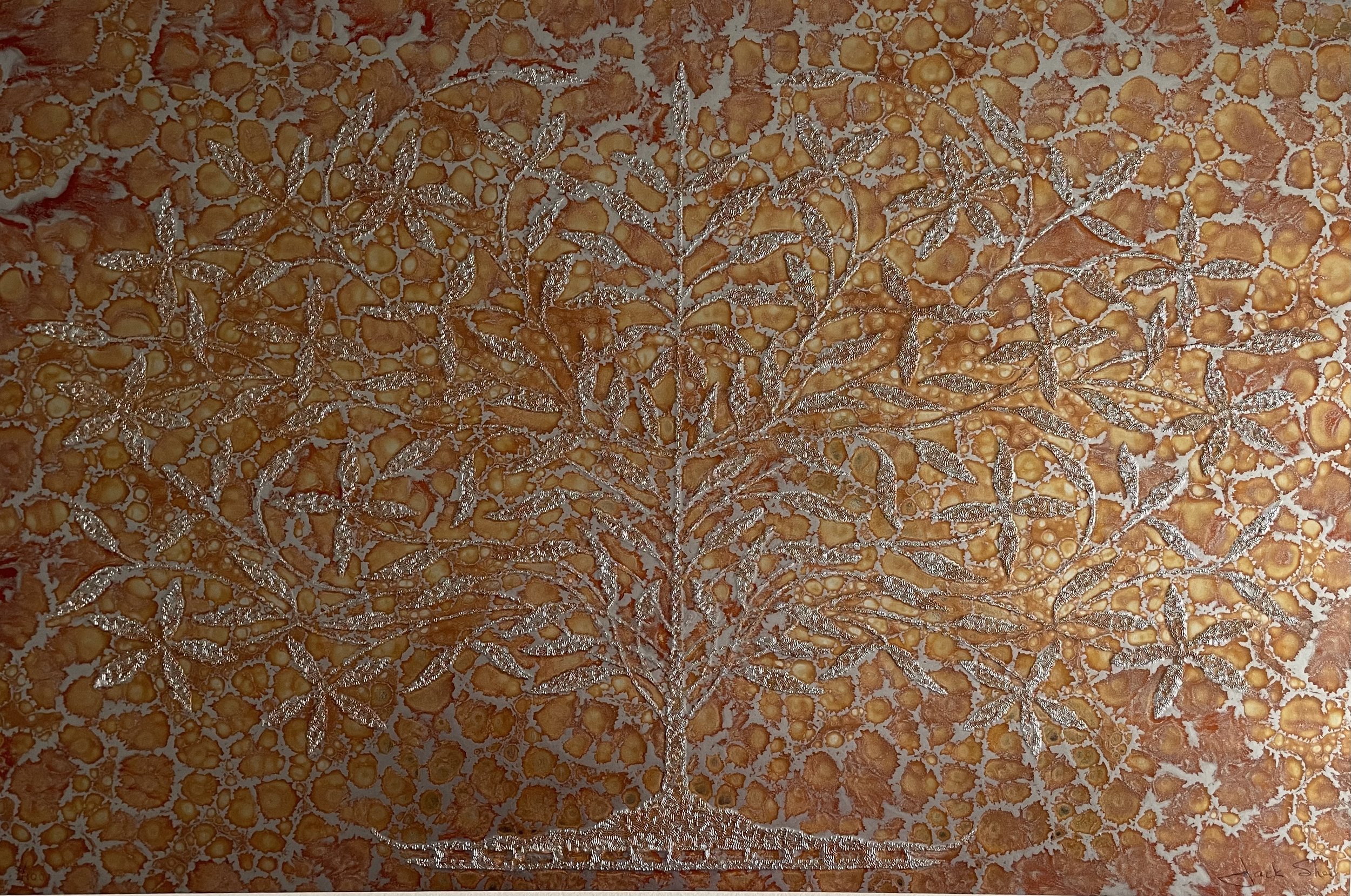 Image 1 of 7
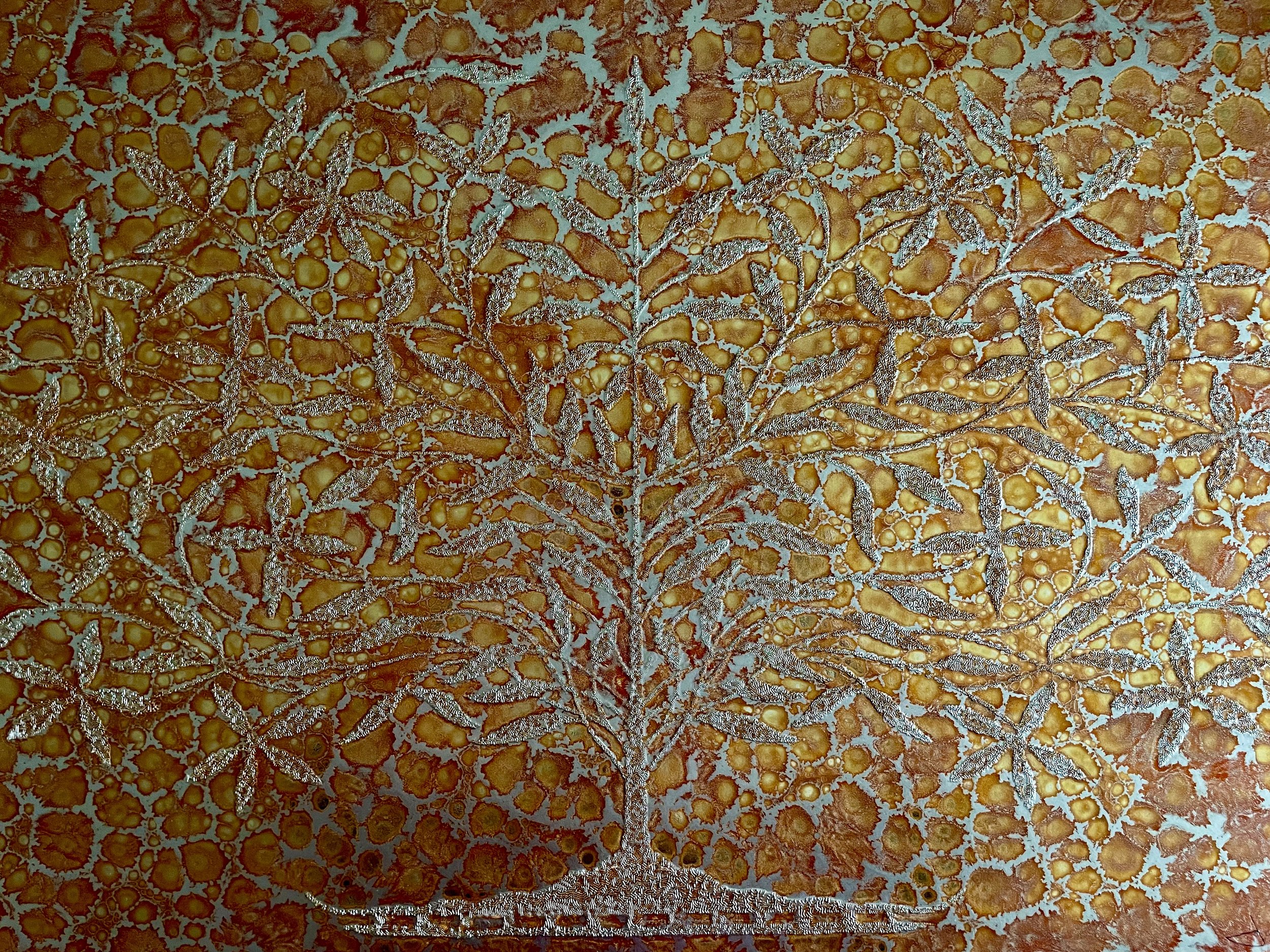 Image 2 of 7
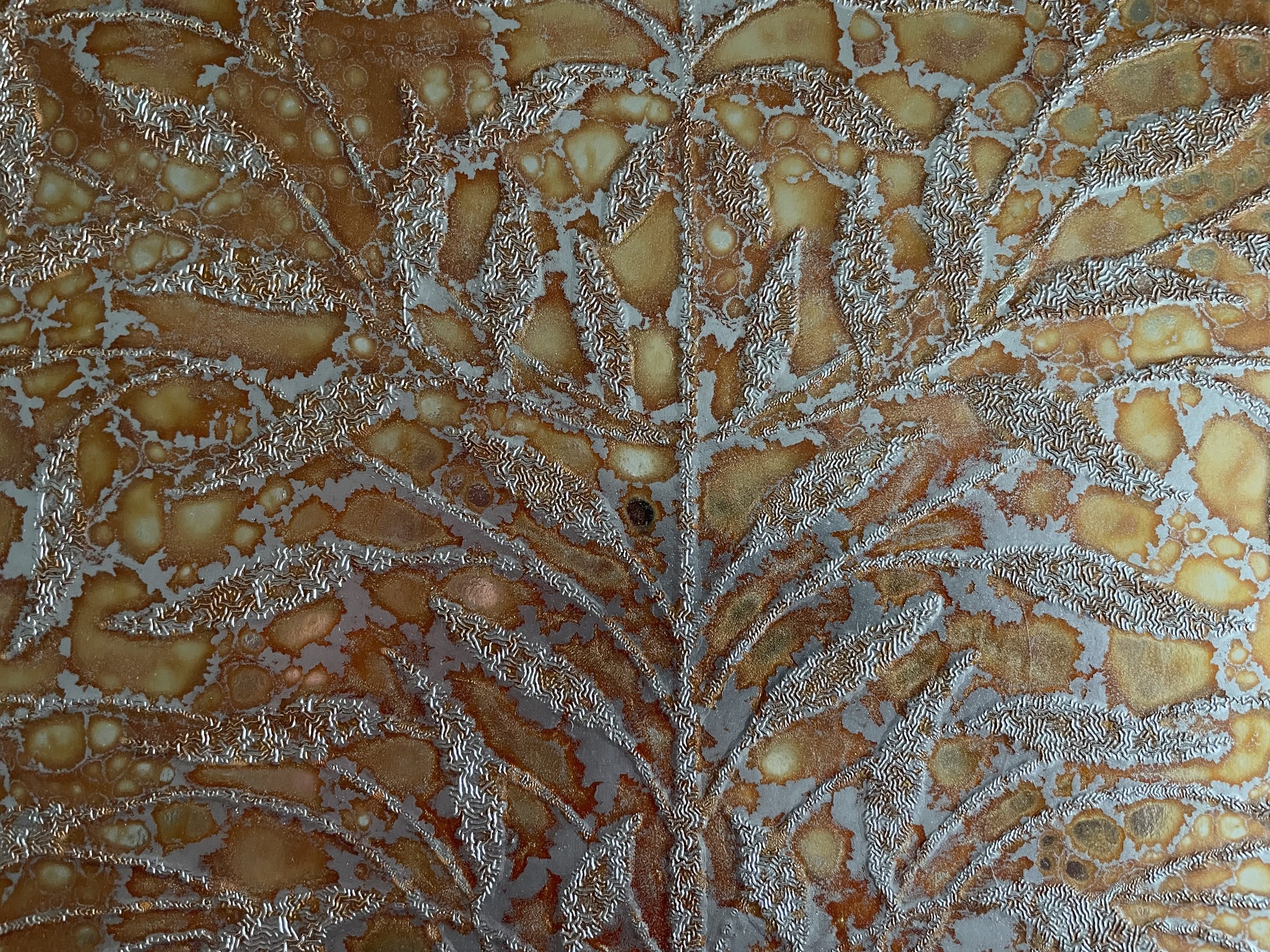 Image 3 of 7
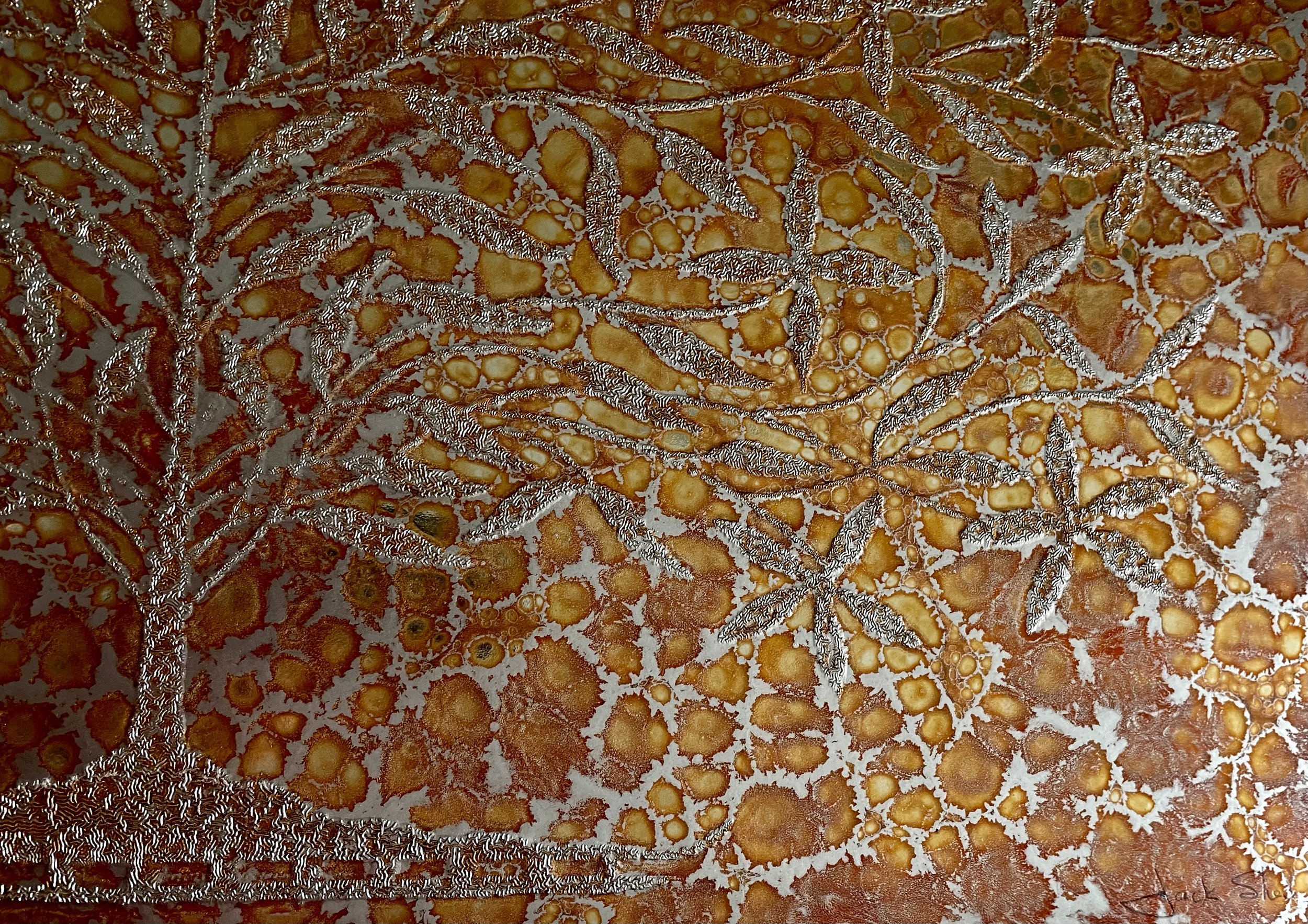 Image 4 of 7
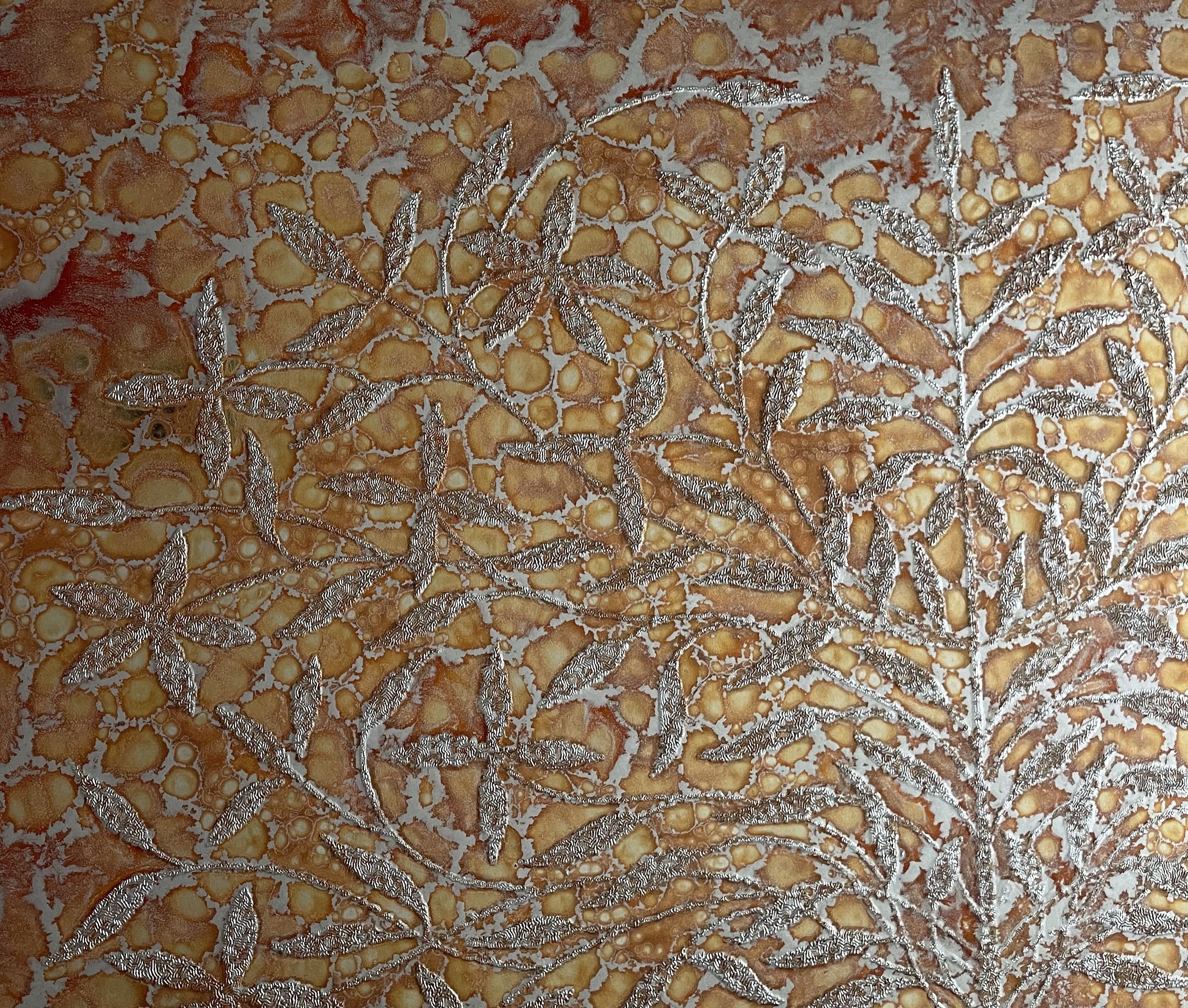 Image 5 of 7
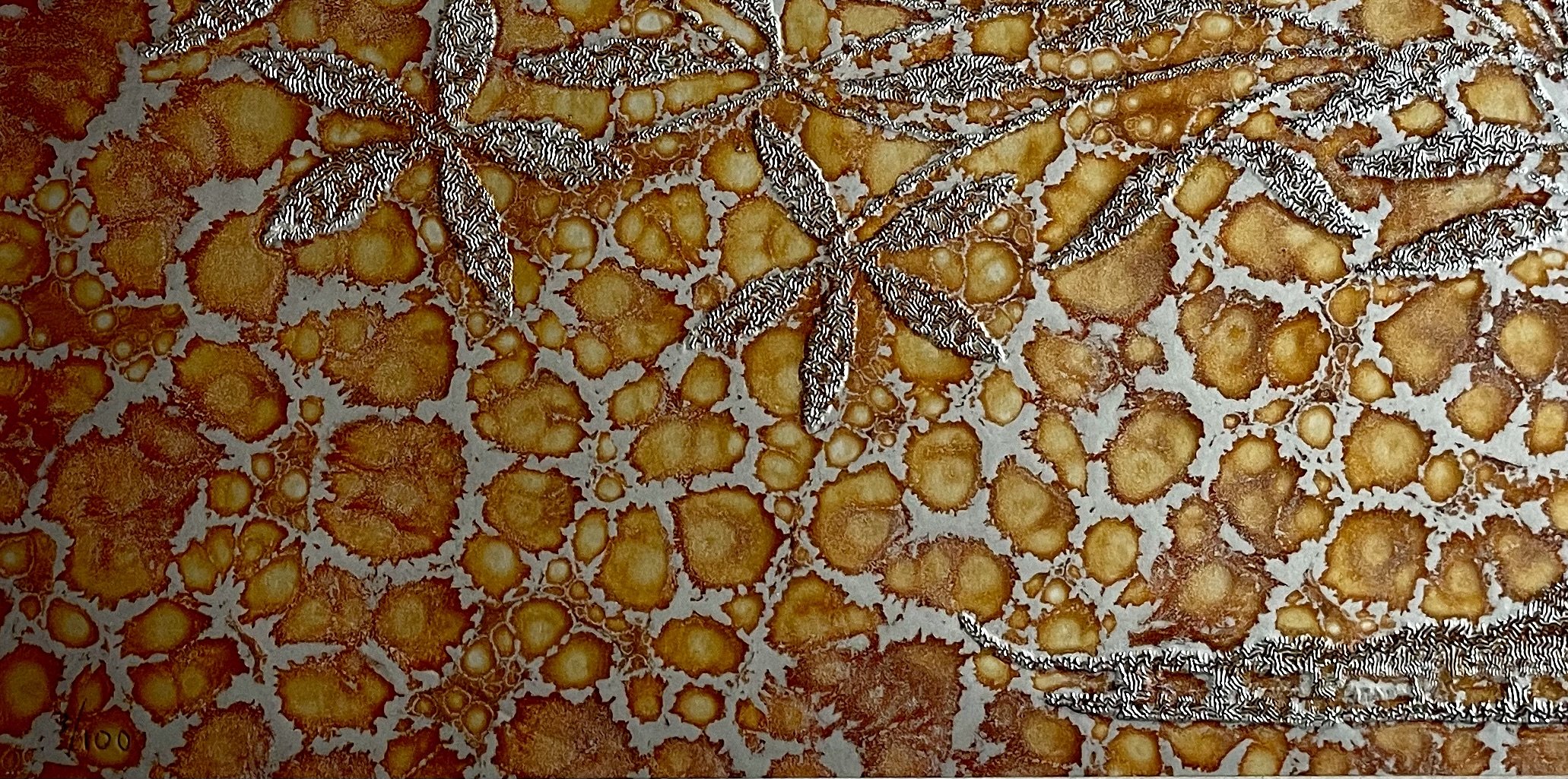 Image 6 of 7
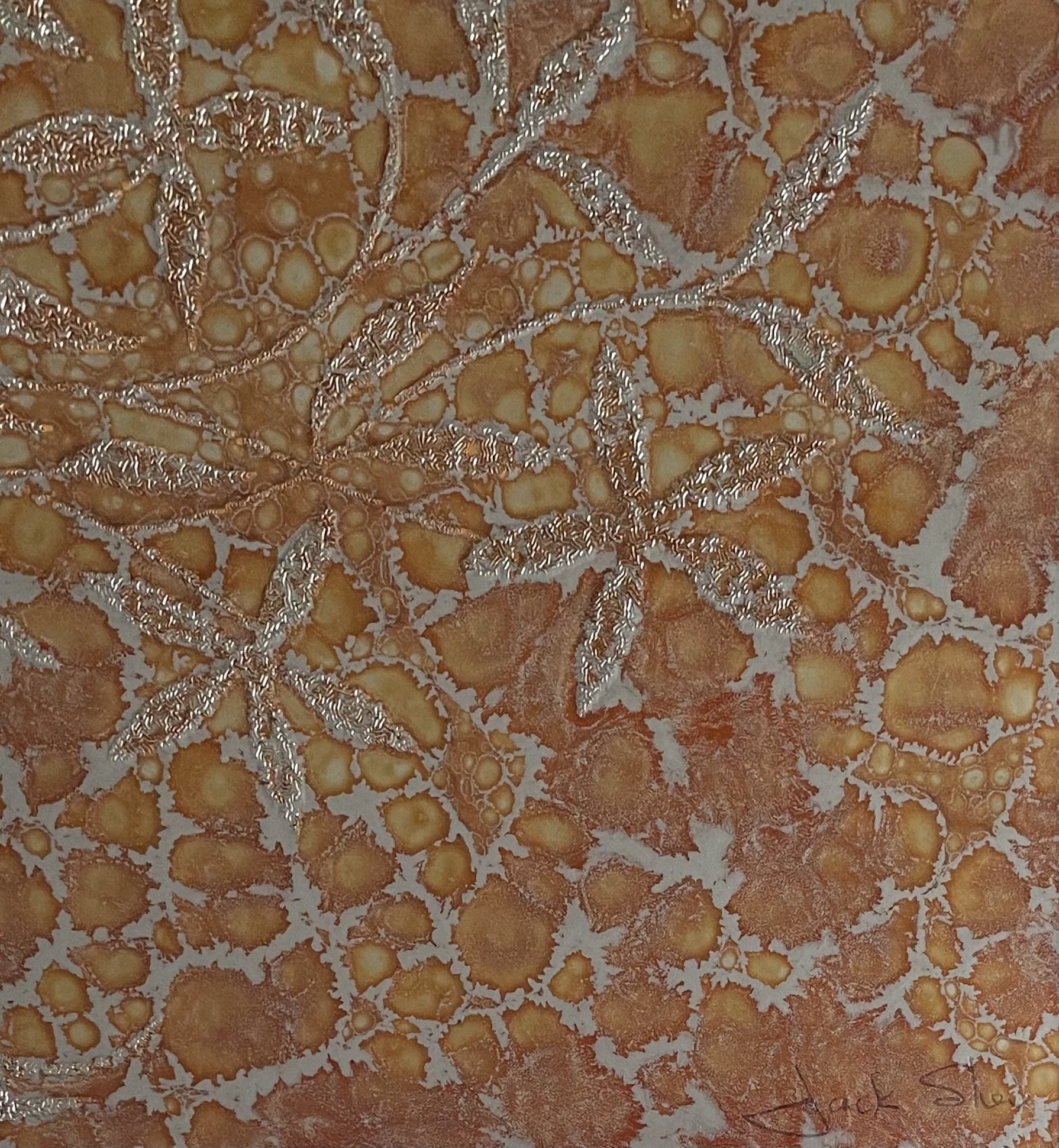 Image 7 of 7