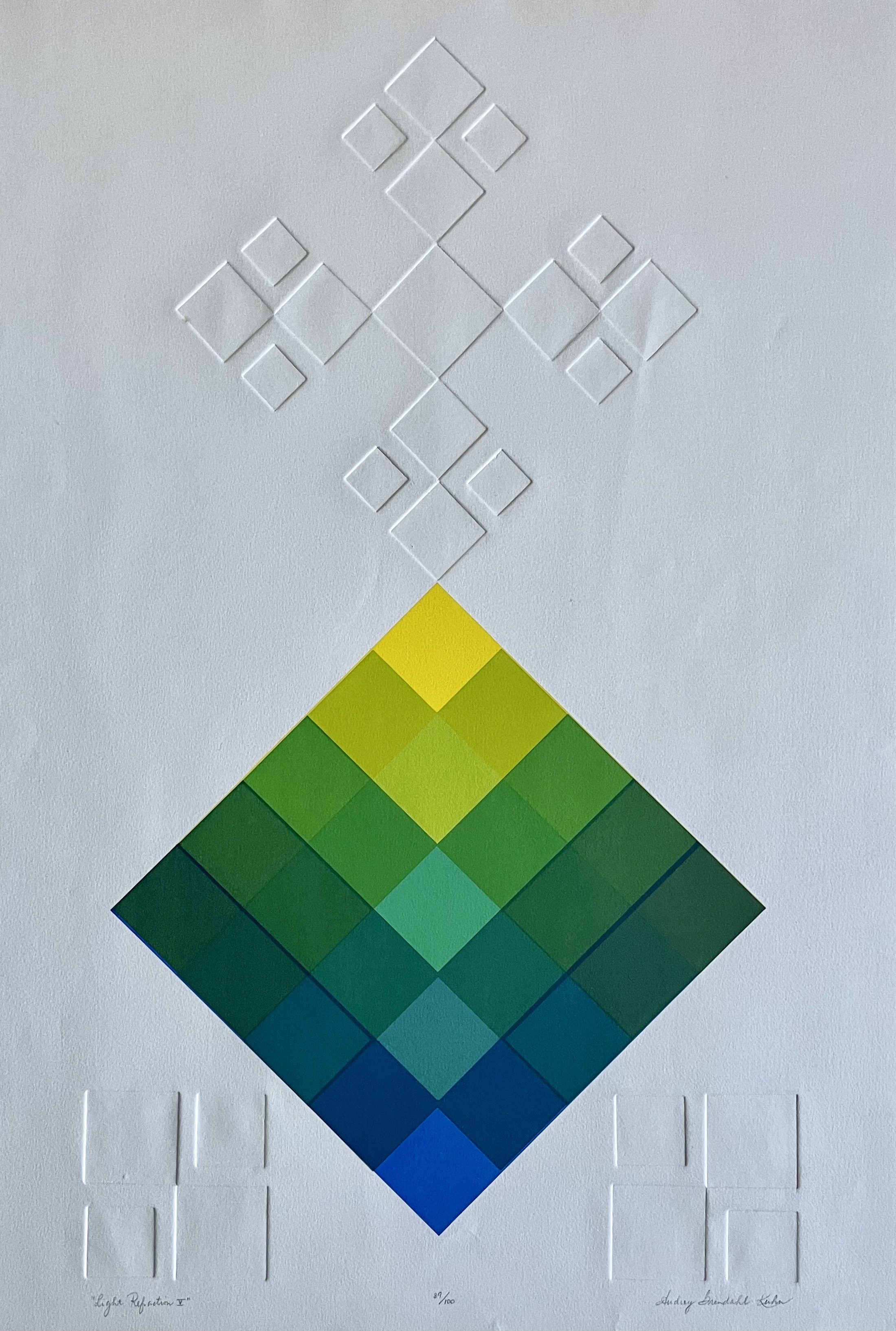
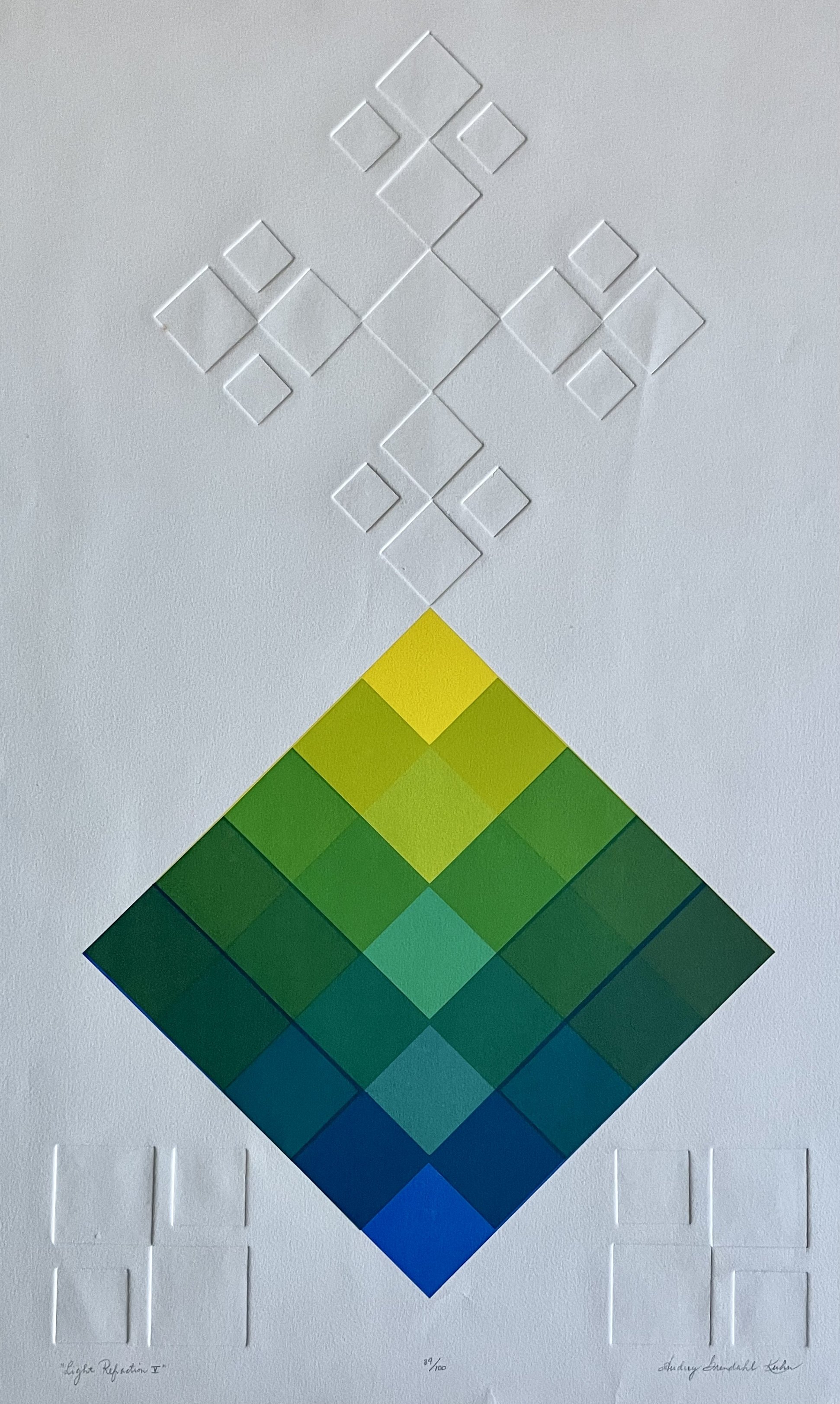
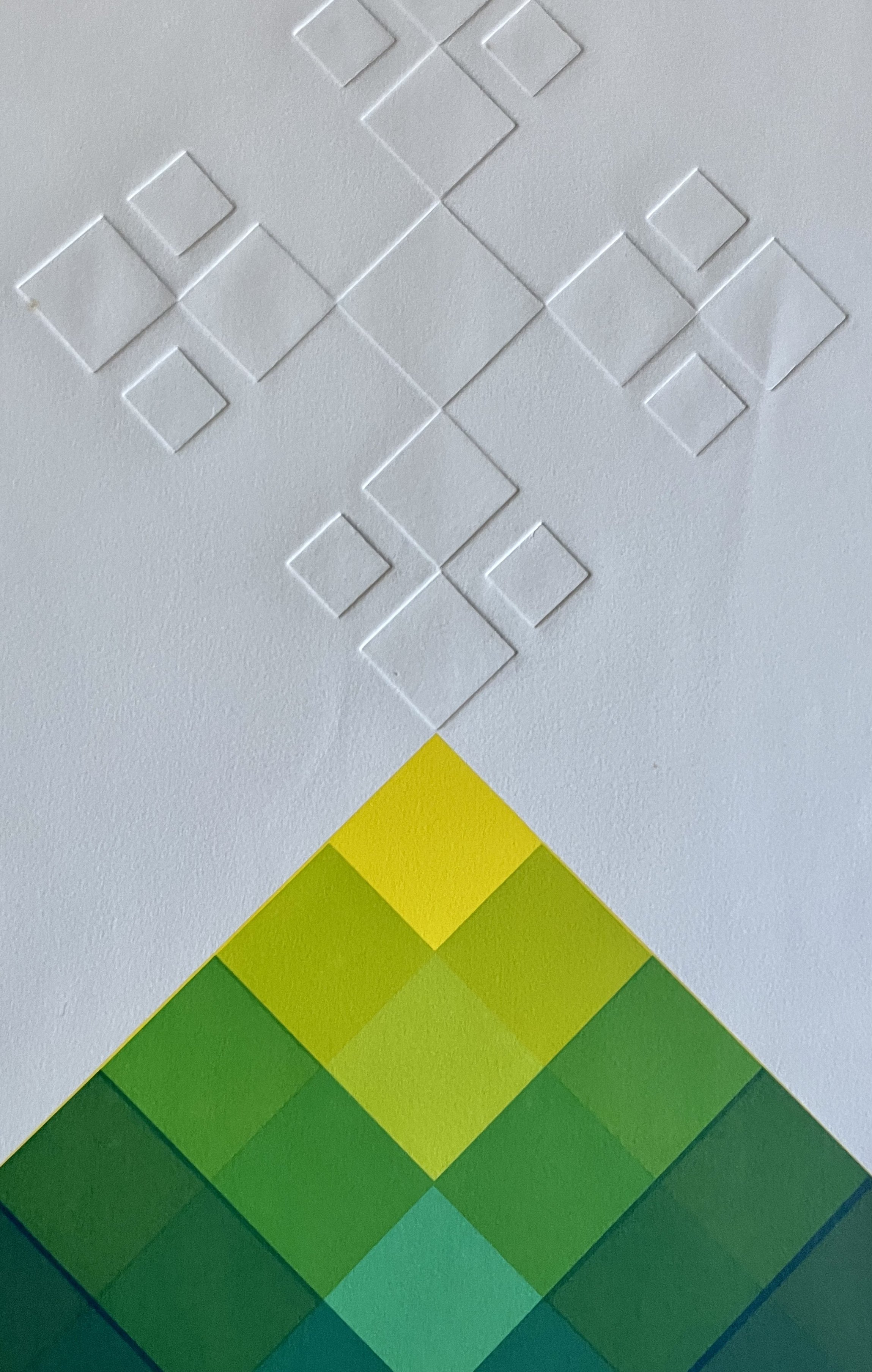
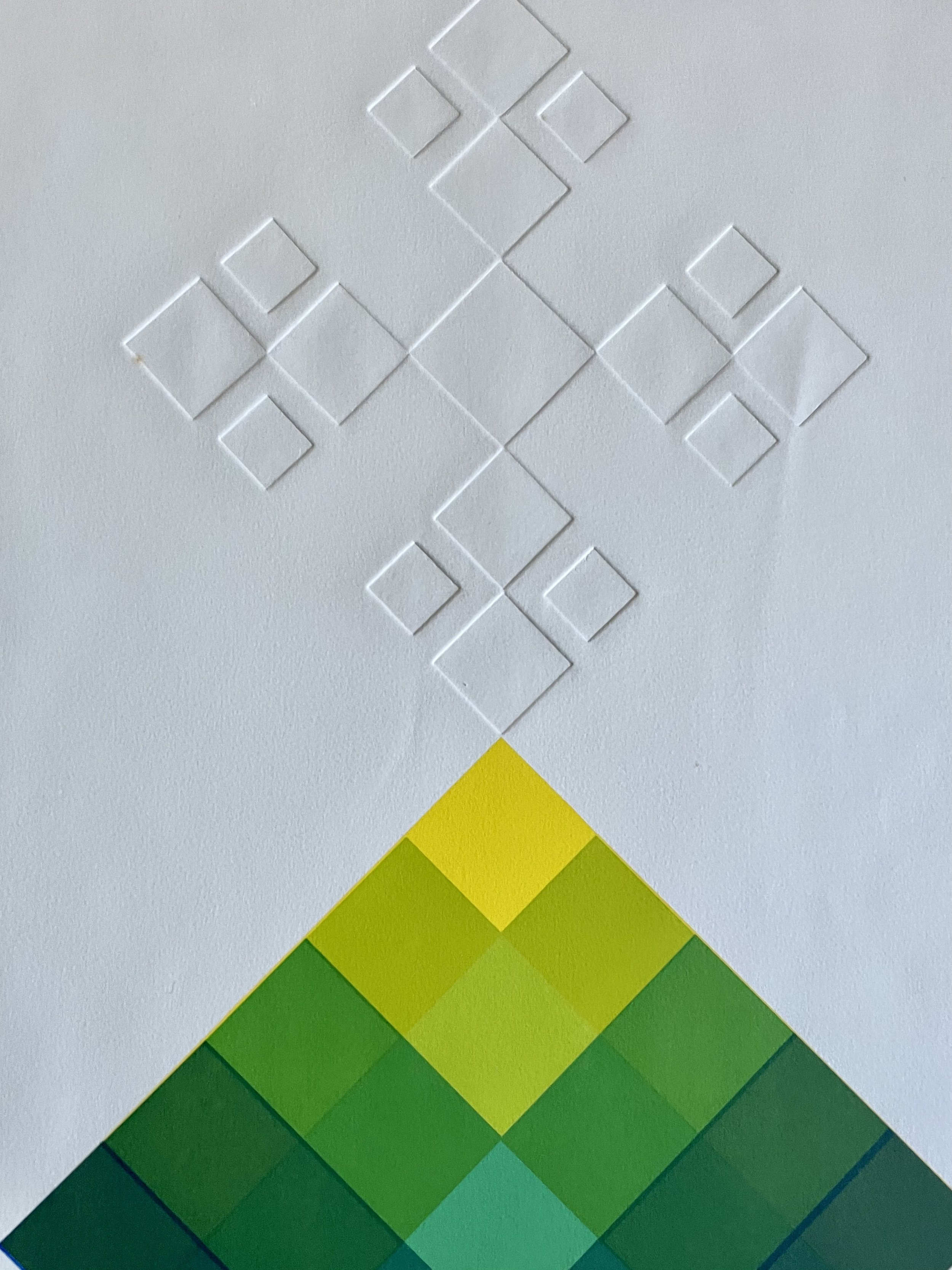
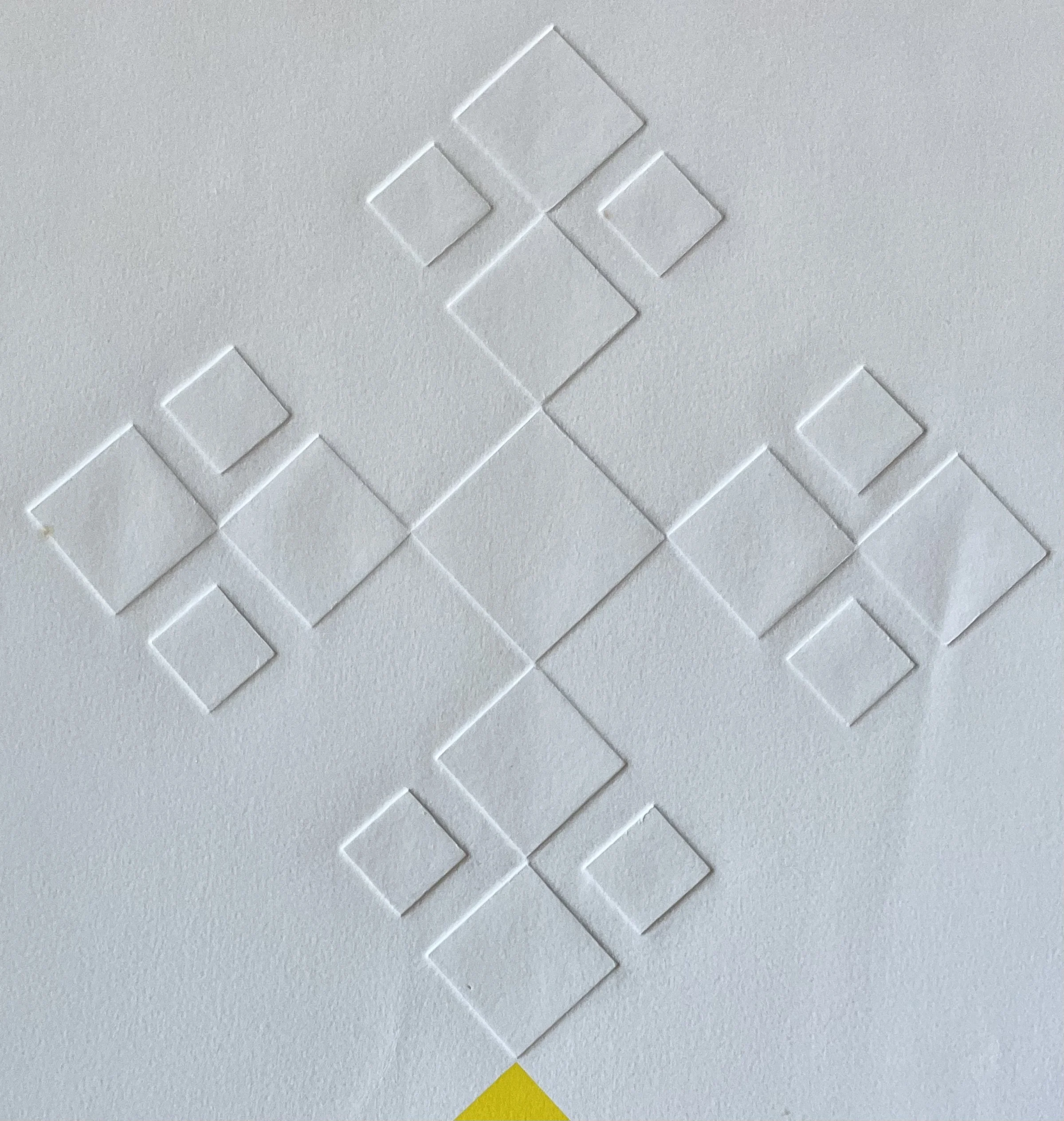
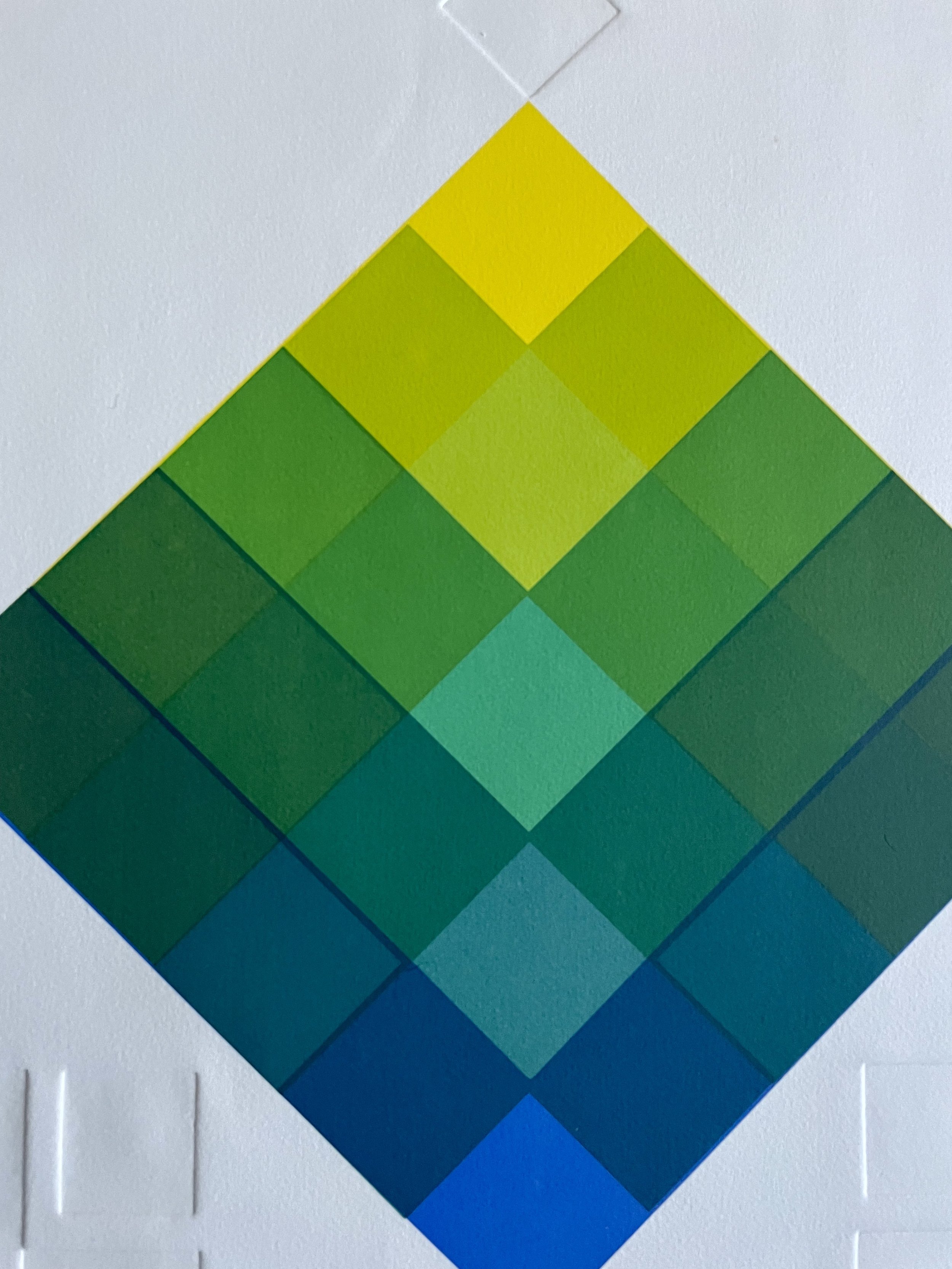
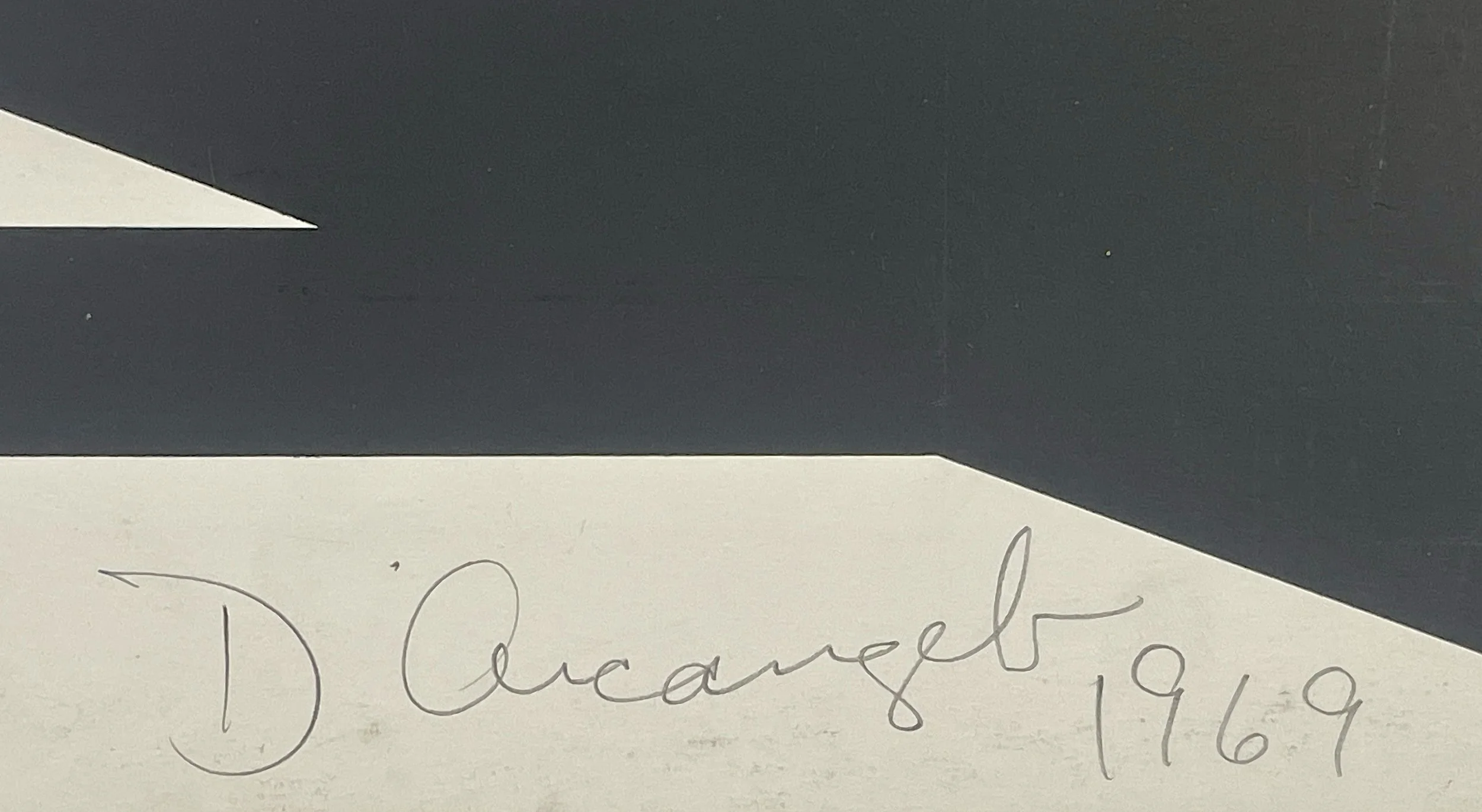
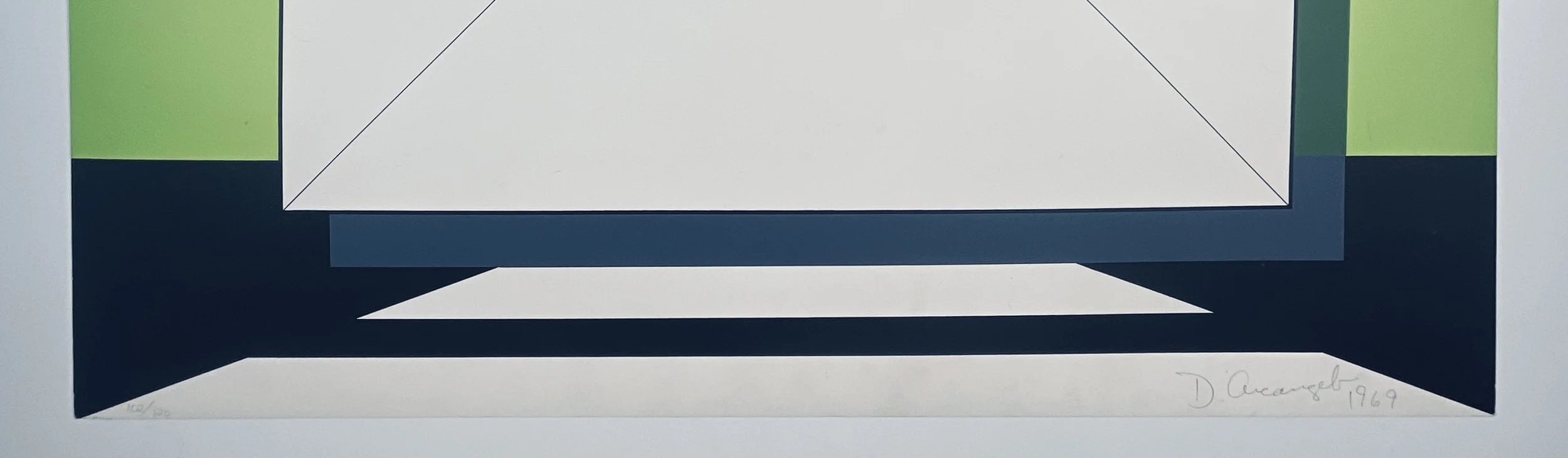
“Trees II,” John Campione (American, 20th c.), c.1970s serigraph, 30×22 in., hand-signed & numbered 81/150, refined modern landscape.
Trees II is a signed limited-edition serigraph by John Campione, a New York master screenprint printer and publisher active during the postwar print renaissance. Featuring layered tonal depth, refined registration, and a contemplative landscape composition, this vintage print exemplifies museum-level silkscreen craftsmanship and professional print-studio excellence.
Artwork Description
Trees II presents a quiet yet powerful grove of trees rendered through carefully layered screens that build depth, atmosphere, and visual rhythm. Campione’s restrained palette of earth tones and soft neutrals allows form and texture to guide the viewer’s eye, creating a sense of stillness and endurance long associated with arboreal imagery in art history.
The work reflects the discipline of a master printer: confident registration, subtle tonal transitions, and a painterly surface achieved entirely through silkscreen. Signed and numbered from a limited edition of 150, Trees II balances aesthetic calm with technical authority, making it an ideal acquisition for collectors of serious modern printmaking.
Artist Biography
John Campione (American, 20th century)
John Campione was a New York–based master screenprint printer, publisher, and print workshop director active during the postwar boom in American fine-art printmaking from the early 1970s through at least the 1980s. His career is documented primarily through major museum records, catalogues raisonnés, auction documentation, and professional print-studio listings, which consistently credit him as a printer—and in some instances a publisher—of museum-circulating silkscreen editions.
Campione is best known for his work as a master printer for leading contemporary artists, most notably Sol LeWitt, whose screenprints from the early 1970s frequently list Campione as printer and are now held in major institutional collections. His name also appears in edition credits associated with Frank Stella, where he is identified as a screenprinting contributor within established publishing frameworks, and in print scholarship documenting early collaborative printer relationships with Robert Mangold—relationships that indicate a high level of technical trust and long-term process collaboration.
A key professional anchor in Campione’s career is Rose Hill Editions, New York, where he is listed as Director beginning in 1976. In this role, Campione operated within the professional publisher-printer model that defined serious contemporary print production, overseeing technical execution, managing edition workflows, and ensuring archival standards suitable for museum acquisition and collector circulation.
Across multiple major institutions—including the Metropolitan Museum of Art, Dia Art Foundation, Detroit Institute of Arts, Minneapolis Institute of Art, and Brooklyn Museum—Campione is consistently credited in official object records as printer or publisher. This repeated institutional documentation confirms his standing as a professional operating at the highest level of print production during a formative period in modern and contemporary American printmaking.
Campione’s own serigraphs reflect the same mastery evident in his collaborative work. Characterized by refined registration, layered color, and controlled tonal depth, his personal prints demonstrate a sophisticated understanding of the silkscreen medium and its ability to bridge drawing, painting, and graphic structure. Today, his work is increasingly recognized by collectors who value the essential role of master printers in shaping the visual and technical language of postwar editions.
John Campione, Trees II — c.1970s serigraph on paper, signed and numbered 81/150, 30 × 22 in. A refined landscape by a New York master printer and Director of Rose Hill Editions.
Certificate of Value & Authentication
This certifies that Trees II is an original hand-pulled serigraph by John Campione, American master screenprint printer, publisher, and print workshop director. The work is signed and numbered 81/150 in pencil and reflects professional silkscreen techniques consistent with Campione’s documented practice. Provenance traces to Mitch Morse Gallery Inc., New York City. Authenticity and condition verified.
Provenance Chain
Artist: John Campione (American, 20th century)
Print Workshop / Publisher Context: Rose Hill Editions, New York
Gallery: Mitch Morse Gallery Inc., New York City
Current Owner: Artfind Gallery, Washington, DC
“Trees II,” John Campione (American, 20th c.), c.1970s serigraph, 30×22 in., hand-signed & numbered 81/150, refined modern landscape.
Trees II is a signed limited-edition serigraph by John Campione, a New York master screenprint printer and publisher active during the postwar print renaissance. Featuring layered tonal depth, refined registration, and a contemplative landscape composition, this vintage print exemplifies museum-level silkscreen craftsmanship and professional print-studio excellence.
Artwork Description
Trees II presents a quiet yet powerful grove of trees rendered through carefully layered screens that build depth, atmosphere, and visual rhythm. Campione’s restrained palette of earth tones and soft neutrals allows form and texture to guide the viewer’s eye, creating a sense of stillness and endurance long associated with arboreal imagery in art history.
The work reflects the discipline of a master printer: confident registration, subtle tonal transitions, and a painterly surface achieved entirely through silkscreen. Signed and numbered from a limited edition of 150, Trees II balances aesthetic calm with technical authority, making it an ideal acquisition for collectors of serious modern printmaking.
Artist Biography
John Campione (American, 20th century)
John Campione was a New York–based master screenprint printer, publisher, and print workshop director active during the postwar boom in American fine-art printmaking from the early 1970s through at least the 1980s. His career is documented primarily through major museum records, catalogues raisonnés, auction documentation, and professional print-studio listings, which consistently credit him as a printer—and in some instances a publisher—of museum-circulating silkscreen editions.
Campione is best known for his work as a master printer for leading contemporary artists, most notably Sol LeWitt, whose screenprints from the early 1970s frequently list Campione as printer and are now held in major institutional collections. His name also appears in edition credits associated with Frank Stella, where he is identified as a screenprinting contributor within established publishing frameworks, and in print scholarship documenting early collaborative printer relationships with Robert Mangold—relationships that indicate a high level of technical trust and long-term process collaboration.
A key professional anchor in Campione’s career is Rose Hill Editions, New York, where he is listed as Director beginning in 1976. In this role, Campione operated within the professional publisher-printer model that defined serious contemporary print production, overseeing technical execution, managing edition workflows, and ensuring archival standards suitable for museum acquisition and collector circulation.
Across multiple major institutions—including the Metropolitan Museum of Art, Dia Art Foundation, Detroit Institute of Arts, Minneapolis Institute of Art, and Brooklyn Museum—Campione is consistently credited in official object records as printer or publisher. This repeated institutional documentation confirms his standing as a professional operating at the highest level of print production during a formative period in modern and contemporary American printmaking.
Campione’s own serigraphs reflect the same mastery evident in his collaborative work. Characterized by refined registration, layered color, and controlled tonal depth, his personal prints demonstrate a sophisticated understanding of the silkscreen medium and its ability to bridge drawing, painting, and graphic structure. Today, his work is increasingly recognized by collectors who value the essential role of master printers in shaping the visual and technical language of postwar editions.
John Campione, Trees II — c.1970s serigraph on paper, signed and numbered 81/150, 30 × 22 in. A refined landscape by a New York master printer and Director of Rose Hill Editions.
Certificate of Value & Authentication
This certifies that Trees II is an original hand-pulled serigraph by John Campione, American master screenprint printer, publisher, and print workshop director. The work is signed and numbered 81/150 in pencil and reflects professional silkscreen techniques consistent with Campione’s documented practice. Provenance traces to Mitch Morse Gallery Inc., New York City. Authenticity and condition verified.
Provenance Chain
Artist: John Campione (American, 20th century)
Print Workshop / Publisher Context: Rose Hill Editions, New York
Gallery: Mitch Morse Gallery Inc., New York City
Current Owner: Artfind Gallery, Washington, DC
 Image 1 of 9
 Image 2 of 9
 Image 3 of 9
 Image 4 of 9
 Image 5 of 9
 Image 6 of 9
 Image 7 of 9
 Image 8 of 9
 Image 9 of 9