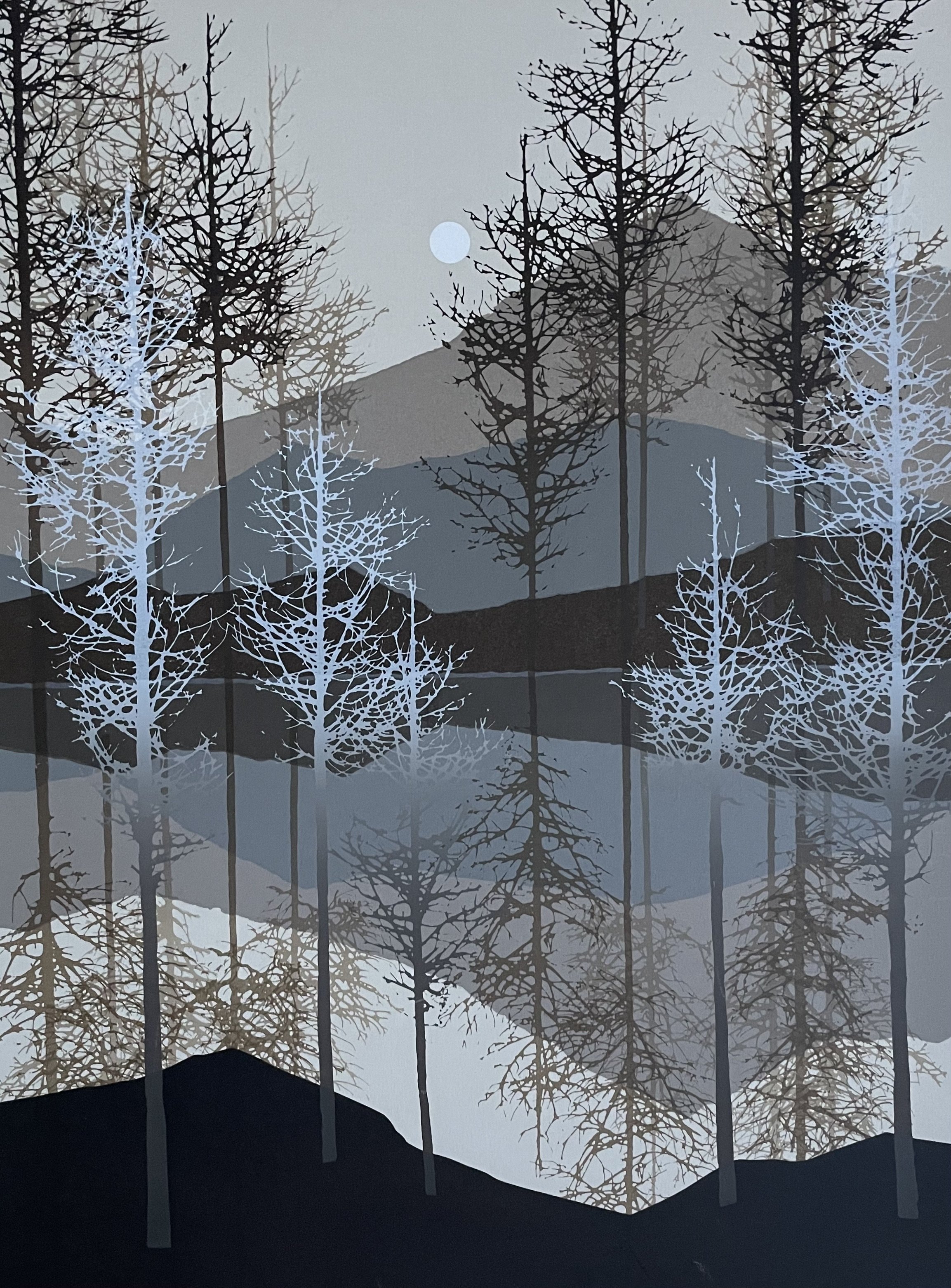
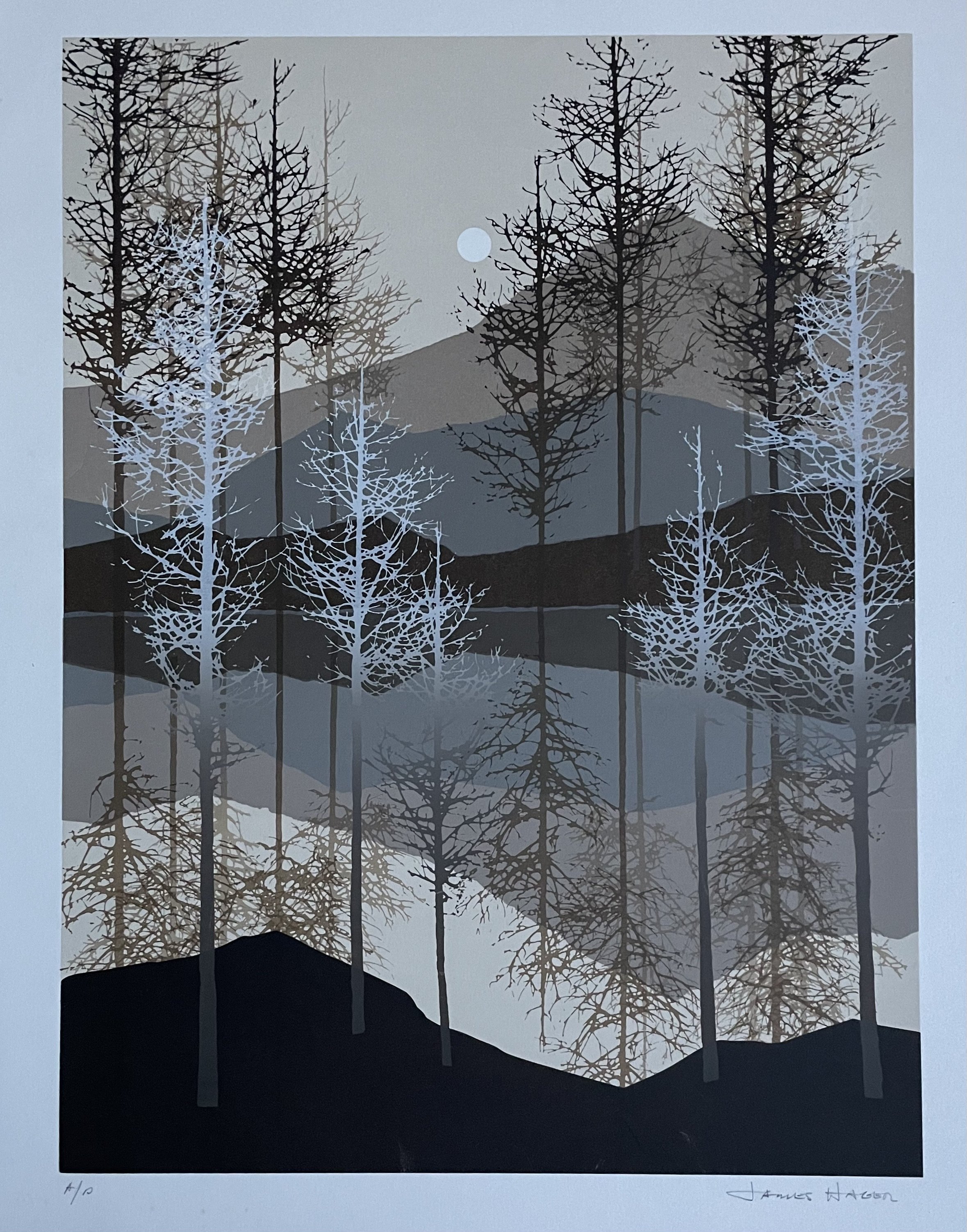
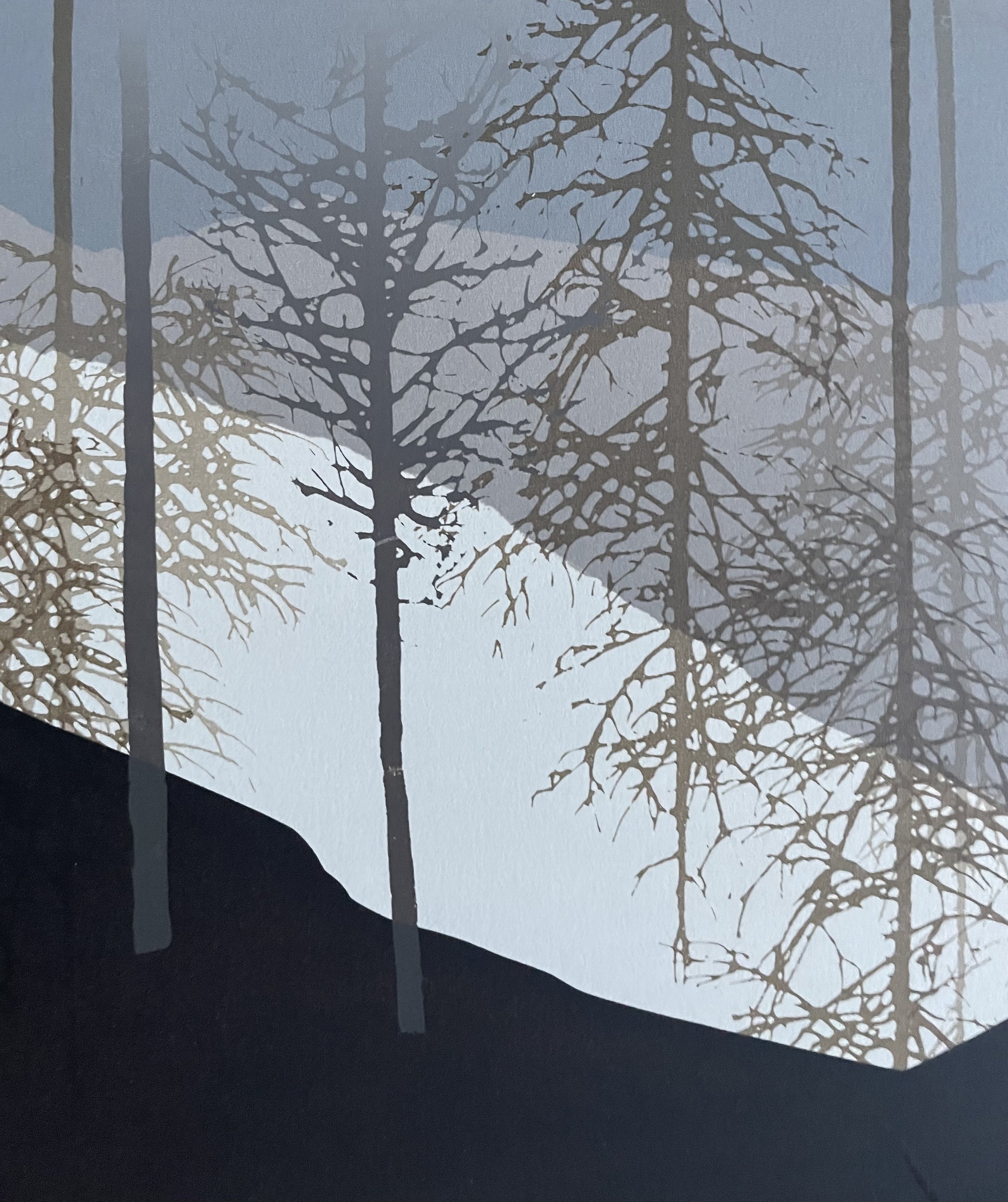
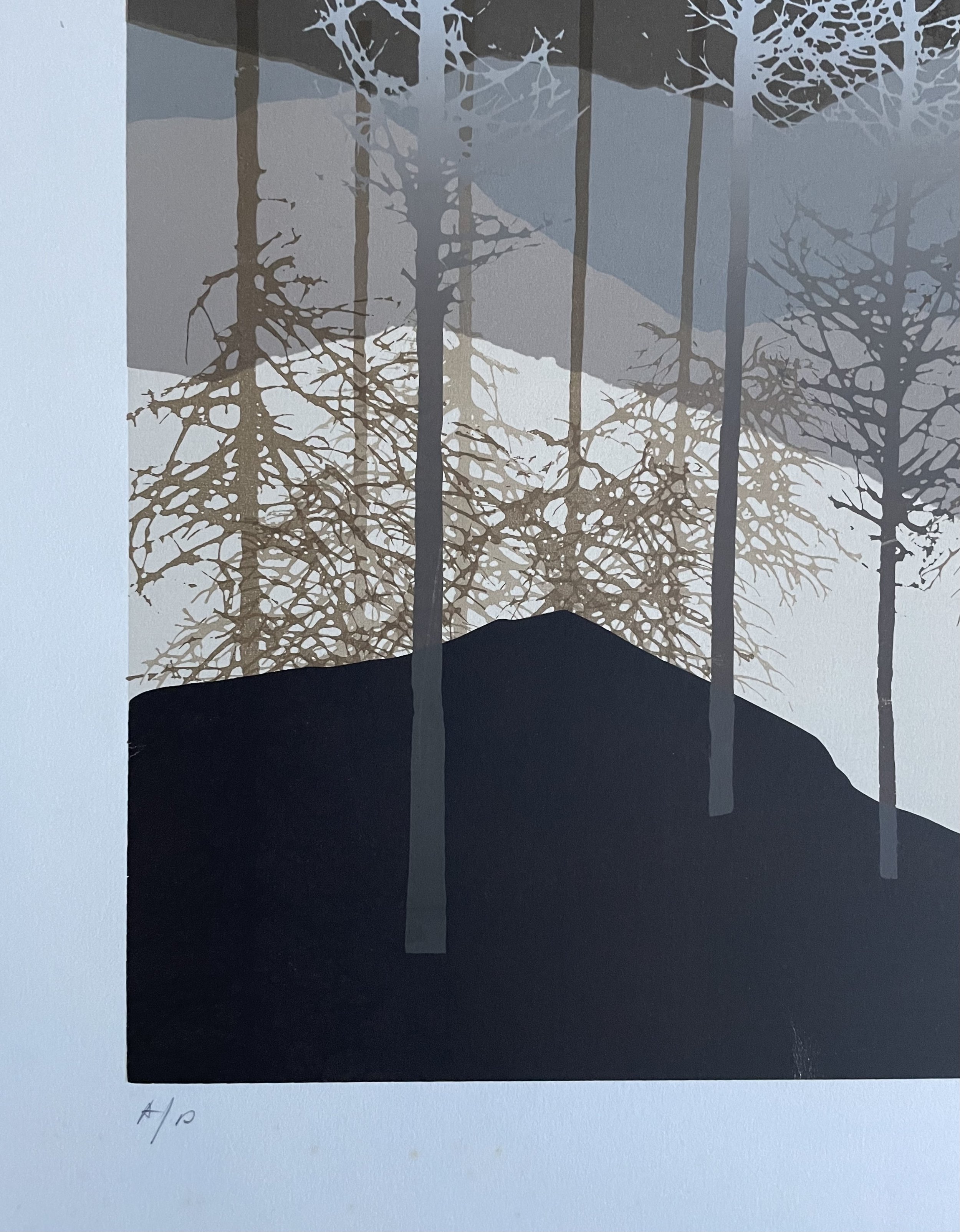
“Tundra” by Robert G. Wilson is a serene 1970s landscape serigraph capturing layered alpine terrain and reflective water through minimalist color fields and atmospheric depth.
Tundra exemplifies Robert G. Wilson’s signature approach to landscape abstraction, blending minimalist structure with a profound sense of place. The composition depicts a tranquil alpine basin framed by silhouetted forest forms, receding mountain ridges, and a luminous body of water that anchors the scene. The restrained palette of cool blues, muted grays, and earthy neutrals creates a contemplative mood, evoking vastness, silence, and natural balance.
Artwork Description
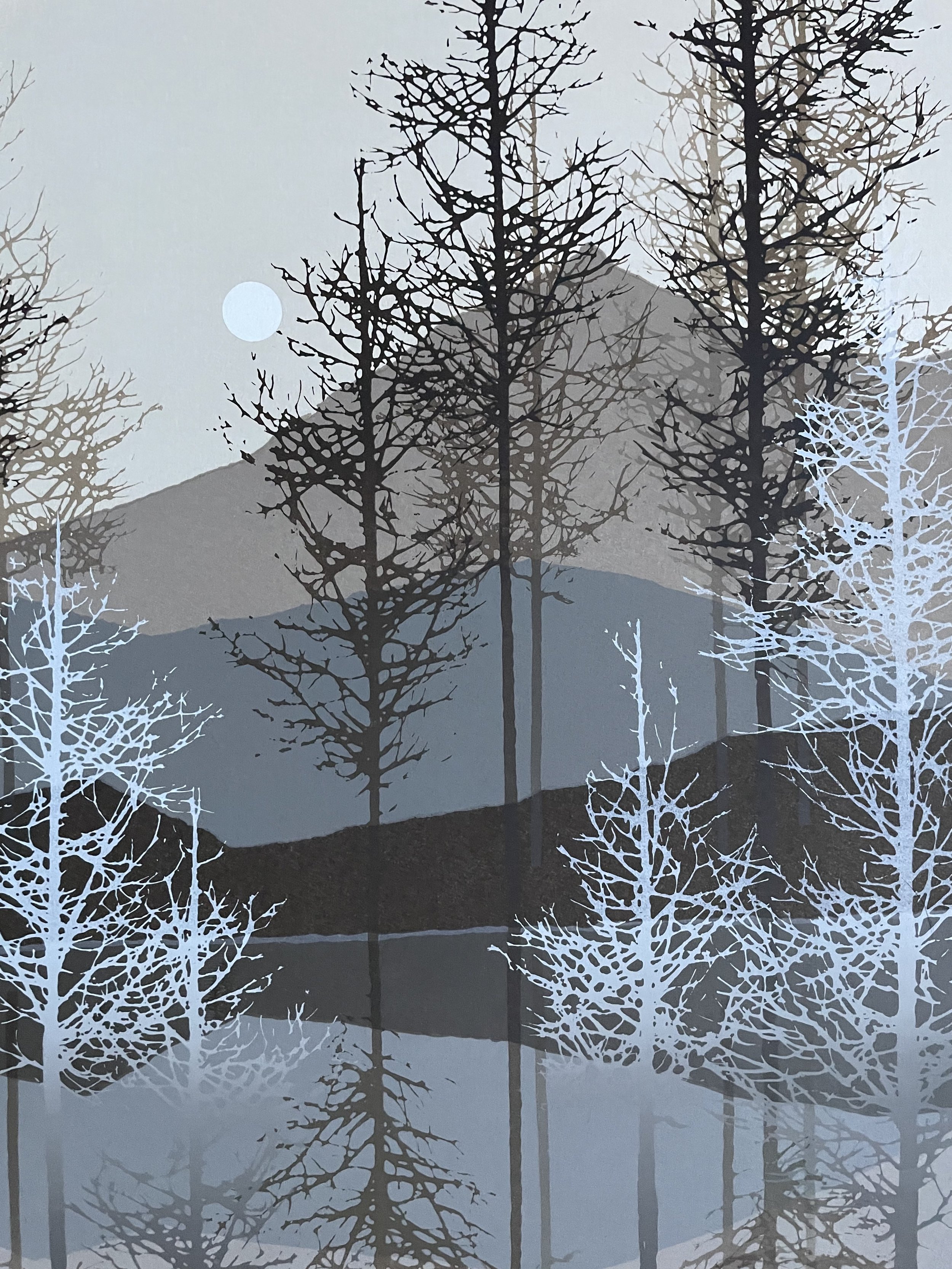
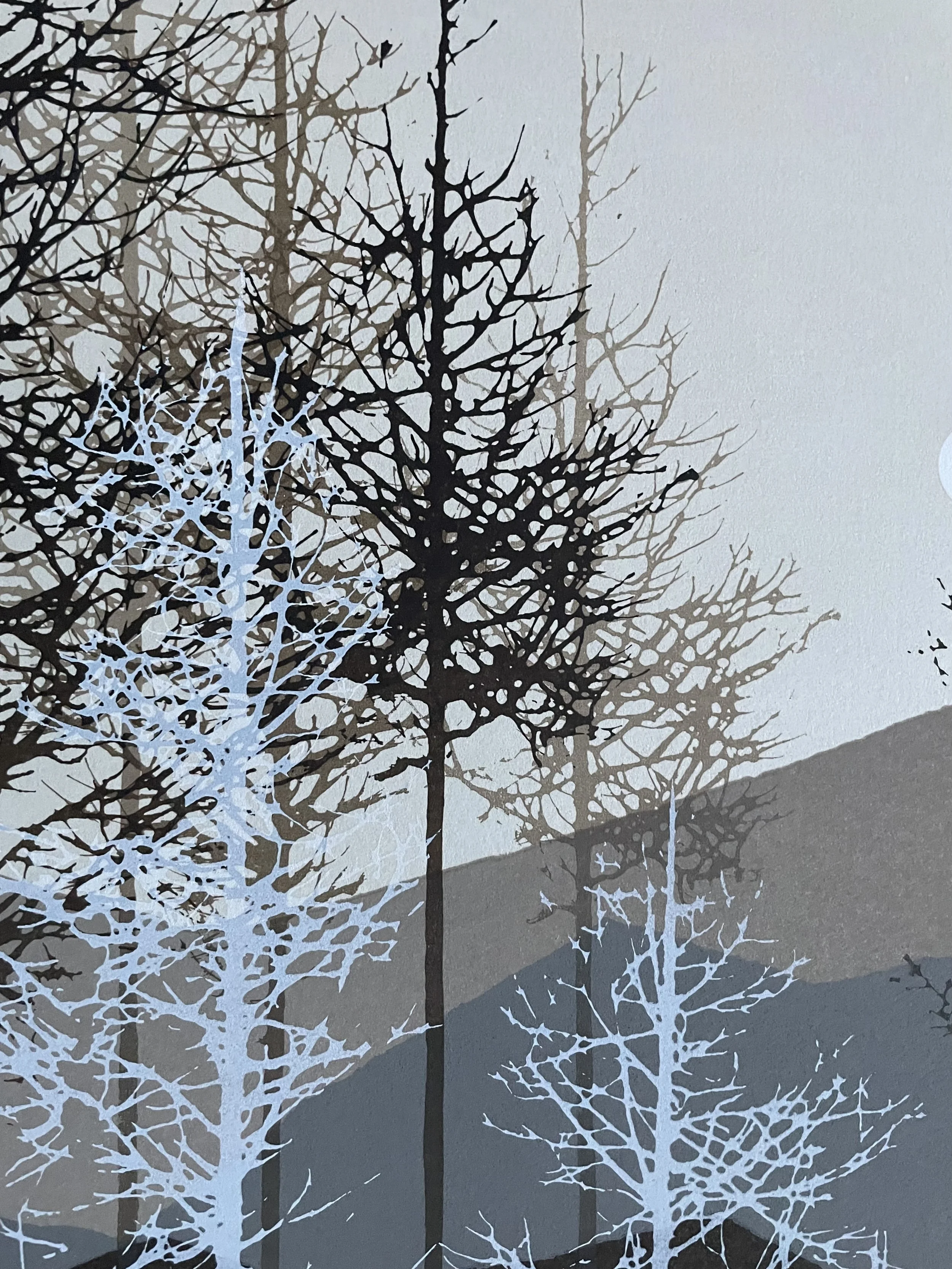
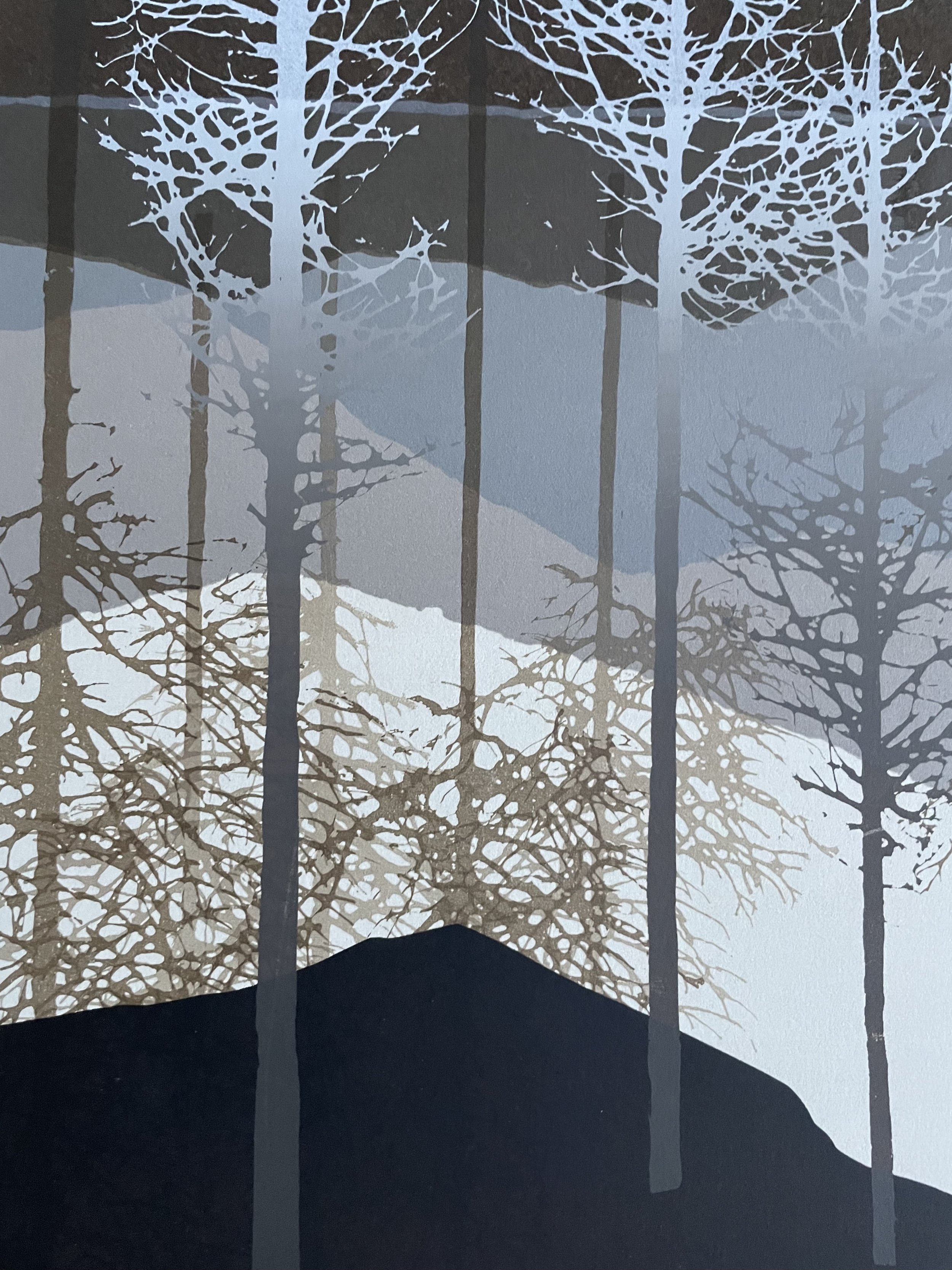
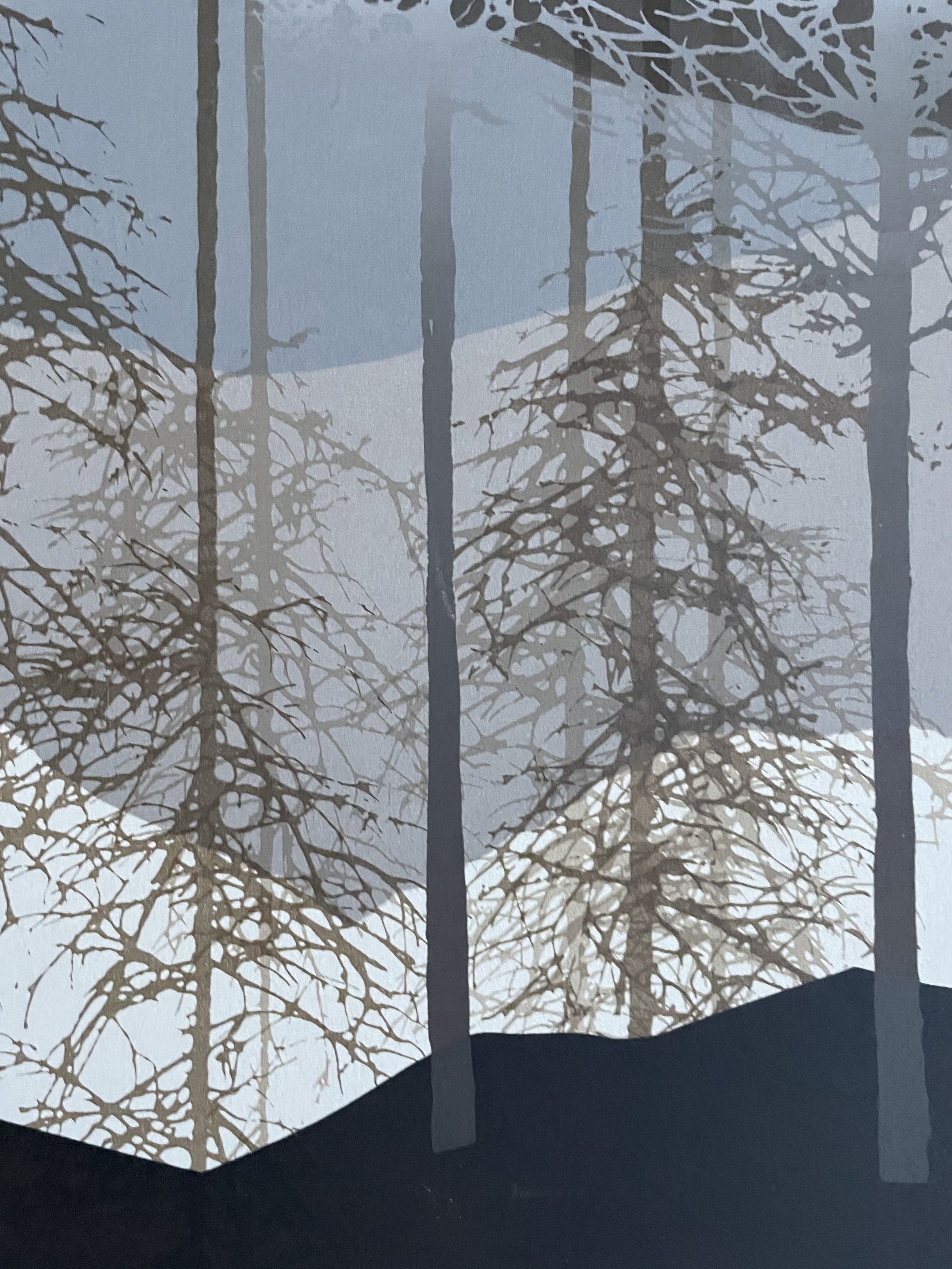
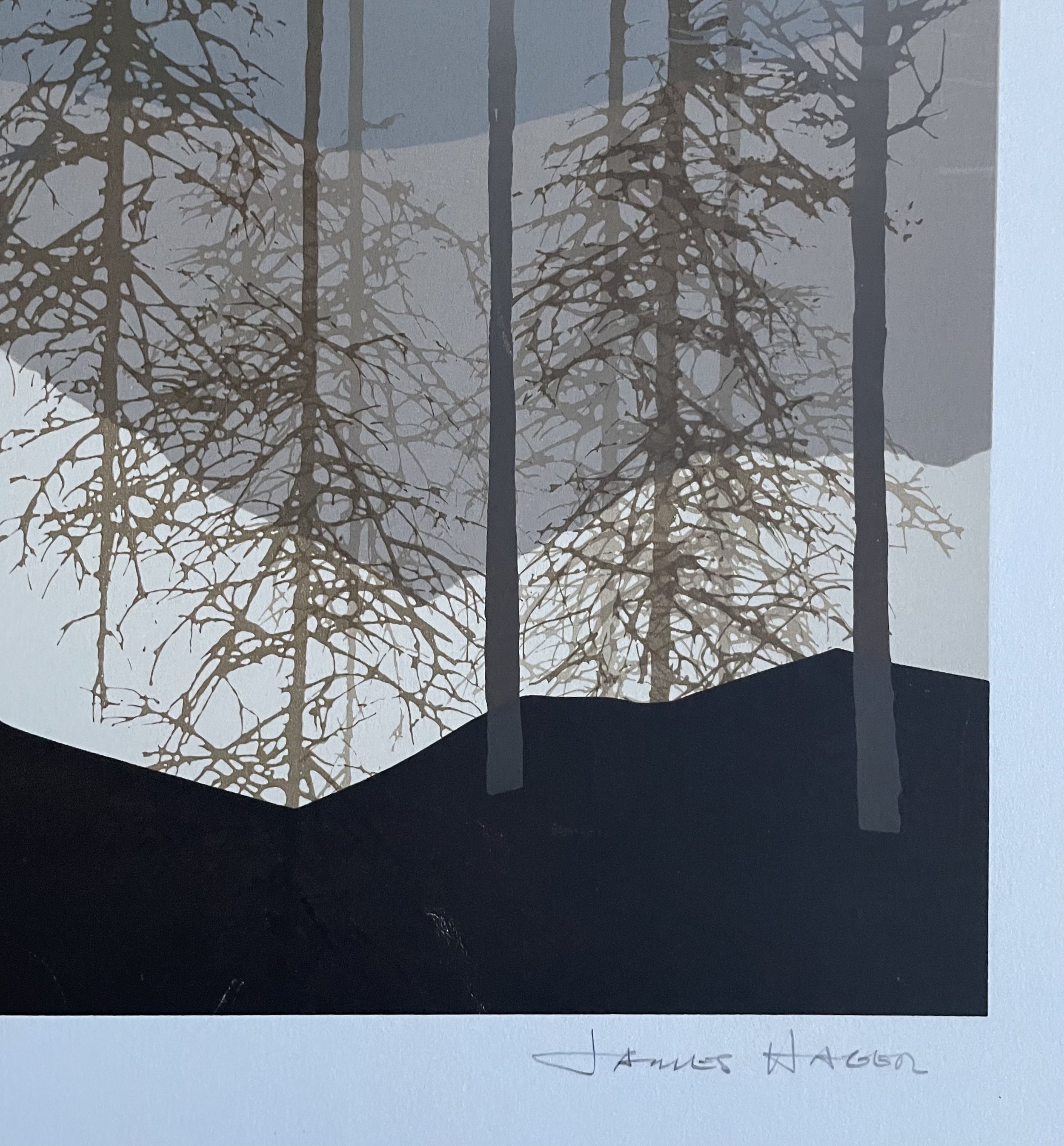
The image is constructed through clean, sharply defined color planes rather than tonal modeling, a hallmark of Wilson’s printmaking style. Foreground trees are rendered as intricate, high-contrast silhouettes, while distant mountains dissolve into soft, layered shapes, producing depth through chromatic recession rather than linear perspective. The water surface reflects surrounding forms with subtle tonal variation, reinforcing the work’s meditative stillness.
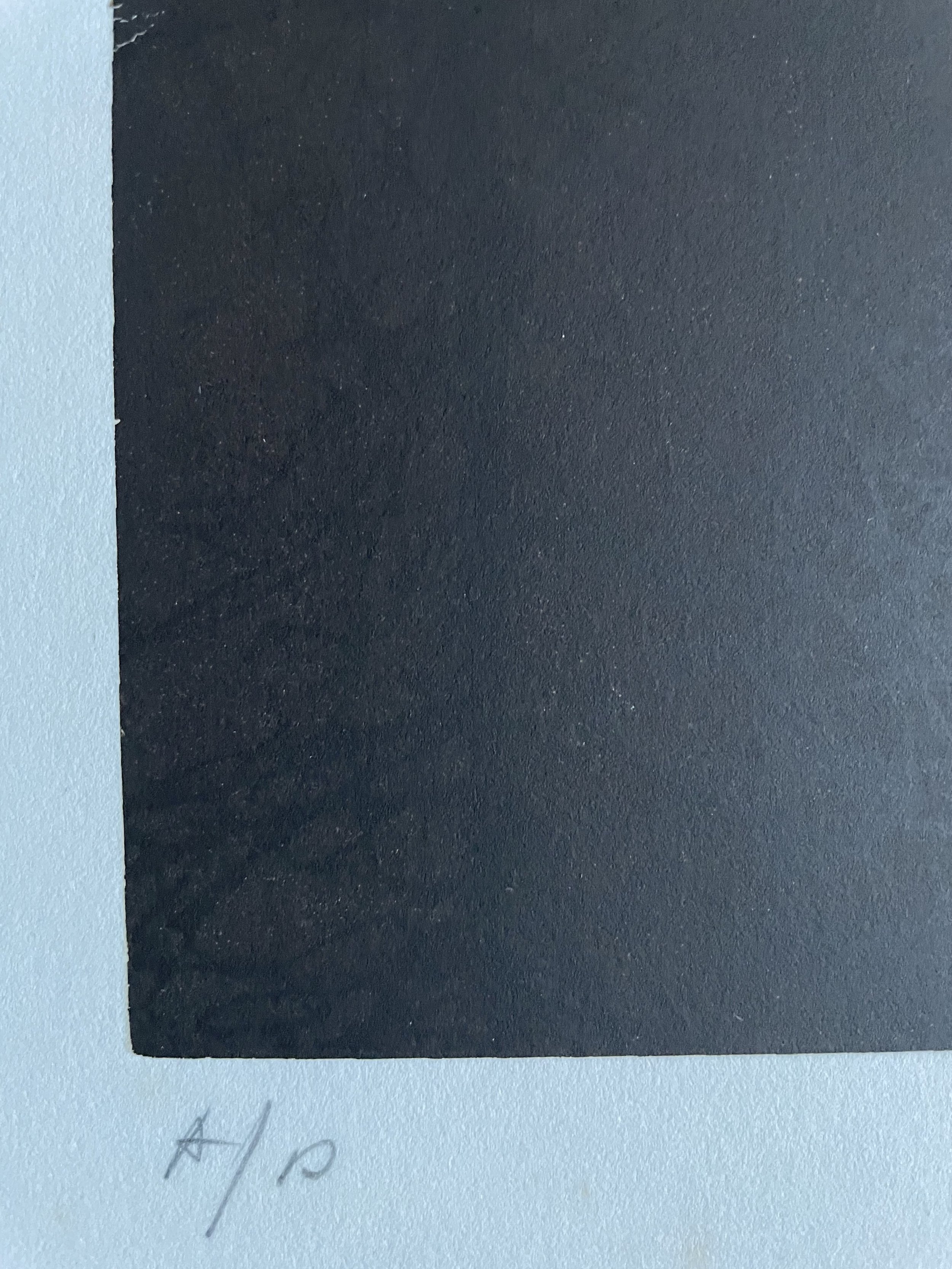
Technically, the print displays all the defining characteristics of a serigraph (silkscreen): opaque, evenly applied color fields; crisp edges between layers; and clearly separated passes of ink. There is no evidence of lithographic crayon texture, plate grain, or tonal bleed typical of lithography. The consistent flatness and precision of the color layers confirm a multi-screen silkscreen process.
The work is pencil-signed “Robert Wilson” and titled Tundra beneath the image, with the edition number 17/375 noted at lower left. The large edition size reflects the popularity of Wilson’s landscapes during the 1970s–1980s and their broad appeal to collectors of modern American regionalism.
Artist Biography — Robert G. Wilson
Robert G. Wilson (American, born 1935) is a landscape artist best known for his serene, stylized interpretations of mountains, forests, and waterways of the American West. Born in Phoenix, Arizona, Wilson developed an early fascination with desert plateaus and mountain ranges, landscapes that would become central to his artistic vision throughout his career.
Wilson studied art privately and through regional programs rather than a single academic institution, allowing him to develop a highly personal visual language. His work reflects influences from modernist landscape traditions, including mid-century American abstraction, Japanese woodblock composition, and the simplified spatial structures of Color Field painting. Despite these influences, Wilson’s work remains deeply grounded in direct observation of nature.
By the late 1960s and throughout the 1970s, Wilson focused extensively on printmaking, particularly serigraphy, which allowed him to translate his paintings into clean, luminous editions with broad accessibility. His prints were widely exhibited and sold across the United States, with strong markets in the Southwest, Pacific Northwest, and Northeast. He exhibited in major cities including Chicago, Denver, Atlanta, Detroit, San Jose, and Scottsdale.
Wilson was represented by respected galleries and publishers, including Mitch Morse Gallery, which played a significant role in distributing his work nationally. His prints became especially popular among collectors drawn to contemplative landscapes that balance modern design with emotional resonance.
Wilson has described his creative process as immersive and intuitive, often stating that he seeks to “become one with the land” before translating it into simplified form. His legacy rests on his ability to distill vast, powerful landscapes into timeless, meditative compositions that remain widely collected today.
Robert G. Wilson (American, b.1935), Tundra, c.1970s, serigraph, 25 × 32 in., signed and numbered 17/375, excellent condition.
Certificate of Value & Authentication
This certifies that Tundra is an original limited-edition serigraph by Robert G. Wilson, produced circa the 1970s. The work is hand-signed in pencil by the artist and numbered 17 from an edition of 375. Based on stylistic analysis, printmaking technique, signature verification, and provenance through Mitch Morse Gallery, the artwork is confirmed as authentic.
Provenance
Private Collection →
Mitch Morse Gallery (acquired in NYC, United States and Europe) →
Artfind Gallery, Washington, DC (current owner)
“Tundra” by Robert G. Wilson is a serene 1970s landscape serigraph capturing layered alpine terrain and reflective water through minimalist color fields and atmospheric depth.
Tundra exemplifies Robert G. Wilson’s signature approach to landscape abstraction, blending minimalist structure with a profound sense of place. The composition depicts a tranquil alpine basin framed by silhouetted forest forms, receding mountain ridges, and a luminous body of water that anchors the scene. The restrained palette of cool blues, muted grays, and earthy neutrals creates a contemplative mood, evoking vastness, silence, and natural balance.
Artwork Description
The image is constructed through clean, sharply defined color planes rather than tonal modeling, a hallmark of Wilson’s printmaking style. Foreground trees are rendered as intricate, high-contrast silhouettes, while distant mountains dissolve into soft, layered shapes, producing depth through chromatic recession rather than linear perspective. The water surface reflects surrounding forms with subtle tonal variation, reinforcing the work’s meditative stillness.
Technically, the print displays all the defining characteristics of a serigraph (silkscreen): opaque, evenly applied color fields; crisp edges between layers; and clearly separated passes of ink. There is no evidence of lithographic crayon texture, plate grain, or tonal bleed typical of lithography. The consistent flatness and precision of the color layers confirm a multi-screen silkscreen process.
The work is pencil-signed “Robert Wilson” and titled Tundra beneath the image, with the edition number 17/375 noted at lower left. The large edition size reflects the popularity of Wilson’s landscapes during the 1970s–1980s and their broad appeal to collectors of modern American regionalism.
Artist Biography — Robert G. Wilson
Robert G. Wilson (American, born 1935) is a landscape artist best known for his serene, stylized interpretations of mountains, forests, and waterways of the American West. Born in Phoenix, Arizona, Wilson developed an early fascination with desert plateaus and mountain ranges, landscapes that would become central to his artistic vision throughout his career.
Wilson studied art privately and through regional programs rather than a single academic institution, allowing him to develop a highly personal visual language. His work reflects influences from modernist landscape traditions, including mid-century American abstraction, Japanese woodblock composition, and the simplified spatial structures of Color Field painting. Despite these influences, Wilson’s work remains deeply grounded in direct observation of nature.
By the late 1960s and throughout the 1970s, Wilson focused extensively on printmaking, particularly serigraphy, which allowed him to translate his paintings into clean, luminous editions with broad accessibility. His prints were widely exhibited and sold across the United States, with strong markets in the Southwest, Pacific Northwest, and Northeast. He exhibited in major cities including Chicago, Denver, Atlanta, Detroit, San Jose, and Scottsdale.
Wilson was represented by respected galleries and publishers, including Mitch Morse Gallery, which played a significant role in distributing his work nationally. His prints became especially popular among collectors drawn to contemplative landscapes that balance modern design with emotional resonance.
Wilson has described his creative process as immersive and intuitive, often stating that he seeks to “become one with the land” before translating it into simplified form. His legacy rests on his ability to distill vast, powerful landscapes into timeless, meditative compositions that remain widely collected today.
Robert G. Wilson (American, b.1935), Tundra, c.1970s, serigraph, 25 × 32 in., signed and numbered 17/375, excellent condition.
Certificate of Value & Authentication
This certifies that Tundra is an original limited-edition serigraph by Robert G. Wilson, produced circa the 1970s. The work is hand-signed in pencil by the artist and numbered 17 from an edition of 375. Based on stylistic analysis, printmaking technique, signature verification, and provenance through Mitch Morse Gallery, the artwork is confirmed as authentic.
Provenance
Private Collection →
Mitch Morse Gallery (acquired in NYC, United States and Europe) →
Artfind Gallery, Washington, DC (current owner)
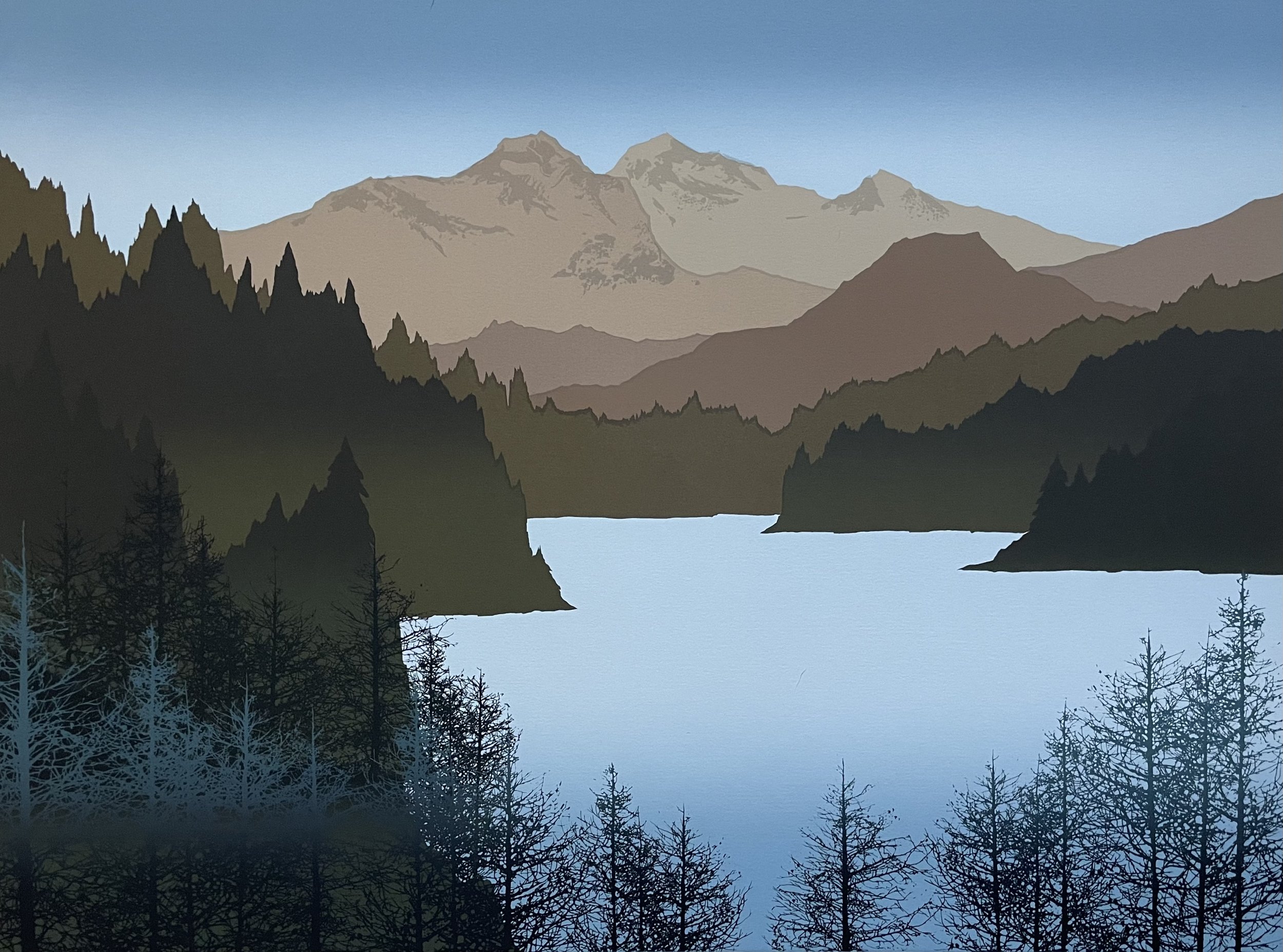 Image 1 of 12
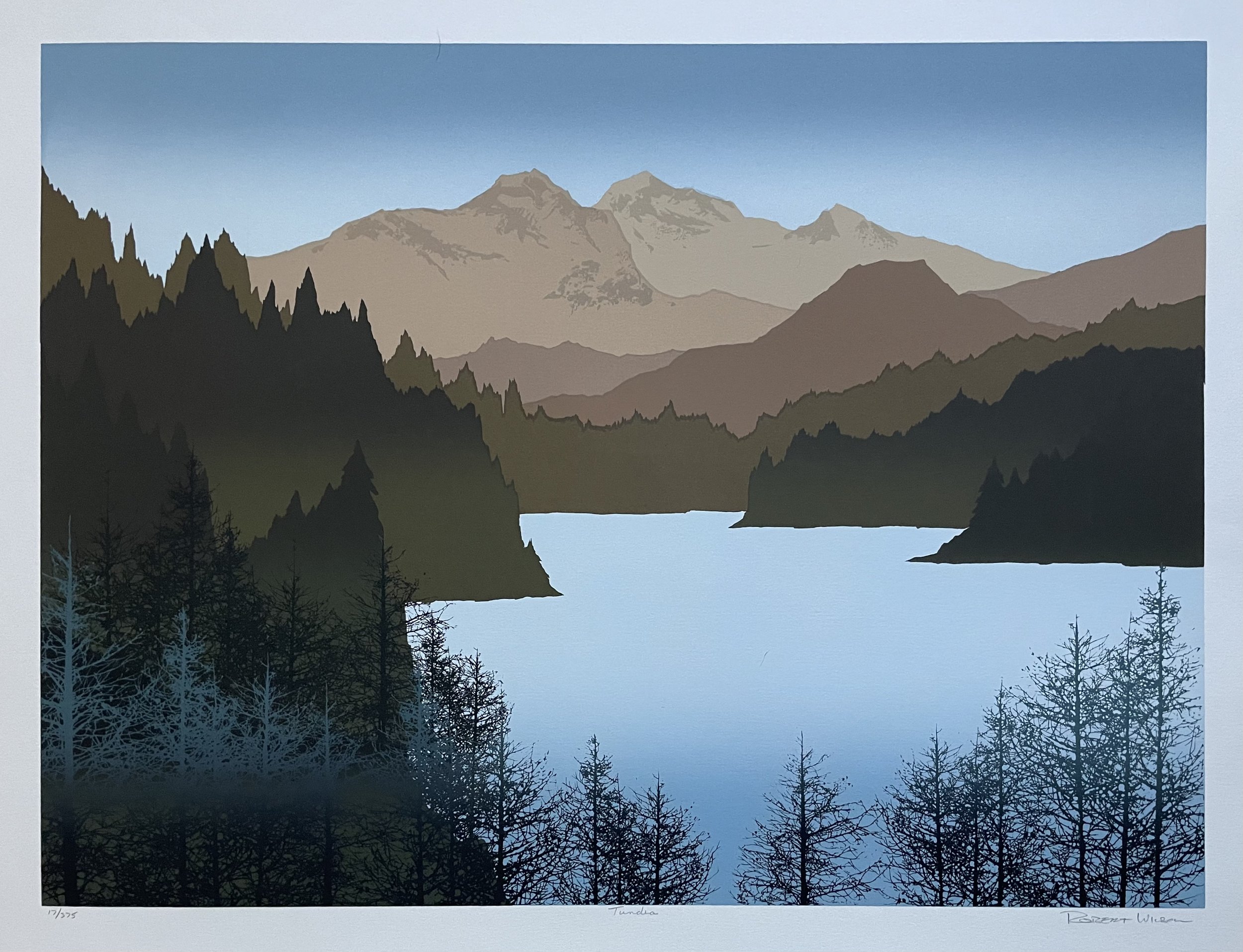 Image 2 of 12
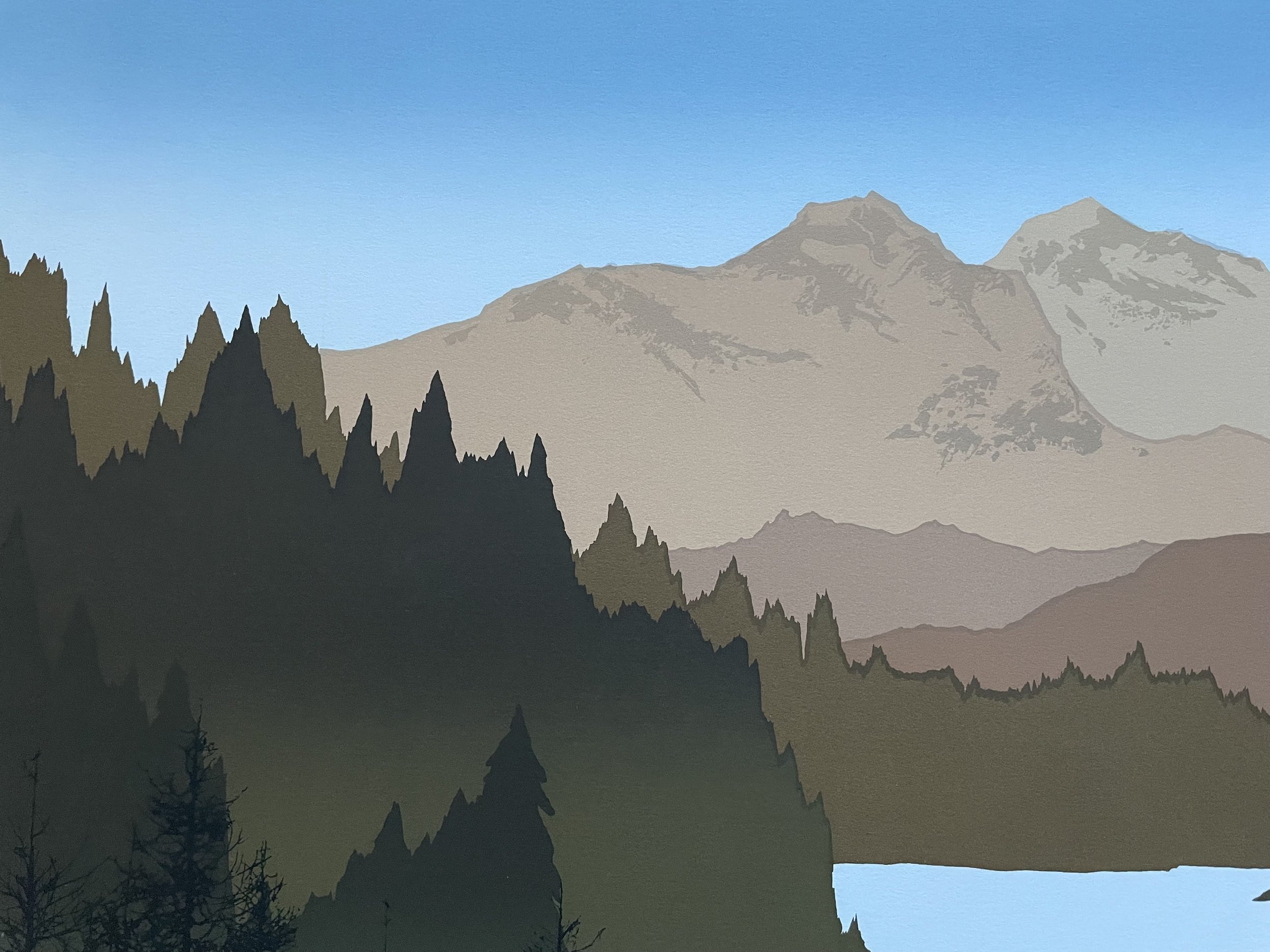 Image 3 of 12
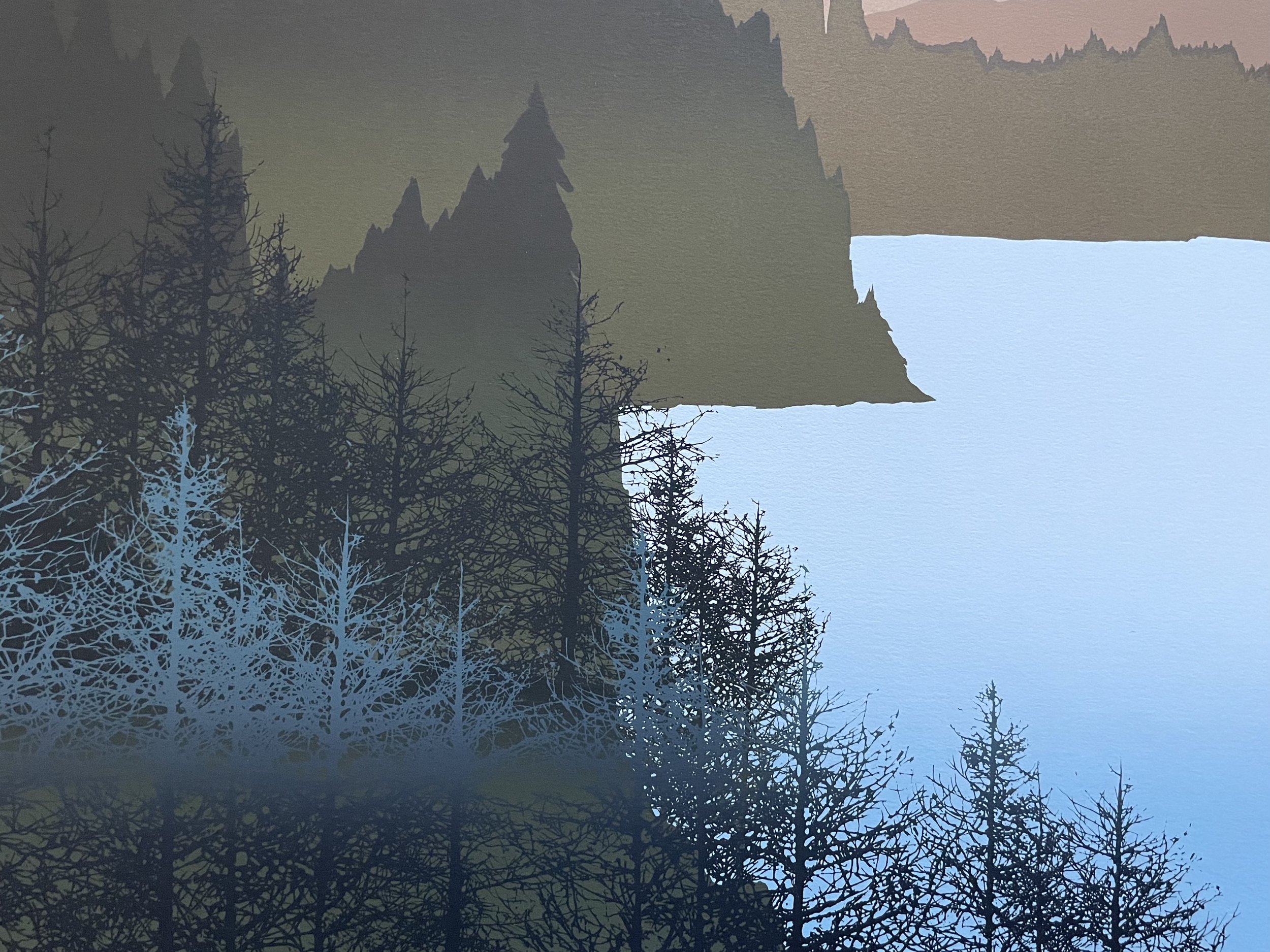 Image 4 of 12
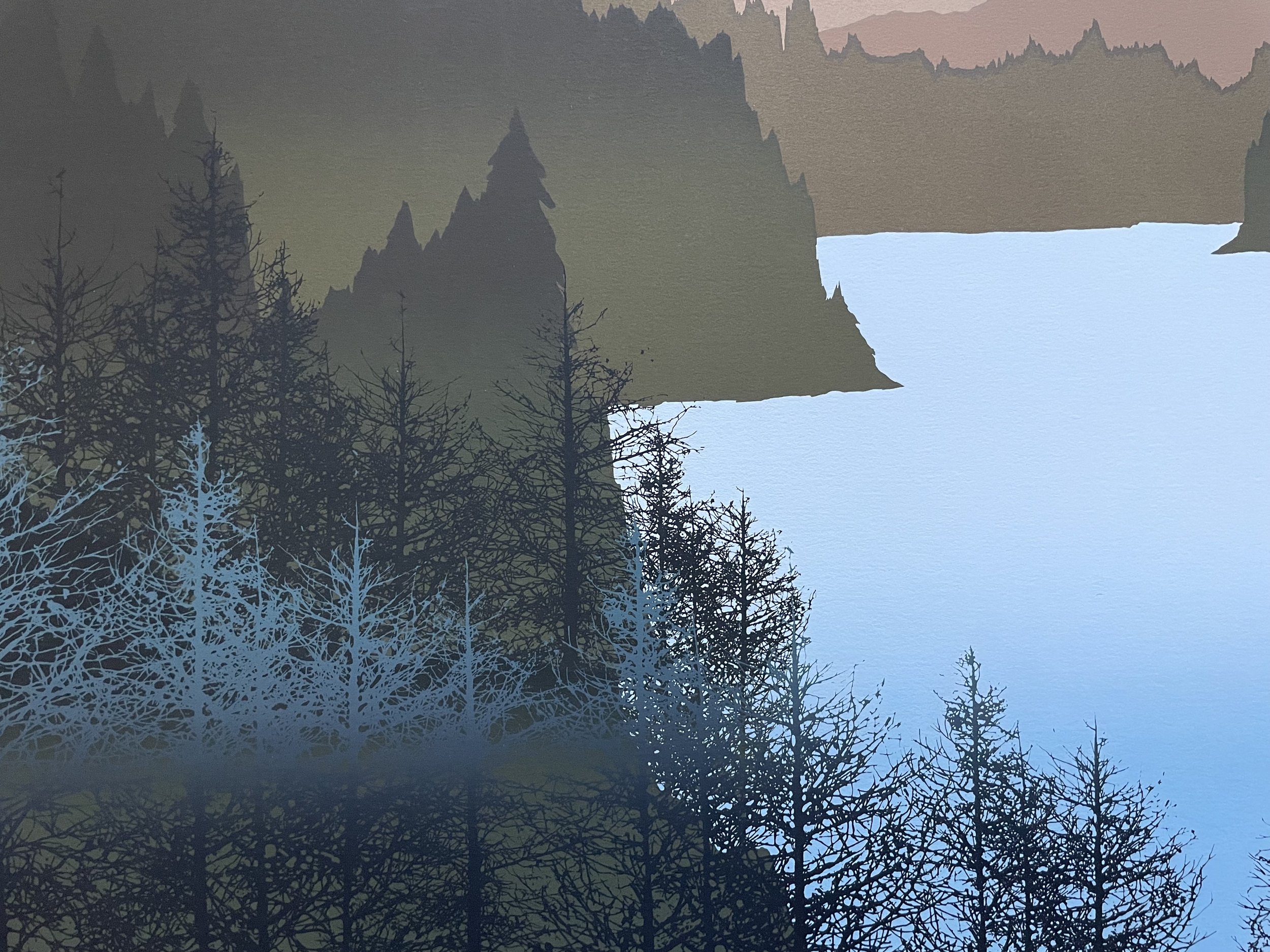 Image 5 of 12
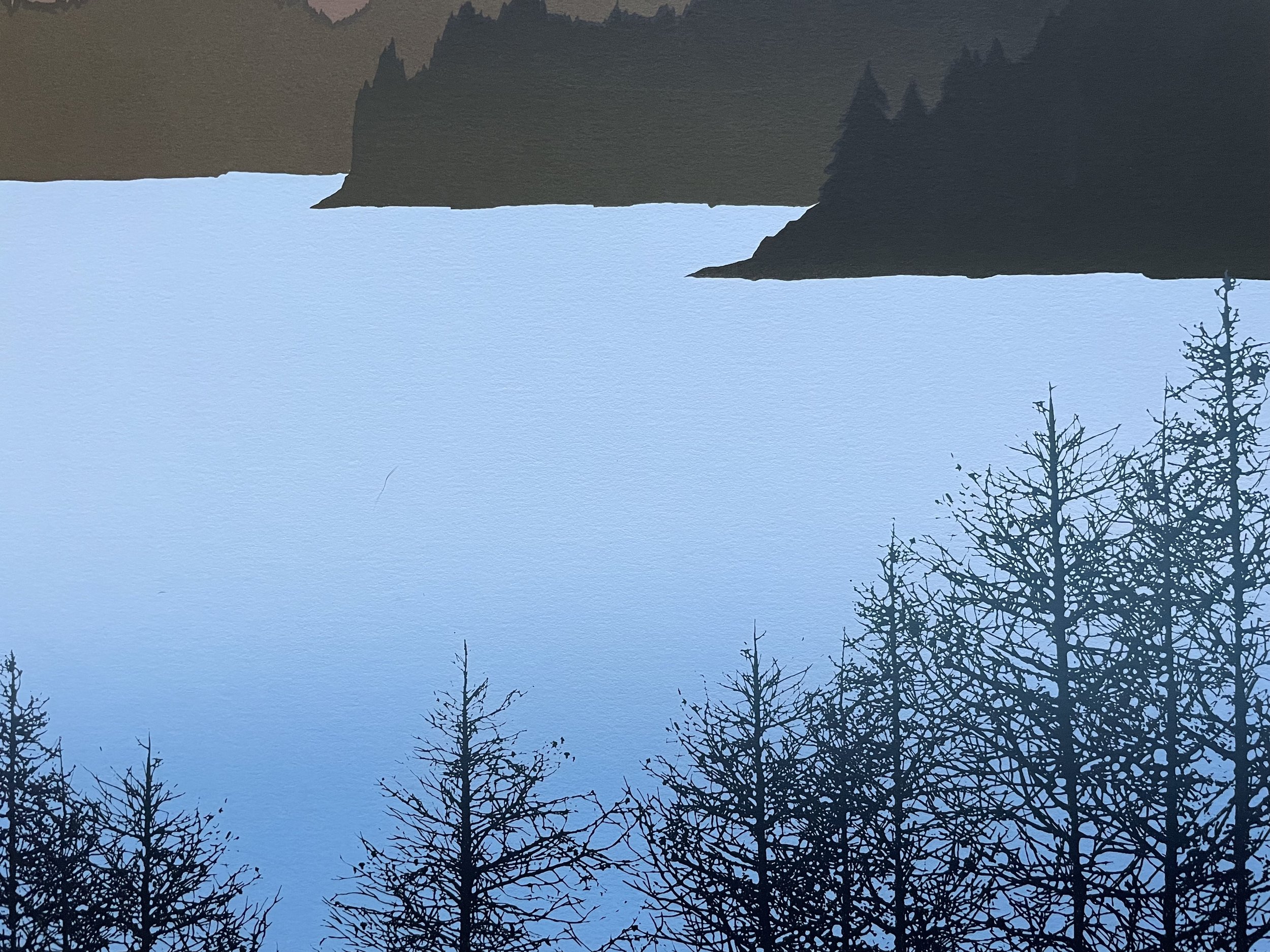 Image 6 of 12
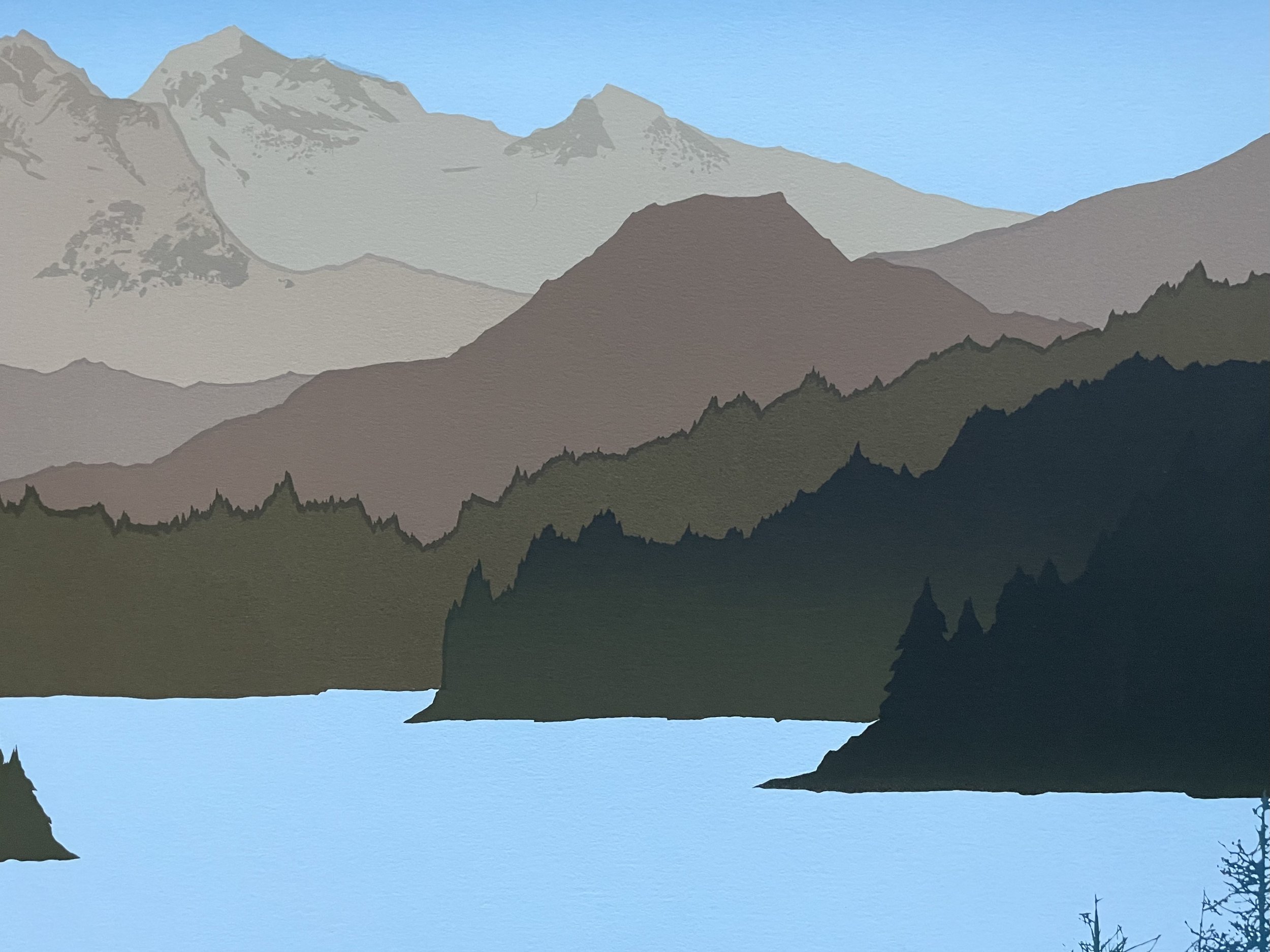 Image 7 of 12
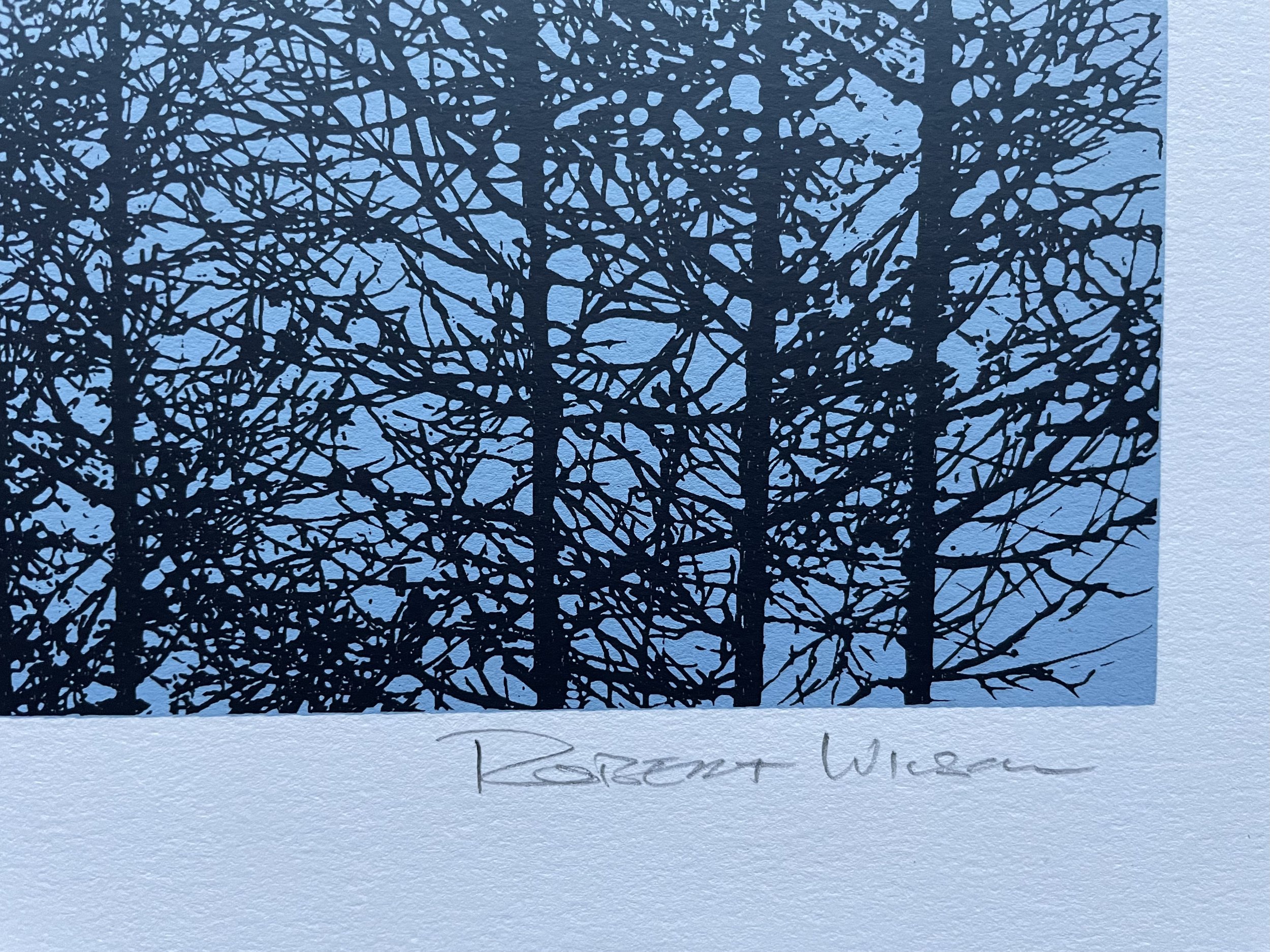 Image 8 of 12
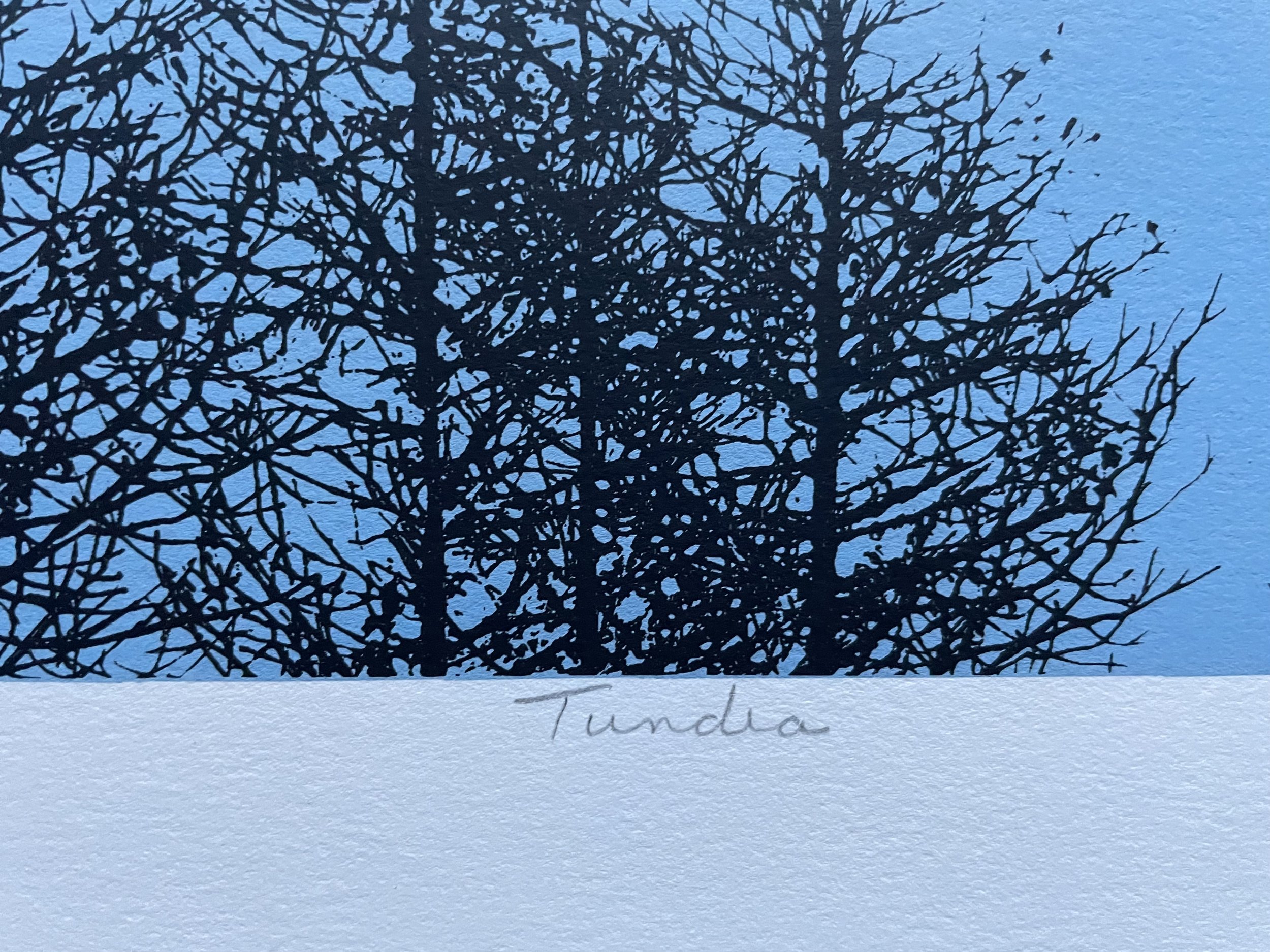 Image 9 of 12
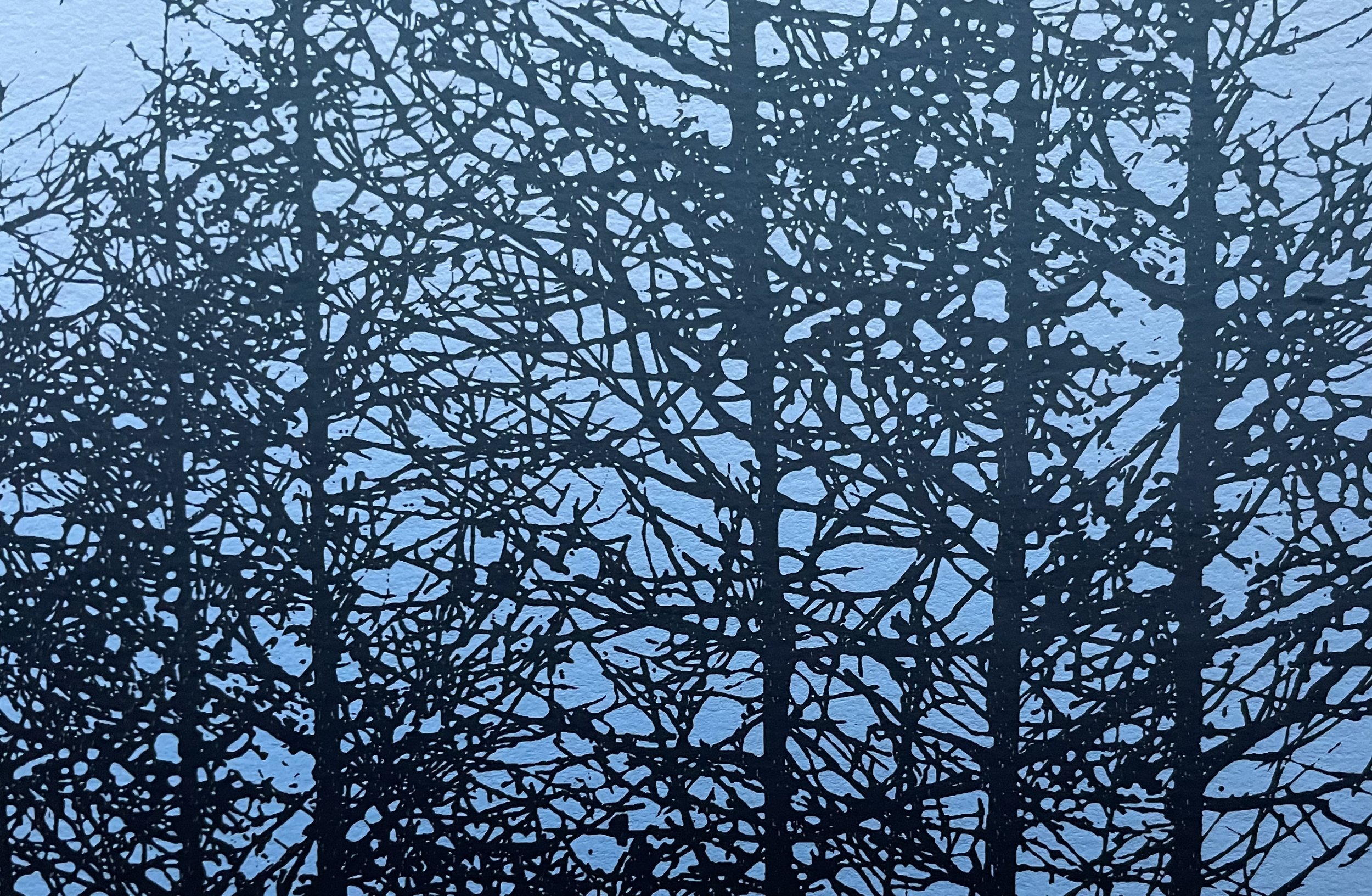 Image 10 of 12
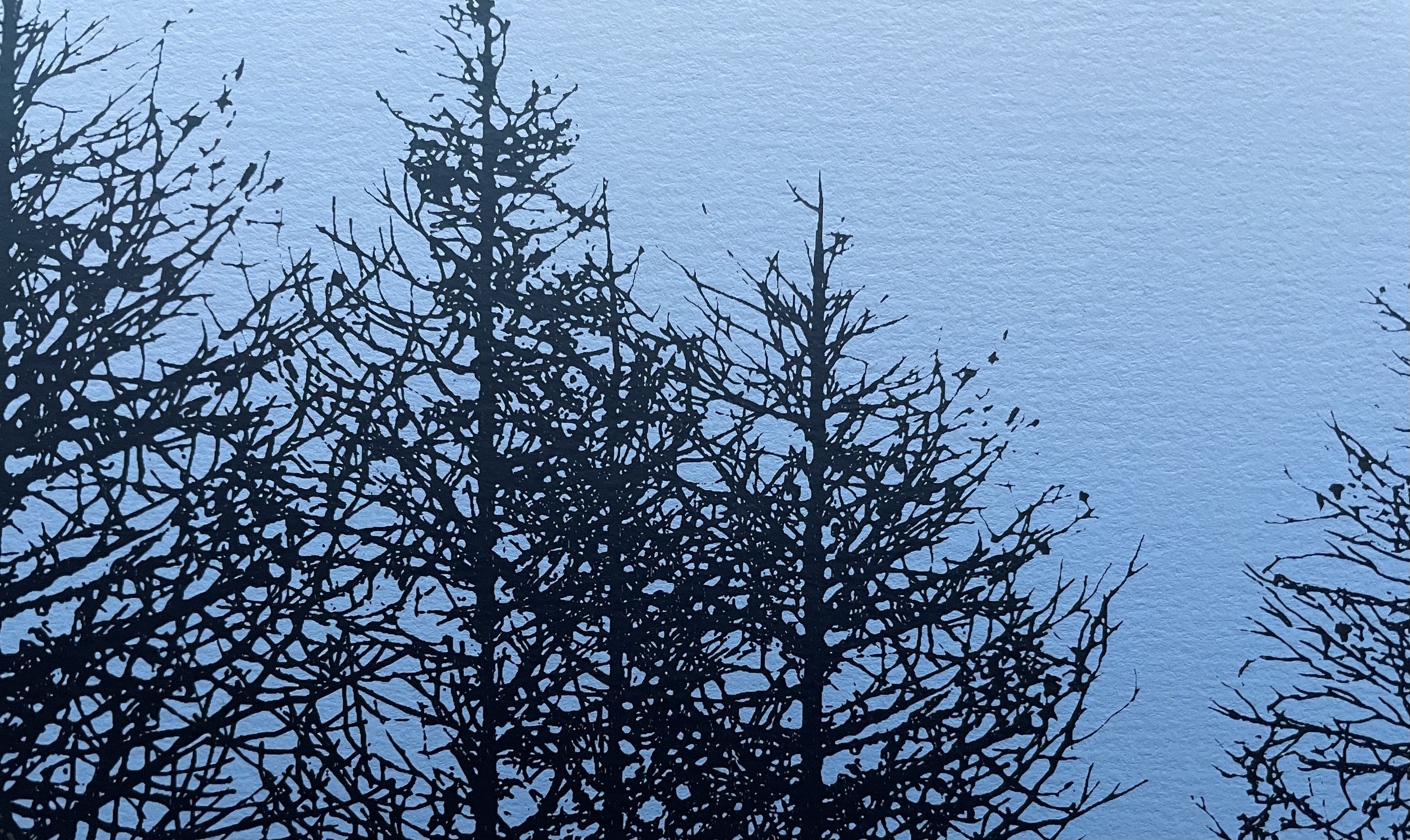 Image 11 of 12
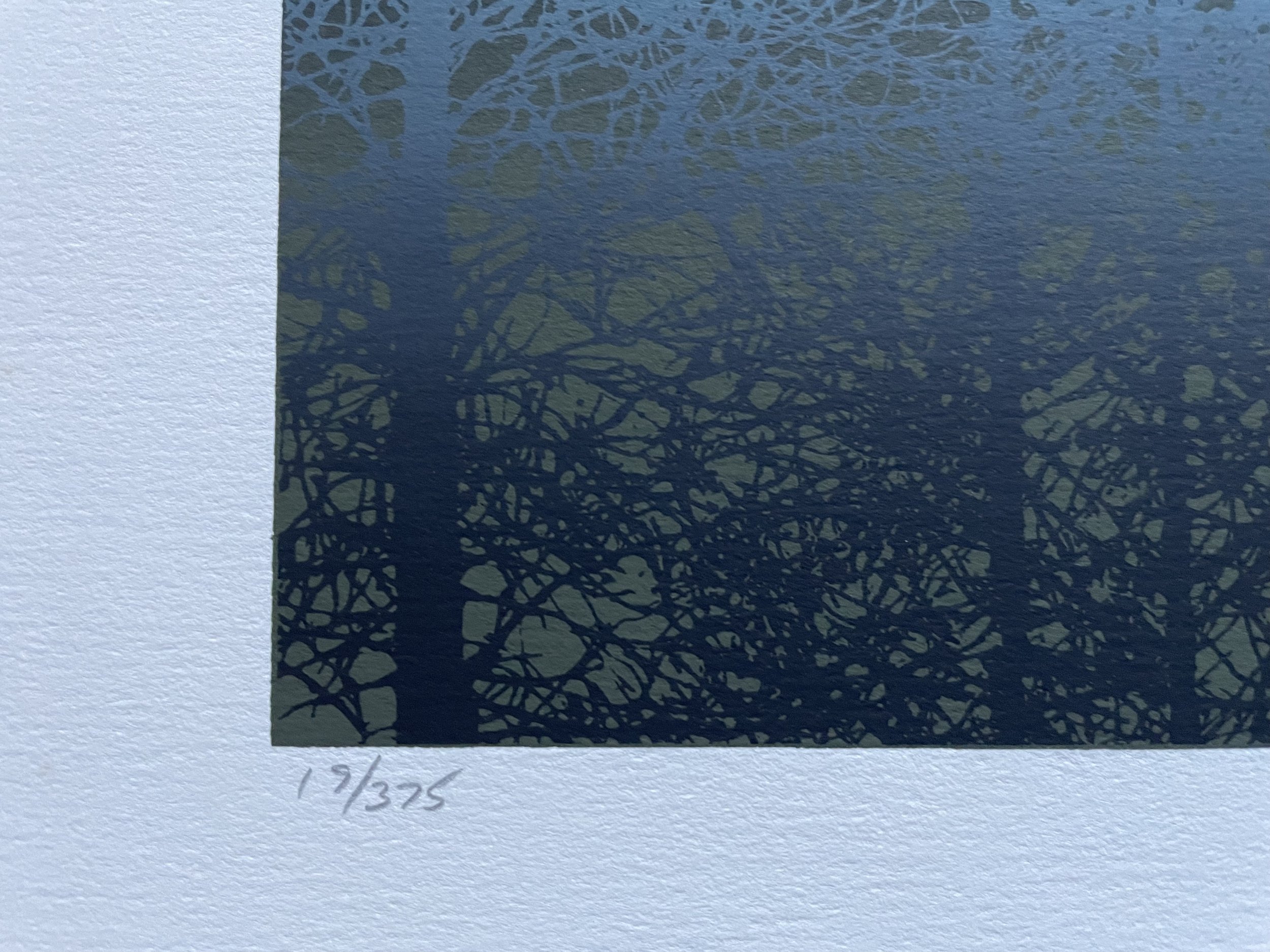 Image 12 of 12