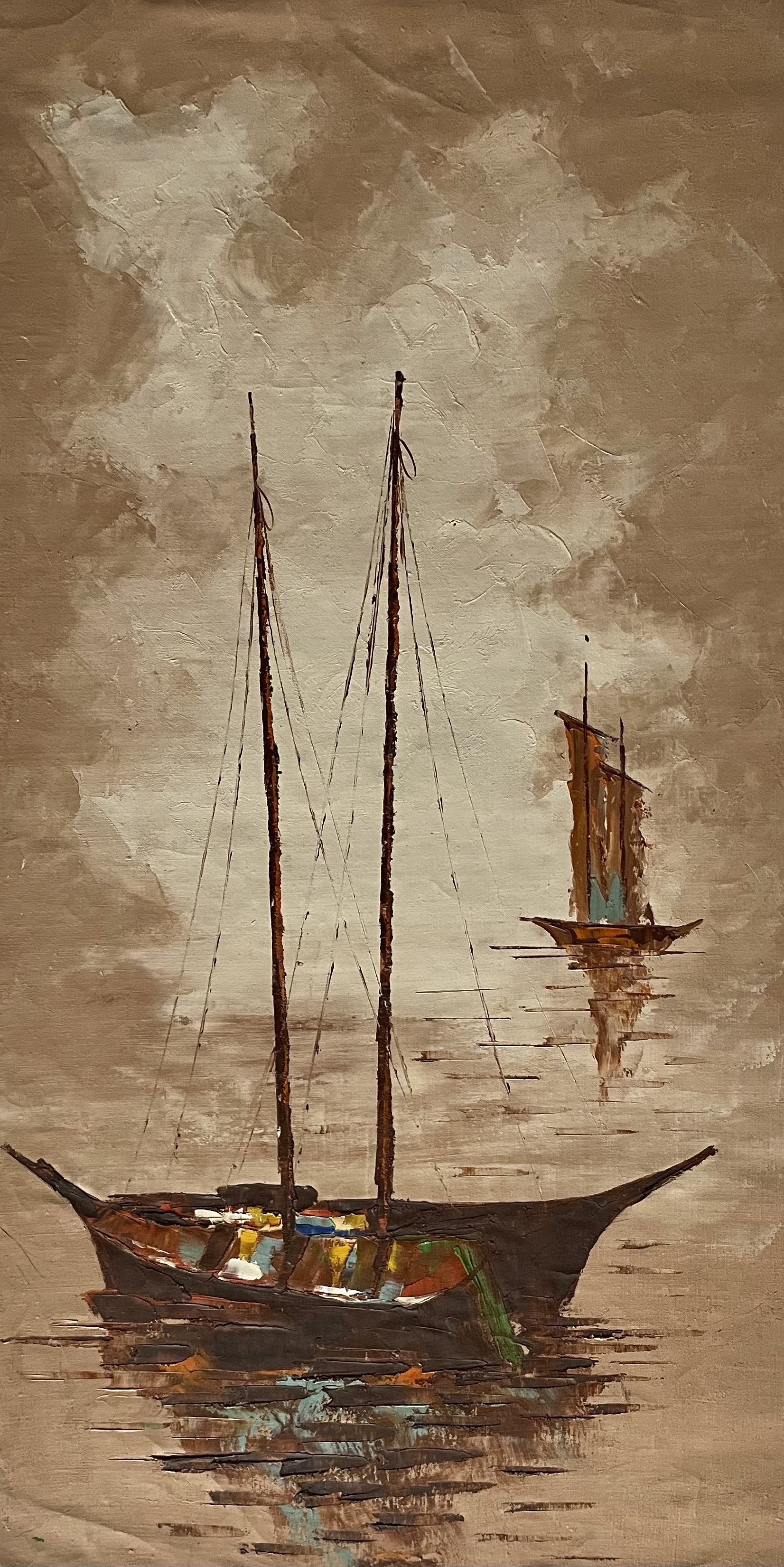
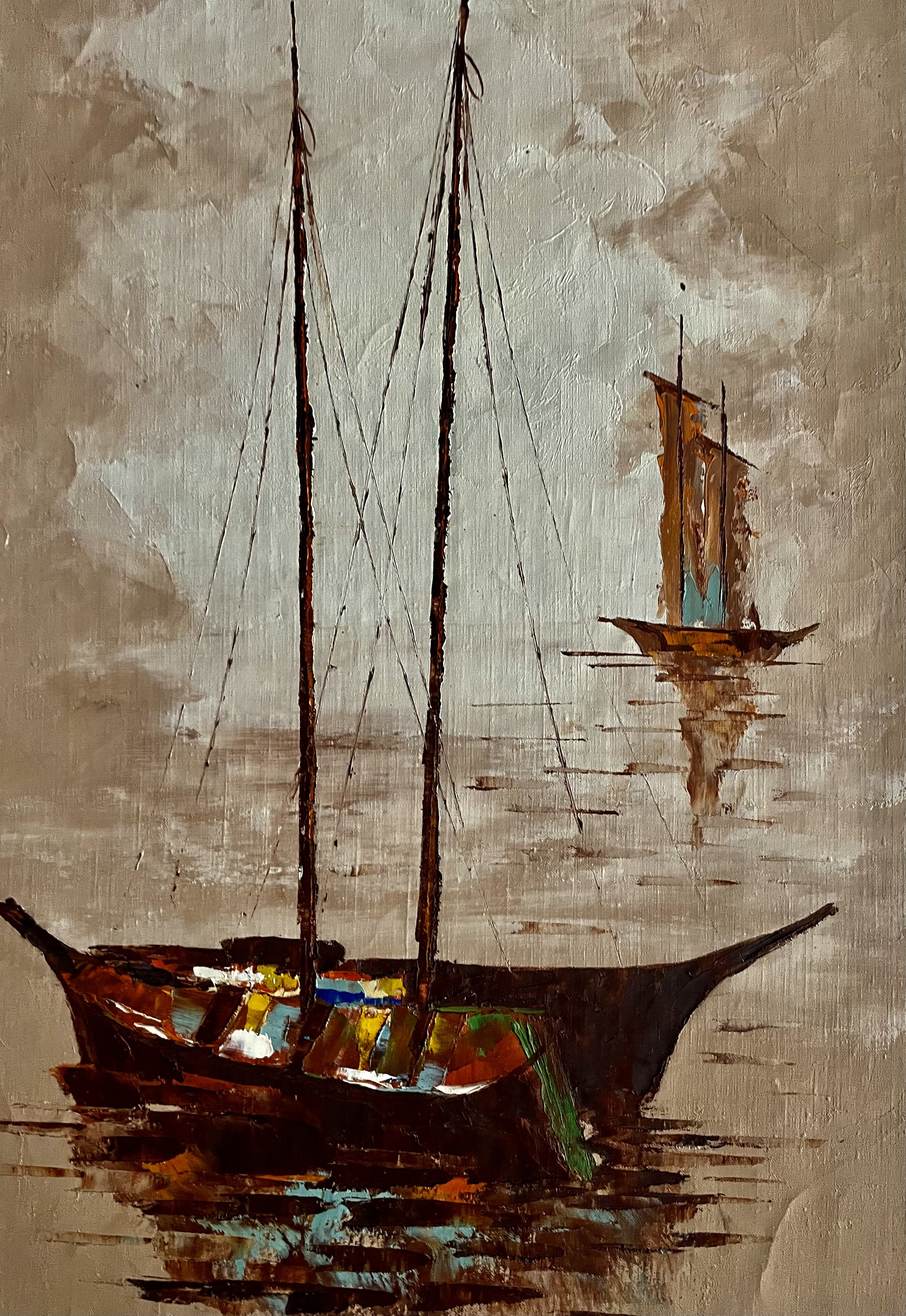
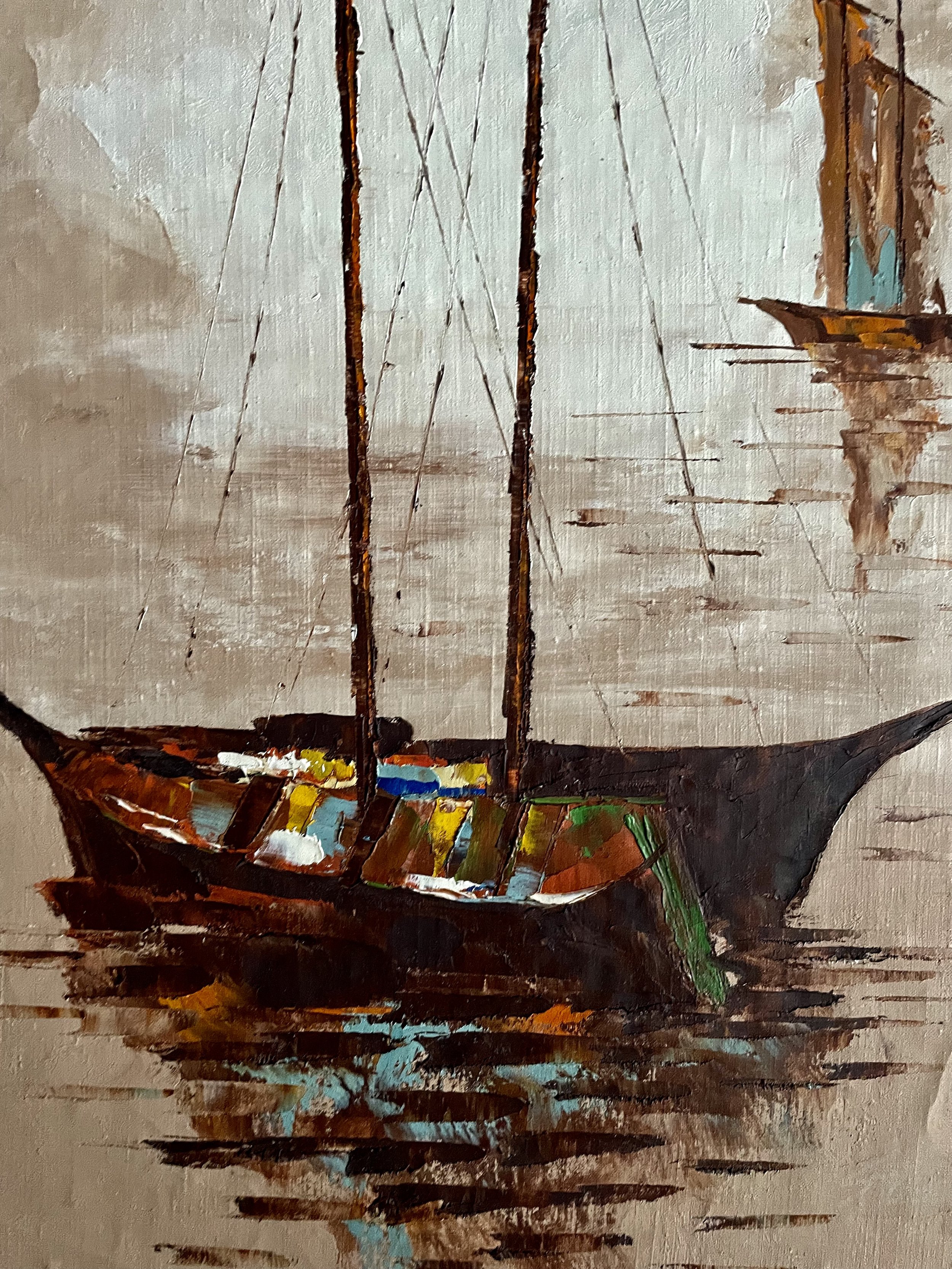
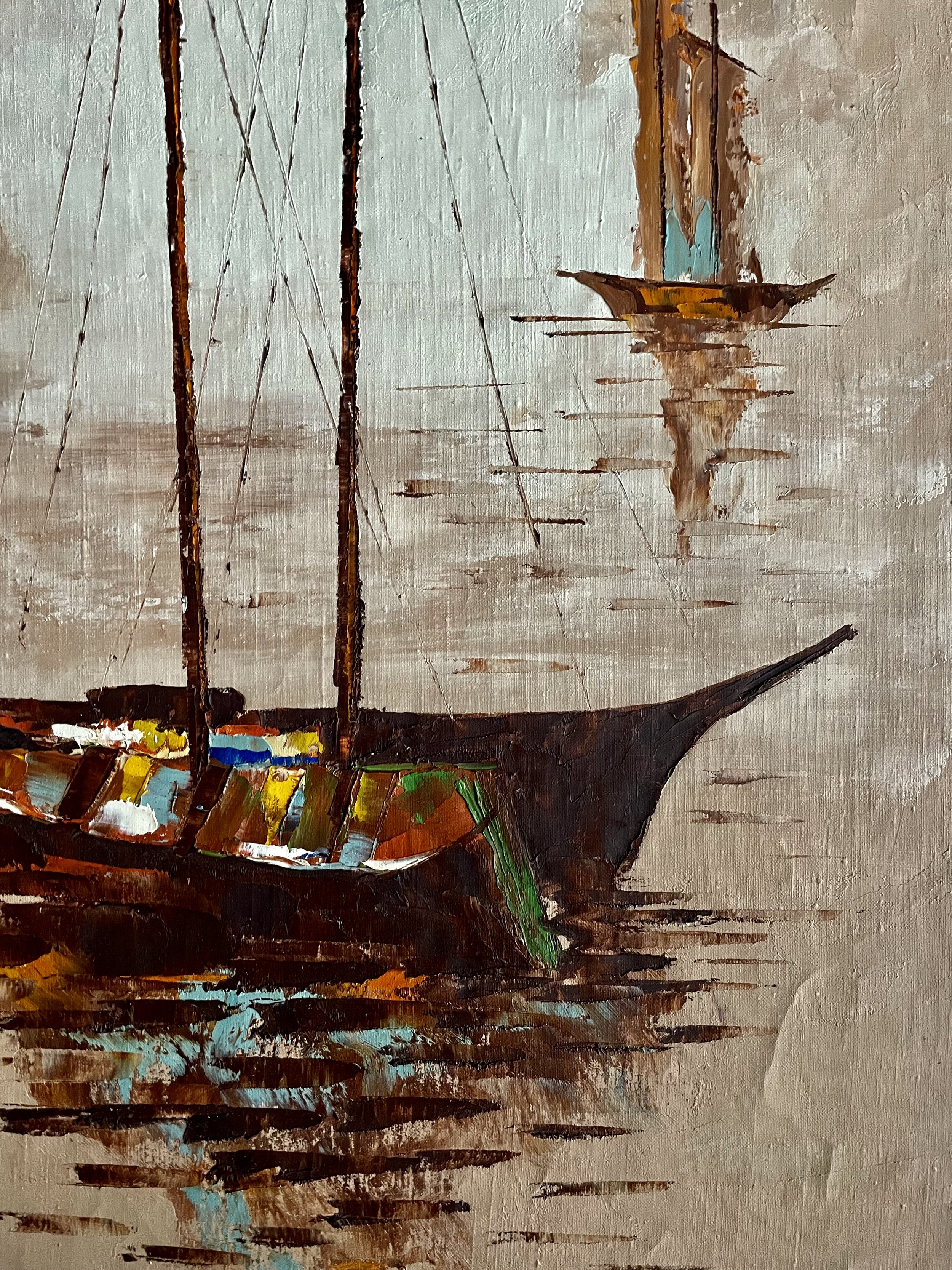
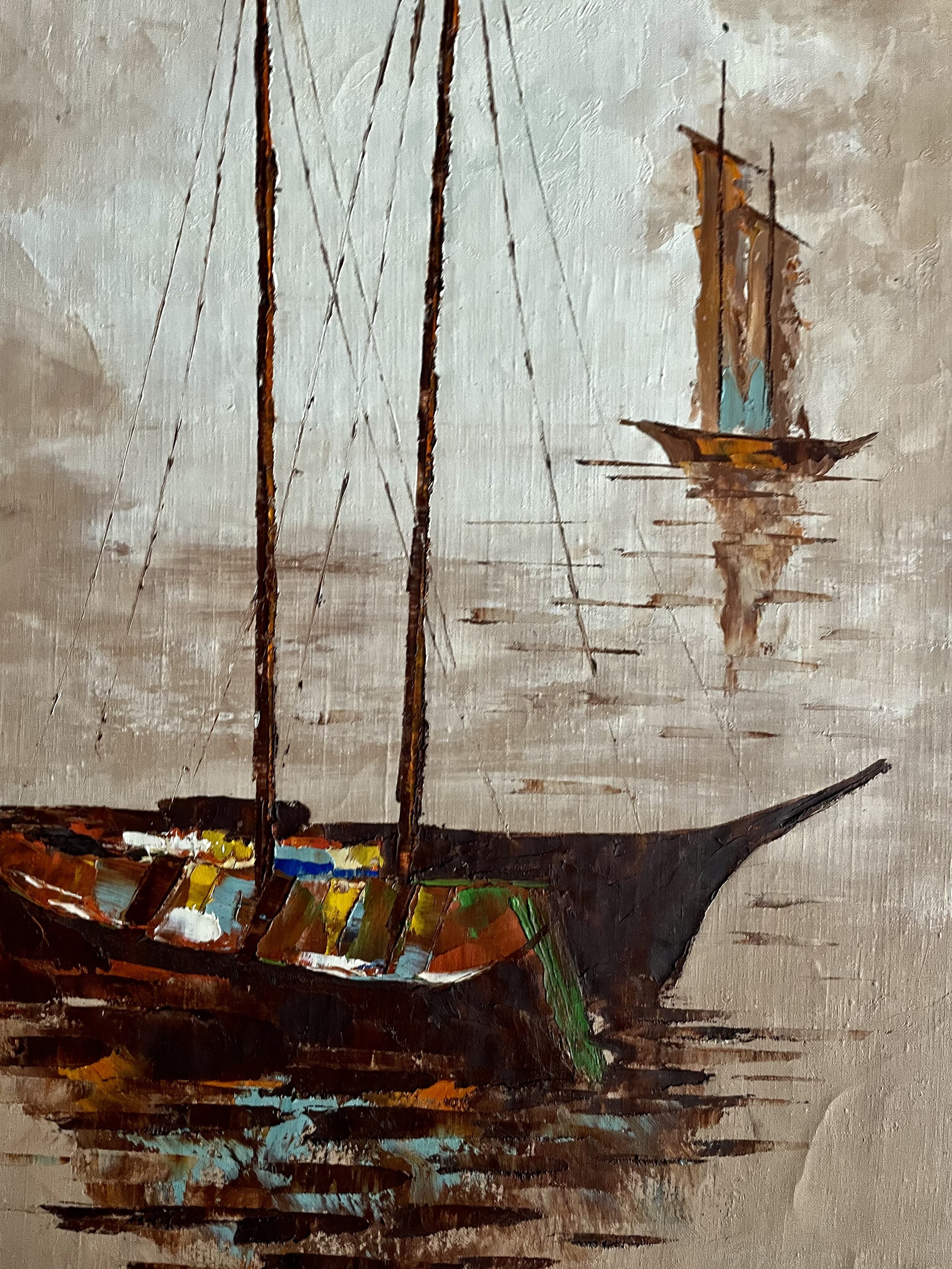
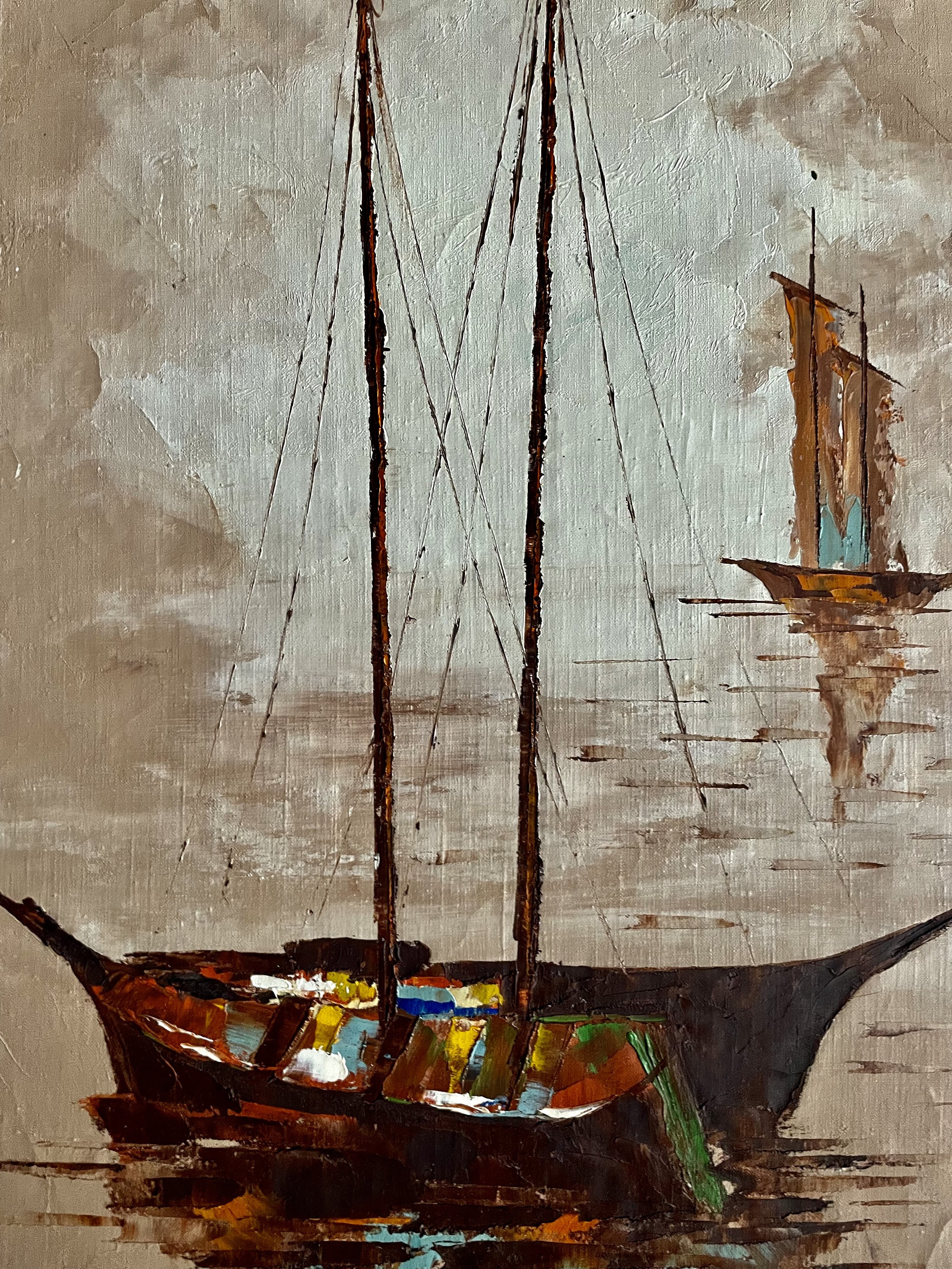
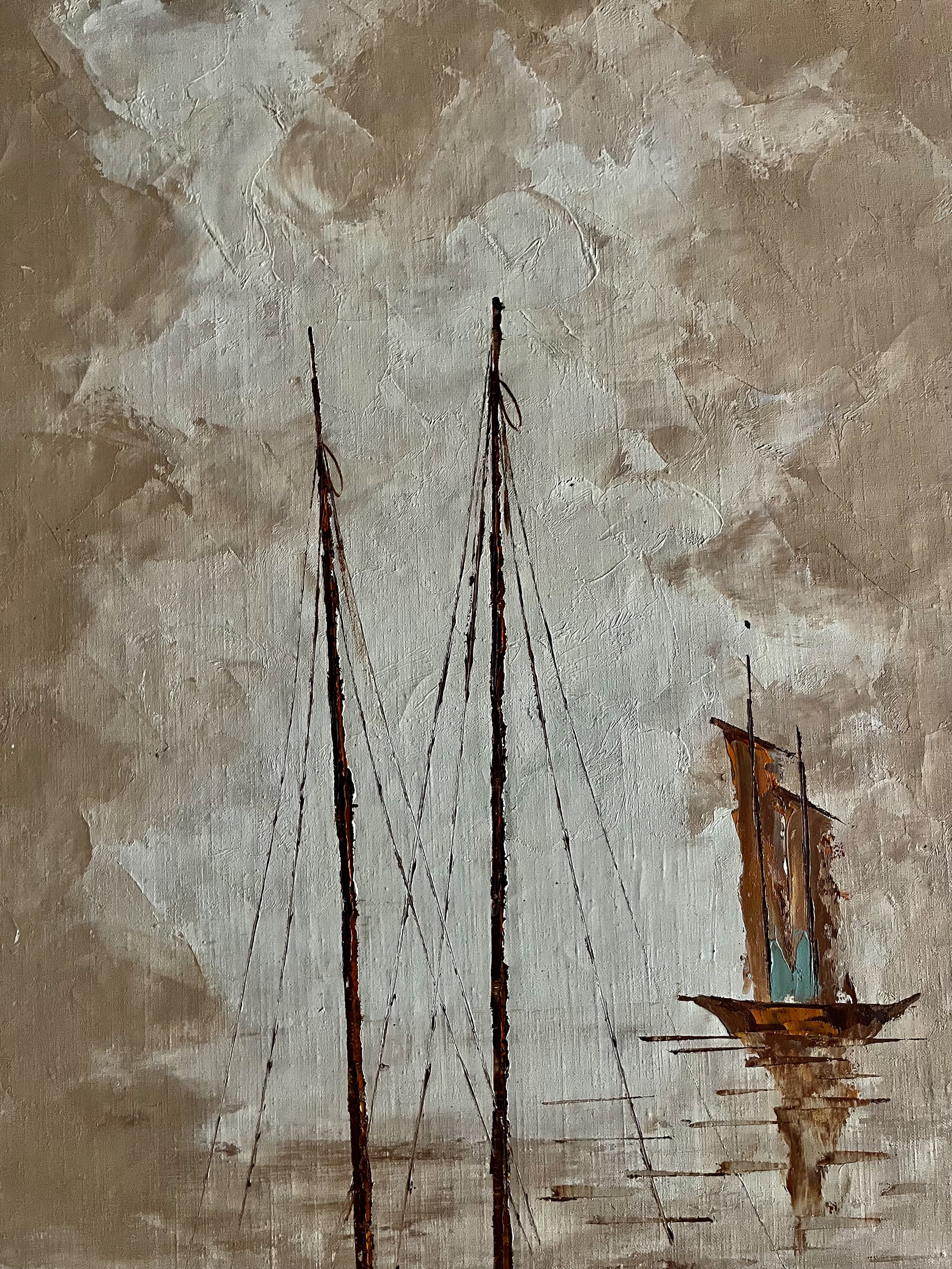
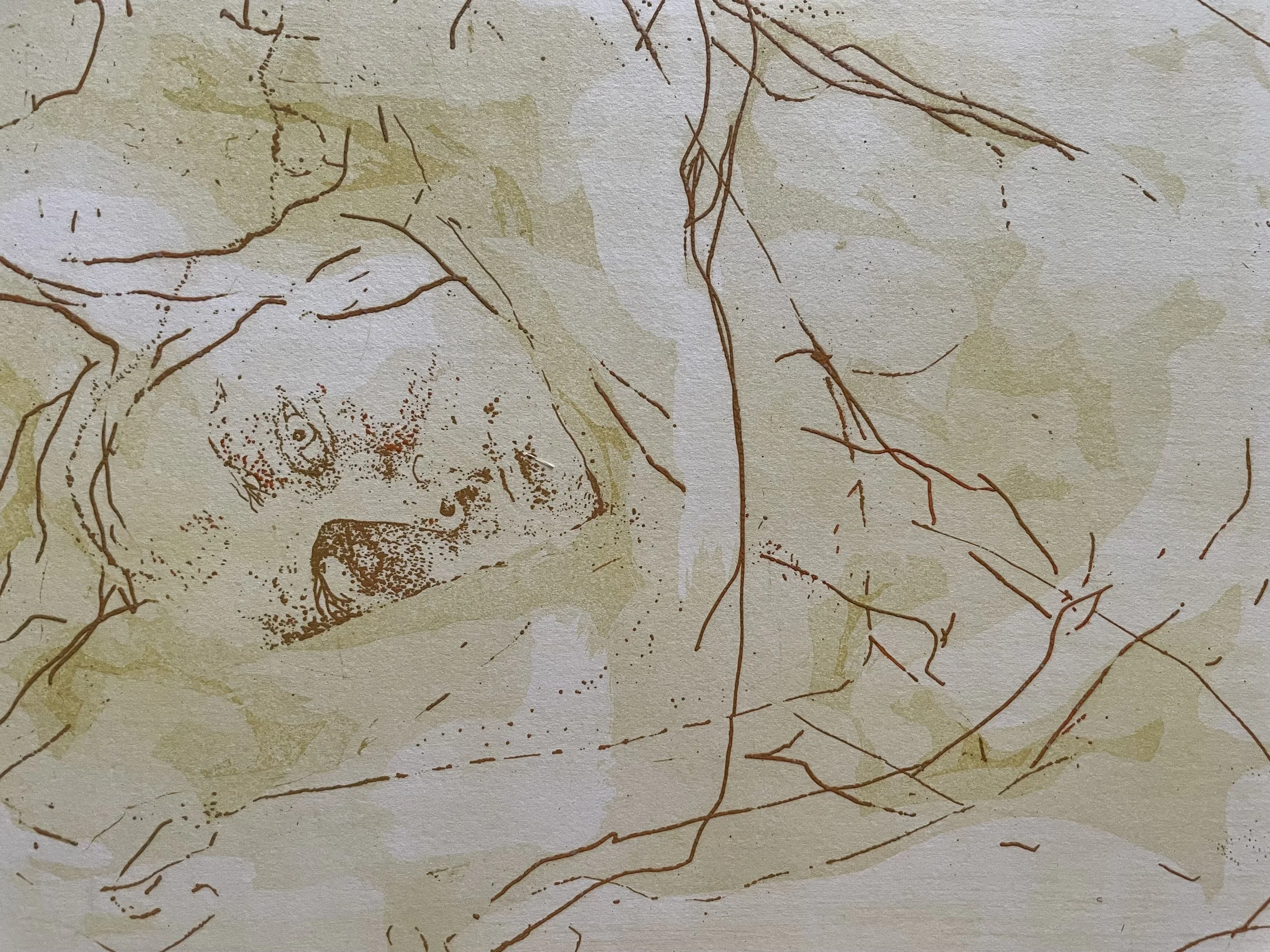
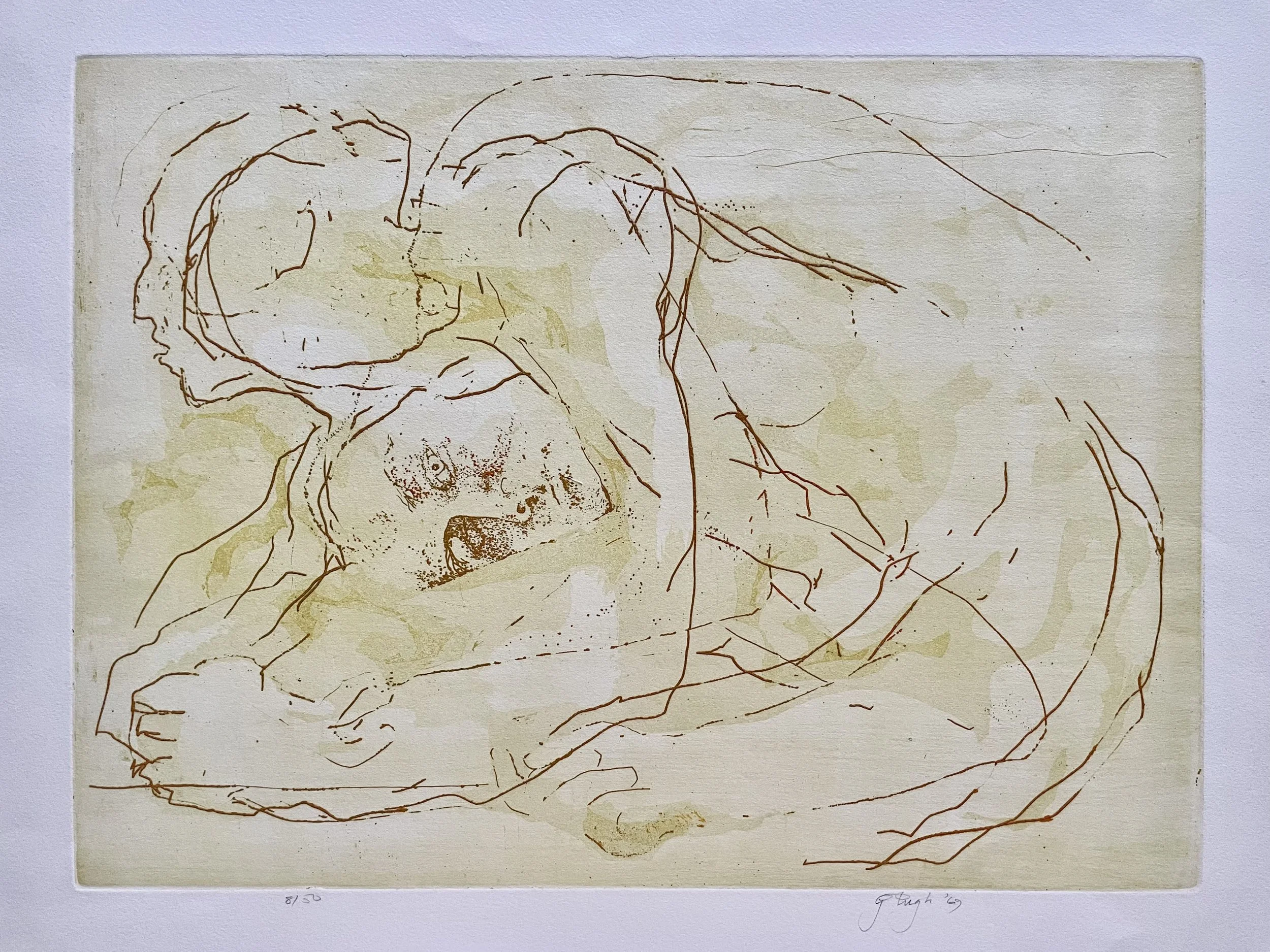
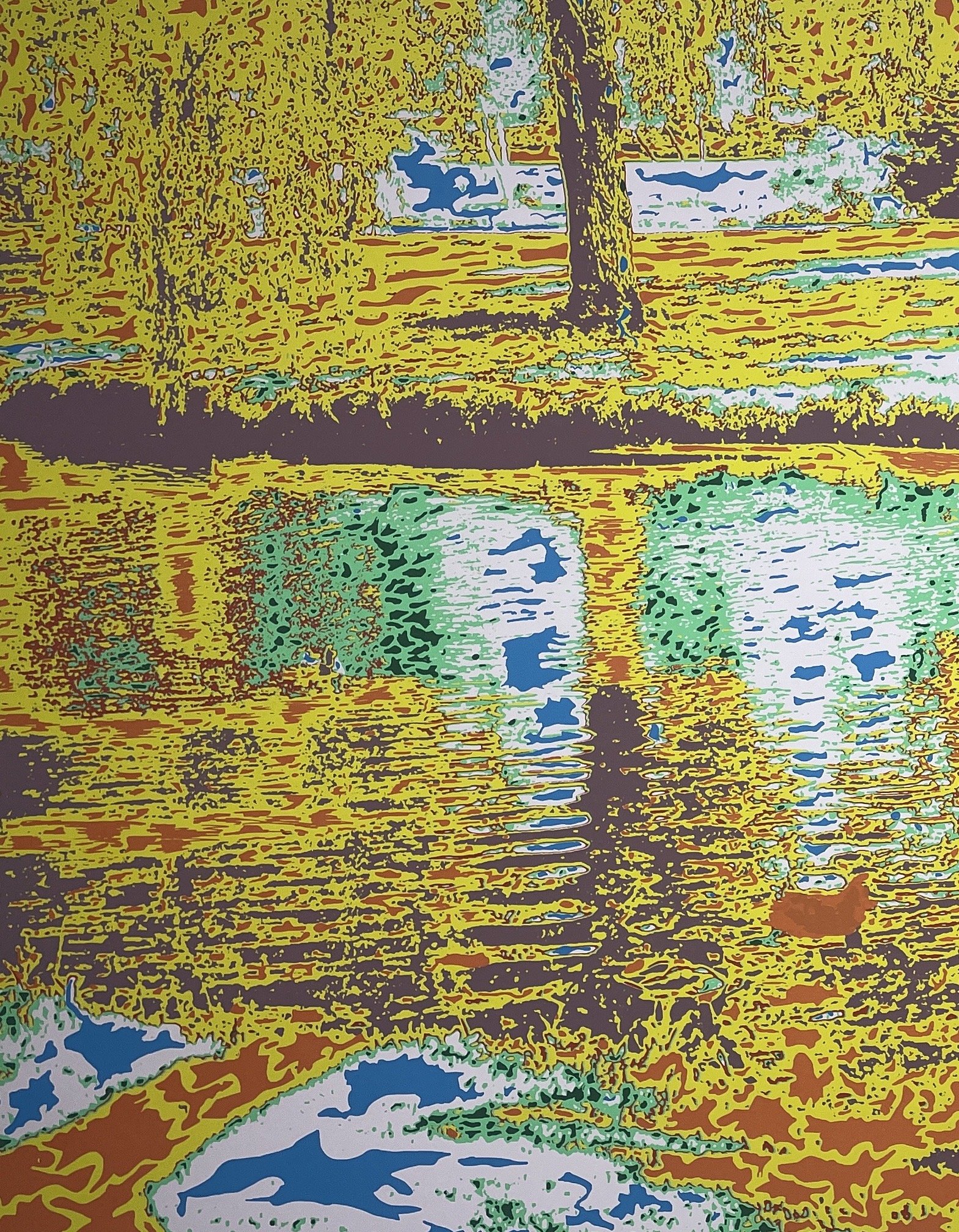
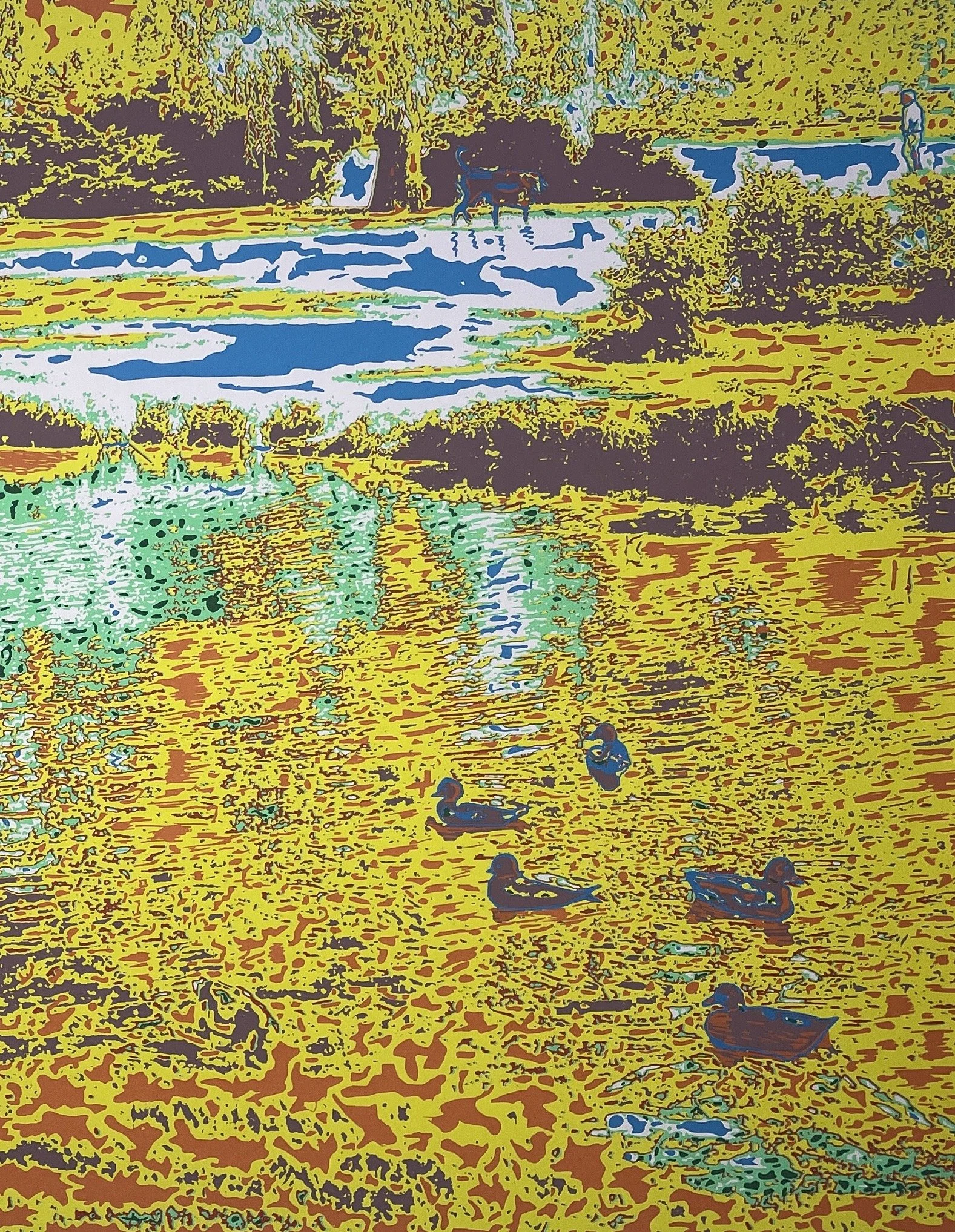
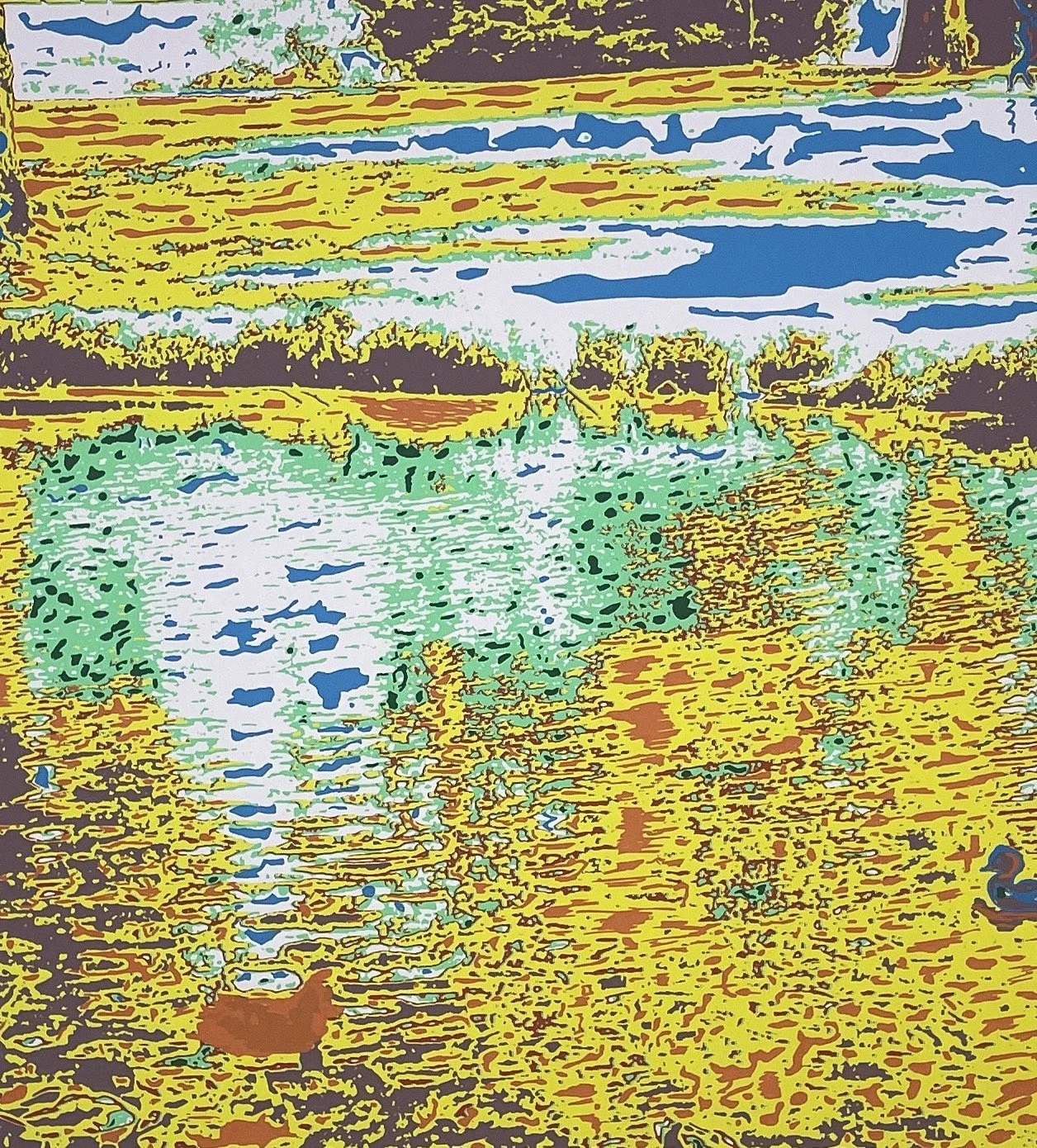
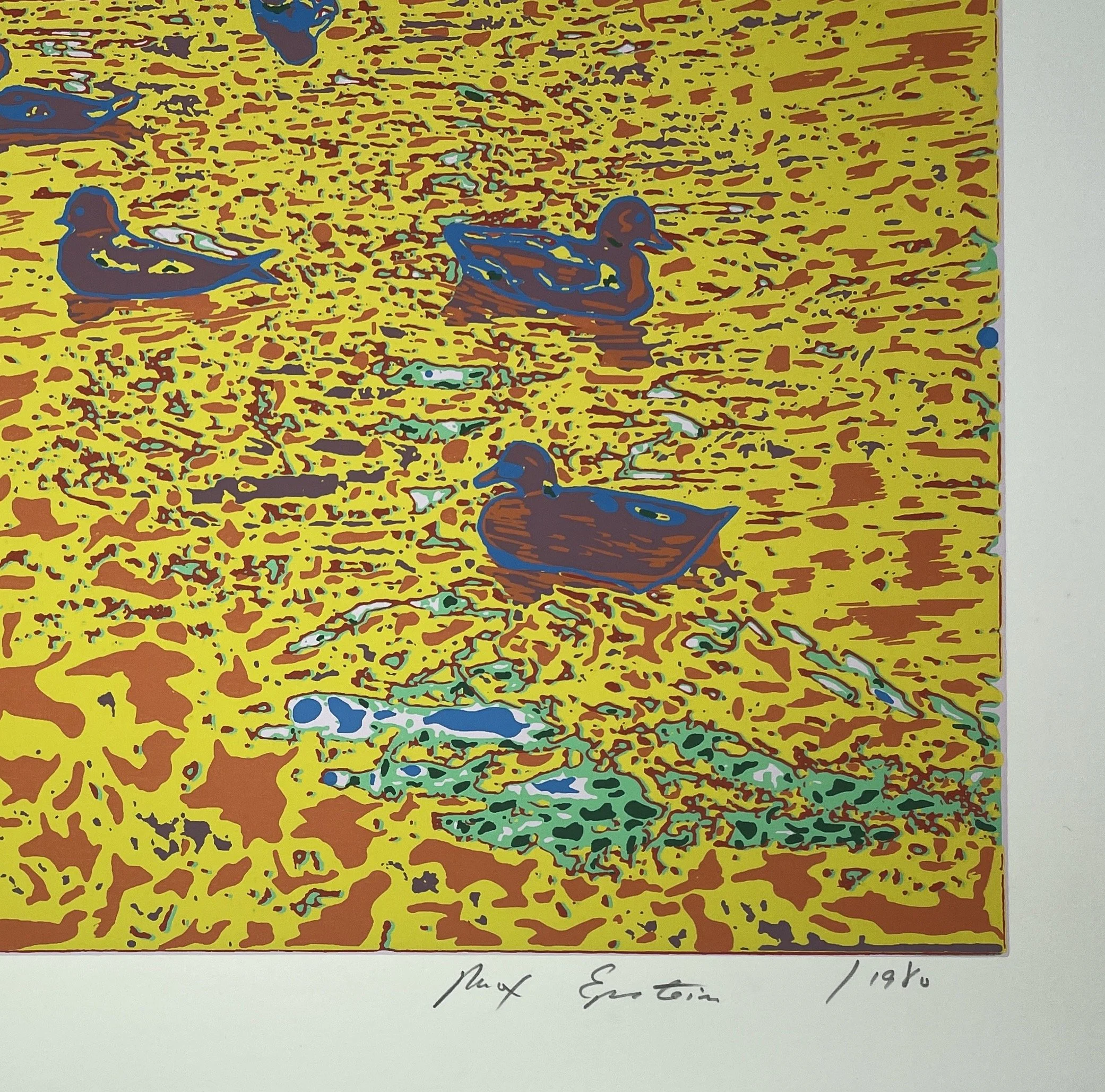
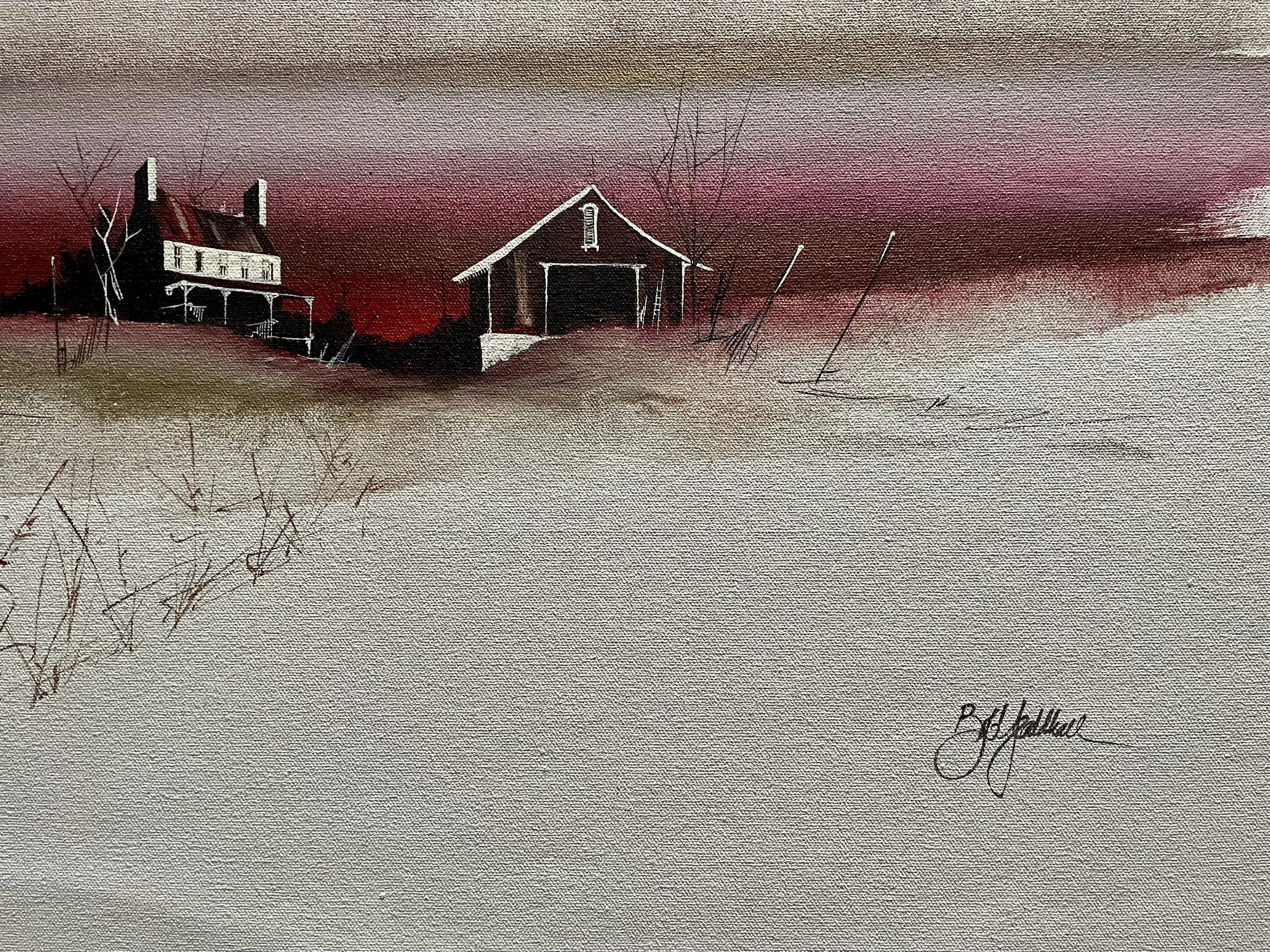
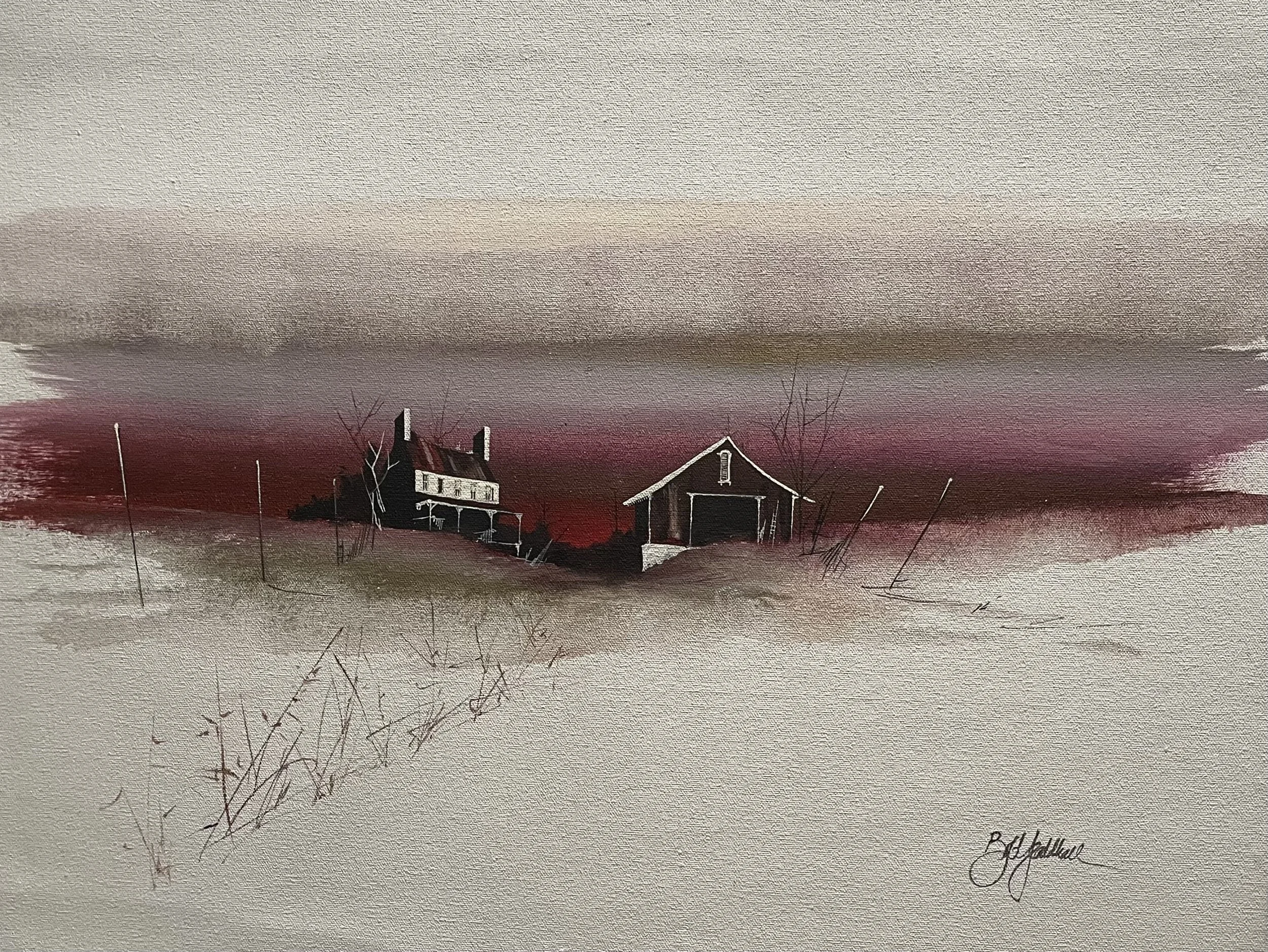
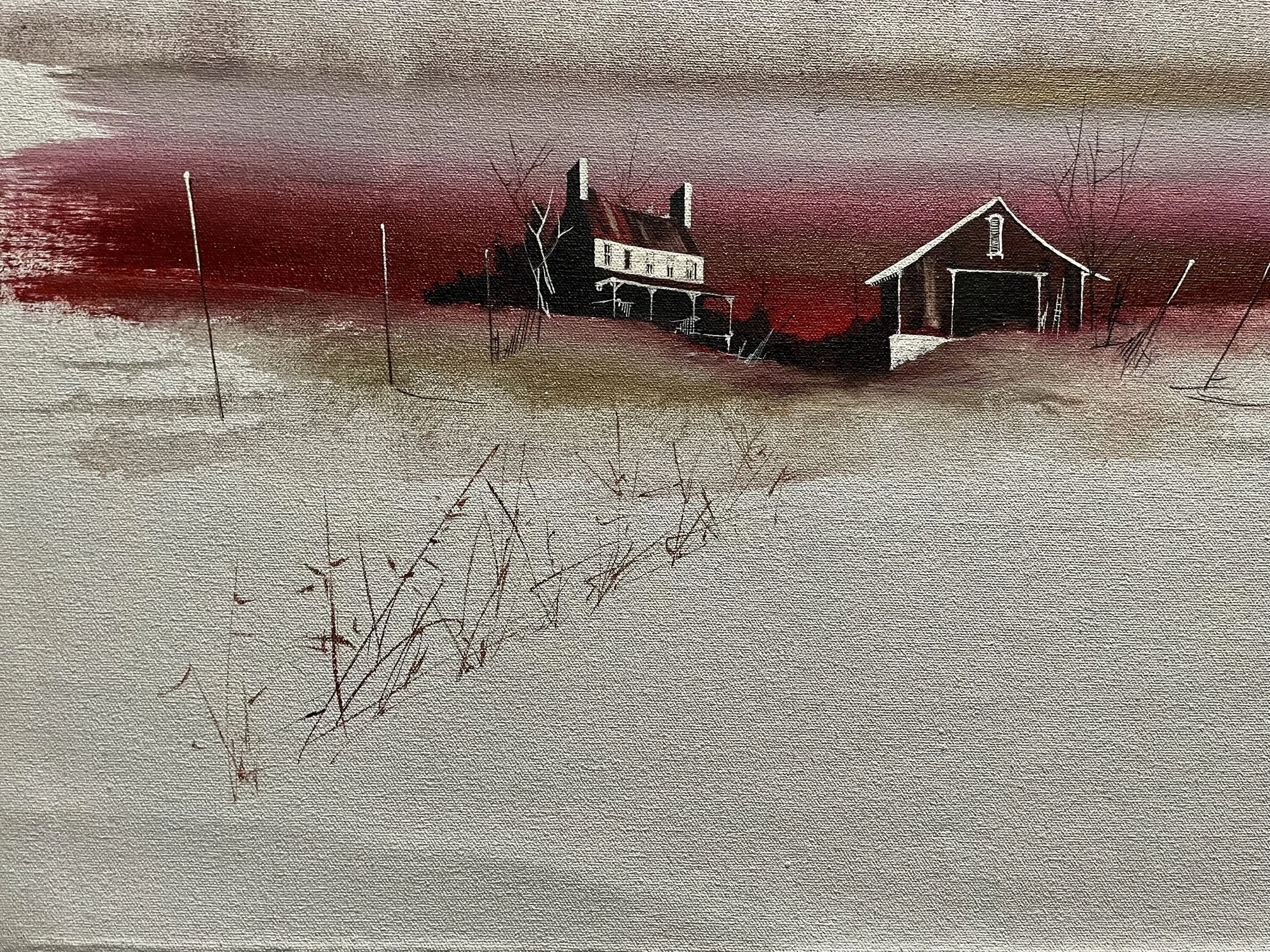
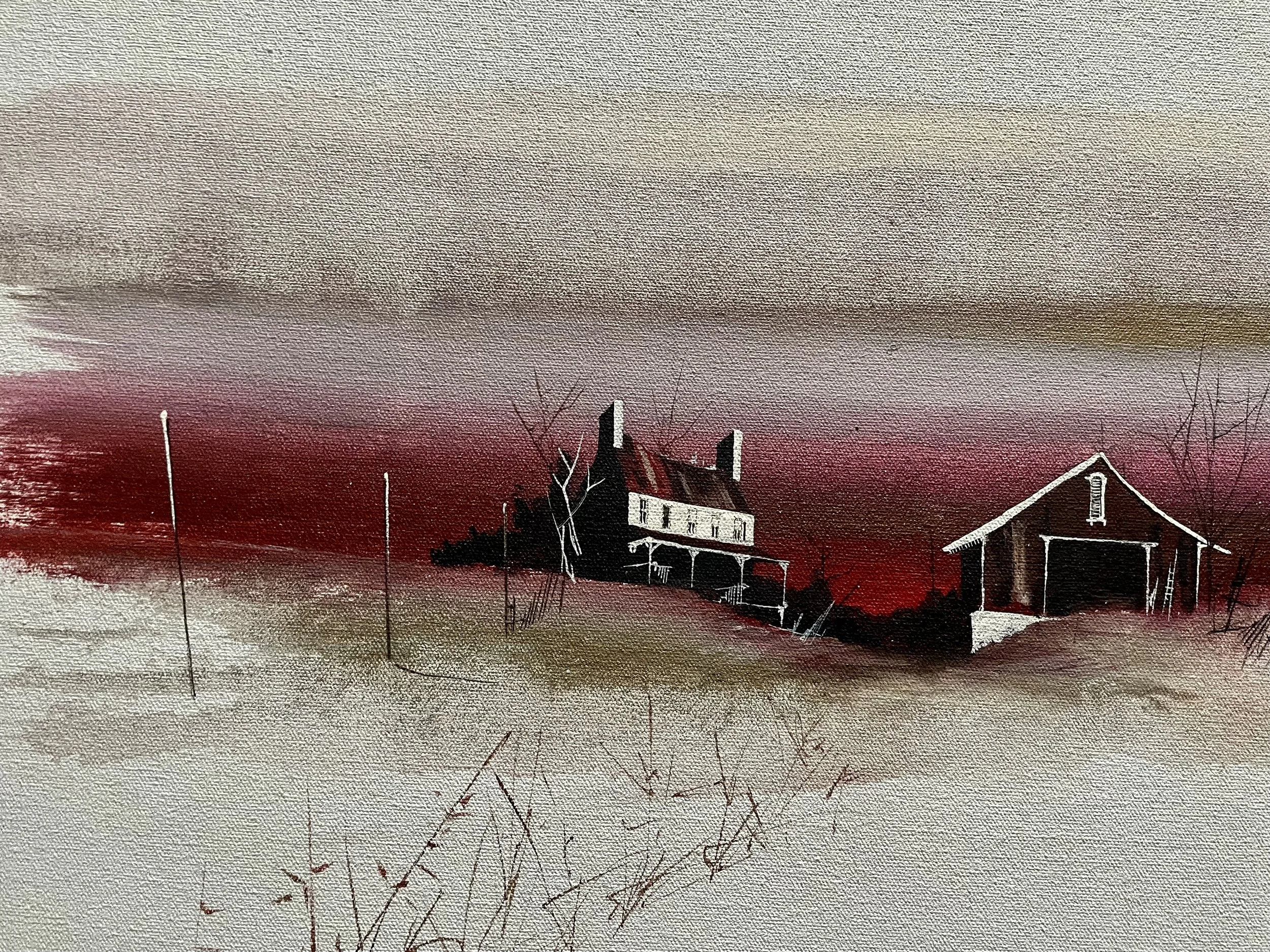
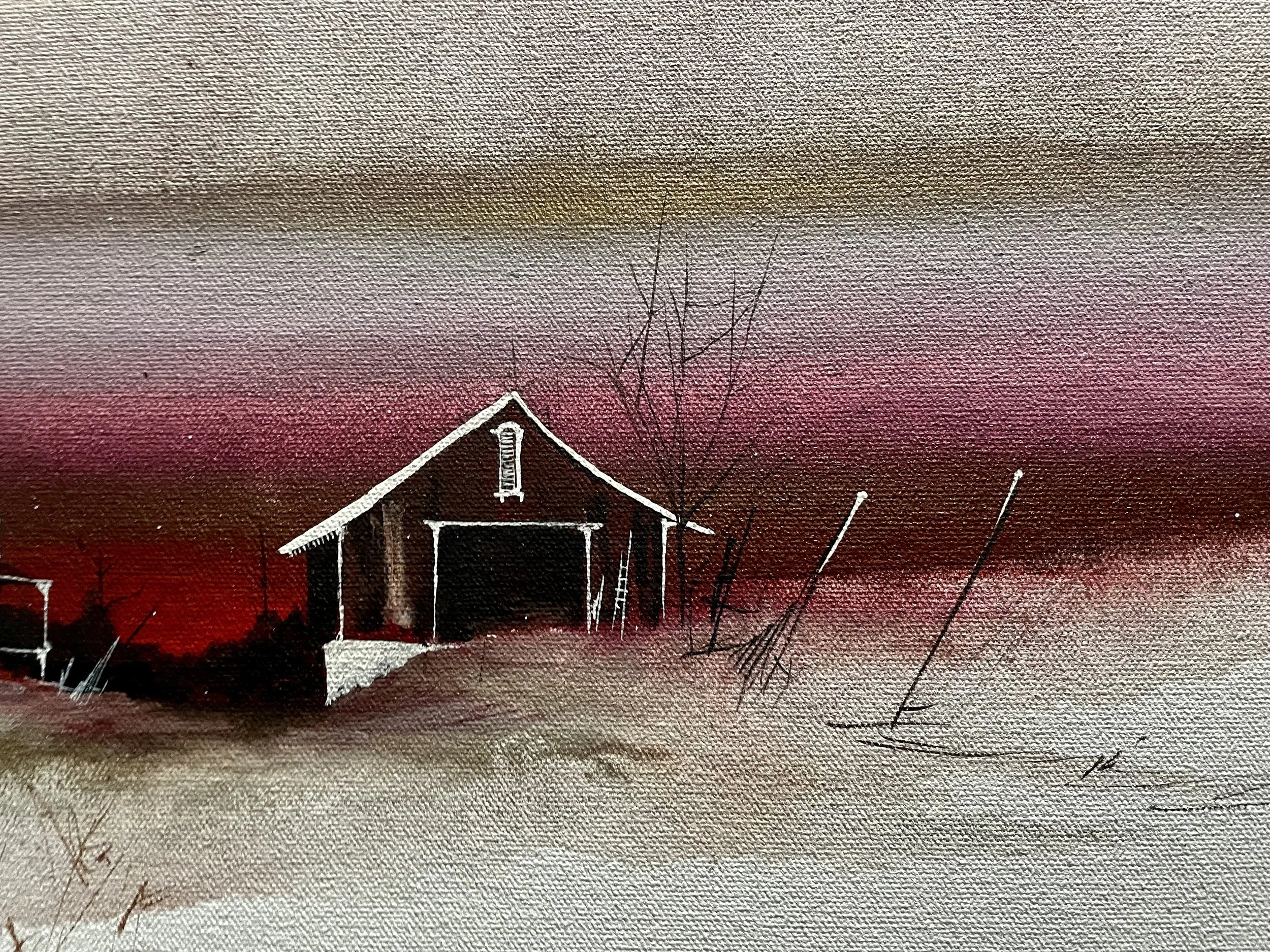
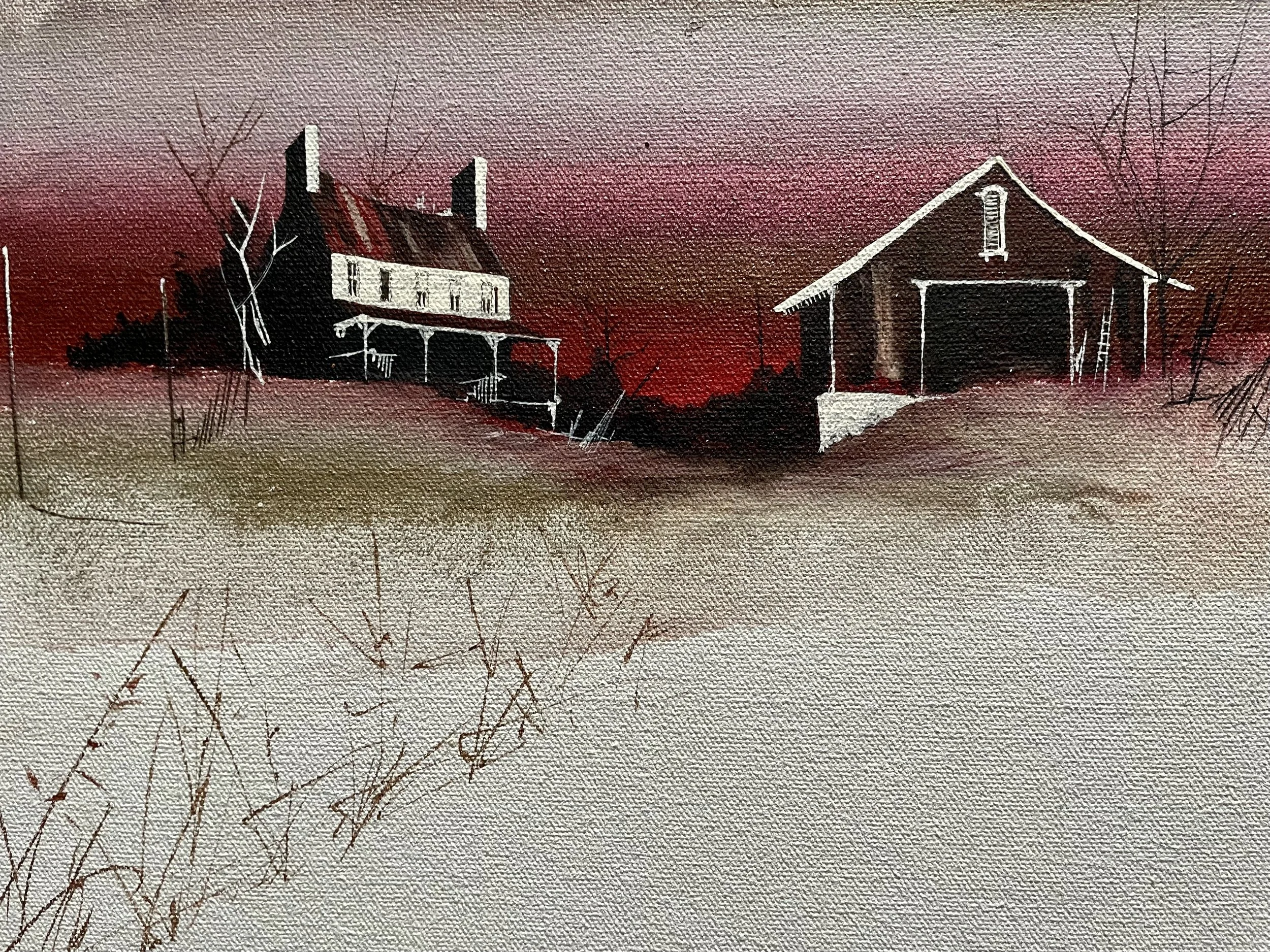
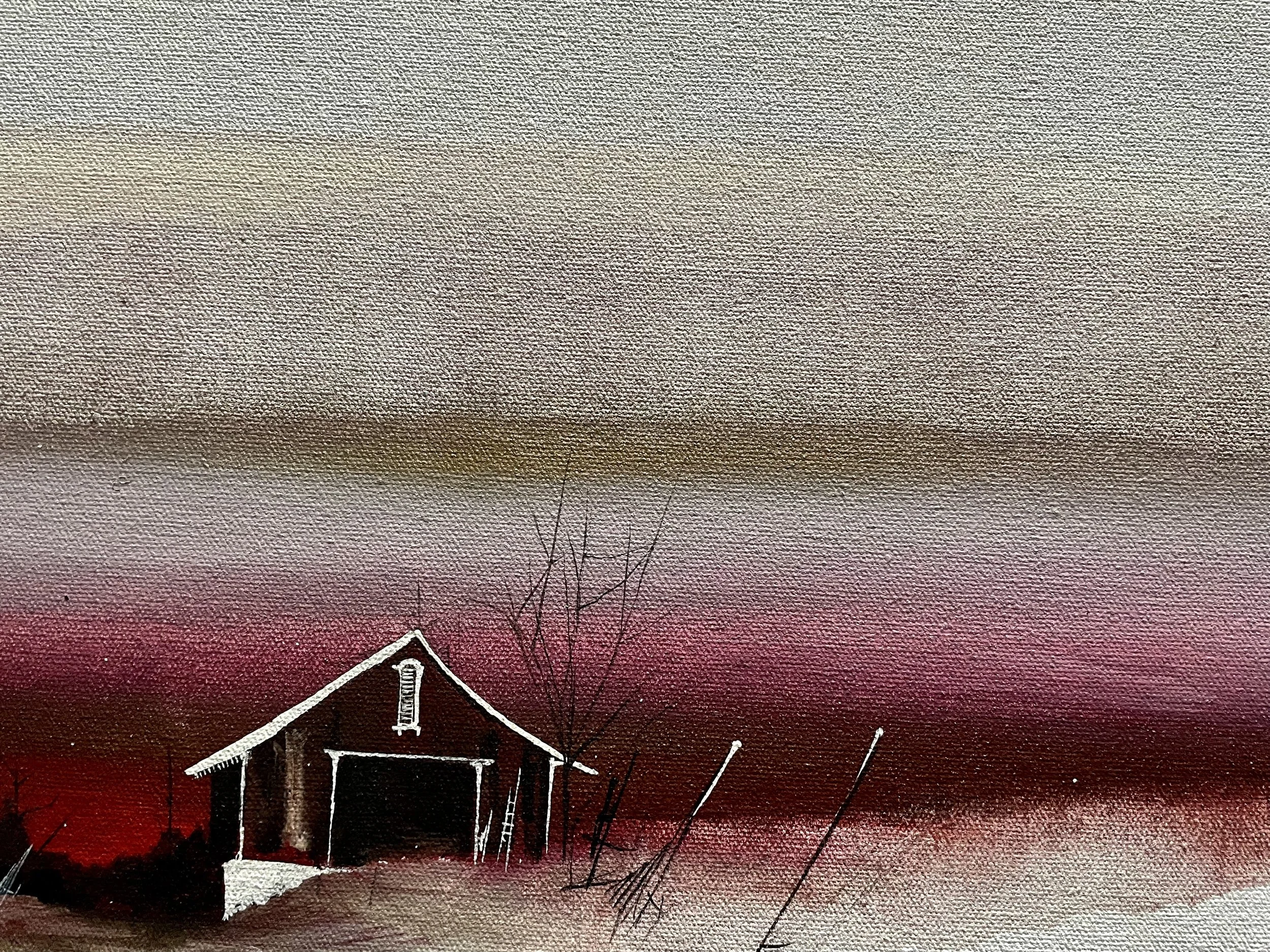
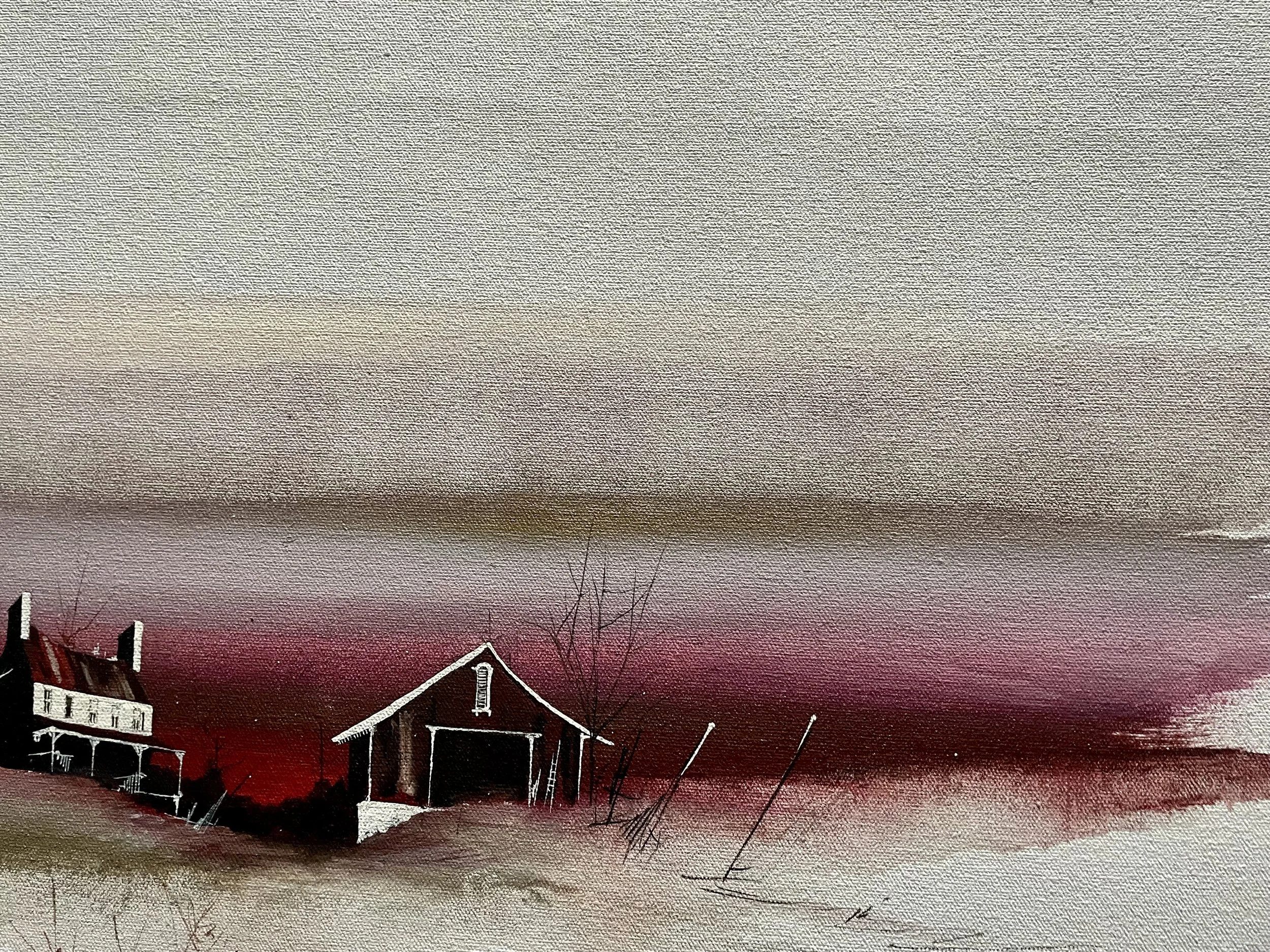
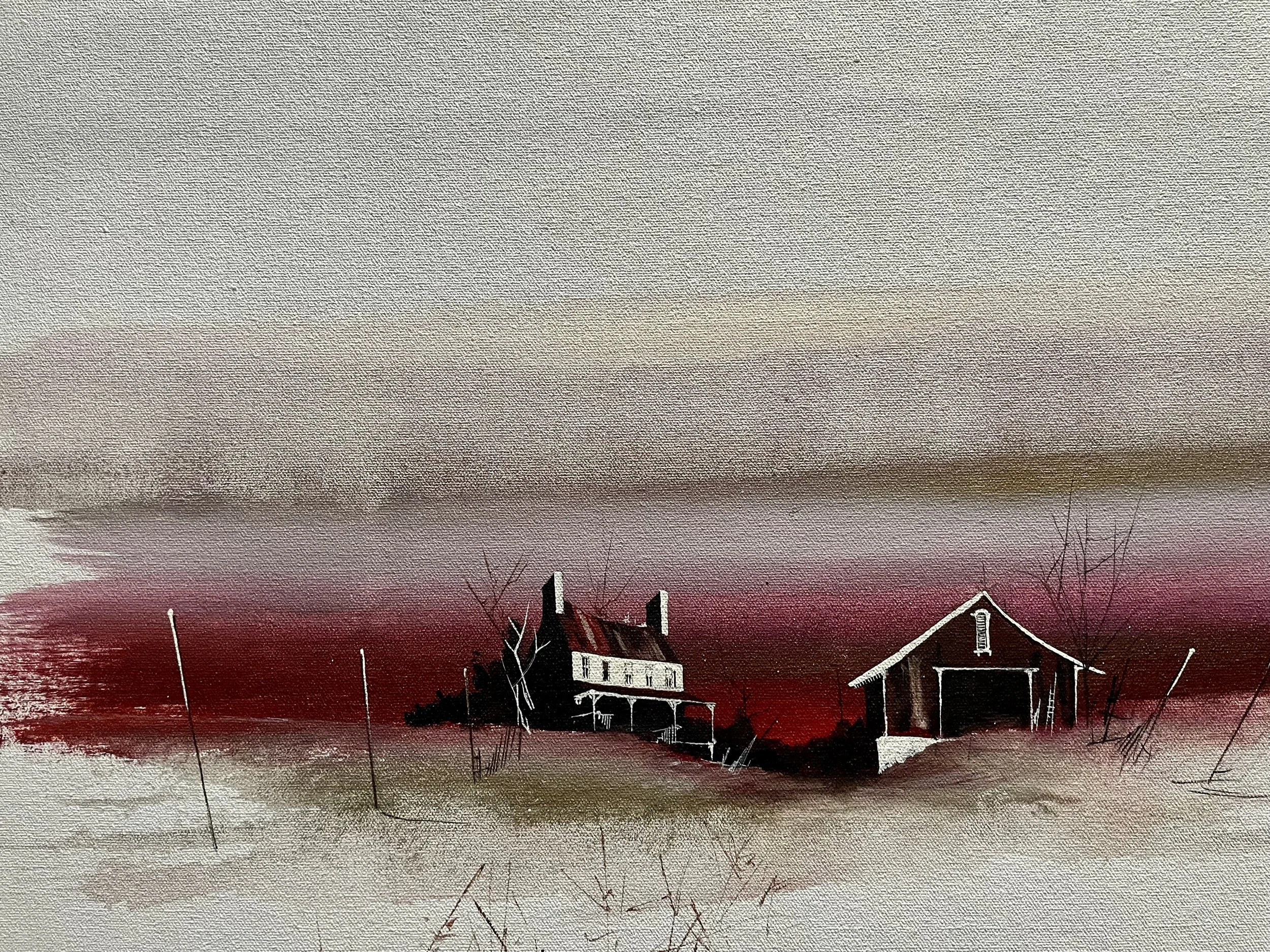
“Cranes in Tranquil Marshland” (Attributed Title), Rick Lane (b. 1951), c. 1980s–1990s, acrylic on paper, 25 × 33 in., signed lower right “Lane.”
A serene and classically inspired acrylic painting on paper by American artist Rick Lane, this 25×33 composition features two elegant cranes rendered in a traditional Oriental style with soft earth-tone palettes, delicate linework, and refined decorative detailing. Acquired in NYC, the work showcases Lane’s rare mastery of East-West fusion techniques—ideal for collectors of Asian-influenced fine art, wildlife painting, contemporary realism, and decorative interior art with timeless appeal.
Description of the Artwork
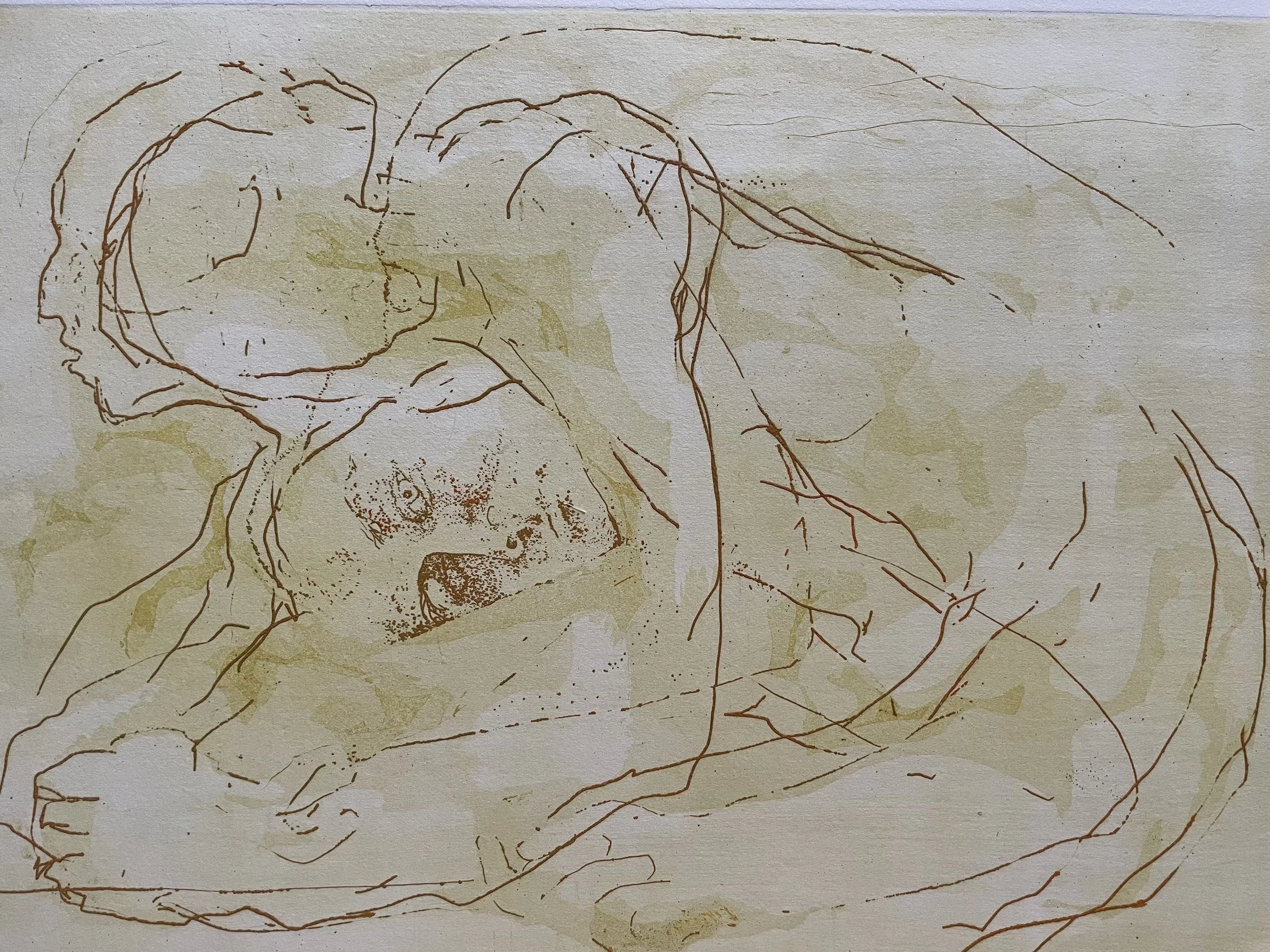
This elegant painting depicts two cranes standing amid reeds and soft marsh grasses, executed in a quiet, harmonious style reminiscent of Chinese and Japanese Edo-period bird-and-flower painting (kachō-ga). The restrained palette—warm ochres, muted greens, charcoal blacks, and ivory tones—evokes a naturally aged patina, giving the artwork the appearance of a classical scroll painting or antique screen panel.
Technique & Medium
Acrylic on paper with a matte, mineral-wash appearance
Layered glazing to simulate ink-wash tonality
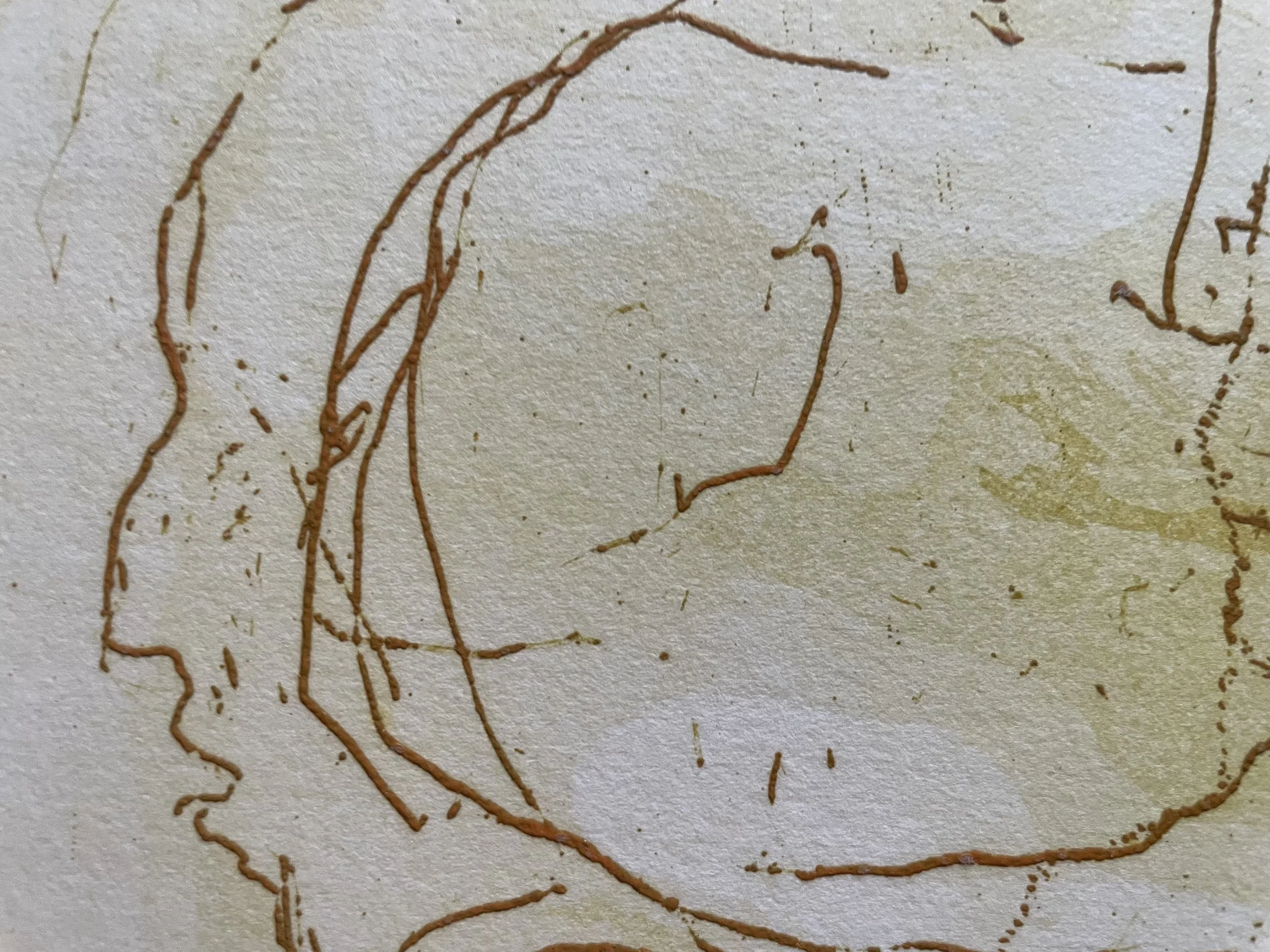
Delicate, confident contour lines reflecting Oriental brush techniques
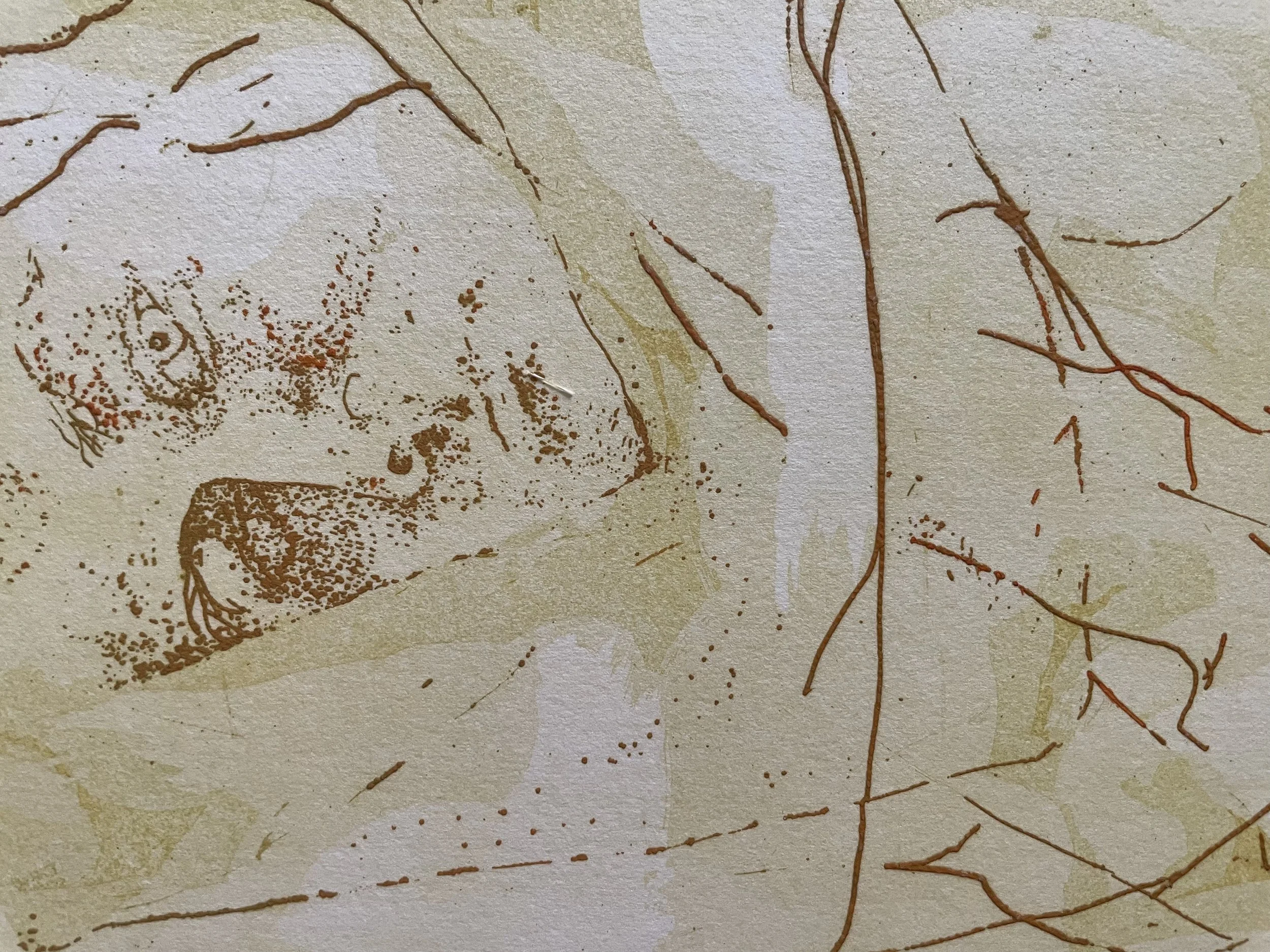
Feathers, wings, and plumage rendered with subtle shading and stippled texture
Minimalist background enhancing symbolic calm and balance
Style & Influences
This painting reflects:
Classical Orientalist decorative traditions
Crane symbolism (longevity, fidelity, peace) drawn from Chinese and Japanese culture
Aesthetic restraint: harmony, symmetry, calmness, and understatement
The artist’s mastery of making contemporary work appear centuries old, one of Lane’s hallmark skills
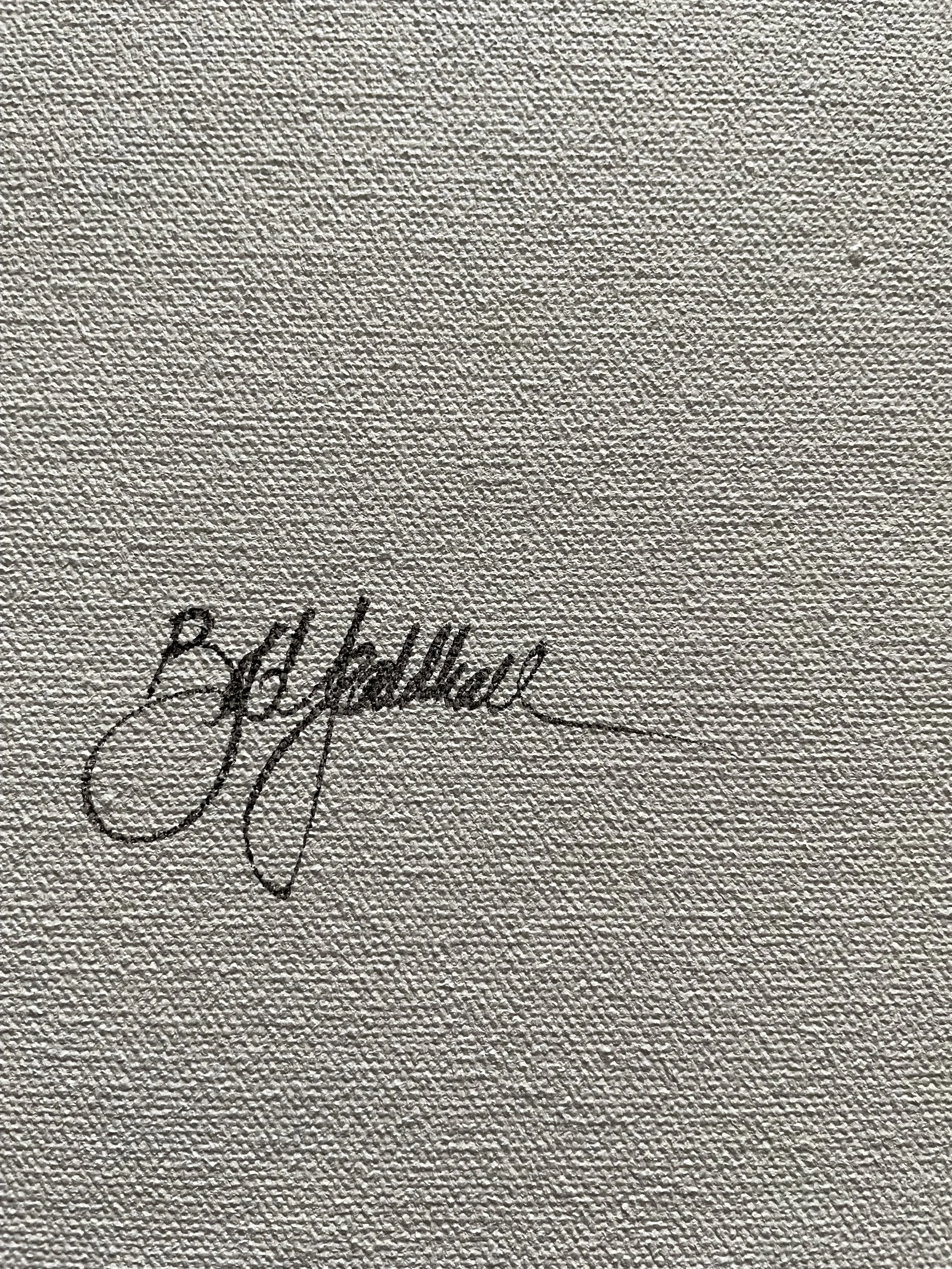
Signature
The work is signed “Lane” in the lower right in a soft, unobtrusive hand consistent with Lane’s Oriental-style works.
Artistic Intent / Story Behind the Work
Rick Lane is known for producing paintings that emulate historic traditions of both Europe and the Orient. This piece—focusing on regal cranes—embodies Lane’s fascination with old-world techniques, learned during extensive study in Spain and through classical training at SVA.
This work likely forms part of his Oriental series, which sought to merge:
Eastern symbolic wildlife imagery
Western academic draftsmanship
Antique-surface simulation to give viewers the sense of discovering an heirloom scroll or lost panel painting
Biography of Rick Lane (b. 1951)
Early Life & Education
Born: 1951, New York City
Education: Bachelor of Fine Arts, School of Visual Arts (SVA), NYC
Studied classical drawing, painting, and Old-Master technique under European-trained faculty
Strong early emphasis on anatomy, glazing, realism, and cross-cultural art history
Training & Influences
Lane undertook years of intensive study in Spain, particularly in Andalusia, where he developed:
Mastery of European classical oil techniques—underpainting, scumbling, glazing
Exposure to Moorish, Spanish Baroque, and Oriental decorative arts
A disciplined approach to rendering animals, hunting scenes, and landscapes
His influences include:
Classical European masters (Velázquez, Goya, Constable)
Japanese and Chinese ink-wash aesthetics
19th-century British sporting painters
Early 20th-century Orientalist decorators and screen painters
Career & Exhibitions
Solo Exhibitions
1980 – Artexpo, New York
1981 – Summerset Gallery, Old Greenwich, CT
1981 – Sol Gallery, Marbella, Spain
Group Exhibitions
Ollantay Center for the Arts, NYC
Various Spanish coastal galleries in Torremolinos and Marbella
New York regional exhibitions highlighting realist and decorative artists
Professional Profile
Rick Lane is widely regarded as a multi-stylistic painter, celebrated for his ability to create:
This versatility—rare in contemporary painters—earned him strong gallery representation in both the U.S. and Spain during the late 20th century.
Lane divides his time between New York and Torremolinos, Spain, continuing to paint, teach, and develop techniques bridging East and West.
Market Position & Legacy
Lane’s works remain sought after for:
Rick Lane (b. 1951), “Cranes in Tranquil Marshland” (Attributed), acrylic on paper, 25×33 in., signed lower right. A classically inspired Oriental crane composition with earth-tone palette and antique-styled surface.
CERTIFICATE OF VALUE & AUTHENTICATION
Artist: Rick Lane (b. 1951)
Title: Cranes in Tranquil Marshland (Attributed)
Date: c. 1980s–1990s
Medium: Acrylic on paper
Dimensions: 25 × 33 in.
Signature: Lower right “Lane”
Condition: Excellent; stable pigment, minor natural surface texture consistent with acrylic wash techniques
Acquisition: New York City
Authenticity: Confirmed by stylistic analysis, signature comparison, and correspondence with Lane’s known Oriental-style works.
Certified by Artfind Gallery, Washington, DC.
Provenance Chain
Private Collection, New York City
Private Collector, United States
Artfind Gallery, Washington, DC (current owner)
“Cranes in Tranquil Marshland” (Attributed Title), Rick Lane (b. 1951), c. 1980s–1990s, acrylic on paper, 25 × 33 in., signed lower right “Lane.”
A serene and classically inspired acrylic painting on paper by American artist Rick Lane, this 25×33 composition features two elegant cranes rendered in a traditional Oriental style with soft earth-tone palettes, delicate linework, and refined decorative detailing. Acquired in NYC, the work showcases Lane’s rare mastery of East-West fusion techniques—ideal for collectors of Asian-influenced fine art, wildlife painting, contemporary realism, and decorative interior art with timeless appeal.
Description of the Artwork
This elegant painting depicts two cranes standing amid reeds and soft marsh grasses, executed in a quiet, harmonious style reminiscent of Chinese and Japanese Edo-period bird-and-flower painting (kachō-ga). The restrained palette—warm ochres, muted greens, charcoal blacks, and ivory tones—evokes a naturally aged patina, giving the artwork the appearance of a classical scroll painting or antique screen panel.
Technique & Medium
Acrylic on paper with a matte, mineral-wash appearance
Layered glazing to simulate ink-wash tonality
Delicate, confident contour lines reflecting Oriental brush techniques
Feathers, wings, and plumage rendered with subtle shading and stippled texture
Minimalist background enhancing symbolic calm and balance
Style & Influences
This painting reflects:
Classical Orientalist decorative traditions
Crane symbolism (longevity, fidelity, peace) drawn from Chinese and Japanese culture
Aesthetic restraint: harmony, symmetry, calmness, and understatement
The artist’s mastery of making contemporary work appear centuries old, one of Lane’s hallmark skills
Signature
The work is signed “Lane” in the lower right in a soft, unobtrusive hand consistent with Lane’s Oriental-style works.
Artistic Intent / Story Behind the Work
Rick Lane is known for producing paintings that emulate historic traditions of both Europe and the Orient. This piece—focusing on regal cranes—embodies Lane’s fascination with old-world techniques, learned during extensive study in Spain and through classical training at SVA.
This work likely forms part of his Oriental series, which sought to merge:
Eastern symbolic wildlife imagery
Western academic draftsmanship
Antique-surface simulation to give viewers the sense of discovering an heirloom scroll or lost panel painting
Biography of Rick Lane (b. 1951)
Early Life & Education
Born: 1951, New York City
Education: Bachelor of Fine Arts, School of Visual Arts (SVA), NYC
Studied classical drawing, painting, and Old-Master technique under European-trained faculty
Strong early emphasis on anatomy, glazing, realism, and cross-cultural art history
Training & Influences
Lane undertook years of intensive study in Spain, particularly in Andalusia, where he developed:
Mastery of European classical oil techniques—underpainting, scumbling, glazing
Exposure to Moorish, Spanish Baroque, and Oriental decorative arts
A disciplined approach to rendering animals, hunting scenes, and landscapes
His influences include:
Classical European masters (Velázquez, Goya, Constable)
Japanese and Chinese ink-wash aesthetics
19th-century British sporting painters
Early 20th-century Orientalist decorators and screen painters
Career & Exhibitions
Solo Exhibitions
1980 – Artexpo, New York
1981 – Summerset Gallery, Old Greenwich, CT
1981 – Sol Gallery, Marbella, Spain
Group Exhibitions
Ollantay Center for the Arts, NYC
Various Spanish coastal galleries in Torremolinos and Marbella
New York regional exhibitions highlighting realist and decorative artists
Professional Profile
Rick Lane is widely regarded as a multi-stylistic painter, celebrated for his ability to create:
This versatility—rare in contemporary painters—earned him strong gallery representation in both the U.S. and Spain during the late 20th century.
Lane divides his time between New York and Torremolinos, Spain, continuing to paint, teach, and develop techniques bridging East and West.
Market Position & Legacy
Lane’s works remain sought after for:
Rick Lane (b. 1951), “Cranes in Tranquil Marshland” (Attributed), acrylic on paper, 25×33 in., signed lower right. A classically inspired Oriental crane composition with earth-tone palette and antique-styled surface.
CERTIFICATE OF VALUE & AUTHENTICATION
Artist: Rick Lane (b. 1951)
Title: Cranes in Tranquil Marshland (Attributed)
Date: c. 1980s–1990s
Medium: Acrylic on paper
Dimensions: 25 × 33 in.
Signature: Lower right “Lane”
Condition: Excellent; stable pigment, minor natural surface texture consistent with acrylic wash techniques
Acquisition: New York City
Authenticity: Confirmed by stylistic analysis, signature comparison, and correspondence with Lane’s known Oriental-style works.
Certified by Artfind Gallery, Washington, DC.
Provenance Chain
Private Collection, New York City
Private Collector, United States
Artfind Gallery, Washington, DC (current owner)
 Image 1 of 8
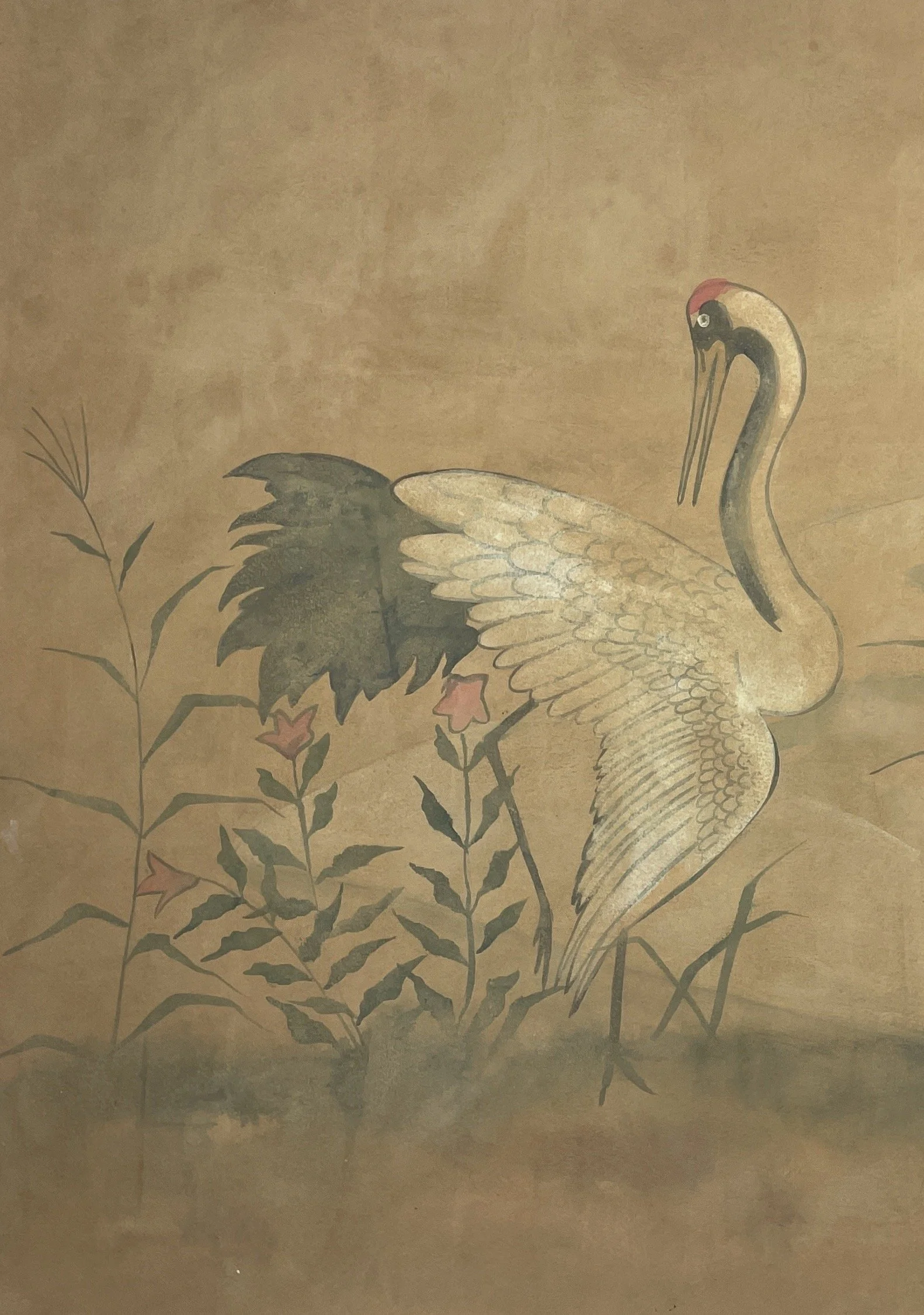 Image 2 of 8
 Image 3 of 8
 Image 4 of 8
 Image 5 of 8
 Image 6 of 8
 Image 7 of 8
 Image 8 of 8