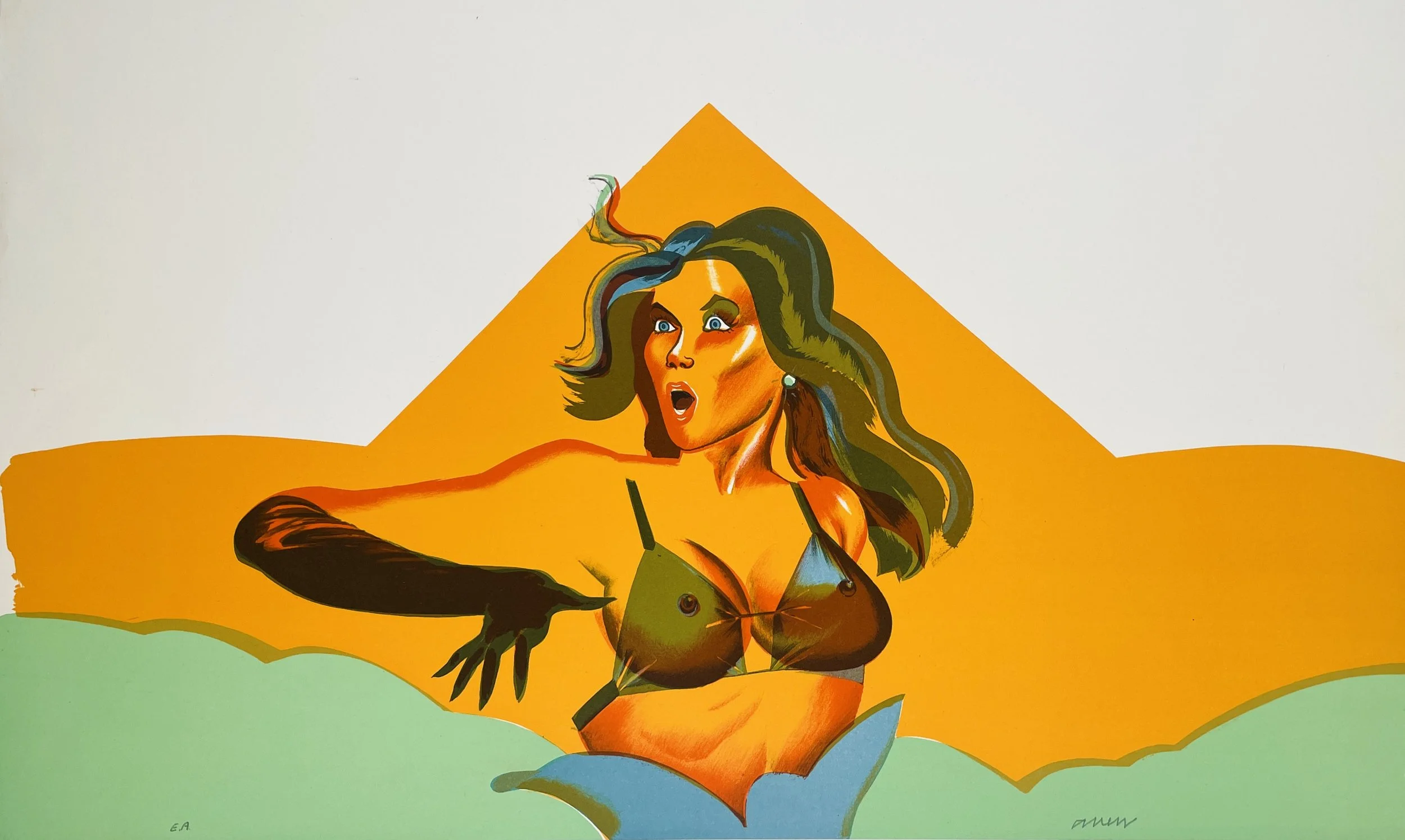
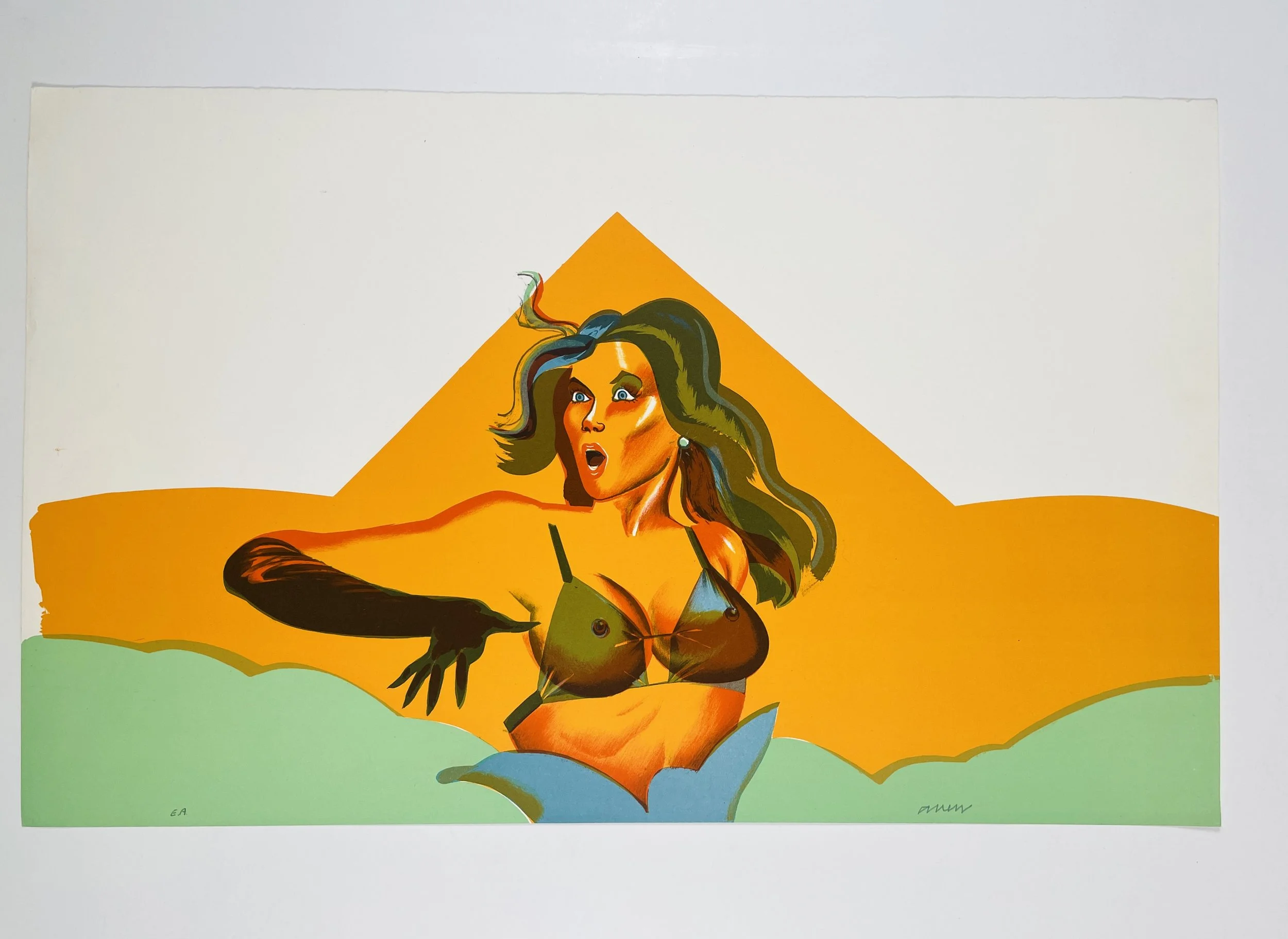
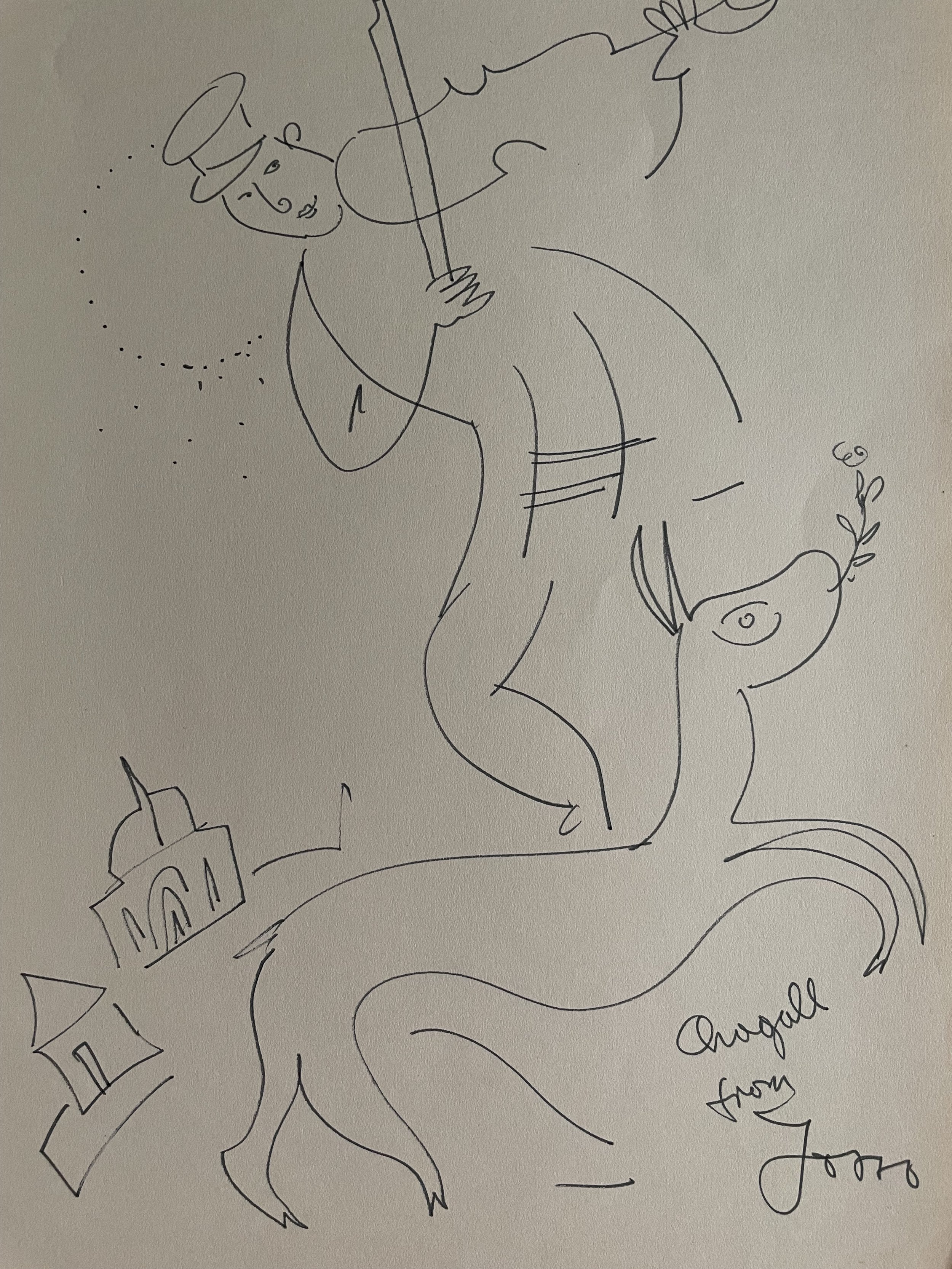
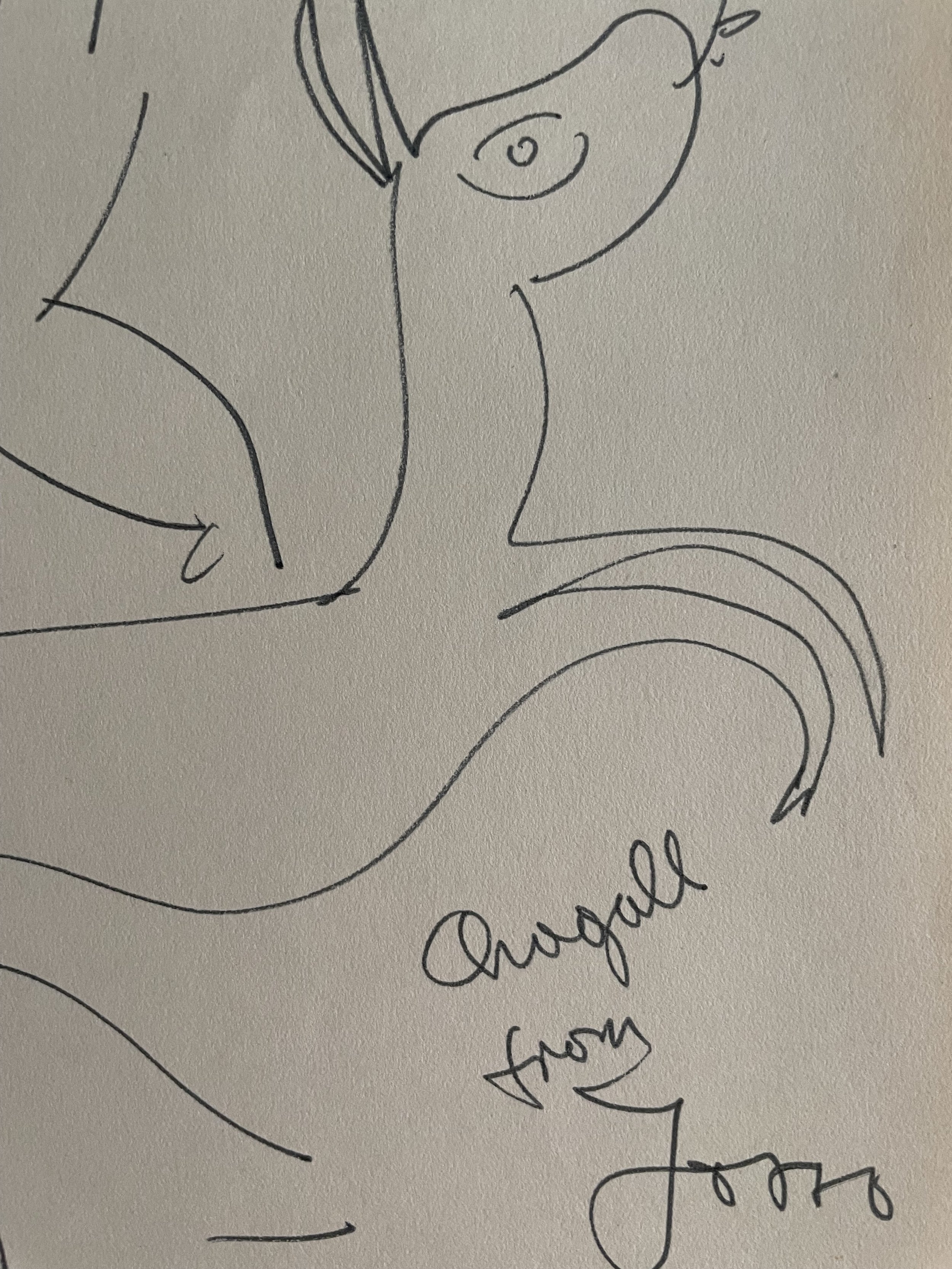
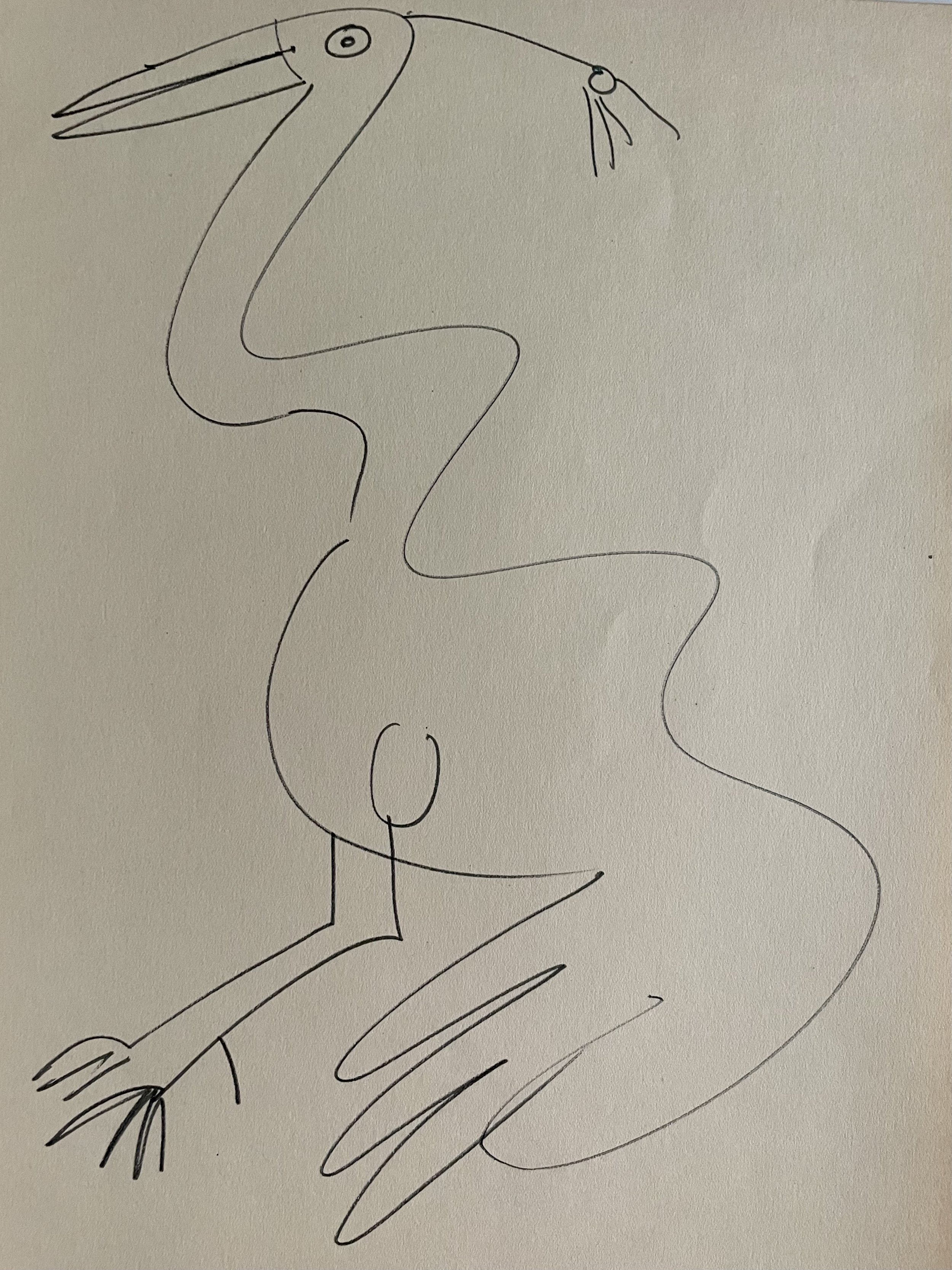
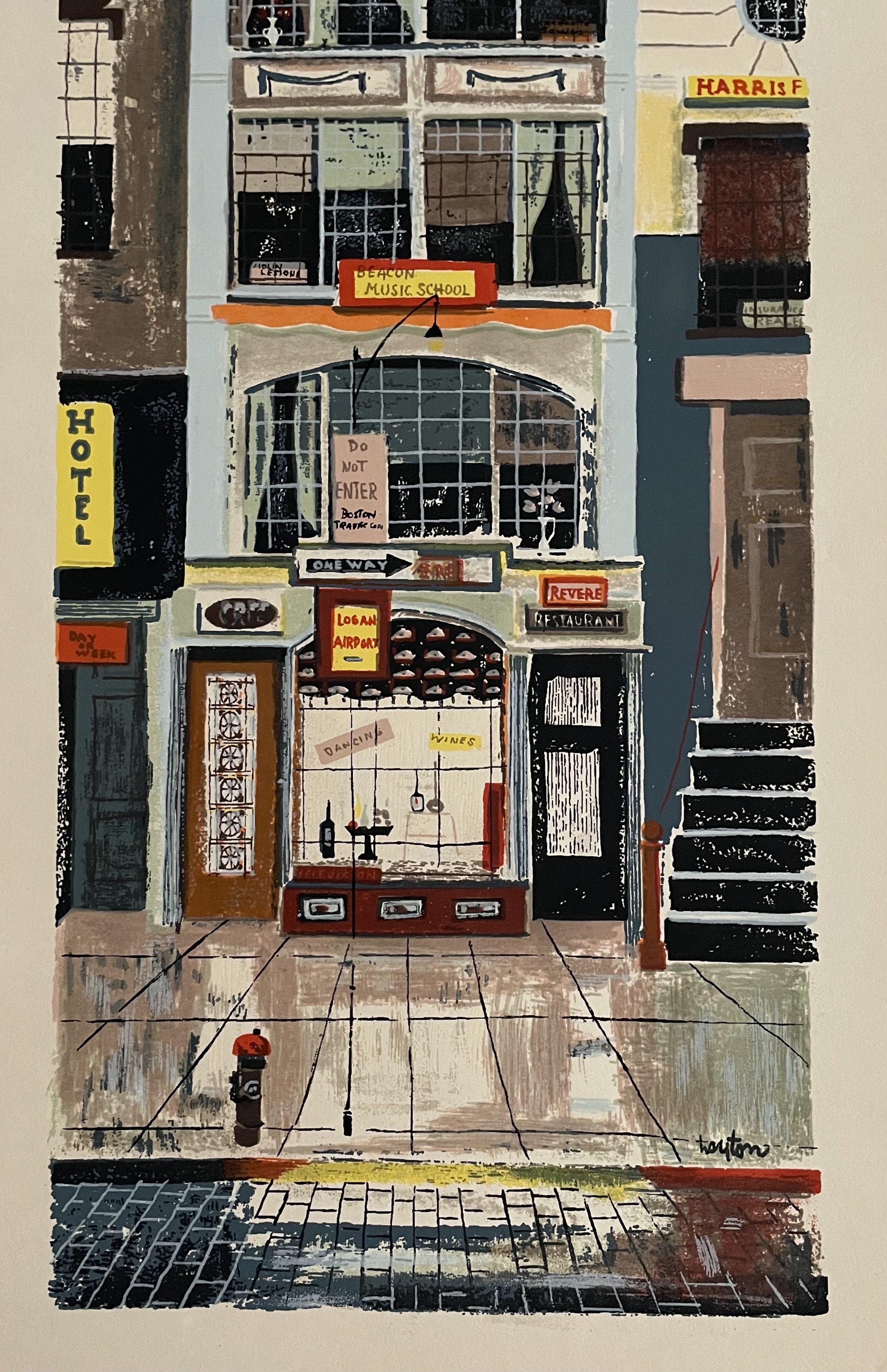
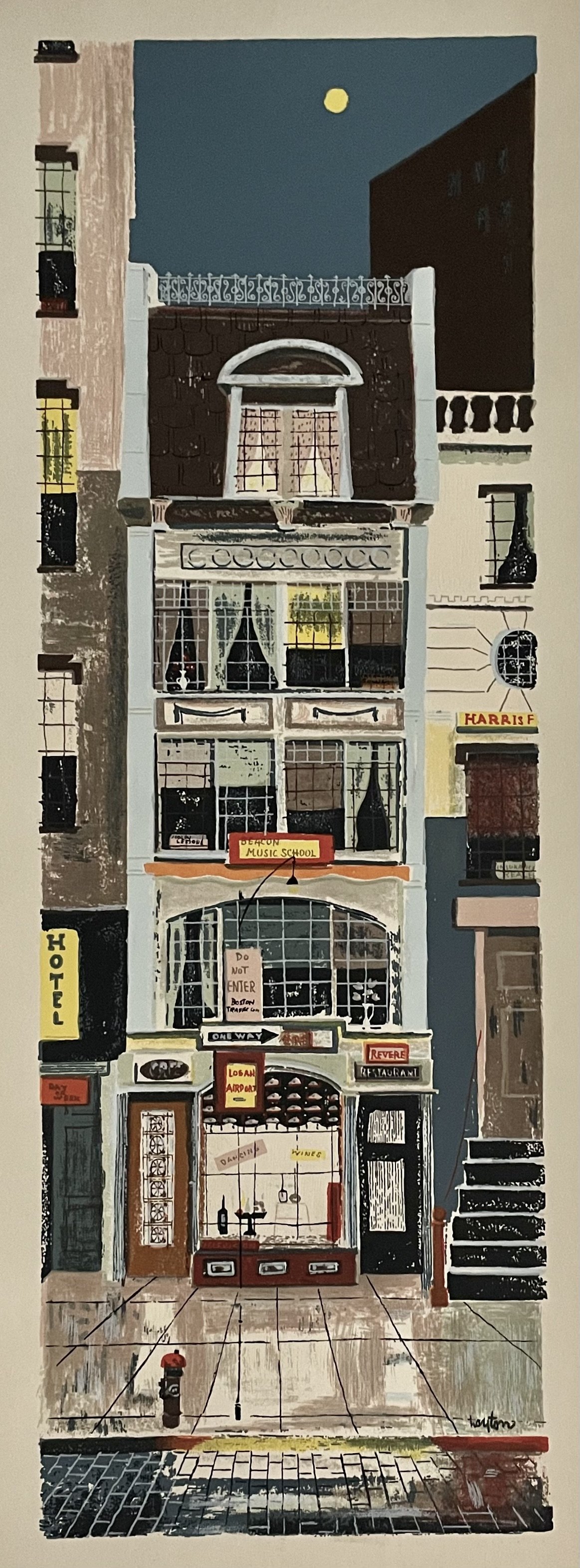
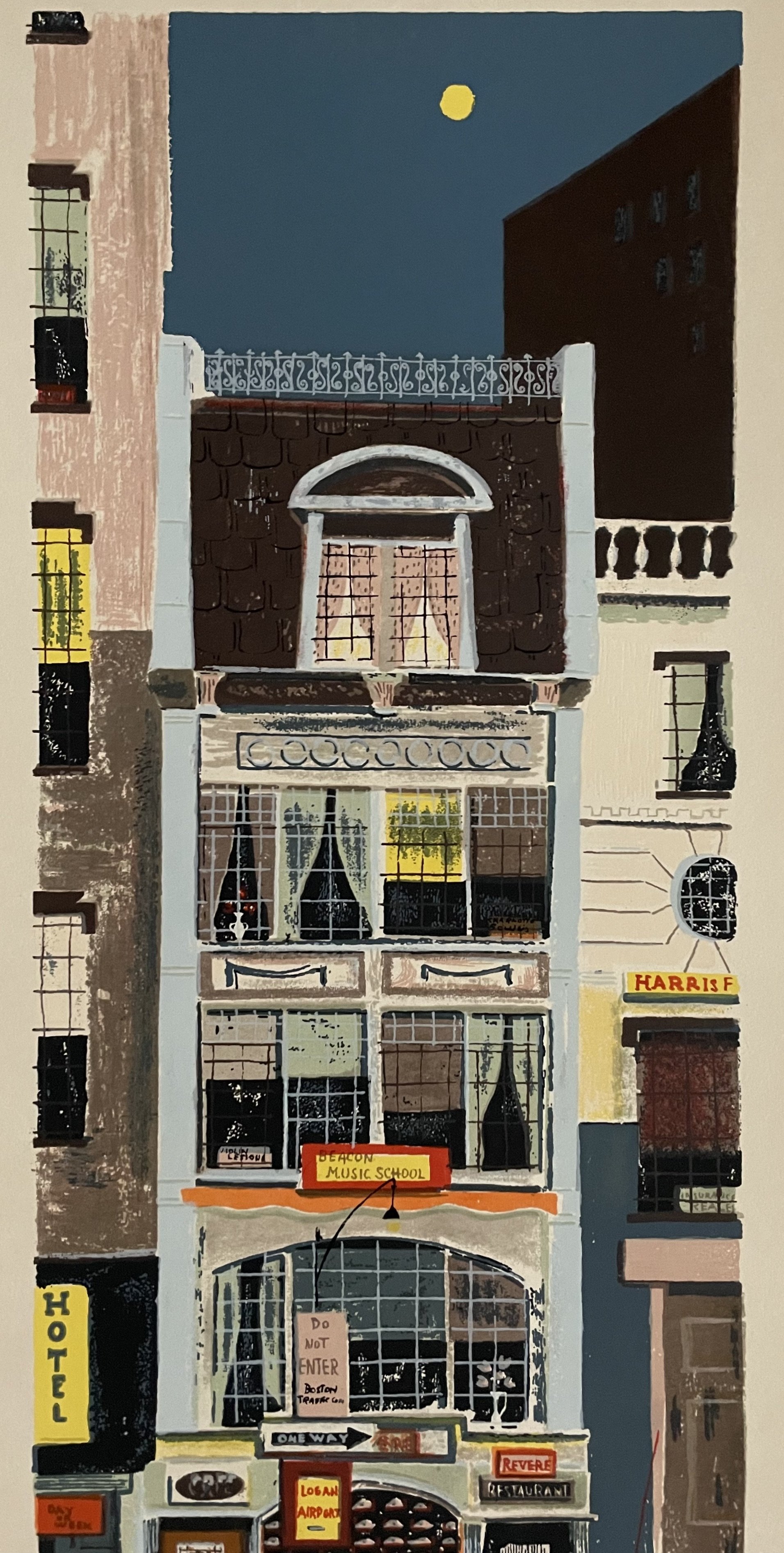
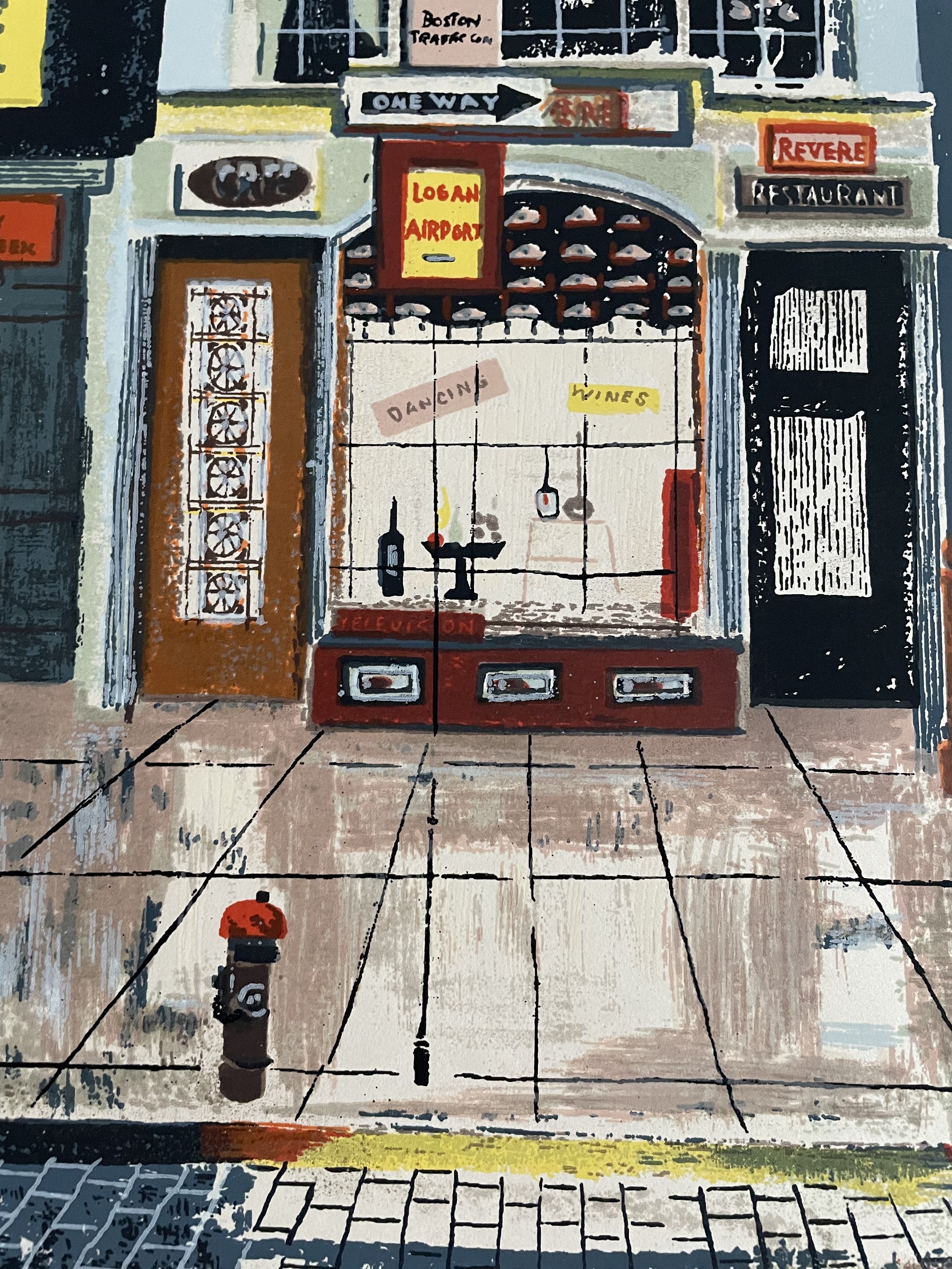
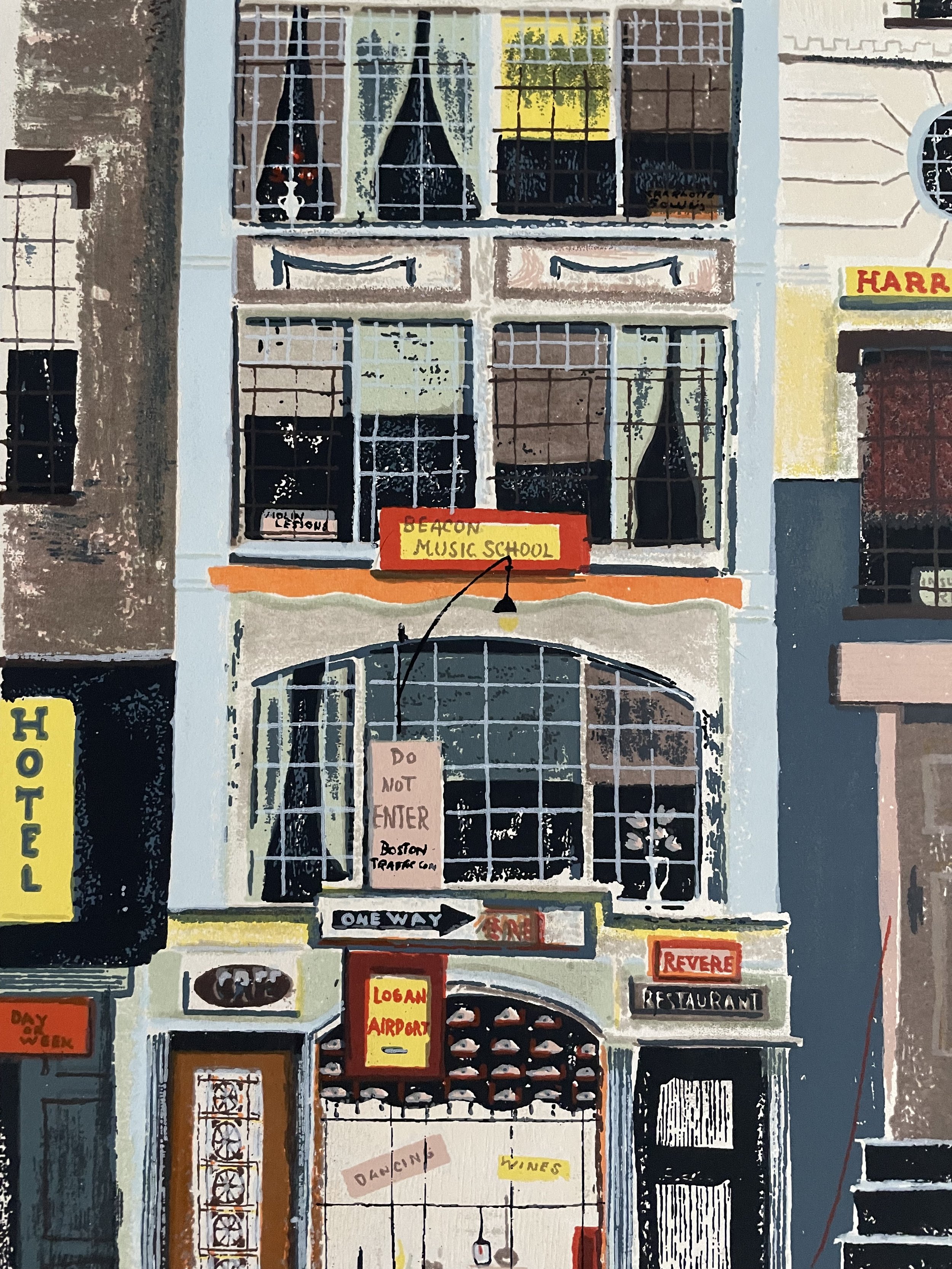
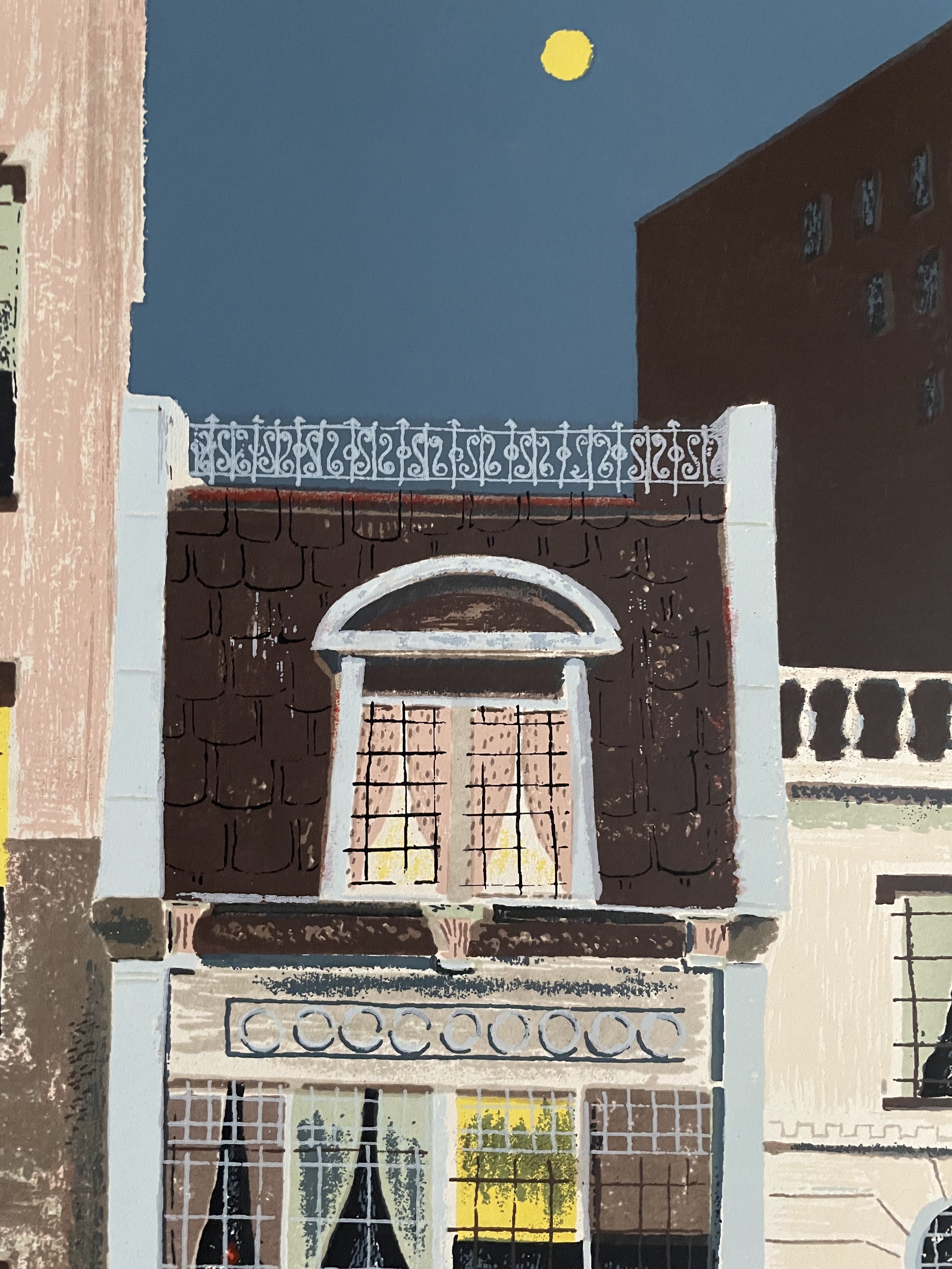
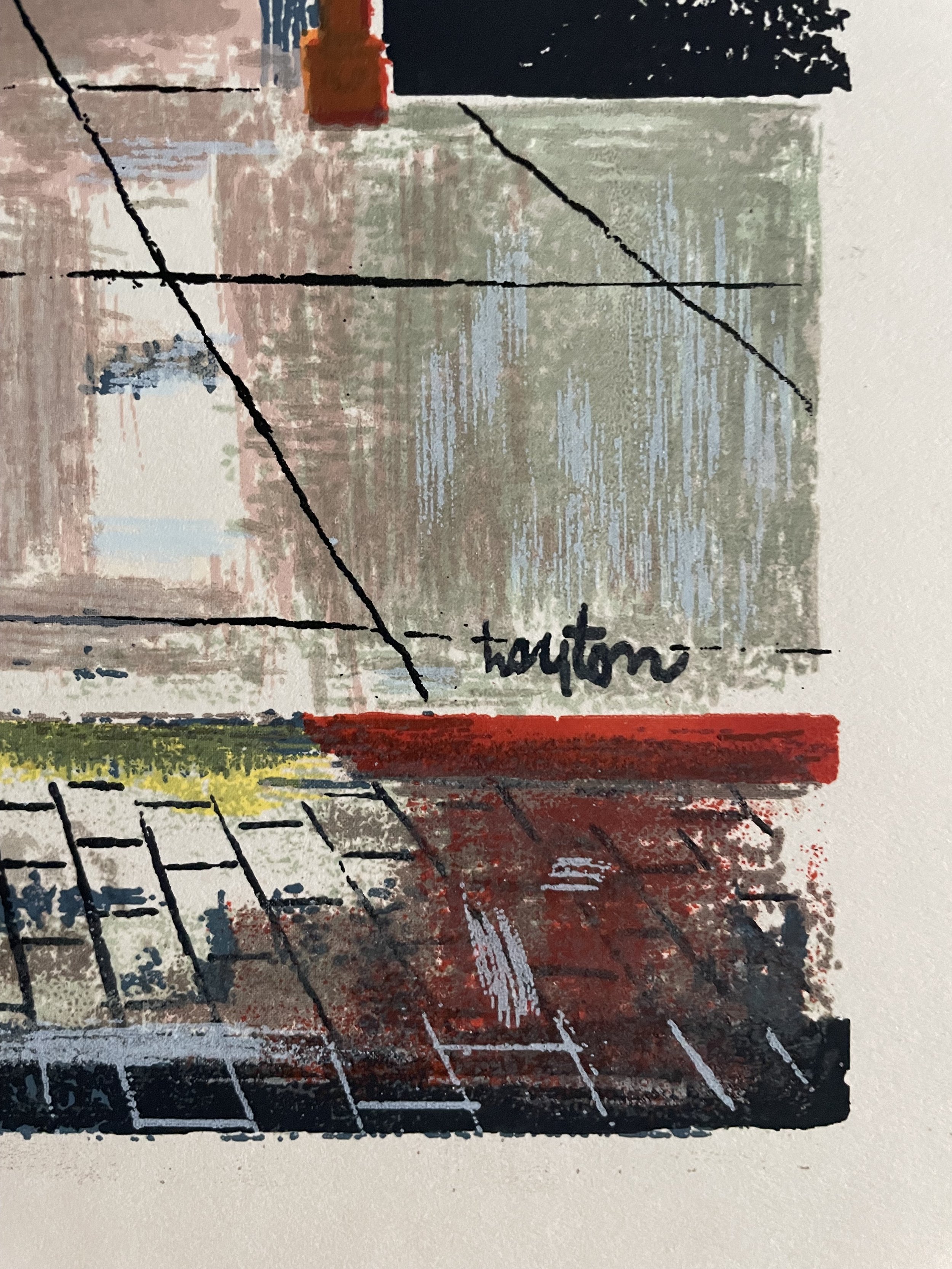
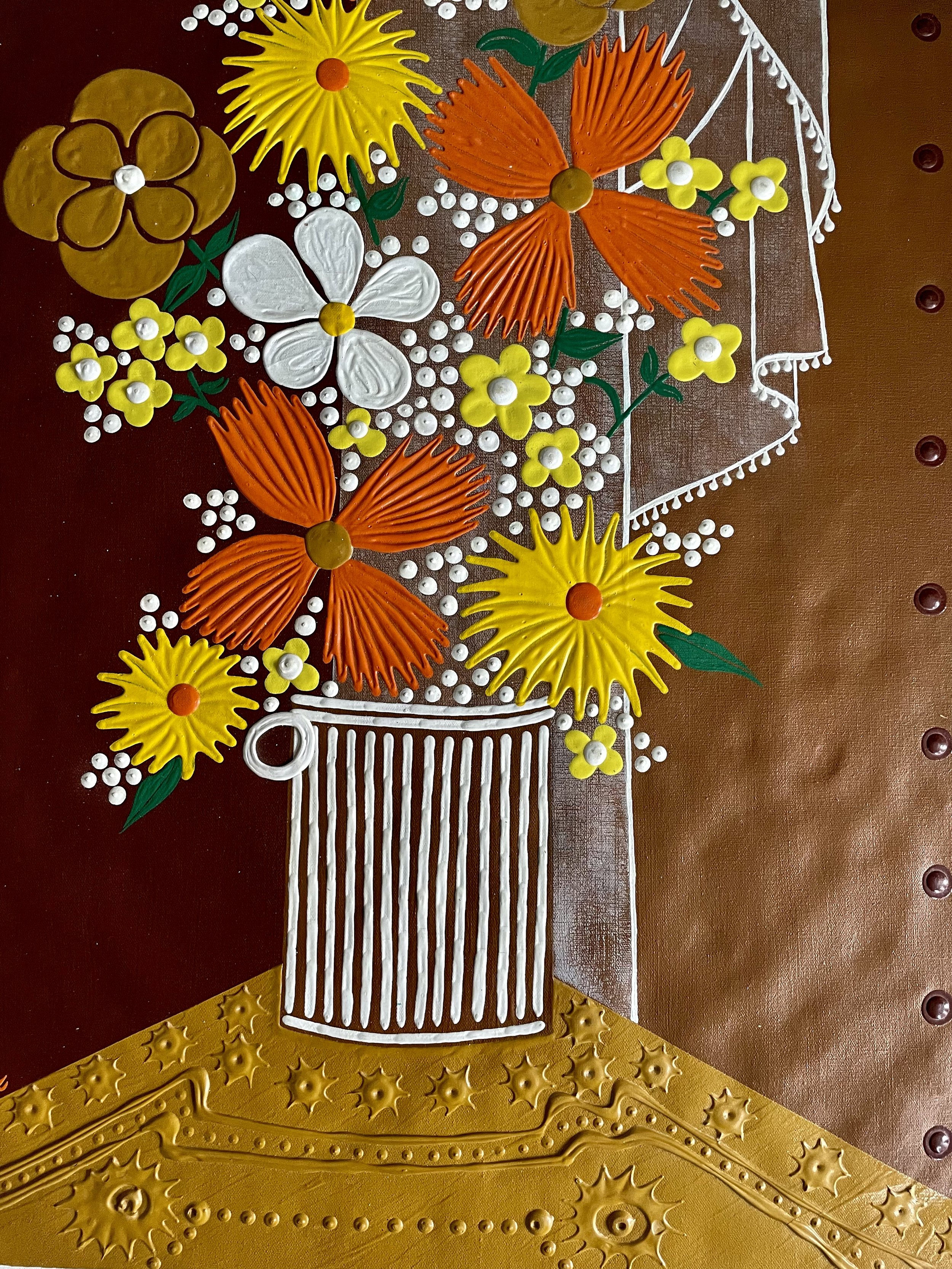
Untitled (Abstract Figure), Attributed European Modernist (mid-20th c.), c.1960, linocut on Japanese paper, 12×18 in, pencil signed & numbered I/XX
A striking mid-century European modernist linocut featuring an abstracted figure rendered in bold red linework over an olive-gold field. Carved with sharp V-gouge marks and printed on thin Japanese paper, the composition reveals a sophisticated studio printing process and an edition of only twenty impressions (I/XX). The work’s geometric structure, patterned triangular textures, and cubist fragmentation reflect the visual language of post-war European graphic modernism. Acquired through Mitch Morse Gallery’s international network of artists and collectors, this impression represents a rare small-edition studio print from the period when painters and sculptors frequently experimented with relief printmaking.
Artwork Description
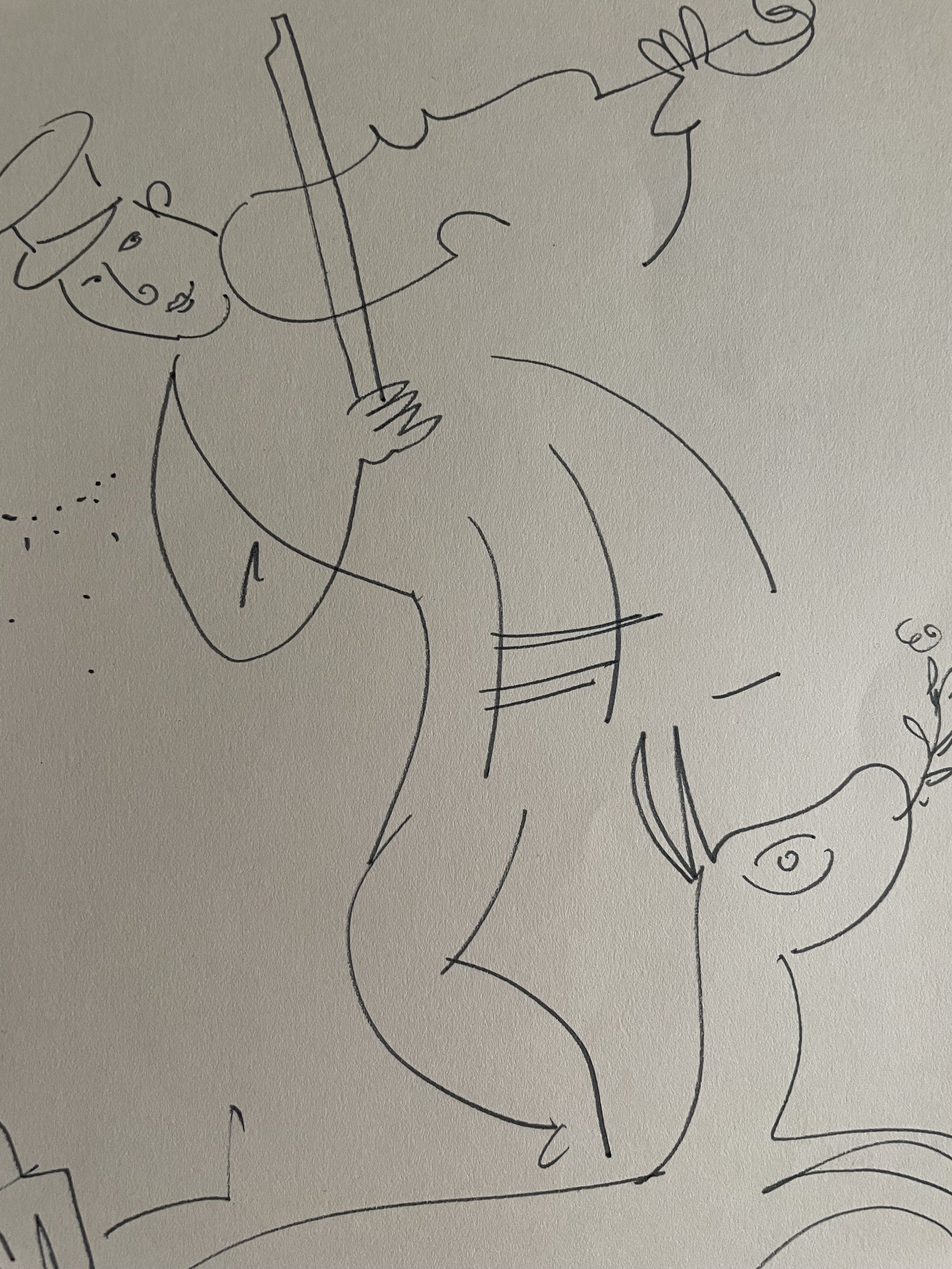
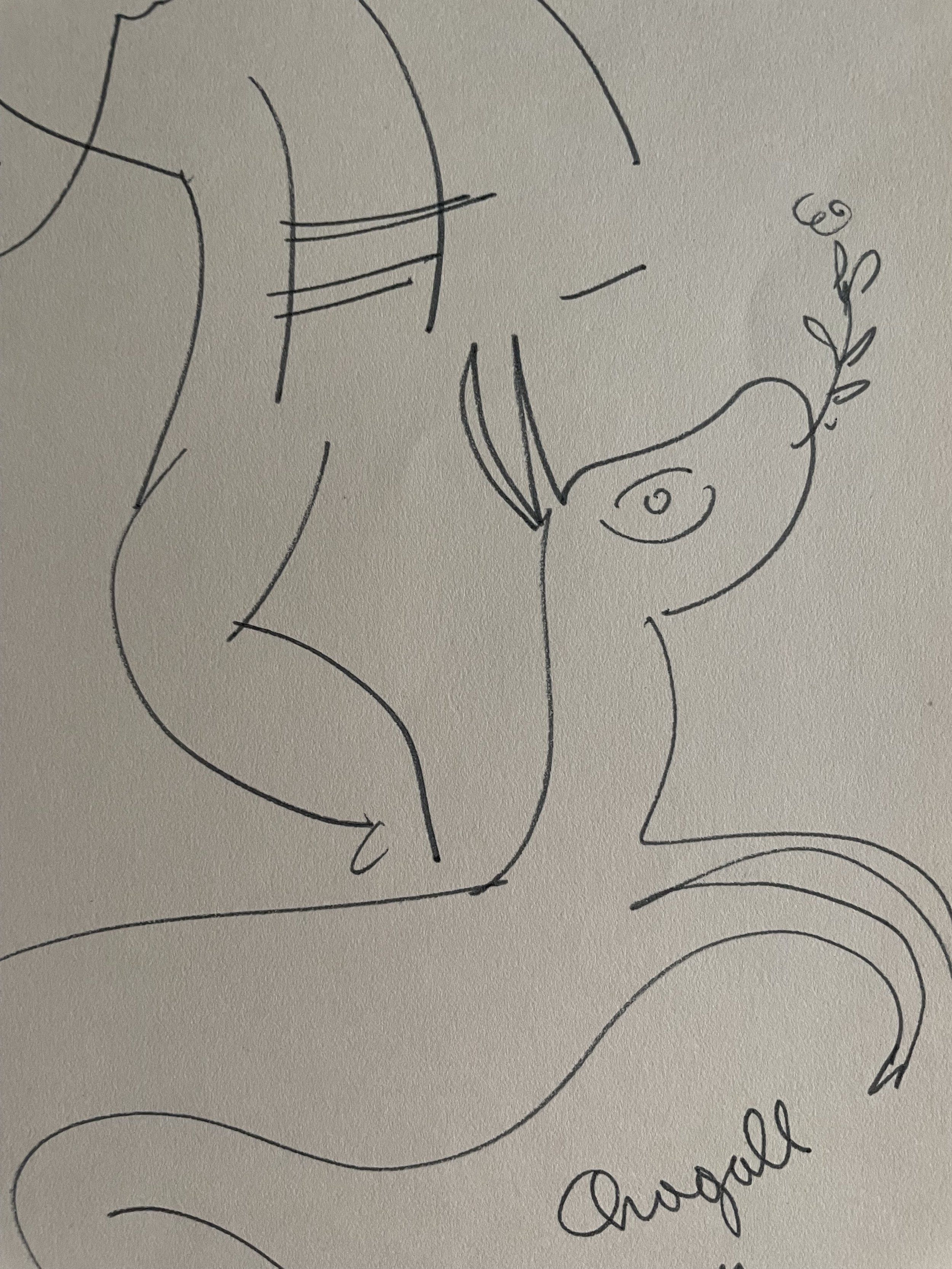
This mid-century modernist linocut depicts an abstracted human figure constructed from angular planes, geometric fragments, and rhythmic patterned textures. The composition is organized through bold red contour lines that divide the figure into interlocking shapes filled with triangular hatch marks, checkerboard elements, and architectural forms. These internal textures function almost like visual “modules,” creating a dynamic contrast between dense pattern fields and flat areas of color.
The work is printed in two colors: a deep red ink forming the primary drawing and a warm olive-gold field beneath. Close inspection reveals the characteristic stippled surface produced by a brayer rolling ink across a relief block. The crisp edges of the red lines and the even transfer across the sheet indicate that the print was produced on a professional press rather than hand-burnished, suggesting access to a studio printmaking environment.
The carving technique is particularly revealing. The triangular textures were created using a V-gouge tool, producing sharp wedge-shaped cuts that taper to needle points. This method was widely taught in European print studios in the 1950s–1970s and is commonly seen in linocuts associated with modernist graphic experimentation of the period. The patterns add energy to the composition while reinforcing the structural geometry of the figure.
The sheet is printed on thin Japanese-style paper, likely kozo or a similar fiber paper imported for fine printmaking. Such paper was favored by European artists because it captured ink impressions with exceptional clarity while allowing subtle embossing of the carved lines. The delicate support also suggests a carefully controlled printing process typical of professional ateliers.
The edition notation in the lower margin reads “I–XX,” indicating the first impression of an edition of twenty prints. Small editions of this size were frequently produced as experimental or gallery-distributed works by painters exploring printmaking as an extension of their studio practice.
Stylistically, the work reflects the influence of post-war European modernism. The abstracted figure recalls the structural simplification of Cubism and the graphic boldness associated with artists influenced by Pablo Picasso and Fernand Léger. During the 1950s and 1960s, many European artists turned to linocut and woodcut as direct, expressive mediums that allowed strong graphic compositions and vivid color contrasts.
Although the exact artist remains unidentified, the visual language, carving technique, and printing method firmly place the work within the European modernist print tradition of the mid-20th century. Its limited edition, professional execution, and provenance from Mitch Morse Gallery’s international acquisitions further support its origin within the network of artists and ateliers active in New York and Europe during the period.
Artist Biography
Attributed European Modernist Printmaker, active mid-20th century
The artist responsible for this linocut remains unidentified, but the work belongs clearly to the visual and technical tradition of European modernist printmaking that flourished in the decades following the Second World War. During this period, artists across France, Belgium, Italy, Germany, and Central Europe explored printmaking as a vital extension of painting and sculpture. Relief techniques such as linocut and woodcut offered immediacy, graphic clarity, and the possibility of small edition distribution through galleries and ateliers.
The mid-century revival of relief printmaking was strongly influenced by earlier modernist pioneers such as Pablo Picasso, who demonstrated the expressive potential of linocut in the 1950s. Picasso’s experiments encouraged a generation of artists to explore bold graphic forms, simplified figures, and strong color contrasts. Many painters who were primarily known for canvas work began producing small editions of prints, often printed in collaborative studios where technical expertise and specialized presses were available.
European print ateliers and art schools played a crucial role in this movement. Studios in Paris, Brussels, Milan, and other cultural centers provided shared presses, professional printing assistance, and access to imported Japanese papers prized for their strength and sensitivity to ink transfer. Artists working in these environments often produced editions of fewer than fifty impressions, sometimes as limited gallery projects or experimental works.
The abstracted human figure in this print reflects the broader stylistic climate of the 1950s and 1960s. Influences from Cubism and post-Cubist abstraction are evident in the fractured planes and structural geometry of the composition. The patterned textures carved into the figure recall the decorative graphic language adopted by many modernists seeking to combine figuration with abstraction.
Another hallmark of the period was the integration of pattern and structure. Artists used repeating marks—triangles, checkerboards, and linear hatching—not merely as decoration but as compositional devices that guided the viewer’s eye across the surface. The result was a dynamic interplay between drawing, pattern, and color.
The use of Japanese paper in this work reflects the increasing fascination European artists had with East Asian materials and techniques. Japanese kozo paper, known for its long fibers and durability, became widely available through art suppliers and was quickly embraced by printmakers. Its thin yet resilient structure allowed precise impressions while preserving the tactile qualities of relief carving.
The work’s small edition of twenty impressions suggests a studio environment where prints were produced carefully and intentionally rather than for mass distribution. Such editions were often sold through galleries or exchanged among artists and collectors within the modernist art community.
This particular print entered the market through Mitch Morse Gallery, a Washington, DC gallery known for representing and handling works by modernist and contemporary artists from both the United States and Europe. The gallery frequently acquired individual prints and paintings during travels to New York and European art centers, bringing lesser-known but compelling works into their program. These acquisitions often included one-off pieces by artists admired by the gallery’s represented painters.
While the precise identity of the artist remains unresolved, the technical quality and stylistic confidence of the print indicate that it was produced by a trained artist working within the professional printmaking culture of mid-century Europe. As scholarship continues to document the vast network of modernist print studios active during the period, works like this provide valuable insight into the experimental spirit that defined post-war graphic art.
Mid-century European modernist linocut depicting an abstract figure with geometric patterning. Two-color relief print on Japanese paper, pencil signed and numbered I/XX from an edition of 20. Sheet size 12 × 18 inches. Provenance Mitch Morse Gallery acquisitions.
Certificate of Authentication
Title: Untitled (Abstract Figure)
Artist: Attributed European Modernist
Date: Circa 1960
Medium: Linocut on Japanese paper
Dimensions: 12 × 18 inches
Edition: I/XX (1 of 20)
Signature: Pencil signature lower right
This certificate confirms that the above artwork has been examined and identified as an original mid-20th century linocut print consistent with European modernist studio production. The work is signed in pencil and numbered from a limited edition of twenty impressions.
Provenance: Mitch Morse Gallery acquisitions, New York and Europe; Artfind Gallery, Washington DC.
Certified by Artfind Gallery, Washington DC.
Condition
Very good vintage condition. Minor edge handling consistent with thin Japanese paper and age. No visible restoration. Strong ink transfer and clear impression.
Provenance
Artist studio, Europe, circa 1960
Private collection, New York, United States
Mitch Morse Gallery acquisitions, New York and Europe
Artfind Gallery, Washington DC (current owner)
Citations
British Museum, Relief printmaking techniques and linocut history
Museum of Modern Art archives on post-war European printmaking
Christie’s and Sotheby’s auction results for mid-century modernist prints
Untitled (Abstract Figure), Attributed European Modernist (mid-20th c.), c.1960, linocut on Japanese paper, 12×18 in, pencil signed & numbered I/XX
A striking mid-century European modernist linocut featuring an abstracted figure rendered in bold red linework over an olive-gold field. Carved with sharp V-gouge marks and printed on thin Japanese paper, the composition reveals a sophisticated studio printing process and an edition of only twenty impressions (I/XX). The work’s geometric structure, patterned triangular textures, and cubist fragmentation reflect the visual language of post-war European graphic modernism. Acquired through Mitch Morse Gallery’s international network of artists and collectors, this impression represents a rare small-edition studio print from the period when painters and sculptors frequently experimented with relief printmaking.
Artwork Description
This mid-century modernist linocut depicts an abstracted human figure constructed from angular planes, geometric fragments, and rhythmic patterned textures. The composition is organized through bold red contour lines that divide the figure into interlocking shapes filled with triangular hatch marks, checkerboard elements, and architectural forms. These internal textures function almost like visual “modules,” creating a dynamic contrast between dense pattern fields and flat areas of color.
The work is printed in two colors: a deep red ink forming the primary drawing and a warm olive-gold field beneath. Close inspection reveals the characteristic stippled surface produced by a brayer rolling ink across a relief block. The crisp edges of the red lines and the even transfer across the sheet indicate that the print was produced on a professional press rather than hand-burnished, suggesting access to a studio printmaking environment.
The carving technique is particularly revealing. The triangular textures were created using a V-gouge tool, producing sharp wedge-shaped cuts that taper to needle points. This method was widely taught in European print studios in the 1950s–1970s and is commonly seen in linocuts associated with modernist graphic experimentation of the period. The patterns add energy to the composition while reinforcing the structural geometry of the figure.
The sheet is printed on thin Japanese-style paper, likely kozo or a similar fiber paper imported for fine printmaking. Such paper was favored by European artists because it captured ink impressions with exceptional clarity while allowing subtle embossing of the carved lines. The delicate support also suggests a carefully controlled printing process typical of professional ateliers.
The edition notation in the lower margin reads “I–XX,” indicating the first impression of an edition of twenty prints. Small editions of this size were frequently produced as experimental or gallery-distributed works by painters exploring printmaking as an extension of their studio practice.
Stylistically, the work reflects the influence of post-war European modernism. The abstracted figure recalls the structural simplification of Cubism and the graphic boldness associated with artists influenced by Pablo Picasso and Fernand Léger. During the 1950s and 1960s, many European artists turned to linocut and woodcut as direct, expressive mediums that allowed strong graphic compositions and vivid color contrasts.
Although the exact artist remains unidentified, the visual language, carving technique, and printing method firmly place the work within the European modernist print tradition of the mid-20th century. Its limited edition, professional execution, and provenance from Mitch Morse Gallery’s international acquisitions further support its origin within the network of artists and ateliers active in New York and Europe during the period.
Artist Biography
Attributed European Modernist Printmaker, active mid-20th century
The artist responsible for this linocut remains unidentified, but the work belongs clearly to the visual and technical tradition of European modernist printmaking that flourished in the decades following the Second World War. During this period, artists across France, Belgium, Italy, Germany, and Central Europe explored printmaking as a vital extension of painting and sculpture. Relief techniques such as linocut and woodcut offered immediacy, graphic clarity, and the possibility of small edition distribution through galleries and ateliers.
The mid-century revival of relief printmaking was strongly influenced by earlier modernist pioneers such as Pablo Picasso, who demonstrated the expressive potential of linocut in the 1950s. Picasso’s experiments encouraged a generation of artists to explore bold graphic forms, simplified figures, and strong color contrasts. Many painters who were primarily known for canvas work began producing small editions of prints, often printed in collaborative studios where technical expertise and specialized presses were available.
European print ateliers and art schools played a crucial role in this movement. Studios in Paris, Brussels, Milan, and other cultural centers provided shared presses, professional printing assistance, and access to imported Japanese papers prized for their strength and sensitivity to ink transfer. Artists working in these environments often produced editions of fewer than fifty impressions, sometimes as limited gallery projects or experimental works.
The abstracted human figure in this print reflects the broader stylistic climate of the 1950s and 1960s. Influences from Cubism and post-Cubist abstraction are evident in the fractured planes and structural geometry of the composition. The patterned textures carved into the figure recall the decorative graphic language adopted by many modernists seeking to combine figuration with abstraction.
Another hallmark of the period was the integration of pattern and structure. Artists used repeating marks—triangles, checkerboards, and linear hatching—not merely as decoration but as compositional devices that guided the viewer’s eye across the surface. The result was a dynamic interplay between drawing, pattern, and color.
The use of Japanese paper in this work reflects the increasing fascination European artists had with East Asian materials and techniques. Japanese kozo paper, known for its long fibers and durability, became widely available through art suppliers and was quickly embraced by printmakers. Its thin yet resilient structure allowed precise impressions while preserving the tactile qualities of relief carving.
The work’s small edition of twenty impressions suggests a studio environment where prints were produced carefully and intentionally rather than for mass distribution. Such editions were often sold through galleries or exchanged among artists and collectors within the modernist art community.
This particular print entered the market through Mitch Morse Gallery, a Washington, DC gallery known for representing and handling works by modernist and contemporary artists from both the United States and Europe. The gallery frequently acquired individual prints and paintings during travels to New York and European art centers, bringing lesser-known but compelling works into their program. These acquisitions often included one-off pieces by artists admired by the gallery’s represented painters.
While the precise identity of the artist remains unresolved, the technical quality and stylistic confidence of the print indicate that it was produced by a trained artist working within the professional printmaking culture of mid-century Europe. As scholarship continues to document the vast network of modernist print studios active during the period, works like this provide valuable insight into the experimental spirit that defined post-war graphic art.
Mid-century European modernist linocut depicting an abstract figure with geometric patterning. Two-color relief print on Japanese paper, pencil signed and numbered I/XX from an edition of 20. Sheet size 12 × 18 inches. Provenance Mitch Morse Gallery acquisitions.
Certificate of Authentication
Title: Untitled (Abstract Figure)
Artist: Attributed European Modernist
Date: Circa 1960
Medium: Linocut on Japanese paper
Dimensions: 12 × 18 inches
Edition: I/XX (1 of 20)
Signature: Pencil signature lower right
This certificate confirms that the above artwork has been examined and identified as an original mid-20th century linocut print consistent with European modernist studio production. The work is signed in pencil and numbered from a limited edition of twenty impressions.
Provenance: Mitch Morse Gallery acquisitions, New York and Europe; Artfind Gallery, Washington DC.
Certified by Artfind Gallery, Washington DC.
Condition
Very good vintage condition. Minor edge handling consistent with thin Japanese paper and age. No visible restoration. Strong ink transfer and clear impression.
Provenance
Artist studio, Europe, circa 1960
Private collection, New York, United States
Mitch Morse Gallery acquisitions, New York and Europe
Artfind Gallery, Washington DC (current owner)
Citations
British Museum, Relief printmaking techniques and linocut history
Museum of Modern Art archives on post-war European printmaking
Christie’s and Sotheby’s auction results for mid-century modernist prints
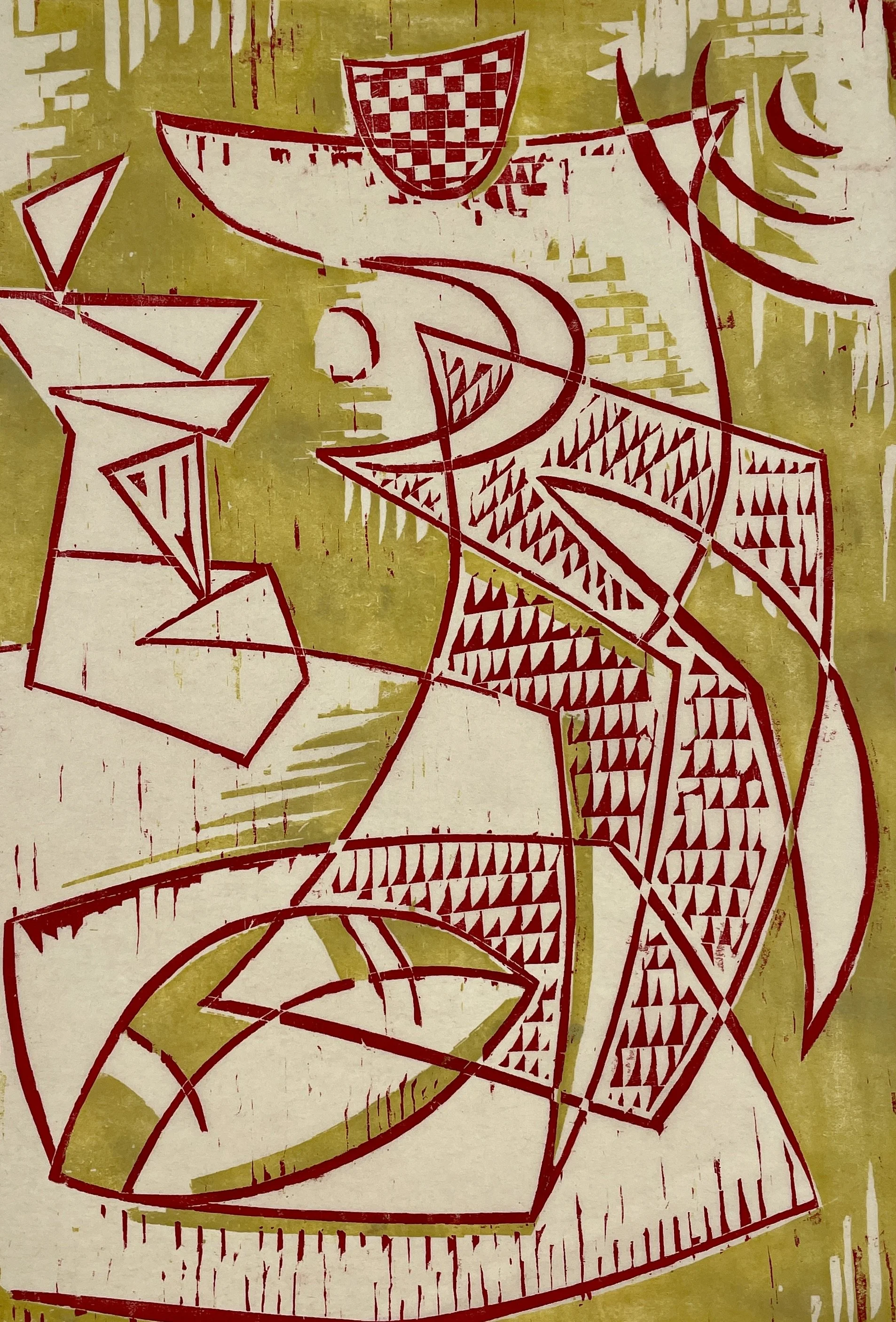 Image 1 of 9
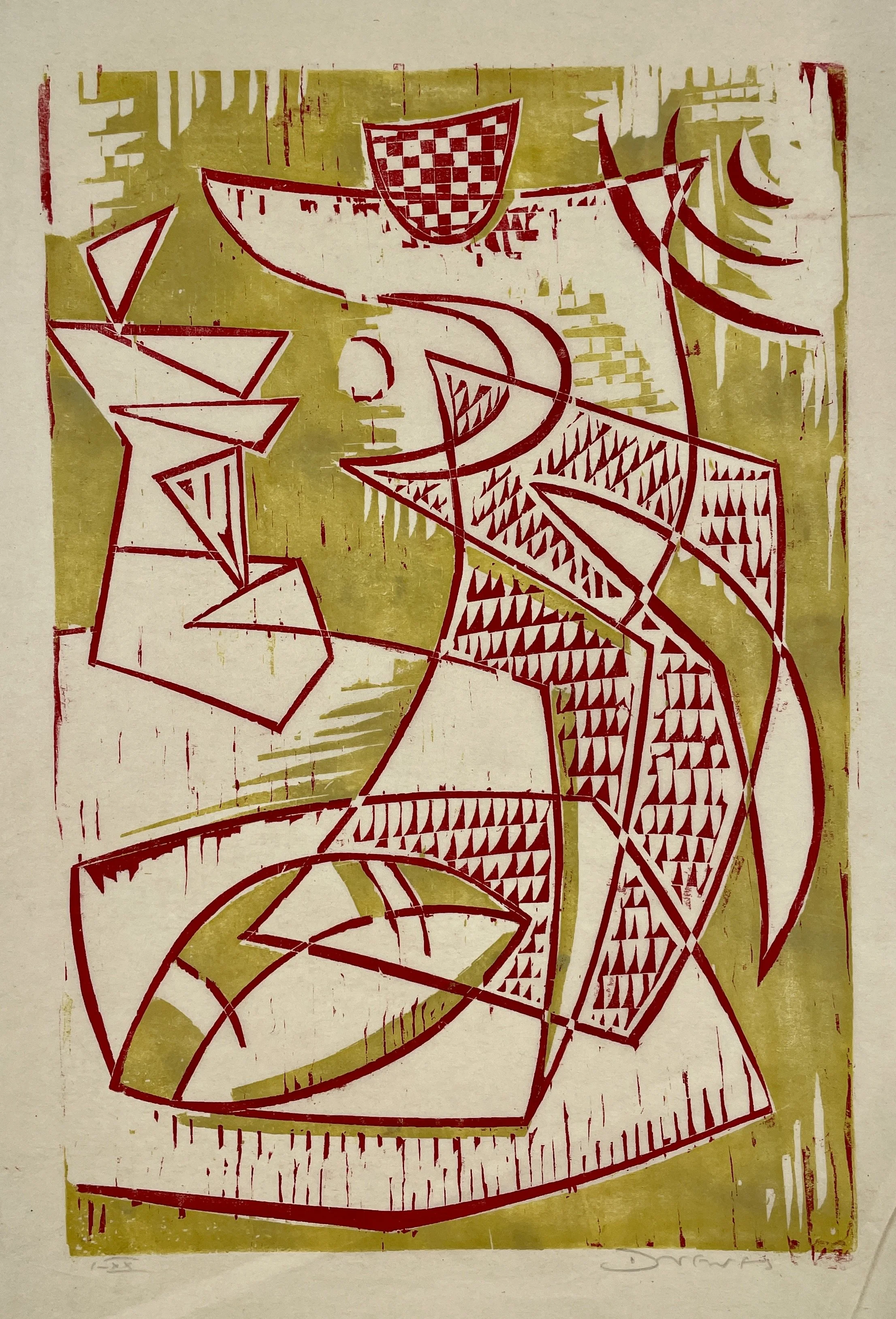 Image 2 of 9
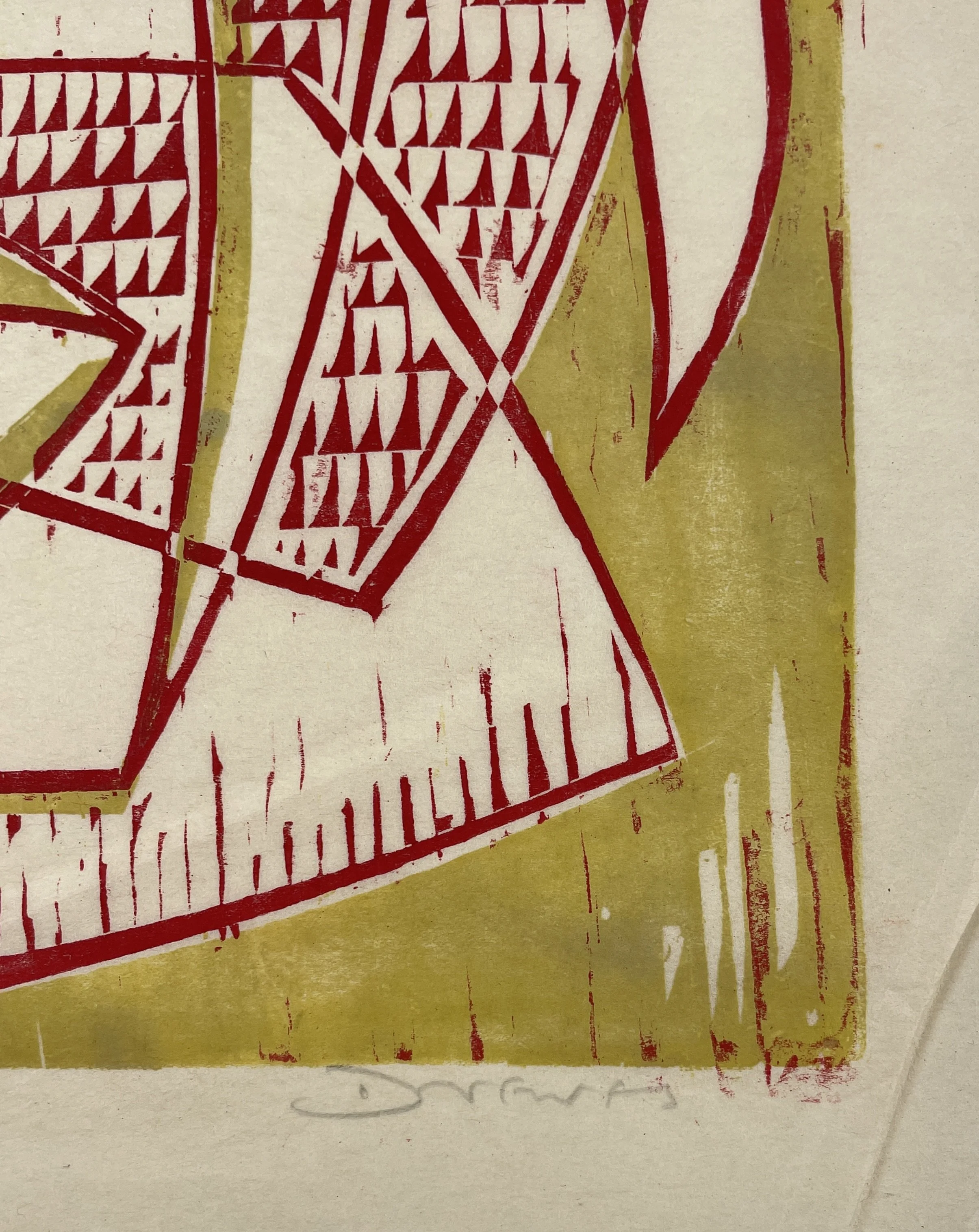 Image 3 of 9
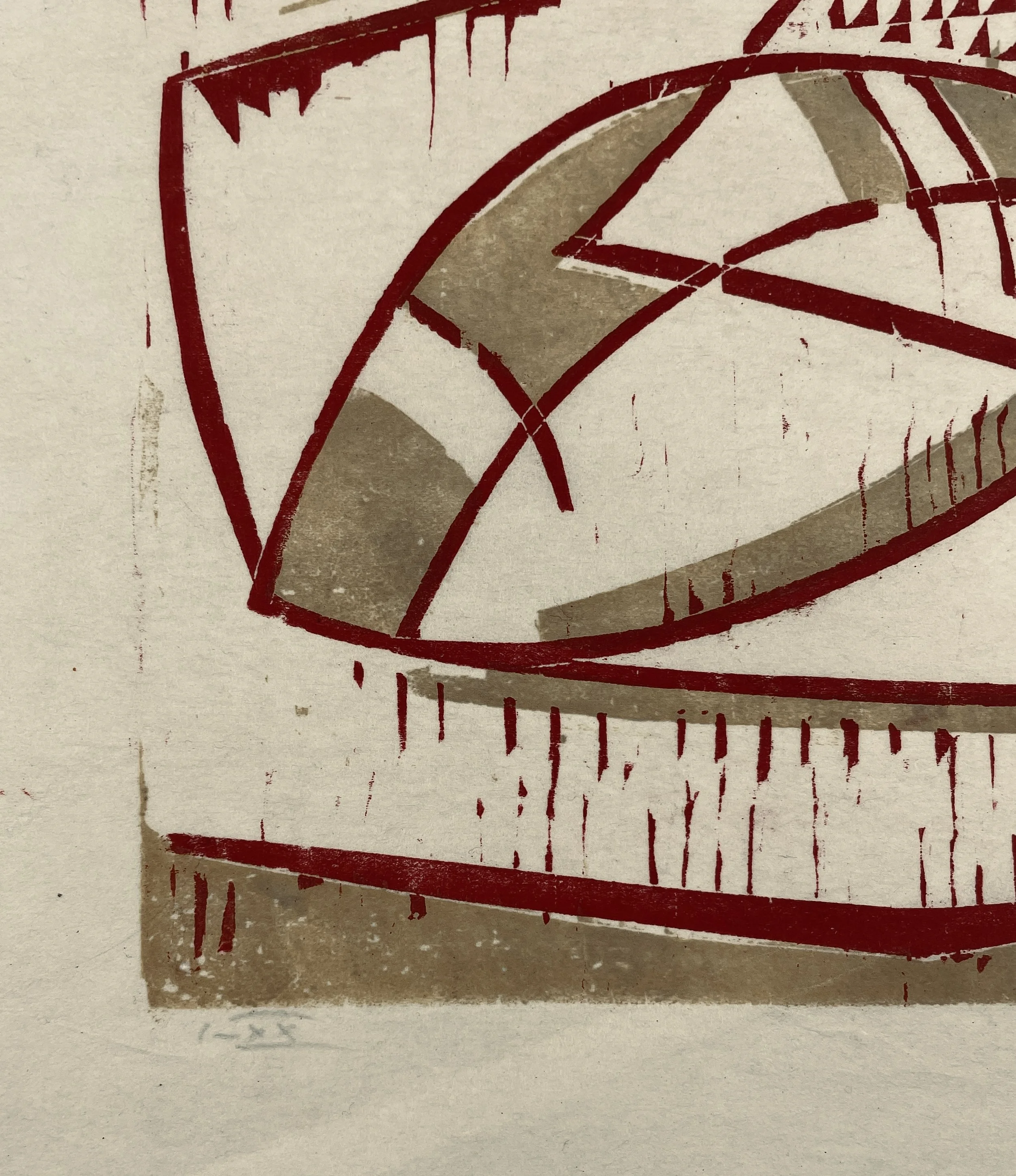 Image 4 of 9
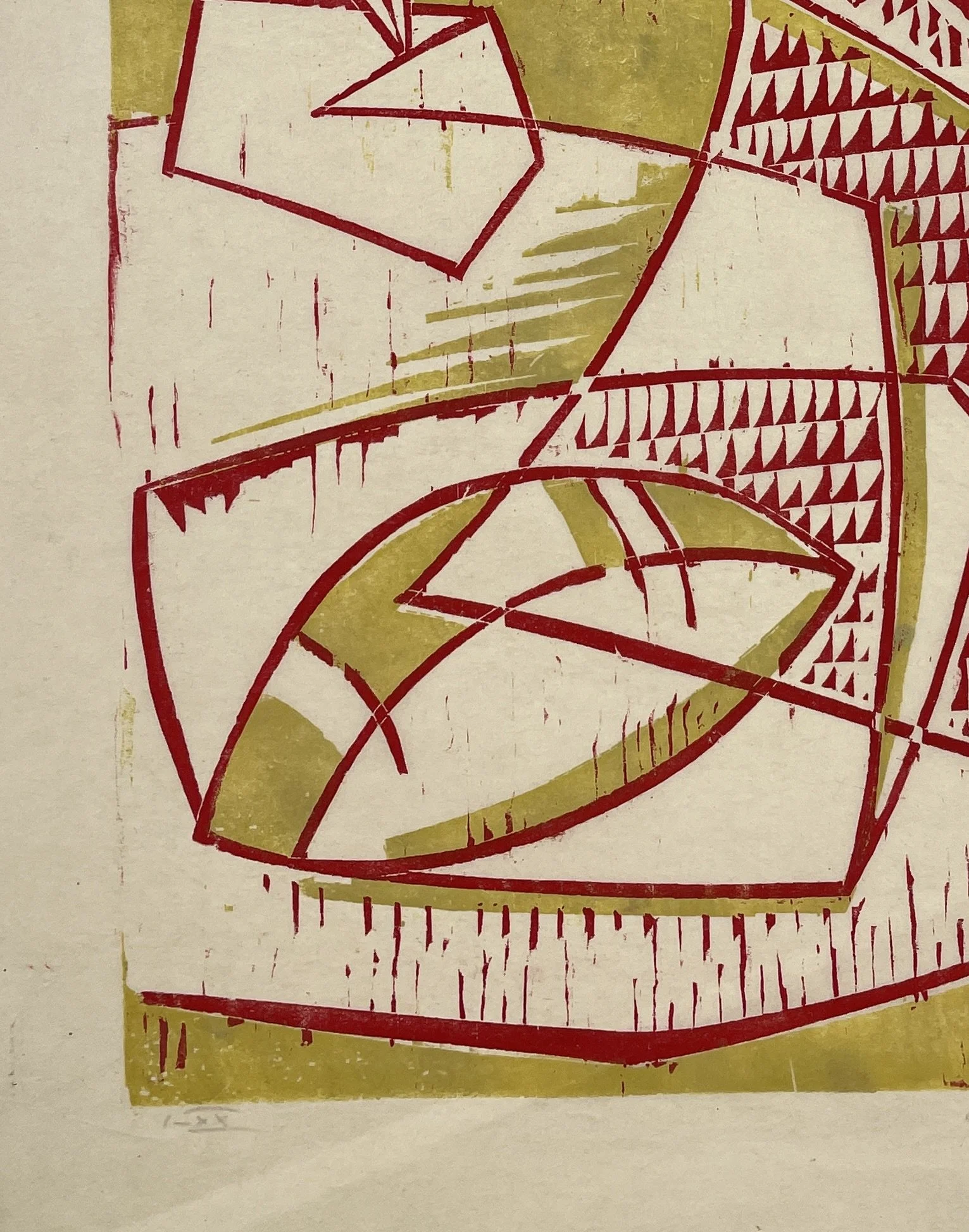 Image 5 of 9
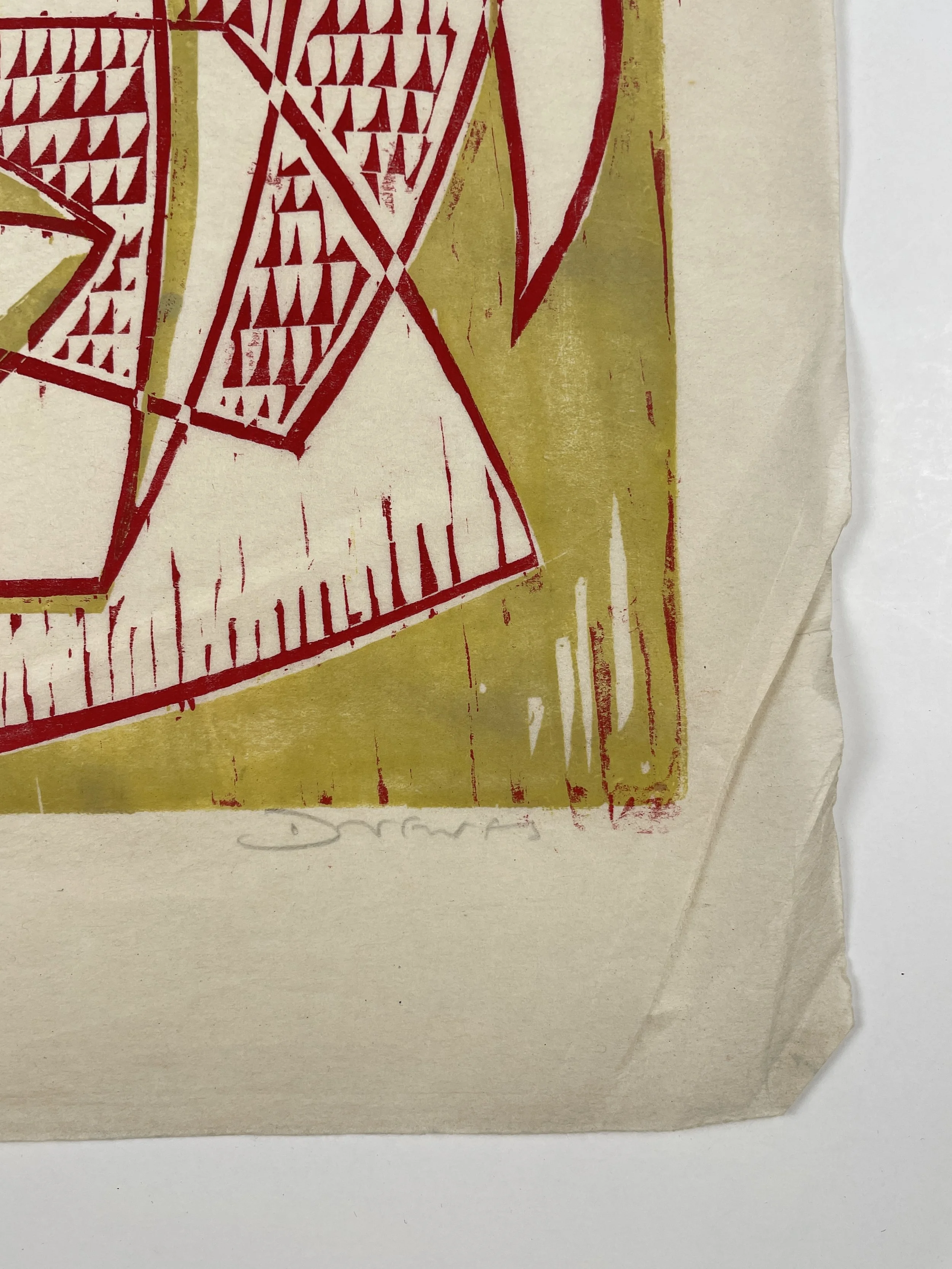 Image 6 of 9
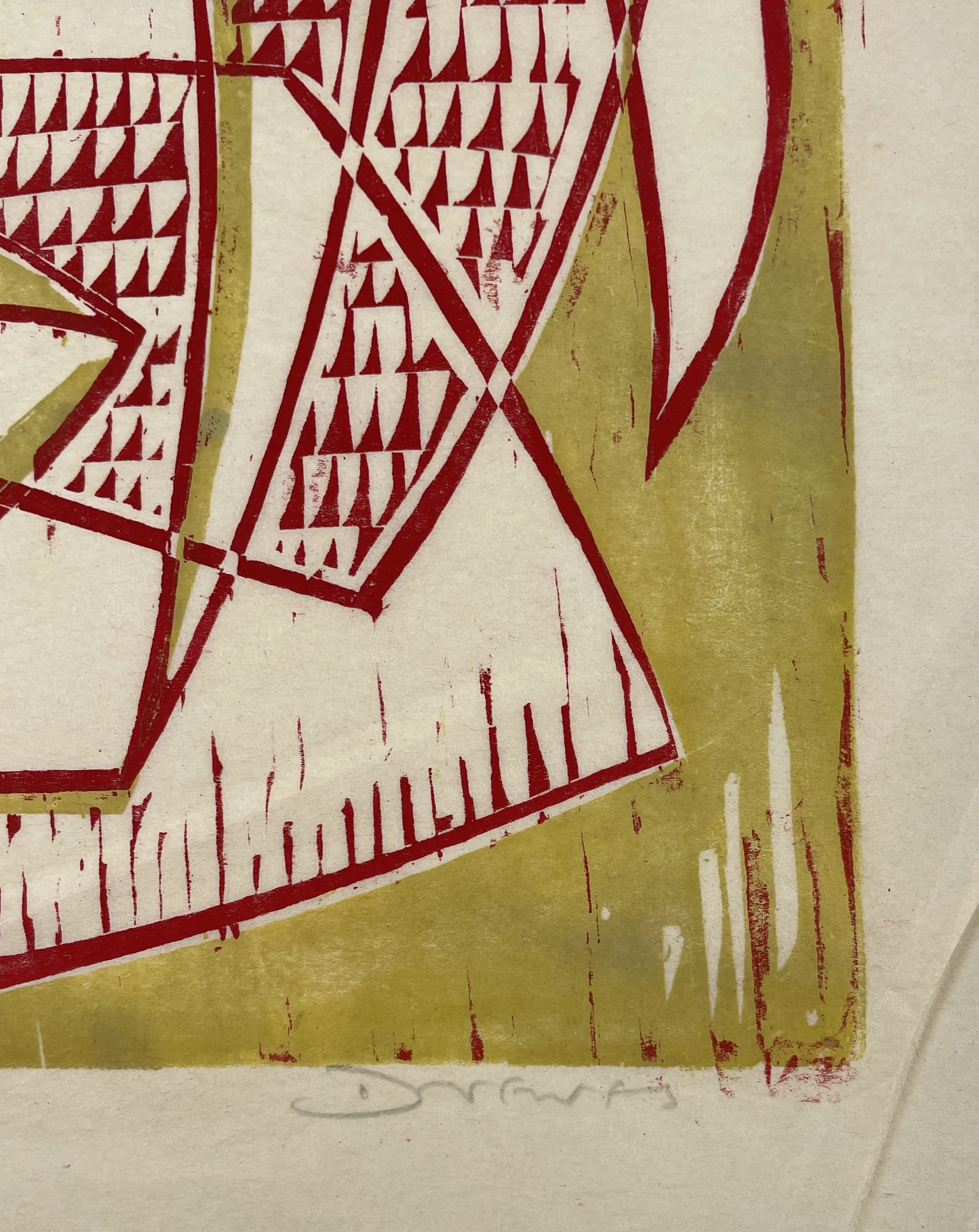 Image 7 of 9
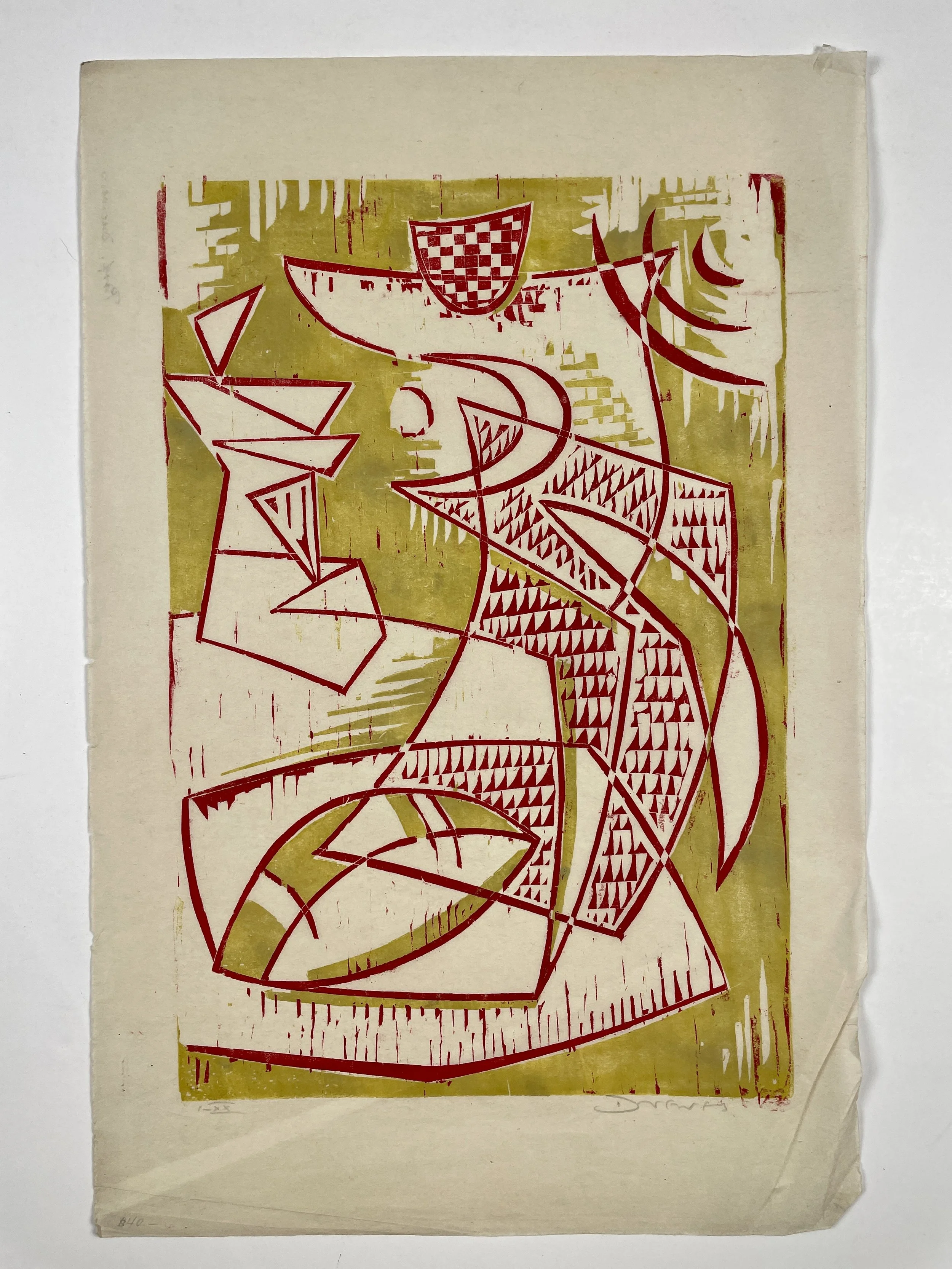 Image 8 of 9
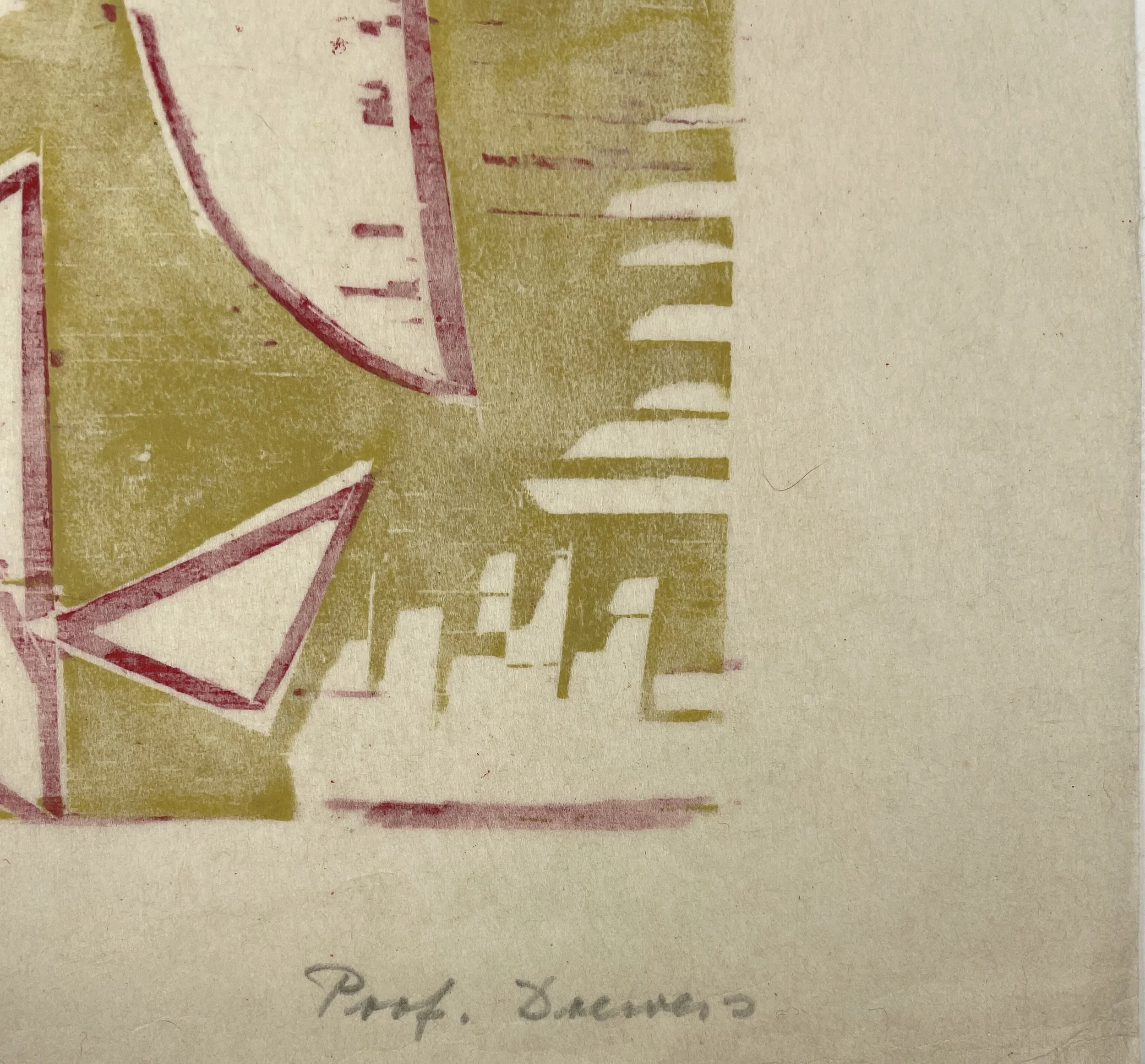 Image 9 of 9