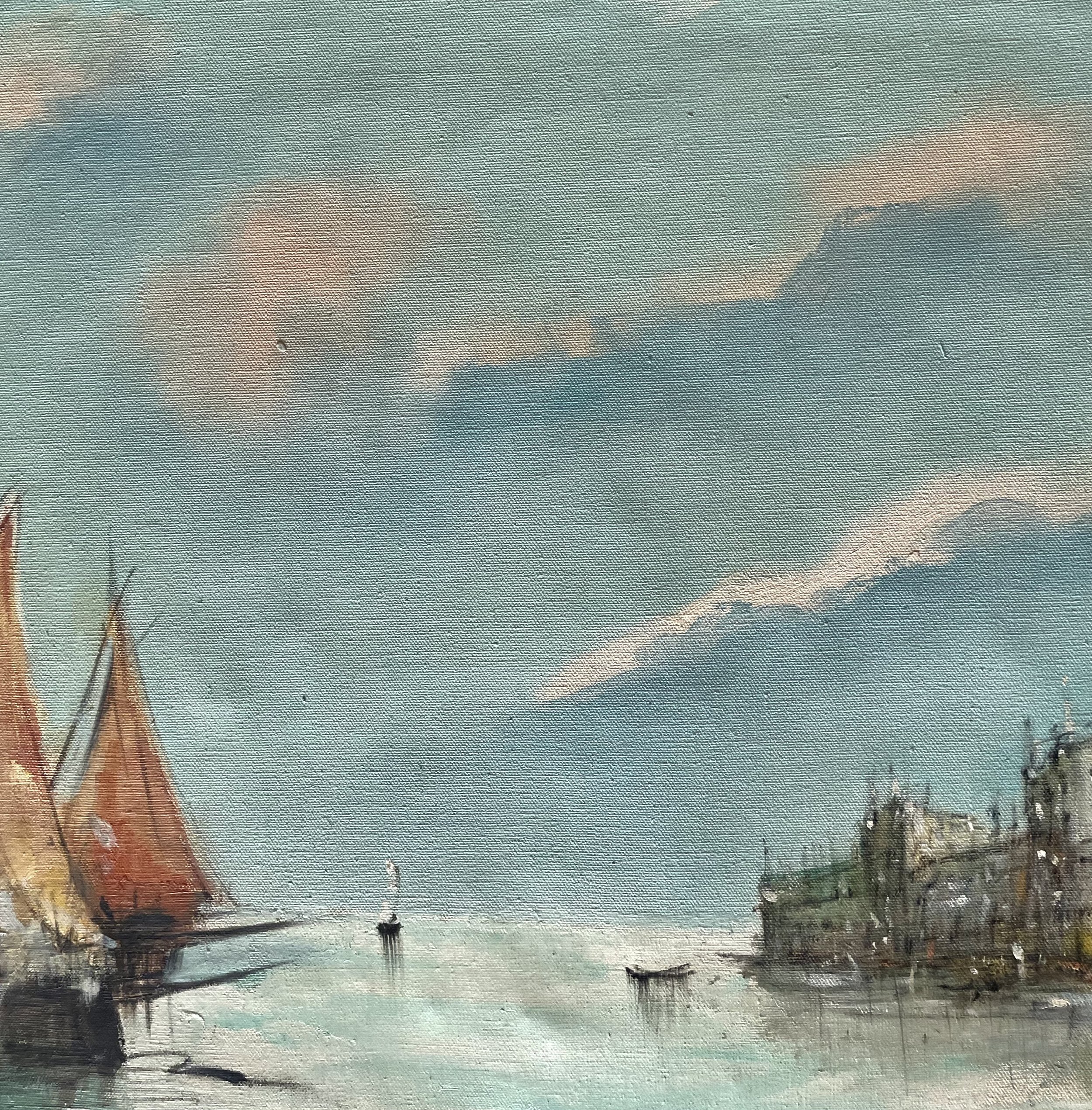
 Image 1 of 4
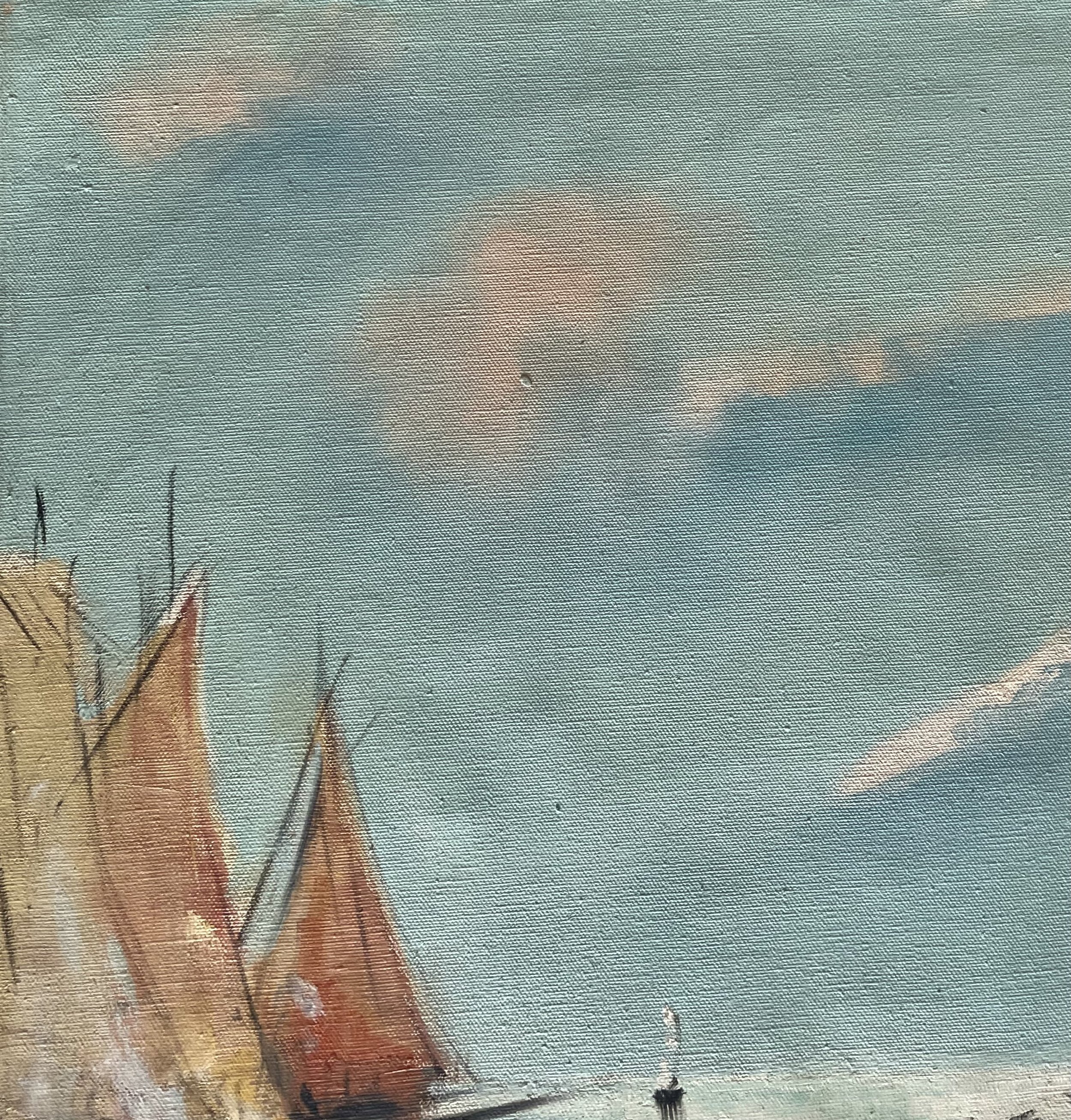
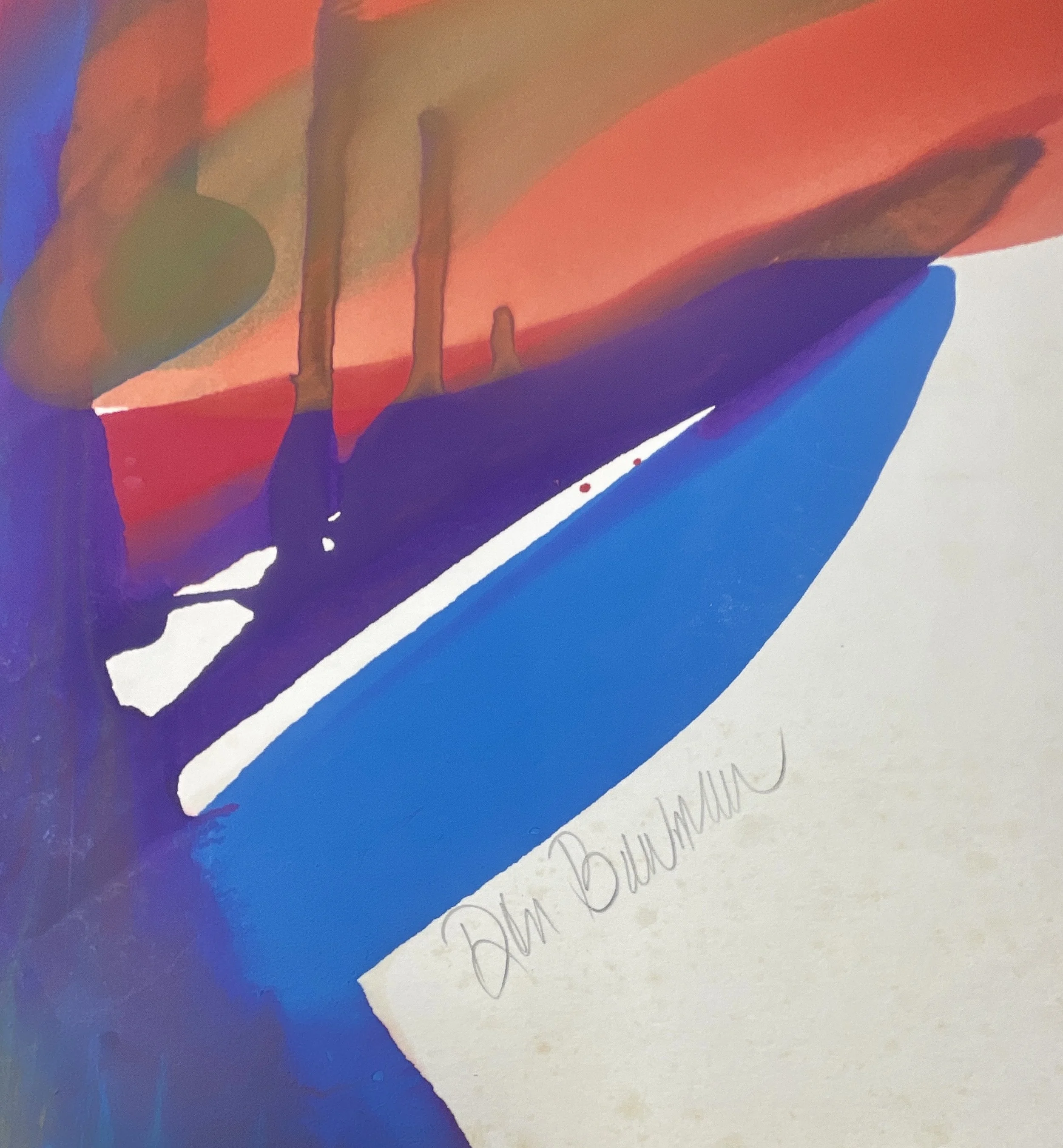 Image 2 of 4
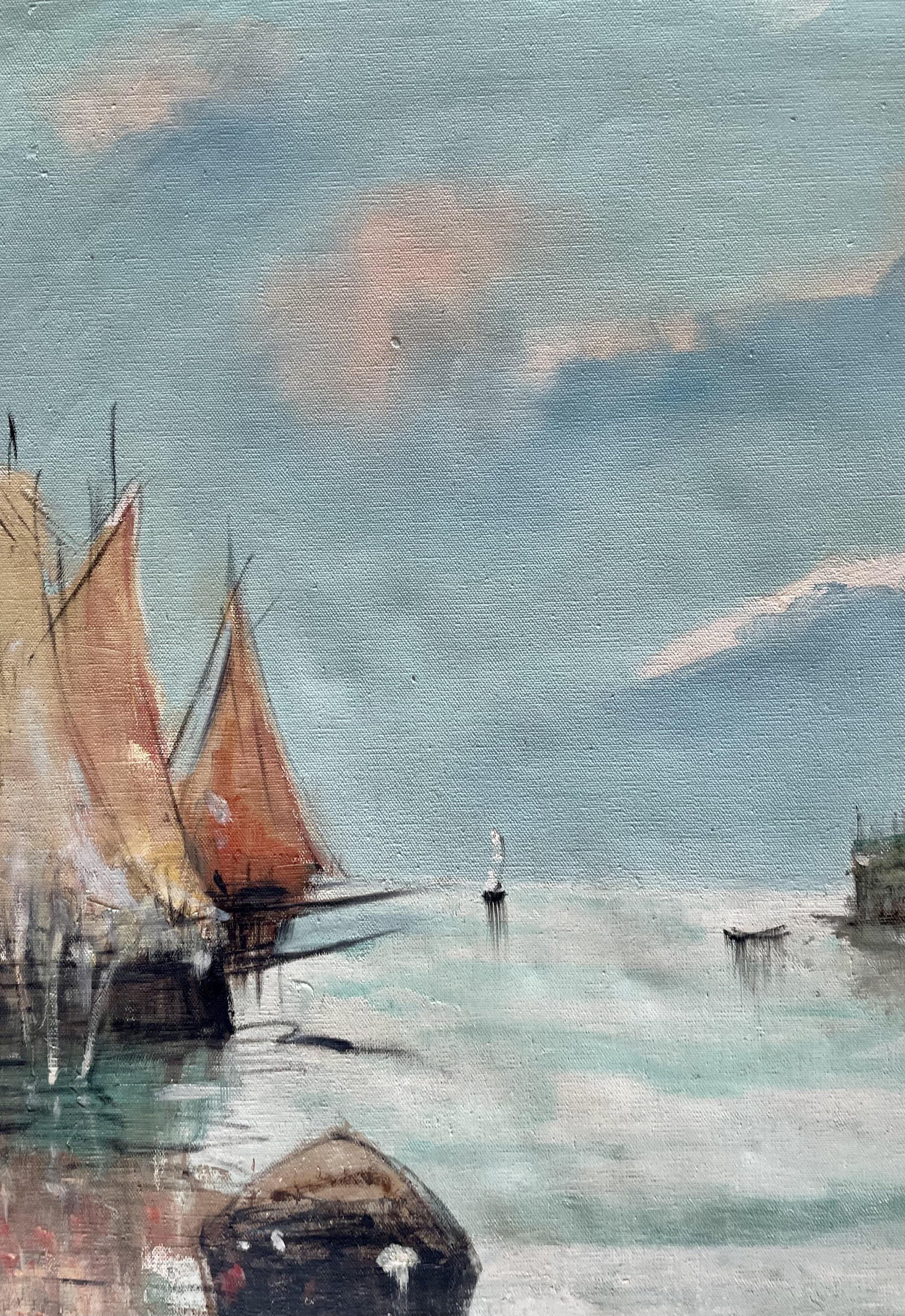
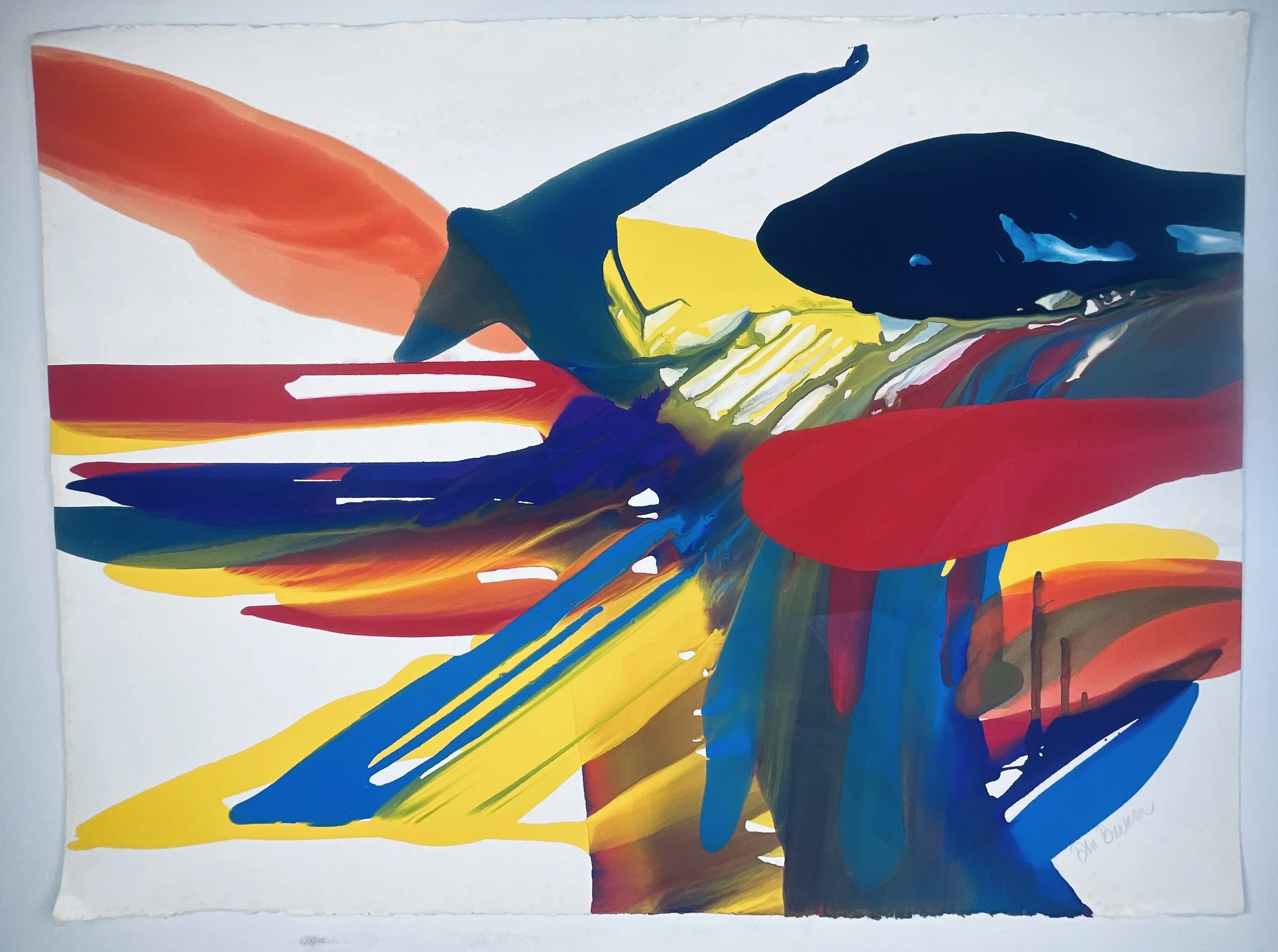 Image 3 of 4
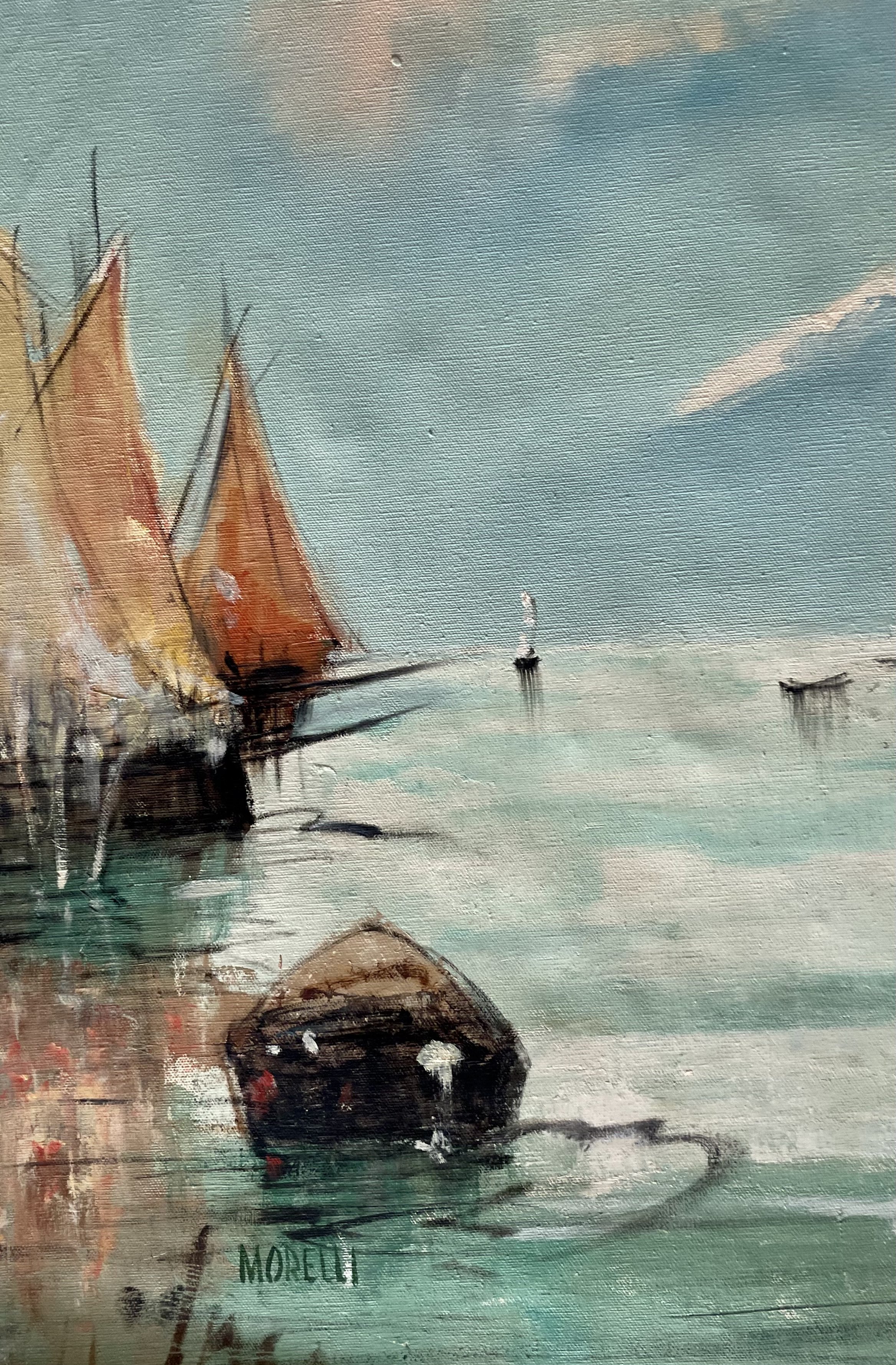
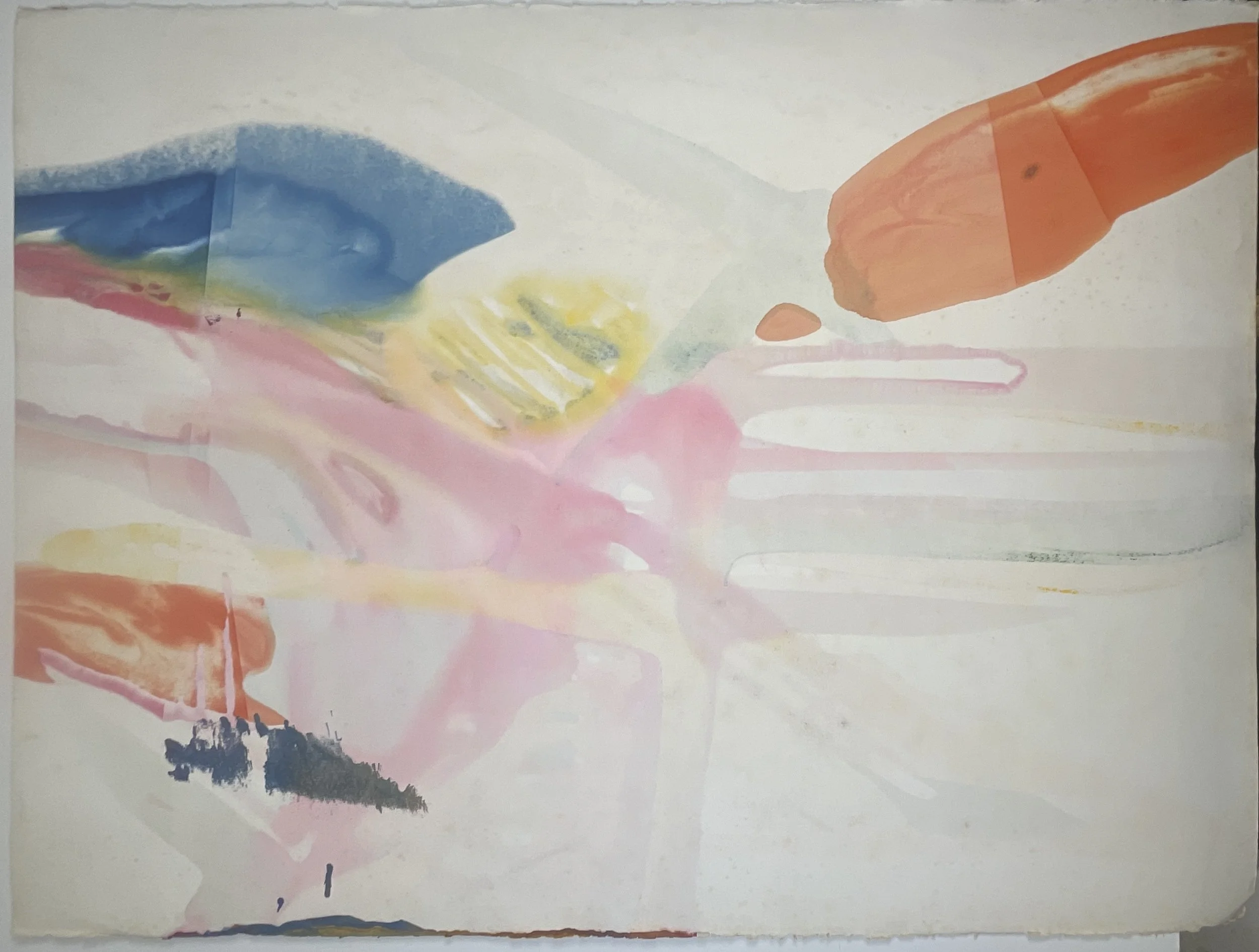 Image 4 of 4
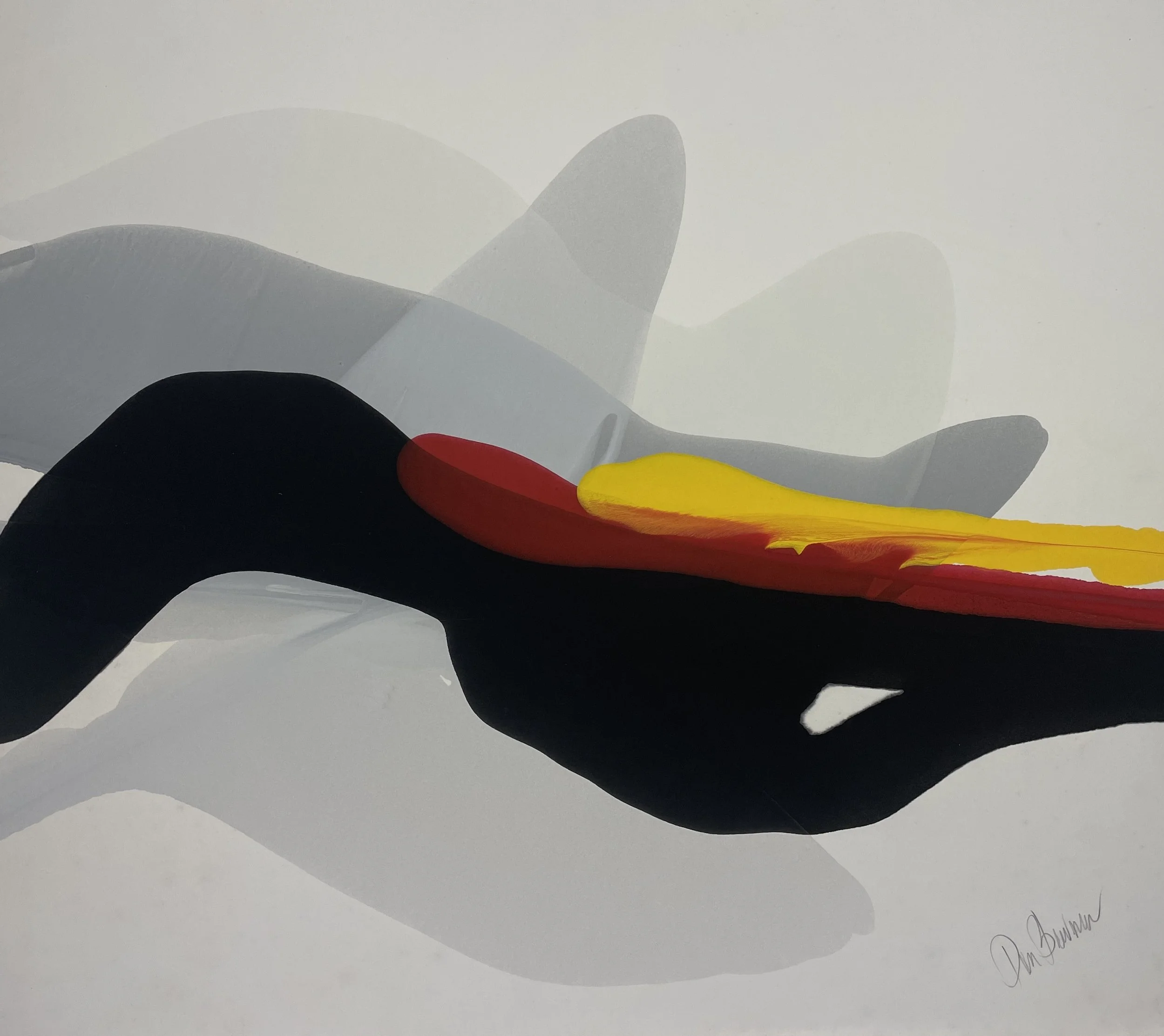
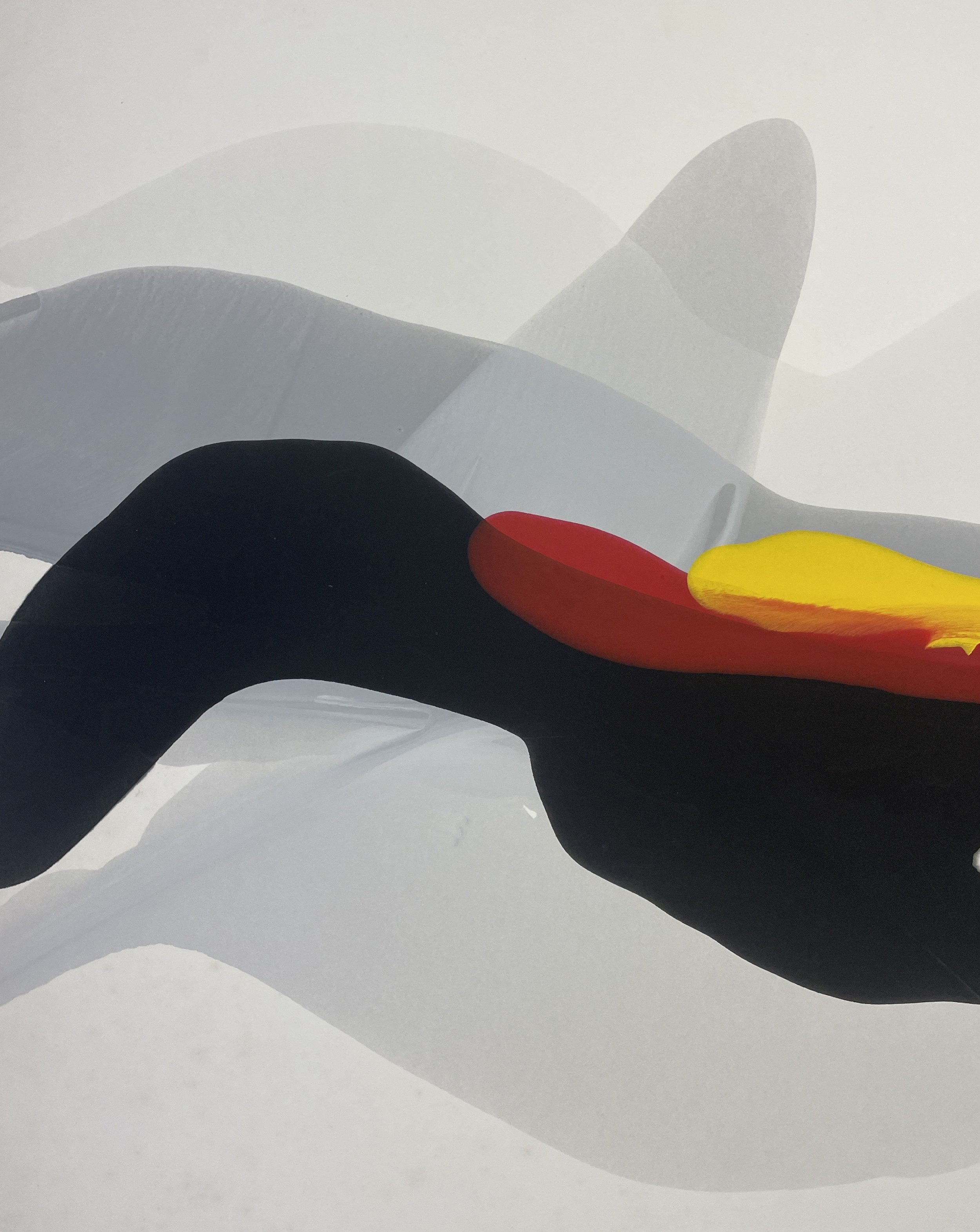
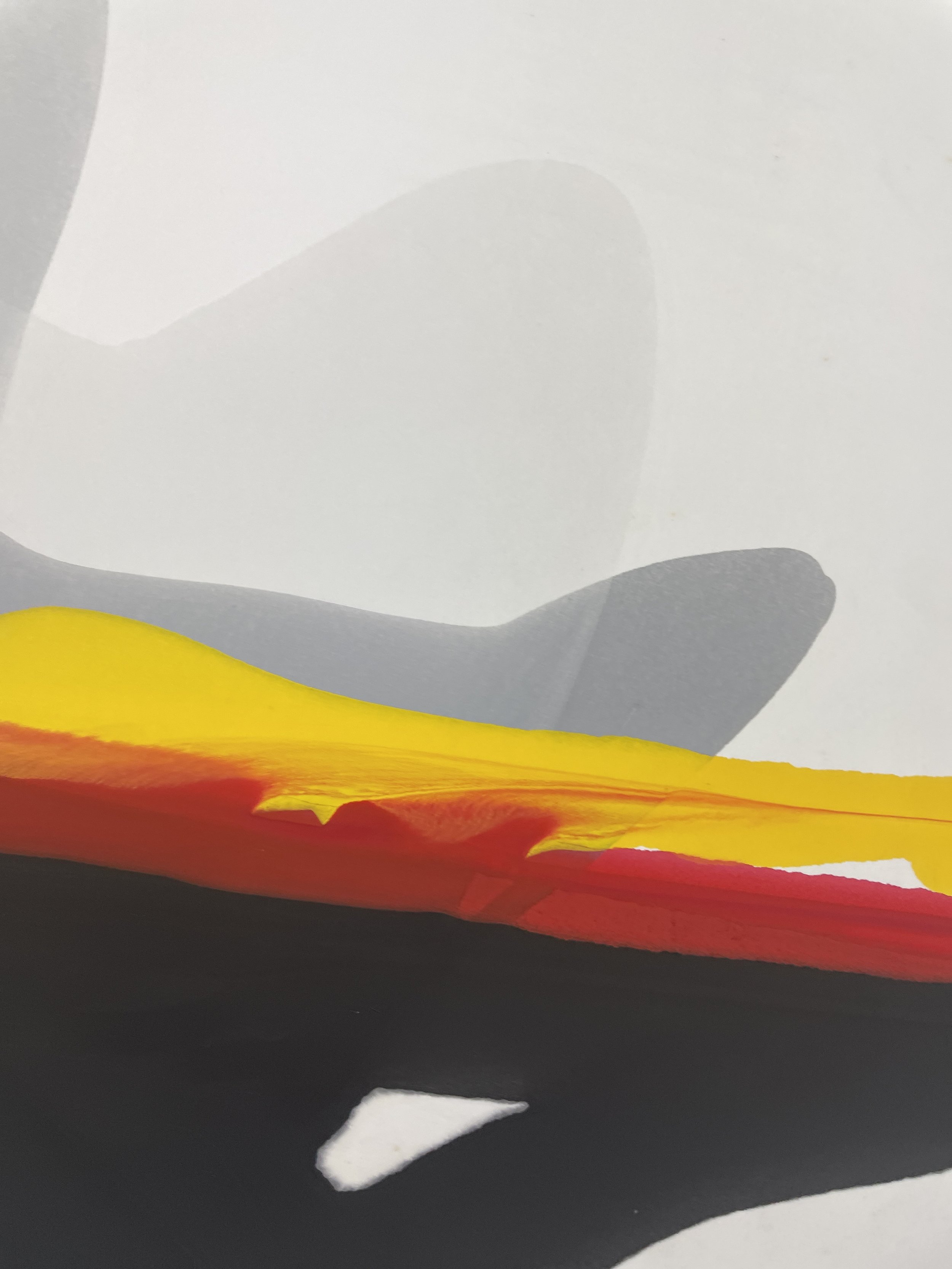
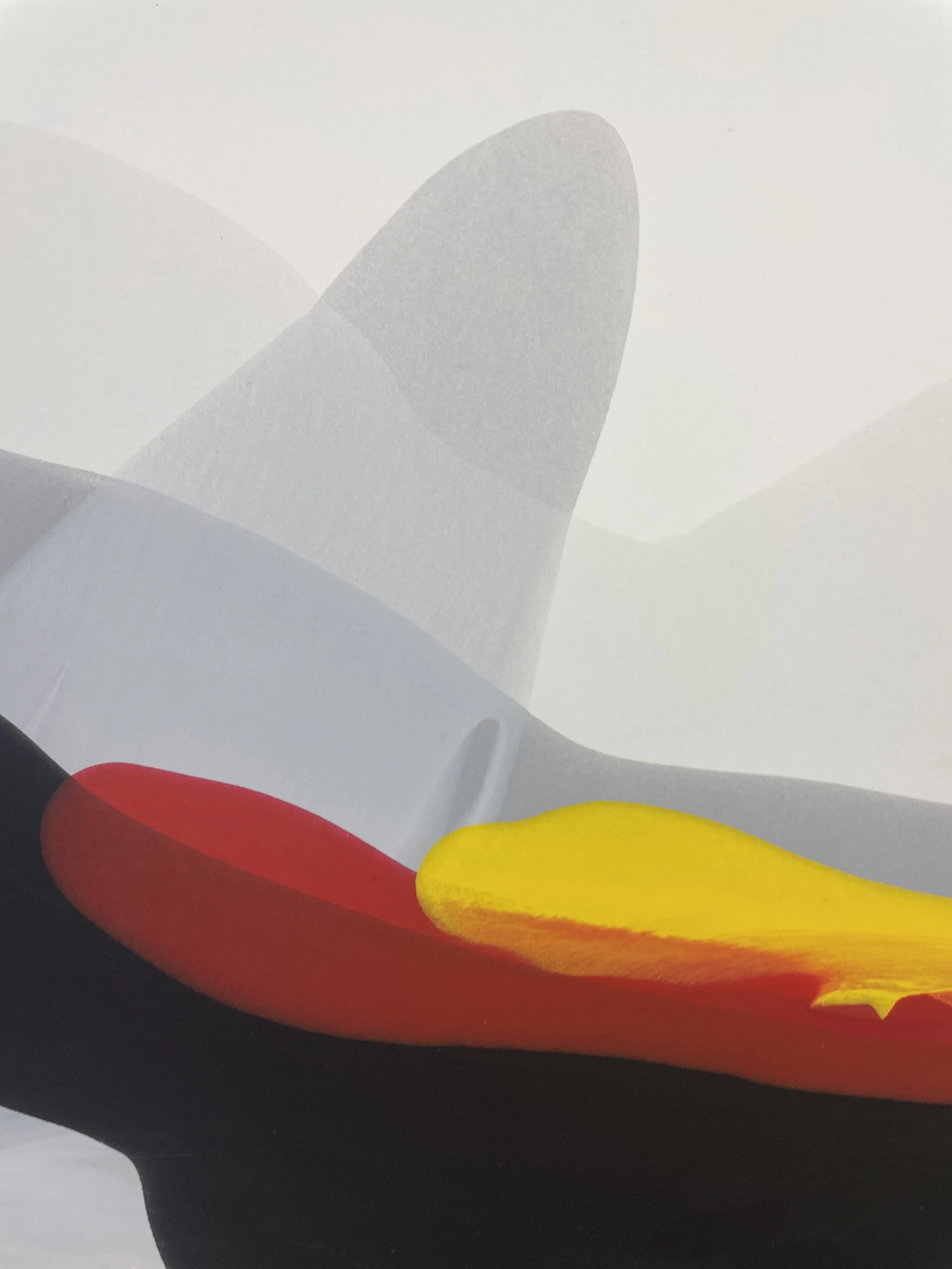
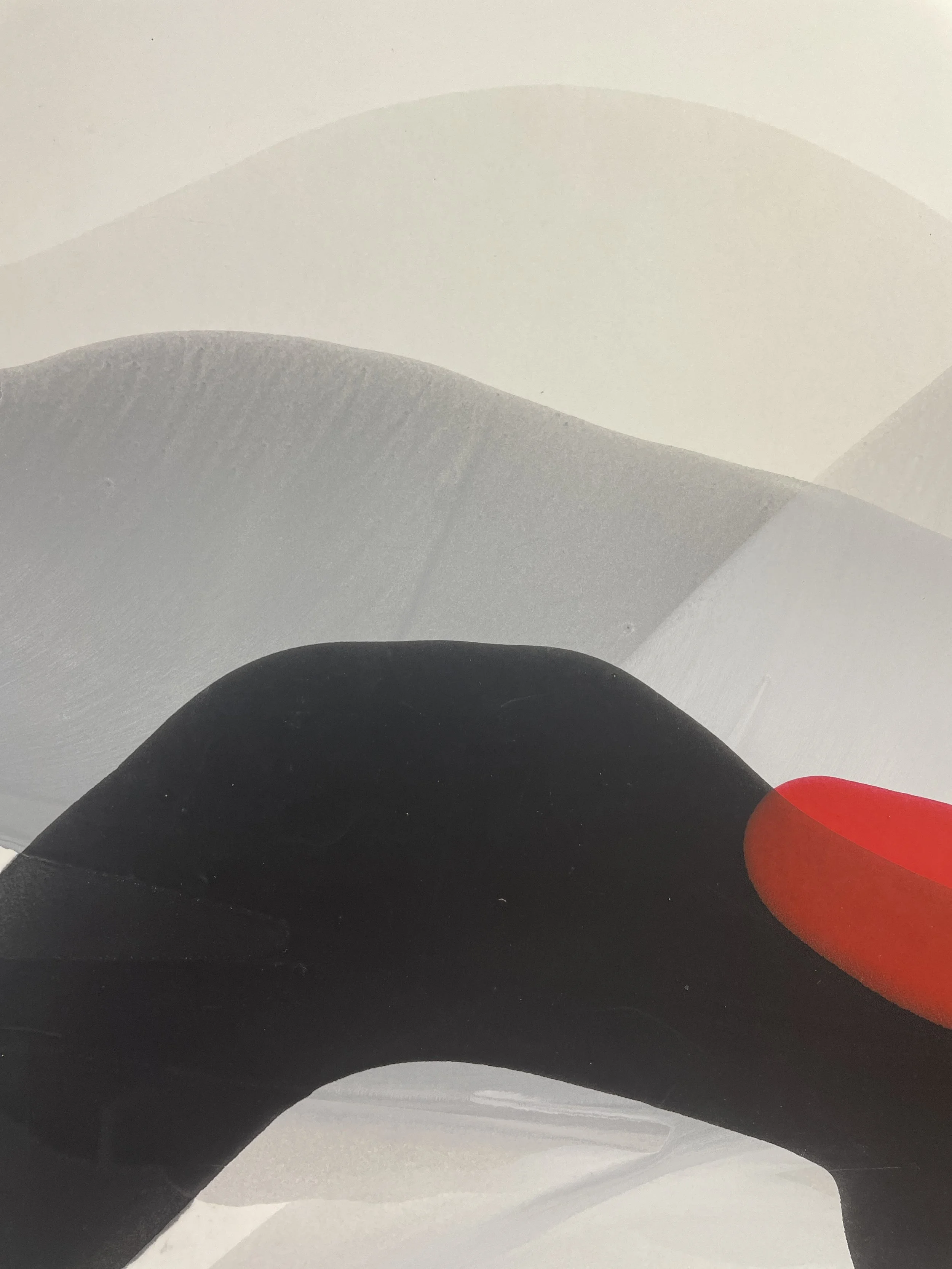
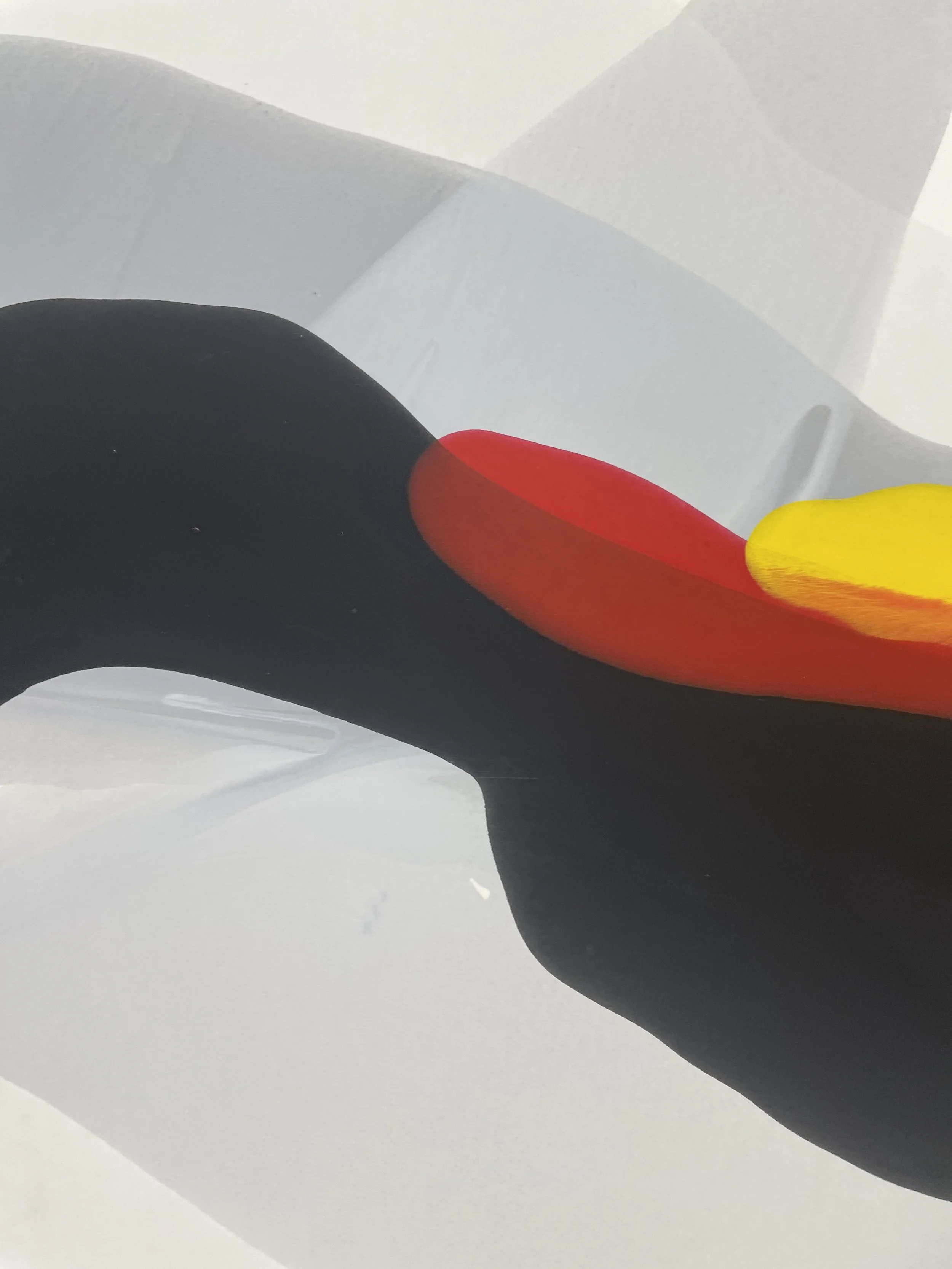
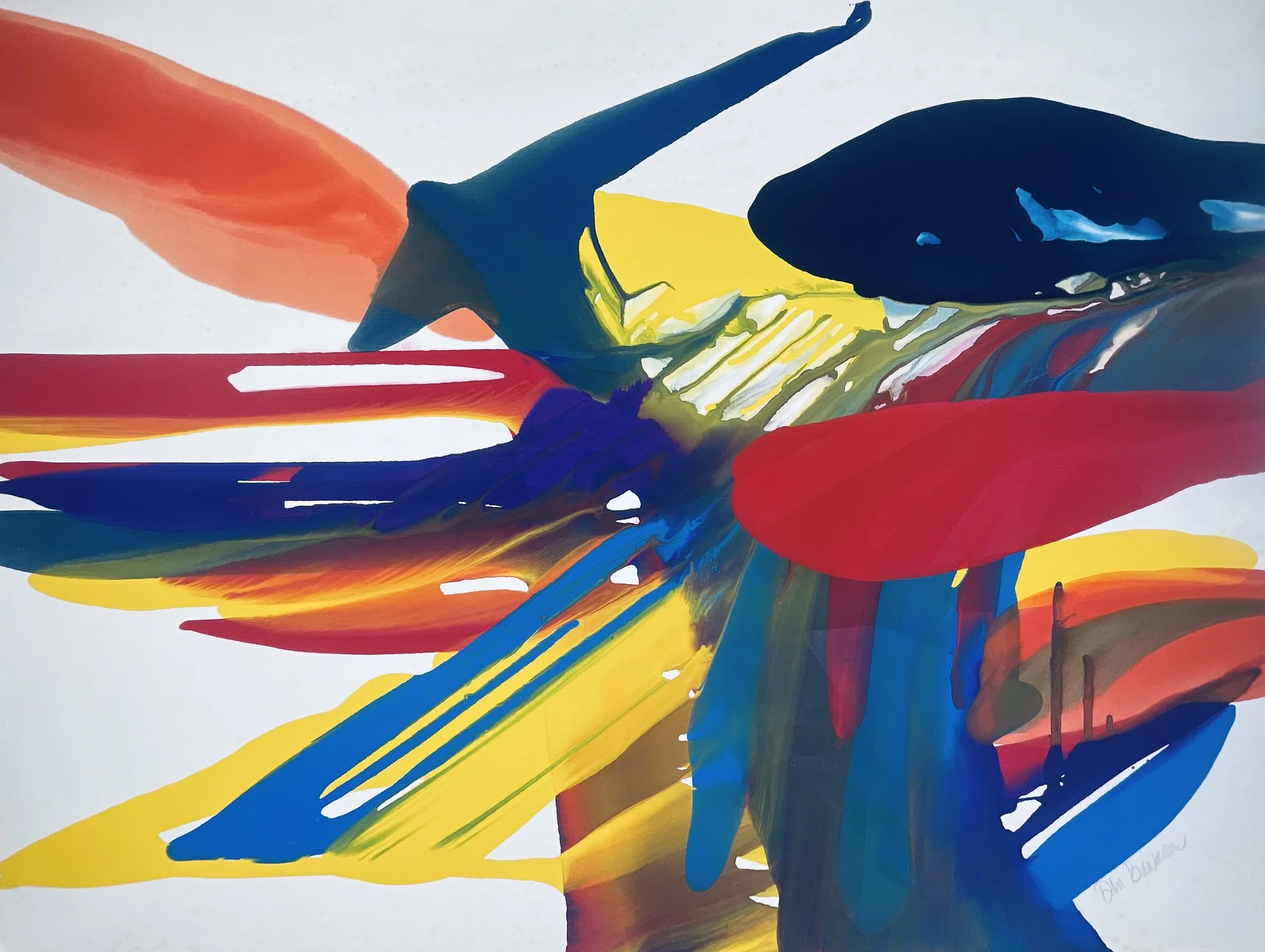
Untitled (Chromatic Flow Abstraction), Don Bowman (b. 1934), c.1960s, oil on paper, 40 × 30 in., signed lower right; gestural color-flow abstract painting.
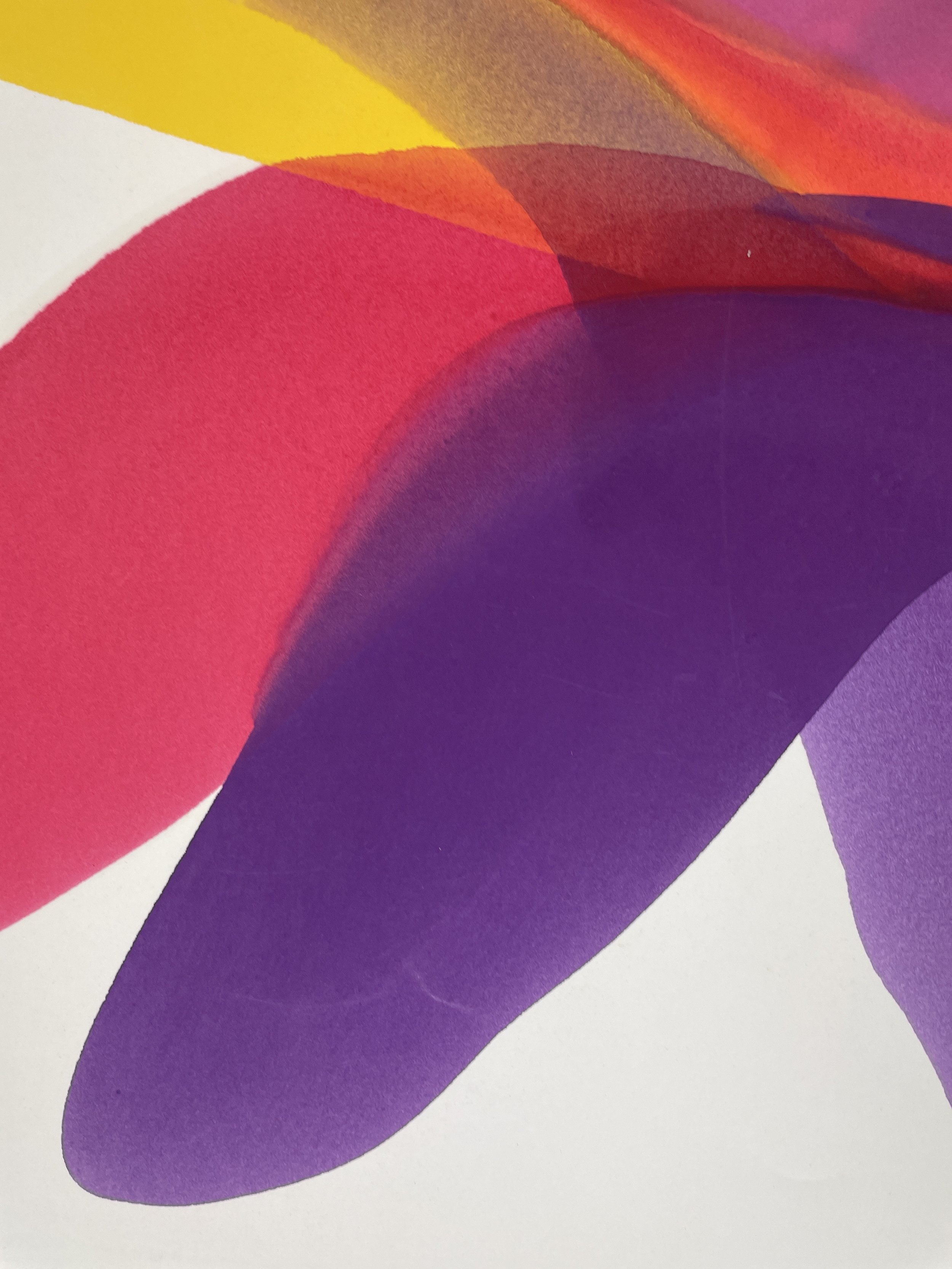
A striking large-scale abstract oil on paper by American artist Don Bowman, executed in the fluid “color-flow” technique for which he became known in the 1960s. Brilliant ribbons of crimson, cobalt, cadmium yellow, and deep ultramarine sweep across the composition in dramatic movement, creating an energetic visual field that balances spontaneity with painterly control. Acquired through Mitch Morse Gallery’s Art Spectrum program, the work exemplifies Bowman’s experimental manipulation of paint flow to produce unique, one-of-a-kind abstractions.
Artwork Description
This vibrant abstract composition by Don Bowman exemplifies the artist’s distinctive approach to paint handling that emerged during the 1960s. Executed in oil on paper, the work features sweeping streams of saturated color that appear to surge and spill across the surface. Broad gestures of crimson, cobalt blue, yellow, and deep ultramarine intersect and overlap, creating an intricate interplay between fluid motion and compositional balance.
Rather than relying on traditional brushwork alone, Bowman developed a technique that involved controlling the movement and flow of liquid paint across the paper. By manipulating viscosity, gravity, and directional movement, the artist allowed pigments to travel across the surface, producing the striking streaks, pools, and translucent overlaps visible in the composition. The resulting imagery conveys both spontaneity and deliberate orchestration.
At the center of the composition, several bold directional forms converge, creating a dynamic focal point where warm reds collide with cooler blues and greens. These intersecting color currents generate a sense of velocity, as though the pigments themselves are moving across the paper. The luminous white ground remains partially visible in places, providing visual breathing space and emphasizing the vibrancy of the surrounding colors.
Subtle drips and softened transitions between hues reveal the artist’s method of allowing gravity and fluid dynamics to participate in the creative process. The painting thus becomes both a record of physical movement and an exploration of color relationships. The edges of certain forms dissolve into transparent gradients, demonstrating Bowman’s interest in the expressive possibilities of pigment flow.
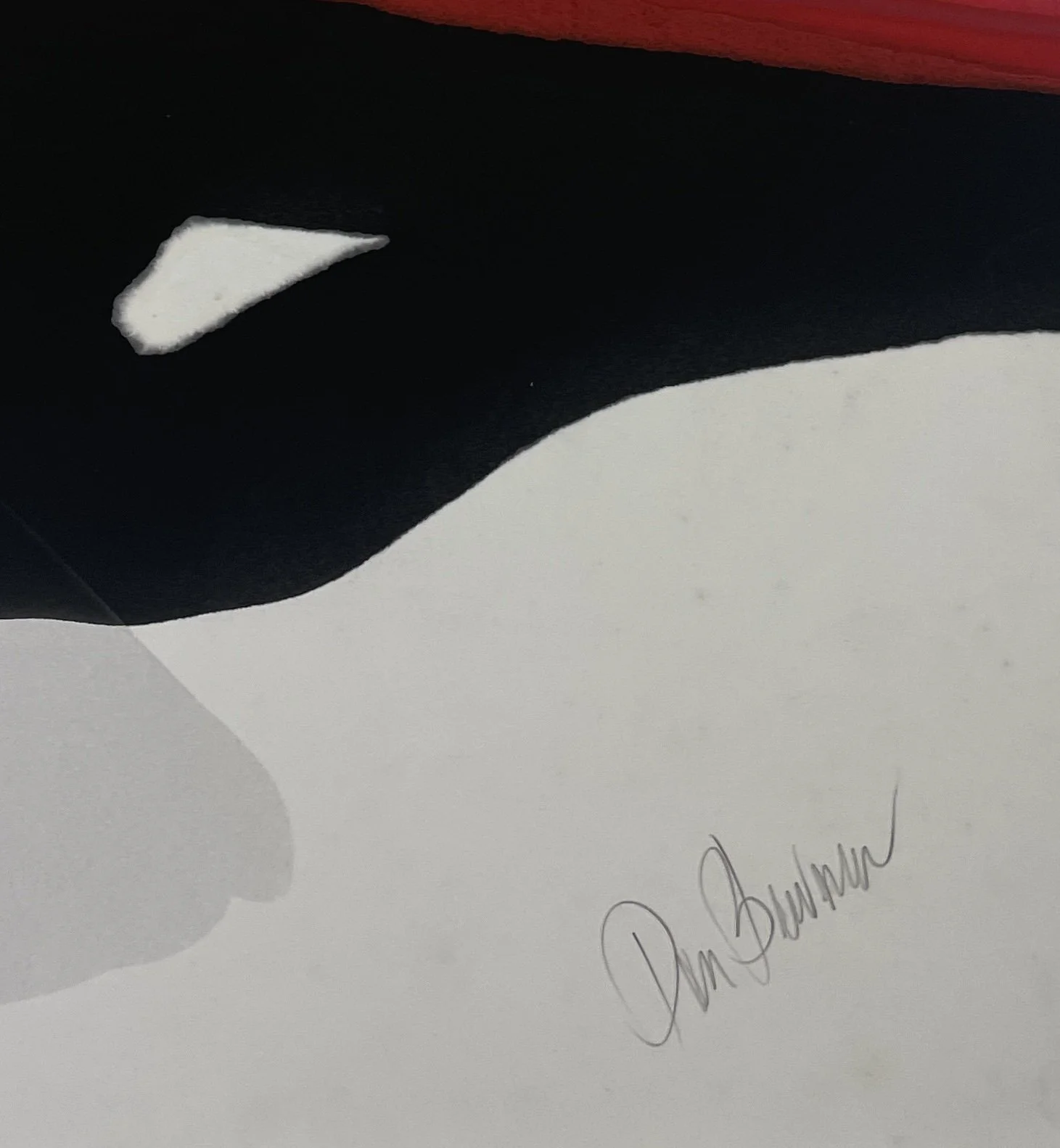
The work is signed by the artist in pencil at the lower right margin. The sheet itself shows natural aging and light foxing consistent with works on paper from the mid-twentieth century. The scale of the sheet—approximately 40 × 30 inches—gives the composition an immersive presence, allowing the viewer to experience the movement of color across the surface in a nearly panoramic format.
Bowman’s abstractions belong to a generation of American artists exploring new directions in non-representational art during the postwar decades. While influenced by Abstract Expressionism and Color Field painting, Bowman’s work distinguishes itself through the deliberate manipulation of liquid paint rather than the gestural brushstroke alone. The result is a hybrid approach combining elements of action painting, stain painting, and experimental printmaking aesthetics.
This particular example represents the type of unique abstract painting that Mitch Morse Gallery presented through its Art Spectrum program, which introduced collectors to emerging American artists experimenting with innovative techniques during the mid-twentieth century.
Artist Biography
Don Bowman (born 1934)
Don Bowman is an American abstract artist whose work emerged during the dynamic postwar period of experimentation in American art. Born in St. Louis, Missouri in 1934, Bowman demonstrated artistic ability at an early age. His early development as an artist was shaped by both formal education and practical experience within the visual arts.
Bowman pursued his studies at Lincoln University in Missouri, where he deepened his engagement with drawing, painting, and the broader visual arts. After completing his studies, he became fully involved in artistic practice, working across both the commercial and fine art sectors. Like many artists of his generation, Bowman navigated a professional landscape in which illustration, design, and independent studio work frequently intersected.
During the late 1950s and early 1960s, Bowman began to concentrate increasingly on experimental approaches to painting and printmaking. This period coincided with major developments in American abstraction, including the continued influence of Abstract Expressionism and the emergence of Color Field painting and post-painterly abstraction. Bowman’s work evolved within this climate of innovation, reflecting a desire to move beyond traditional brush-based techniques.
Over time he developed a distinctive method centered on the manipulation of paint flow. Rather than applying paint solely through conventional brushwork, Bowman allowed liquid pigments to move across the surface of the paper, carefully guiding their direction and interaction. This technique produced sweeping forms, translucent layers, and organic gradients that give his paintings a sense of motion and spontaneity.
By the mid-1960s Bowman focused primarily on screen printing and painting on paper. The combination of these practices contributed to the refinement of his signature technique, in which the controlled movement of pigment became the central visual language of the work. The resulting compositions appear simultaneously gestural and fluid, capturing the moment when paint transitions between control and chance.
Works by Bowman were presented through the Art Spectrum program, a division of Mitch Morse Gallery Inc. in New York. Mitch Morse was a prominent figure in the promotion and distribution of contemporary graphics and paintings during the mid-twentieth century, serving as an artist’s agent, publisher of original graphics, art dealer, and fine art restorer. Through this network Bowman’s work reached collectors across the United States.
Bowman’s paintings are represented in the collections of numerous private collectors and institutions interested in American abstract art of the postwar era. His work reflects the broader artistic dialogue of the period while maintaining a distinctive emphasis on the physical behavior of paint itself.
Today Bowman’s paintings and works on paper continue to be appreciated for their vibrant color, experimental techniques, and connection to the rich history of American abstract painting in the second half of the twentieth century.
Don Bowman (b.1934), Untitled abstract oil on paper, c.1960s. Signed lower right. Large chromatic flow composition. Sheet approx. 40 × 30 inches.
Certificate of Authentication
Artist: Don Bowman (American, b.1934)
Title: Untitled (Chromatic Flow Abstraction)
Medium: Oil on paper
Dimensions: 40 × 30 inches
Signature: Signed lower right
This certificate confirms that the artwork described above is an original work by Don Bowman executed in oil on paper. The painting demonstrates Bowman’s characteristic technique of controlled paint flow and color abstraction.
Provenance: Art Spectrum, a division of Mitch Morse Gallery Inc., New York.
Current owner: Artfind Gallery, Washington DC.
Condition
Good vintage condition. Visible foxing and minor age-related toning to the paper consistent with mid-20th-century works on paper. Color remains strong and stable.
Provenance
Artist studio
Art Spectrum / Mitch Morse Gallery Inc., New York
Acquired through Mitch Morse Gallery acquisitions in New York, United States and Europe
Artfind Gallery, Washington DC (current owner)
Citations
Art Spectrum / Mitch Morse Gallery artist sheet
Gibson, Ann. Abstract Expressionism: Other Politics
Benezit Dictionary of Artists
Archives of American Art – postwar American abstraction history
Untitled (Chromatic Flow Abstraction), Don Bowman (b. 1934), c.1960s, oil on paper, 40 × 30 in., signed lower right; gestural color-flow abstract painting.
A striking large-scale abstract oil on paper by American artist Don Bowman, executed in the fluid “color-flow” technique for which he became known in the 1960s. Brilliant ribbons of crimson, cobalt, cadmium yellow, and deep ultramarine sweep across the composition in dramatic movement, creating an energetic visual field that balances spontaneity with painterly control. Acquired through Mitch Morse Gallery’s Art Spectrum program, the work exemplifies Bowman’s experimental manipulation of paint flow to produce unique, one-of-a-kind abstractions.
Artwork Description
This vibrant abstract composition by Don Bowman exemplifies the artist’s distinctive approach to paint handling that emerged during the 1960s. Executed in oil on paper, the work features sweeping streams of saturated color that appear to surge and spill across the surface. Broad gestures of crimson, cobalt blue, yellow, and deep ultramarine intersect and overlap, creating an intricate interplay between fluid motion and compositional balance.
Rather than relying on traditional brushwork alone, Bowman developed a technique that involved controlling the movement and flow of liquid paint across the paper. By manipulating viscosity, gravity, and directional movement, the artist allowed pigments to travel across the surface, producing the striking streaks, pools, and translucent overlaps visible in the composition. The resulting imagery conveys both spontaneity and deliberate orchestration.
At the center of the composition, several bold directional forms converge, creating a dynamic focal point where warm reds collide with cooler blues and greens. These intersecting color currents generate a sense of velocity, as though the pigments themselves are moving across the paper. The luminous white ground remains partially visible in places, providing visual breathing space and emphasizing the vibrancy of the surrounding colors.
Subtle drips and softened transitions between hues reveal the artist’s method of allowing gravity and fluid dynamics to participate in the creative process. The painting thus becomes both a record of physical movement and an exploration of color relationships. The edges of certain forms dissolve into transparent gradients, demonstrating Bowman’s interest in the expressive possibilities of pigment flow.
The work is signed by the artist in pencil at the lower right margin. The sheet itself shows natural aging and light foxing consistent with works on paper from the mid-twentieth century. The scale of the sheet—approximately 40 × 30 inches—gives the composition an immersive presence, allowing the viewer to experience the movement of color across the surface in a nearly panoramic format.
Bowman’s abstractions belong to a generation of American artists exploring new directions in non-representational art during the postwar decades. While influenced by Abstract Expressionism and Color Field painting, Bowman’s work distinguishes itself through the deliberate manipulation of liquid paint rather than the gestural brushstroke alone. The result is a hybrid approach combining elements of action painting, stain painting, and experimental printmaking aesthetics.
This particular example represents the type of unique abstract painting that Mitch Morse Gallery presented through its Art Spectrum program, which introduced collectors to emerging American artists experimenting with innovative techniques during the mid-twentieth century.
Artist Biography
Don Bowman (born 1934)
Don Bowman is an American abstract artist whose work emerged during the dynamic postwar period of experimentation in American art. Born in St. Louis, Missouri in 1934, Bowman demonstrated artistic ability at an early age. His early development as an artist was shaped by both formal education and practical experience within the visual arts.
Bowman pursued his studies at Lincoln University in Missouri, where he deepened his engagement with drawing, painting, and the broader visual arts. After completing his studies, he became fully involved in artistic practice, working across both the commercial and fine art sectors. Like many artists of his generation, Bowman navigated a professional landscape in which illustration, design, and independent studio work frequently intersected.
During the late 1950s and early 1960s, Bowman began to concentrate increasingly on experimental approaches to painting and printmaking. This period coincided with major developments in American abstraction, including the continued influence of Abstract Expressionism and the emergence of Color Field painting and post-painterly abstraction. Bowman’s work evolved within this climate of innovation, reflecting a desire to move beyond traditional brush-based techniques.
Over time he developed a distinctive method centered on the manipulation of paint flow. Rather than applying paint solely through conventional brushwork, Bowman allowed liquid pigments to move across the surface of the paper, carefully guiding their direction and interaction. This technique produced sweeping forms, translucent layers, and organic gradients that give his paintings a sense of motion and spontaneity.
By the mid-1960s Bowman focused primarily on screen printing and painting on paper. The combination of these practices contributed to the refinement of his signature technique, in which the controlled movement of pigment became the central visual language of the work. The resulting compositions appear simultaneously gestural and fluid, capturing the moment when paint transitions between control and chance.
Works by Bowman were presented through the Art Spectrum program, a division of Mitch Morse Gallery Inc. in New York. Mitch Morse was a prominent figure in the promotion and distribution of contemporary graphics and paintings during the mid-twentieth century, serving as an artist’s agent, publisher of original graphics, art dealer, and fine art restorer. Through this network Bowman’s work reached collectors across the United States.
Bowman’s paintings are represented in the collections of numerous private collectors and institutions interested in American abstract art of the postwar era. His work reflects the broader artistic dialogue of the period while maintaining a distinctive emphasis on the physical behavior of paint itself.
Today Bowman’s paintings and works on paper continue to be appreciated for their vibrant color, experimental techniques, and connection to the rich history of American abstract painting in the second half of the twentieth century.
Don Bowman (b.1934), Untitled abstract oil on paper, c.1960s. Signed lower right. Large chromatic flow composition. Sheet approx. 40 × 30 inches.
Certificate of Authentication
Artist: Don Bowman (American, b.1934)
Title: Untitled (Chromatic Flow Abstraction)
Medium: Oil on paper
Dimensions: 40 × 30 inches
Signature: Signed lower right
This certificate confirms that the artwork described above is an original work by Don Bowman executed in oil on paper. The painting demonstrates Bowman’s characteristic technique of controlled paint flow and color abstraction.
Provenance: Art Spectrum, a division of Mitch Morse Gallery Inc., New York.
Current owner: Artfind Gallery, Washington DC.
Condition
Good vintage condition. Visible foxing and minor age-related toning to the paper consistent with mid-20th-century works on paper. Color remains strong and stable.
Provenance
Artist studio
Art Spectrum / Mitch Morse Gallery Inc., New York
Acquired through Mitch Morse Gallery acquisitions in New York, United States and Europe
Artfind Gallery, Washington DC (current owner)
Citations
Art Spectrum / Mitch Morse Gallery artist sheet
Gibson, Ann. Abstract Expressionism: Other Politics
Benezit Dictionary of Artists
Archives of American Art – postwar American abstraction history