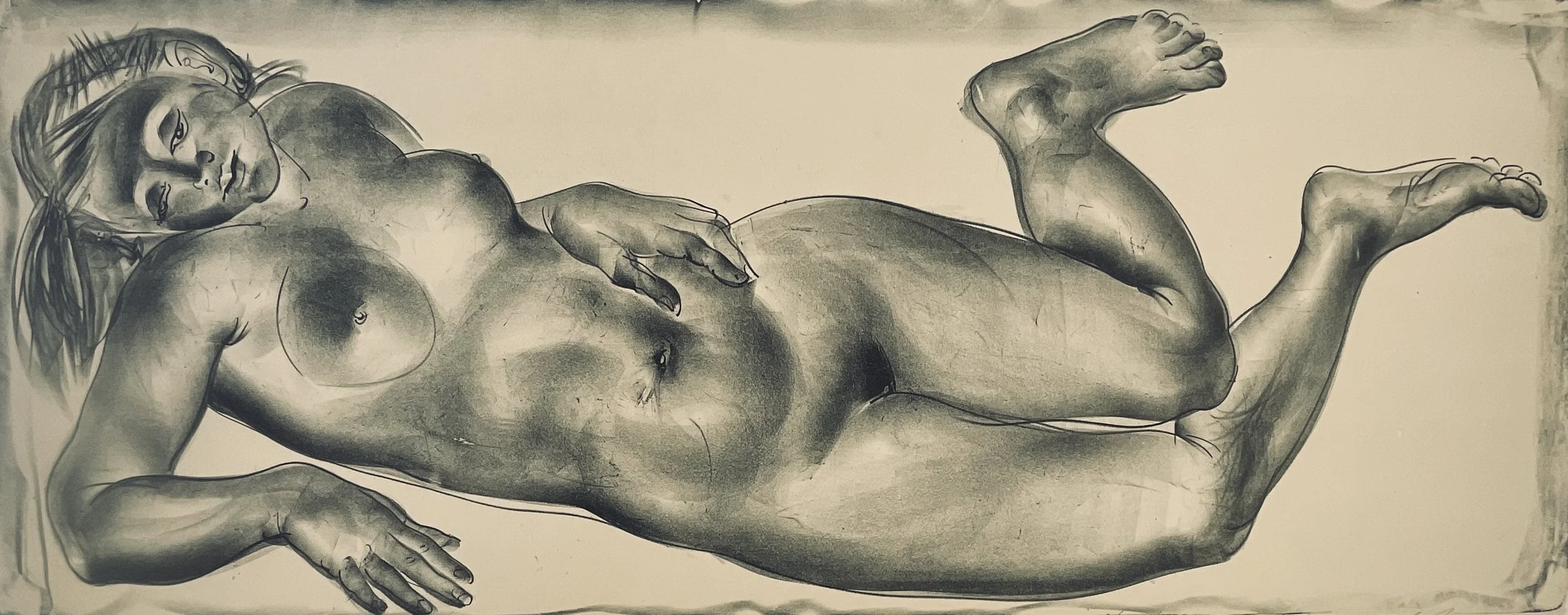
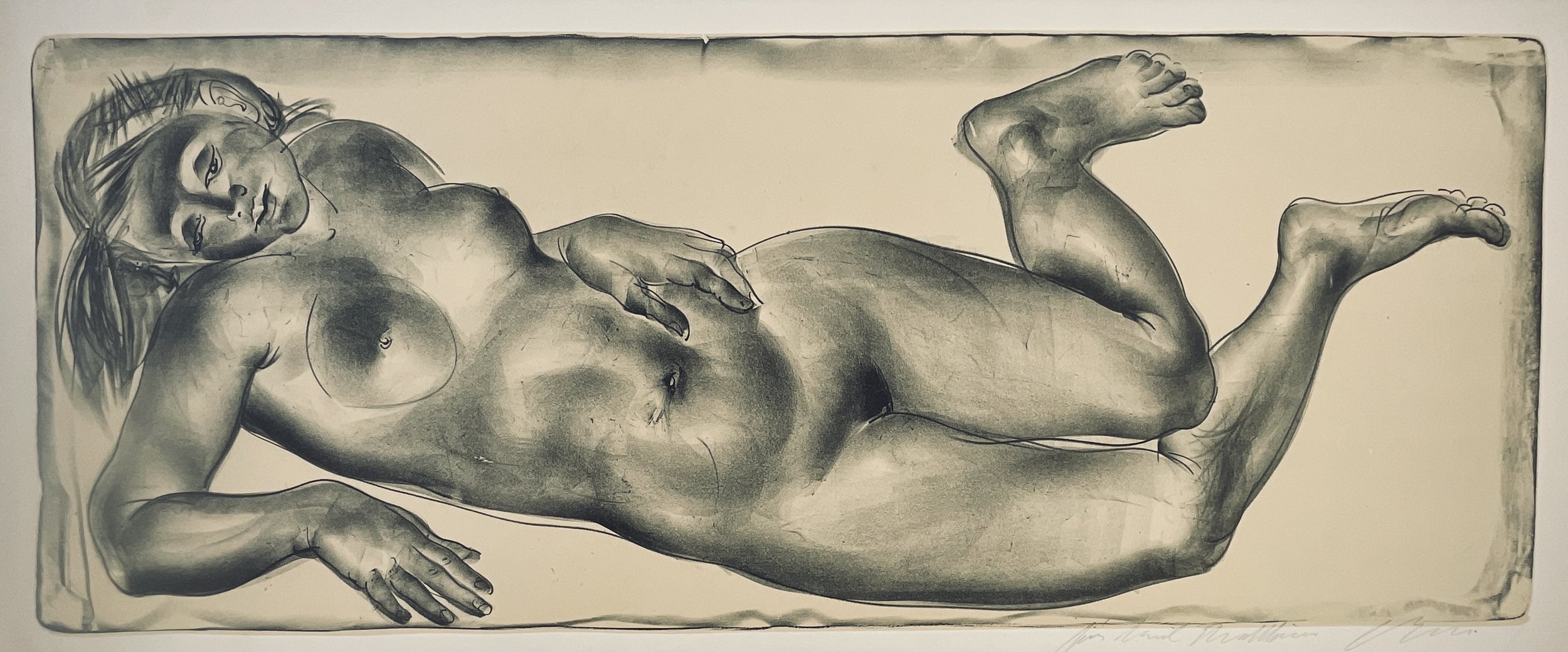
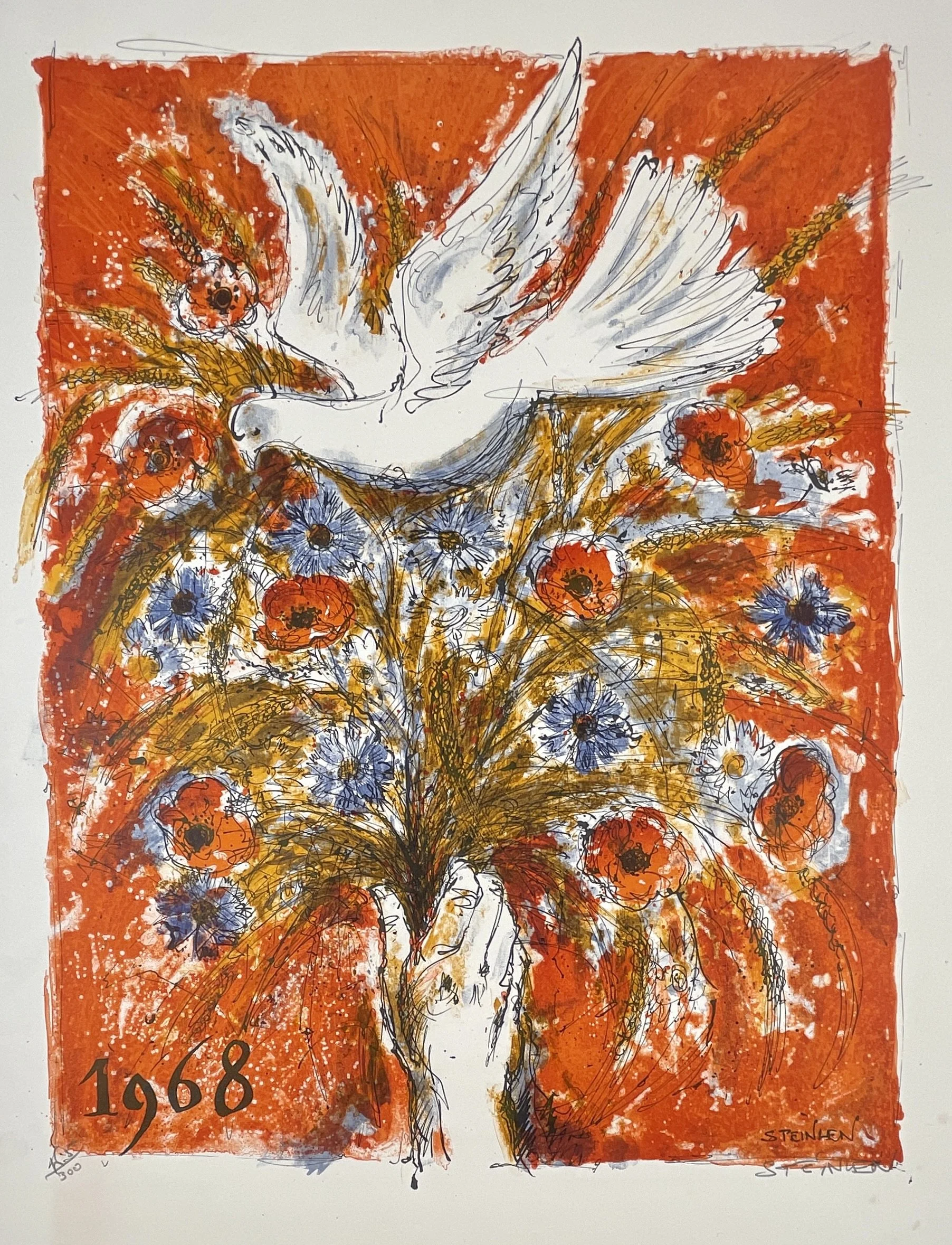
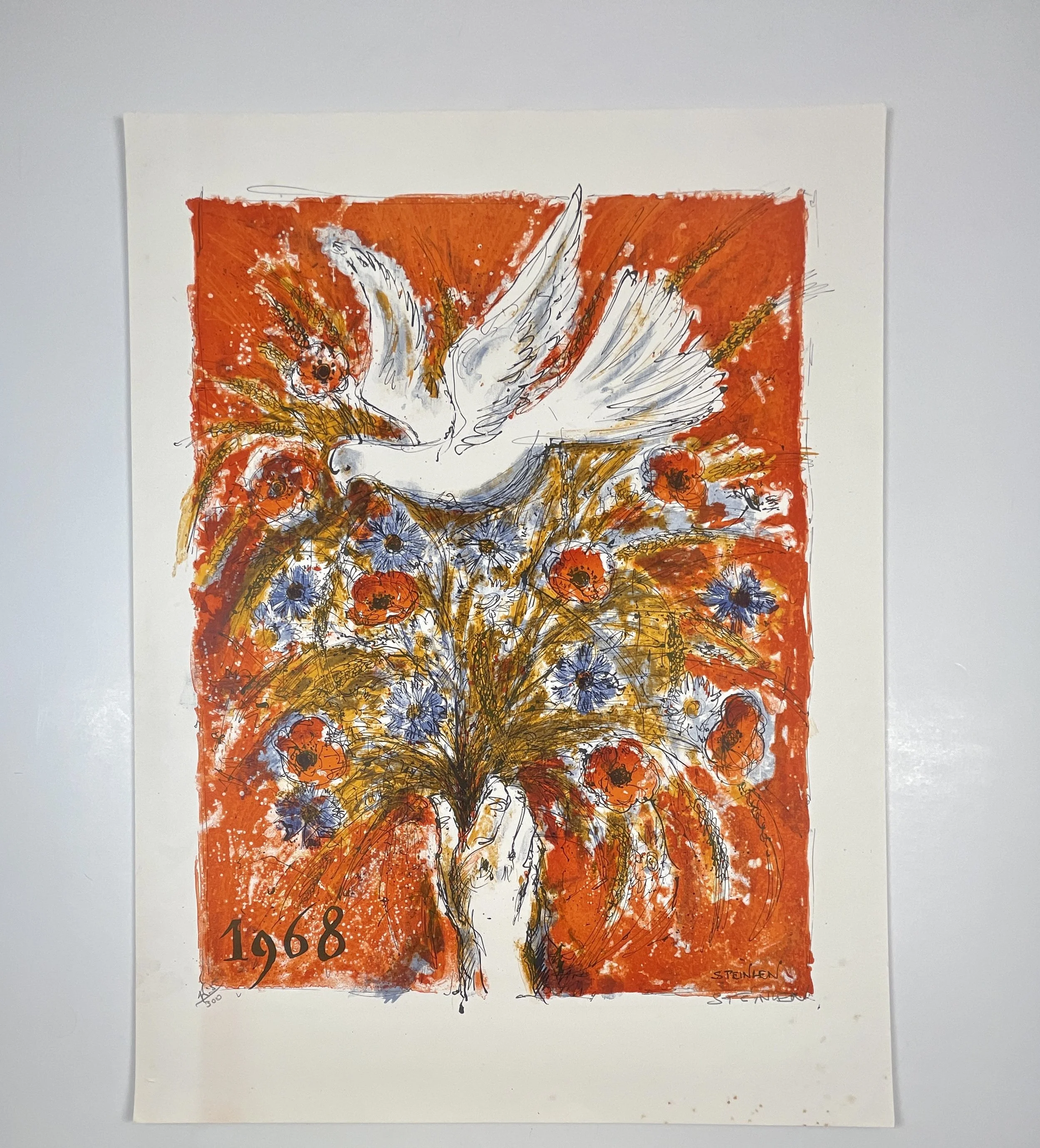
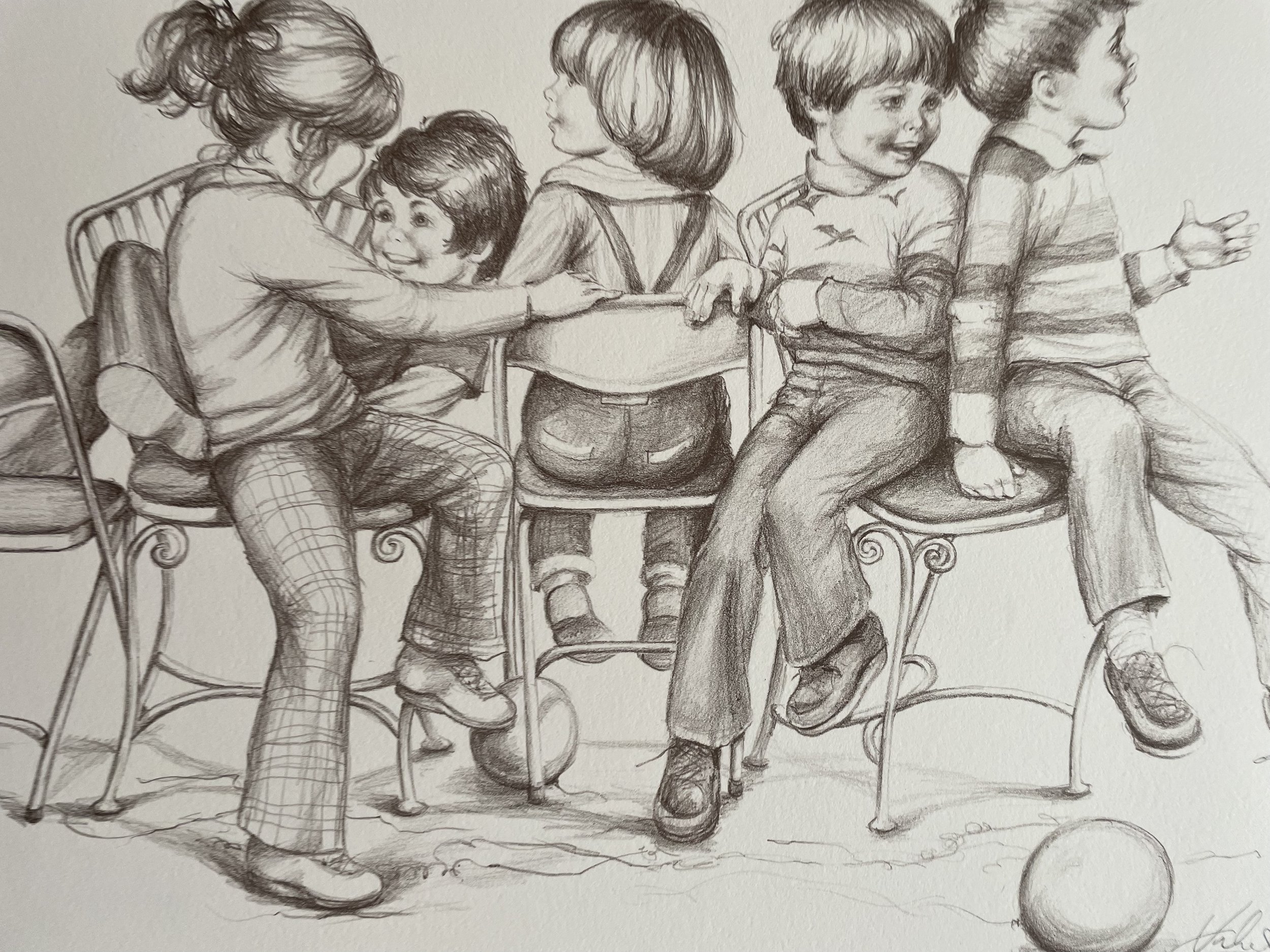
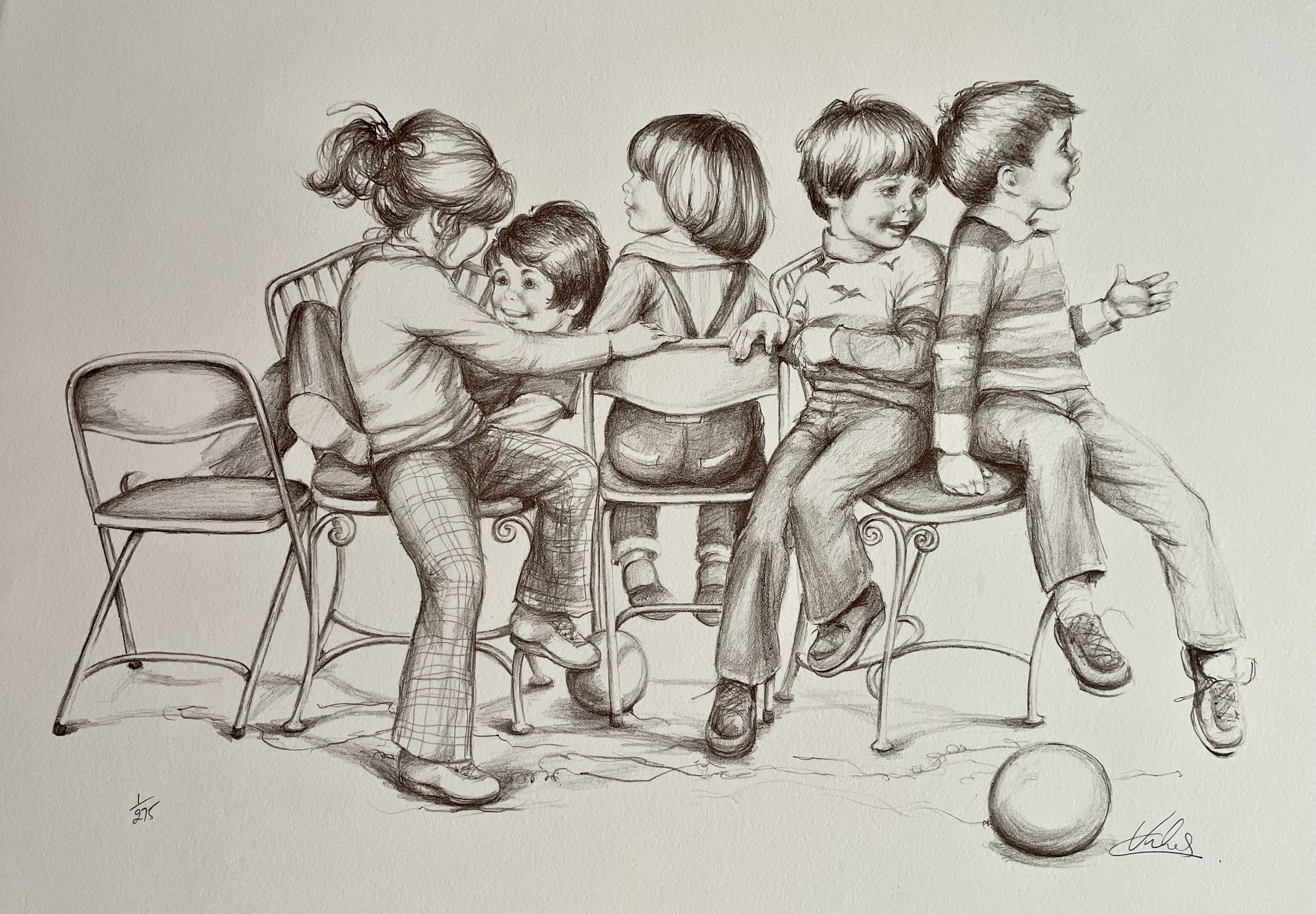
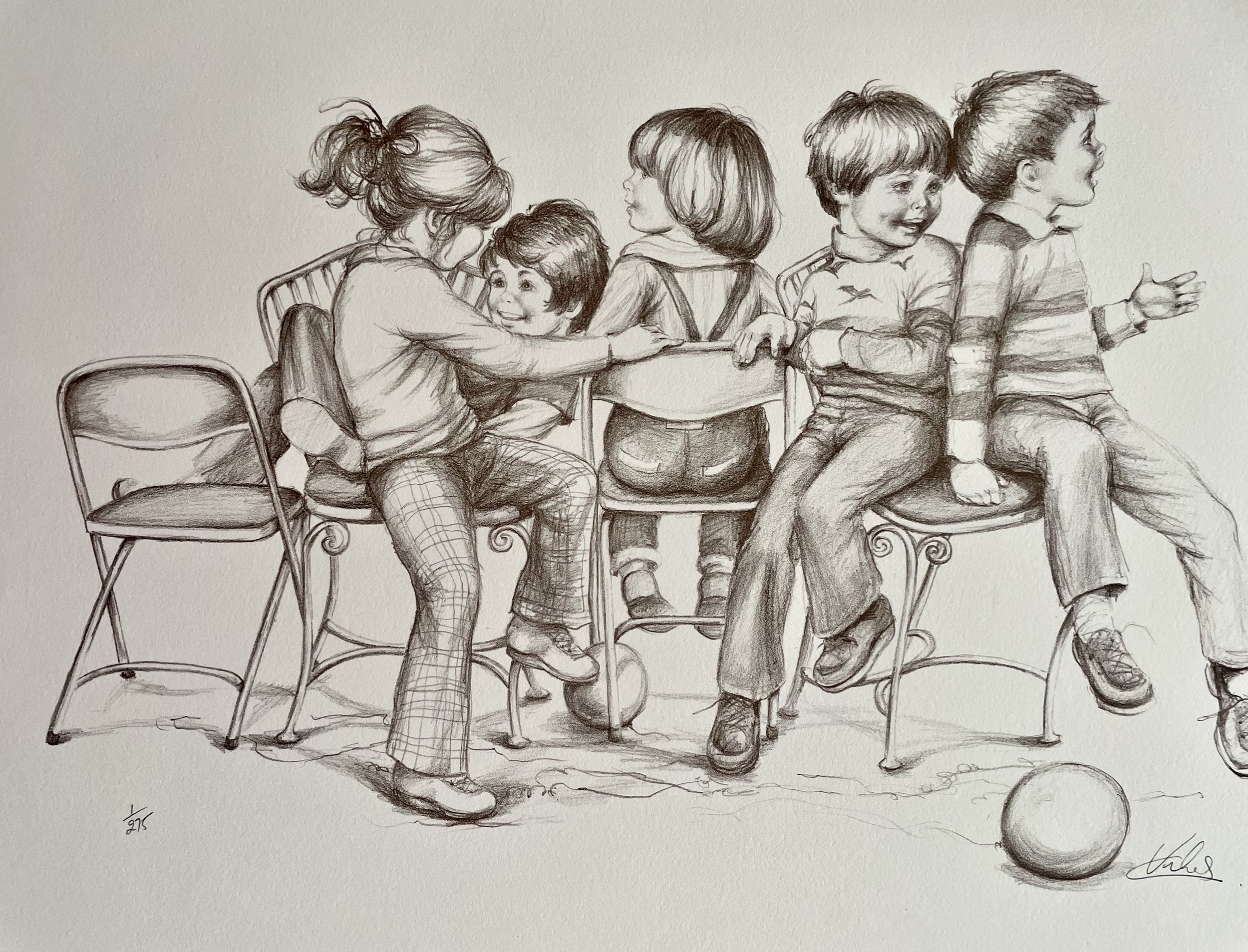
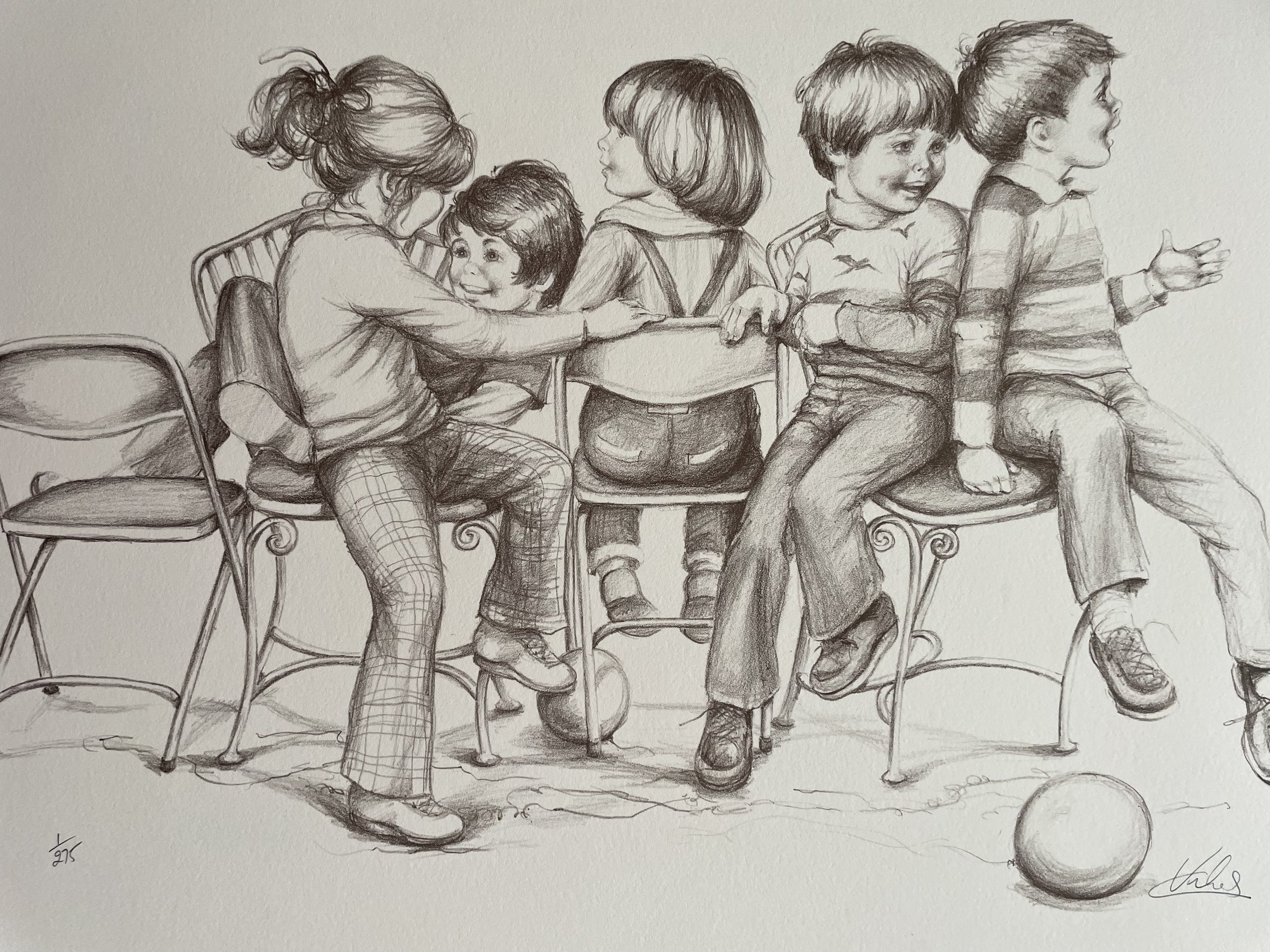
Untitled (Streetfront with Figures and Dog), Harry McCormick (1942–2023), 1979 photorealist color lithograph, 17×28 in, pencil-signed, edition 47/200.
This atmospheric photorealist lithograph by Harry McCormick (1942–2023) captures a quiet city storefront: a solitary man in a red shirt, a pair of figures deep in conversation, and a white dog resting on the steps. Created in 1979 as a limited-edition color lithograph, signed and numbered 47/200, the work exemplifies McCormick’s signature blend of cinematic realism, psychological tension, and masterful light and shadow. Collectors of urban realism, photorealist prints, and New York–school interiors will find this a compelling, museum-quality work with strong provenance through Mitch Morse Gallery to Artfind Gallery.
Artwork Description
This lithograph presents a richly detailed urban streetscape: a row of storefronts rendered in deep blacks, blues, and ochres. On the far left, beneath a sagging awning, a man in a red shirt and brimmed hat sits alone on the stoop, hands folded, his body language closed and contemplative. At the center-right, a pair of older figures converse on a raised platform of steps while a small white dog lies between them, creating a counterpoint of companionship to the solitary figure at left.
The architecture is described with McCormick’s characteristic precision—painted wood trim, heavy doorways, carved decorative panel, and worn stone steps all emerge from a velvety dark backdrop. Light appears to fall obliquely from the street, picking out the red shirt, the dog’s fur, and the worn edges of the stoop. The deep shadows behind the figures push them forward, heightening the sense of three-dimensional space and creating an almost cinematic still frame—a hallmark of McCormick’s realism.
Though executed as a color lithograph, the print closely mimics the tonal richness of an oil painting. Multiple color passes create subtle gradations in the blacks and blues, while hand-drawn details articulate facial features, clothing folds, and architectural edges. McCormick’s training in etching and his obsession with interior and streetscape lighting clearly inform this print: the surface reads as both technically meticulous and emotionally charged.
Narratively, the work is about urban stillness and social distance. The man on the left sits in isolation while the two on the right converse; the dog, calmly at rest, anchors the foreground and subtly connects the scene. The storefront’s dark windows, reflecting nothing back to the viewer, add to the sense of mystery and introspection. Like many of McCormick’s images of bars, cafés, and hotel lobbies, this street scene suggests untold stories and the quiet drama of everyday life.
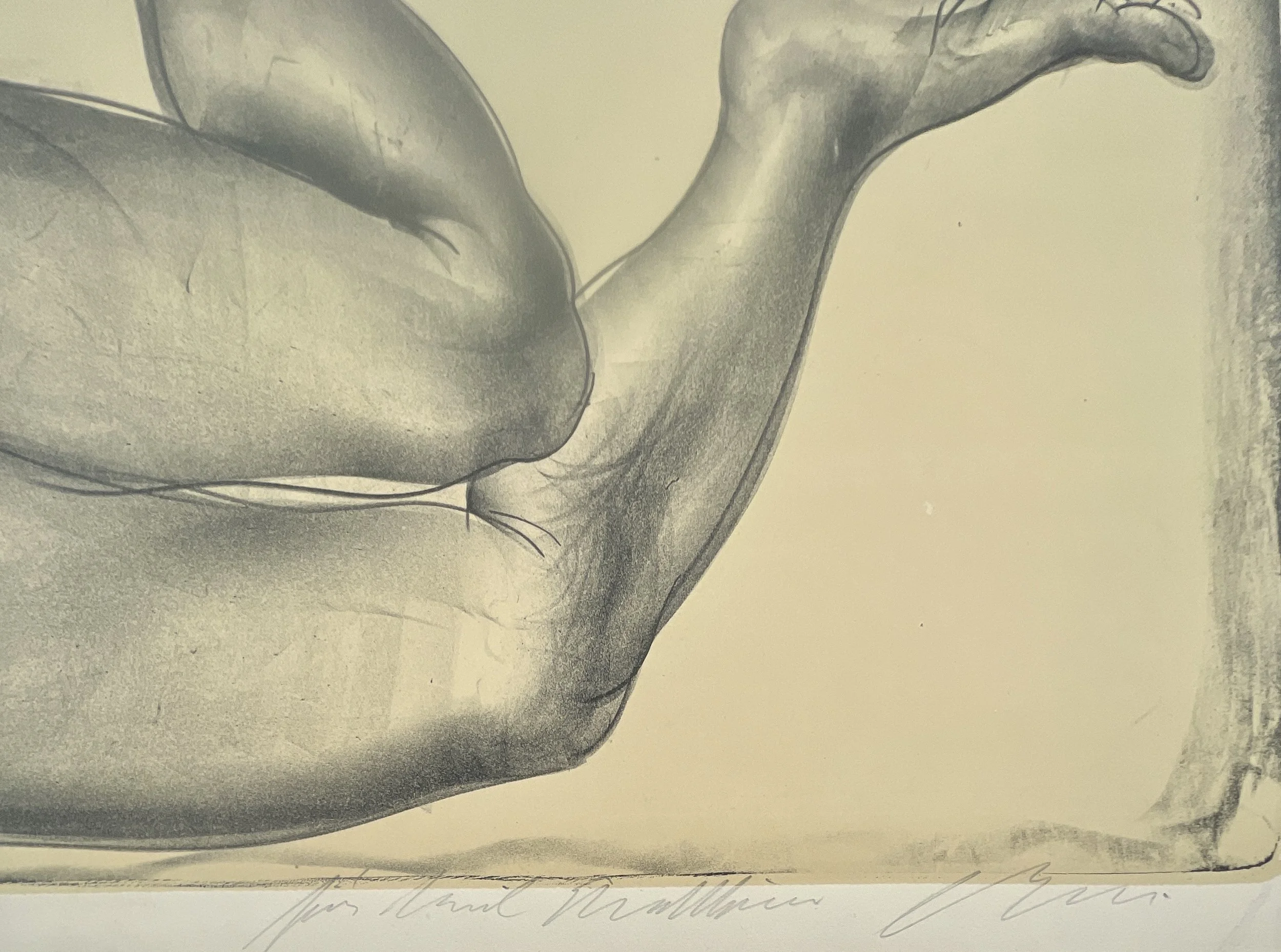
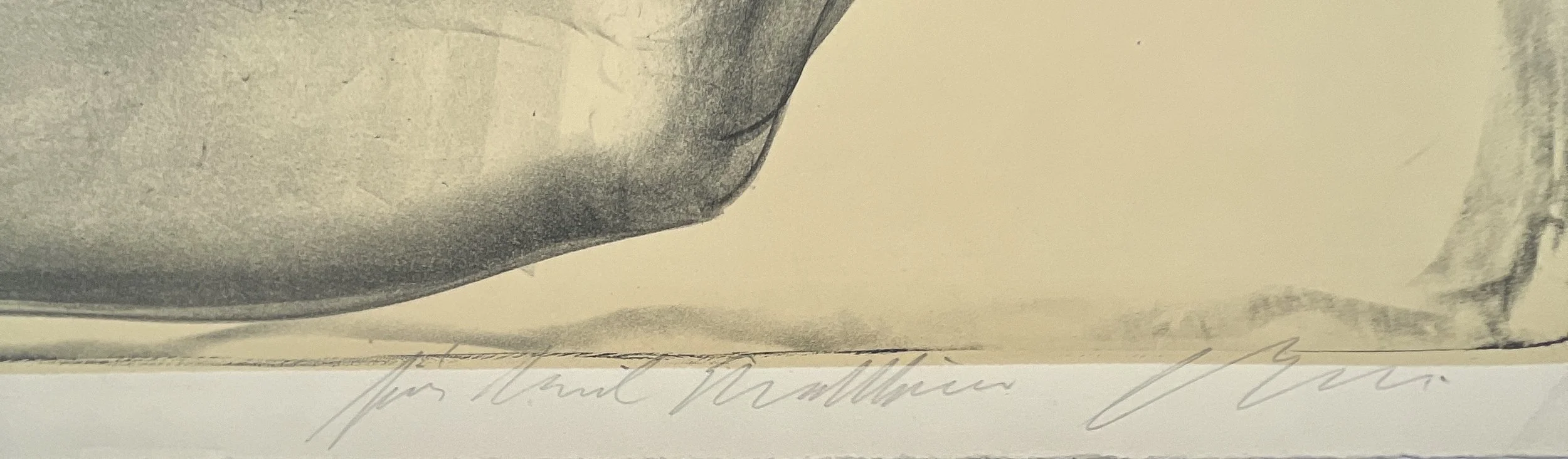
The print is pencil-signed “Harry McCormick” at the lower right and numbered 47/200 at the lower left margin. Measuring approximately 17 × 28 inches, it dates from 1979, a period when McCormick was producing highly refined realist compositions and gaining wide recognition through galleries, corporate commissions, and museum acquisitions.
Biography of Harry McCormick (1942–2023)
Early Life and Training
Harry McCormick was born on June 12, 1942, in Bayonne, New Jersey. His family traveled frequently during his youth, and he developed the habit of sketching scenes from their journeys—an early practice that shaped his lifelong focus on observed spaces and moods. This sustained drawing habit eventually led him to study etching at Pratt Institute in New York in the 1960s, though he remained largely self-taught as a painter.
Development of a Photorealist, Atmospheric Style
McCormick became known as a realist and photorealist painter of interiors, particularly hotel bars, New York restaurants, cafés, and other theatrical public spaces. His work is distinguished by an extraordinary control of light, shadow, reflections, and surface detail, often compared to the psychological quiet of Edward Hopper but with greater emphasis on interior architecture, polished surfaces, and romantic atmosphere.
He frequently depicted solitary or small groups of figures—waiters, bartenders, anonymous patrons—caught in moments of introspection. Antique furnishings, mirrors, and architectural details play a major role in his compositions, reinforcing the sense of stage-like settings and suspended time.
Career, Exhibitions, and Collections
By the mid-1960s, McCormick was exhibiting in New York and throughout New England, taking part in group shows with other realist painters and gradually developing a devoted collector base. Over subsequent decades, his paintings and prints appeared in galleries across the United States and Europe, and his meticulously rendered interiors became fixtures in luxury hotels, private collections, and corporate spaces.
McCormick’s work is held in a number of public collections, including the Delaware Art Museum, Birmingham Museum of Art, and Newark Museum, among others. Additional institutions documented as holding his work include the Boca Raton Museum of Art, the Smithsonian American Art Museum, several university collections, and even the Vatican Collection in Rome, underscoring the reach of his reputation.
Later Life and Legacy
McCormick continued to paint well into the 21st century, later living and working in Florida while maintaining strong ties to New York. He died in July 2023 in Jacksonville, Florida. Today he is regarded as a leading figure in late-20th-century American romantic realism and photorealism, celebrated for transforming ordinary interiors and streetscapes into richly atmospheric, psychologically charged images—qualities that are clearly evident in this 1979 lithograph.
Harry McCormick (American, 1942–2023), Untitled (Streetfront with Figures and Dog), 1979, color lithograph on paper, 17×28 in, pencil-signed lower right, numbered 47/200 lower left. Photorealist storefront scene with seated man, conversing figures, and dog, showcasing McCormick’s acclaimed treatment of light, shadow, and urban atmosphere. Provenance: Mitch Morse Gallery, New York; Artfind Gallery, Washington, DC.
Certificate of Value & Authentication
Artist: Harry McCormick (American, 1942–2023)
Title: Untitled (Streetfront with Figures and Dog) (working title)
Date: 1979
Medium: Photorealist color lithograph on paper
Dimensions: 17 × 28 inches (approx.)
Edition: 47/200
Signature: Hand-signed “Harry McCormick” in pencil at lower right; numbered 47/200 at lower left
Technique: Multi-color lithography printed to closely emulate the tonal depth of McCormick’s oil paintings, with detailed storefront architecture and figures rendered in a realist style.
Condition: Very good vintage condition with minor, expected handling and age-related toning (formal condition report recommended for conservation purposes).
Authenticity:
– Signature and numbering consistent with other documented McCormick lithographs.
– Style, subject matter, and technique align with McCormick’s photorealist urban scenes of the 1970s.
– Provenance traceable to Mitch Morse Gallery, New York, a recognized dealer in contemporary prints, then to Artfind Gallery, Washington, DC (current owner).
This certificate attests that the above-described work is an authentic limited-edition lithograph by Harry McCormick.
Provenance Chain (Collector-Formatted)
• Harry McCormick (1942–2023) – artist
• Mitch Morse Gallery, New York, NY – acquired directly from the artist or publisher as part of their contemporary print offerings, c. late 1970s
• Private holdings via Mitch Morse Gallery (New York / European clientele)
• Artfind Gallery, Washington, DC – current owner
Untitled (Streetfront with Figures and Dog), Harry McCormick (1942–2023), 1979 photorealist color lithograph, 17×28 in, pencil-signed, edition 47/200.
This atmospheric photorealist lithograph by Harry McCormick (1942–2023) captures a quiet city storefront: a solitary man in a red shirt, a pair of figures deep in conversation, and a white dog resting on the steps. Created in 1979 as a limited-edition color lithograph, signed and numbered 47/200, the work exemplifies McCormick’s signature blend of cinematic realism, psychological tension, and masterful light and shadow. Collectors of urban realism, photorealist prints, and New York–school interiors will find this a compelling, museum-quality work with strong provenance through Mitch Morse Gallery to Artfind Gallery.
Artwork Description
This lithograph presents a richly detailed urban streetscape: a row of storefronts rendered in deep blacks, blues, and ochres. On the far left, beneath a sagging awning, a man in a red shirt and brimmed hat sits alone on the stoop, hands folded, his body language closed and contemplative. At the center-right, a pair of older figures converse on a raised platform of steps while a small white dog lies between them, creating a counterpoint of companionship to the solitary figure at left.
The architecture is described with McCormick’s characteristic precision—painted wood trim, heavy doorways, carved decorative panel, and worn stone steps all emerge from a velvety dark backdrop. Light appears to fall obliquely from the street, picking out the red shirt, the dog’s fur, and the worn edges of the stoop. The deep shadows behind the figures push them forward, heightening the sense of three-dimensional space and creating an almost cinematic still frame—a hallmark of McCormick’s realism.
Though executed as a color lithograph, the print closely mimics the tonal richness of an oil painting. Multiple color passes create subtle gradations in the blacks and blues, while hand-drawn details articulate facial features, clothing folds, and architectural edges. McCormick’s training in etching and his obsession with interior and streetscape lighting clearly inform this print: the surface reads as both technically meticulous and emotionally charged.
Narratively, the work is about urban stillness and social distance. The man on the left sits in isolation while the two on the right converse; the dog, calmly at rest, anchors the foreground and subtly connects the scene. The storefront’s dark windows, reflecting nothing back to the viewer, add to the sense of mystery and introspection. Like many of McCormick’s images of bars, cafés, and hotel lobbies, this street scene suggests untold stories and the quiet drama of everyday life.
The print is pencil-signed “Harry McCormick” at the lower right and numbered 47/200 at the lower left margin. Measuring approximately 17 × 28 inches, it dates from 1979, a period when McCormick was producing highly refined realist compositions and gaining wide recognition through galleries, corporate commissions, and museum acquisitions.
Biography of Harry McCormick (1942–2023)
Early Life and Training
Harry McCormick was born on June 12, 1942, in Bayonne, New Jersey. His family traveled frequently during his youth, and he developed the habit of sketching scenes from their journeys—an early practice that shaped his lifelong focus on observed spaces and moods. This sustained drawing habit eventually led him to study etching at Pratt Institute in New York in the 1960s, though he remained largely self-taught as a painter.
Development of a Photorealist, Atmospheric Style
McCormick became known as a realist and photorealist painter of interiors, particularly hotel bars, New York restaurants, cafés, and other theatrical public spaces. His work is distinguished by an extraordinary control of light, shadow, reflections, and surface detail, often compared to the psychological quiet of Edward Hopper but with greater emphasis on interior architecture, polished surfaces, and romantic atmosphere.
He frequently depicted solitary or small groups of figures—waiters, bartenders, anonymous patrons—caught in moments of introspection. Antique furnishings, mirrors, and architectural details play a major role in his compositions, reinforcing the sense of stage-like settings and suspended time.
Career, Exhibitions, and Collections
By the mid-1960s, McCormick was exhibiting in New York and throughout New England, taking part in group shows with other realist painters and gradually developing a devoted collector base. Over subsequent decades, his paintings and prints appeared in galleries across the United States and Europe, and his meticulously rendered interiors became fixtures in luxury hotels, private collections, and corporate spaces.
McCormick’s work is held in a number of public collections, including the Delaware Art Museum, Birmingham Museum of Art, and Newark Museum, among others. Additional institutions documented as holding his work include the Boca Raton Museum of Art, the Smithsonian American Art Museum, several university collections, and even the Vatican Collection in Rome, underscoring the reach of his reputation.
Later Life and Legacy
McCormick continued to paint well into the 21st century, later living and working in Florida while maintaining strong ties to New York. He died in July 2023 in Jacksonville, Florida. Today he is regarded as a leading figure in late-20th-century American romantic realism and photorealism, celebrated for transforming ordinary interiors and streetscapes into richly atmospheric, psychologically charged images—qualities that are clearly evident in this 1979 lithograph.
Harry McCormick (American, 1942–2023), Untitled (Streetfront with Figures and Dog), 1979, color lithograph on paper, 17×28 in, pencil-signed lower right, numbered 47/200 lower left. Photorealist storefront scene with seated man, conversing figures, and dog, showcasing McCormick’s acclaimed treatment of light, shadow, and urban atmosphere. Provenance: Mitch Morse Gallery, New York; Artfind Gallery, Washington, DC.
Certificate of Value & Authentication
Artist: Harry McCormick (American, 1942–2023)
Title: Untitled (Streetfront with Figures and Dog) (working title)
Date: 1979
Medium: Photorealist color lithograph on paper
Dimensions: 17 × 28 inches (approx.)
Edition: 47/200
Signature: Hand-signed “Harry McCormick” in pencil at lower right; numbered 47/200 at lower left
Technique: Multi-color lithography printed to closely emulate the tonal depth of McCormick’s oil paintings, with detailed storefront architecture and figures rendered in a realist style.
Condition: Very good vintage condition with minor, expected handling and age-related toning (formal condition report recommended for conservation purposes).
Authenticity:
– Signature and numbering consistent with other documented McCormick lithographs.
– Style, subject matter, and technique align with McCormick’s photorealist urban scenes of the 1970s.
– Provenance traceable to Mitch Morse Gallery, New York, a recognized dealer in contemporary prints, then to Artfind Gallery, Washington, DC (current owner).
This certificate attests that the above-described work is an authentic limited-edition lithograph by Harry McCormick.
Provenance Chain (Collector-Formatted)
• Harry McCormick (1942–2023) – artist
• Mitch Morse Gallery, New York, NY – acquired directly from the artist or publisher as part of their contemporary print offerings, c. late 1970s
• Private holdings via Mitch Morse Gallery (New York / European clientele)
• Artfind Gallery, Washington, DC – current owner
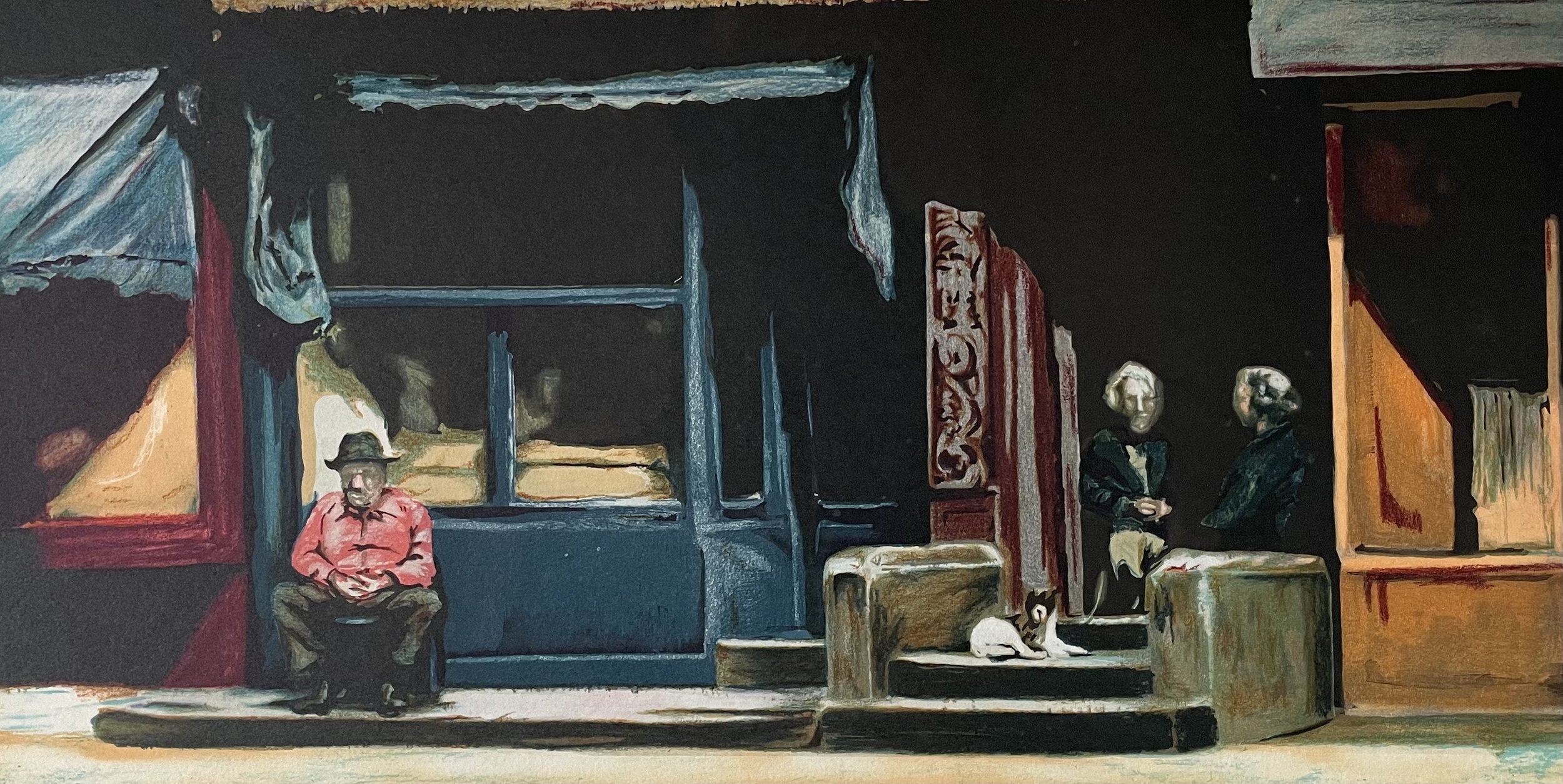 Image 1 of 7
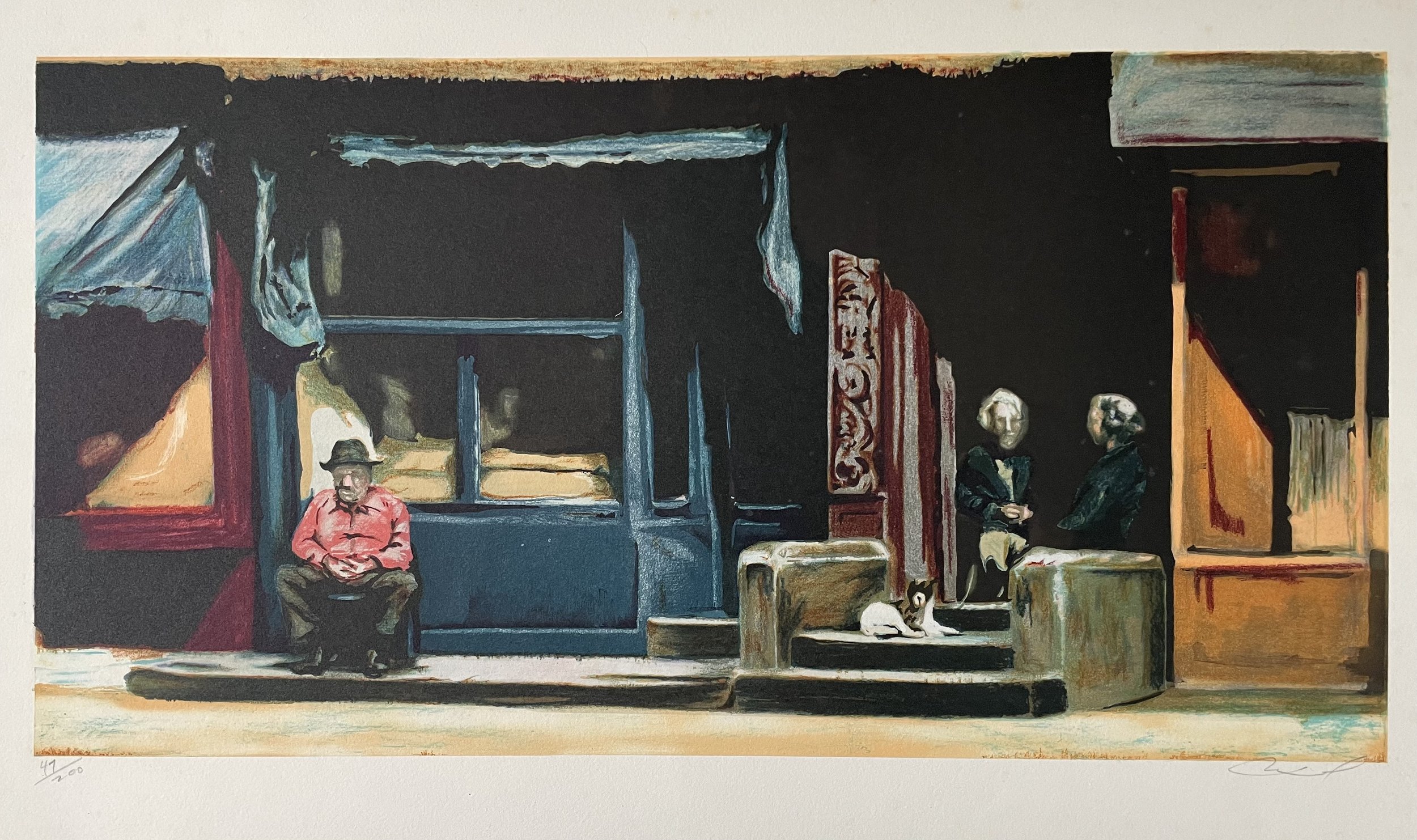 Image 2 of 7
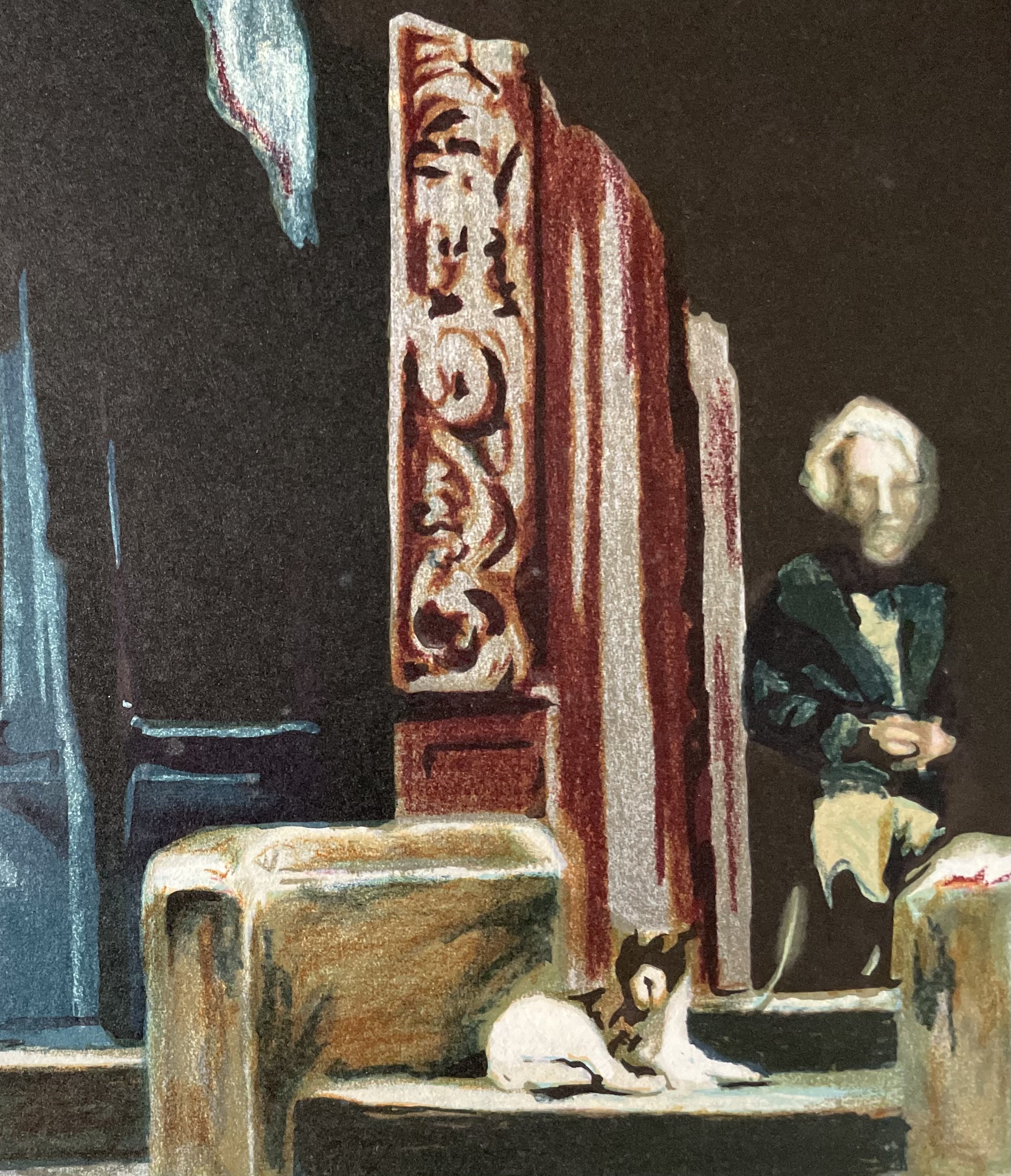 Image 3 of 7
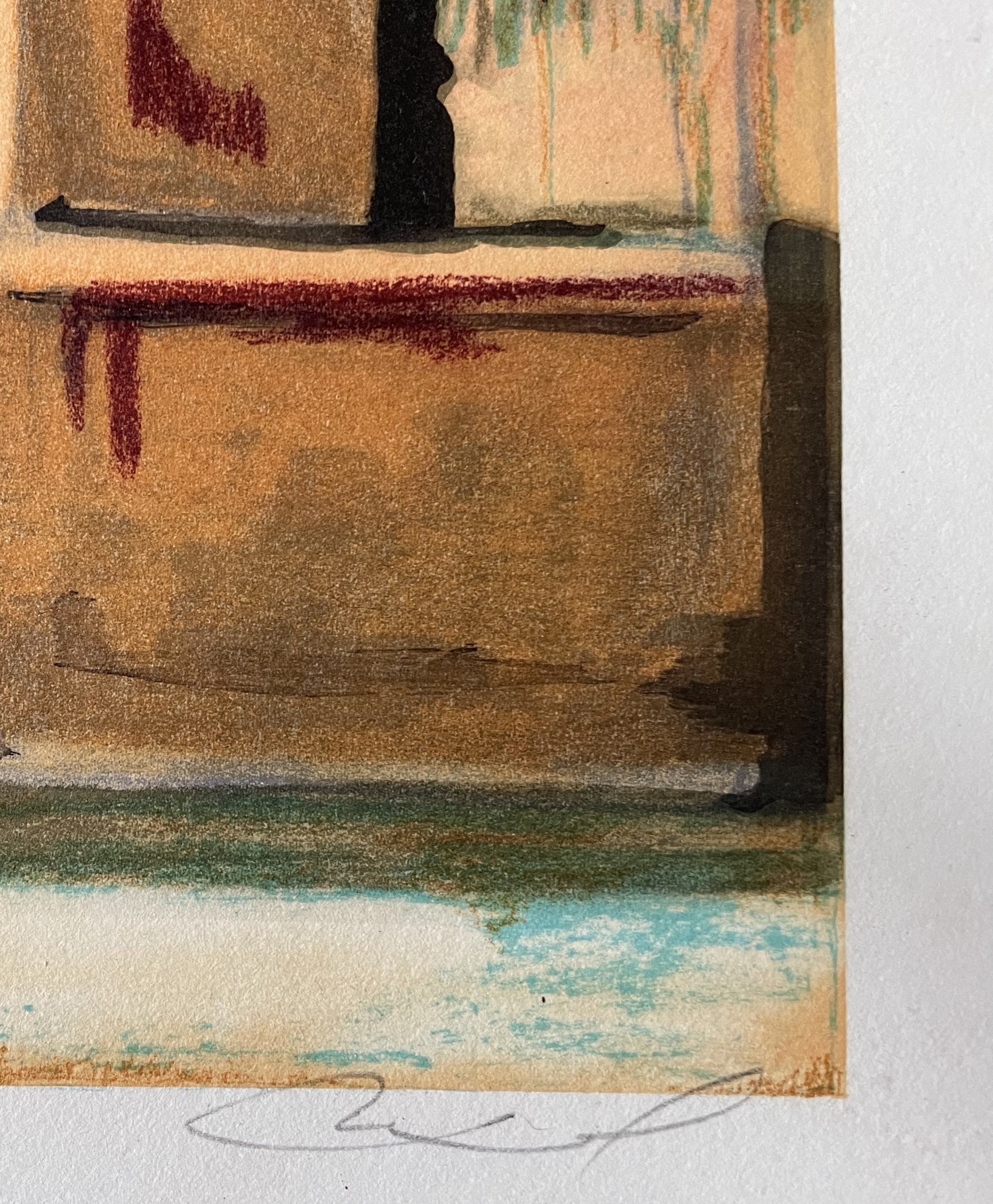 Image 4 of 7
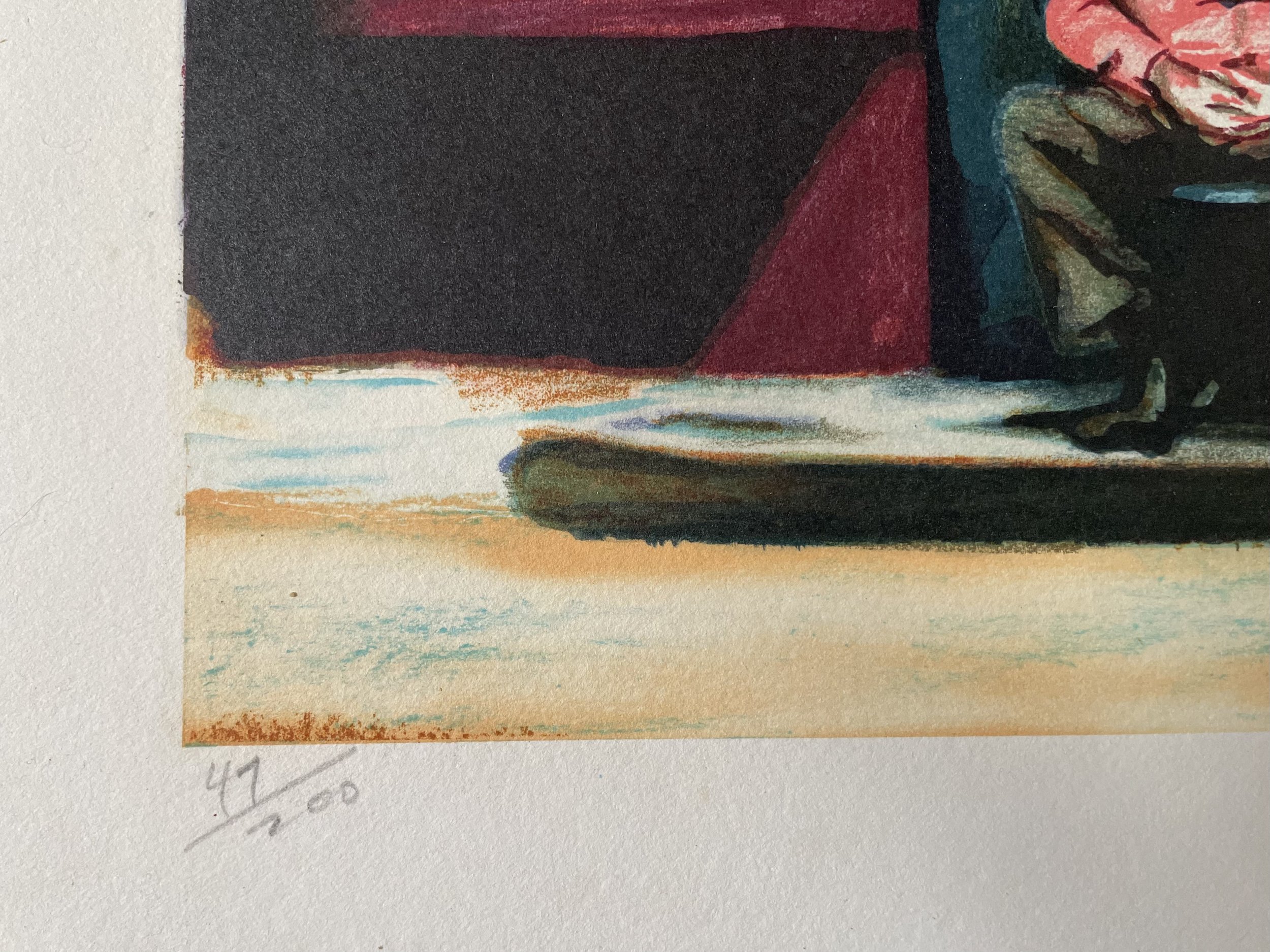 Image 5 of 7
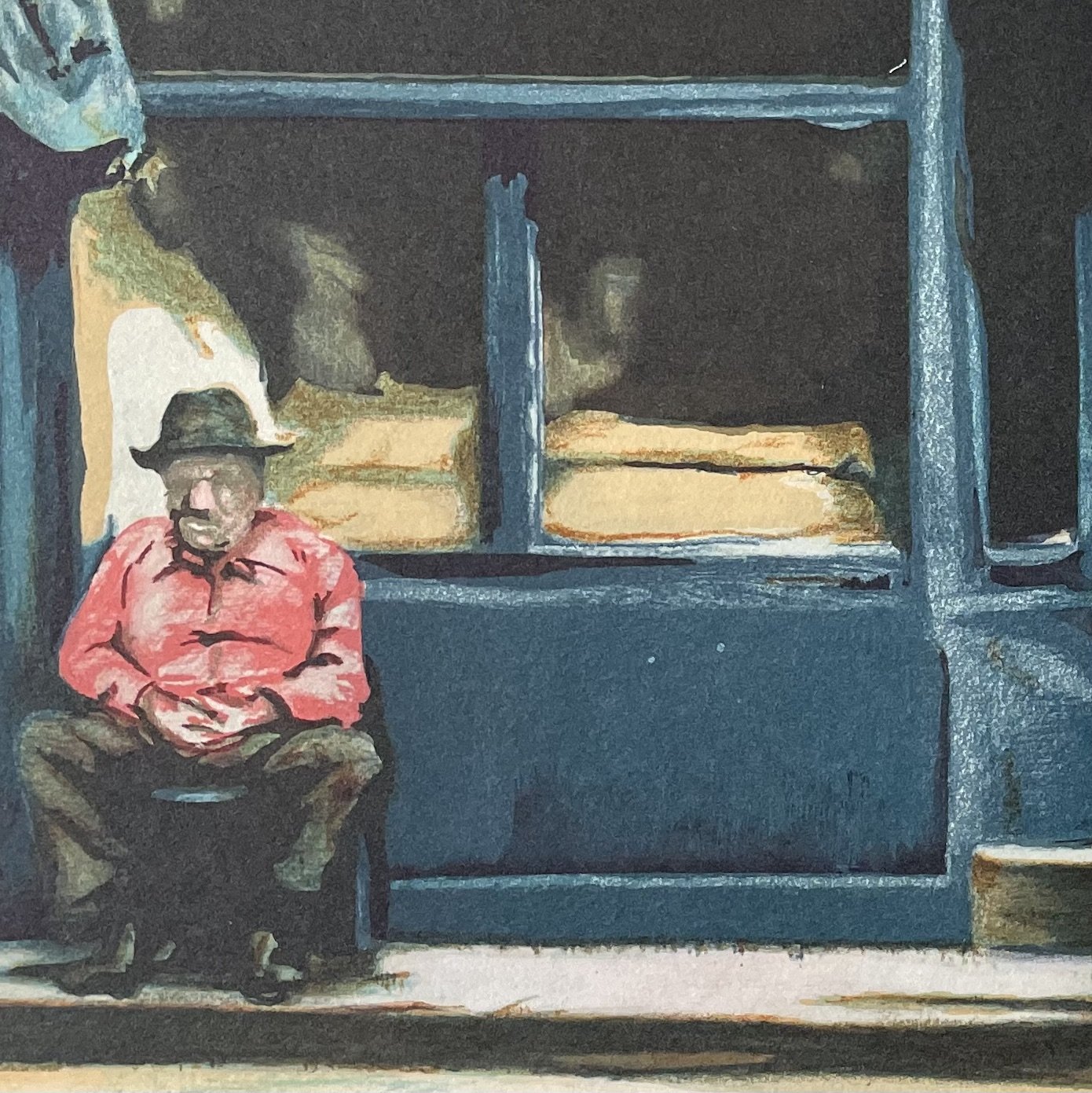 Image 6 of 7
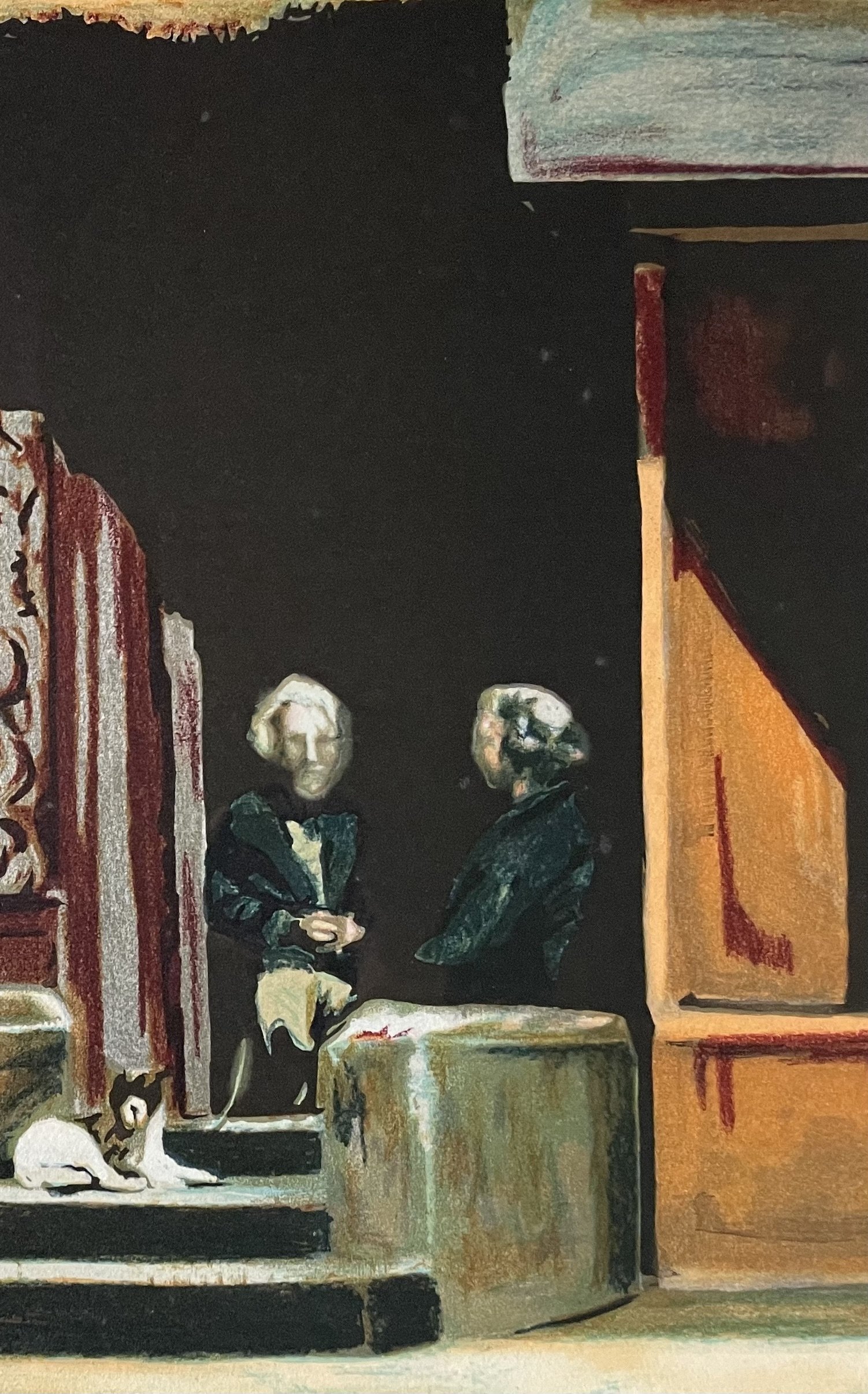 Image 7 of 7