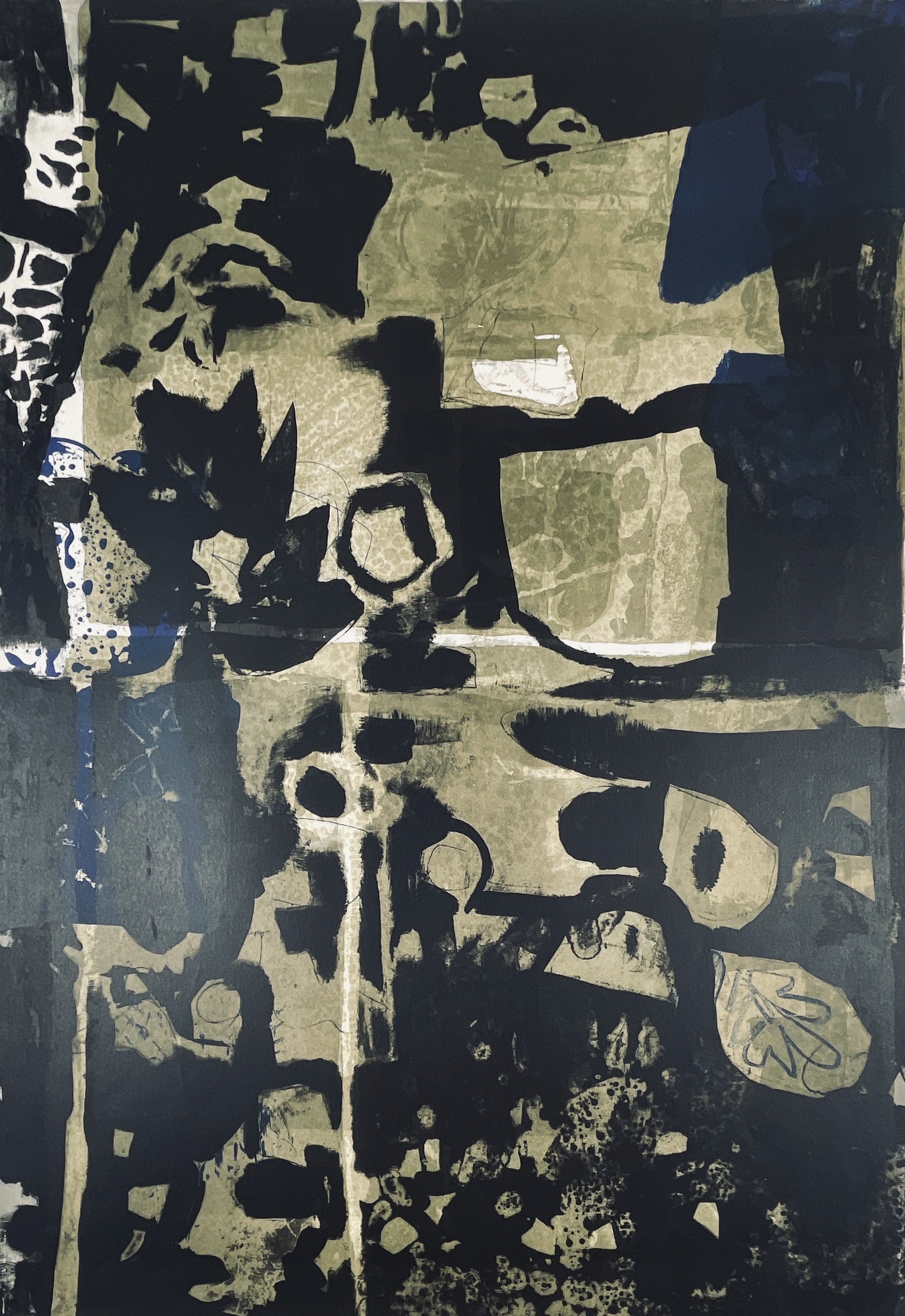
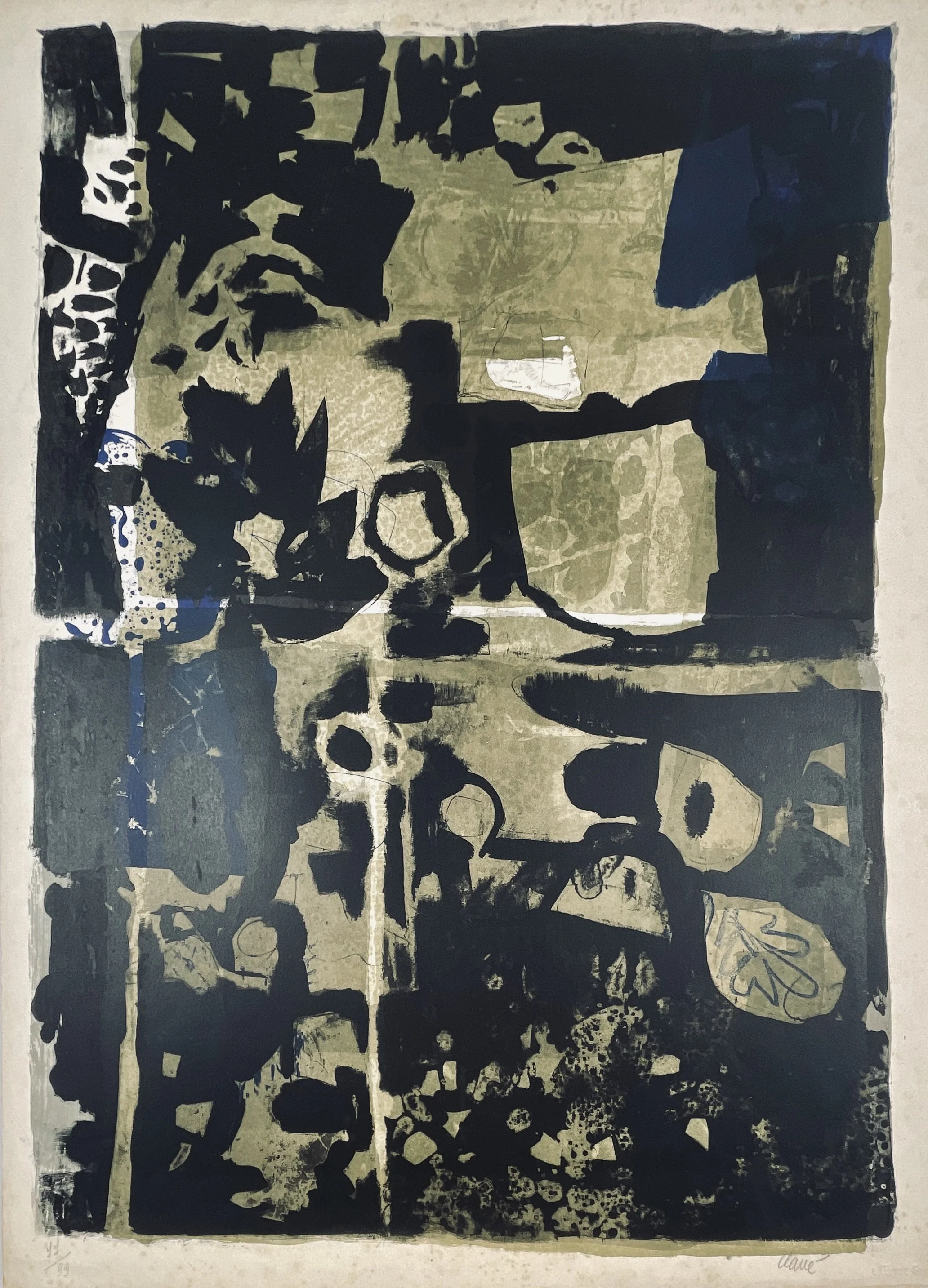
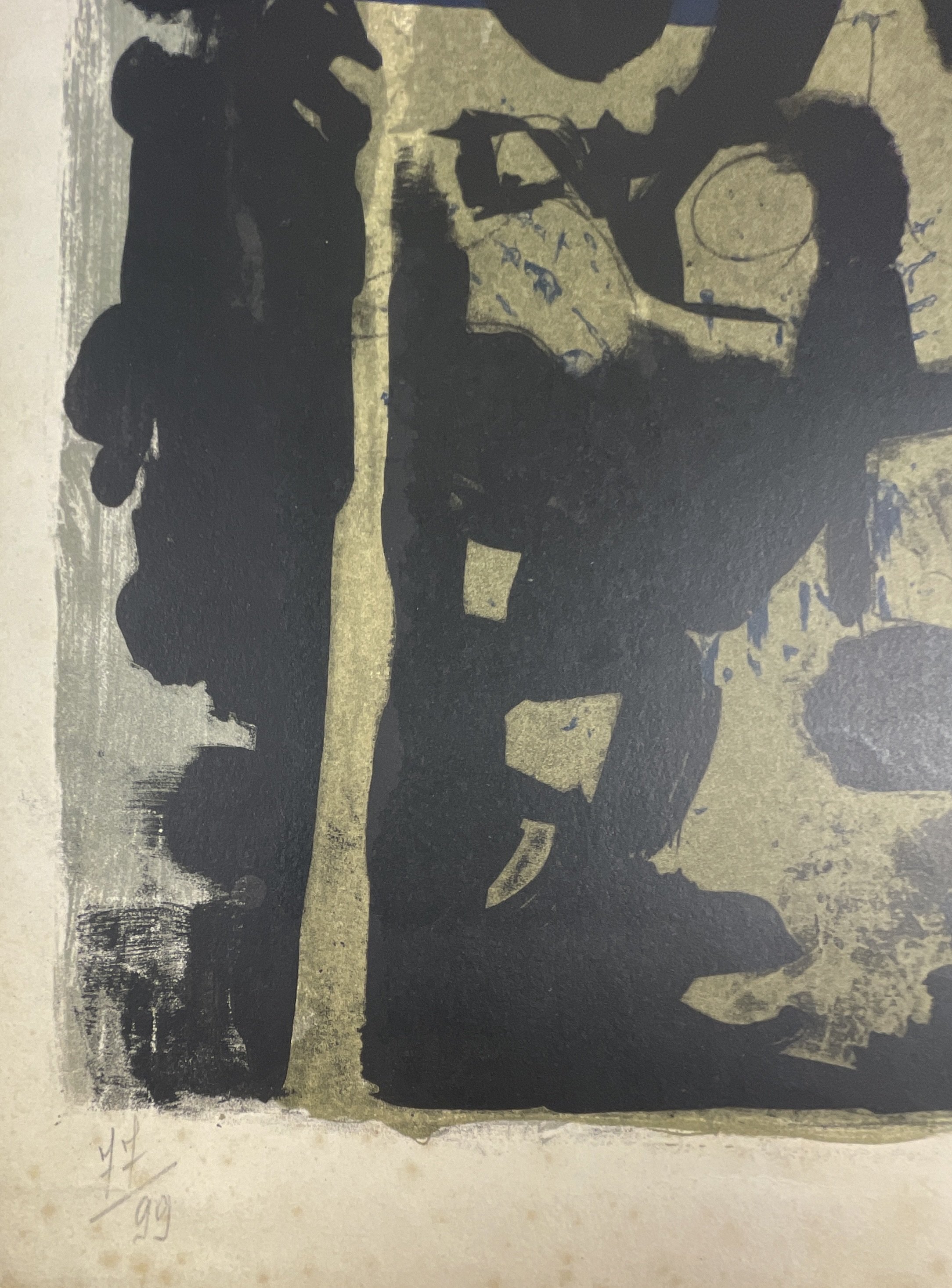
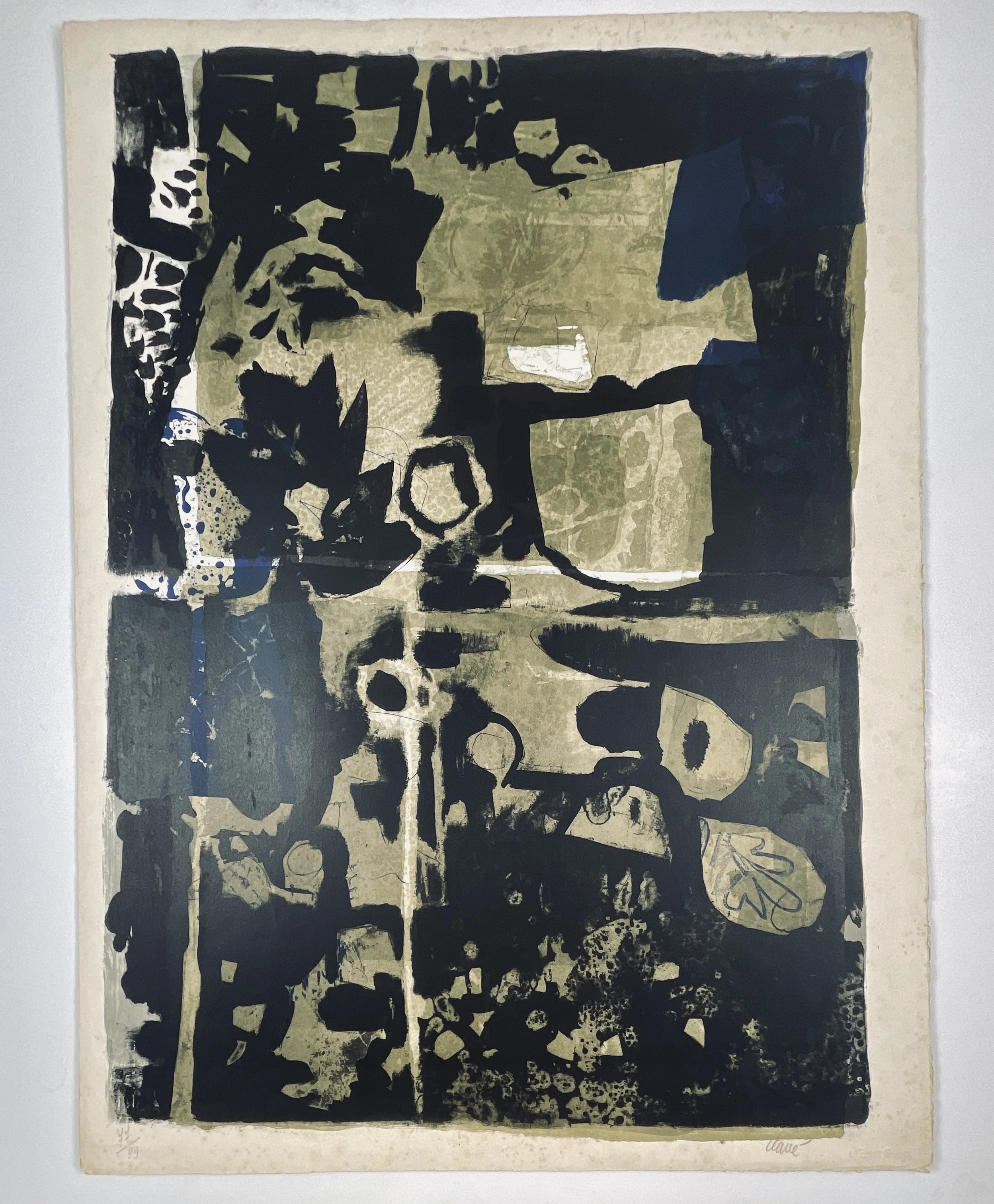
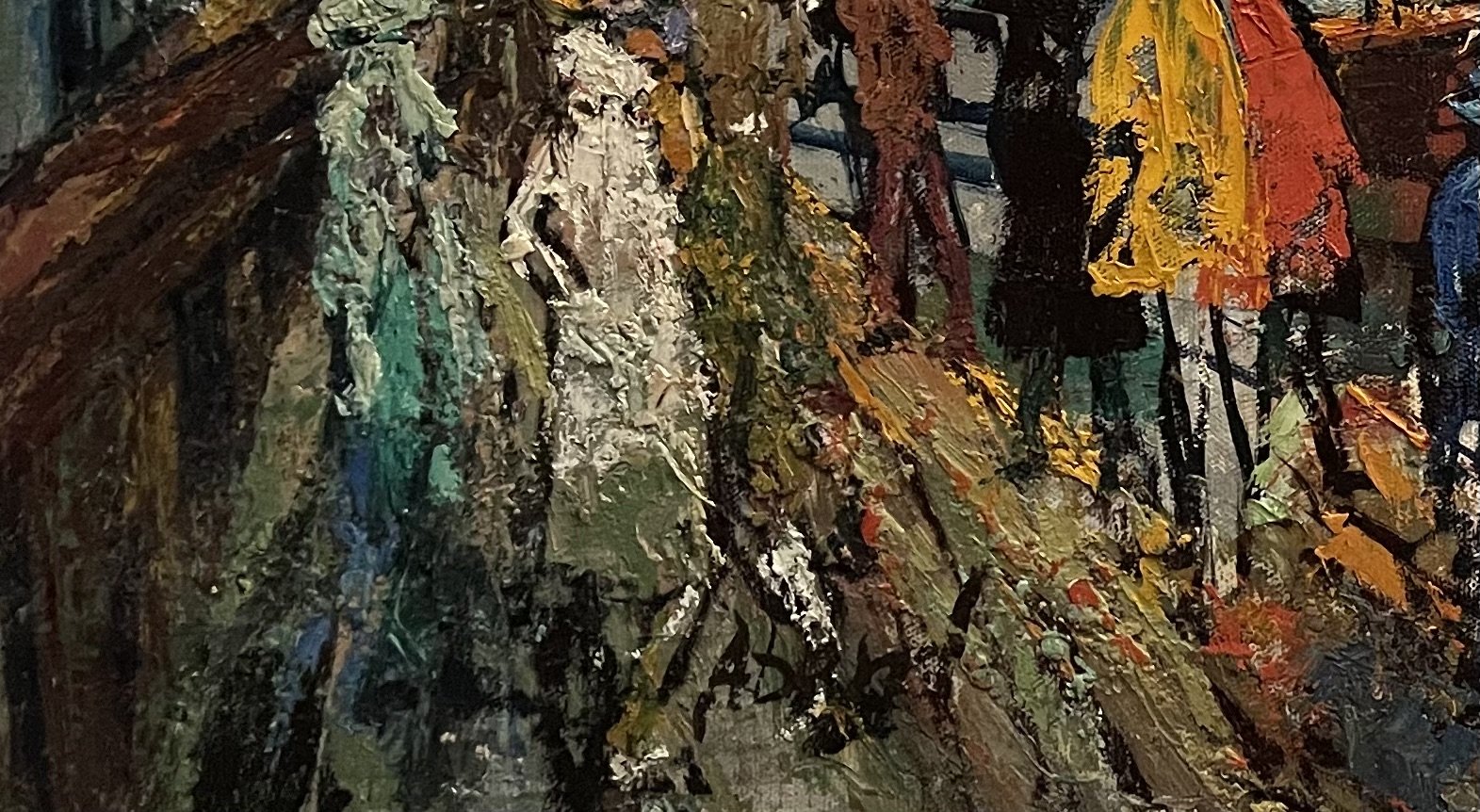
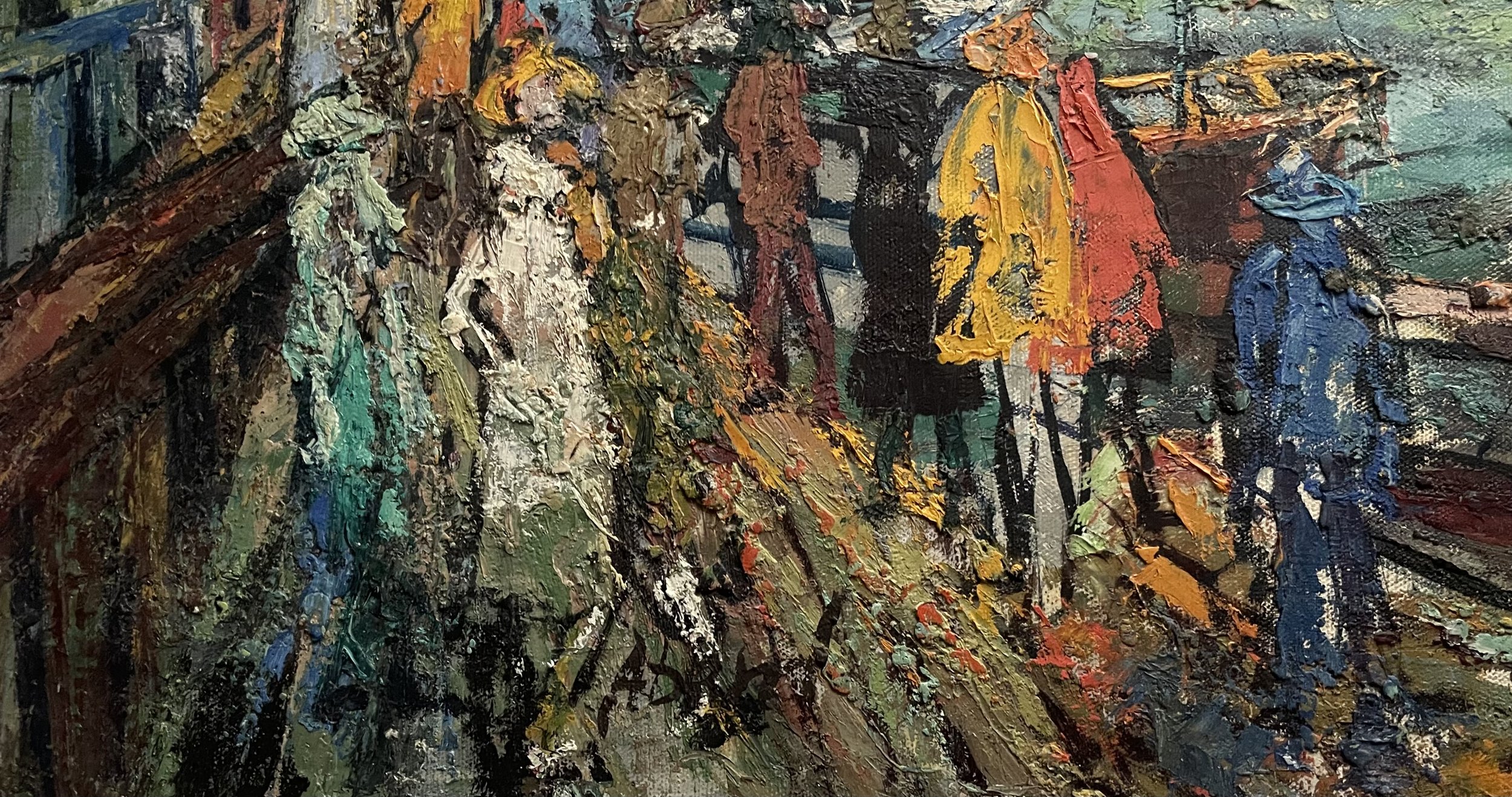
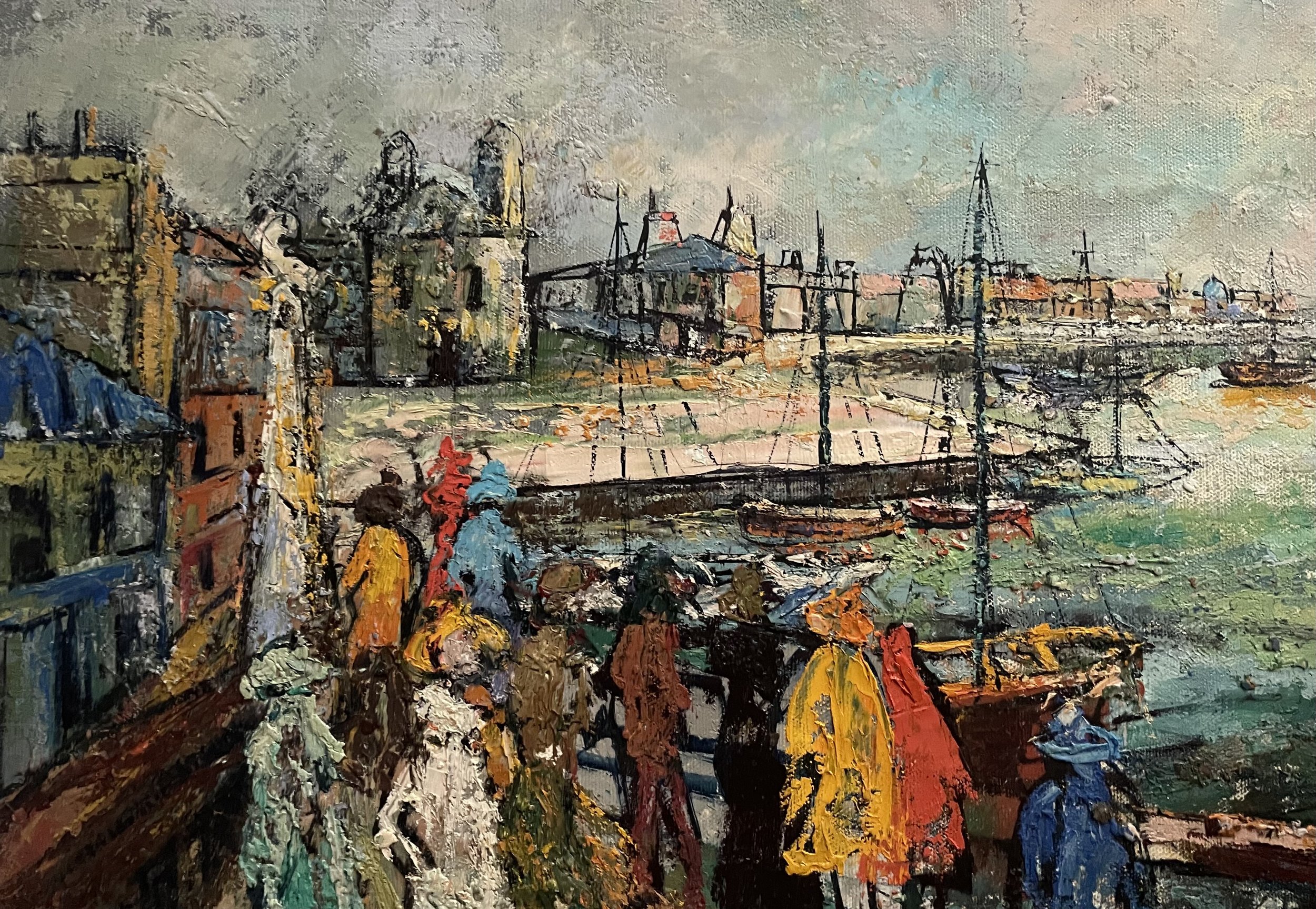
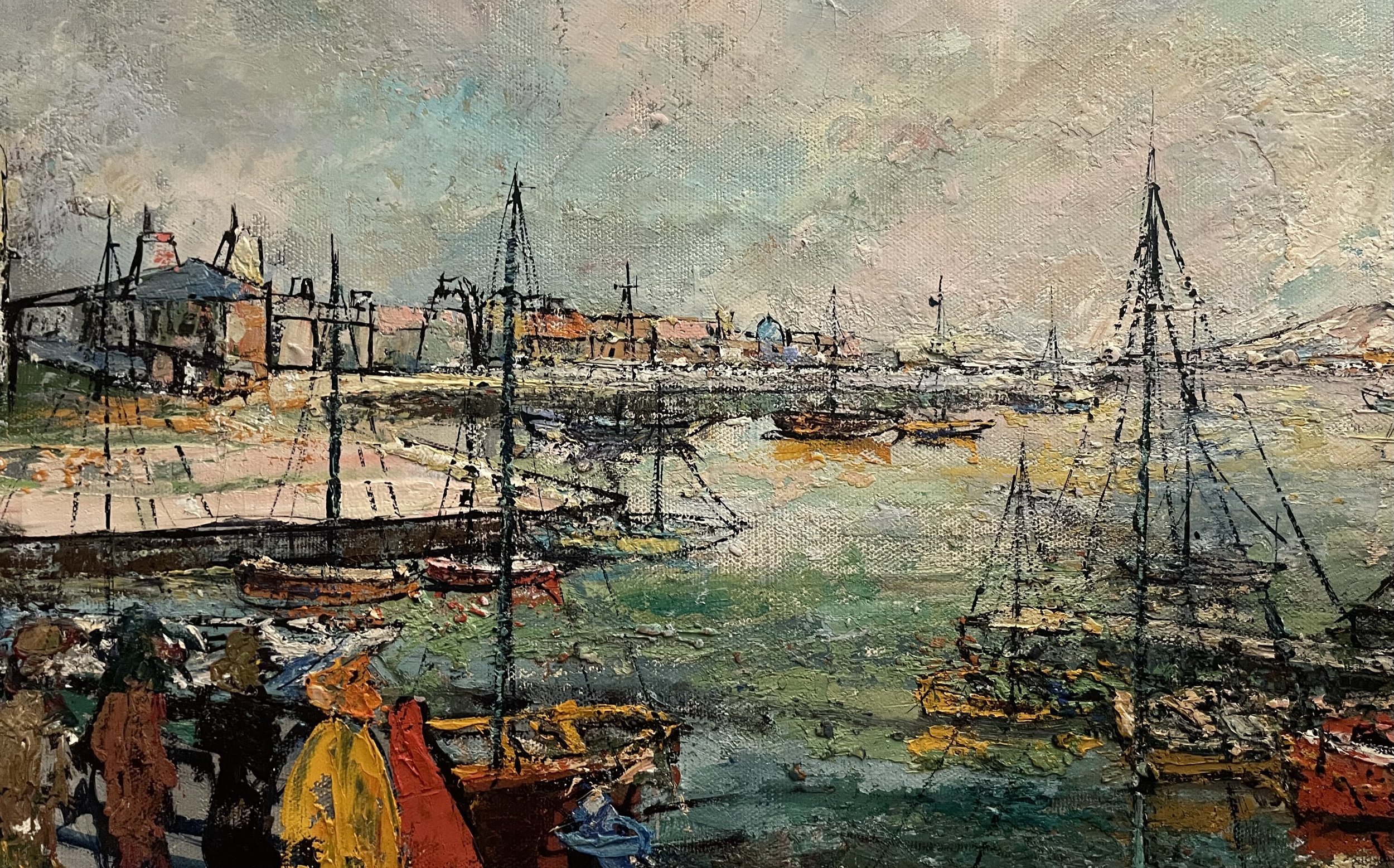
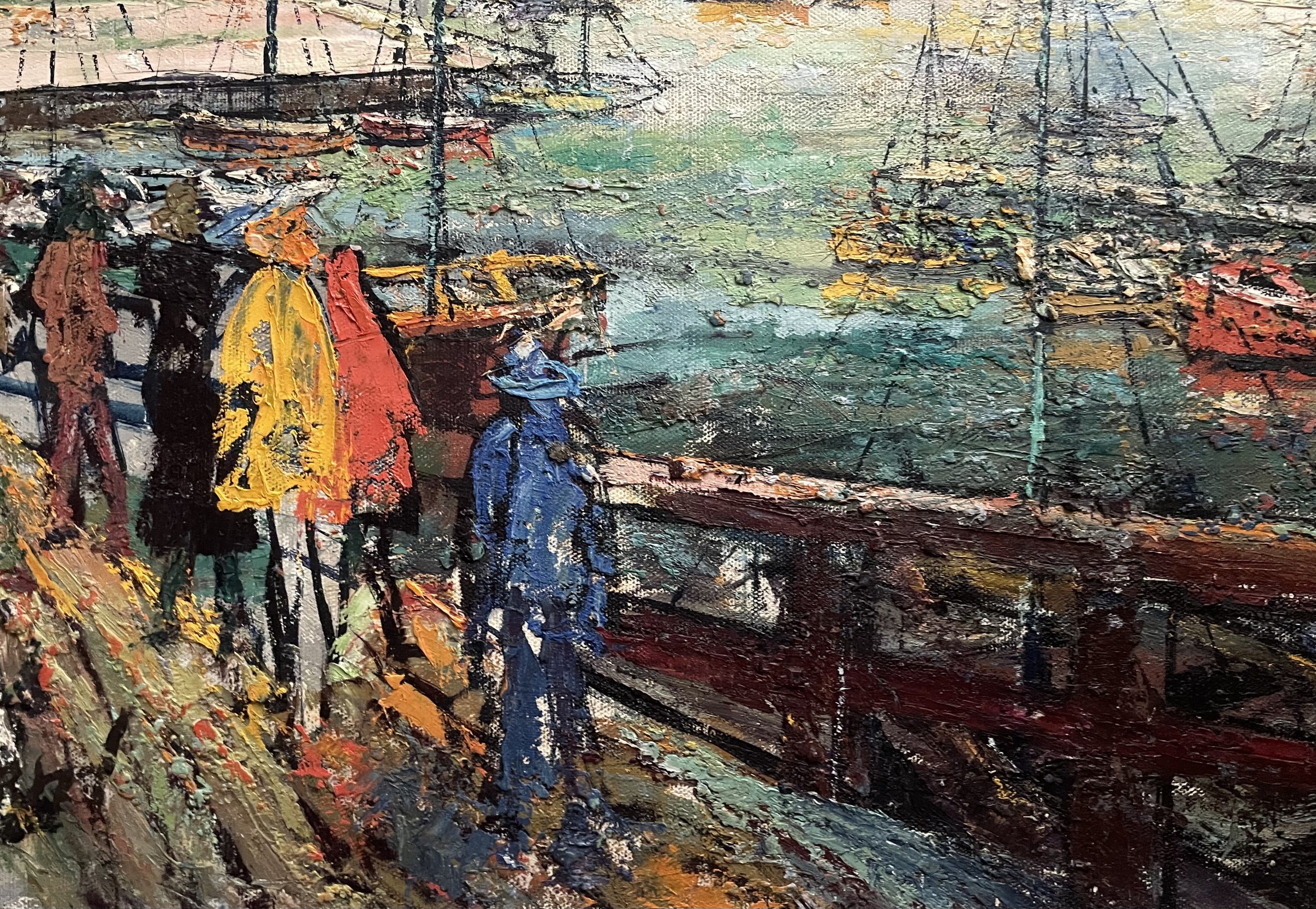
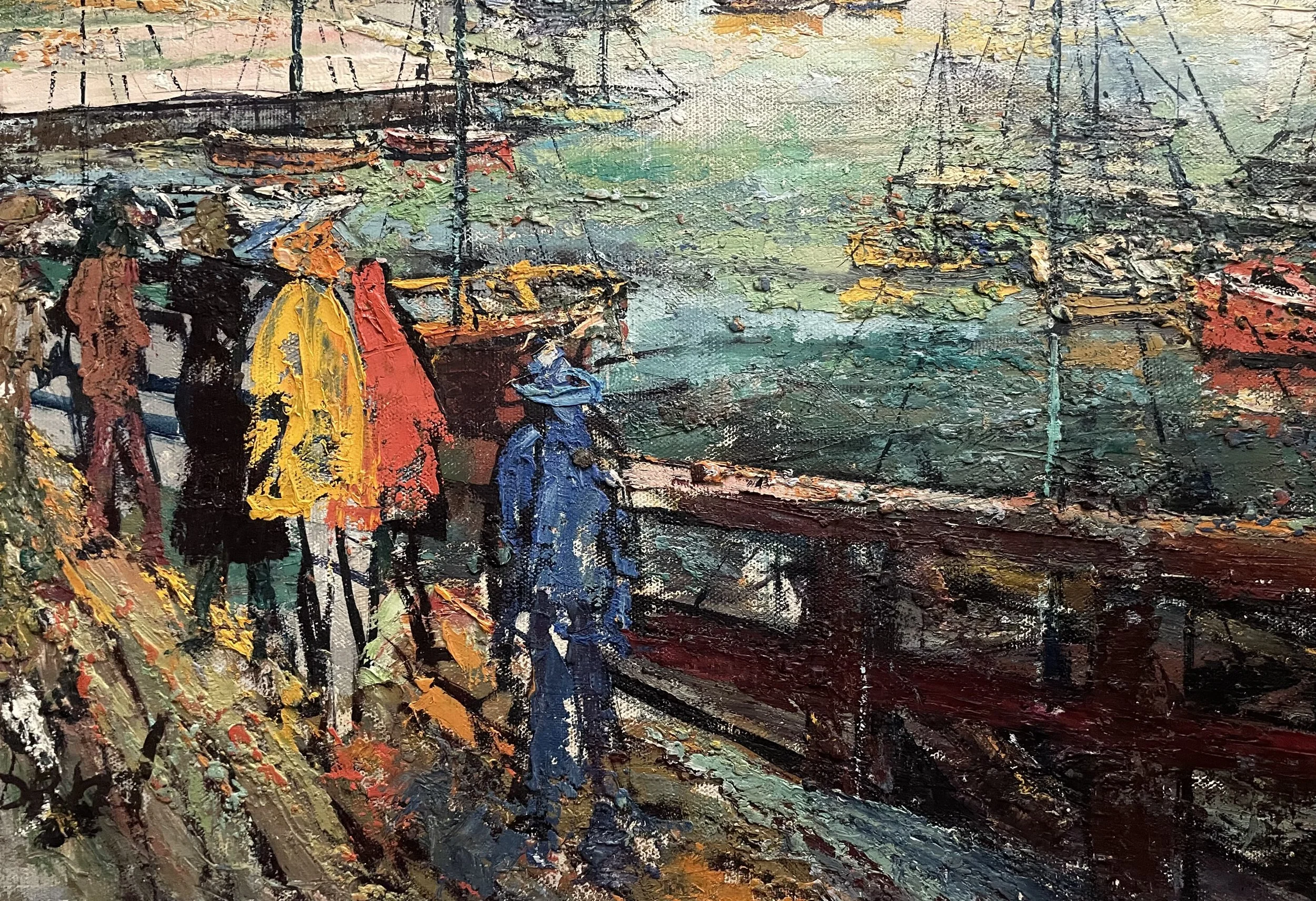
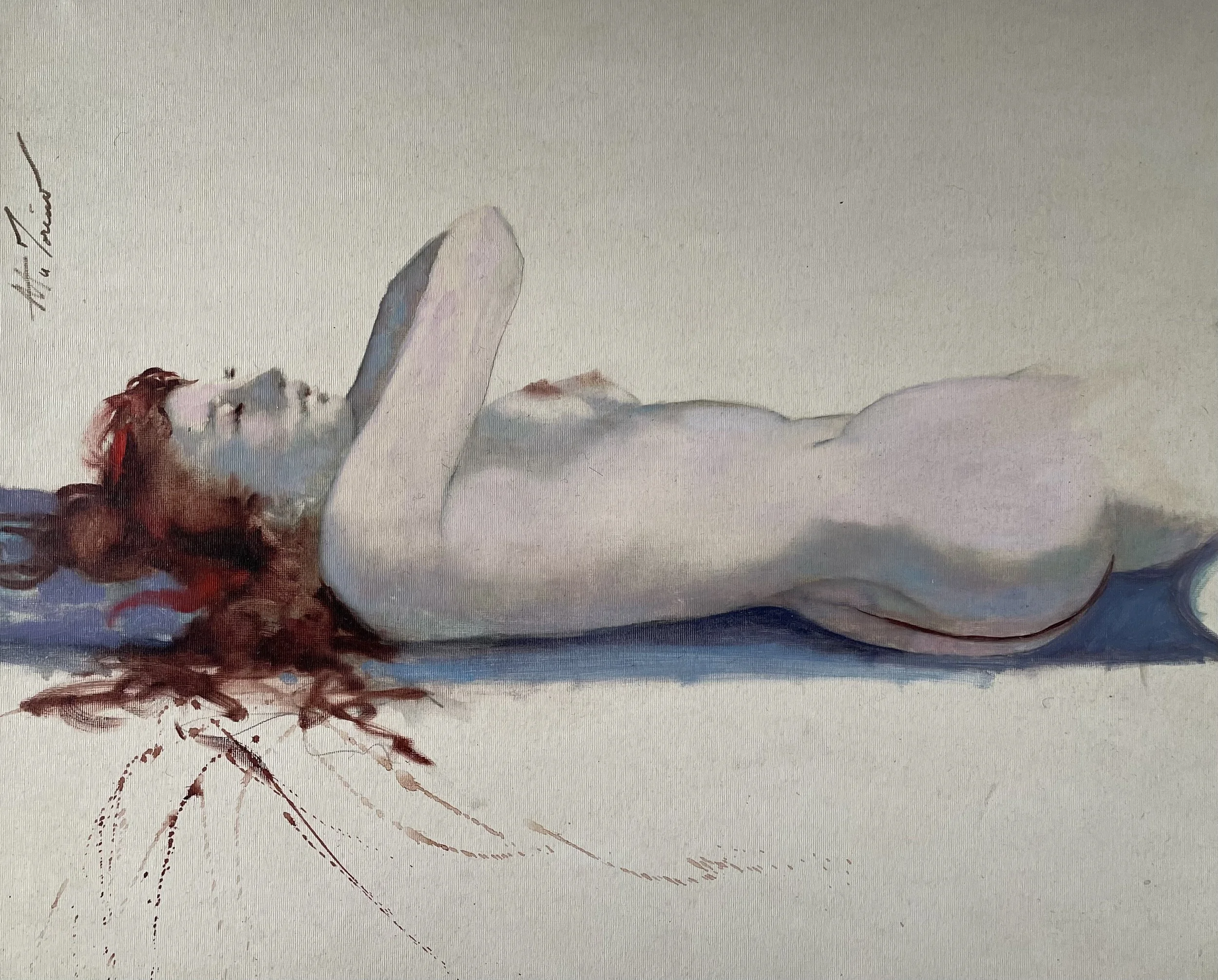
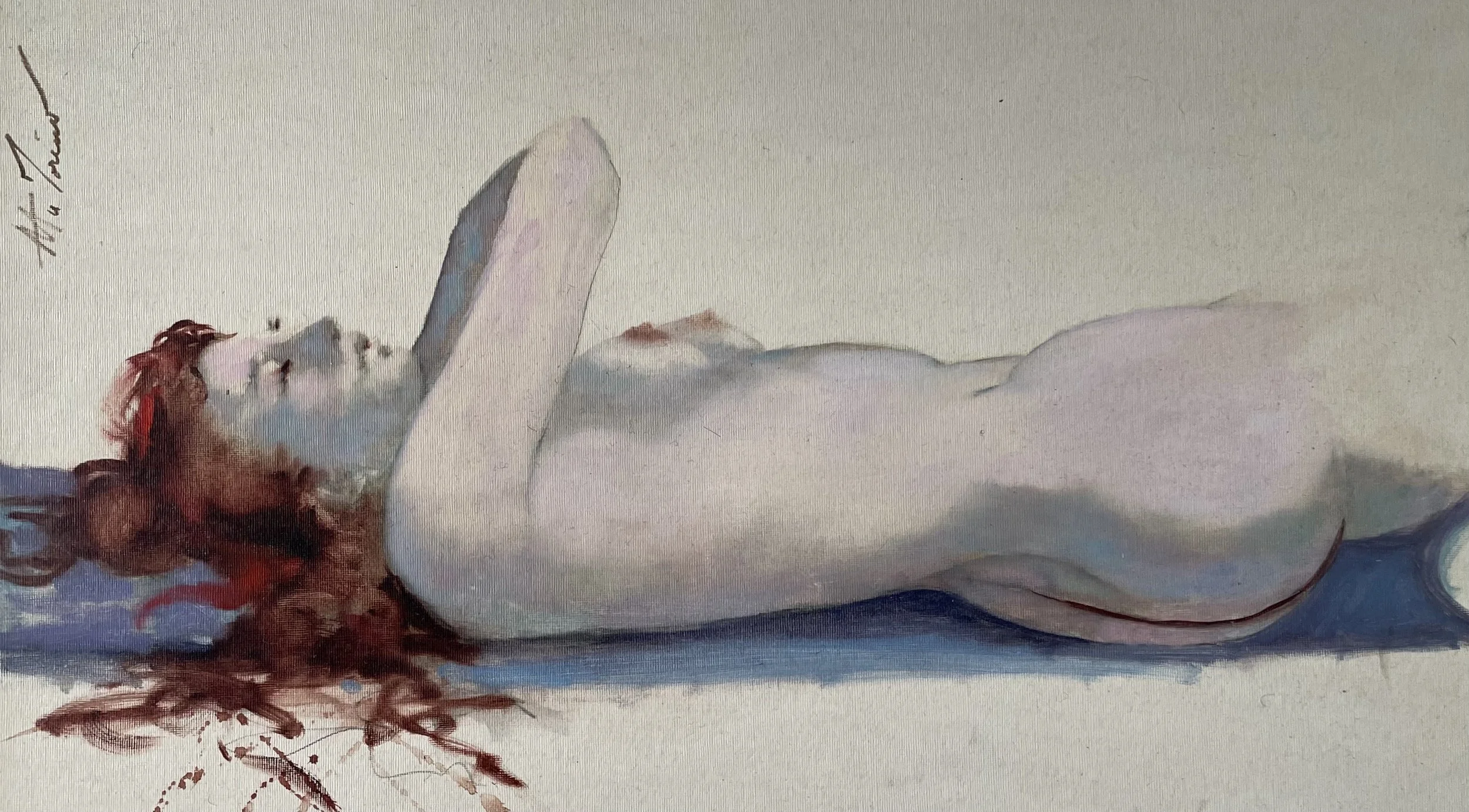
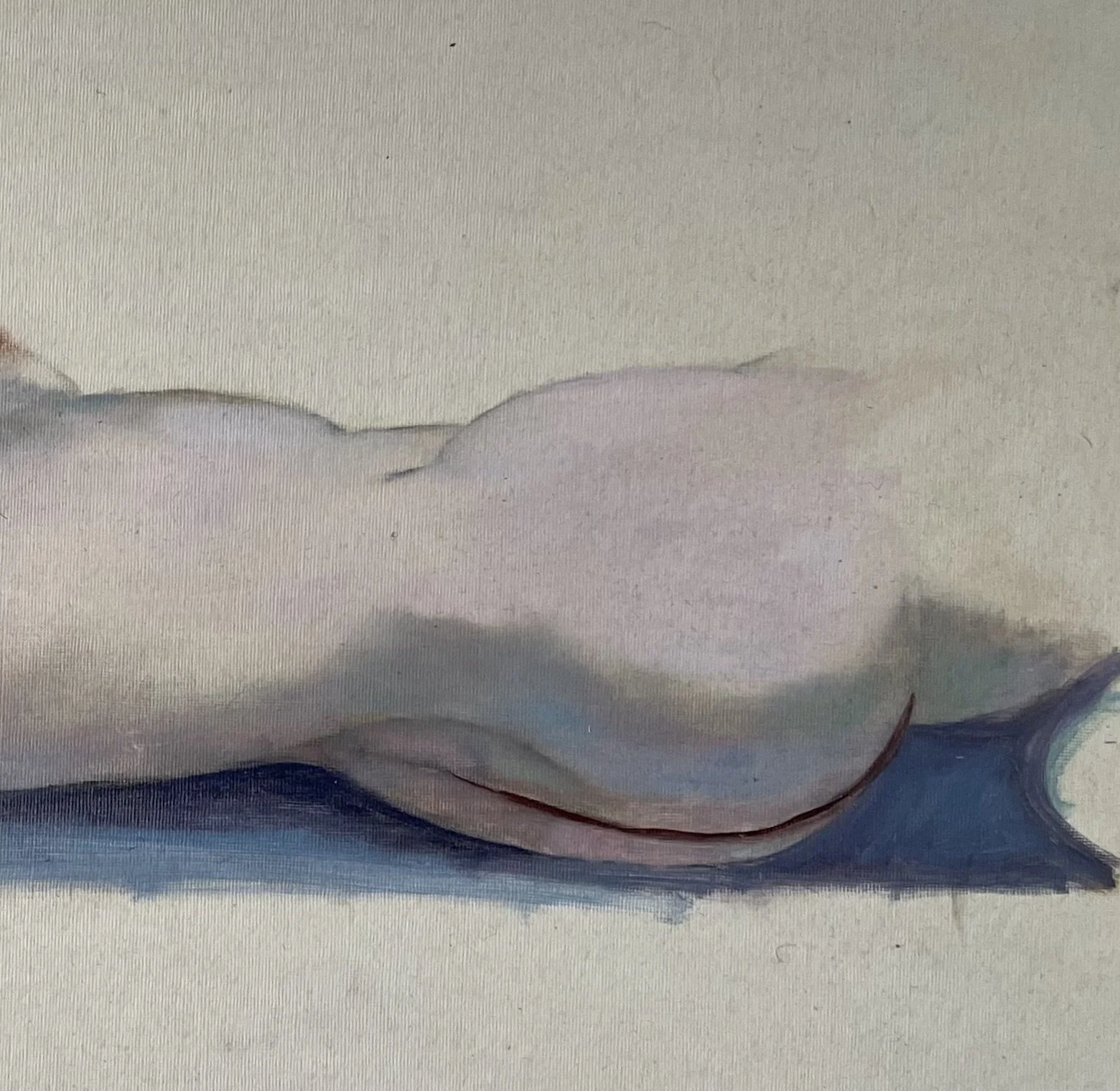
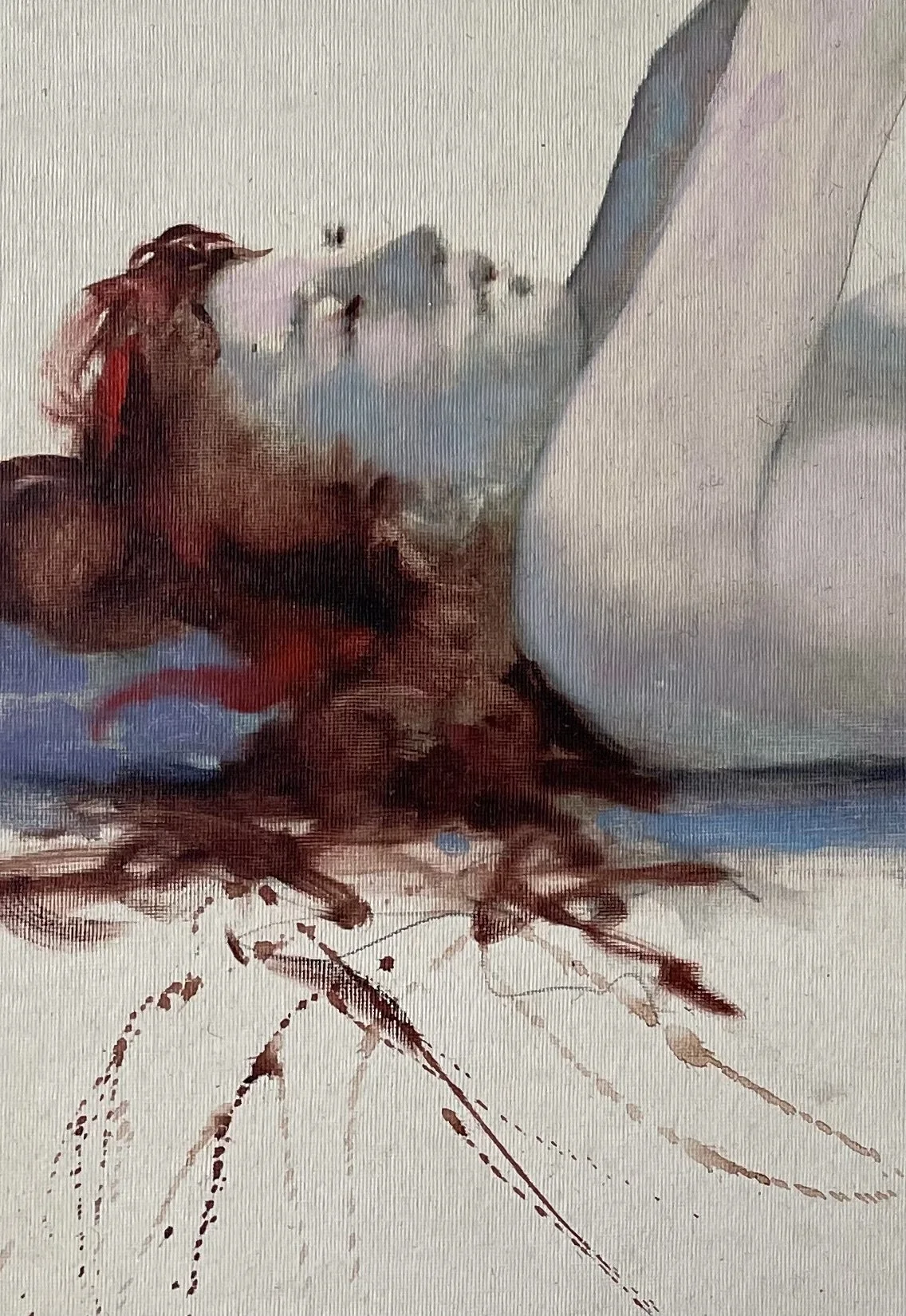
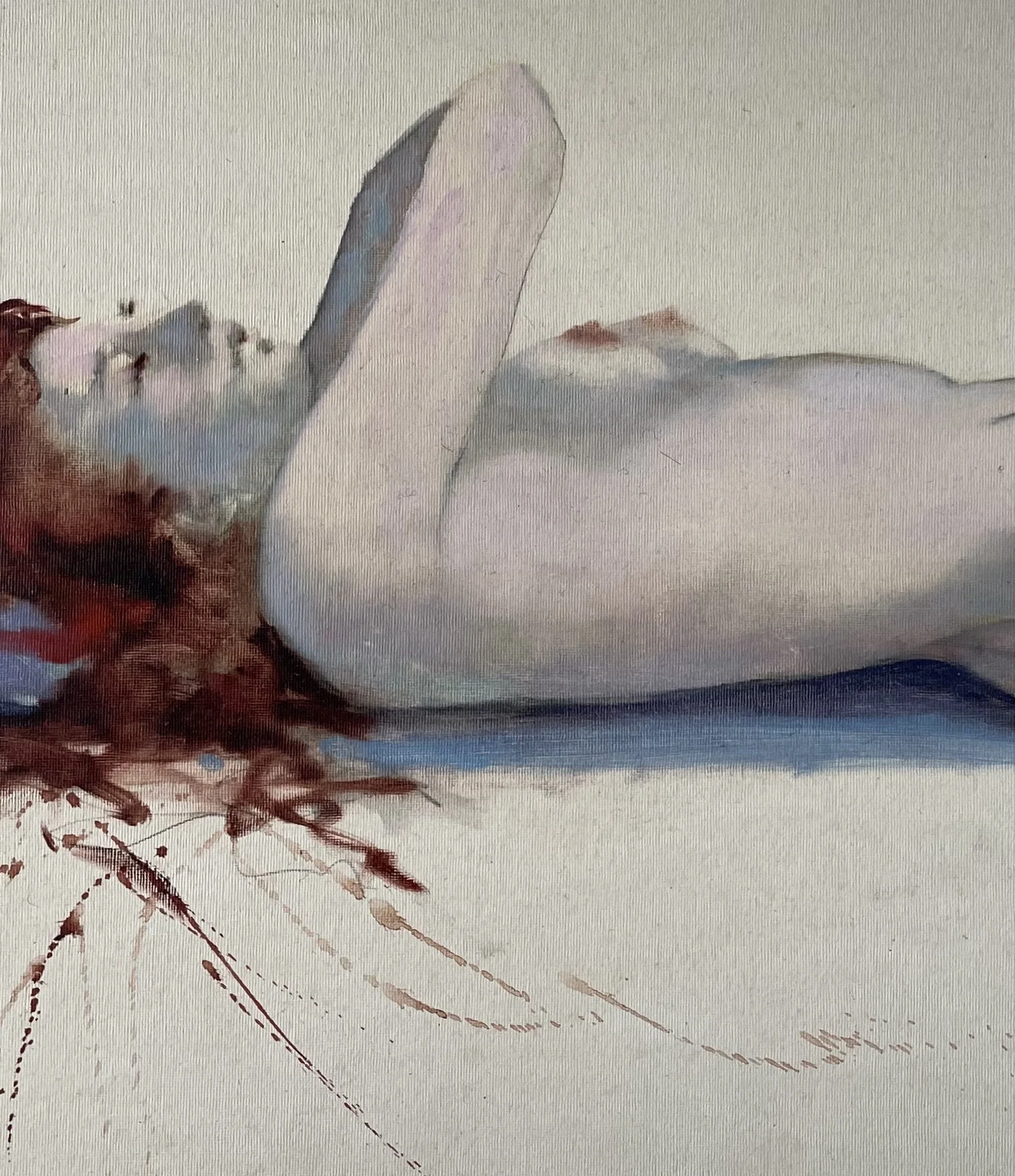
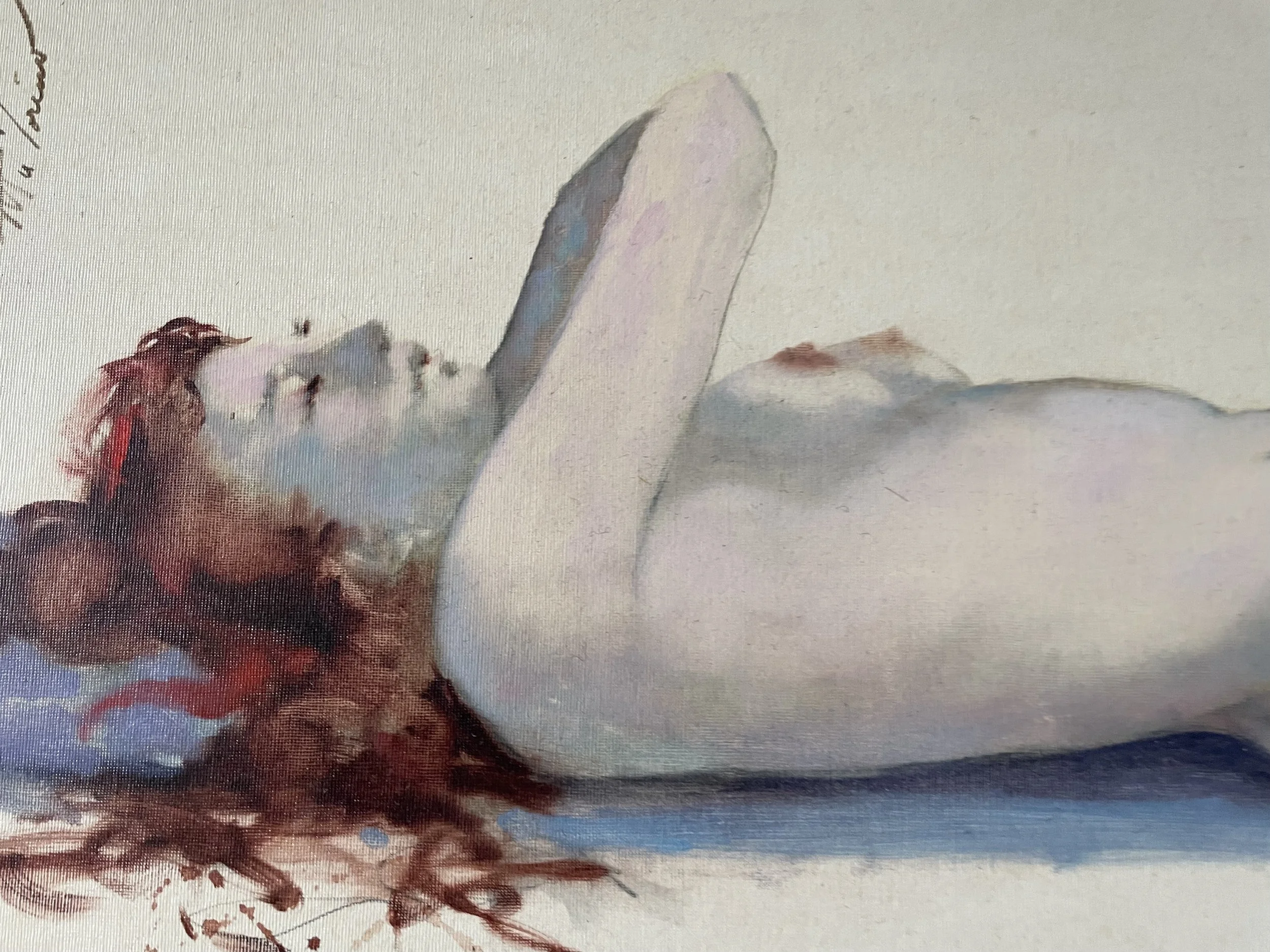
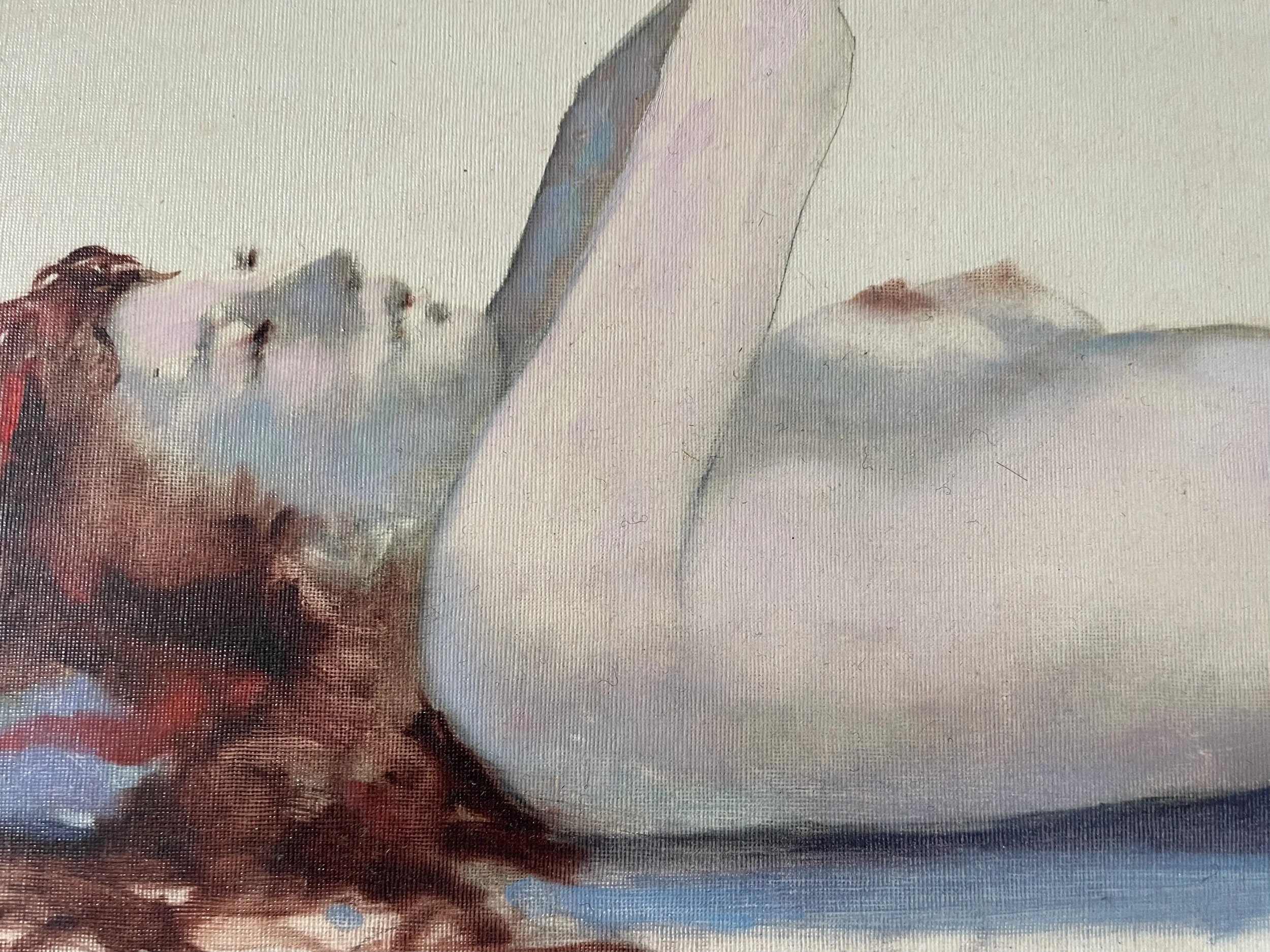
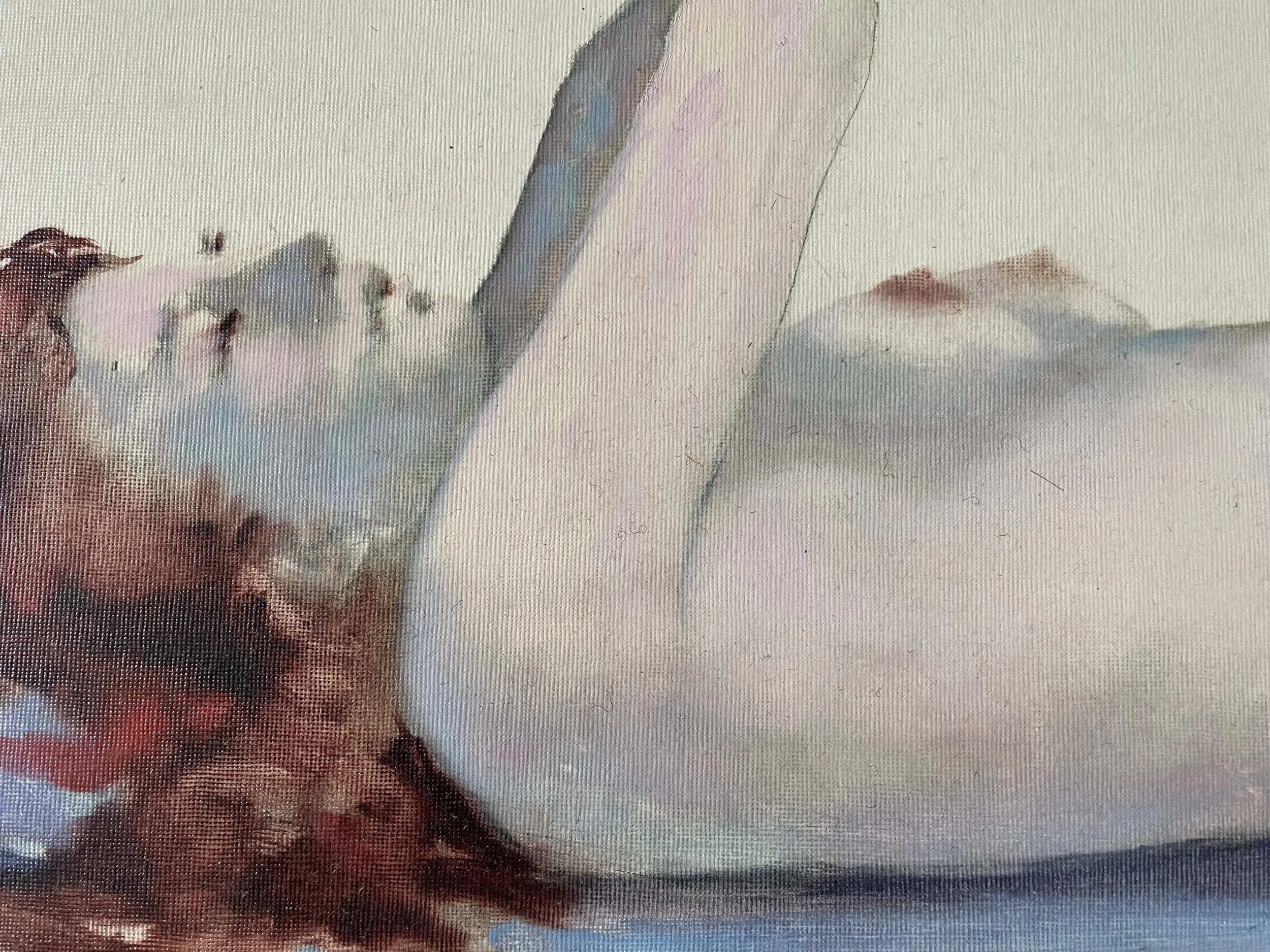
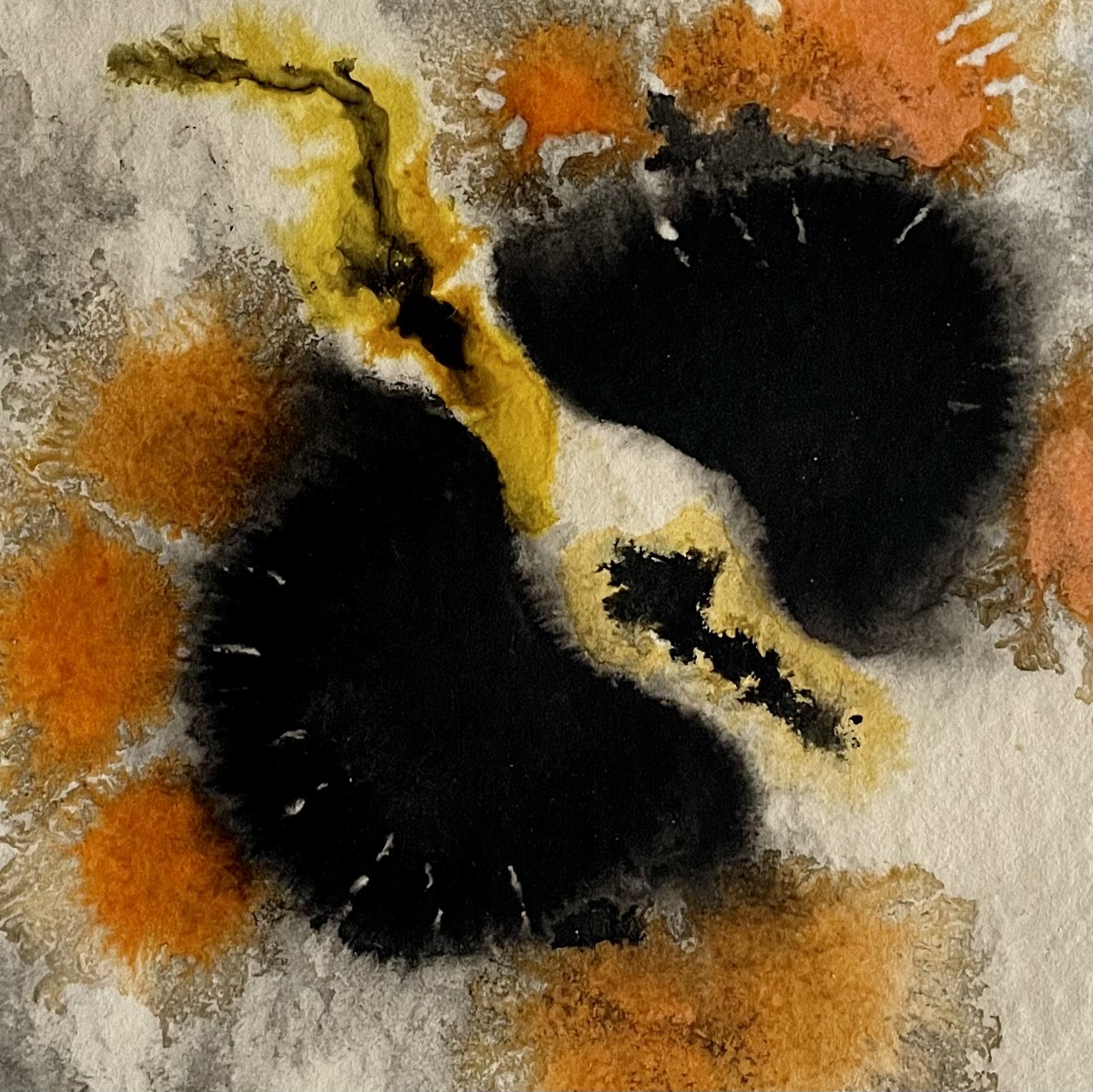
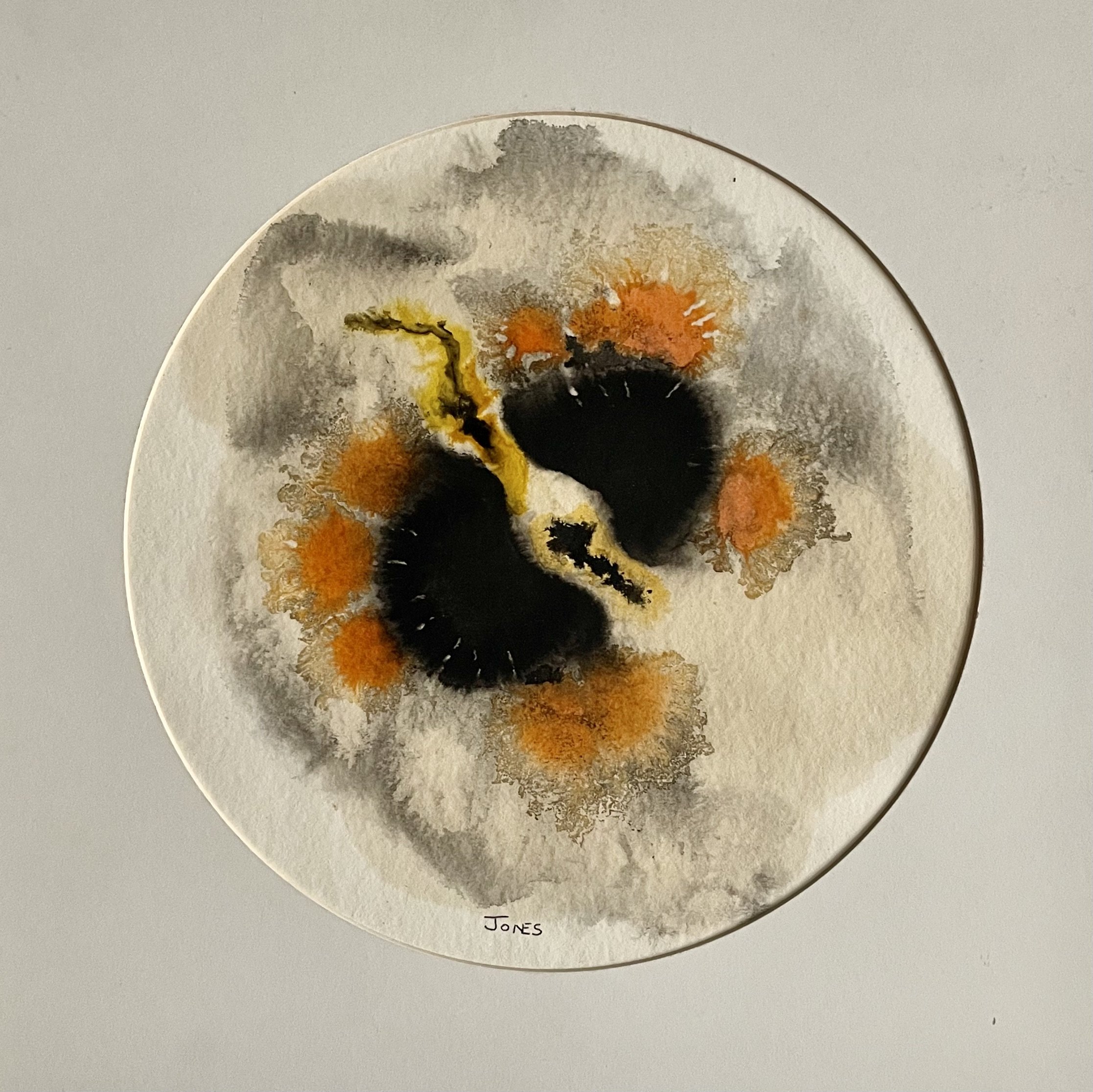
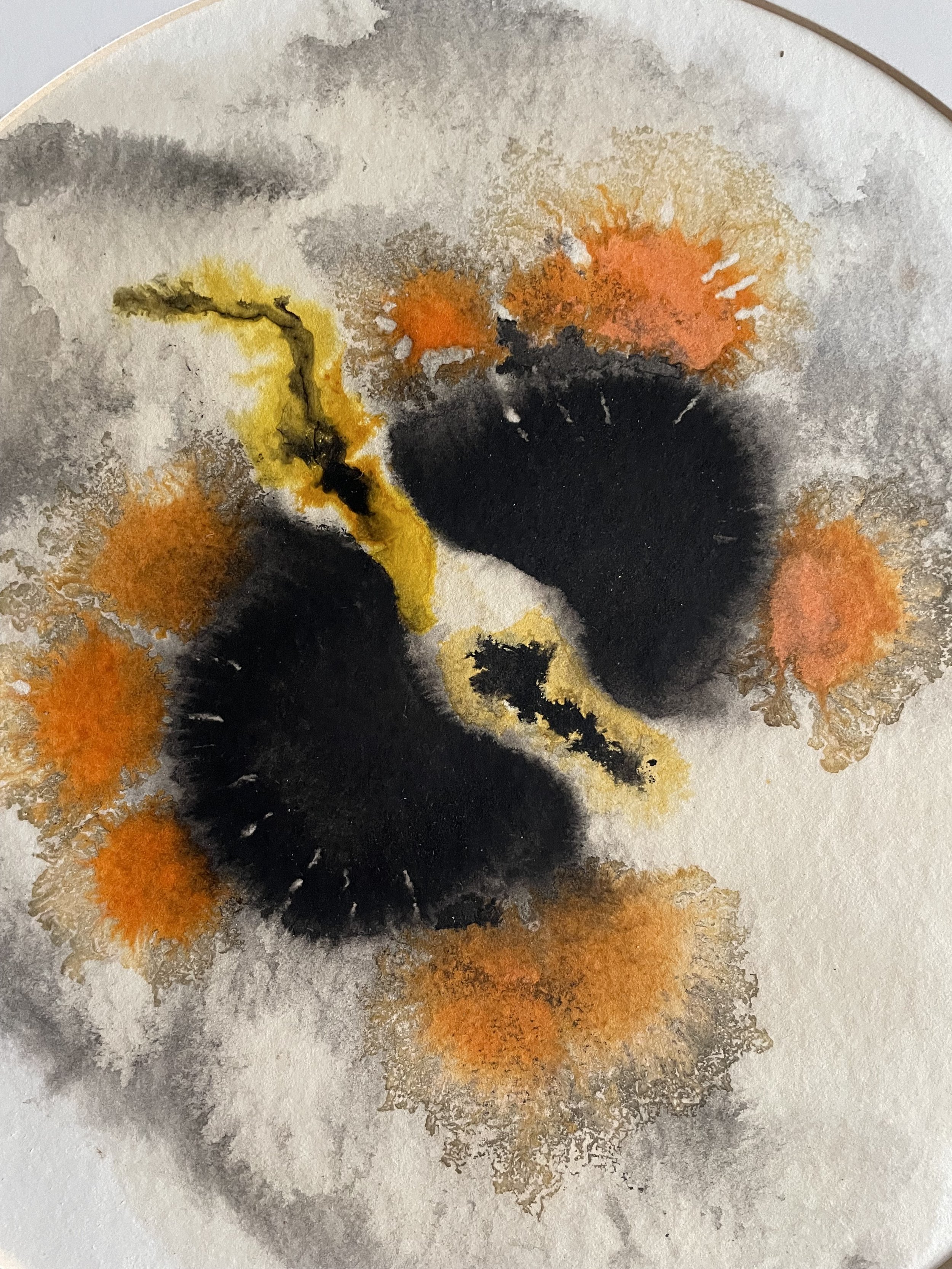
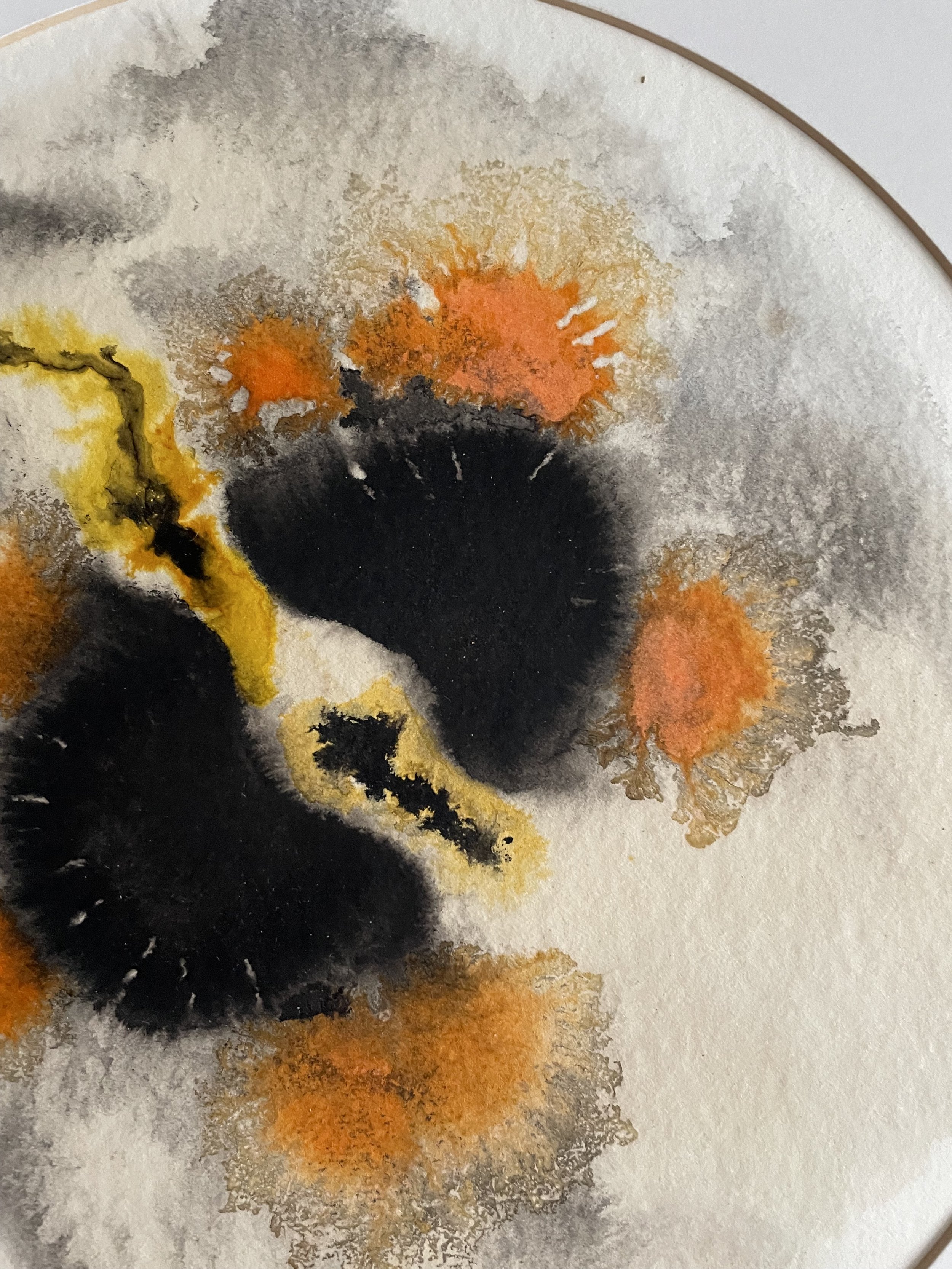
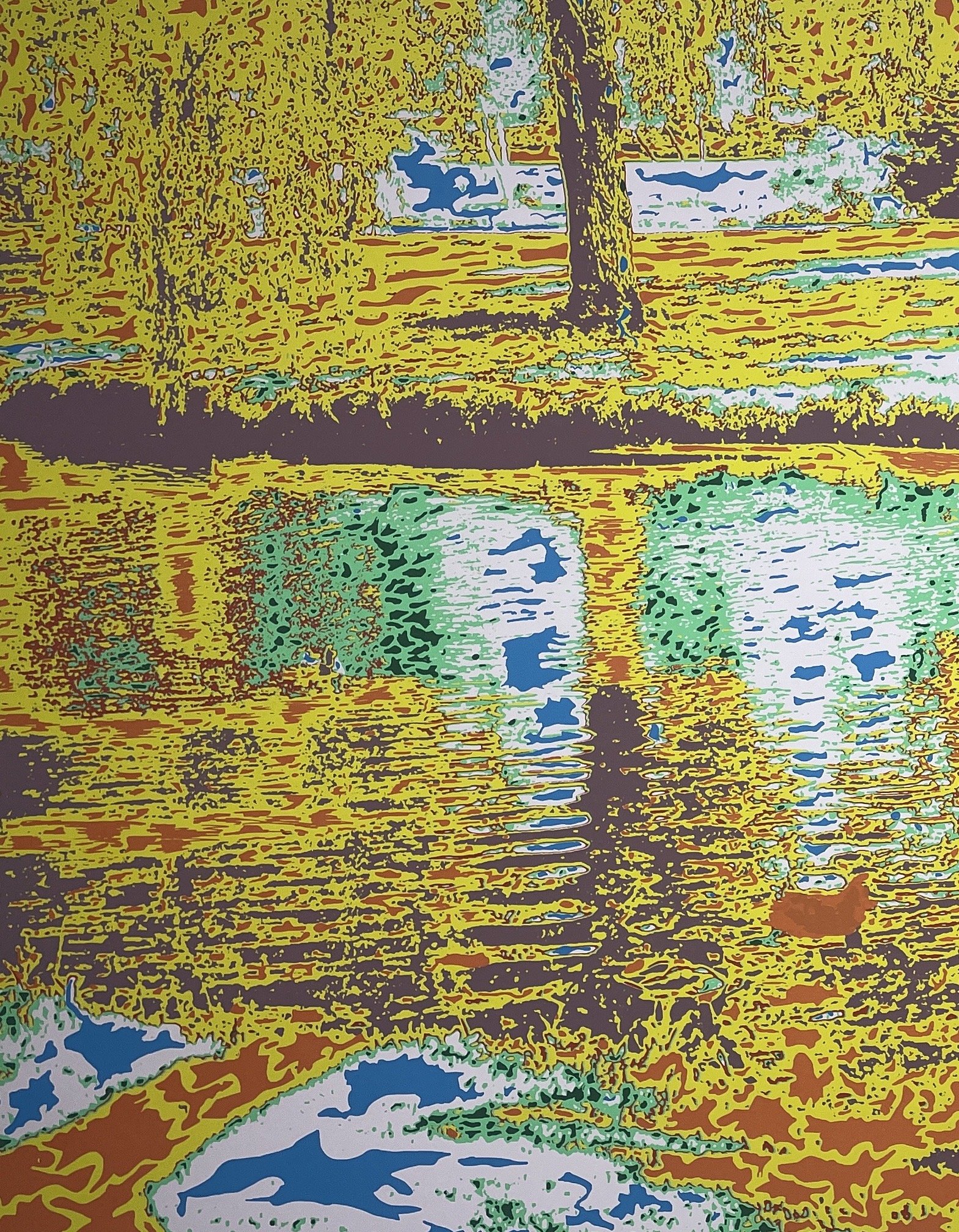
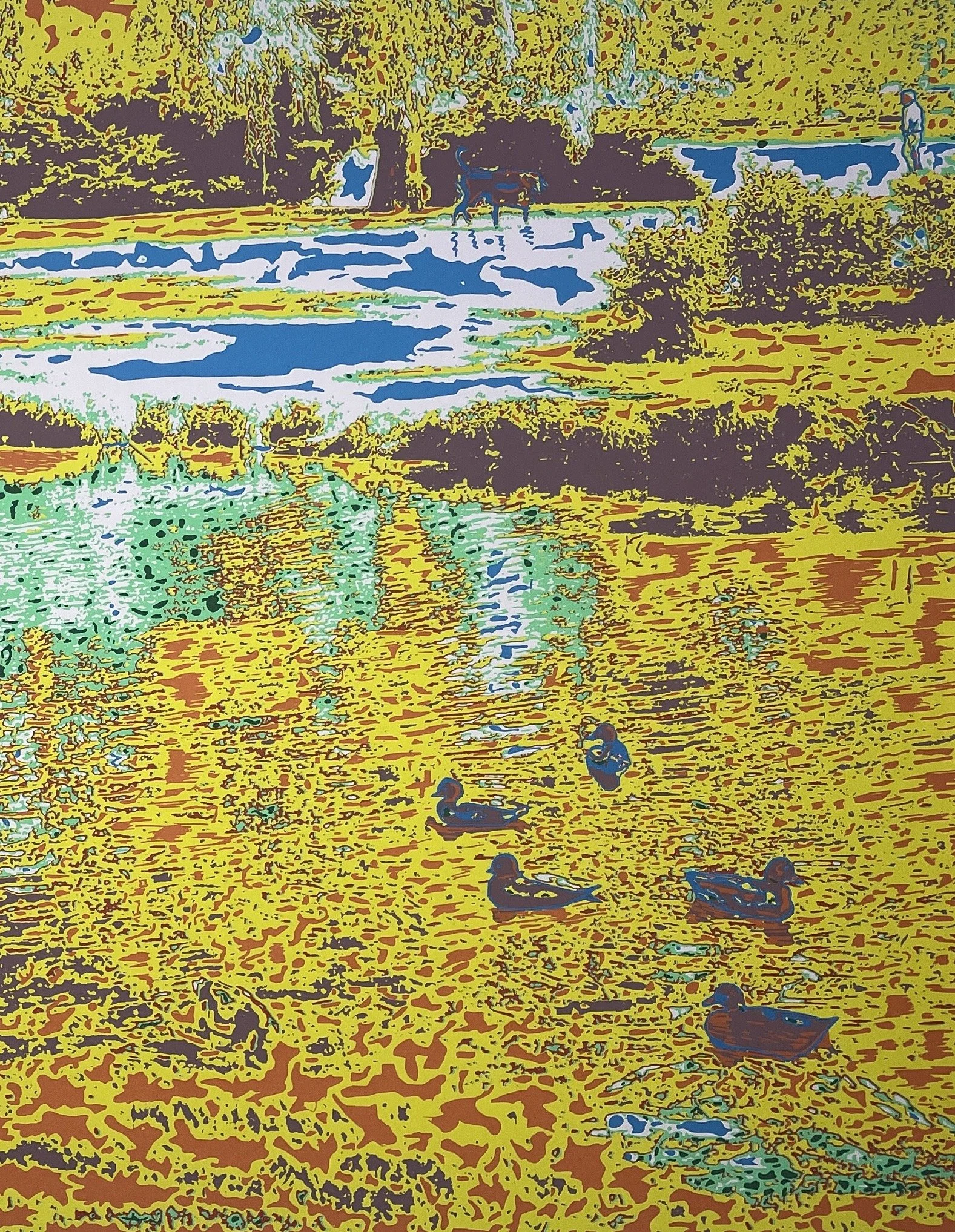
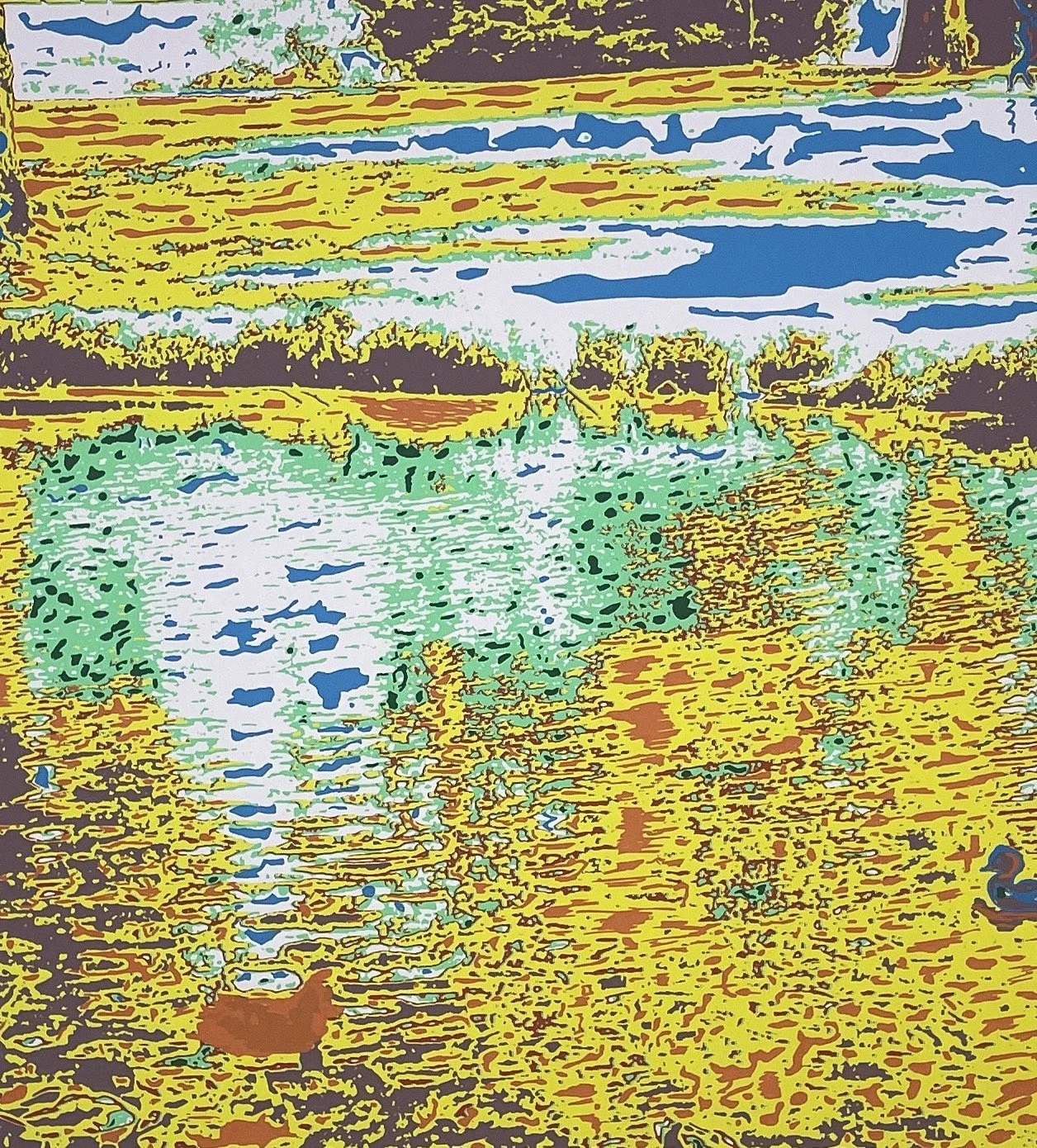
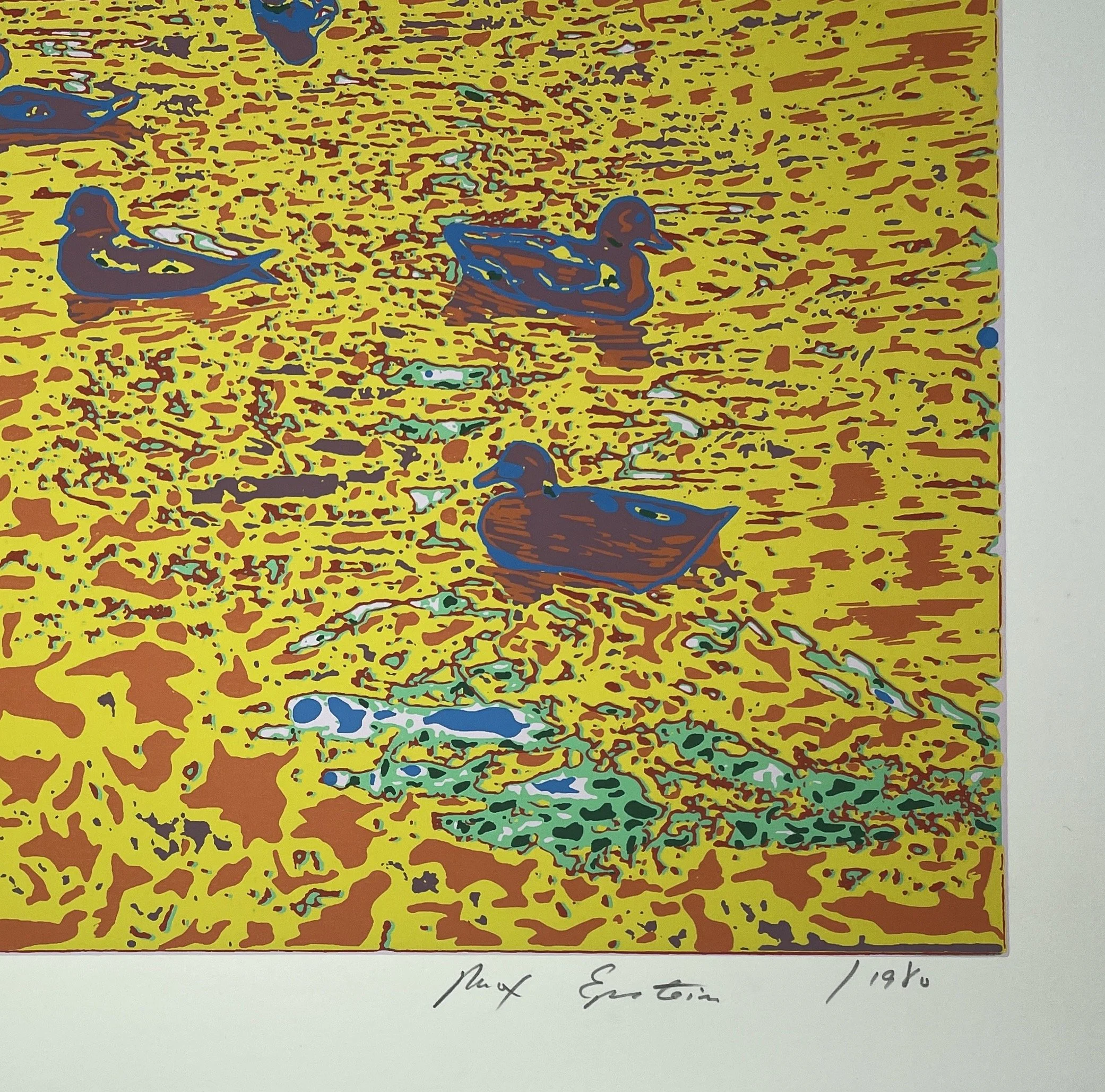
“Wheat Dance,” L. Sacco / R. Ehrlich, c.1970s hand-pulled lithograph, 15×19 in., pencil-signed and numbered 57/375.
“Wheat Dance” is a lyrical 1970s hand-pulled lithograph by printmakers L. Sacco and R. Ehrlich, blending minimalist landscape abstraction with expressive calligraphic mark-making. Signed and numbered 57/375, this atmospheric 15×19 inch print captures the movement of wheat bending rhythmically in the wind. A perfect fit for collectors of modernist prints, botanical minimalism, and mid-century American print studios.
ARTWORK DESCRIPTION
“Wheat Dance” is a masterclass in economy of line, merging the serenity of nature studies with the structure of modernist abstraction. The piece employs a beautifully modulated ochre-to-gold gradient—a hallmark of 1970s lithographic color fields—over which Sacco and Ehrlich articulate a rising bundle of wheat rendered in swift, gestural black linework.
The lithographic technique appears to rely on single-stone (or single-plate) printing for the background gradient, possibly achieved through split-fountain inking, followed by a second, hand-drawn key plate for the botanical forms. The contrast between the soft atmospheric wash and the energetic, almost calligraphic stalks creates a dynamic sense of motion, evoking wind, harvest, and seasonal renewal.
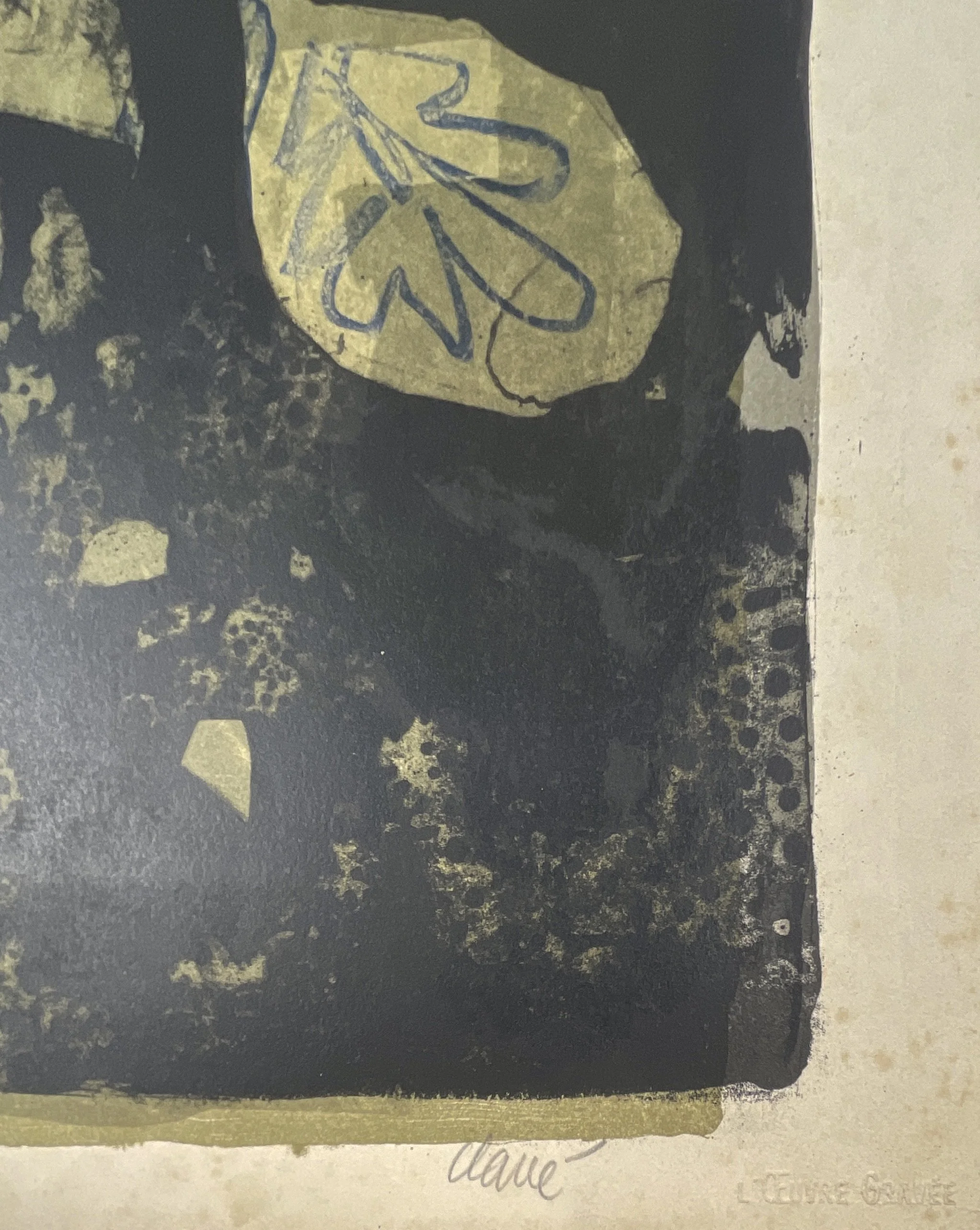
The artwork’s mood is meditative yet alive—rooted in nature but executed with the sharp clarity of studio printmaking. The artists’ joint signature, “L. Sacco / R. Ehrlich,” confirms a collaborative print, common in university printmaking labs and cooperative studios of the 1970s–80s.
ARTIST BIOGRAPHY – L. SACCO & R. EHRLICH
Because Sacco and Ehrlich are not widely documented in major auction results or museum databases, their work most closely aligns with the American regional printmaking movement that flourished between the 1960s and 1980s. This era saw hundreds of independent print workshops—often university-affiliated or cooperative studios—producing limited editions for public art programs, botanical studies, and abstract naturalist themes.
L. Sacco
L. Sacco appears in regional print portfolios and small-press lithographic sets from the northeastern United States, active primarily in the mid-1970s to early 1980s. Artists with the surname Sacco during this period often trained in:
university printmaking programs in New York, Pennsylvania, or Connecticut
cooperative studios such as the Art Students League, Pratt lithography labs, and independent ateliers specializing in botanical or nature-inspired printmaking
Sacco’s known works share characteristics of:
precise, elegant linework
nature-centered motifs
a minimalist sensibility influenced by Japanese woodblock and calligraphy
a preference for limited palettes and atmospheric gradients
R. Ehrlich
R. Ehrlich, frequently paired with Sacco in co-signed prints, was likely the technical lithographer or collaborating printer—very common in cooperative studios where:
one artist conceptualizes the imagery,
another handles technical preparation, plate processing, or printing.
Ehrlich’s mark suggests training in traditional lithographic techniques, with an emphasis on:
The partnership suggests a working relationship within a formal print workshop, where artists collaborated to produce editions for public art distribution, galleries, and regional exhibitions.
Influences and Style
Both artists show influences from:
Japanese minimalism
post-war American modernism
the naturalist revival movement of the 1960s–70s
conservation and land-art themes, popularized during the environmental movement
Their prints were often purchased by collectors seeking serene, meditative, or understated modernist works.
L. Sacco / R. Ehrlich, “Wheat Dance,” c.1970s, hand-pulled lithograph, 15×19 in., pencil-signed and numbered 57/375. A lyrical modernist rendering of wind-bent wheat, executed with elegant calligraphic linework over a gold atmospheric field. Excellent condition.
CERTIFICATE OF VALUE & AUTHENTICATION
Artwork: “Wheat Dance”
Artists: L. Sacco / R. Ehrlich
Date: c.1970s
Medium: Hand-pulled lithograph
Edition: 57/375
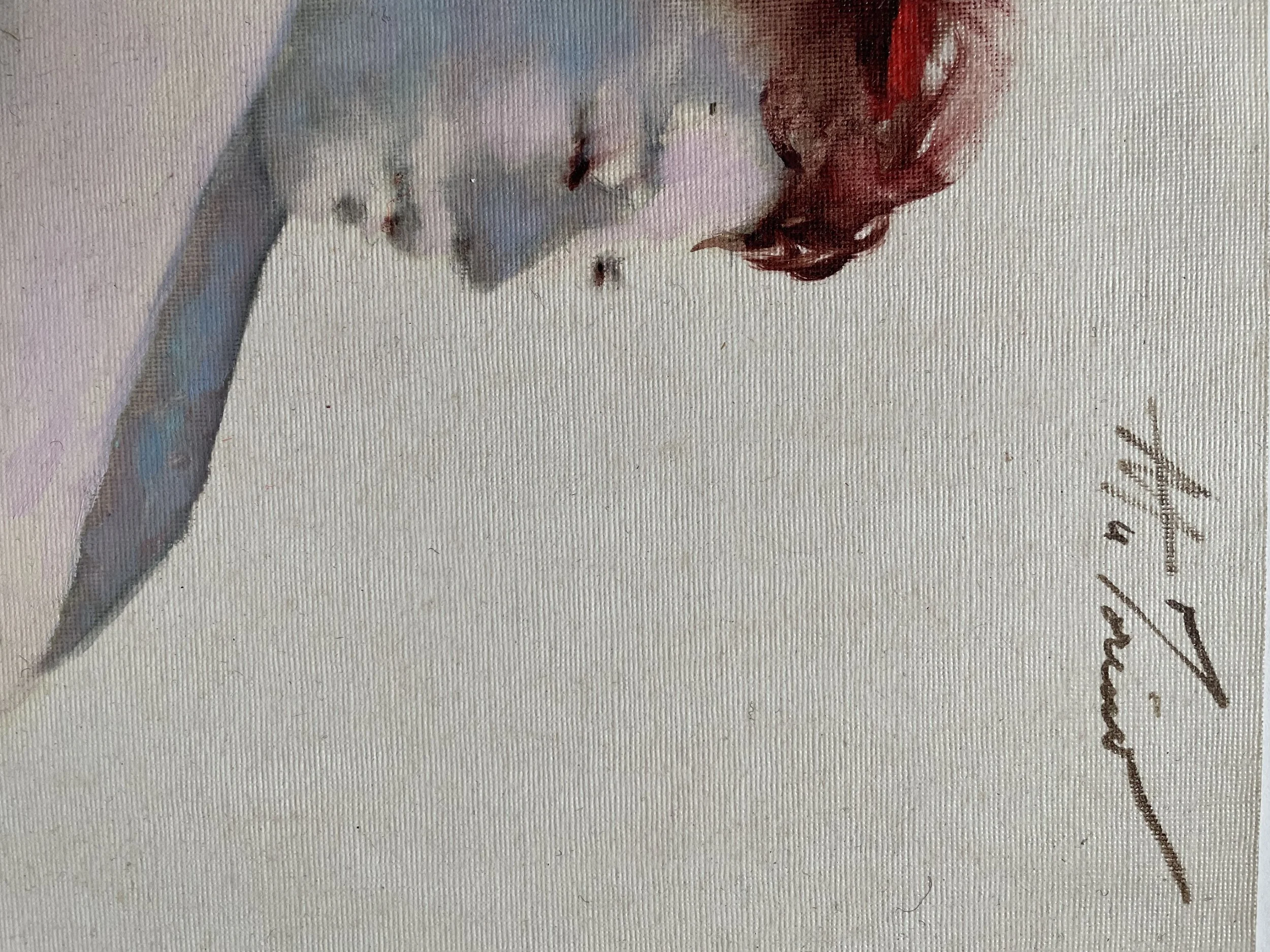
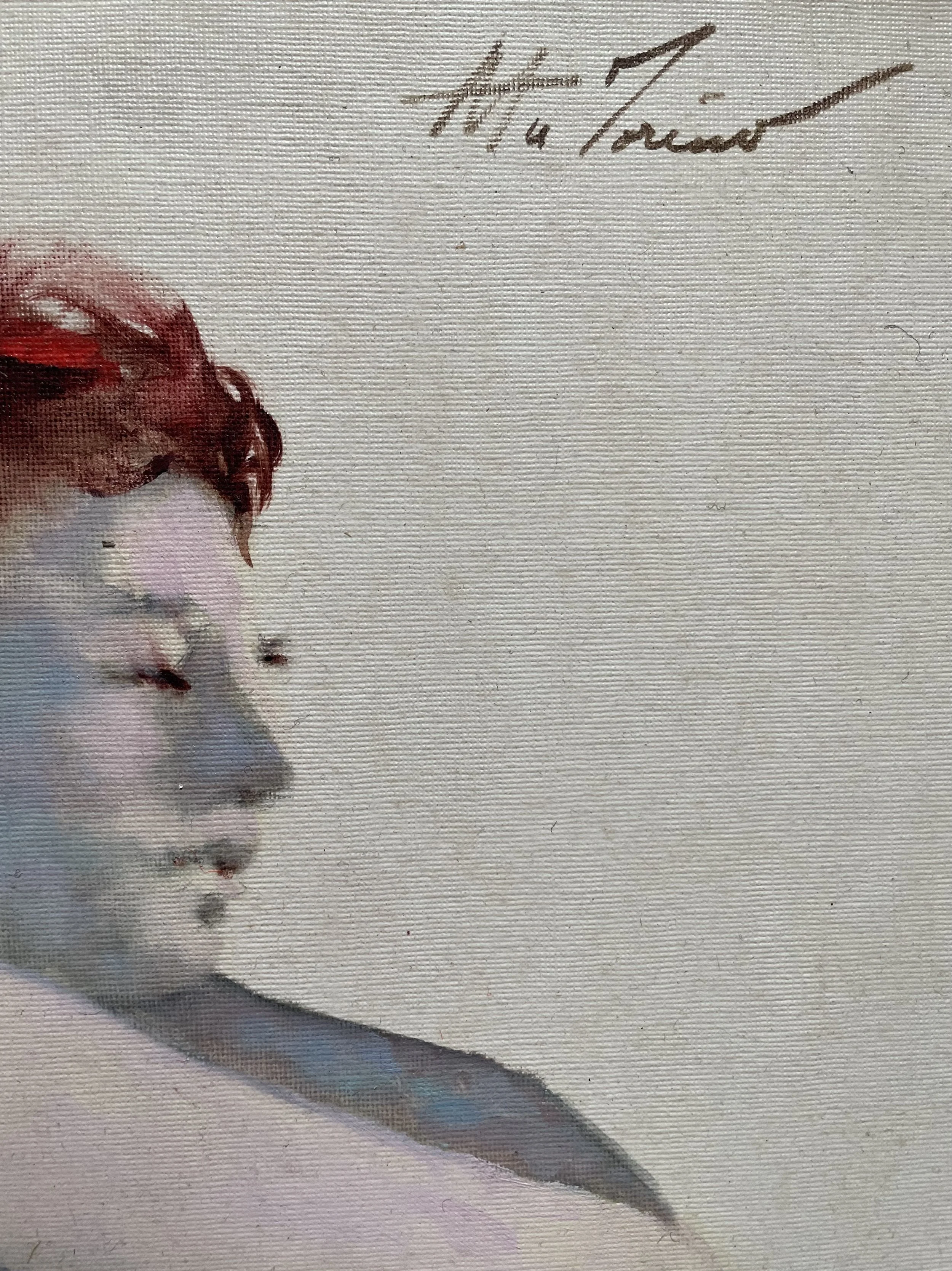
Signature: Pencil-signed by both artists
Dimensions: 15×19 inches
Authentication Notes:
Signature matches known examples from Sacco/Ehrlich collaborative editions.
Paper and ink consistent with 1970s–80s American lithographic studio materials.
Edition number handwritten in standard workshop format.
Provenance from Mitch Morse Gallery, a recognized distributor of artist-made limited editions.
PROVENANCE CHAIN (Collector-Formatted)
Artist(s): L. Sacco / R. Ehrlich
Studio / Edition: American regional lithography workshop, c.1970s
Acquired by: Mitch Morse Gallery, NYC
Transferred to: Private inventory of Mitch Morse Gallery (NYC & Europe acquisitions)
Current Owner: Artfind Gallery, Washington, DC
Provenance from Mitch Morse Gallery adds credibility and value, as the gallery was known for curating technically strong, artist-driven editions throughout the 1970s–1990s.
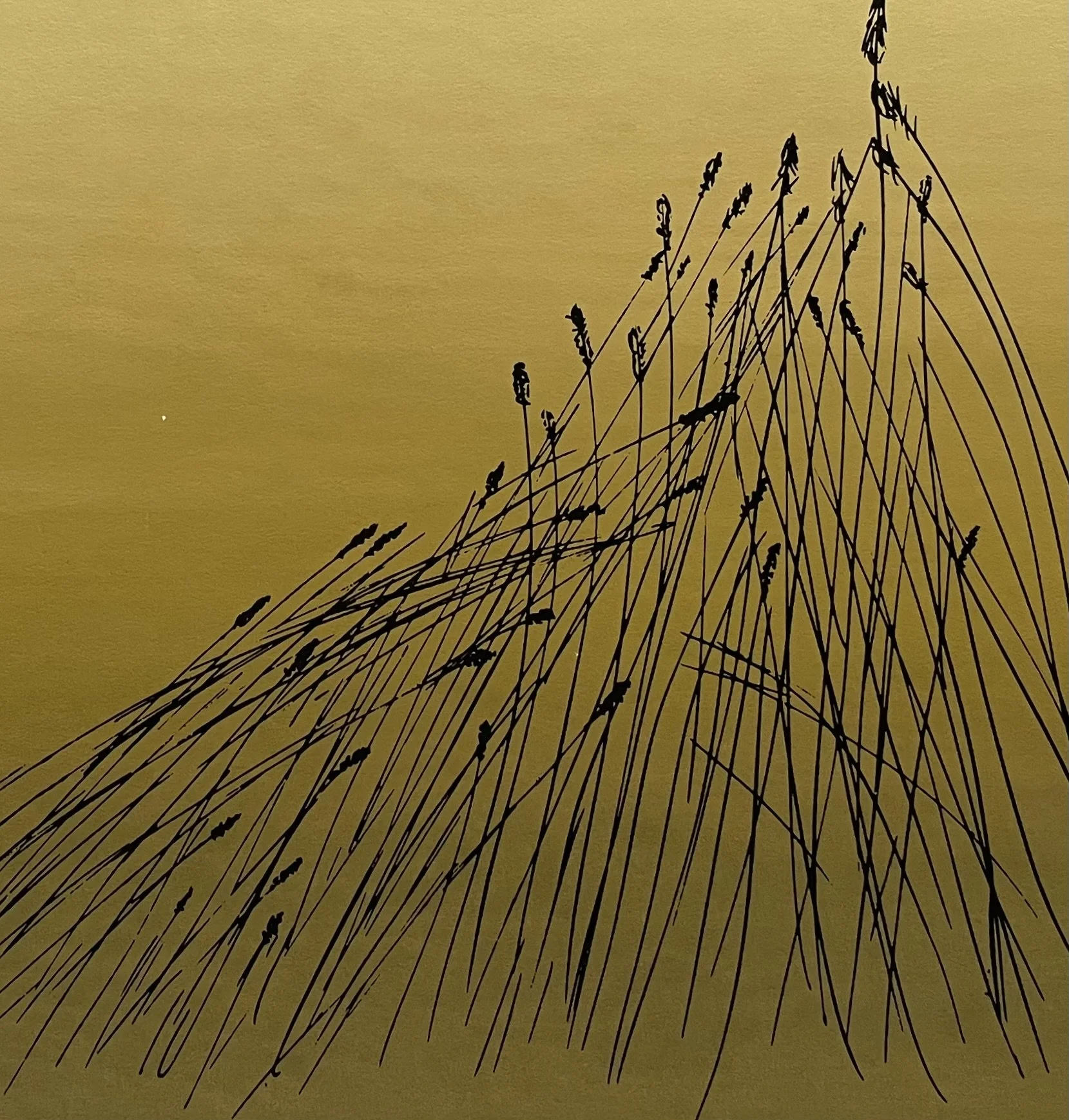 Image 1 of 6
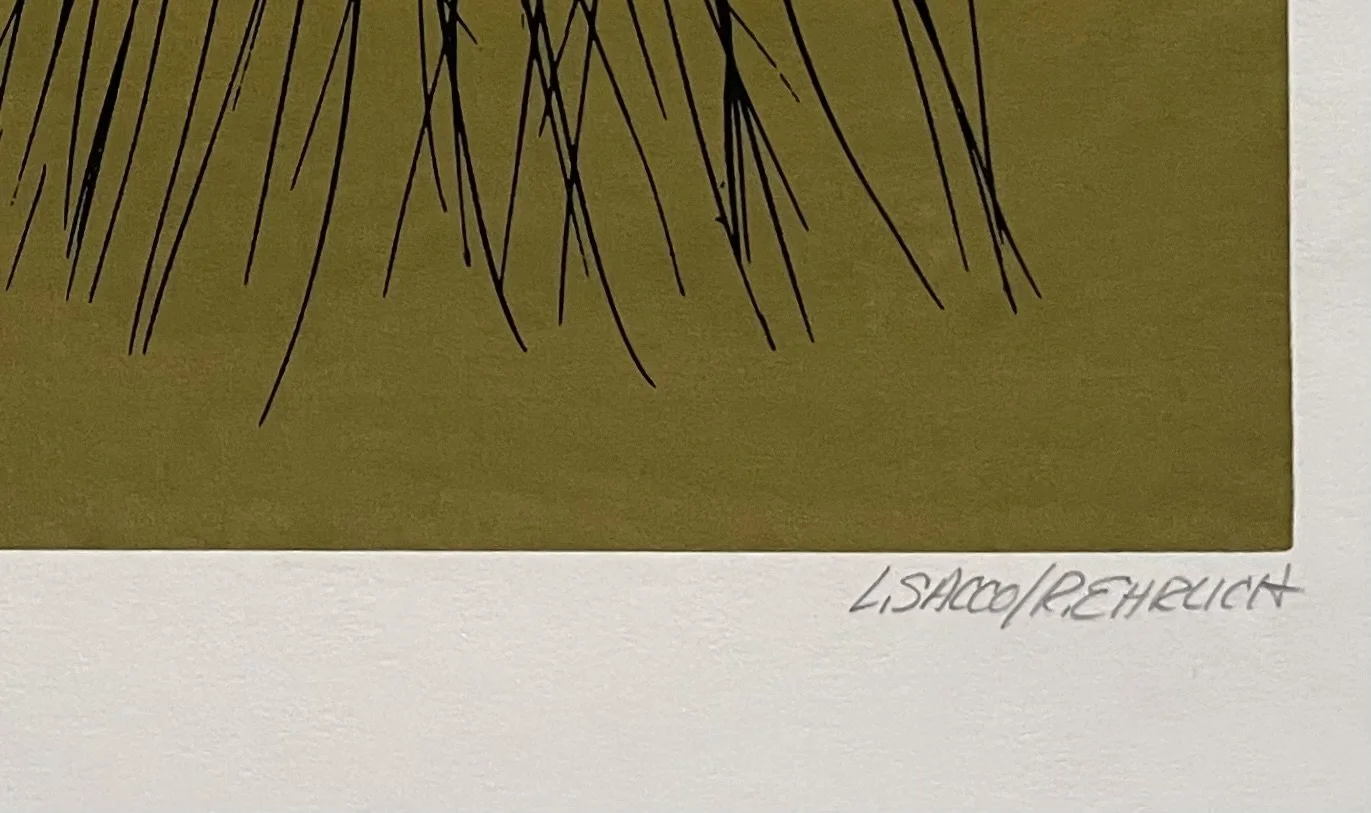 Image 2 of 6
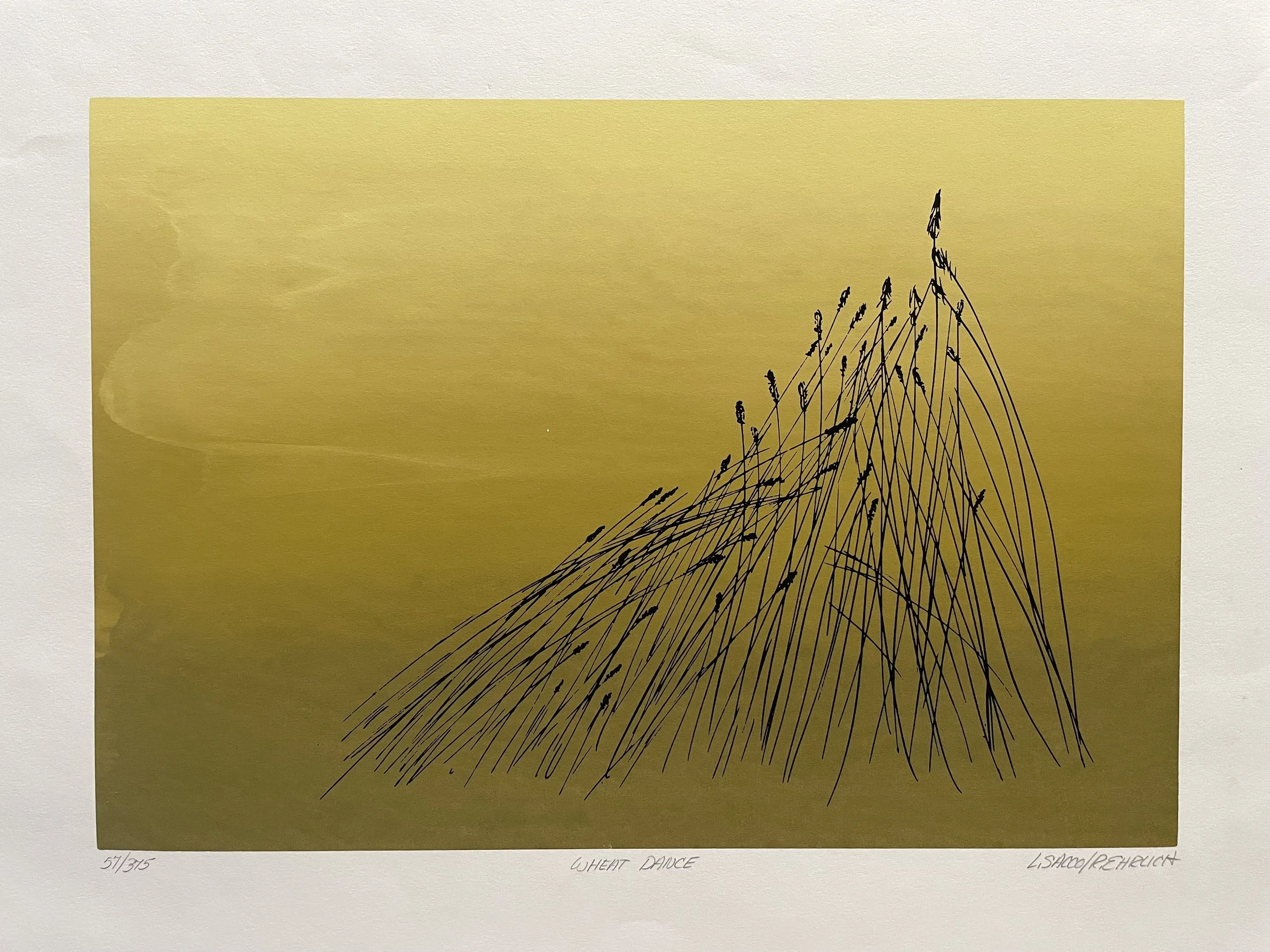 Image 3 of 6
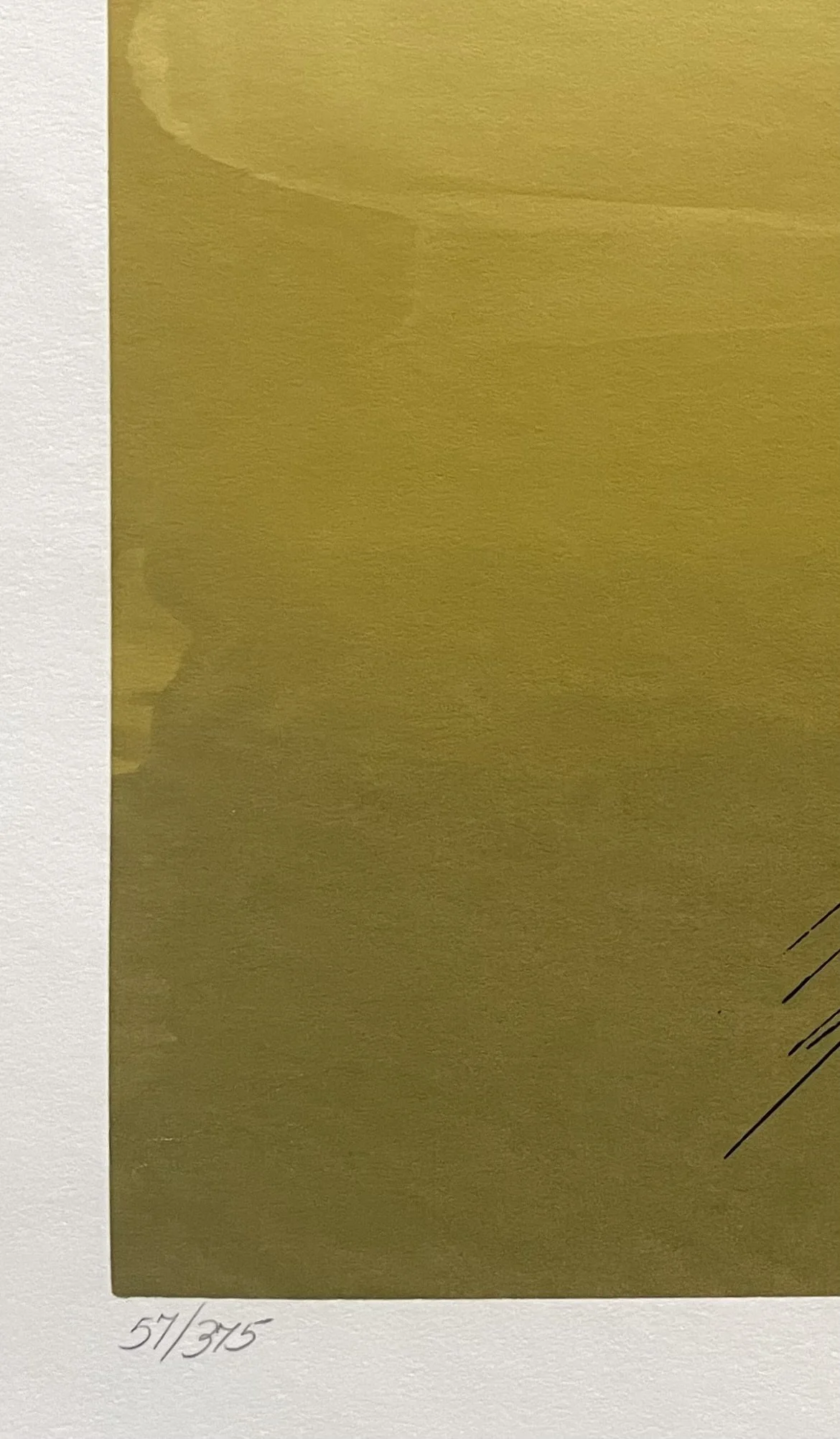 Image 4 of 6
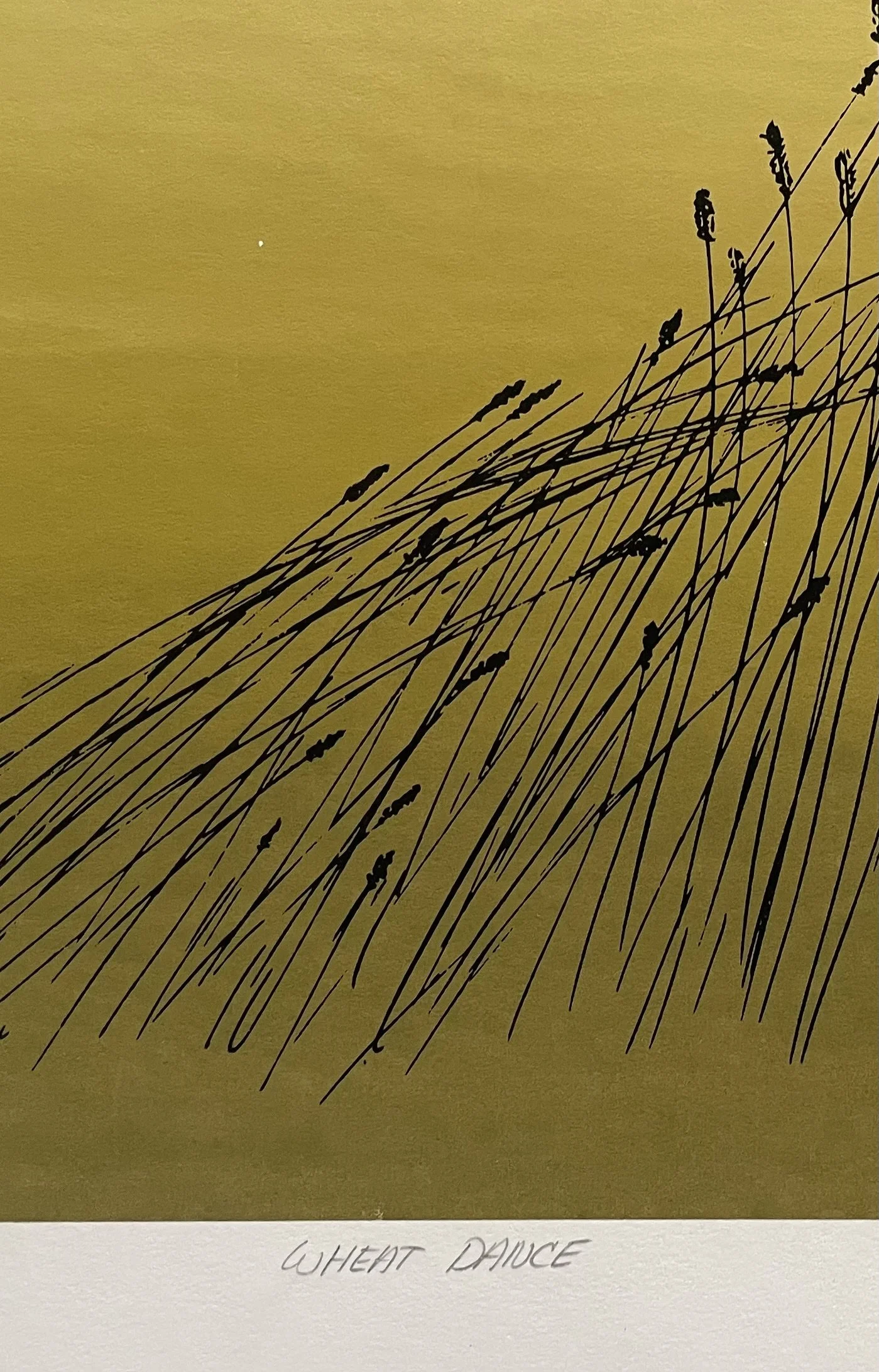 Image 5 of 6
 Image 6 of 6