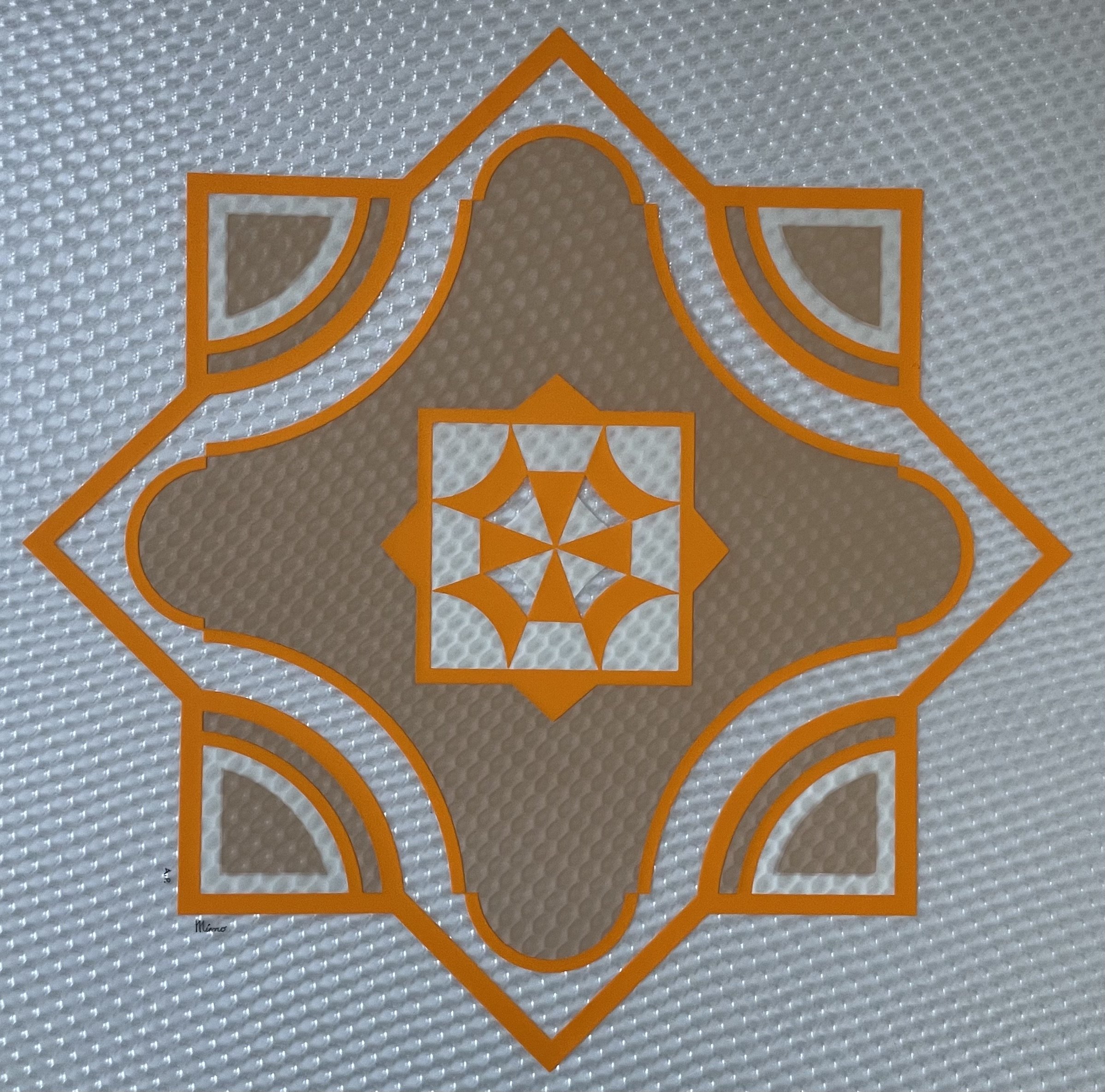
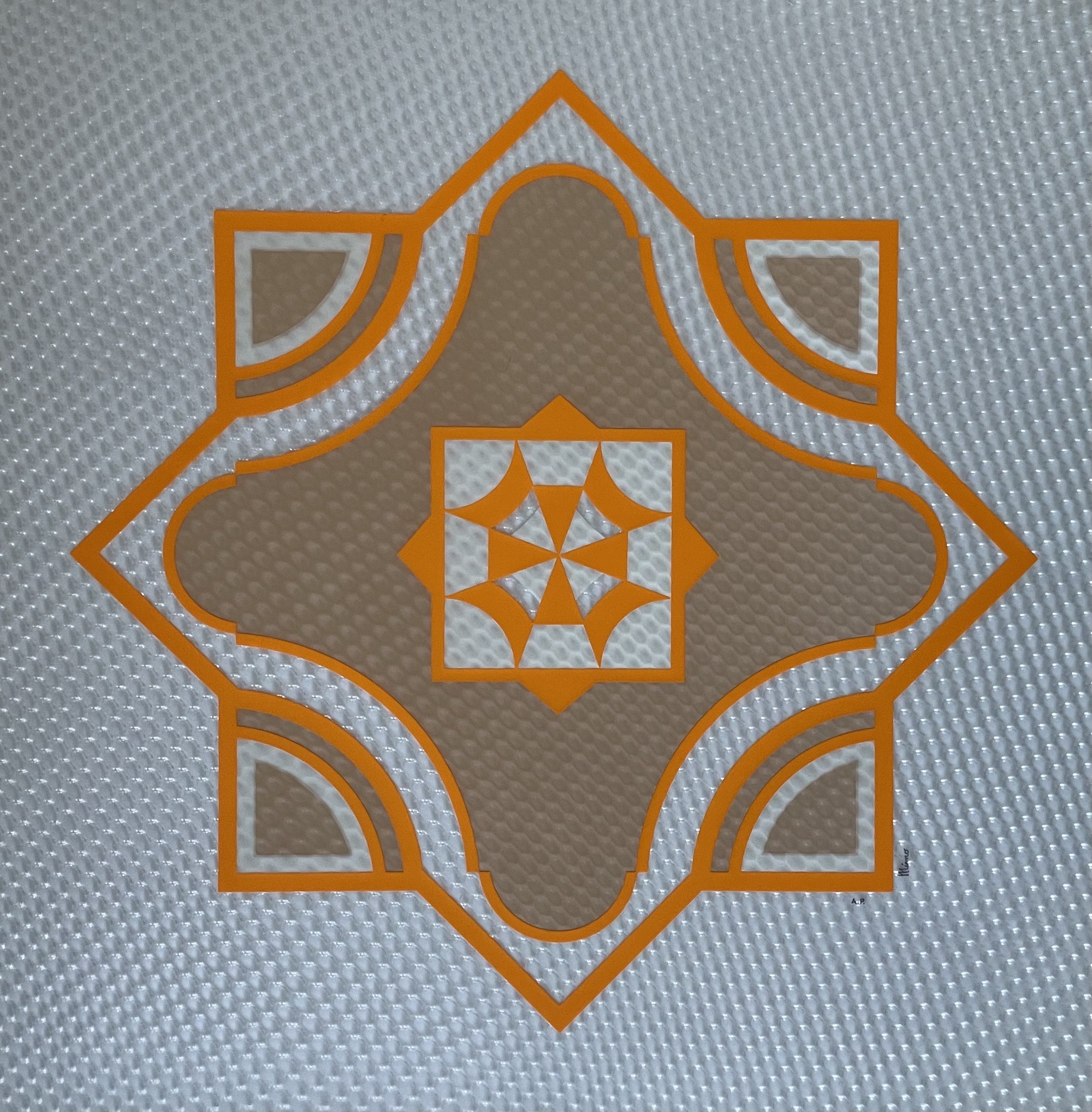
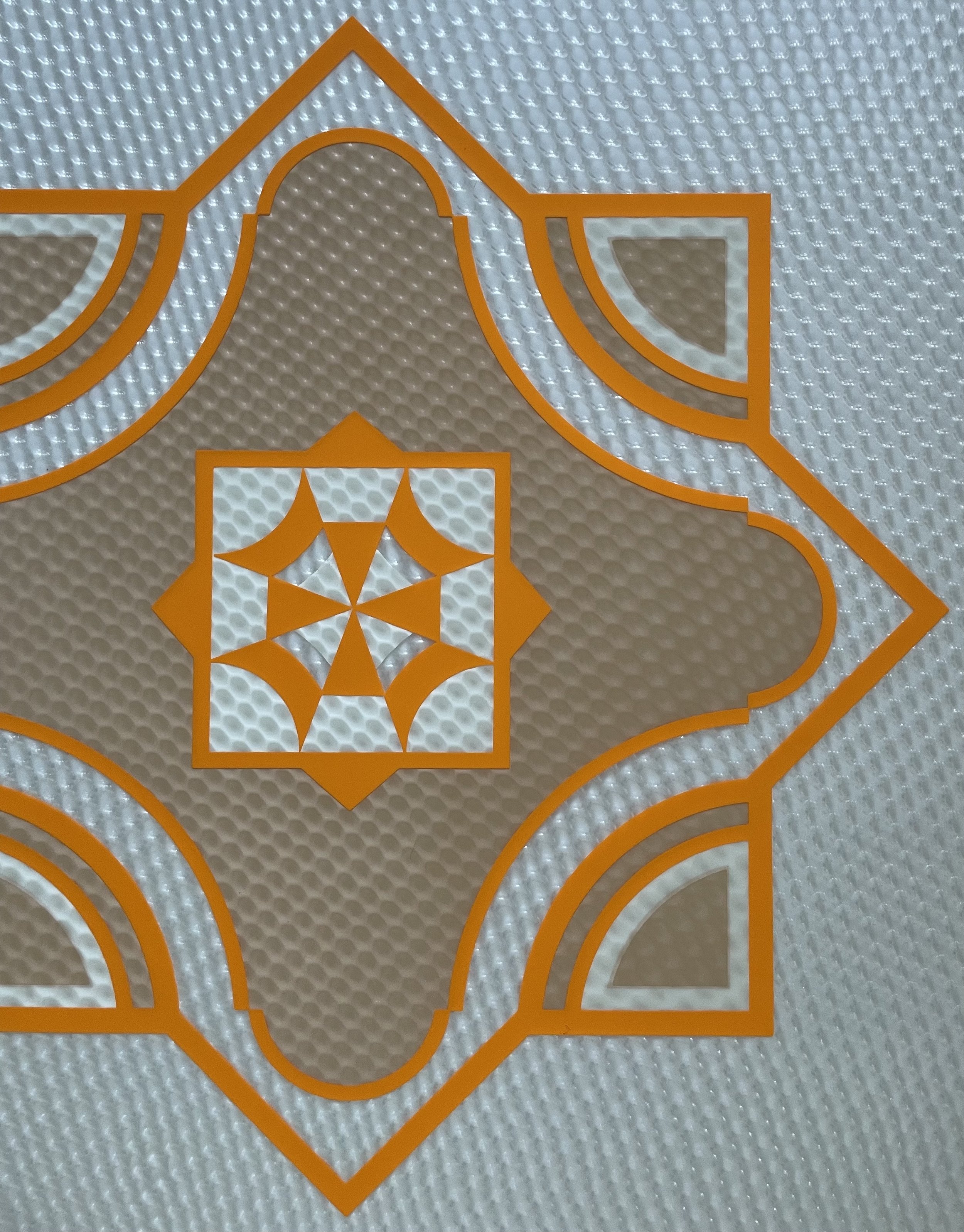
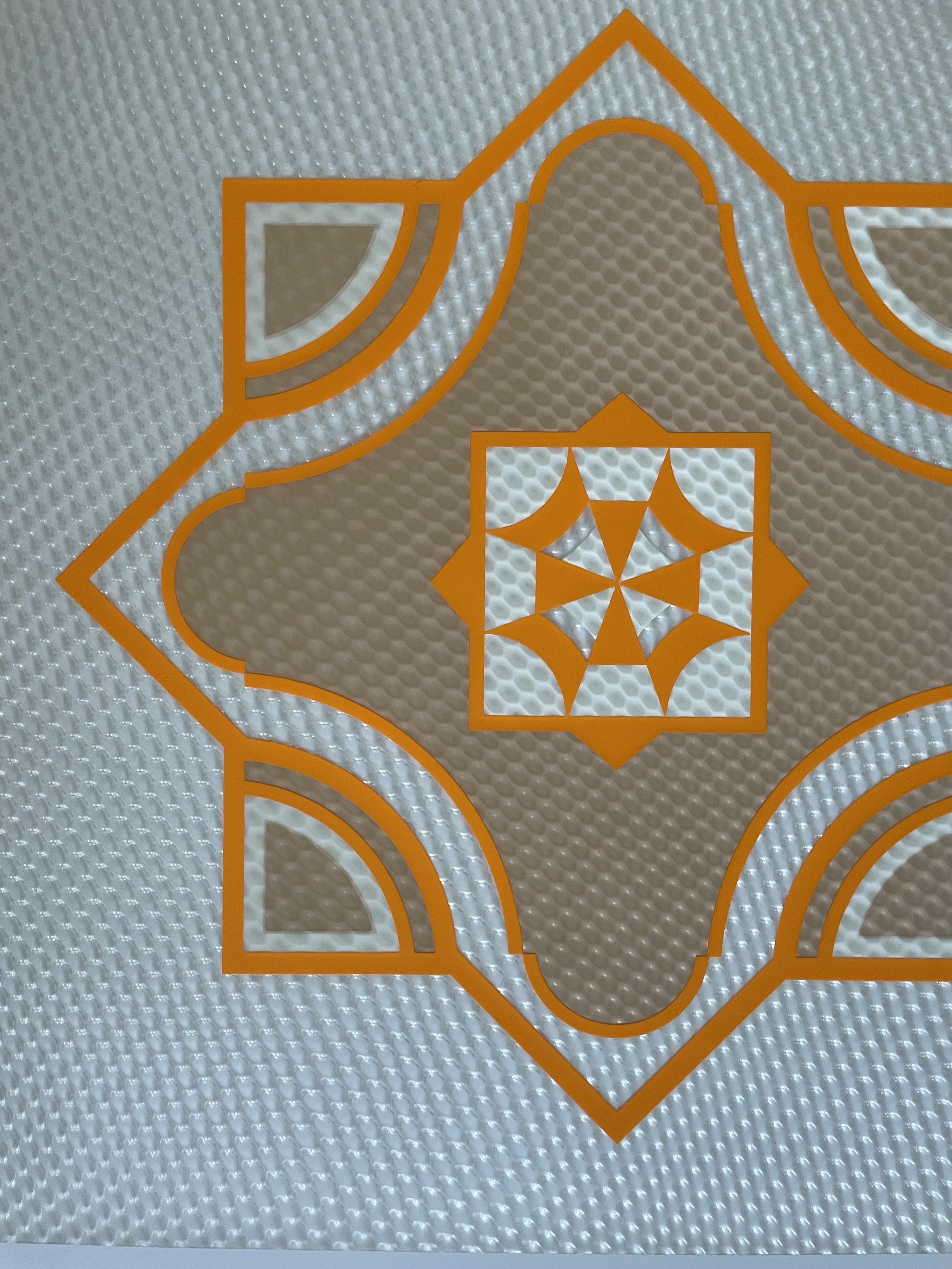
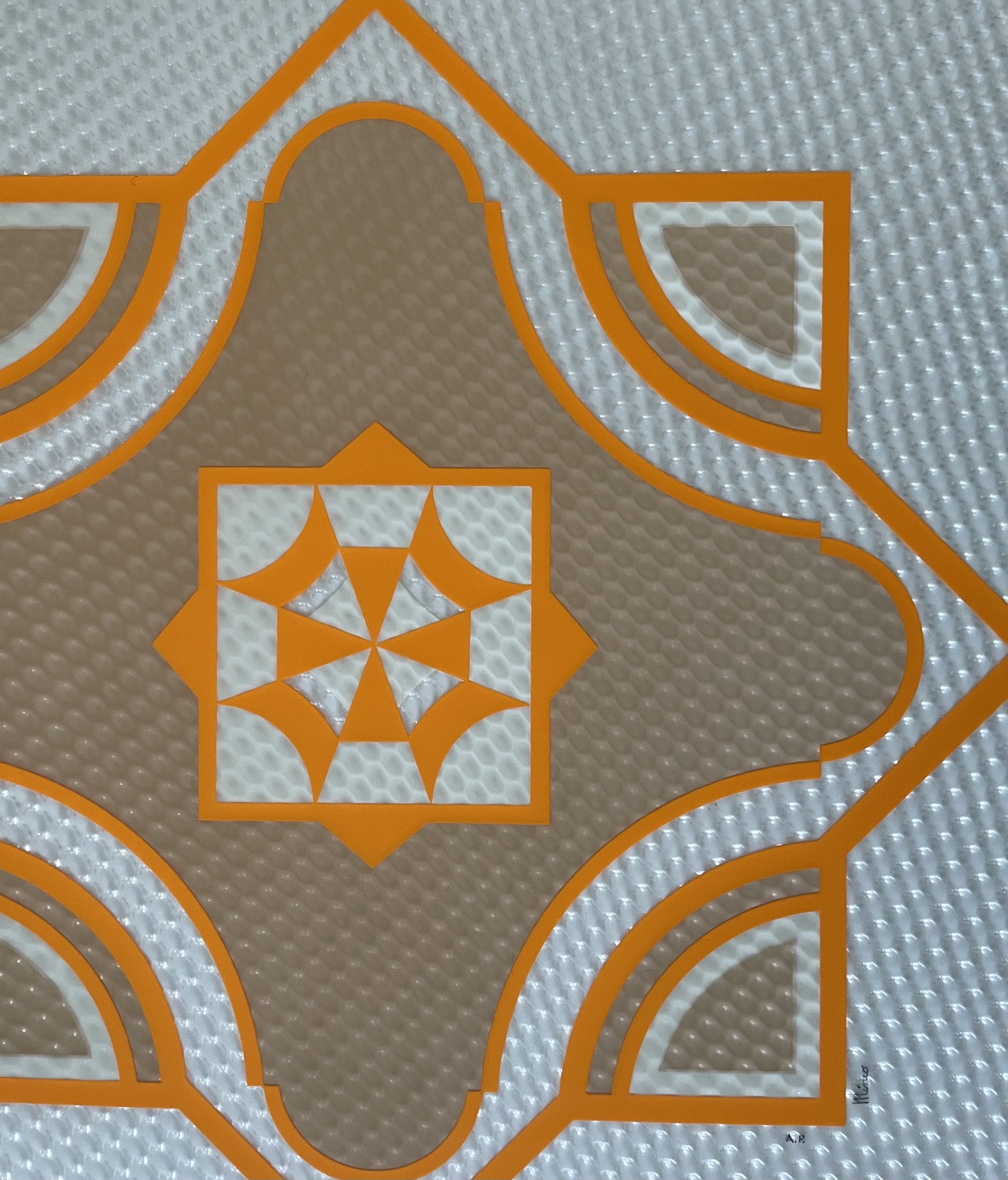
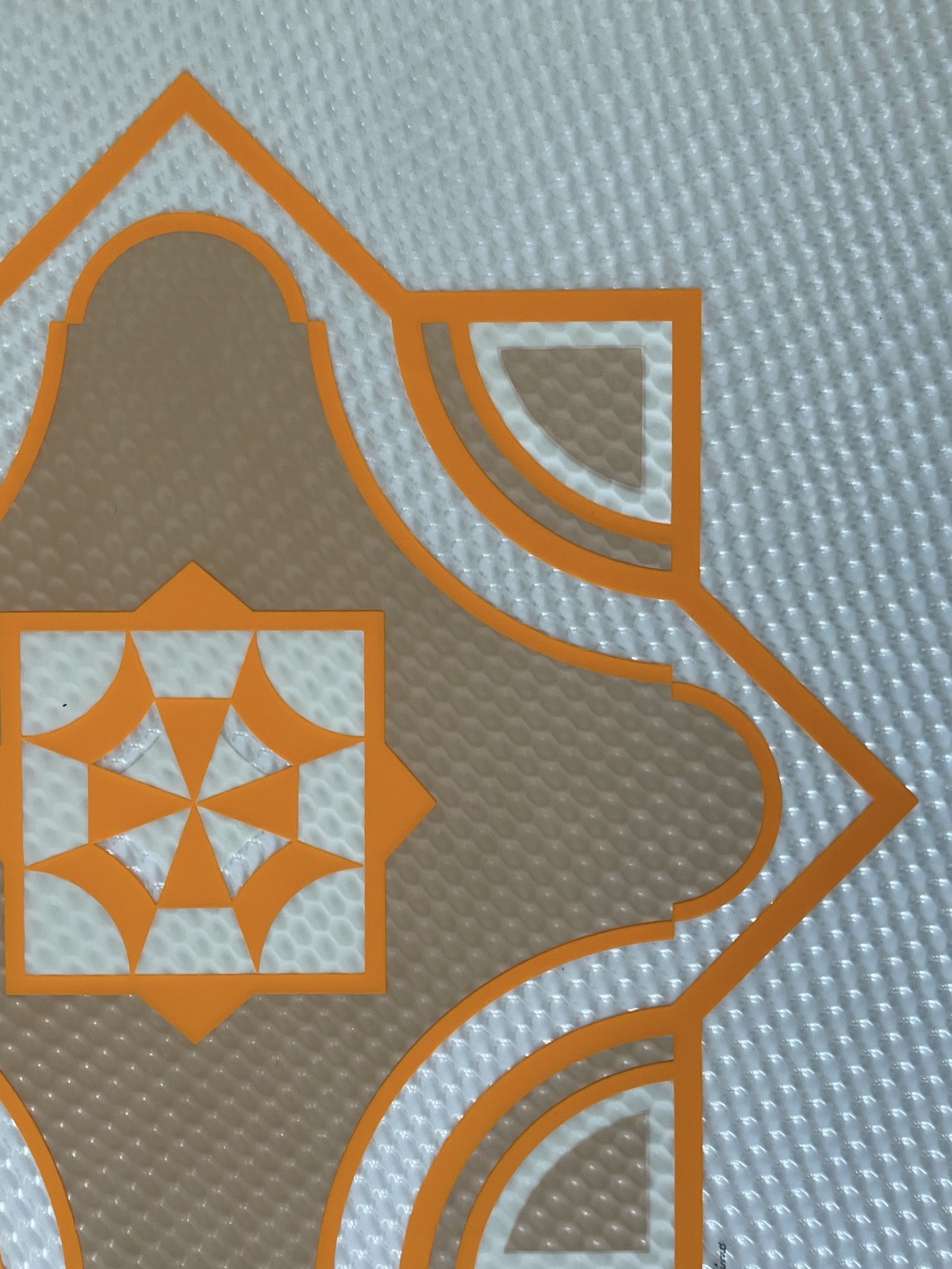
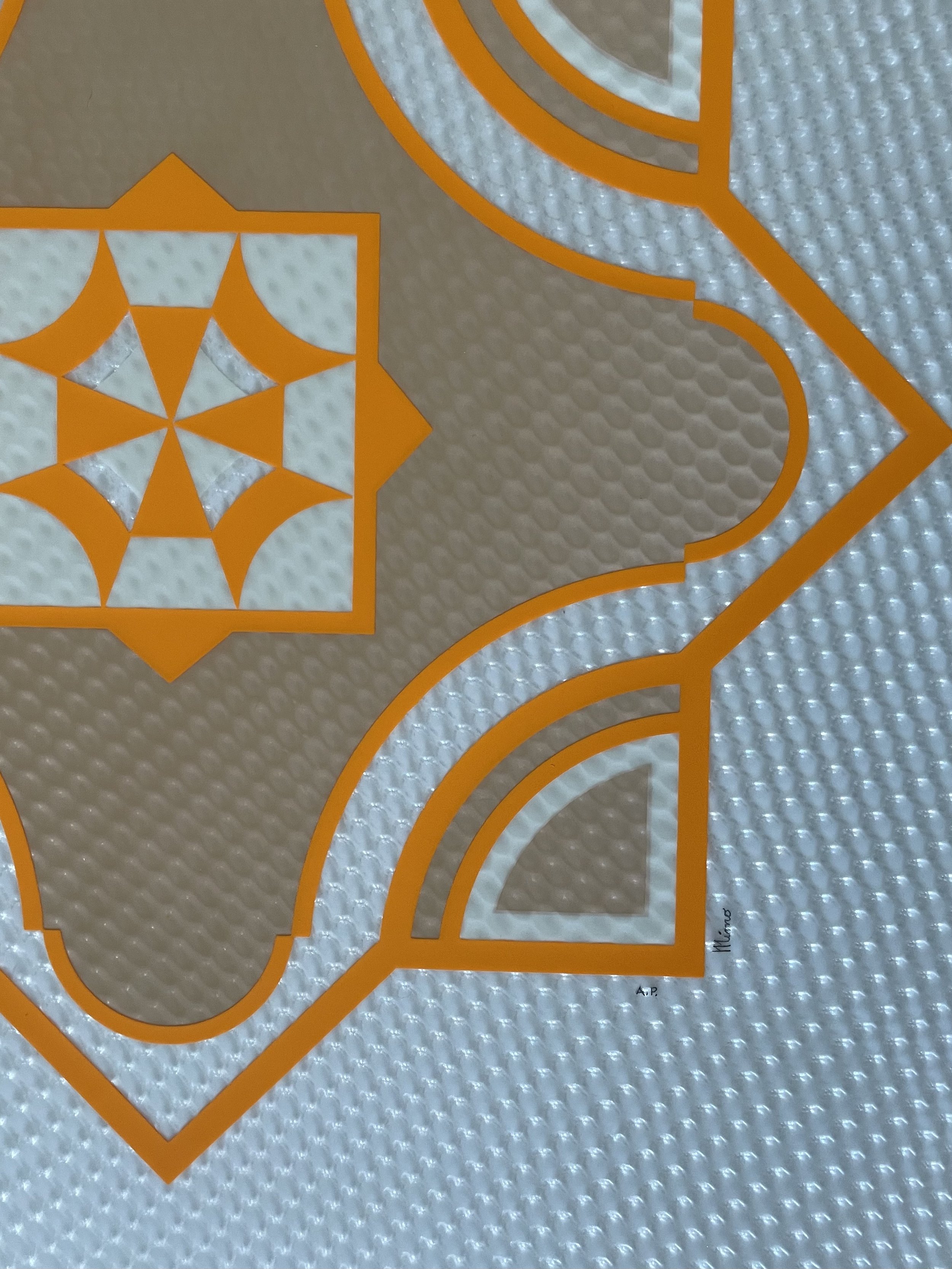
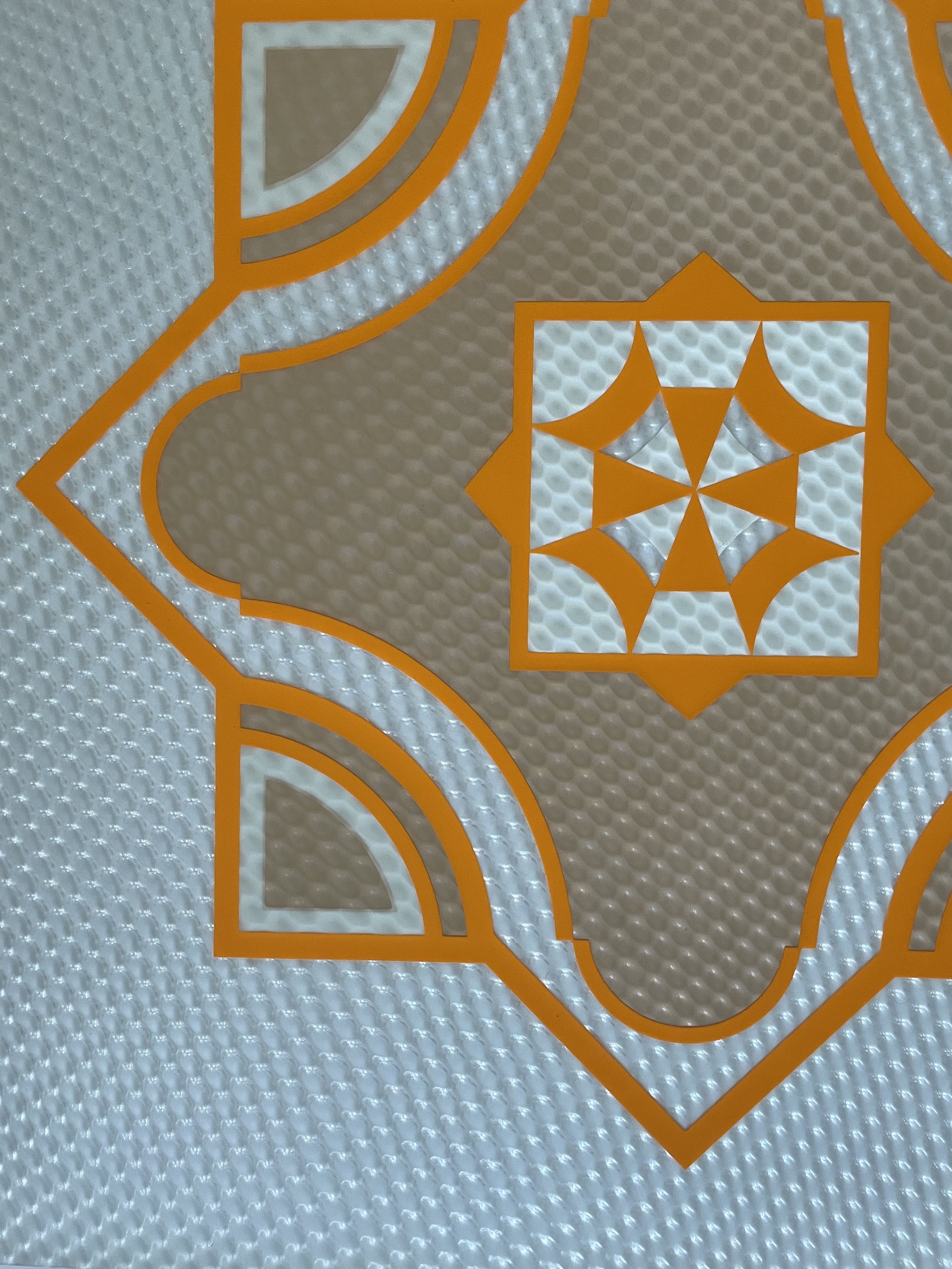
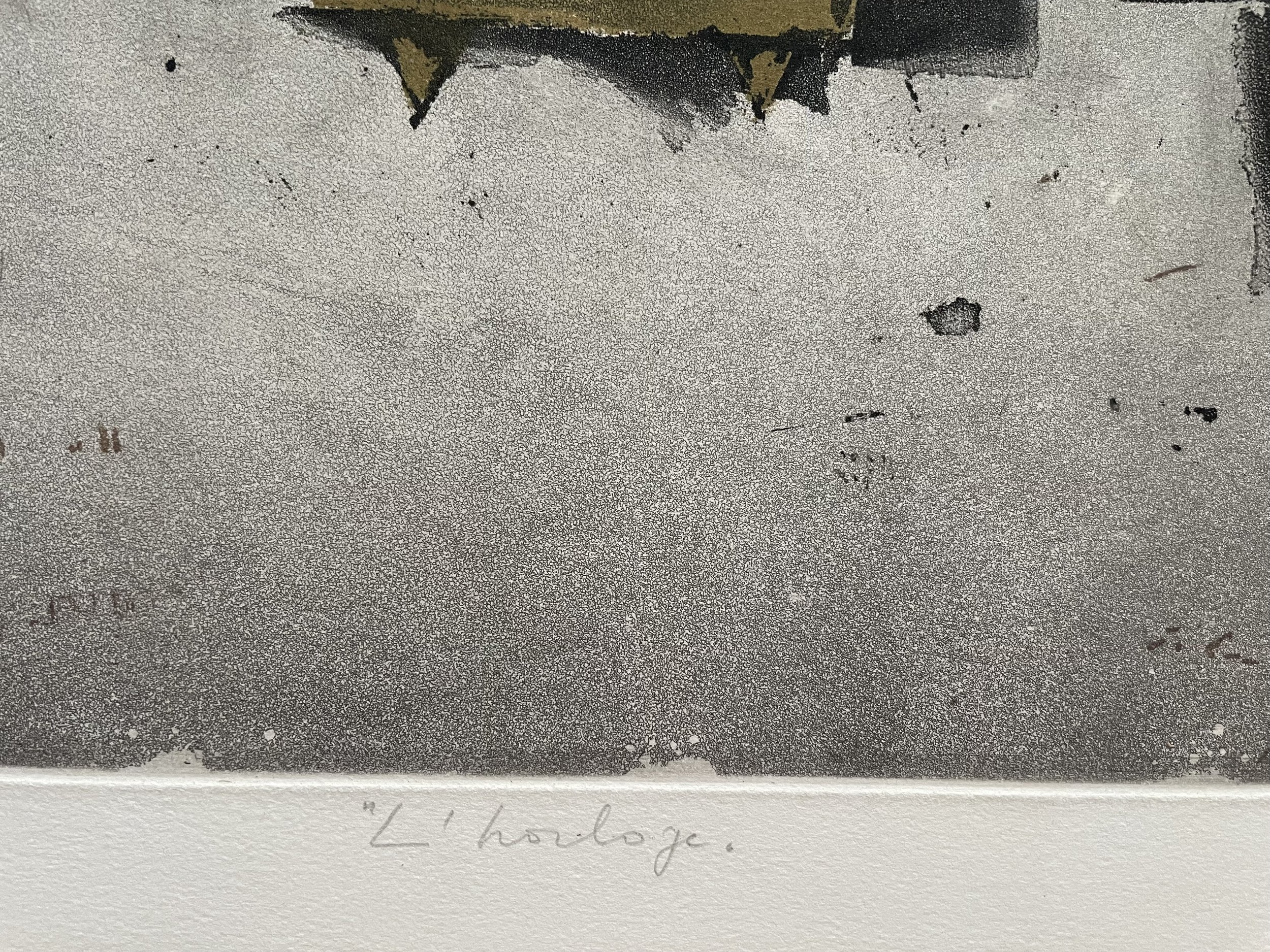
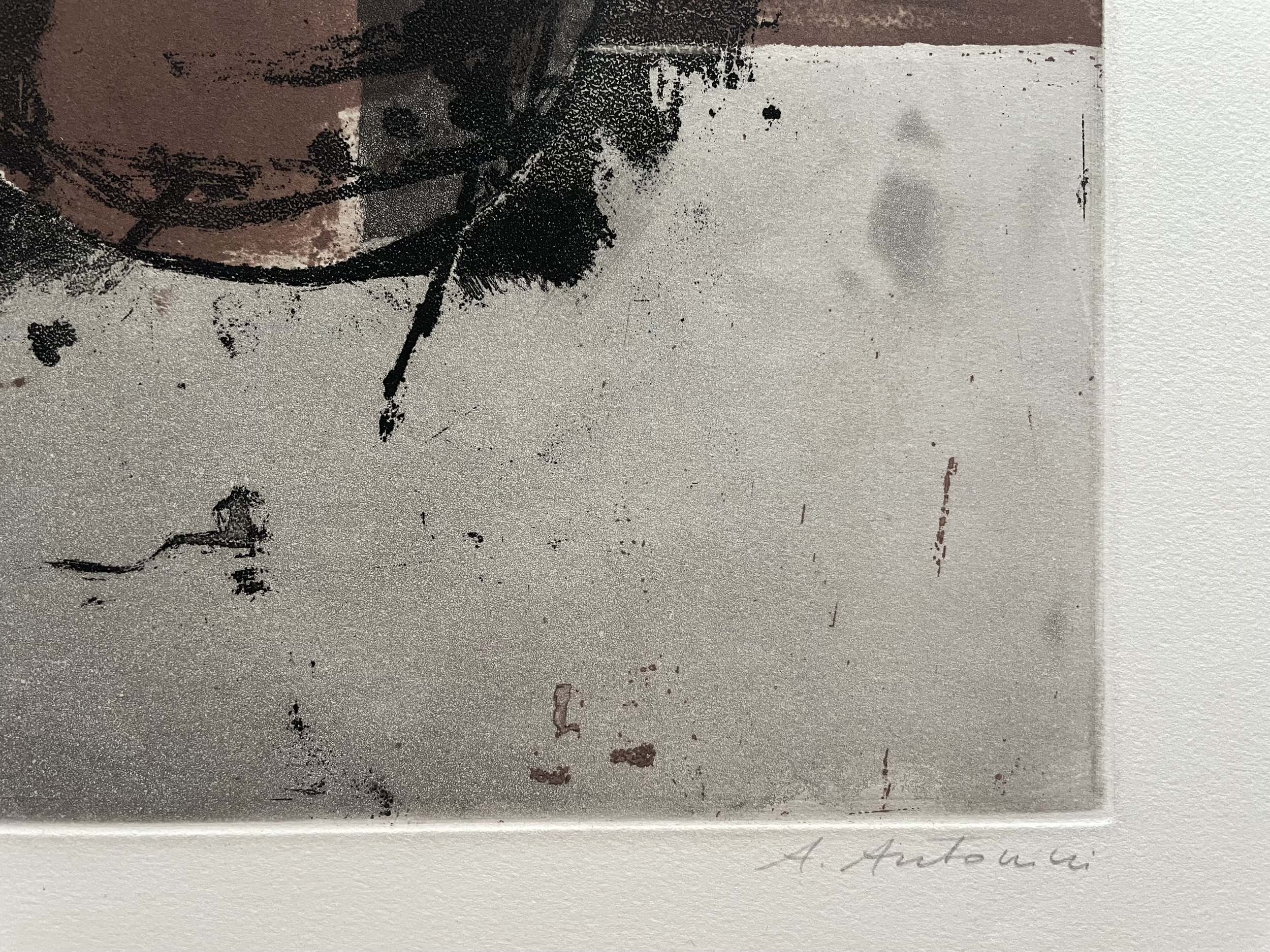
“Windsong” Jack Sher (American, 20th c.), c.1970s dimensional-relief serigraph 22×30, pencil-signed, titled & numbered 30/100.
A richly tactile dimensional-relief serigraph by Jack Sher, Windsong features a copper-toned “tree of life” motif rising over a marbled, tortoiseshell-like ground. Created using Sher’s experimental Monostructure process, the surface shimmers with raised texture and metallic warmth. Pencil-signed, titled, and numbered 30/100; 22×30 inches.
Artwork Description
What you’re looking at
Windsong presents a branching, wind-swept tree rendered in luminous copper relief, its limbs spreading like a living network over an earthy, mineral-like field. The background has a molten, cellular patterning—greens, ambers, and browns—that reads like polished stone, oxidized metal, or geological cross-sections. The overall effect is both organic and alchemical: nature translated into sculptural surface.
Style & period
This work sits in a late-20th-century tradition of process-driven abstraction and tactile mixed-media printmaking, where the print becomes object-like rather than purely optical. Sher’s imagery leans “biomorphic” and naturalistic in spirit, even when the method is experimental and industrial in its rigor.
Medium & technique (Dimensional-Relief Serigraph / Monostructure)
Unlike standard flat serigraphy, Windsong is built to be experienced by both eye and hand. The raised tree form is formed through Sher’s proprietary Monostructure approach—freehand design mapped into separated fields, then activated through controlled material/chemical interactions and hand-finishing. The relief catches light differently across the surface, making the tree shimmer and “move” as the viewing angle changes. The marbled ground suggests layered pours or reactive patterning that evolves rather than being purely “printed” in a conventional sense.
Signature & editioning
The work is pencil-signed (visible in your close-up), titled, and numbered 30/100. While the edition is 100, the process and hand-finishing mean prints can show subtle variation from one to the next—an important talking point for collectors who want uniqueness within an edition.
Inspiration / story behind the work
The tree motif reads as a symbol of endurance and interconnectedness—roots, trunk, and branching systems echoing the “mutations created by nature” that Sher often aimed to evoke through texture and reactive pattern. The title Windsongreinforces that sense of movement: a still image that feels animated by invisible forces (wind, growth, time).
ARTIST BIOGRAPHY — JACK SHER (1934–2000)
Cooper Union School of Art • Wanamaker Medal Recipient • Inventor of “Monostructure”
Born: 1934, New York City
Died: 2000
Nationality: American
Training: Cooper Union School of Art, New York (Scholarship recipient; Wanamaker Medal)
Known for: Monostructure (original technique), experimental chemical art, relief-based abstraction, mylar-based compositions
Active: 1950s–1990s, primarily in NYC
Practice & significance
Sher’s work is best understood as hybrid print-object making: a bridge between fine art printmaking, industrial surface innovation, and materials experimentation. The Monostructure method (sketch-to-partitioned fields-to controlled chemical evolution-to hand color/finish) positions him in a lineage of postwar artists who treated process as both medium and subject—where the “how” is inseparable from the “what.”
Materials-first creative process
Sher’s hallmark is the orchestration of reaction, curing, and layered surface build. The result is a dimensional skin that reads like metalwork, enamel, lacquer, or geological sediment—highly collectible for clients drawn to craft, texture, and objecthood.
Exhibitions & collections (current state of evidence)
At the moment, I did not locate a reliable, centralized public record (museum CV, catalogue raisonné, or institutional biography page) listing exhibitions and permanent collections for Jack Sher the visual artist. What is consistently documented online are market-facing listings for works like Windsong and related dimensional-relief pieces, including auction-platform entries describing the Monostructure method and the work’s format/editioning. If you’d like, upload any vintage brochure, gallery sheet, or label text you may have from Mitch Morse (or the retired Manhattan gallery mentioned in one listing), and I can turn that into a clean “exhibitions/collections” section in your house style.
Jack Sher (American, 20th c.), Windsong, c.1970s. Dimensional-relief serigraph in colors on paper, 22 × 30 in. Pencil signed, titled, and numbered 30/100. Copper-toned tree motif over marbled, tortoiseshell-like ground; produced using Sher’s experimental Monostructure process. Provenance: Mitch Morse Gallery → Artfind Gallery, Washington DC.
Certificate of Value & Authentication
Artist: Jack Sher (American, 20th century)
Title:Windsong
Date: c. 1970s (circa late 20th century)
Medium: Dimensional-relief serigraph (Monostructure process) on paper
Dimensions: 22 × 30 inches (sheet)
Edition: 30/100
Signature/Marks: Pencil signed; titled and numbered
Condition (visual): Strong color and intact relief visible in photos; in-person inspection recommended for surface abrasions, edge wear, and paper tone
Provenance: Mitch Morse Gallery (acquired in NYC, United States and Europe) → Artfind Gallery, Washington DC (current owner)
Authentication Statement: Based on visible signature/editioning and technique consistent with known Jack Sher dimensional-relief serigraphs described in market records, this work is authenticated as an original work by the artist.
Provenance Chain (Collector Format)
Jack Sher (artist) → Mitch Morse Gallery (publisher/agent; acquired in NYC, United States and Europe) → Artfind Gallery, Washington DC (current owner).
MONOSTRUCTURE is an avant-garde creative process pioneered by artist Jack Sher, weaving a captivating narrative of experimentation and innovation. The journey begins with freehand sketches on mylar—an unconventional choice that beats traditional paper in resilience. Each design is meticulously outlined with high lines that create distinct, partitioned areas, setting the stage for the alchemical transformation to come. Sher’s signature blend of 26 meticulously formulated chemicals dances across the surface, sparking a controlled yet evolving dialogue within the artwork over the course of three weeks. The final touch comes as Sher adds vibrant color and hand-finishes each piece, imbuing it with a personal touch. Even though all images bear a sequential signature and number, each emanates its own unique vibe, ensuring that no two pieces in the series are ever the same. This process is not just about creation; it’s a testament to the beauty born from meticulous experimentation and the daring spirit of artistic exploration.
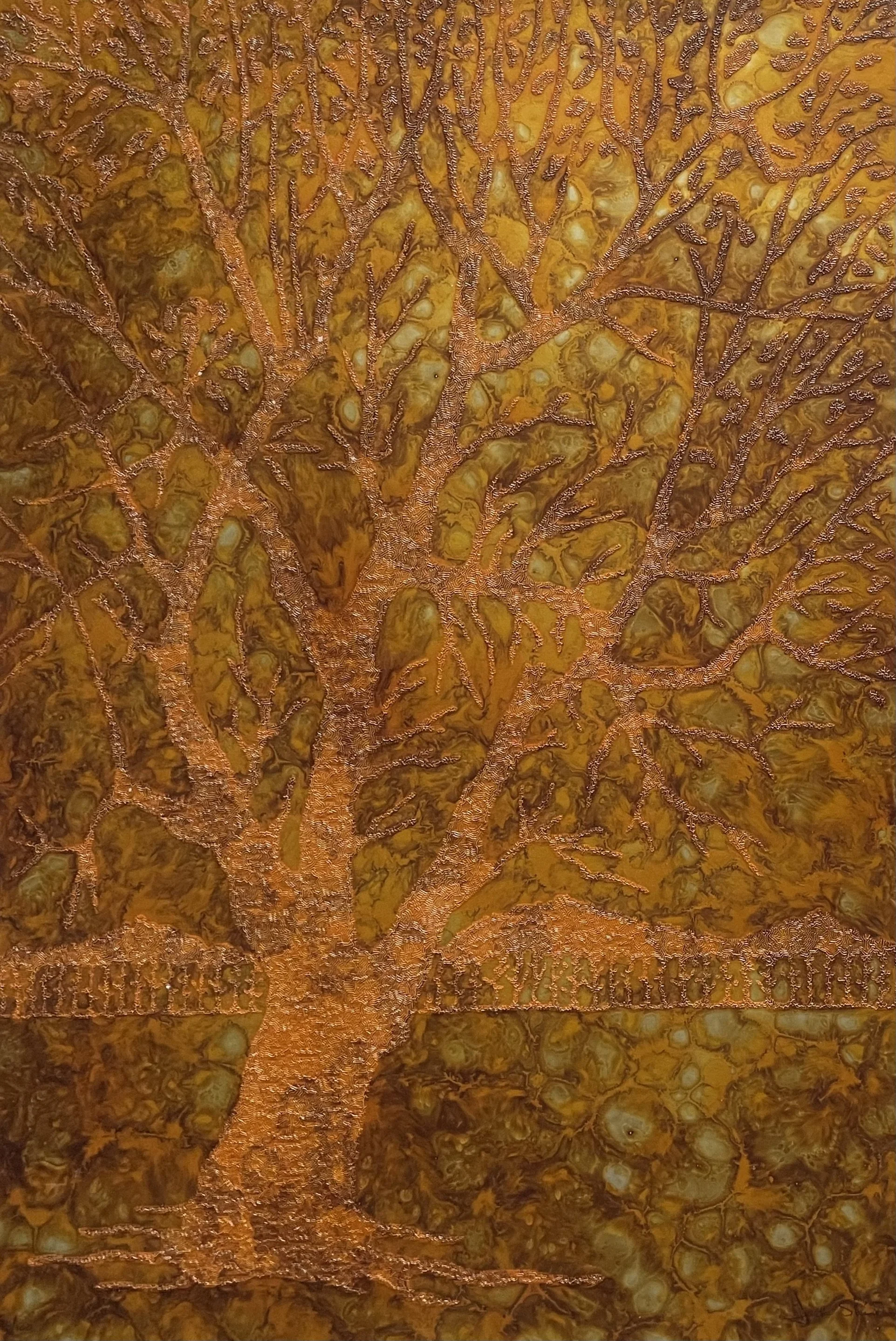 Image 1 of 6
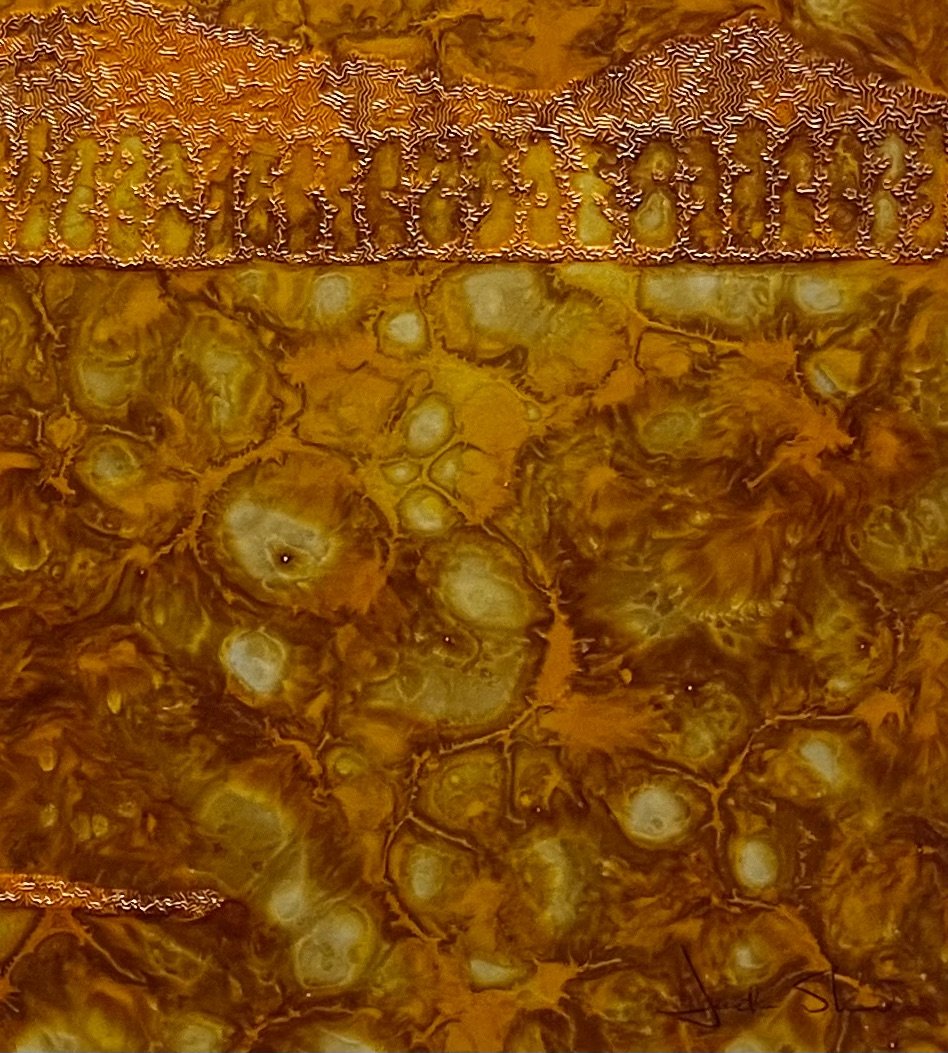 Image 2 of 6
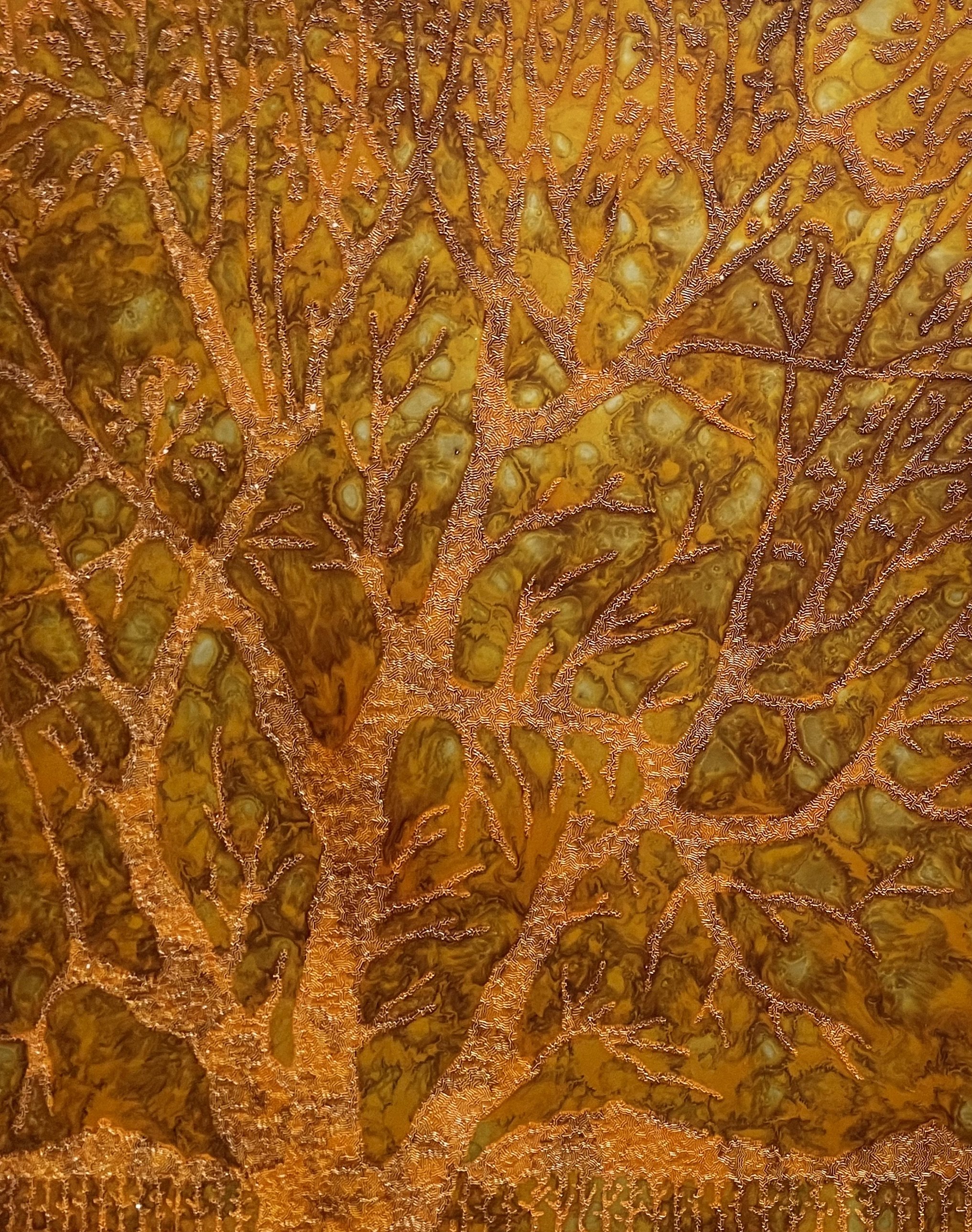 Image 3 of 6
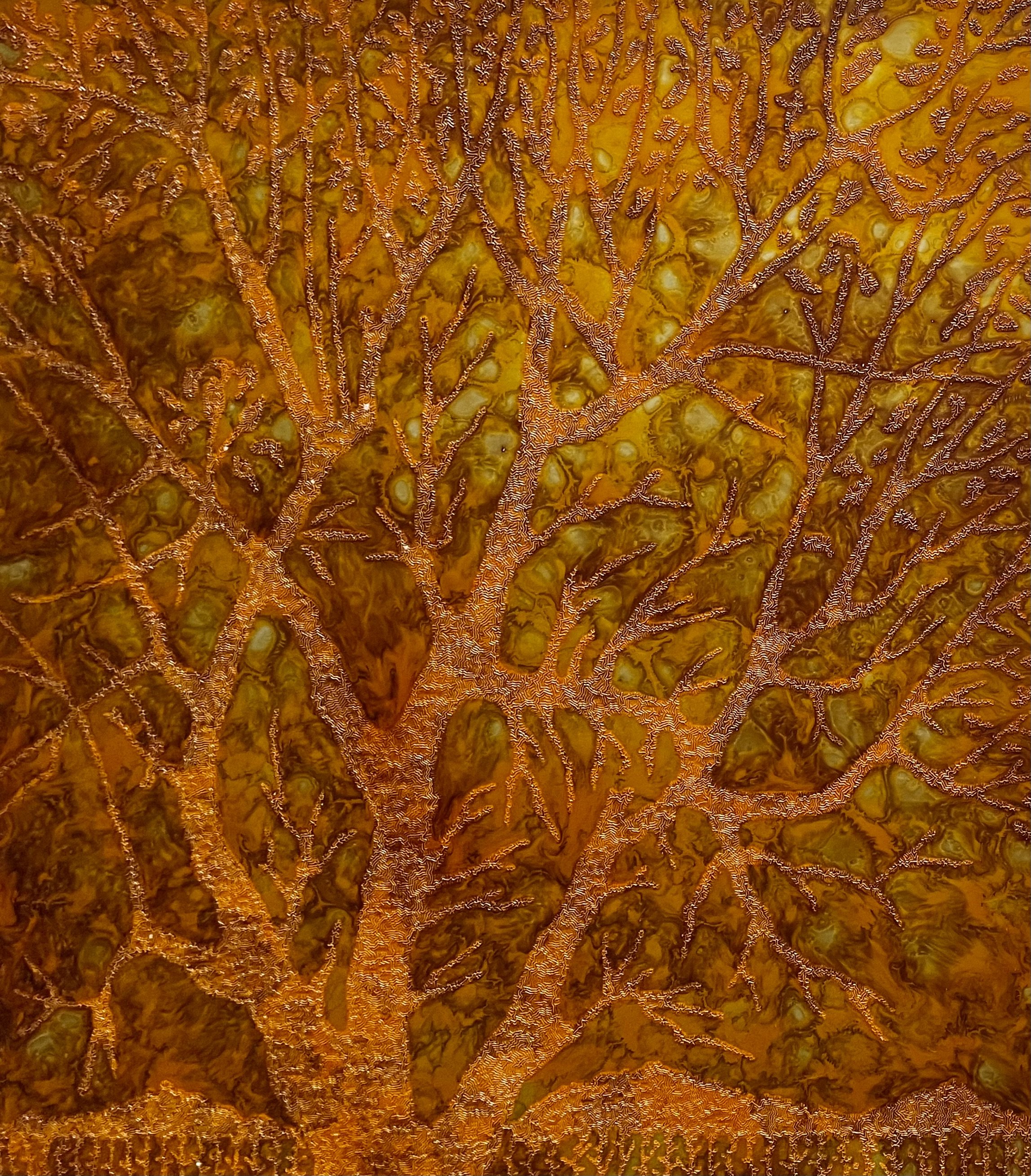 Image 4 of 6
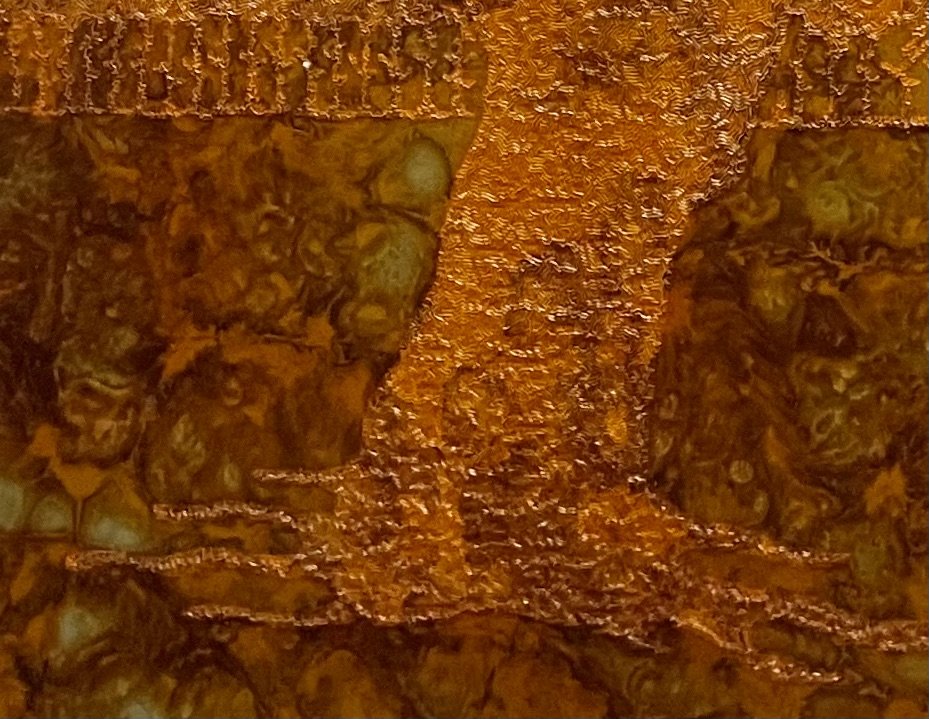 Image 5 of 6
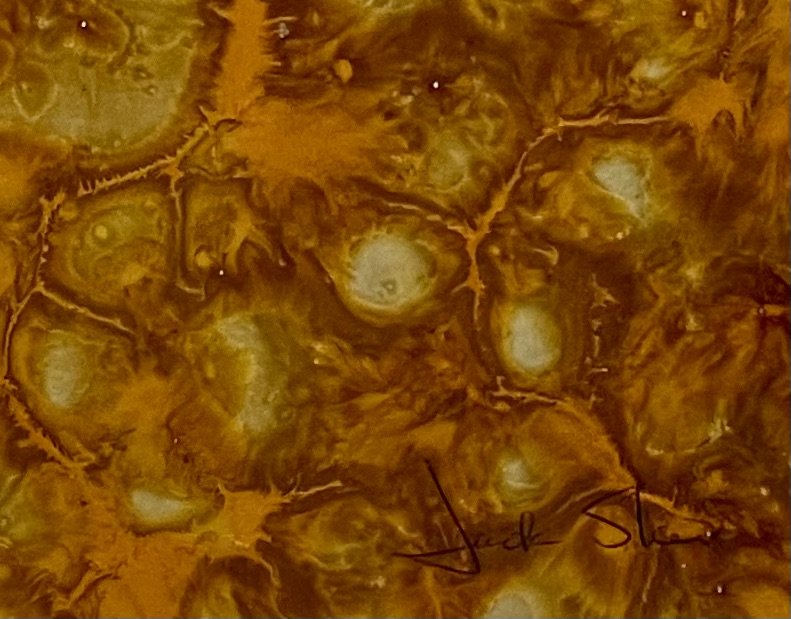 Image 6 of 6