 Image 1 of 4
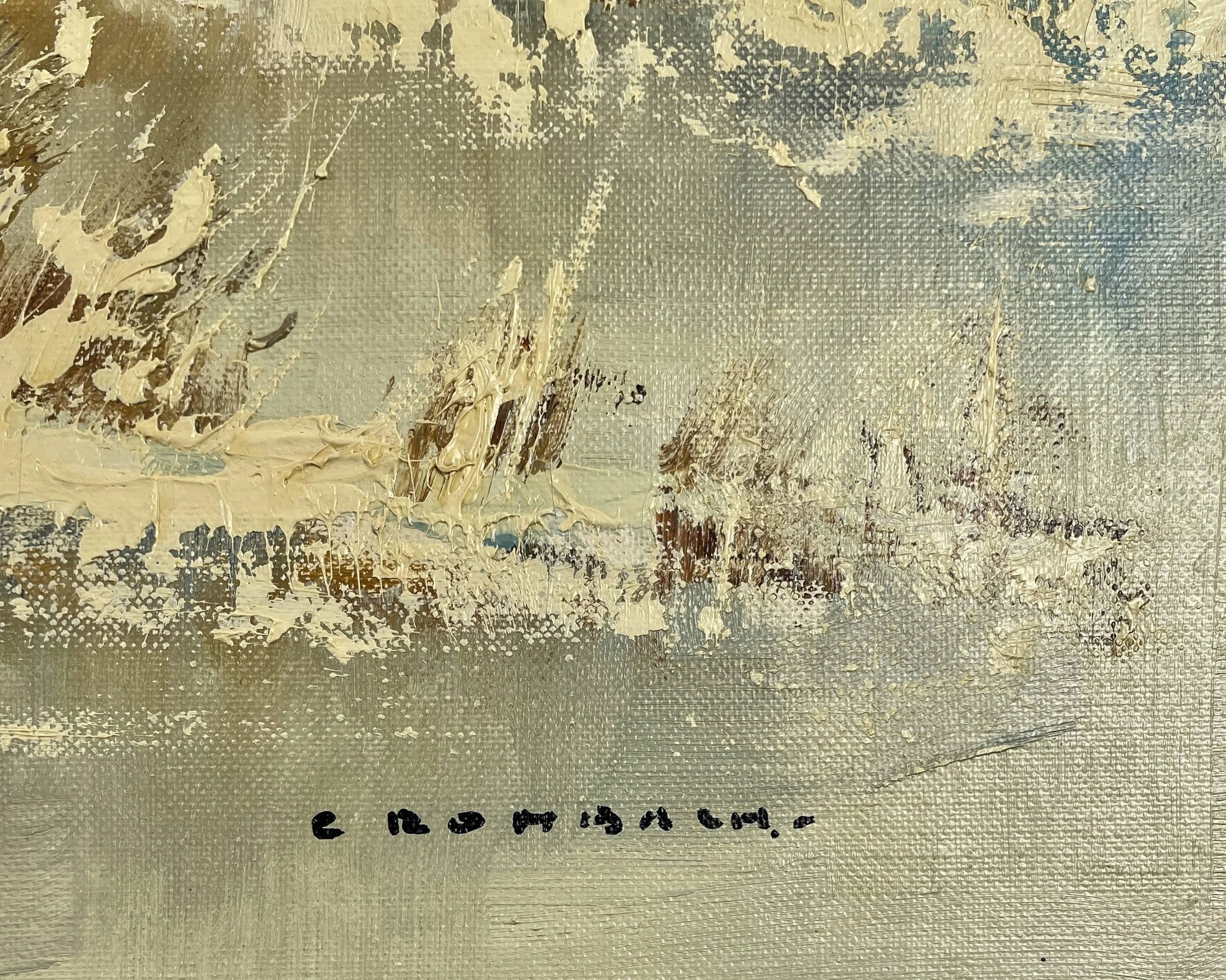 Image 2 of 4
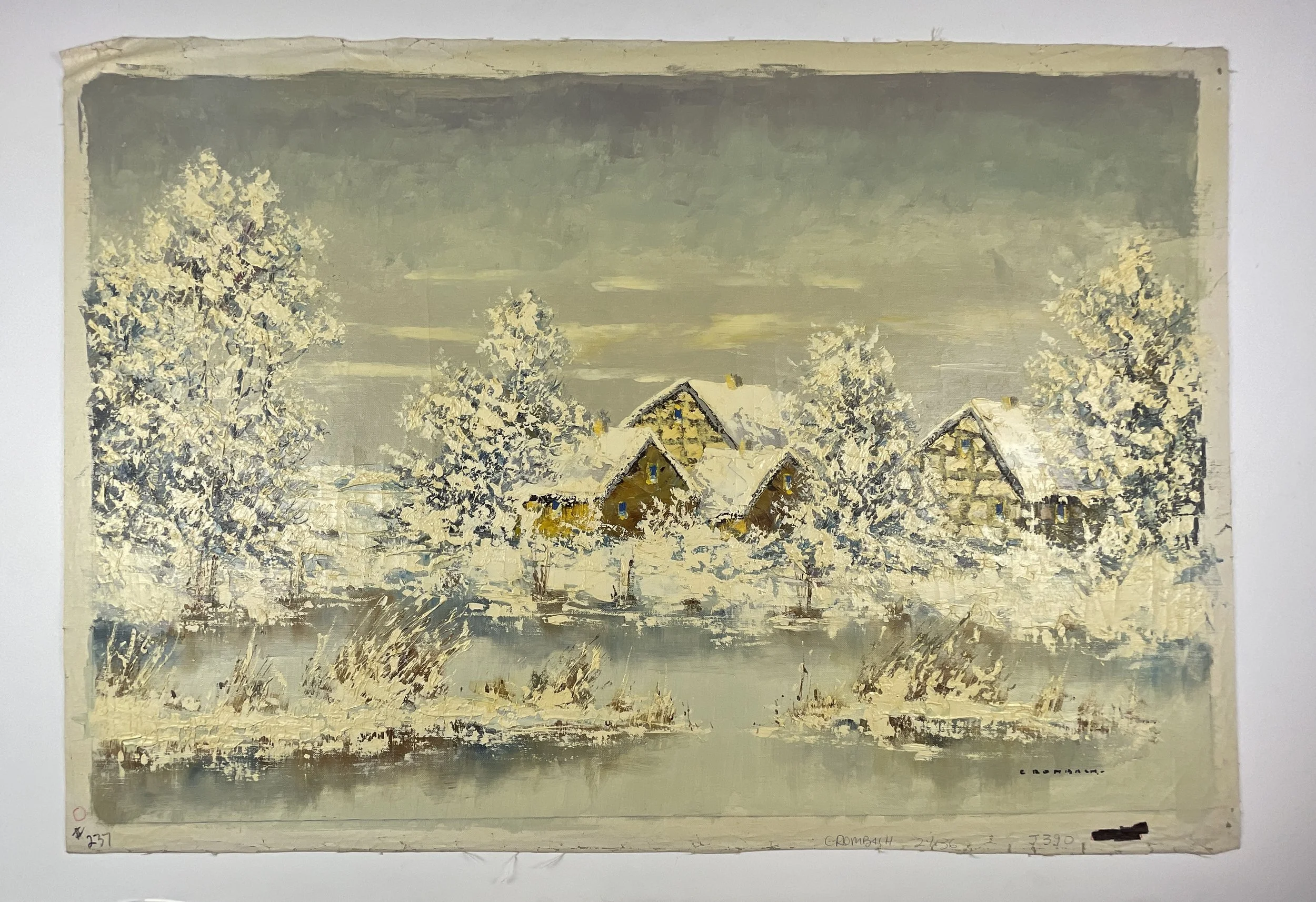 Image 3 of 4
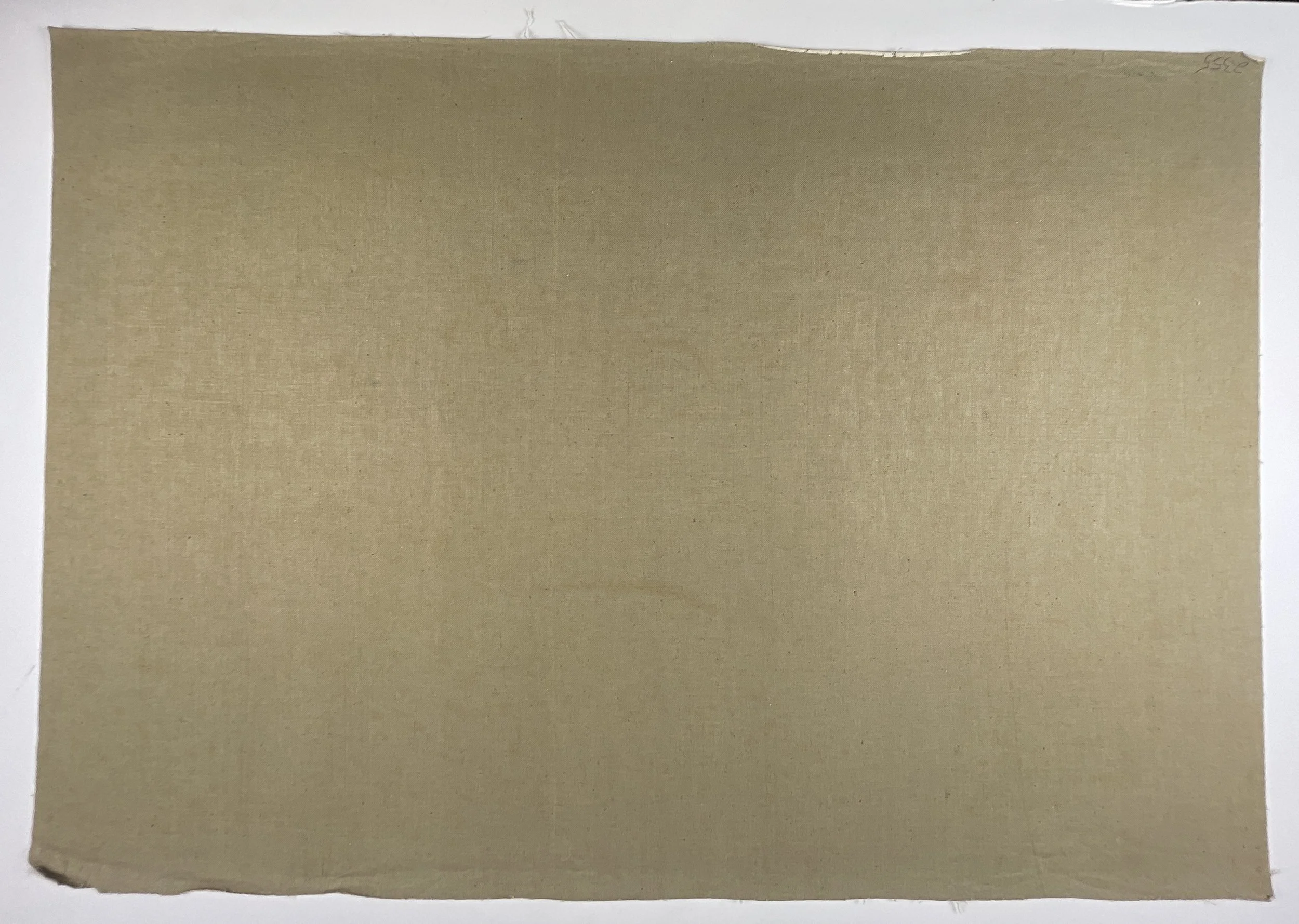 Image 4 of 4
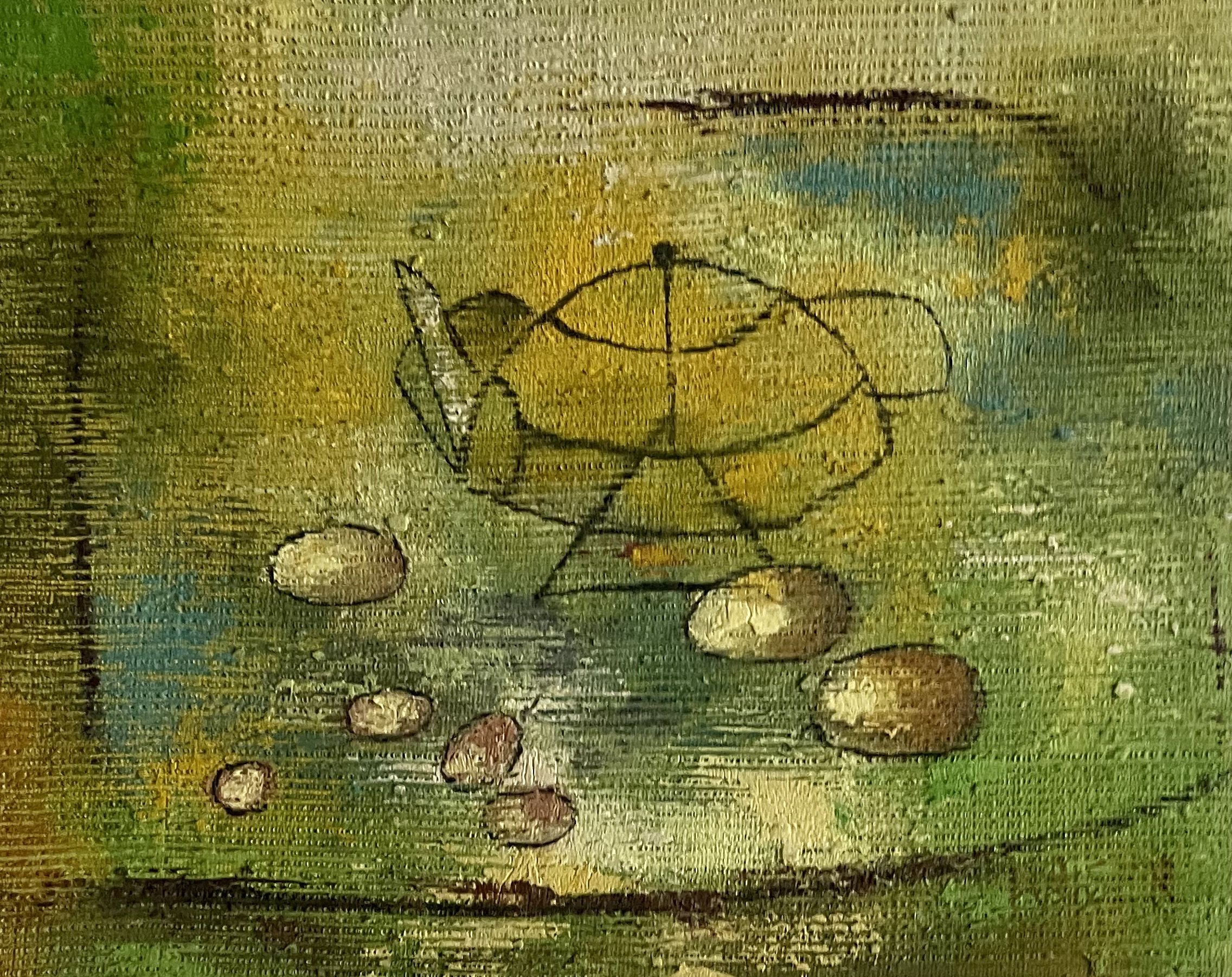
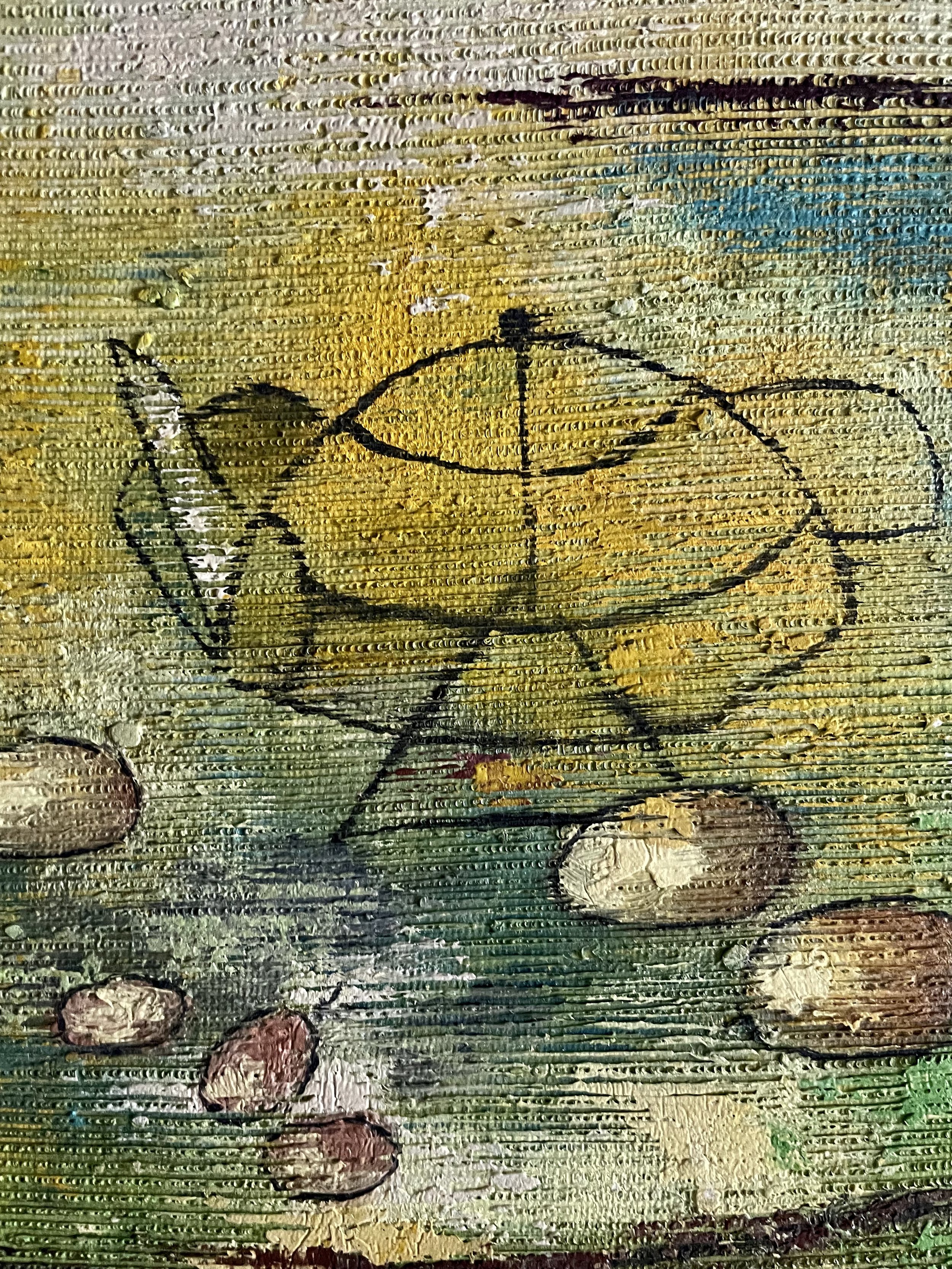
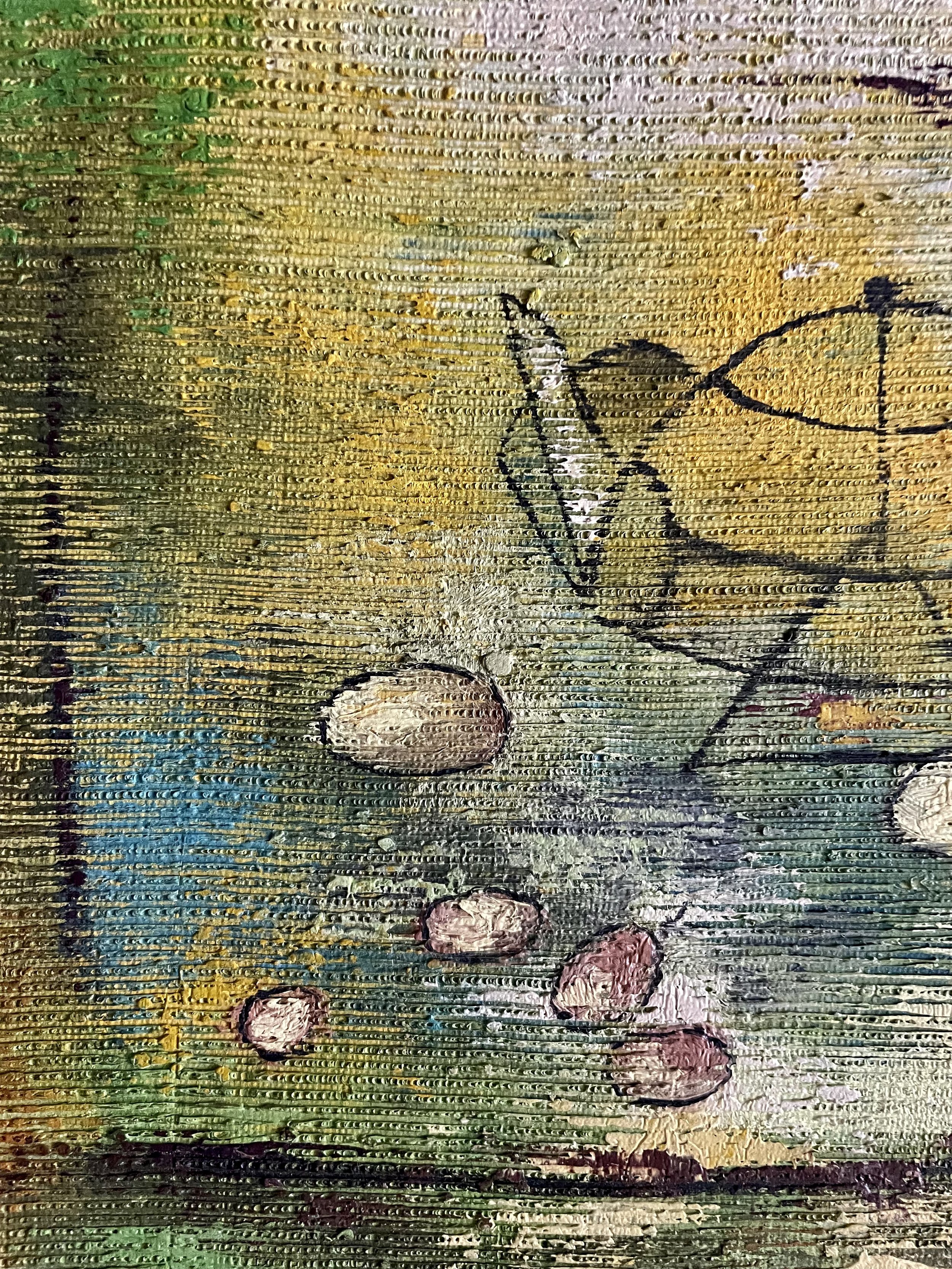
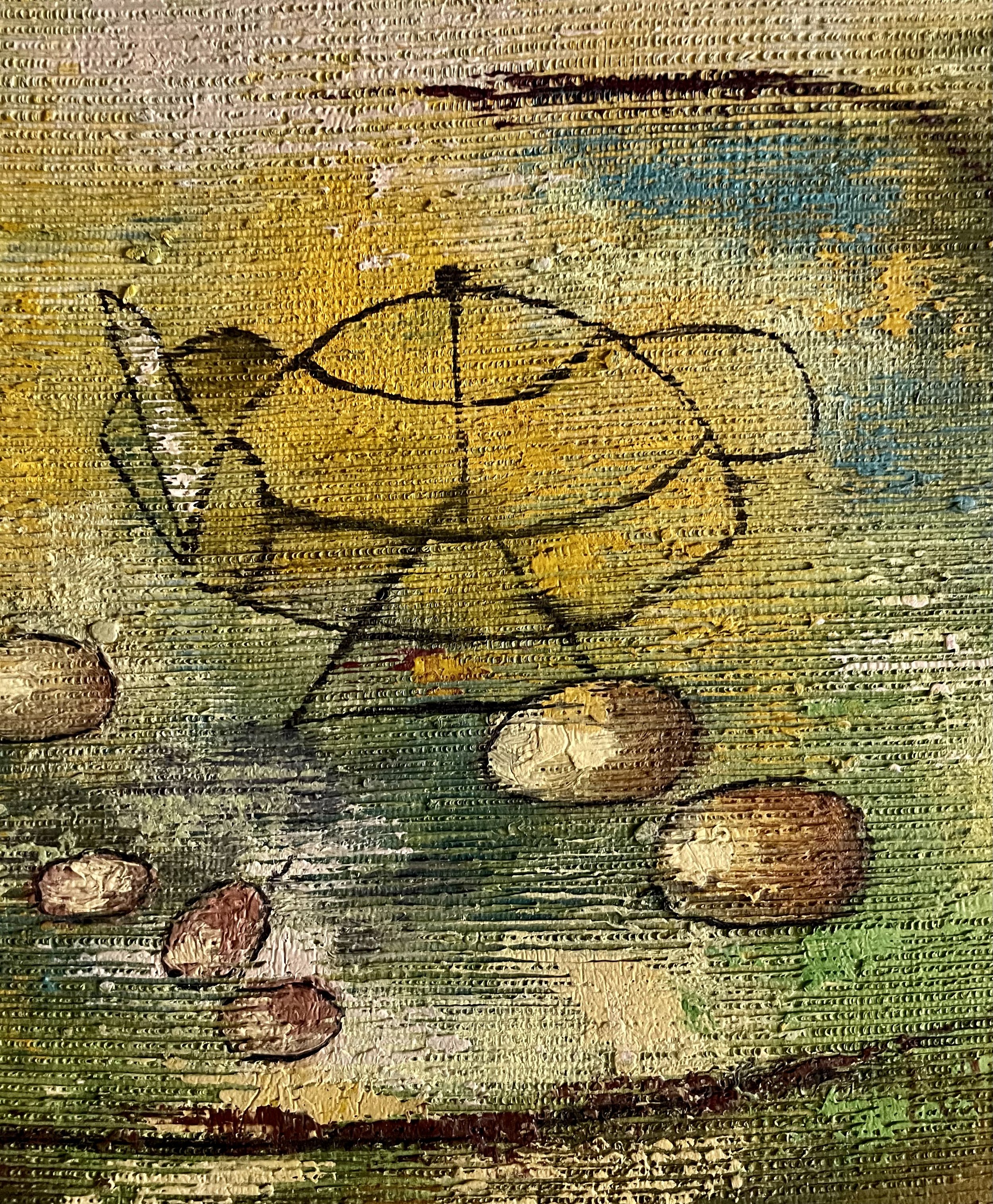
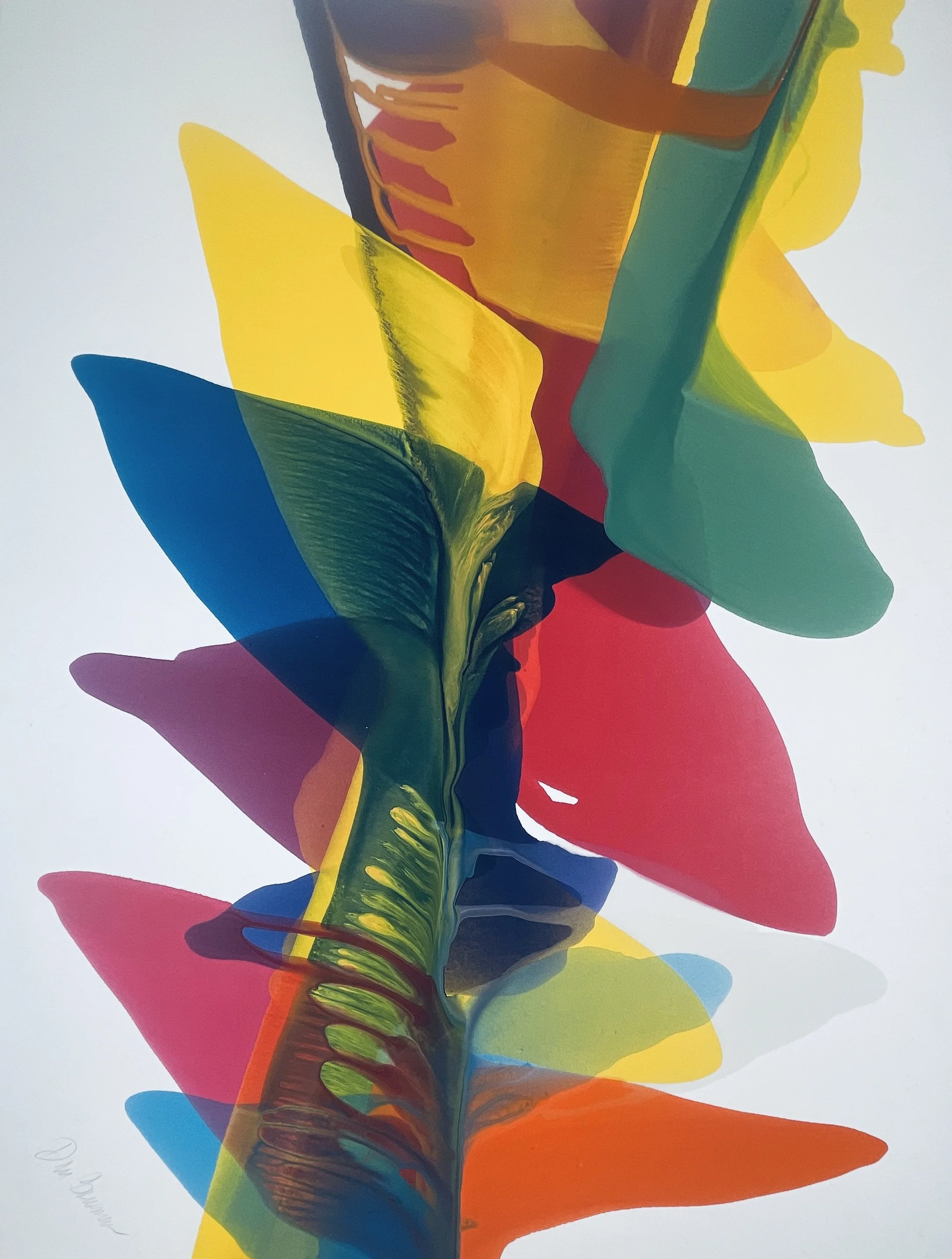
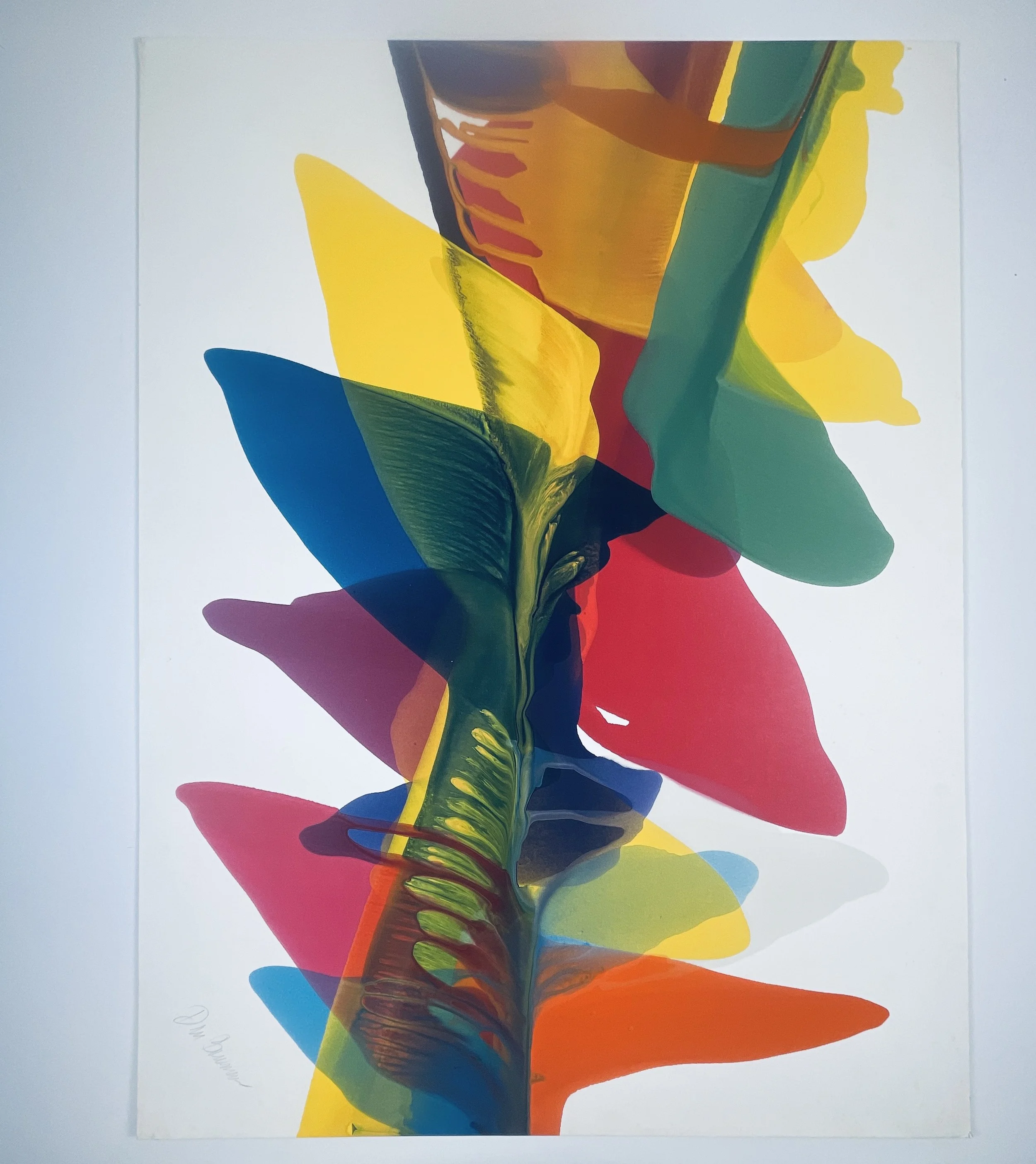
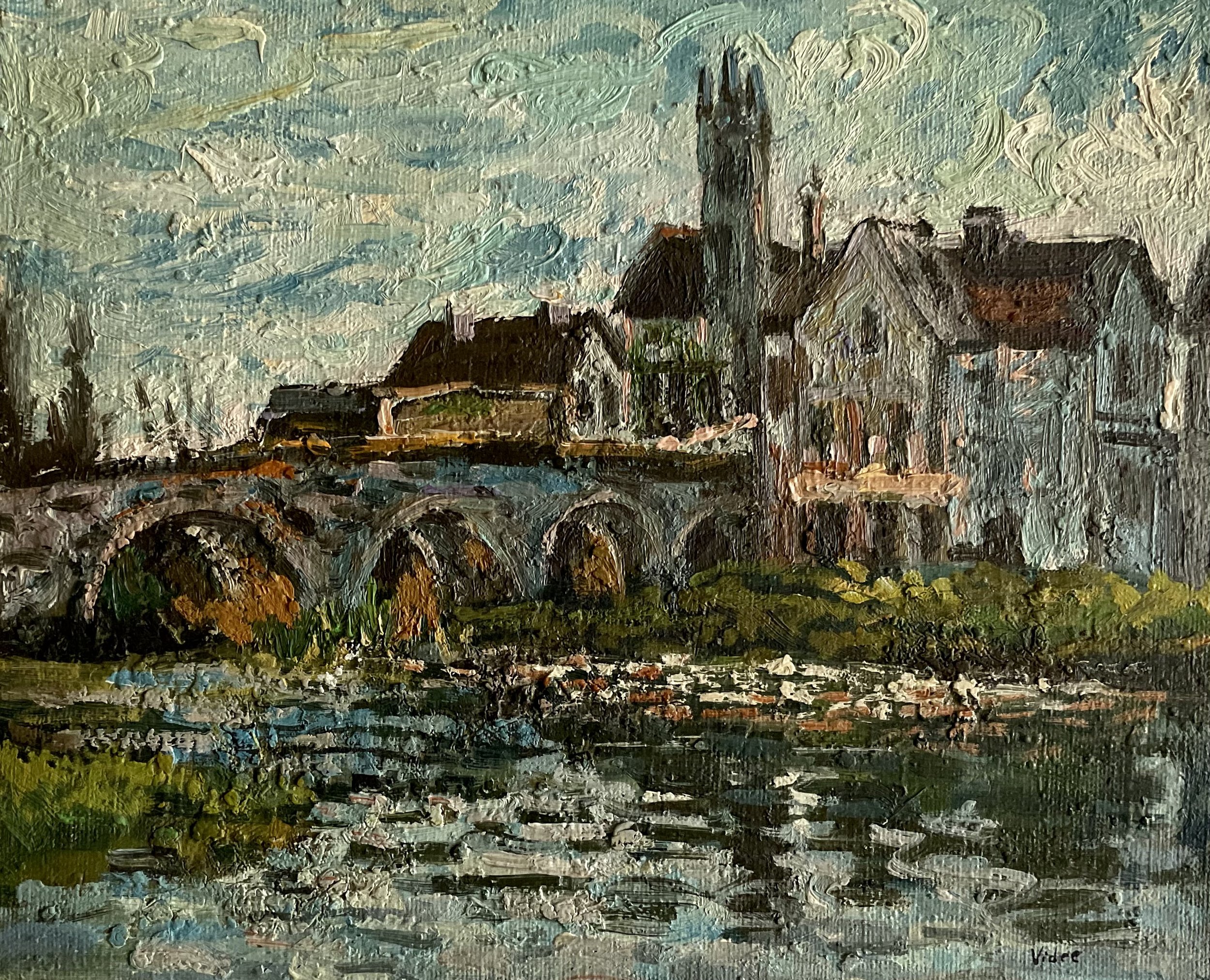
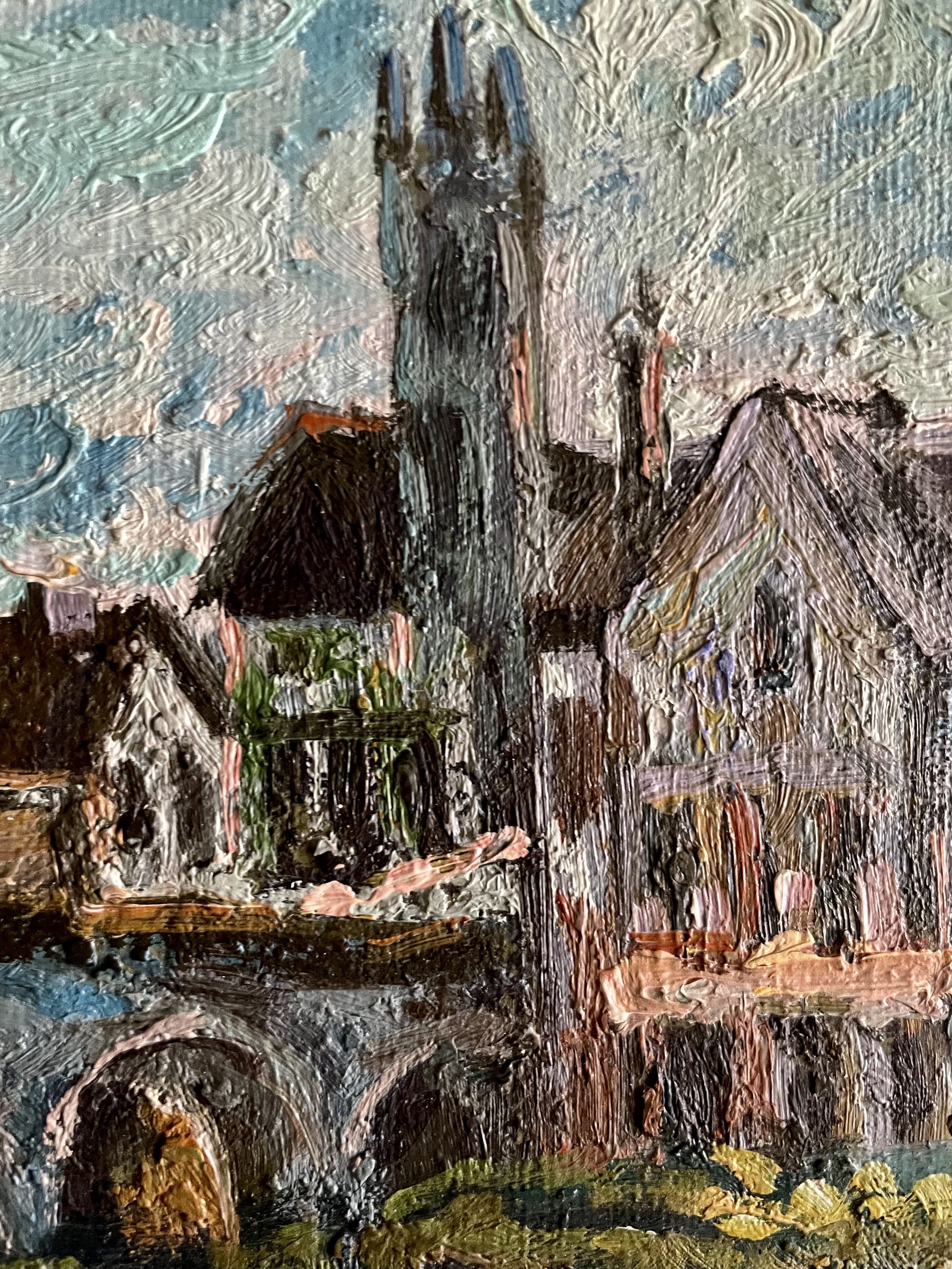
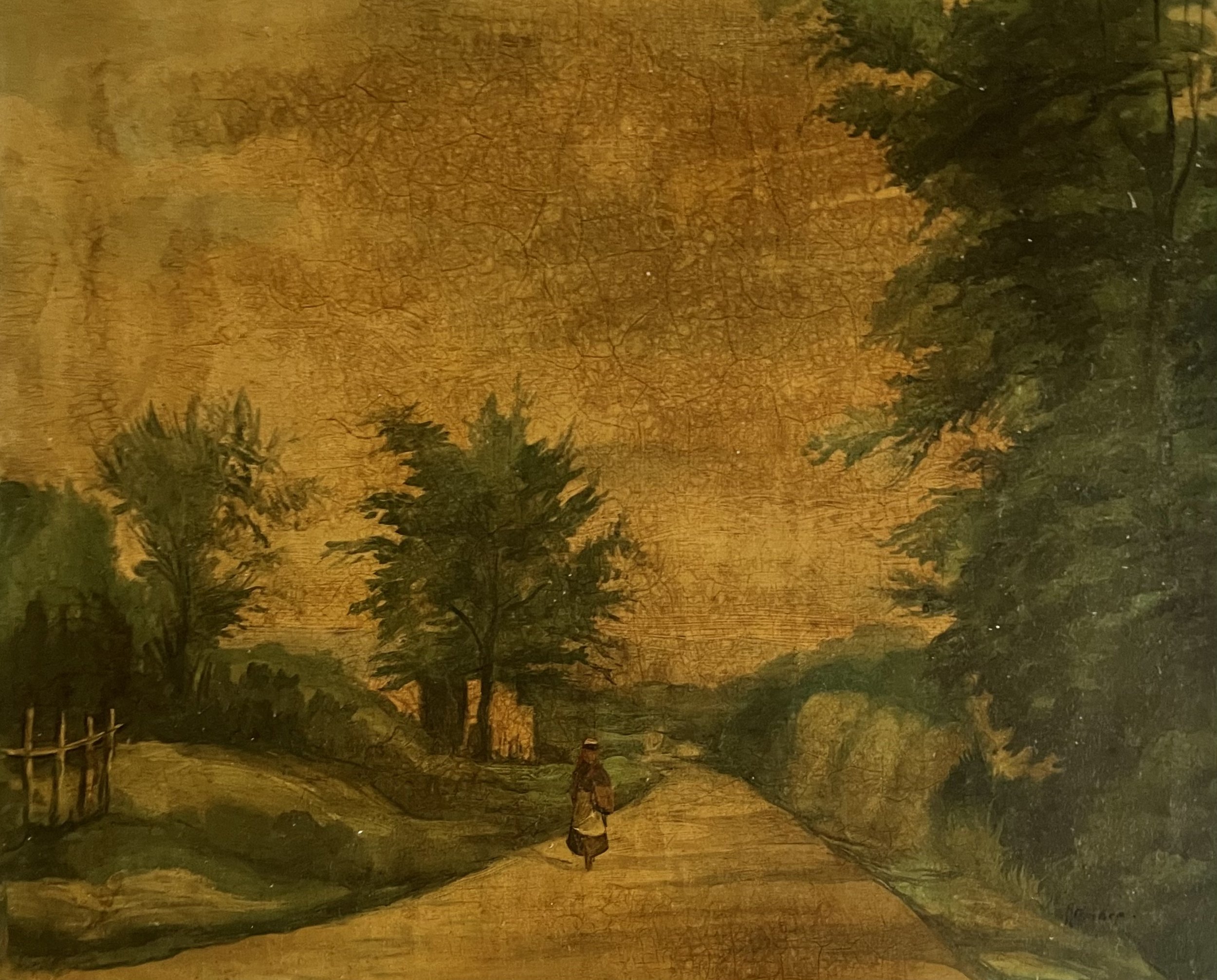
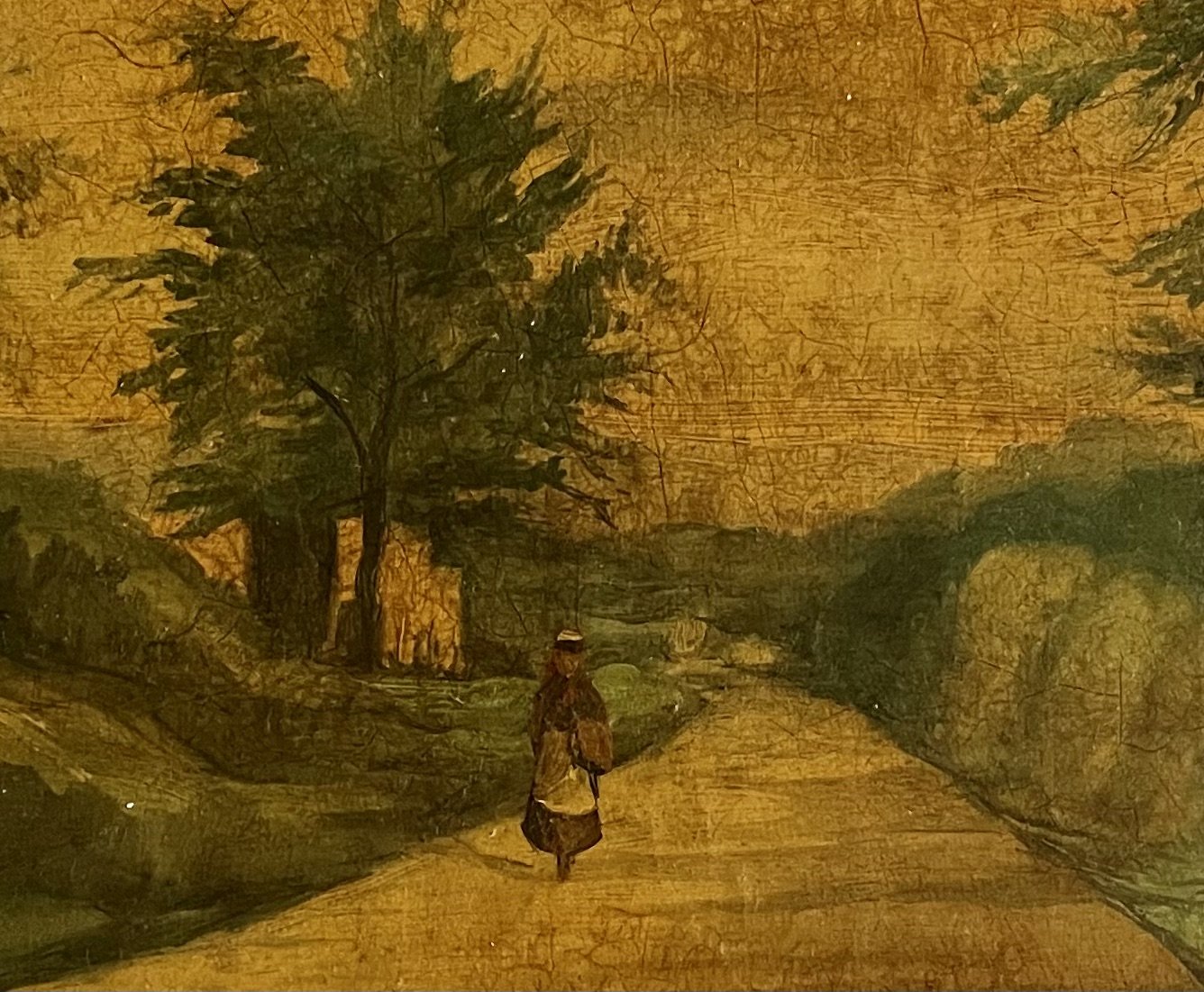
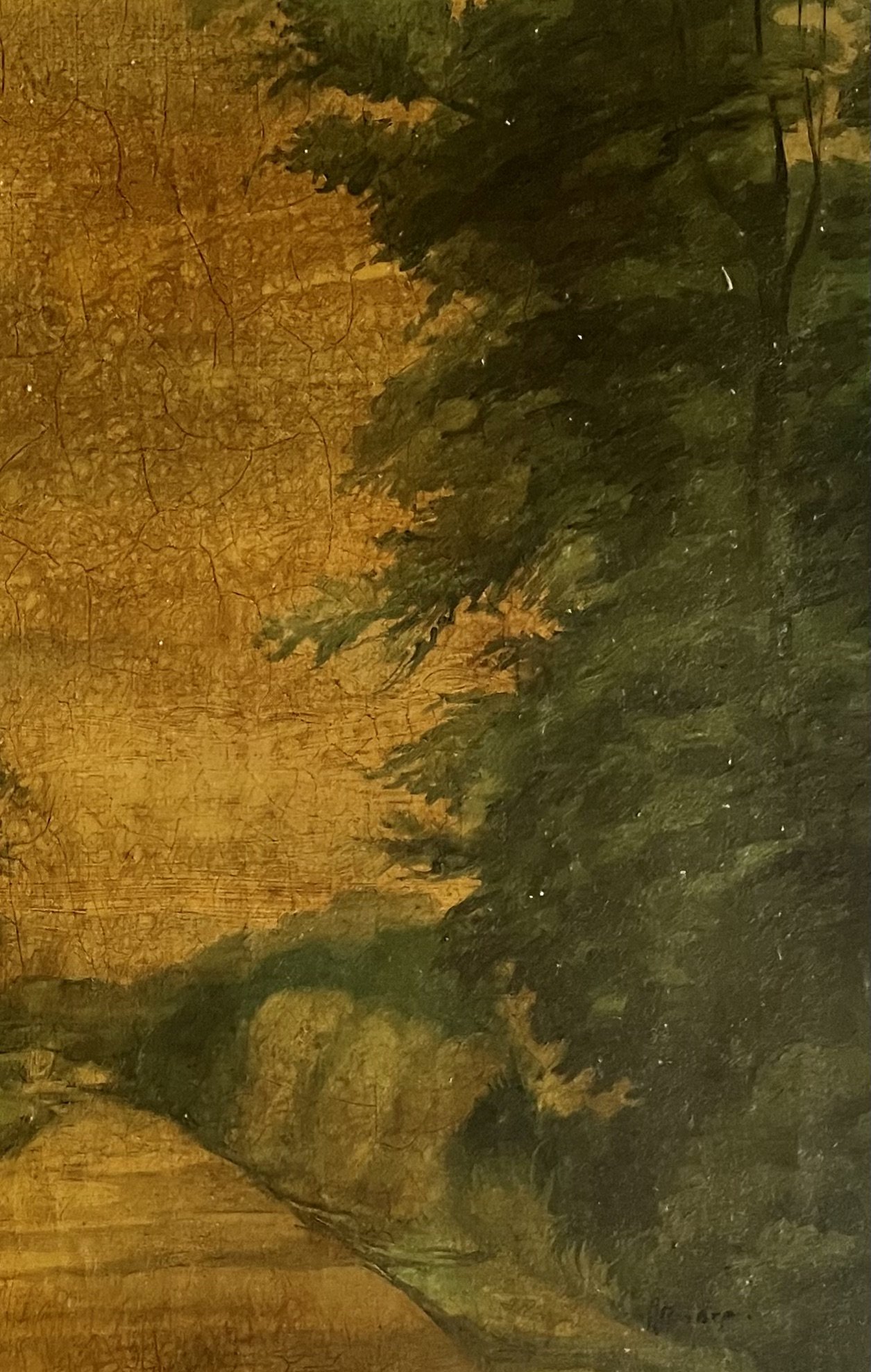
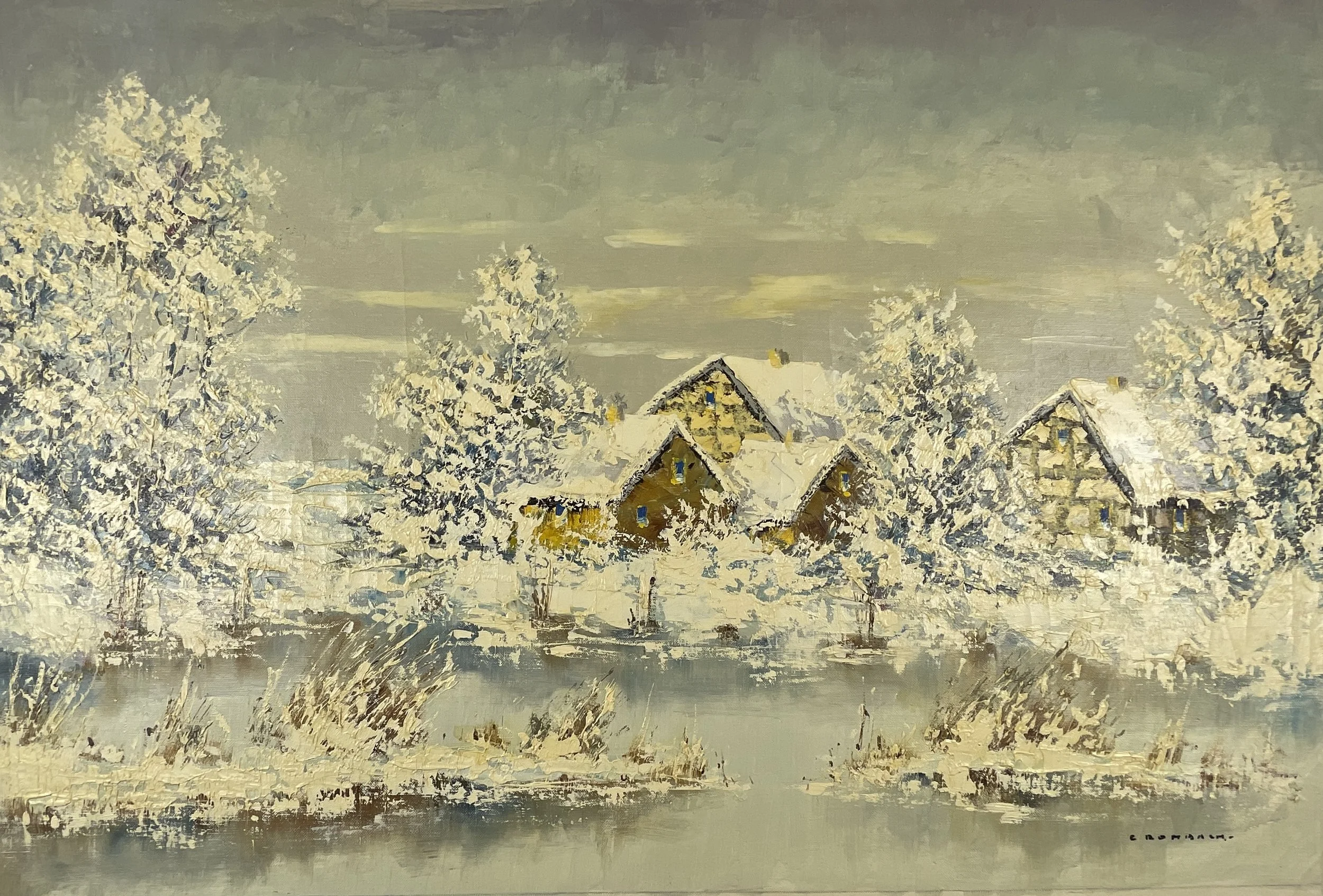
Winter Village by the River (attributed), C. Rombach, c.1960–1975, impasto oil on canvas, 36 × 24 in., signed lower right.
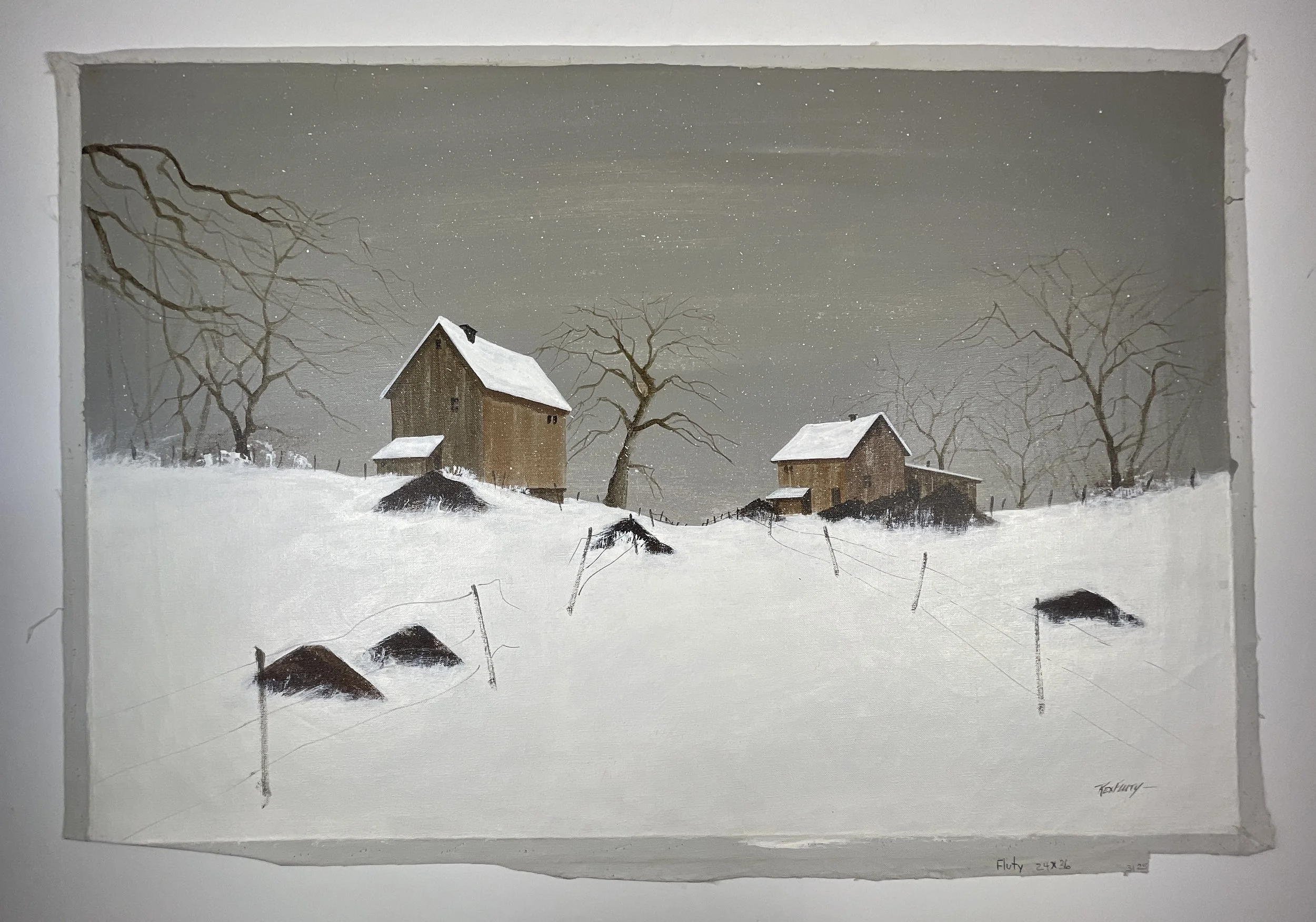
Expressive winter landscape by C. Rombach depicting snow-covered cottages beside a quiet river. Executed in rich impasto oil with palette-knife texture, the composition captures the luminous stillness of a winter countryside village with reflected light across icy water and heavily frosted trees.
Artwork Description
This evocative winter landscape by C. Rombach portrays a tranquil rural settlement blanketed in snow and reflected in a calm river in the foreground. The scene centers on a cluster of rustic houses with steep roofs heavily coated in winter snow. These cottages sit quietly along the riverbank, their warm ochre and stone walls contrasting with the cool tones of the surrounding winter landscape.
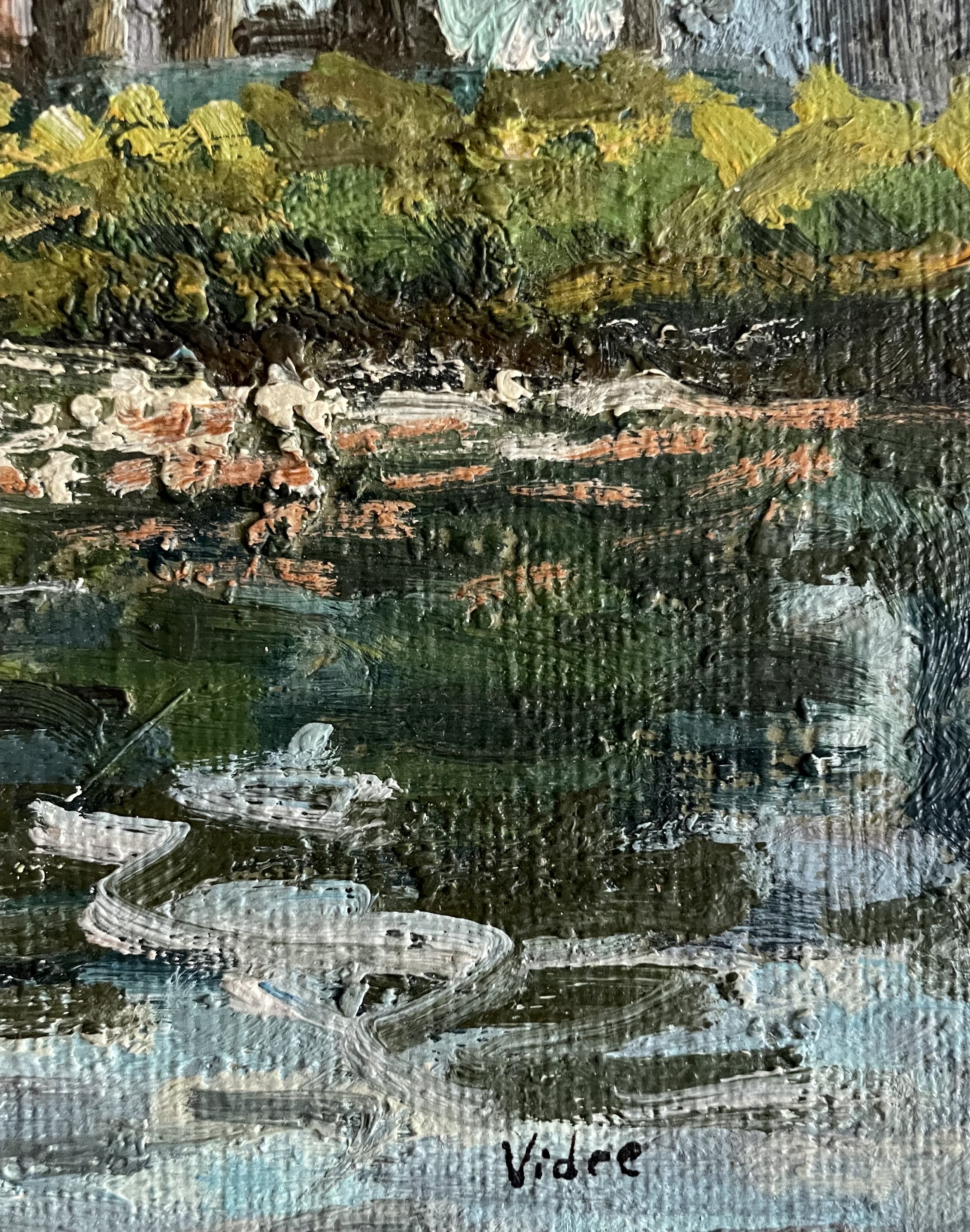
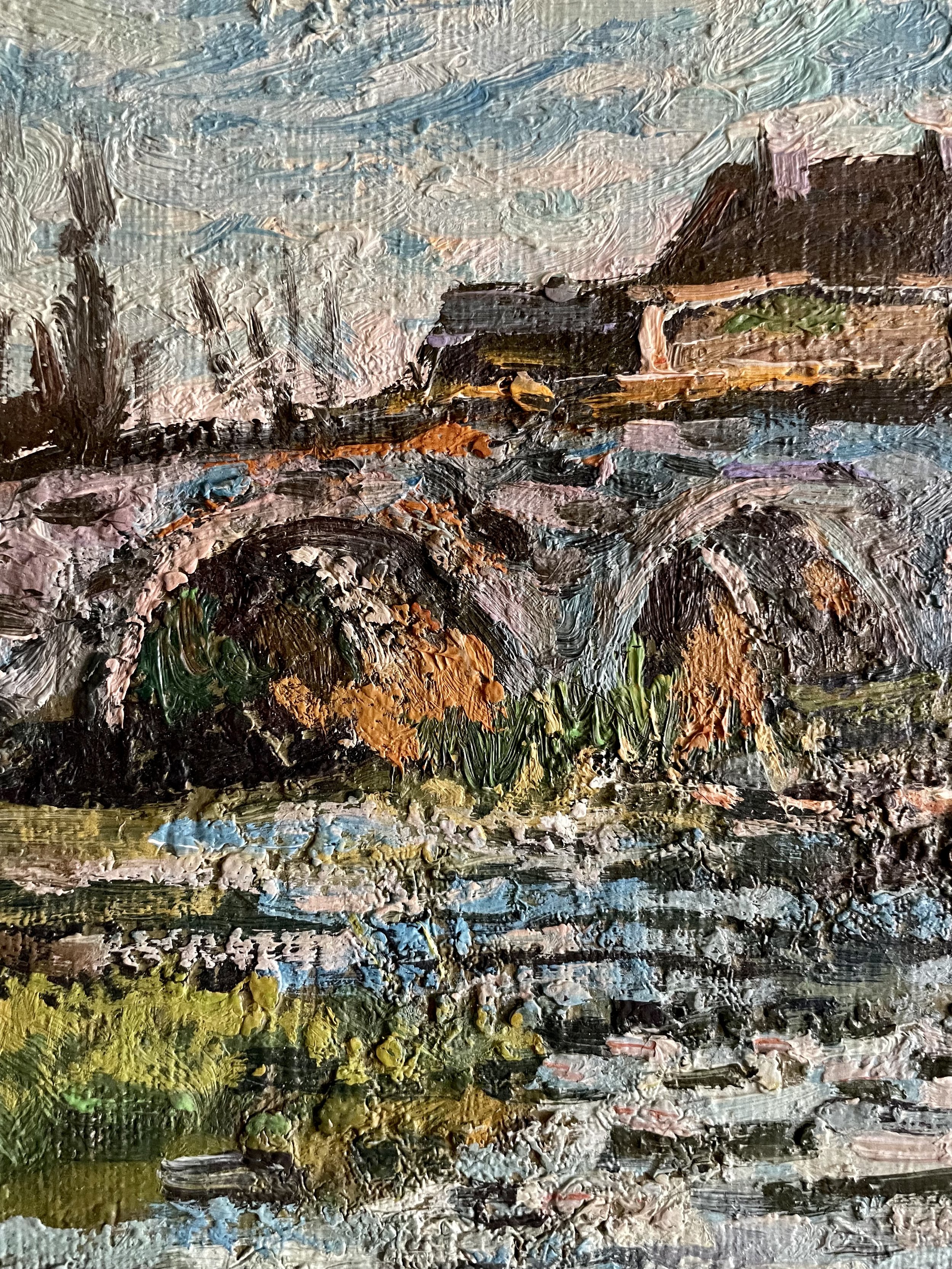
The composition is structured around the horizontal sweep of the river, which forms a calm reflective foreground. The water’s smooth surface mirrors the snowy banks, muted sky, and surrounding trees, giving the painting a serene atmosphere typical of mid-century European landscape painting. Reflections are rendered in soft blues, greys, and pale greens with subtle vertical drag marks that suggest movement in the water.
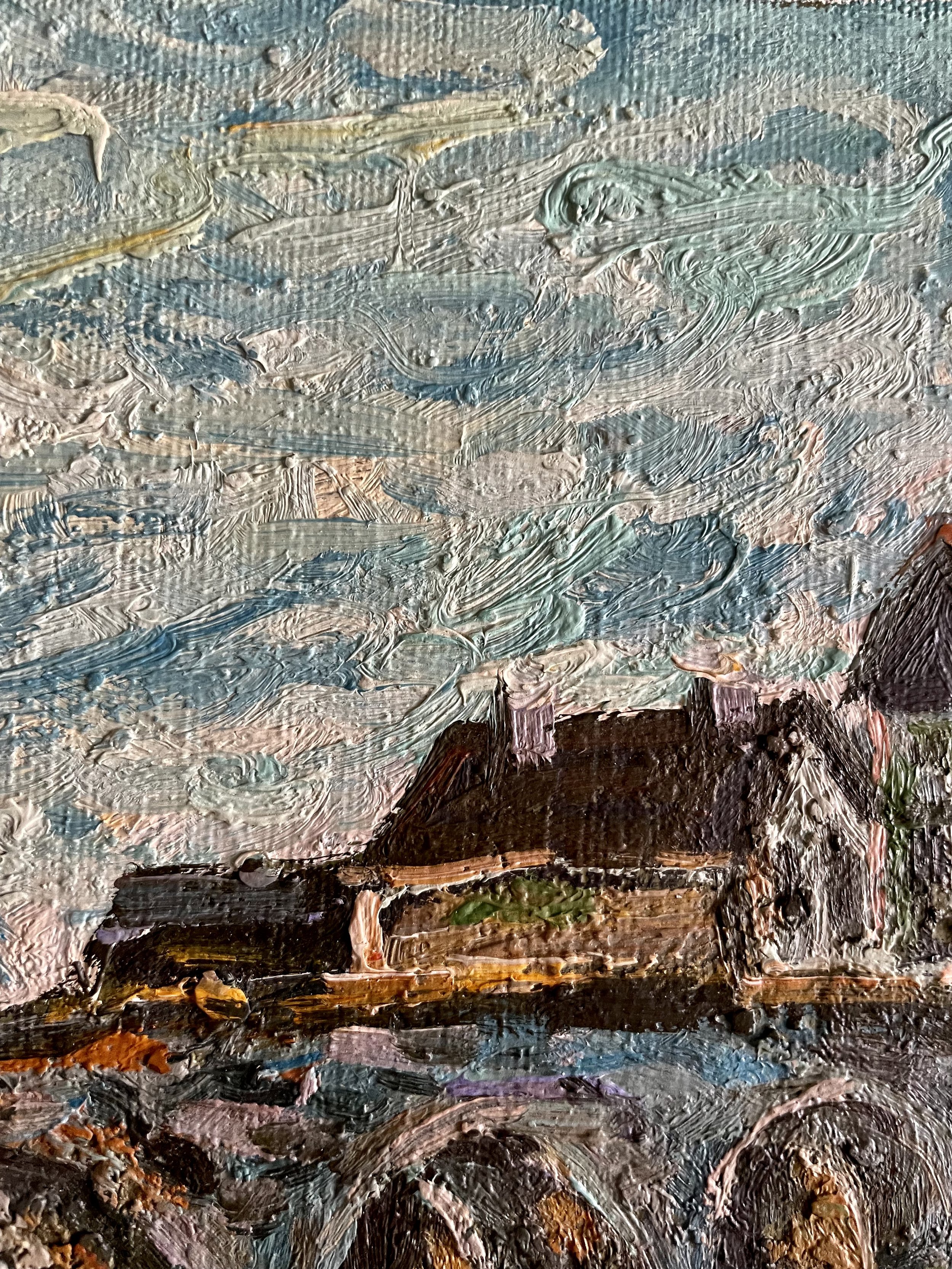
Beyond the river, dense stands of winter trees frame the village. Their branches are thickly laden with snow and built up through vigorous palette-knife strokes and textured brushwork. The artist layers creamy whites, pale blues, and grey-violet tones to create the weight and sparkle of snow resting on branches.
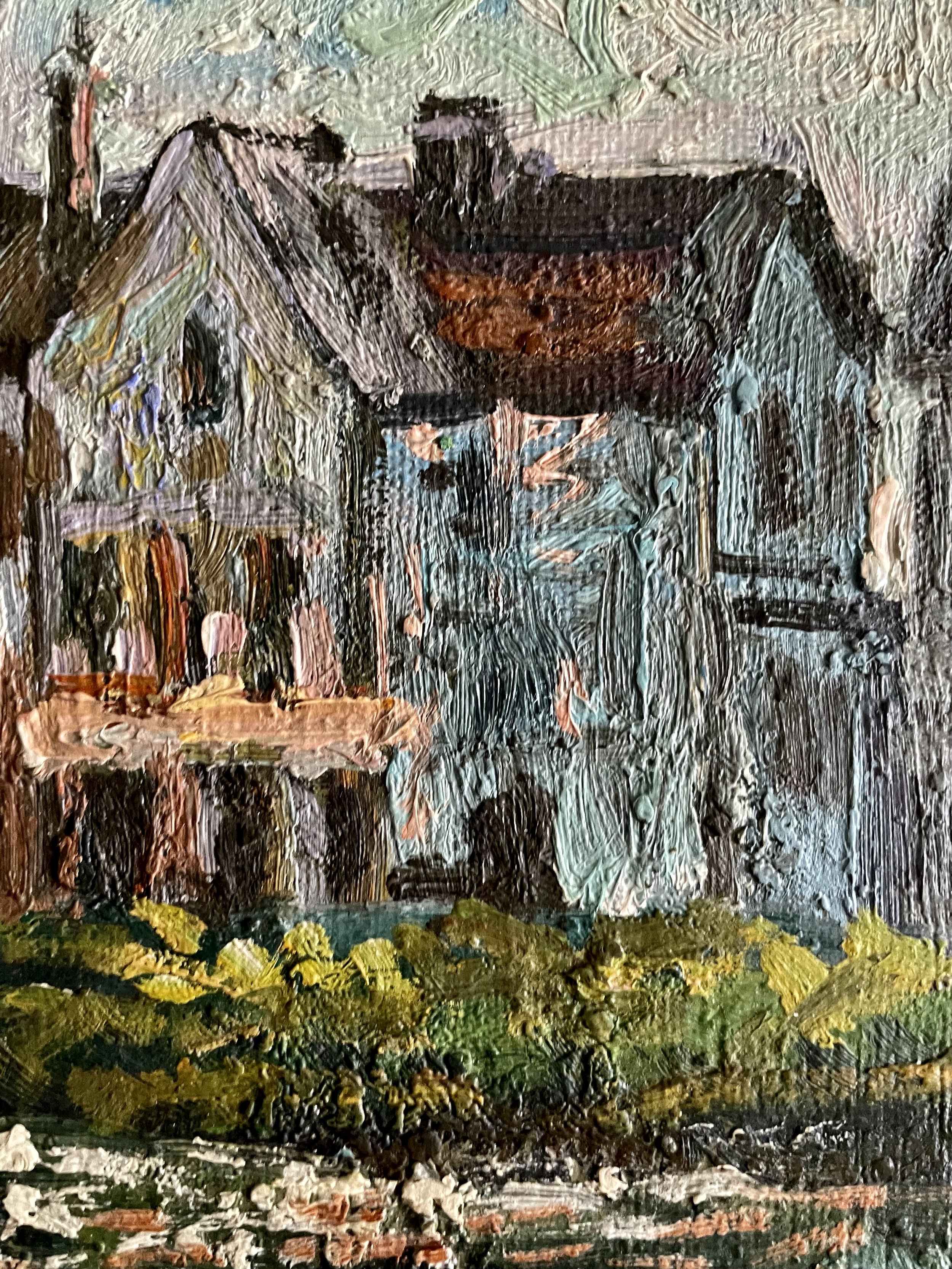
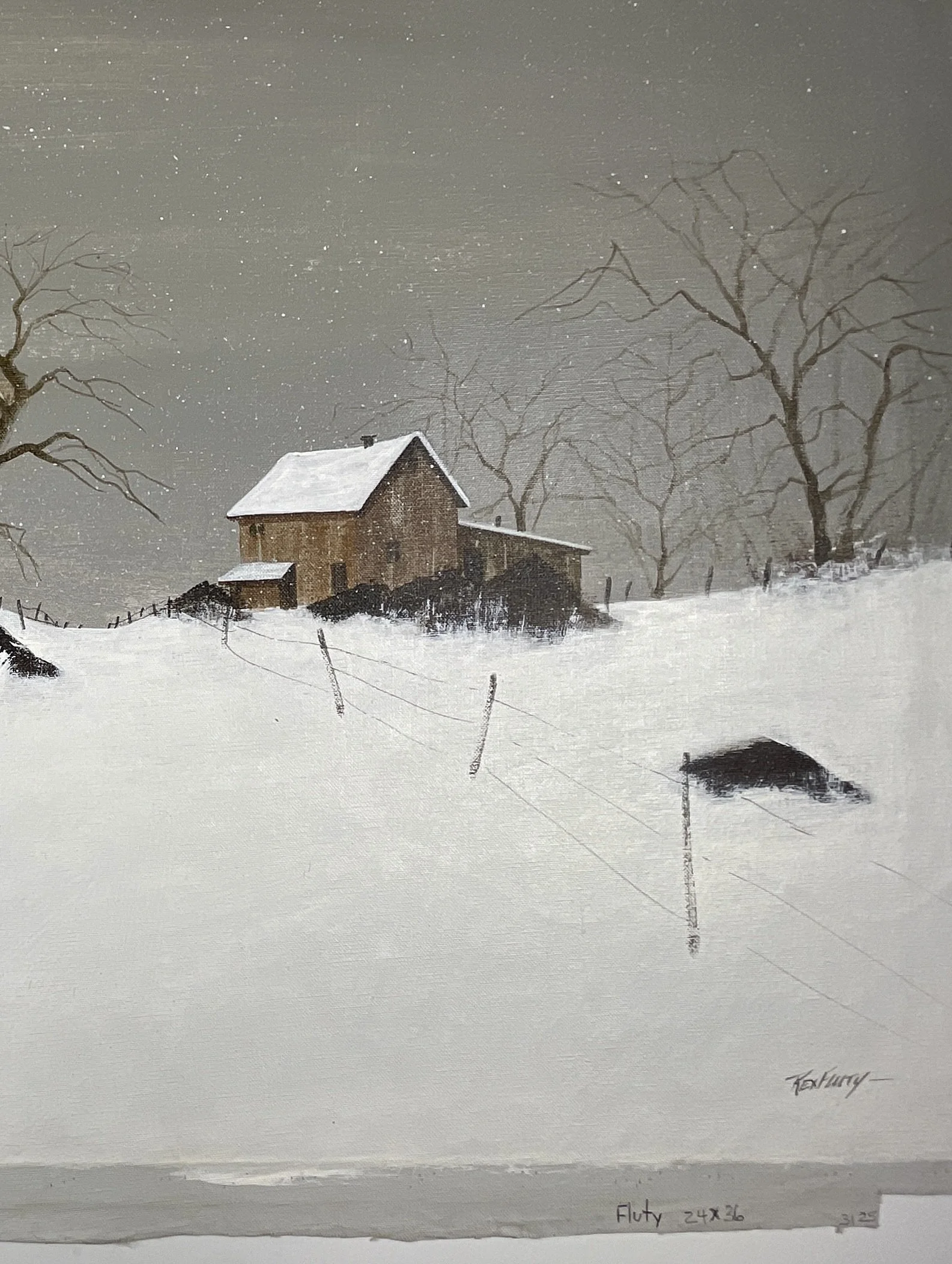
The houses themselves are constructed with expressive strokes that emphasize structure rather than strict architectural detail. The roofs are sharply angled and thick with impasto, allowing the paint surface to physically project from the canvas and catch light. Small windows appear in warm touches of yellow and blue, suggesting the quiet presence of life inside the winter homes.
The sky above the village stretches across the canvas in muted winter light. Soft greenish-grey tones suggest an overcast winter afternoon, with thin streaks of pale yellow breaking through the clouds. This restrained sky balances the heavier texture of the foreground, allowing the composition to breathe while reinforcing the cold atmosphere of the season.
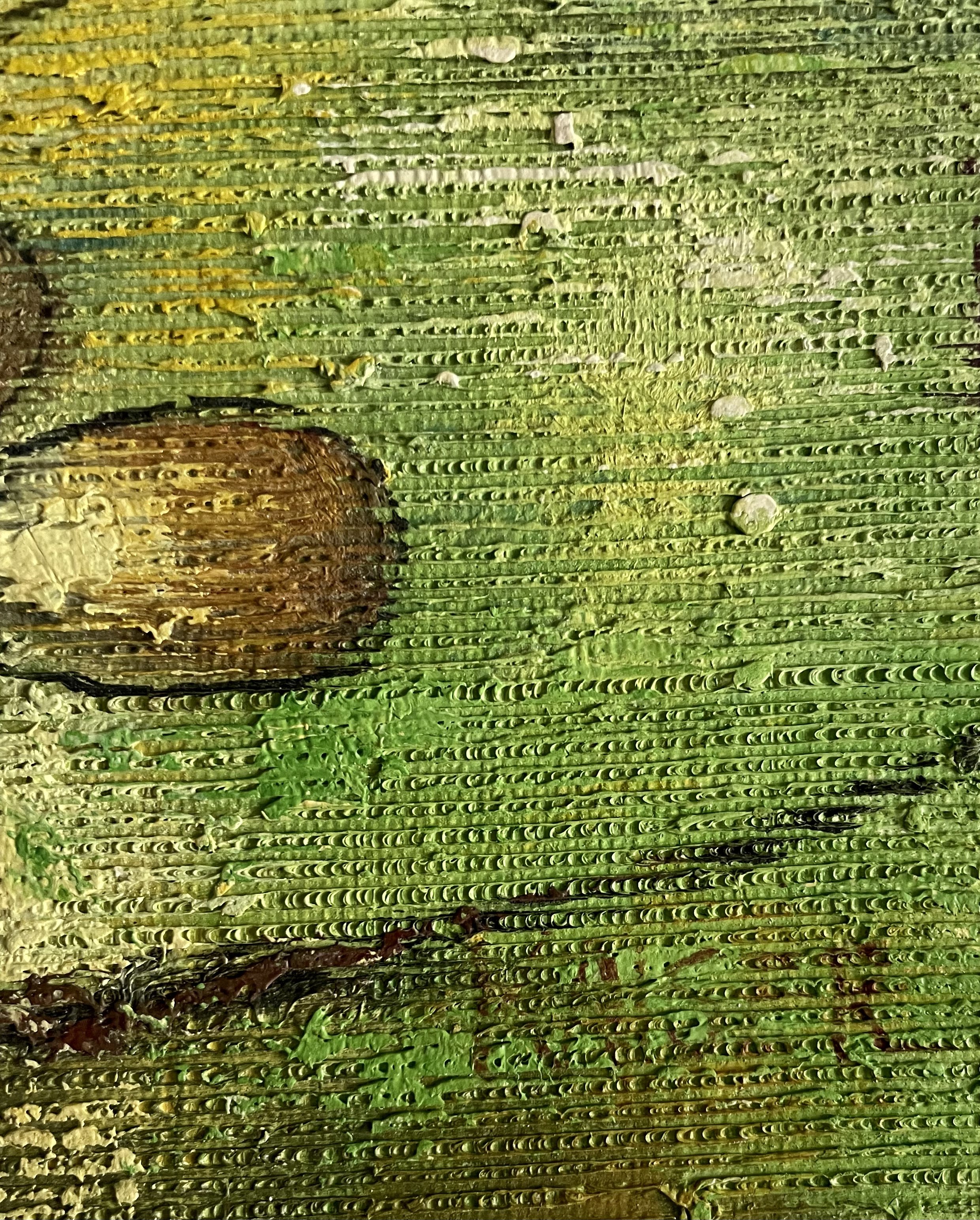
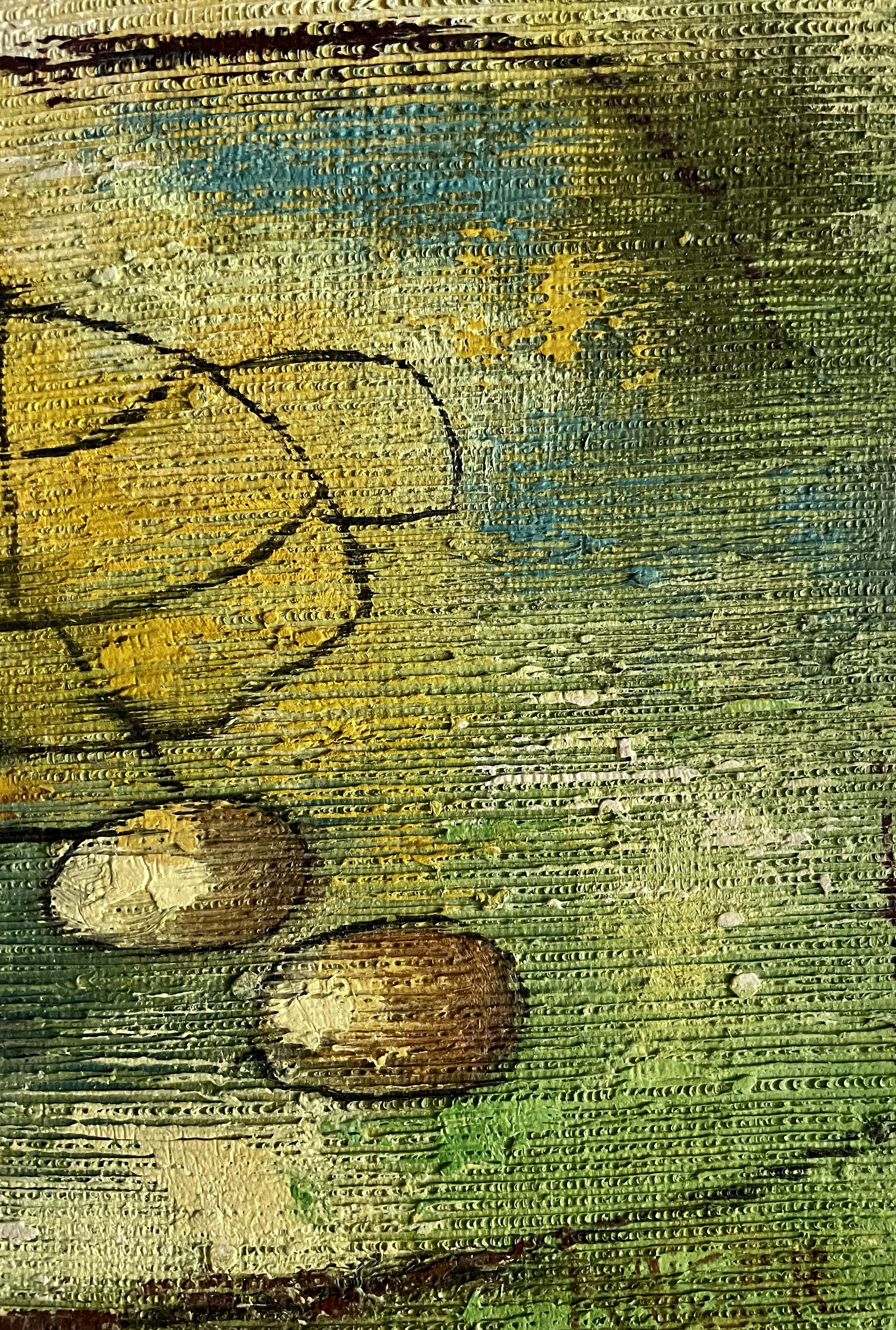
Rombach’s use of impasto is central to the work’s visual impact. Thick layers of paint are applied with palette knife and brush to form snowbanks, trees, and rooflines. The textured surface gives the painting a tactile quality and enhances the sense of freshly fallen snow. The technique reflects the influence of European post-impressionist landscape traditions where physical paint texture contributes directly to the visual experience.
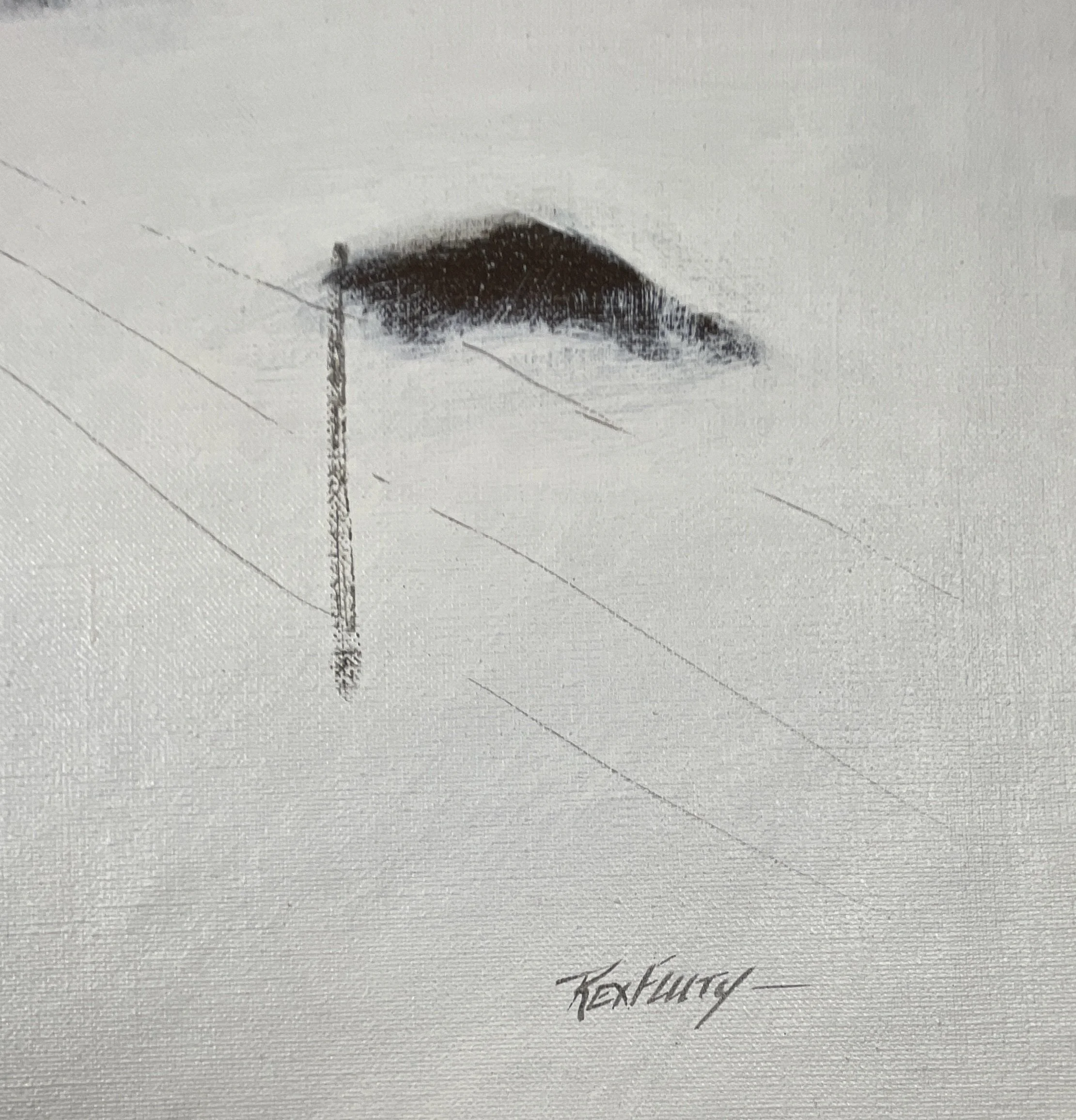
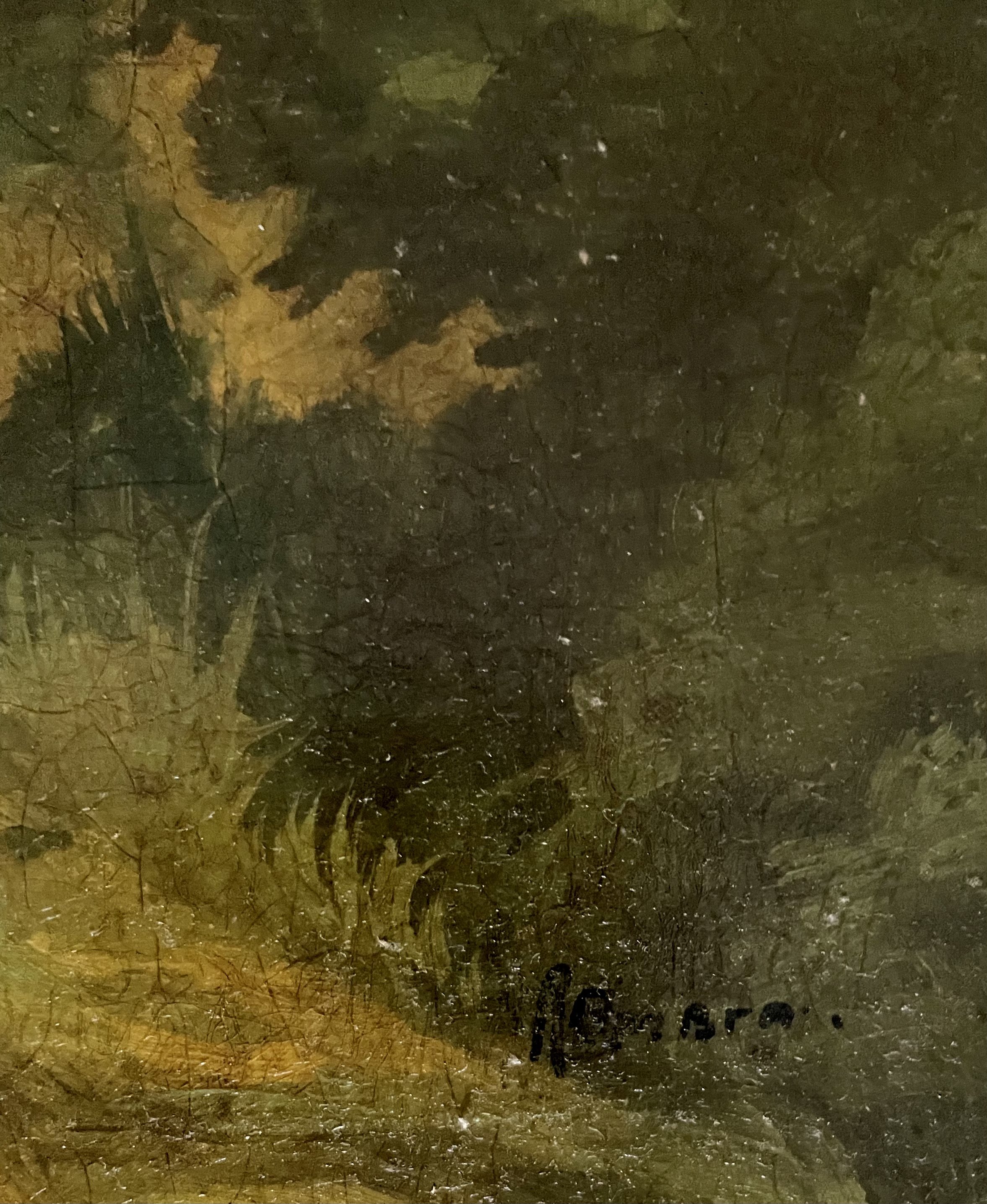
Measuring approximately 36 × 24 inches, the painting presents a classic winter village scene rendered with strong painterly energy. The signature visible in the lower right identifies the work as that of C. Rombach, whose landscapes frequently depict rural European settings in expressive impasto oil.
The result is a quiet yet powerful winter scene—one that combines rustic architecture, frozen waterways, and heavy snowfall into a cohesive landscape filled with atmosphere and texture.
Artist Biography
C. Rombach was a mid-twentieth-century European landscape painter known for expressive impasto paintings of rural villages and seasonal countryside scenes. While documentation on the artist remains limited compared with major modernist figures, the body of work attributed to Rombach reflects the broader European tradition of post-impressionist landscape painting that flourished throughout the mid-1900s.
Paintings attributed to Rombach commonly depict pastoral villages, riverside cottages, forested valleys, and winter countryside settings. These subjects echo the long European tradition of rural landscape painting that developed from nineteenth-century impressionism and evolved into a more textural and expressive form in the twentieth century.
Rombach’s work is distinguished by thick palette-knife application and vigorous brushwork. Instead of smooth tonal blending, the artist builds compositions through layers of paint that give physical depth to trees, buildings, and terrain. Snow scenes in particular reveal the artist’s command of impasto technique, with heavy deposits of paint used to suggest snow resting on rooftops and branches.
Stylistically, Rombach’s landscapes share characteristics with the broader post-impressionist and expressionist traditions that influenced many European painters working in the mid-century period. Color is often simplified into cool atmospheric palettes—soft greys, pale blues, and winter whites—contrasted with warmer tones in architecture or autumn foliage.
Works attributed to the artist circulated internationally through gallery networks that specialized in European landscape painting during the 1960s and 1970s. Many such paintings entered American collections through art dealers in New York who represented international artists and distributed original oil paintings and limited editions to collectors and galleries.
The work of C. Rombach reflects the enduring popularity of European village landscapes during the twentieth century. Collectors were drawn to these scenes for their romantic atmosphere, traditional subject matter, and expressive paint handling. Paintings such as winter villages, riverside cottages, and pastoral valleys offered a timeless vision of rural life that contrasted with the rapid modernization occurring across Europe and North America during the period.
Although detailed archival records for the artist remain scarce, the paintings themselves demonstrate a confident command of composition, texture, and seasonal atmosphere. Rombach’s landscapes continue to attract collectors who appreciate richly textured impasto painting and traditional European countryside subjects.
As of 2026, works attributed to C. Rombach remain present on the secondary art market and in private collections, particularly among collectors of mid-century European landscape painting. The paintings are appreciated for their tactile surfaces, evocative rural imagery, and connection to the enduring tradition of expressive oil landscape painting.
C. Rombach winter village landscape oil painting, expressive impasto snow scene with cottages and river reflection, signed, 36 × 24 in.
Certificate of Authentication
Artist: C. Rombach
Title: Winter Village by the River (attributed)
Medium: Oil on canvas
Technique: Impasto palette-knife painting
Dimensions: 36 × 24 inches
Signature: Signed lower right
Date: circa 1960–1975
This work is an original oil painting attributed to C. Rombach based on the visible signature and stylistic characteristics consistent with the artist’s landscape paintings.
Condition
Very good vintage condition. Minor edge wear and handling marks consistent with gallery storage. Paint surface stable with pronounced impasto texture and no visible restoration.
Provenance
Artist studio or early gallery distribution
Mitch Morse Gallery, New York — artist’s agent, publisher of original graphics, art dealer and distributor
Private collection acquired through Mitch Morse Gallery
Artfind Gallery, Washington DC (current owner)
All works have been acquired from Mitch Morse Gallery, which sourced artwork in New York, the United States, and Europe.
Provenance Note: Mitch Morse Gallery Collection
This artwork originates from the inventory of Mitch Morse Gallery, a respected New York–based gallery and publisher active during the mid-to-late 20th century. Mitch Morse was an established figure in the American art market, serving as an artist’s agent, publisher of original graphics, art dealer, distributor, and fine art restorer. He was also a Design Affiliate of A.S.I.D., listed in Who’s Who in the East, and a guest lecturer in graphics at New York University, with appearances on radio and television discussing art and design.
Through his gallery and associated publishing operations, Morse acquired paintings, prints, and original works from artists and studios across New York, Europe, and international art markets, assembling a broad inventory representing a wide range of artistic traditions and mediums. Works from this collection circulated through galleries and collectors throughout the United States.
The present painting was acquired through this network and is now held in the collection of Artfind Gallery, Washington DC, continuing the documented chain of gallery provenance from Mitch Morse’s original acquisitions.
Winter Village by the River (attributed), C. Rombach, c.1960–1975, impasto oil on canvas, 36 × 24 in., signed lower right.
Expressive winter landscape by C. Rombach depicting snow-covered cottages beside a quiet river. Executed in rich impasto oil with palette-knife texture, the composition captures the luminous stillness of a winter countryside village with reflected light across icy water and heavily frosted trees.
Artwork Description
This evocative winter landscape by C. Rombach portrays a tranquil rural settlement blanketed in snow and reflected in a calm river in the foreground. The scene centers on a cluster of rustic houses with steep roofs heavily coated in winter snow. These cottages sit quietly along the riverbank, their warm ochre and stone walls contrasting with the cool tones of the surrounding winter landscape.
The composition is structured around the horizontal sweep of the river, which forms a calm reflective foreground. The water’s smooth surface mirrors the snowy banks, muted sky, and surrounding trees, giving the painting a serene atmosphere typical of mid-century European landscape painting. Reflections are rendered in soft blues, greys, and pale greens with subtle vertical drag marks that suggest movement in the water.
Beyond the river, dense stands of winter trees frame the village. Their branches are thickly laden with snow and built up through vigorous palette-knife strokes and textured brushwork. The artist layers creamy whites, pale blues, and grey-violet tones to create the weight and sparkle of snow resting on branches.
The houses themselves are constructed with expressive strokes that emphasize structure rather than strict architectural detail. The roofs are sharply angled and thick with impasto, allowing the paint surface to physically project from the canvas and catch light. Small windows appear in warm touches of yellow and blue, suggesting the quiet presence of life inside the winter homes.
The sky above the village stretches across the canvas in muted winter light. Soft greenish-grey tones suggest an overcast winter afternoon, with thin streaks of pale yellow breaking through the clouds. This restrained sky balances the heavier texture of the foreground, allowing the composition to breathe while reinforcing the cold atmosphere of the season.
Rombach’s use of impasto is central to the work’s visual impact. Thick layers of paint are applied with palette knife and brush to form snowbanks, trees, and rooflines. The textured surface gives the painting a tactile quality and enhances the sense of freshly fallen snow. The technique reflects the influence of European post-impressionist landscape traditions where physical paint texture contributes directly to the visual experience.
Measuring approximately 36 × 24 inches, the painting presents a classic winter village scene rendered with strong painterly energy. The signature visible in the lower right identifies the work as that of C. Rombach, whose landscapes frequently depict rural European settings in expressive impasto oil.
The result is a quiet yet powerful winter scene—one that combines rustic architecture, frozen waterways, and heavy snowfall into a cohesive landscape filled with atmosphere and texture.
Artist Biography
C. Rombach was a mid-twentieth-century European landscape painter known for expressive impasto paintings of rural villages and seasonal countryside scenes. While documentation on the artist remains limited compared with major modernist figures, the body of work attributed to Rombach reflects the broader European tradition of post-impressionist landscape painting that flourished throughout the mid-1900s.
Paintings attributed to Rombach commonly depict pastoral villages, riverside cottages, forested valleys, and winter countryside settings. These subjects echo the long European tradition of rural landscape painting that developed from nineteenth-century impressionism and evolved into a more textural and expressive form in the twentieth century.
Rombach’s work is distinguished by thick palette-knife application and vigorous brushwork. Instead of smooth tonal blending, the artist builds compositions through layers of paint that give physical depth to trees, buildings, and terrain. Snow scenes in particular reveal the artist’s command of impasto technique, with heavy deposits of paint used to suggest snow resting on rooftops and branches.
Stylistically, Rombach’s landscapes share characteristics with the broader post-impressionist and expressionist traditions that influenced many European painters working in the mid-century period. Color is often simplified into cool atmospheric palettes—soft greys, pale blues, and winter whites—contrasted with warmer tones in architecture or autumn foliage.
Works attributed to the artist circulated internationally through gallery networks that specialized in European landscape painting during the 1960s and 1970s. Many such paintings entered American collections through art dealers in New York who represented international artists and distributed original oil paintings and limited editions to collectors and galleries.
The work of C. Rombach reflects the enduring popularity of European village landscapes during the twentieth century. Collectors were drawn to these scenes for their romantic atmosphere, traditional subject matter, and expressive paint handling. Paintings such as winter villages, riverside cottages, and pastoral valleys offered a timeless vision of rural life that contrasted with the rapid modernization occurring across Europe and North America during the period.
Although detailed archival records for the artist remain scarce, the paintings themselves demonstrate a confident command of composition, texture, and seasonal atmosphere. Rombach’s landscapes continue to attract collectors who appreciate richly textured impasto painting and traditional European countryside subjects.
As of 2026, works attributed to C. Rombach remain present on the secondary art market and in private collections, particularly among collectors of mid-century European landscape painting. The paintings are appreciated for their tactile surfaces, evocative rural imagery, and connection to the enduring tradition of expressive oil landscape painting.
C. Rombach winter village landscape oil painting, expressive impasto snow scene with cottages and river reflection, signed, 36 × 24 in.
Certificate of Authentication
Artist: C. Rombach
Title: Winter Village by the River (attributed)
Medium: Oil on canvas
Technique: Impasto palette-knife painting
Dimensions: 36 × 24 inches
Signature: Signed lower right
Date: circa 1960–1975
This work is an original oil painting attributed to C. Rombach based on the visible signature and stylistic characteristics consistent with the artist’s landscape paintings.
Condition
Very good vintage condition. Minor edge wear and handling marks consistent with gallery storage. Paint surface stable with pronounced impasto texture and no visible restoration.
Provenance
Artist studio or early gallery distribution
Mitch Morse Gallery, New York — artist’s agent, publisher of original graphics, art dealer and distributor
Private collection acquired through Mitch Morse Gallery
Artfind Gallery, Washington DC (current owner)
All works have been acquired from Mitch Morse Gallery, which sourced artwork in New York, the United States, and Europe.
Provenance Note: Mitch Morse Gallery Collection
This artwork originates from the inventory of Mitch Morse Gallery, a respected New York–based gallery and publisher active during the mid-to-late 20th century. Mitch Morse was an established figure in the American art market, serving as an artist’s agent, publisher of original graphics, art dealer, distributor, and fine art restorer. He was also a Design Affiliate of A.S.I.D., listed in Who’s Who in the East, and a guest lecturer in graphics at New York University, with appearances on radio and television discussing art and design.
Through his gallery and associated publishing operations, Morse acquired paintings, prints, and original works from artists and studios across New York, Europe, and international art markets, assembling a broad inventory representing a wide range of artistic traditions and mediums. Works from this collection circulated through galleries and collectors throughout the United States.
The present painting was acquired through this network and is now held in the collection of Artfind Gallery, Washington DC, continuing the documented chain of gallery provenance from Mitch Morse’s original acquisitions.