 Image 1 of 5
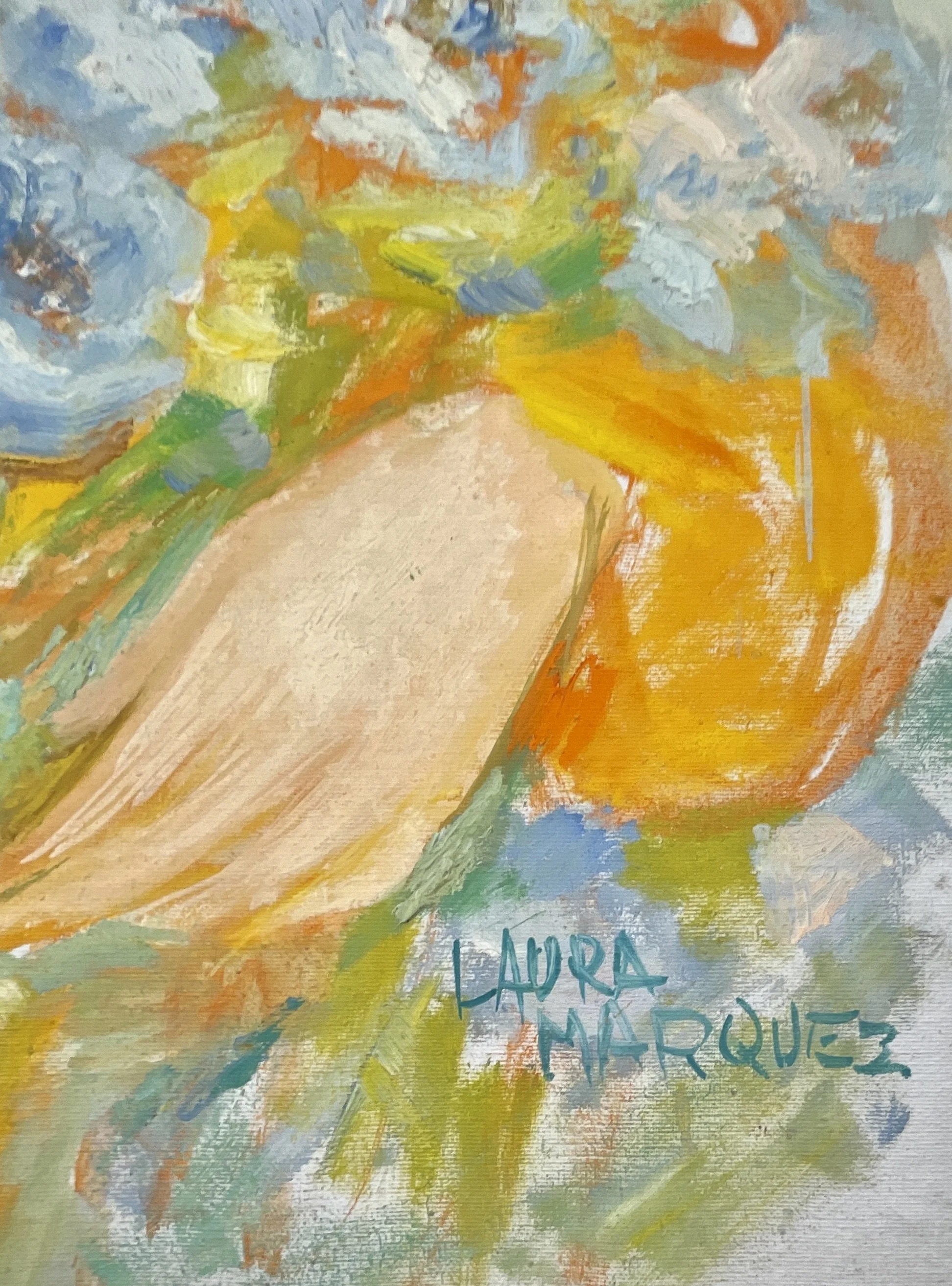 Image 2 of 5
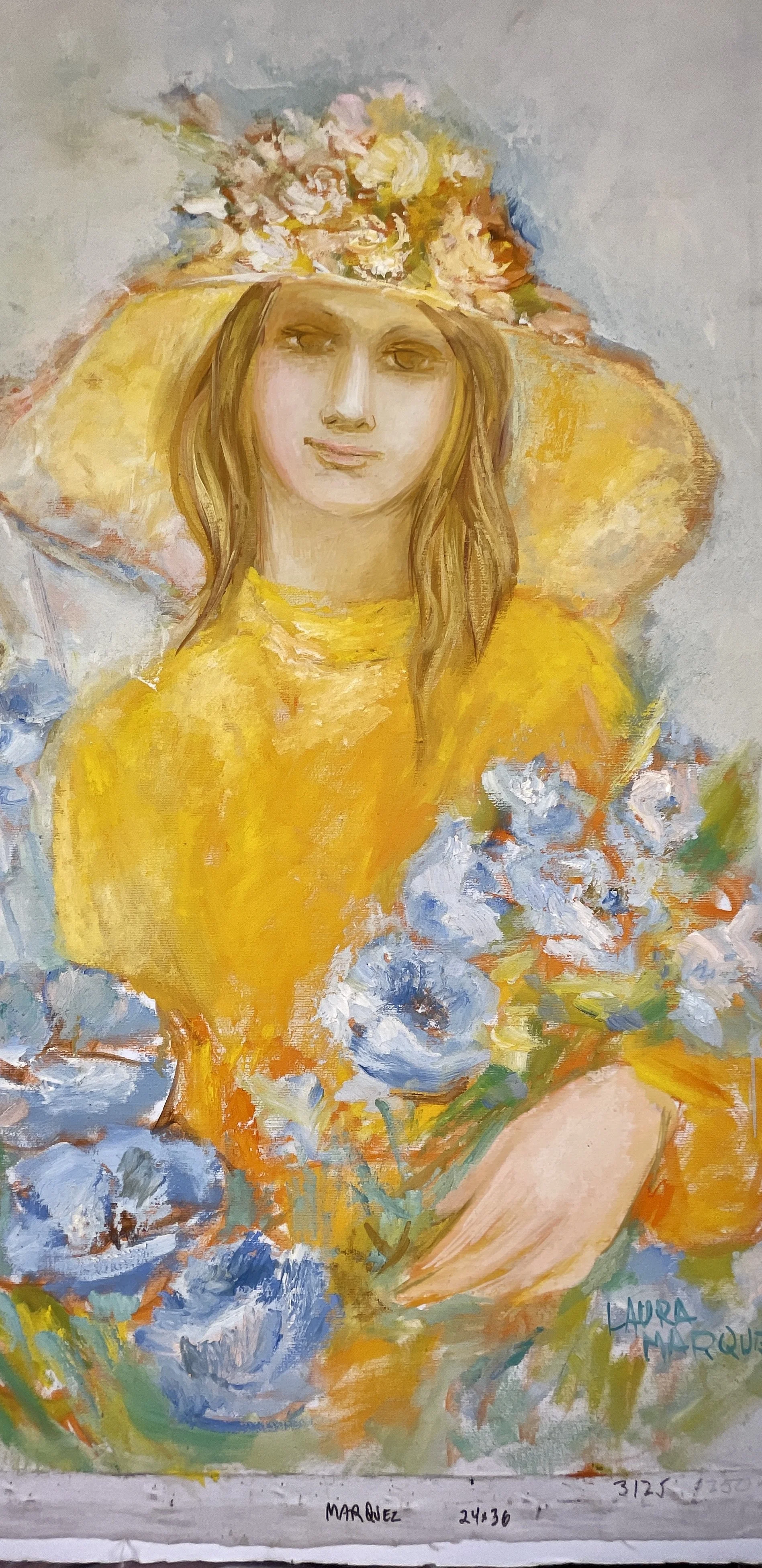 Image 3 of 5
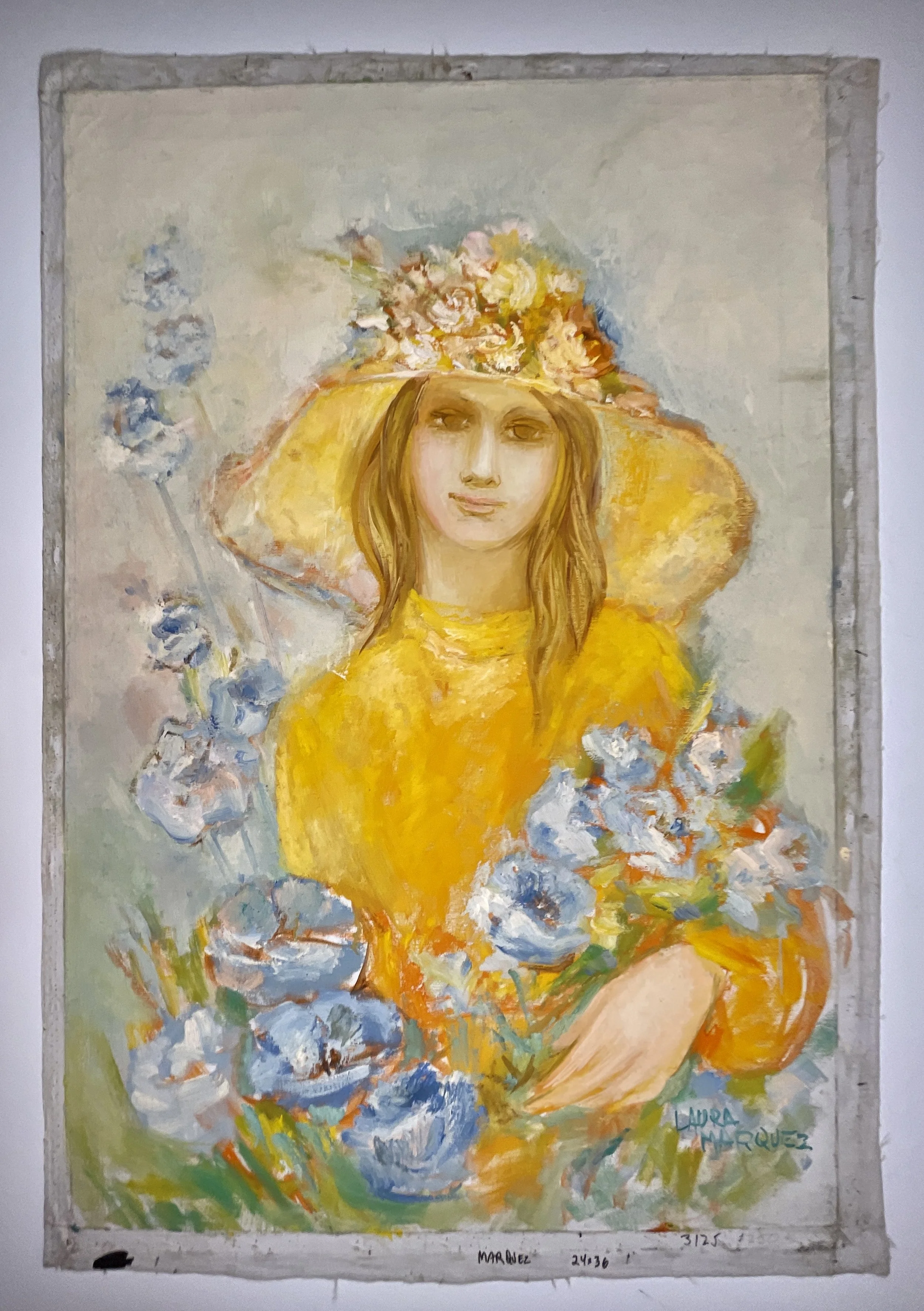 Image 4 of 5
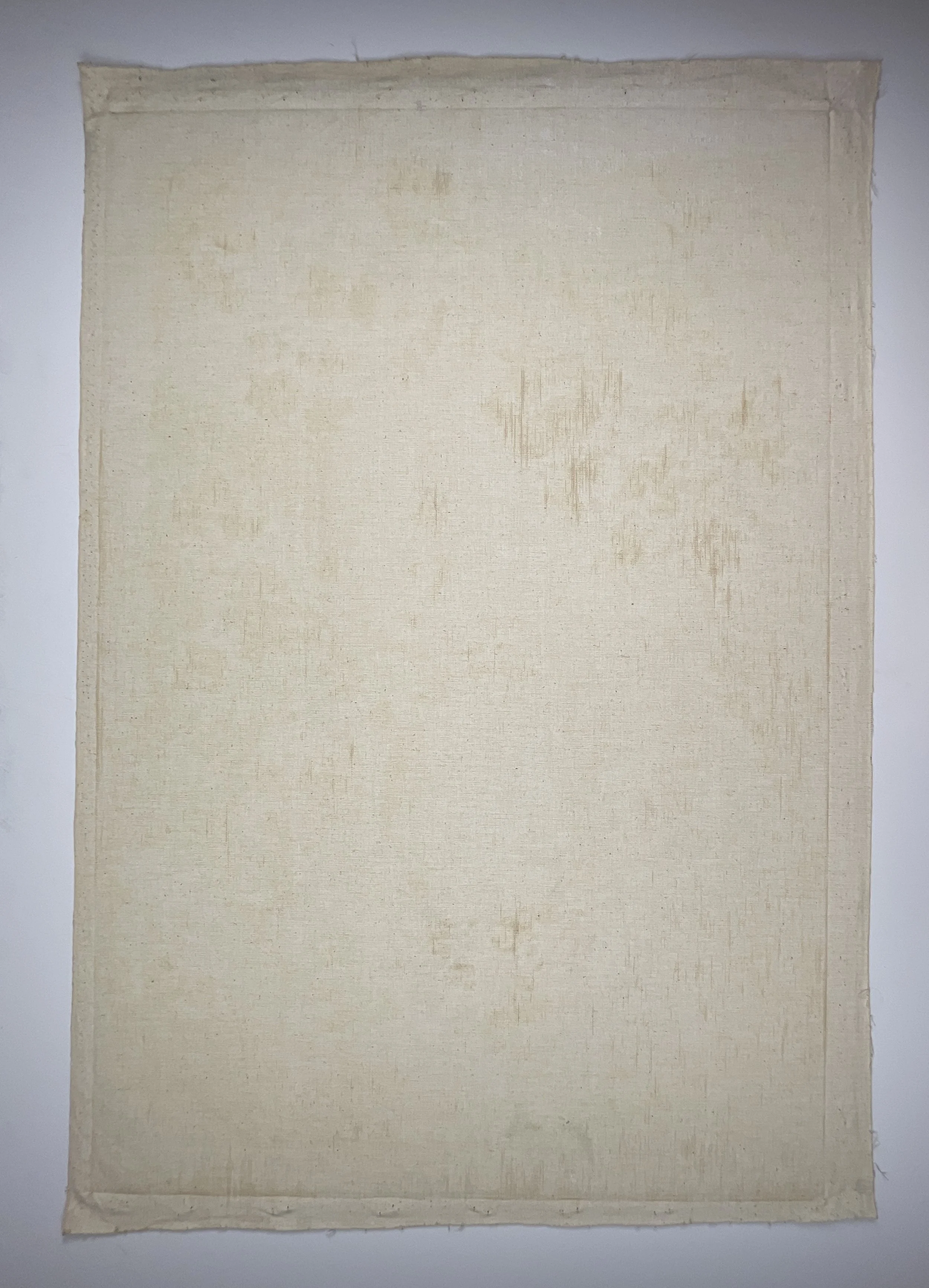 Image 5 of 5
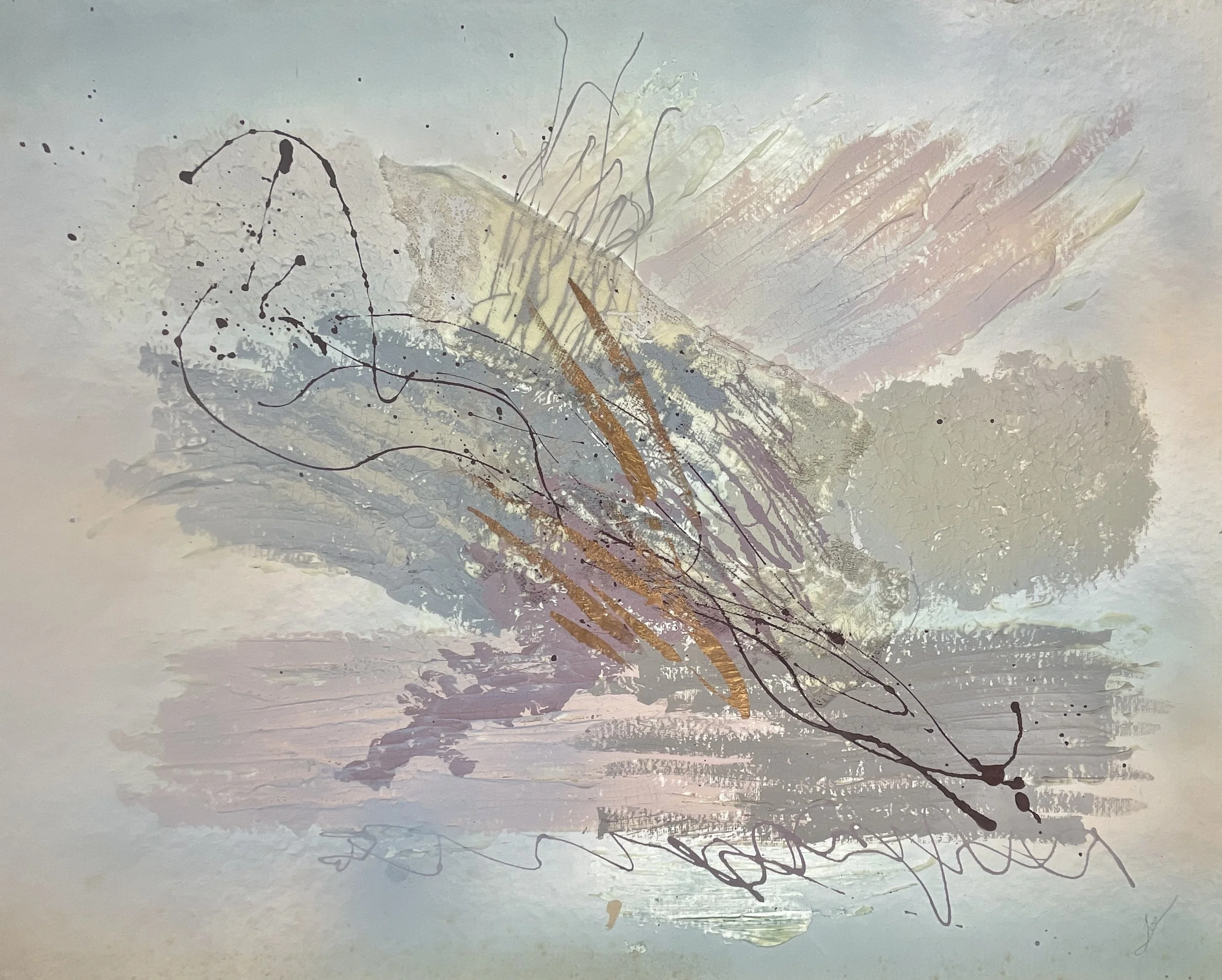
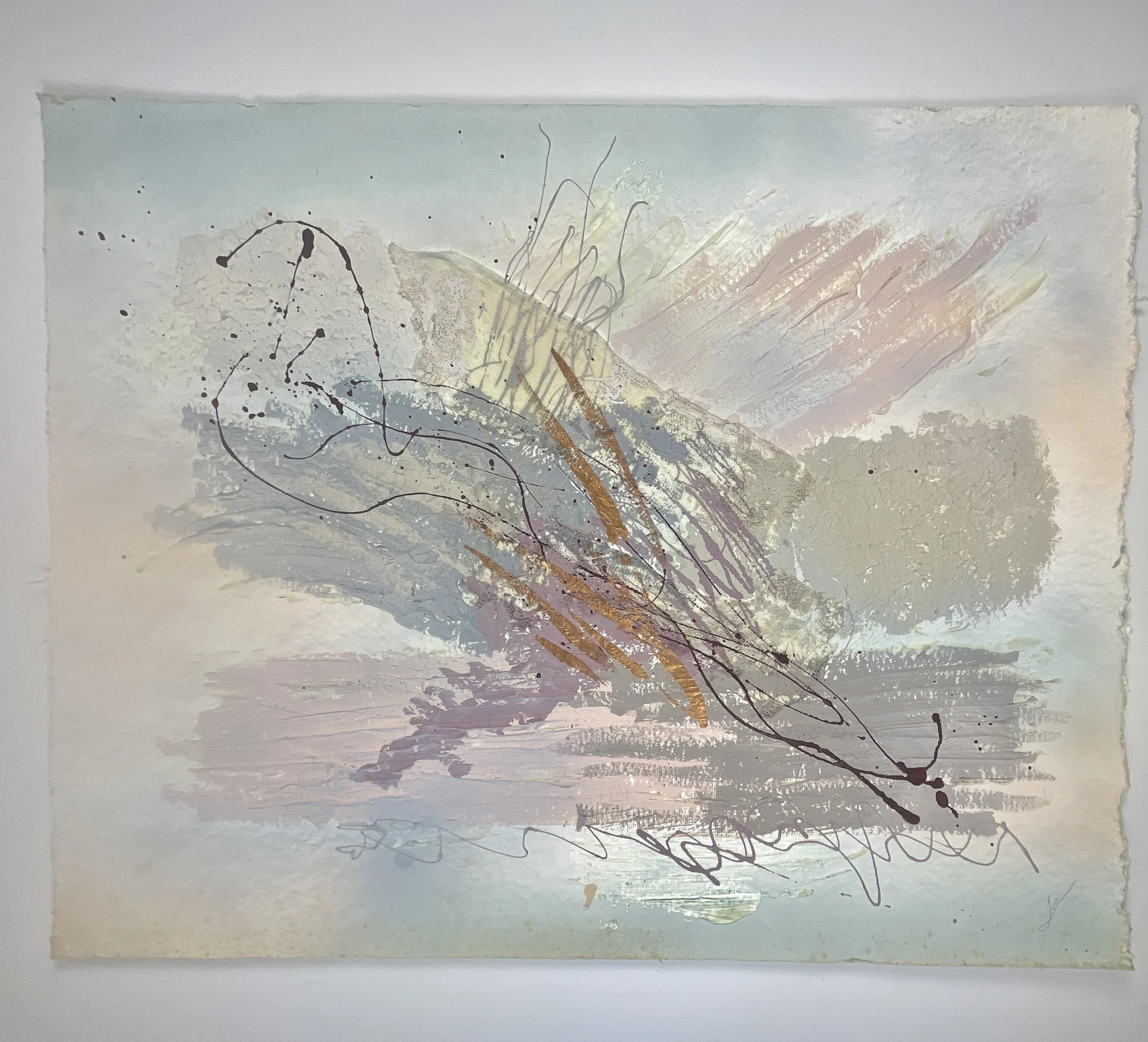
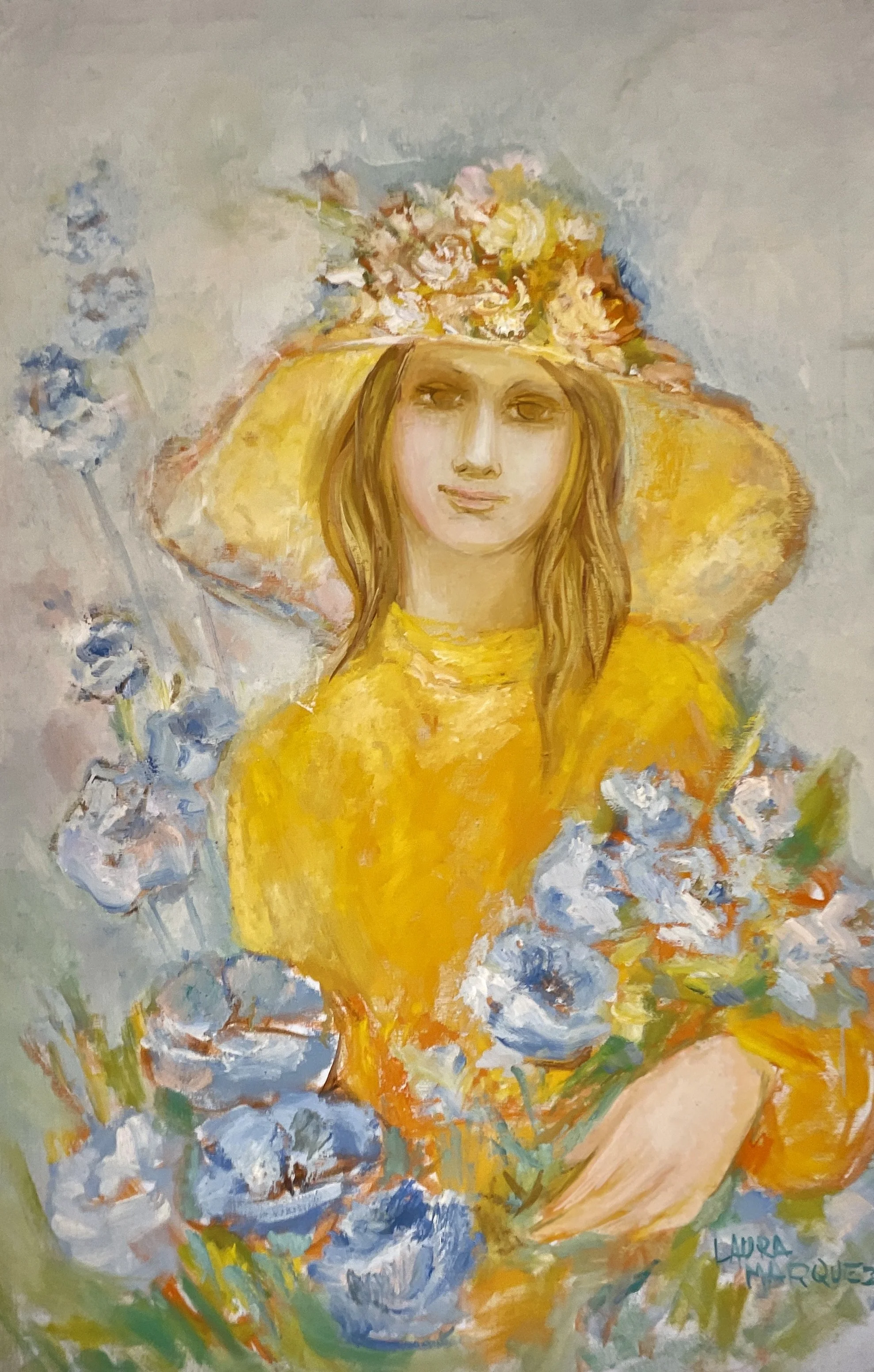
Woman in Yellow (attributed)— Laura Márquez (1929–2021), c.1980, acrylic on canvas, 24×36 in; signed LR.
Expressive figurative portrait by Paraguayan modern-art pioneer Laura Márquez: a luminous woman in a flowered hat holding blue blooms, painted in warm, impressionist color on canvas. Signed original painting, 24×36, ideal for collectors of Latin American art, postwar modernism, and poetic floral portraiture.
Artwork Description
This original painting presents a serene, front-facing young woman in a wide-brimmed, flower-crowned hat, dressed in saturated marigold yellow and cradling an abundant bouquet of powder-blue blossoms. Márquez orchestrates the composition as a color conversation: the dominant yellows and oranges radiate warmth and optimism, while the cool blues (flowers and soft atmospheric passages) counterbalance with calm. The figure’s simplified facial modeling and elongated neck evoke modern portrait conventions, while the loose, confident brushwork—especially in the flowers and background—keeps the image airy and contemporary rather than academic.
The background is intentionally understated: pale gray-blue and misty neutrals dissolve into the figure, allowing the hat and bouquet to read as the primary silhouettes. Paint handling varies across the surface, with broader, opaque strokes in the dress and brisk, layered marks in the florals, suggesting a studio practice that values gesture, immediacy, and chromatic harmony over tight detail.
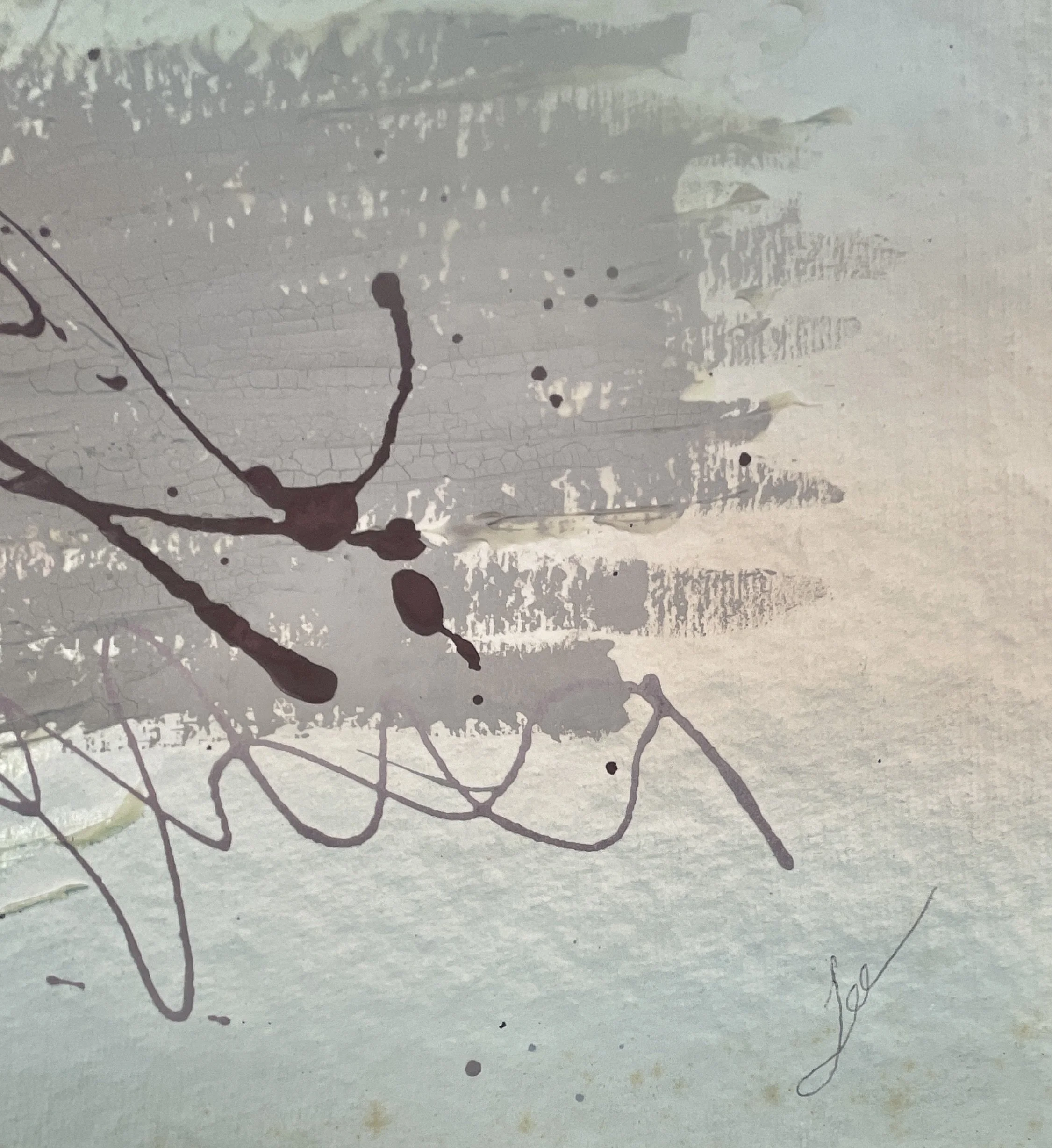
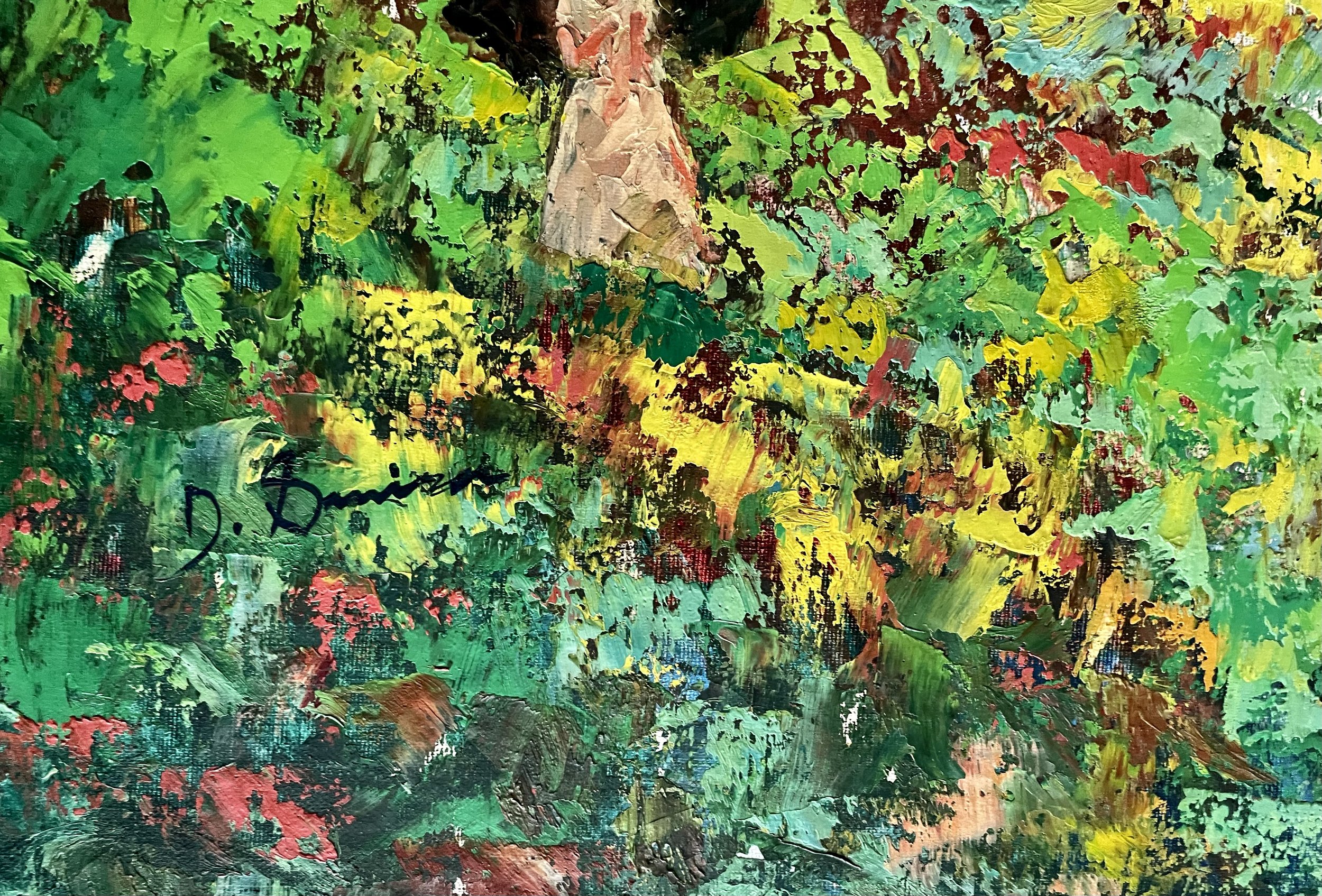
Medium and support: the work appears executed in acrylic paint on canvas (bright, opaque passages with a generally matte-to-satin look), on an unstretched canvas support. The painting is signed in paint at the lower right, “Laura Marquez.” No edition number is present, consistent with a unique original painting. The subject matter—an intimate portrait fused with floral symbolism—aligns with Márquez’s lifelong interest in blending modern visual language with an accessible, human emotional register.
Artist Biography
Laura Márquez (often referenced as Laura Márquez Moscarda; 1929–2021) is widely recognized as a pioneering figure in Paraguayan modern art whose career bridged painting, works on paper, and experimental postwar practices across Paraguay, Argentina, and the United States. Born in Asunción on March 1, 1929, she came of age in a cultural context shaped by political turbulence and uneven institutional support for modern art. Seeking rigorous training and a wider avant-garde environment, she moved to Buenos Aires as a young artist to study in Argentina’s academic system, where she also encountered the city’s rapidly modernizing art scene.
In Buenos Aires, Márquez became active in reform-minded student movements that pushed art education away from rigid academic hierarchies and toward modern European models and contemporary experimentation. Multiple sources describe her as taking on leadership roles connected to these reforms, an early sign of the intellectual independence and institutional ambition that would later shape her contributions in Paraguay.
By the 1960s, Márquez was engaging the expanded field of Latin American modernism—kinetic and optical investigations, conceptual strategies, and the experimental energy circulating around the Instituto Torcuato Di Tella in Buenos Aires. Accounts of her career emphasize her openness to international currents (Op art, Minimalism, and other postwar vocabularies) while maintaining a sustained dialogue with Paraguayan cultural forms and symbols.
A signature achievement of this period is her landmark installation Puertas Inútiles (Useless Doors), exhibited at the 9th São Paulo Biennial (1967). The work is repeatedly characterized as an immersive environment of multiple door-like structures—an architectural, labyrinthine proposition that transformed viewers into participants navigating uncertainty, passage, and perception. Later institutional writing frames the installation as both formally “cool” (in the sense of controlled structure) and psychologically charged, inviting readings related to identity, subjectivity, and consciousness.
Márquez relocated to New York around 1970, entering a city where happenings, performance, alternative spaces, and cross-cultural networks were reshaping contemporary art. Sources connected to her biography describe her New York years as active and socially embedded, including collaborations and participation in events and artist communities linked to Latin American cultural organizing.
In later life, Márquez returned to Paraguay permanently (reported as 2013 in at least one biography source) and remained an important reference point for modern and contemporary Paraguayan art histories. She died in Asunción on April 1, 2021. Her posthumous profile continues to grow through scholarship and renewed exhibition attention, including gallery presentations and critical coverage into the 2020s.
Laura Márquez (Paraguayan, 1929–2021)
Woman in Yellow (attributed)
c. 1980
Acrylic on canvas (unstretched)
24 × 36 in
Signed lower right: “Laura Marquez”
Subject: figurative portrait with florals; warm/cool chromatic balance; expressive modern brushwork.
Certificate of Authentication
Artist: Laura Márquez (Paraguayan, 1929–2021)
Title: Woman in Yellow (attributed)
Date: c. 1980 (approximate)
Medium: Acrylic on canvas (unstretched)
Dimensions: 24 × 36 inches
Signature: Signed lower right in paint: “Laura Marquez”
Type: Original, unique painting (not an edition)
Condition
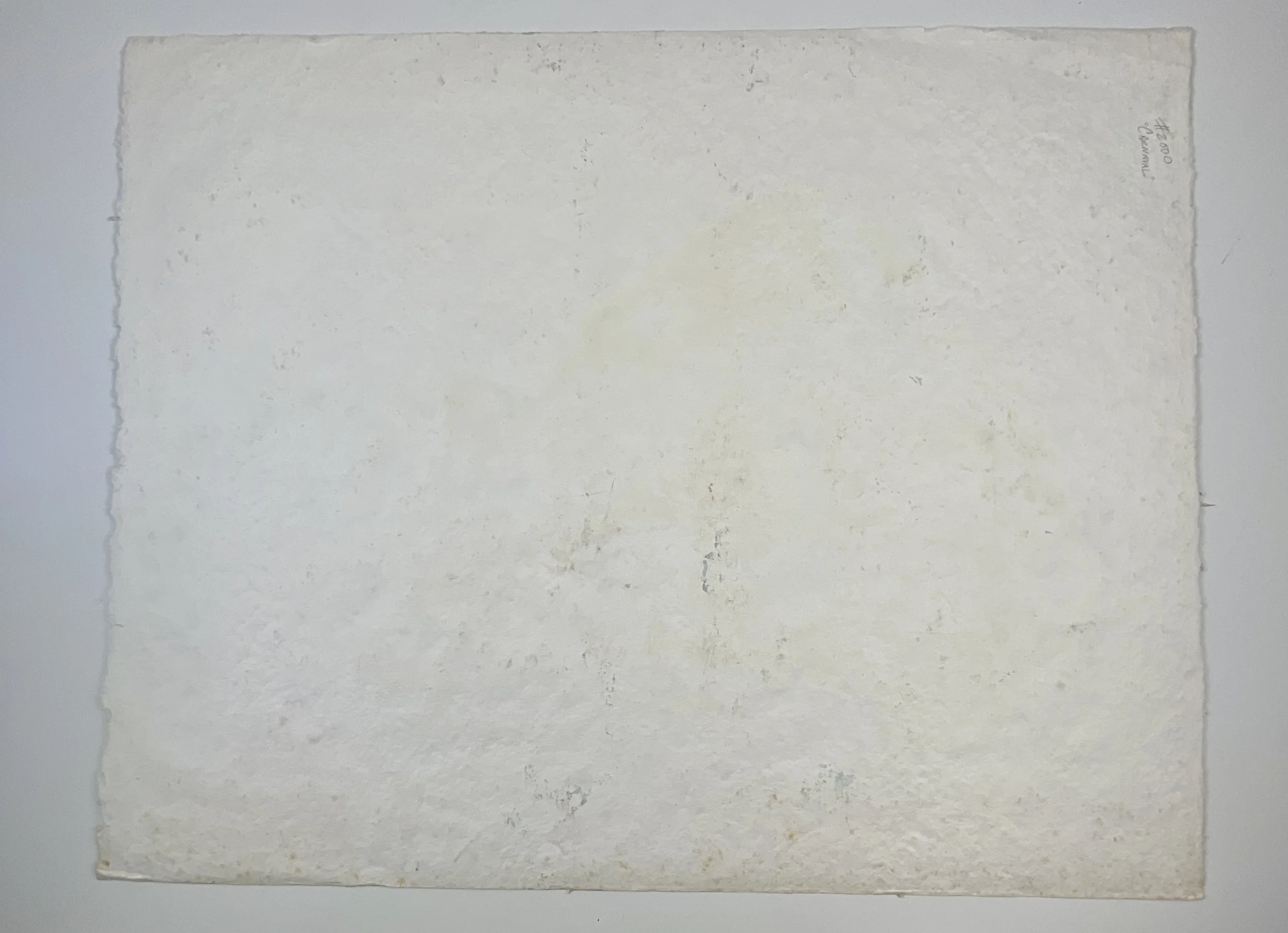
Overall condition appears good, consistent with age and an unstretched canvas format. Light surface soiling and minor handling wear may be present, with edge wear and subtle discoloration/toning visible on the reverse canvas. No major paint loss is apparent in the provided images. A professional condition report is recommended prior to framing or resale, especially to document any minute abrasions, craquelure (if present), or prior conservation.
Provenance Chain
Laura Márquez (artist studio)
Acquired by Mitch Morse Gallery (New York, with acquisitions attributed to NYC, United States and Europe)
Private holding / gallery inventory (Mitch Morse Gallery)
Artfind Gallery, Washington DC (current owner)
Woman in Yellow (attributed)— Laura Márquez (1929–2021), c.1980, acrylic on canvas, 24×36 in; signed LR.
Expressive figurative portrait by Paraguayan modern-art pioneer Laura Márquez: a luminous woman in a flowered hat holding blue blooms, painted in warm, impressionist color on canvas. Signed original painting, 24×36, ideal for collectors of Latin American art, postwar modernism, and poetic floral portraiture.
Artwork Description
This original painting presents a serene, front-facing young woman in a wide-brimmed, flower-crowned hat, dressed in saturated marigold yellow and cradling an abundant bouquet of powder-blue blossoms. Márquez orchestrates the composition as a color conversation: the dominant yellows and oranges radiate warmth and optimism, while the cool blues (flowers and soft atmospheric passages) counterbalance with calm. The figure’s simplified facial modeling and elongated neck evoke modern portrait conventions, while the loose, confident brushwork—especially in the flowers and background—keeps the image airy and contemporary rather than academic.
The background is intentionally understated: pale gray-blue and misty neutrals dissolve into the figure, allowing the hat and bouquet to read as the primary silhouettes. Paint handling varies across the surface, with broader, opaque strokes in the dress and brisk, layered marks in the florals, suggesting a studio practice that values gesture, immediacy, and chromatic harmony over tight detail.
Medium and support: the work appears executed in acrylic paint on canvas (bright, opaque passages with a generally matte-to-satin look), on an unstretched canvas support. The painting is signed in paint at the lower right, “Laura Marquez.” No edition number is present, consistent with a unique original painting. The subject matter—an intimate portrait fused with floral symbolism—aligns with Márquez’s lifelong interest in blending modern visual language with an accessible, human emotional register.
Artist Biography
Laura Márquez (often referenced as Laura Márquez Moscarda; 1929–2021) is widely recognized as a pioneering figure in Paraguayan modern art whose career bridged painting, works on paper, and experimental postwar practices across Paraguay, Argentina, and the United States. Born in Asunción on March 1, 1929, she came of age in a cultural context shaped by political turbulence and uneven institutional support for modern art. Seeking rigorous training and a wider avant-garde environment, she moved to Buenos Aires as a young artist to study in Argentina’s academic system, where she also encountered the city’s rapidly modernizing art scene.
In Buenos Aires, Márquez became active in reform-minded student movements that pushed art education away from rigid academic hierarchies and toward modern European models and contemporary experimentation. Multiple sources describe her as taking on leadership roles connected to these reforms, an early sign of the intellectual independence and institutional ambition that would later shape her contributions in Paraguay.
By the 1960s, Márquez was engaging the expanded field of Latin American modernism—kinetic and optical investigations, conceptual strategies, and the experimental energy circulating around the Instituto Torcuato Di Tella in Buenos Aires. Accounts of her career emphasize her openness to international currents (Op art, Minimalism, and other postwar vocabularies) while maintaining a sustained dialogue with Paraguayan cultural forms and symbols.
A signature achievement of this period is her landmark installation Puertas Inútiles (Useless Doors), exhibited at the 9th São Paulo Biennial (1967). The work is repeatedly characterized as an immersive environment of multiple door-like structures—an architectural, labyrinthine proposition that transformed viewers into participants navigating uncertainty, passage, and perception. Later institutional writing frames the installation as both formally “cool” (in the sense of controlled structure) and psychologically charged, inviting readings related to identity, subjectivity, and consciousness.
Márquez relocated to New York around 1970, entering a city where happenings, performance, alternative spaces, and cross-cultural networks were reshaping contemporary art. Sources connected to her biography describe her New York years as active and socially embedded, including collaborations and participation in events and artist communities linked to Latin American cultural organizing.
In later life, Márquez returned to Paraguay permanently (reported as 2013 in at least one biography source) and remained an important reference point for modern and contemporary Paraguayan art histories. She died in Asunción on April 1, 2021. Her posthumous profile continues to grow through scholarship and renewed exhibition attention, including gallery presentations and critical coverage into the 2020s.
Laura Márquez (Paraguayan, 1929–2021)
Woman in Yellow (attributed)
c. 1980
Acrylic on canvas (unstretched)
24 × 36 in
Signed lower right: “Laura Marquez”
Subject: figurative portrait with florals; warm/cool chromatic balance; expressive modern brushwork.
Certificate of Authentication
Artist: Laura Márquez (Paraguayan, 1929–2021)
Title: Woman in Yellow (attributed)
Date: c. 1980 (approximate)
Medium: Acrylic on canvas (unstretched)
Dimensions: 24 × 36 inches
Signature: Signed lower right in paint: “Laura Marquez”
Type: Original, unique painting (not an edition)
Condition
Overall condition appears good, consistent with age and an unstretched canvas format. Light surface soiling and minor handling wear may be present, with edge wear and subtle discoloration/toning visible on the reverse canvas. No major paint loss is apparent in the provided images. A professional condition report is recommended prior to framing or resale, especially to document any minute abrasions, craquelure (if present), or prior conservation.
Provenance Chain
Laura Márquez (artist studio)
Acquired by Mitch Morse Gallery (New York, with acquisitions attributed to NYC, United States and Europe)
Private holding / gallery inventory (Mitch Morse Gallery)
Artfind Gallery, Washington DC (current owner)