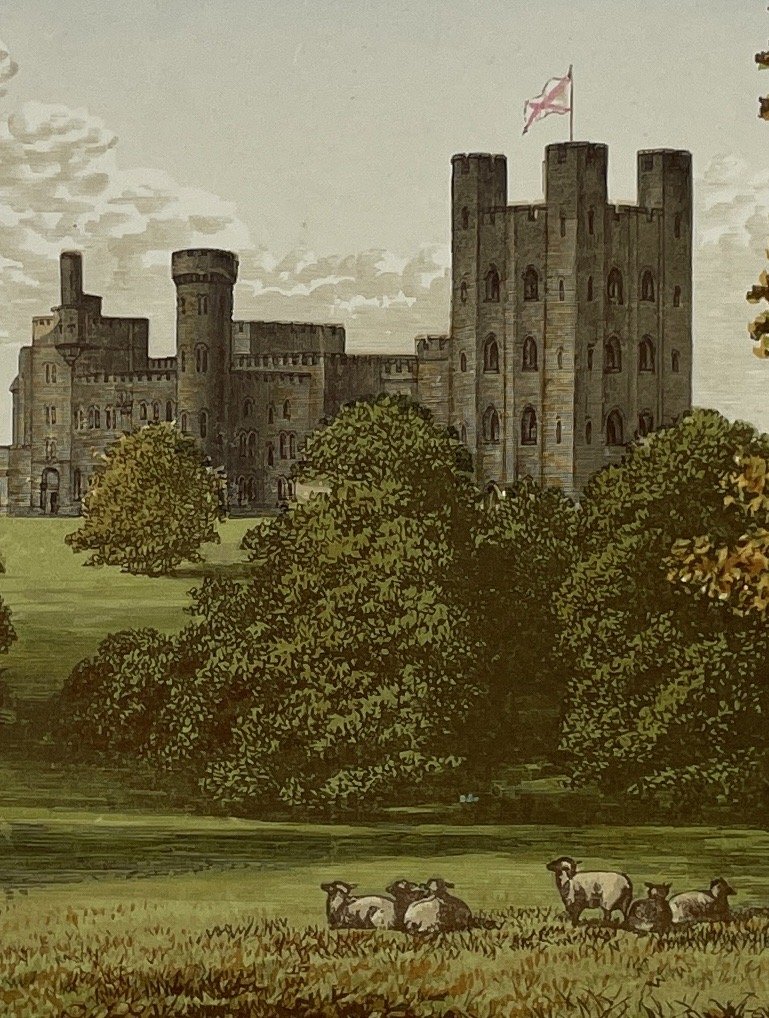
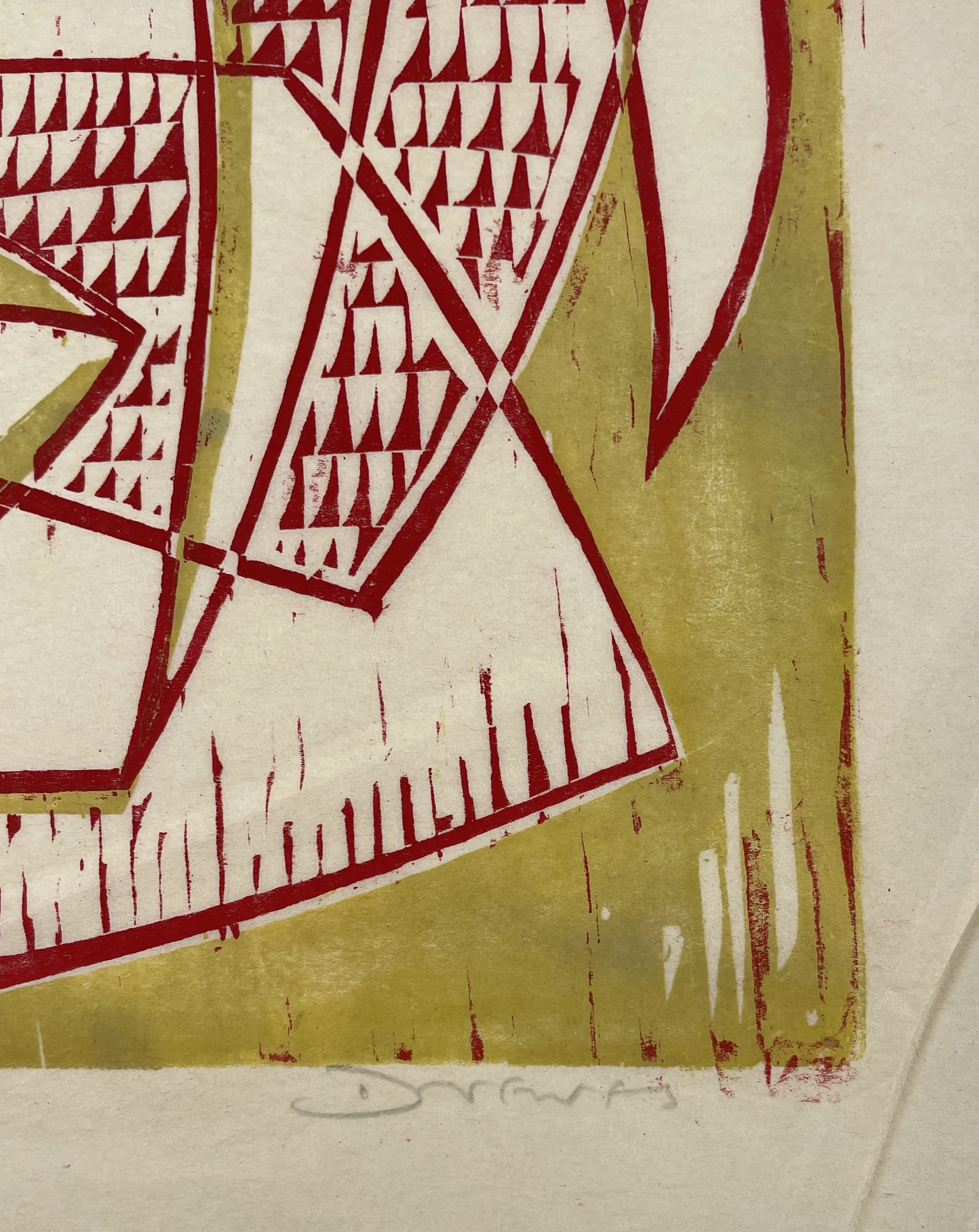
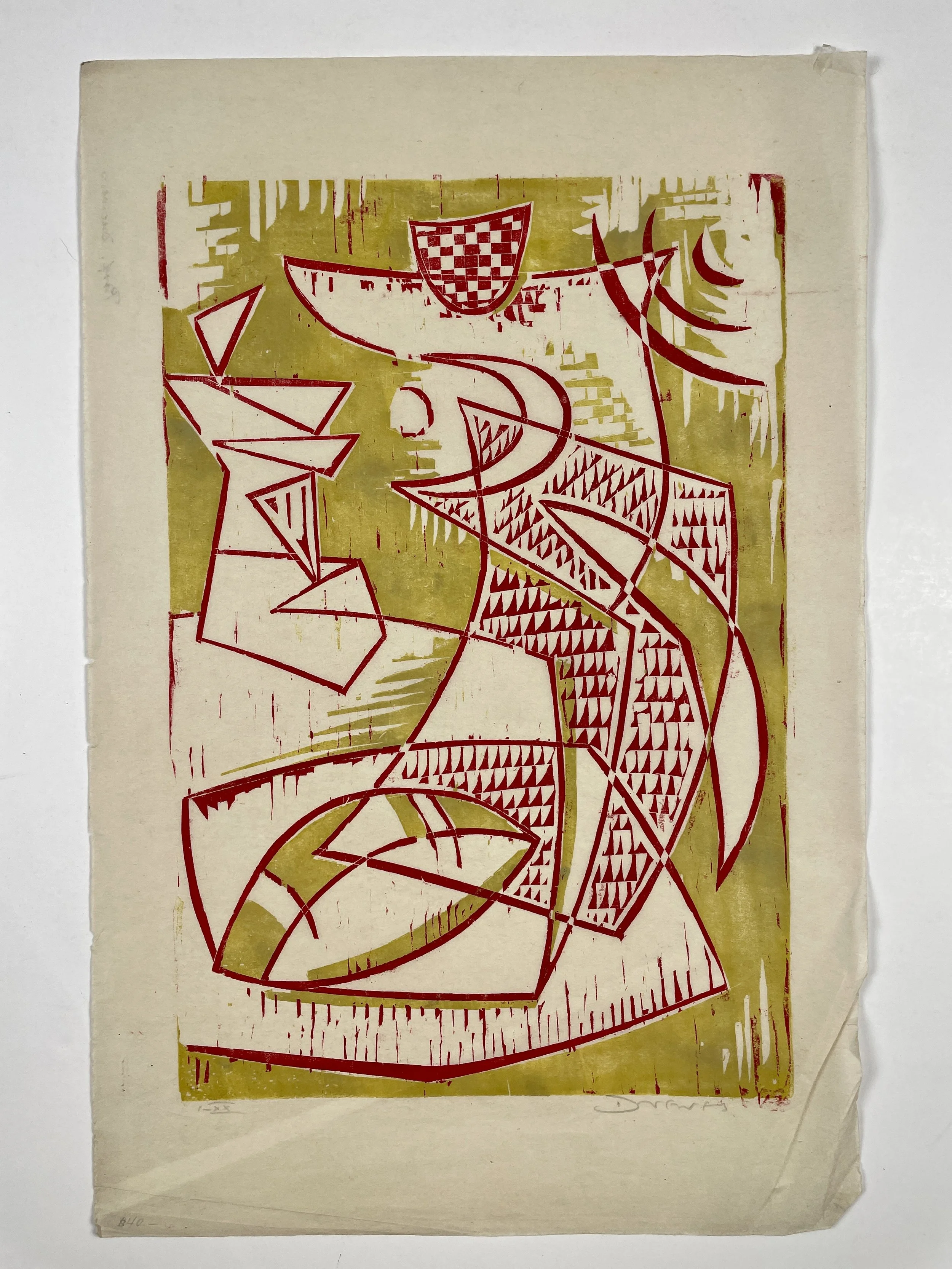
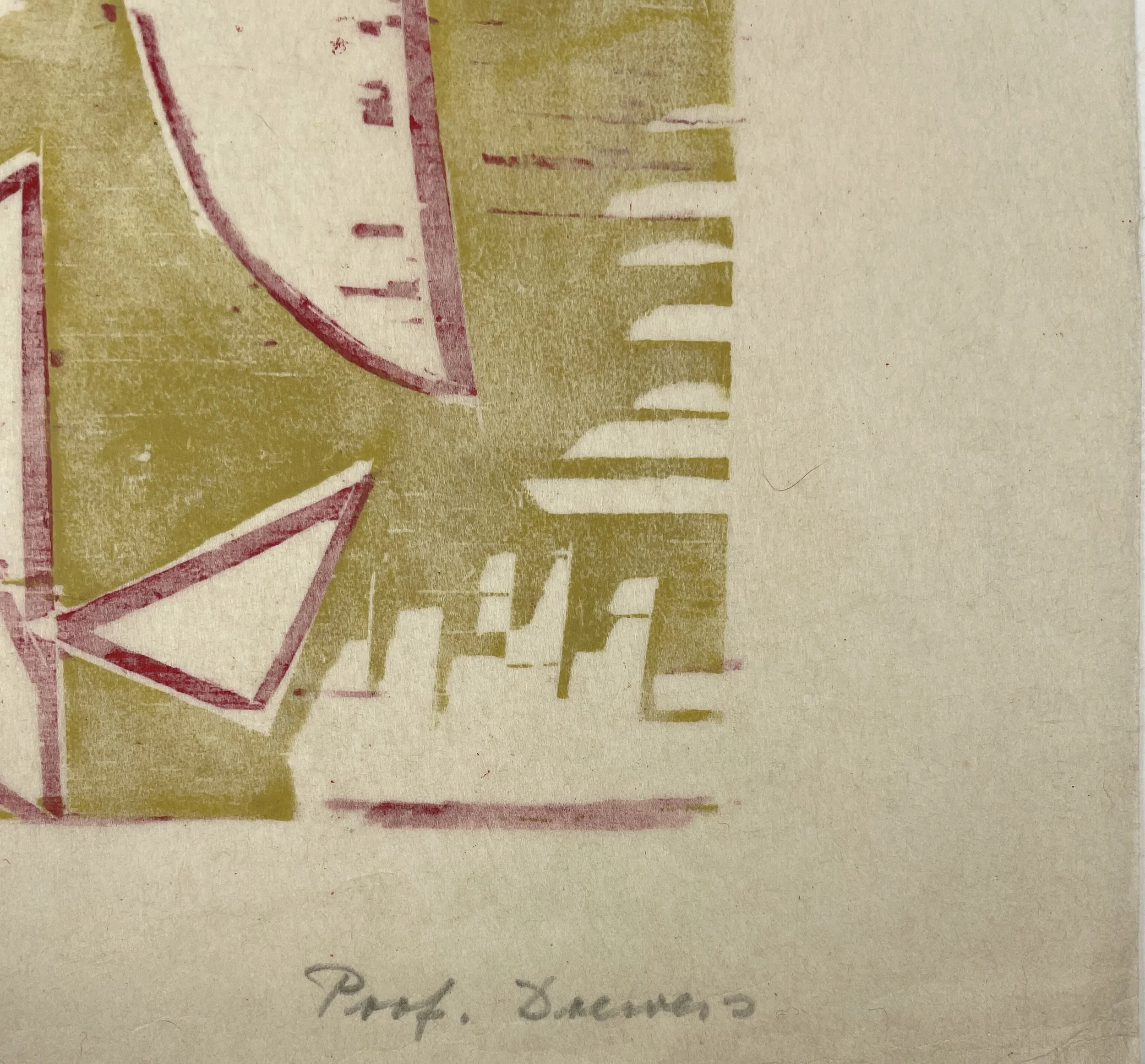
“Workington Hall,” Alexander Francis Lydon (1836–1917), c. 1880, Baxter-process colored woodblock engraving printed by Benjamin Fawcett (1808–1893), published by William Mackenzie, London; sheet 10½ × 8 in., image approx. 7¼ × 5⅛ in., unsigned as issued.
This beautifully preserved Victorian Baxter-process colored woodblock engraving of Workington Hall, illustrated by Alexander Francis Lydon and printed by master color-printer Benjamin Fawcett, comes from A Series of Picturesque Views of Seats of the Noblemen and Gentlemen of Great Britain and Ireland (c. 1880). Featuring the historic Cumbrian estate perched above a wooded slope beneath dramatic English skies, this plate is highly desirable for collectors of British manor house art, Victorian color printing, country estate history, and antique architectural engravings.
Artwork Description
This richly atmospheric woodblock engraving depicts Workington Hall, the ancestral seat of the Curwen family in Cumbria, and a structure with medieval origins later transformed into a castellated Georgian residence. Positioned on a steep, grassy rise, the hall commands the landscape with its crenellated parapets, tall sash windows, battlements, and fortified symmetry.
Alexander Francis Lydon captures the interplay between architecture and natural setting: mature trees frame the scene, their intricate foliage contrasting with the hall’s smooth stone surfaces. The sweeping hillside in the foreground creates depth and visual movement, while the sky—rendered in shifting grays and soft blues—adds a dramatic, almost theatrical quality. The result evokes both the grandeur and solitude of the northern English country estate.
Printed by Benjamin Fawcett using the Baxter-process woodblock method, the plate required multiple precisely registered blocks—often eight or more—to build its layered, transparent colors. Fawcett’s technique enhances Lydon’s draughtsmanship with subtle greens, warm earth tones, delicate shadows, and atmospheric gradations, giving this print exceptional clarity and richness.
As part of William Mackenzie’s monumental Picturesque Views, the work serves as a significant visual document of 19th-century British aristocratic estates, many of which would later face decline or architectural change.
Artist & Printer Biographies
ALEXANDER FRANCIS LYDON (1836–1917) — Illustrator
Lydon was one of Victorian Britain’s most respected draughtsmen, known for his architectural accuracy, naturalistic landscapes, and refined compositions. Trained under printer Benjamin Fawcett, he developed an exceptional ability to create detailed woodblock drawings for color printing. His collaborations with Rev. Francis Orpen Morris and Fawcett produced some of the era’s most celebrated illustrated volumes. Lydon’s topographical works remain treasured for their historical fidelity and aesthetic charm.
BENJAMIN FAWCETT (1808–1893) — Printer
Fawcett was a pioneer in the use of color woodblock printing and a master of the Baxter-process, known for its transparency, registration precision, and luminous tonal blending. Working from Driffield, Yorkshire, he collaborated with Lydon for nearly 50 years, producing landmark works in ornithology, natural history, and architectural topography. His prints are widely regarded as some of the finest examples of Victorian color craftsmanship.
WILLIAM MACKENZIE — Publisher
A leading Victorian publisher of illustrated books, atlases, and architectural surveys, Mackenzie’s Picturesque Views of Seats of the Noblemen and Gentlemen of Great Britain and Ireland is considered one of the most important visual records of British aristocratic estates from the late 19th century. His volumes were produced to a high standard, often featuring gilt edges and deluxe bindings.
Alexander Francis Lydon (illustrator), Benjamin Fawcett (printer), “Workington Hall,” c. 1880. Baxter-process colored woodblock engraving from Picturesque Views of Seats of the Noblemen and Gentlemen of Great Britain and Ireland. Image approx. 7¼ × 5⅛ in., sheet 10½ × 8 in. Very good color and condition.
CERTIFICATE OF VALUE & AUTHENTICATION
For Fine Art Appraisal / Insurance / Gallery Documentation
Title: Workington Hall
Illustrator: Alexander Francis Lydon (1836–1917)
Printer: Benjamin Fawcett (1808–1893)
Publisher: William Mackenzie, London / Edinburgh / Dublin
Date: c. 1880
Medium: Baxter-process colored woodblock engraving (multi-block; avg. 8 colors)
Sheet Size: 10½ × 8 inches
Image Size: approx. 7¼ × 5⅛ inches
Condition: Very good antique condition; vibrant original color; no tears or creases; never framed or exposed
Current Owner: Artfind Gallery, Washington, DC
Authentication: Verified original 19th-century production consistent with Lydon–Fawcett printing and Mackenzie publication features.
8. Provenance Chain (Collector Format)
Published by William Mackenzie, London / Edinburgh / Dublin (c. 1880)
Private British Collection
Mitch Moore Gallery Inc., NYC (retired inventory)
Current Owner: Artfind Gallery, Washington, DC
“Workington Hall,” Alexander Francis Lydon (1836–1917), c. 1880, Baxter-process colored woodblock engraving printed by Benjamin Fawcett (1808–1893), published by William Mackenzie, London; sheet 10½ × 8 in., image approx. 7¼ × 5⅛ in., unsigned as issued.
This beautifully preserved Victorian Baxter-process colored woodblock engraving of Workington Hall, illustrated by Alexander Francis Lydon and printed by master color-printer Benjamin Fawcett, comes from A Series of Picturesque Views of Seats of the Noblemen and Gentlemen of Great Britain and Ireland (c. 1880). Featuring the historic Cumbrian estate perched above a wooded slope beneath dramatic English skies, this plate is highly desirable for collectors of British manor house art, Victorian color printing, country estate history, and antique architectural engravings.
Artwork Description
This richly atmospheric woodblock engraving depicts Workington Hall, the ancestral seat of the Curwen family in Cumbria, and a structure with medieval origins later transformed into a castellated Georgian residence. Positioned on a steep, grassy rise, the hall commands the landscape with its crenellated parapets, tall sash windows, battlements, and fortified symmetry.
Alexander Francis Lydon captures the interplay between architecture and natural setting: mature trees frame the scene, their intricate foliage contrasting with the hall’s smooth stone surfaces. The sweeping hillside in the foreground creates depth and visual movement, while the sky—rendered in shifting grays and soft blues—adds a dramatic, almost theatrical quality. The result evokes both the grandeur and solitude of the northern English country estate.
Printed by Benjamin Fawcett using the Baxter-process woodblock method, the plate required multiple precisely registered blocks—often eight or more—to build its layered, transparent colors. Fawcett’s technique enhances Lydon’s draughtsmanship with subtle greens, warm earth tones, delicate shadows, and atmospheric gradations, giving this print exceptional clarity and richness.
As part of William Mackenzie’s monumental Picturesque Views, the work serves as a significant visual document of 19th-century British aristocratic estates, many of which would later face decline or architectural change.
Artist & Printer Biographies
ALEXANDER FRANCIS LYDON (1836–1917) — Illustrator
Lydon was one of Victorian Britain’s most respected draughtsmen, known for his architectural accuracy, naturalistic landscapes, and refined compositions. Trained under printer Benjamin Fawcett, he developed an exceptional ability to create detailed woodblock drawings for color printing. His collaborations with Rev. Francis Orpen Morris and Fawcett produced some of the era’s most celebrated illustrated volumes. Lydon’s topographical works remain treasured for their historical fidelity and aesthetic charm.
BENJAMIN FAWCETT (1808–1893) — Printer
Fawcett was a pioneer in the use of color woodblock printing and a master of the Baxter-process, known for its transparency, registration precision, and luminous tonal blending. Working from Driffield, Yorkshire, he collaborated with Lydon for nearly 50 years, producing landmark works in ornithology, natural history, and architectural topography. His prints are widely regarded as some of the finest examples of Victorian color craftsmanship.
WILLIAM MACKENZIE — Publisher
A leading Victorian publisher of illustrated books, atlases, and architectural surveys, Mackenzie’s Picturesque Views of Seats of the Noblemen and Gentlemen of Great Britain and Ireland is considered one of the most important visual records of British aristocratic estates from the late 19th century. His volumes were produced to a high standard, often featuring gilt edges and deluxe bindings.
Alexander Francis Lydon (illustrator), Benjamin Fawcett (printer), “Workington Hall,” c. 1880. Baxter-process colored woodblock engraving from Picturesque Views of Seats of the Noblemen and Gentlemen of Great Britain and Ireland. Image approx. 7¼ × 5⅛ in., sheet 10½ × 8 in. Very good color and condition.
CERTIFICATE OF VALUE & AUTHENTICATION
For Fine Art Appraisal / Insurance / Gallery Documentation
Title: Workington Hall
Illustrator: Alexander Francis Lydon (1836–1917)
Printer: Benjamin Fawcett (1808–1893)
Publisher: William Mackenzie, London / Edinburgh / Dublin
Date: c. 1880
Medium: Baxter-process colored woodblock engraving (multi-block; avg. 8 colors)
Sheet Size: 10½ × 8 inches
Image Size: approx. 7¼ × 5⅛ inches
Condition: Very good antique condition; vibrant original color; no tears or creases; never framed or exposed
Current Owner: Artfind Gallery, Washington, DC
Authentication: Verified original 19th-century production consistent with Lydon–Fawcett printing and Mackenzie publication features.
8. Provenance Chain (Collector Format)
Published by William Mackenzie, London / Edinburgh / Dublin (c. 1880)
Private British Collection
Mitch Moore Gallery Inc., NYC (retired inventory)
Current Owner: Artfind Gallery, Washington, DC
 Image 1 of 7
 Image 2 of 7
 Image 3 of 7
 Image 4 of 7
 Image 5 of 7
 Image 6 of 7
 Image 7 of 7