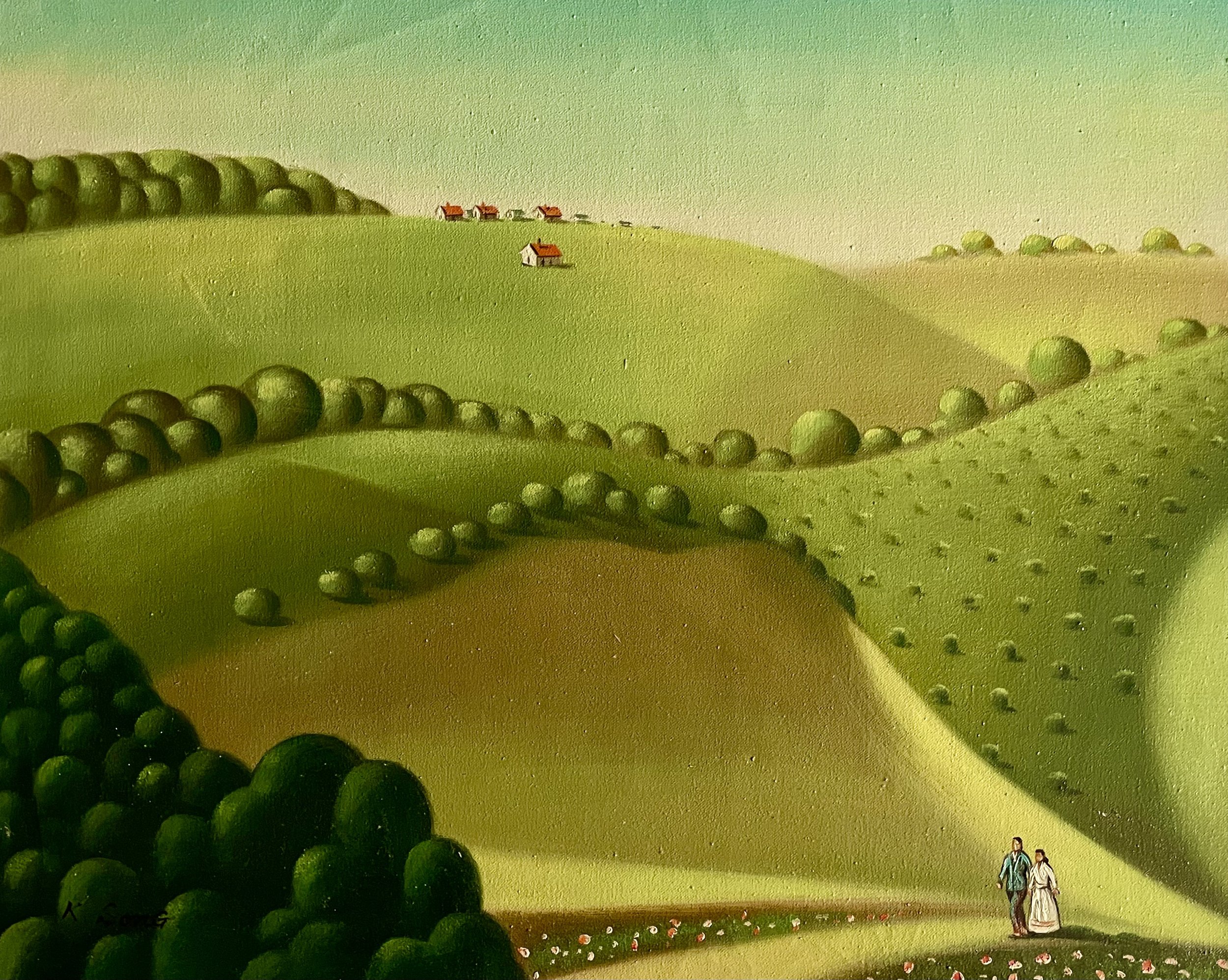
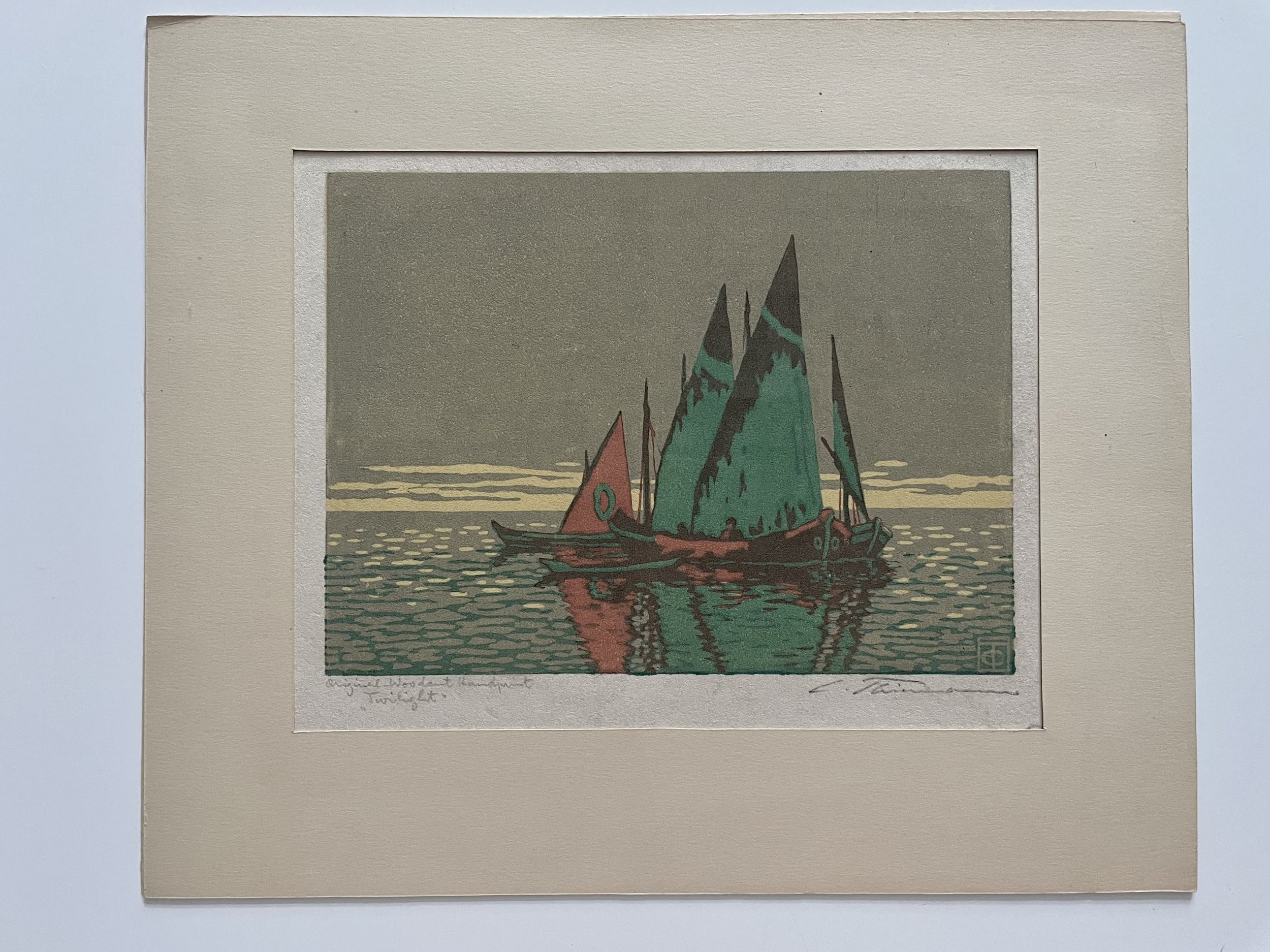
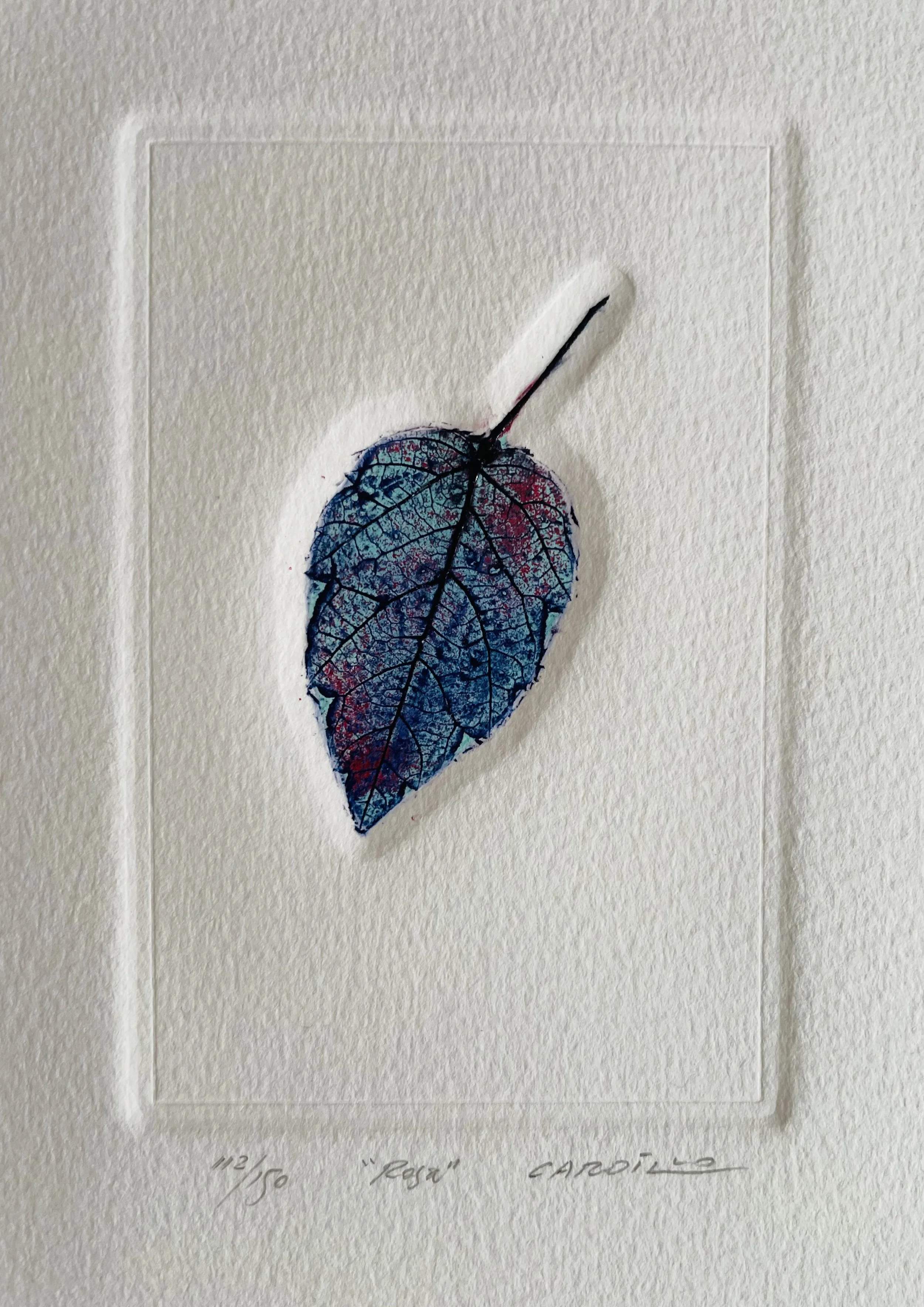
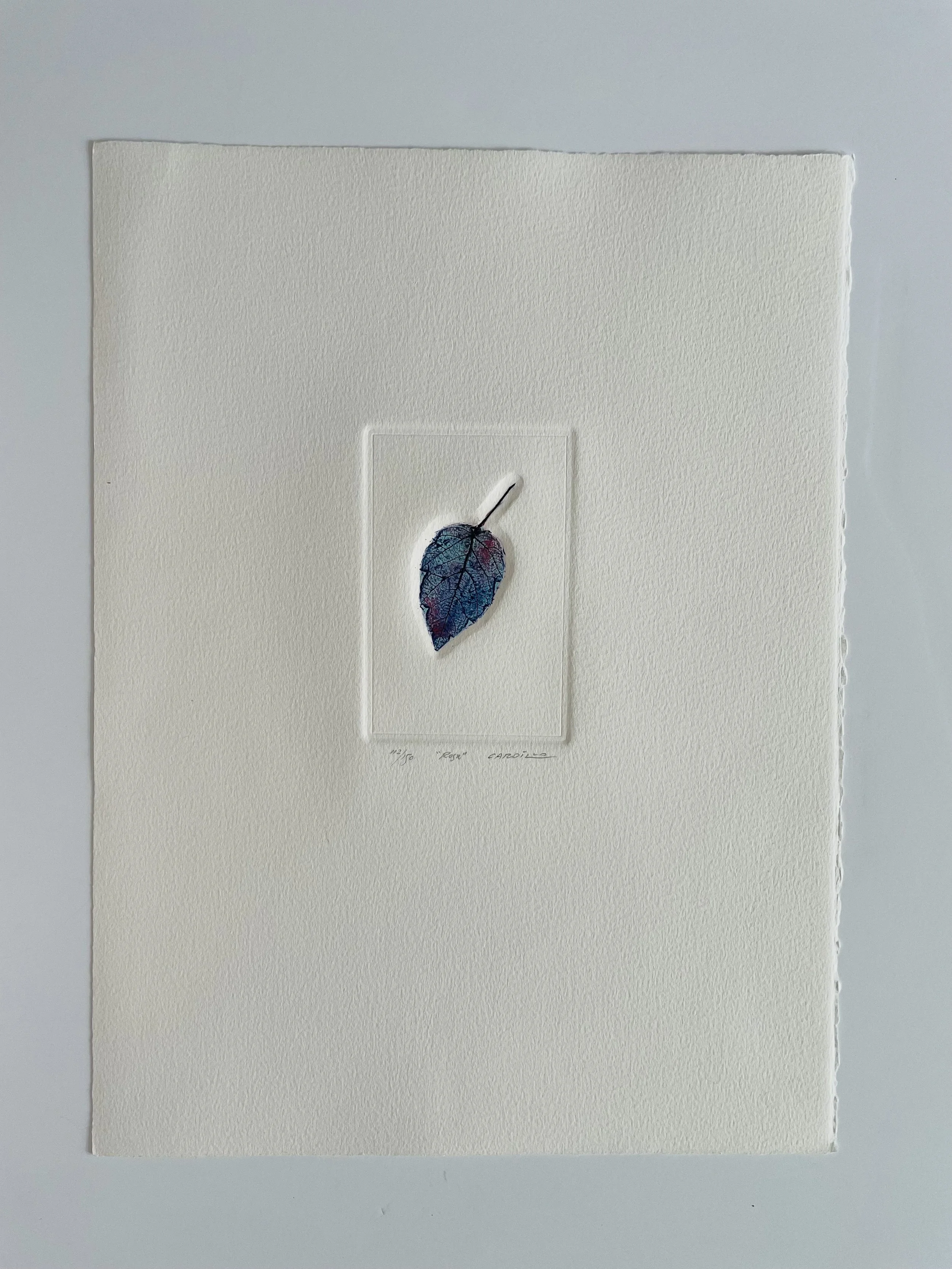
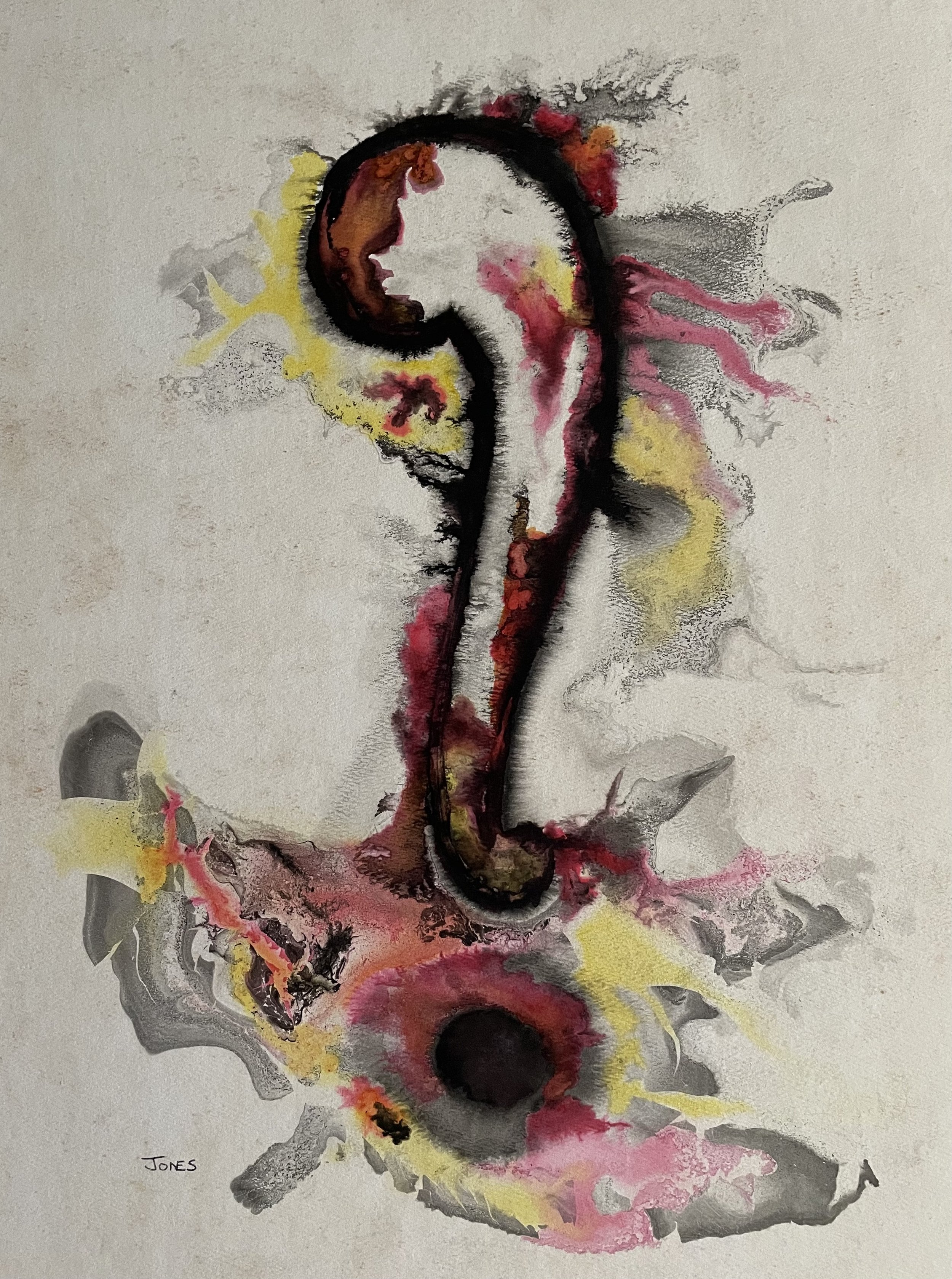
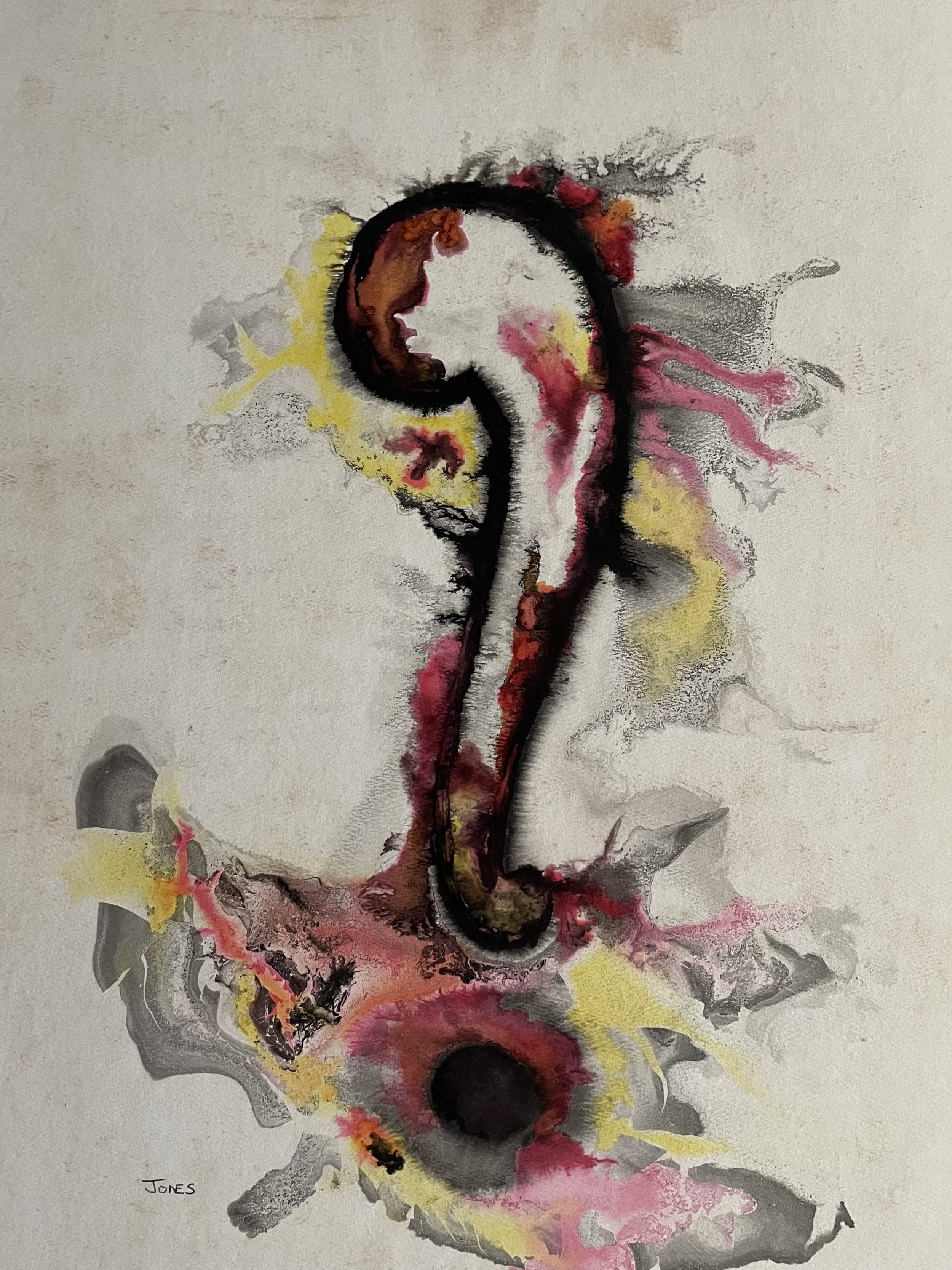
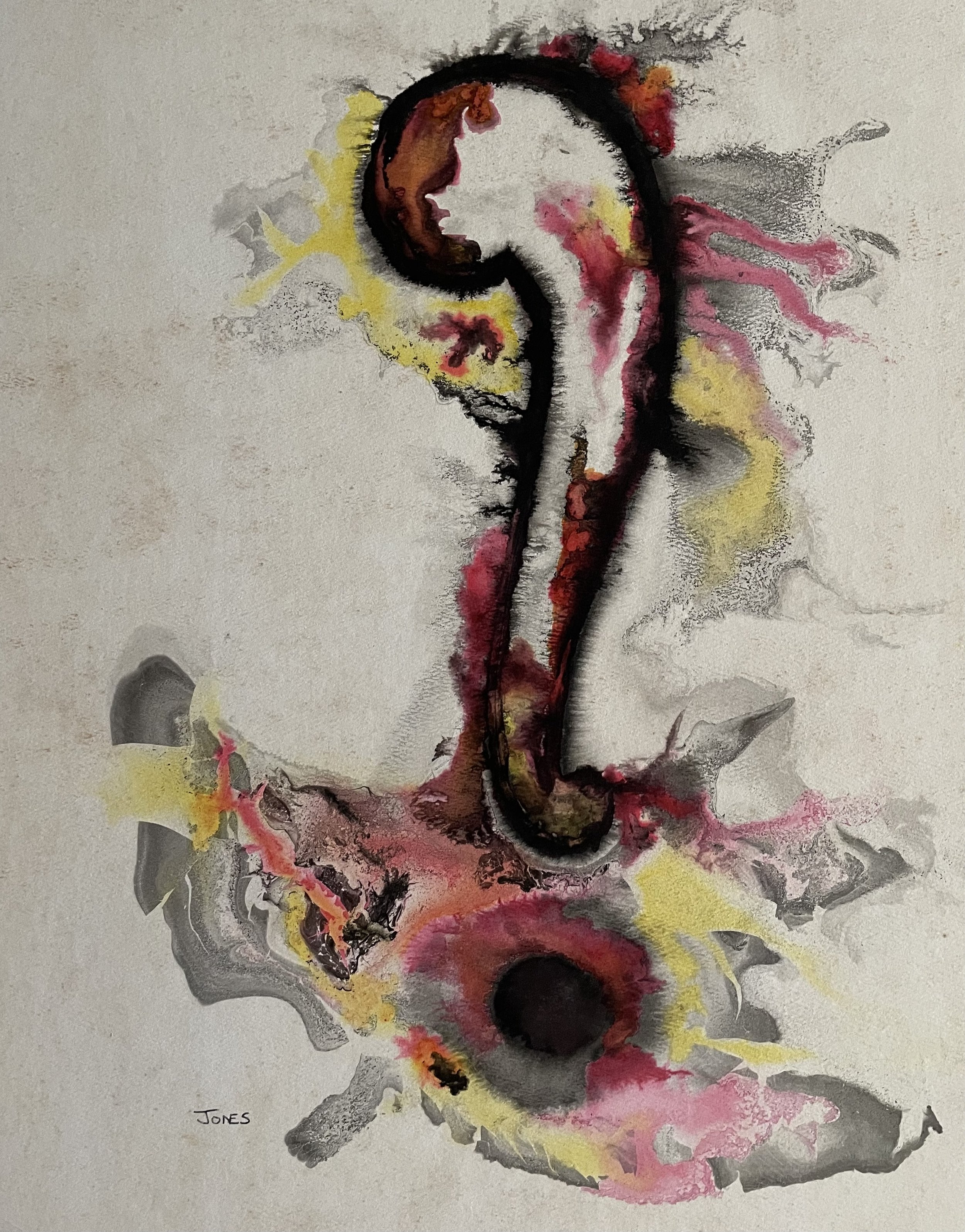
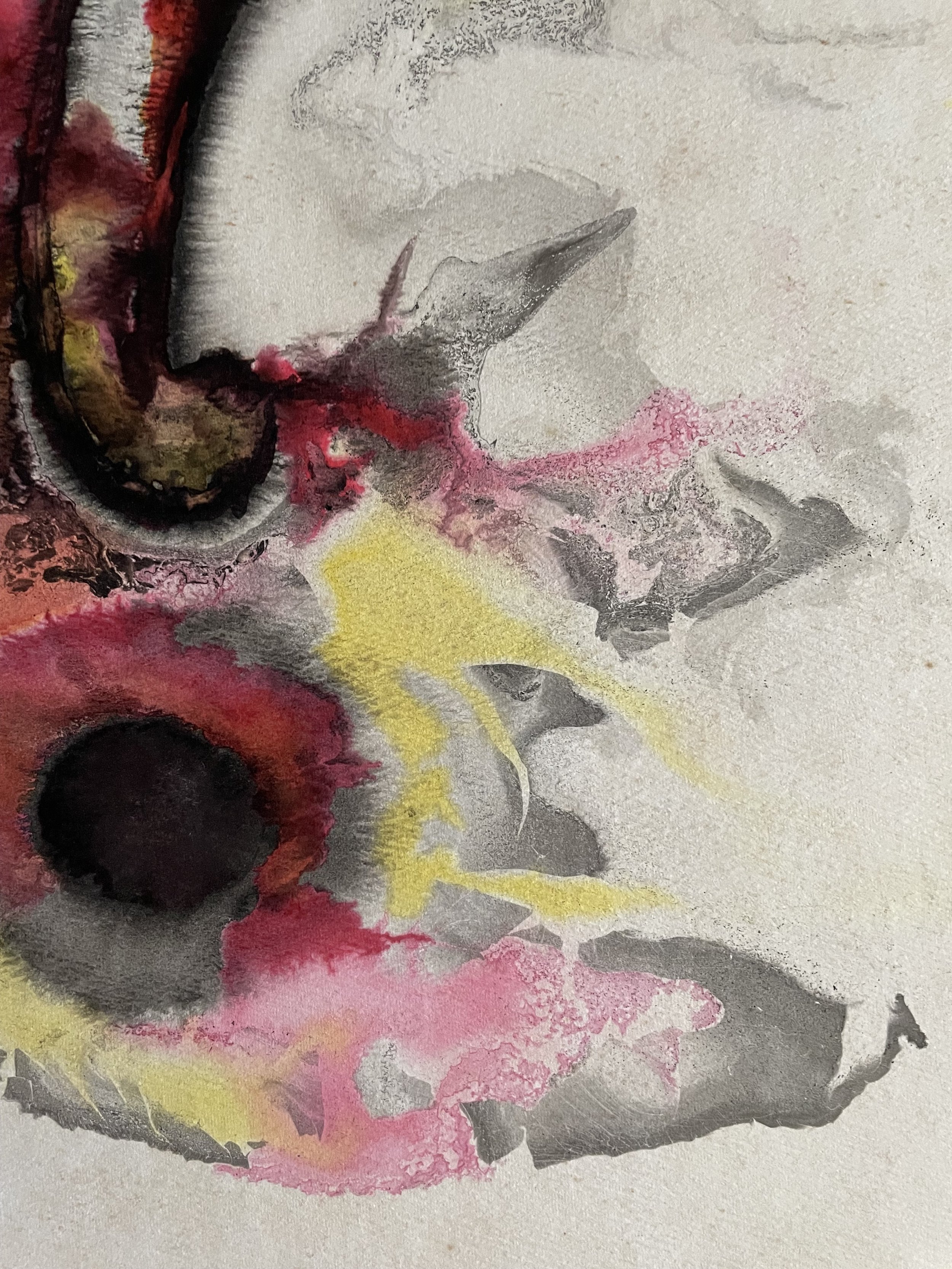
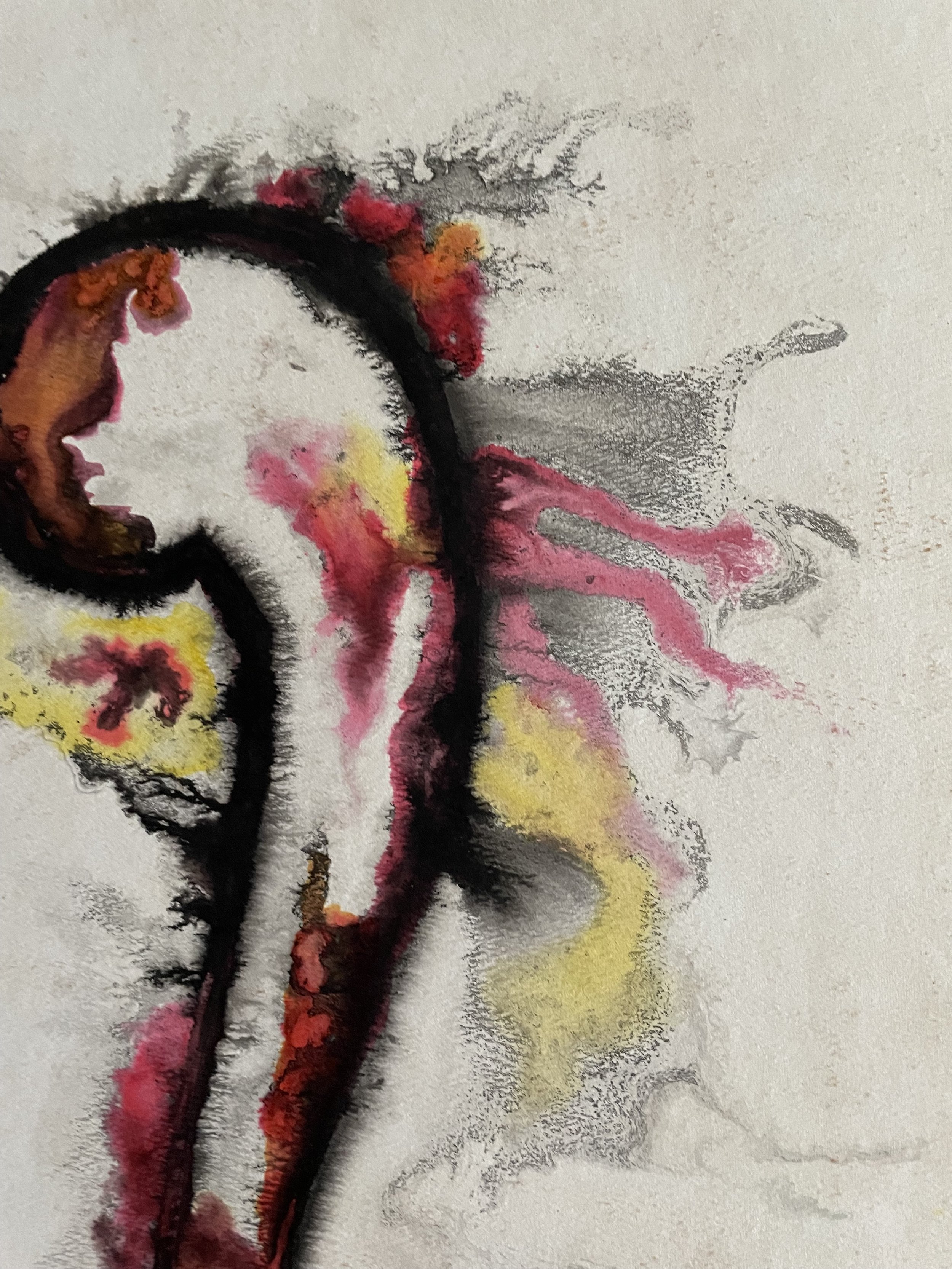
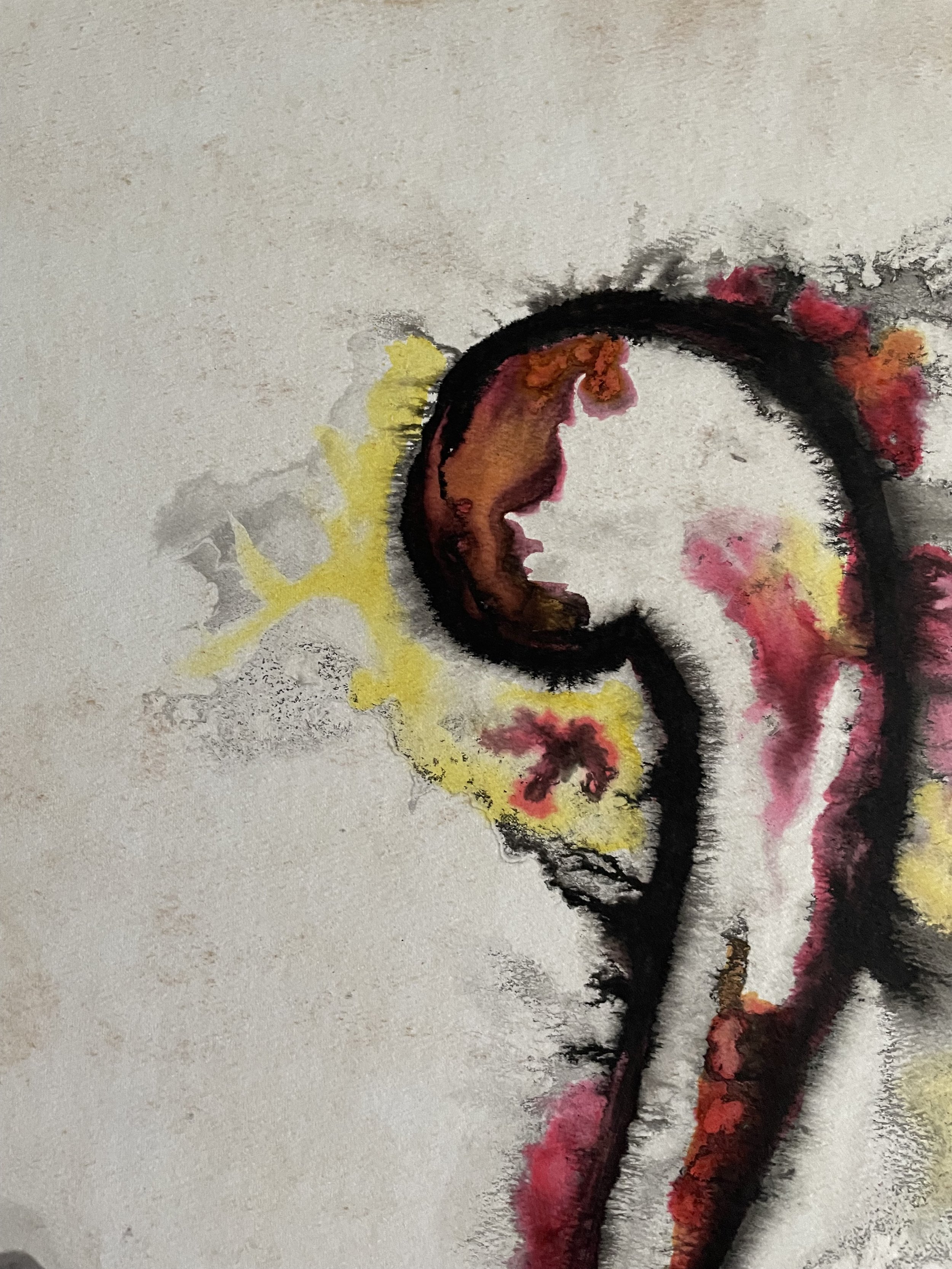
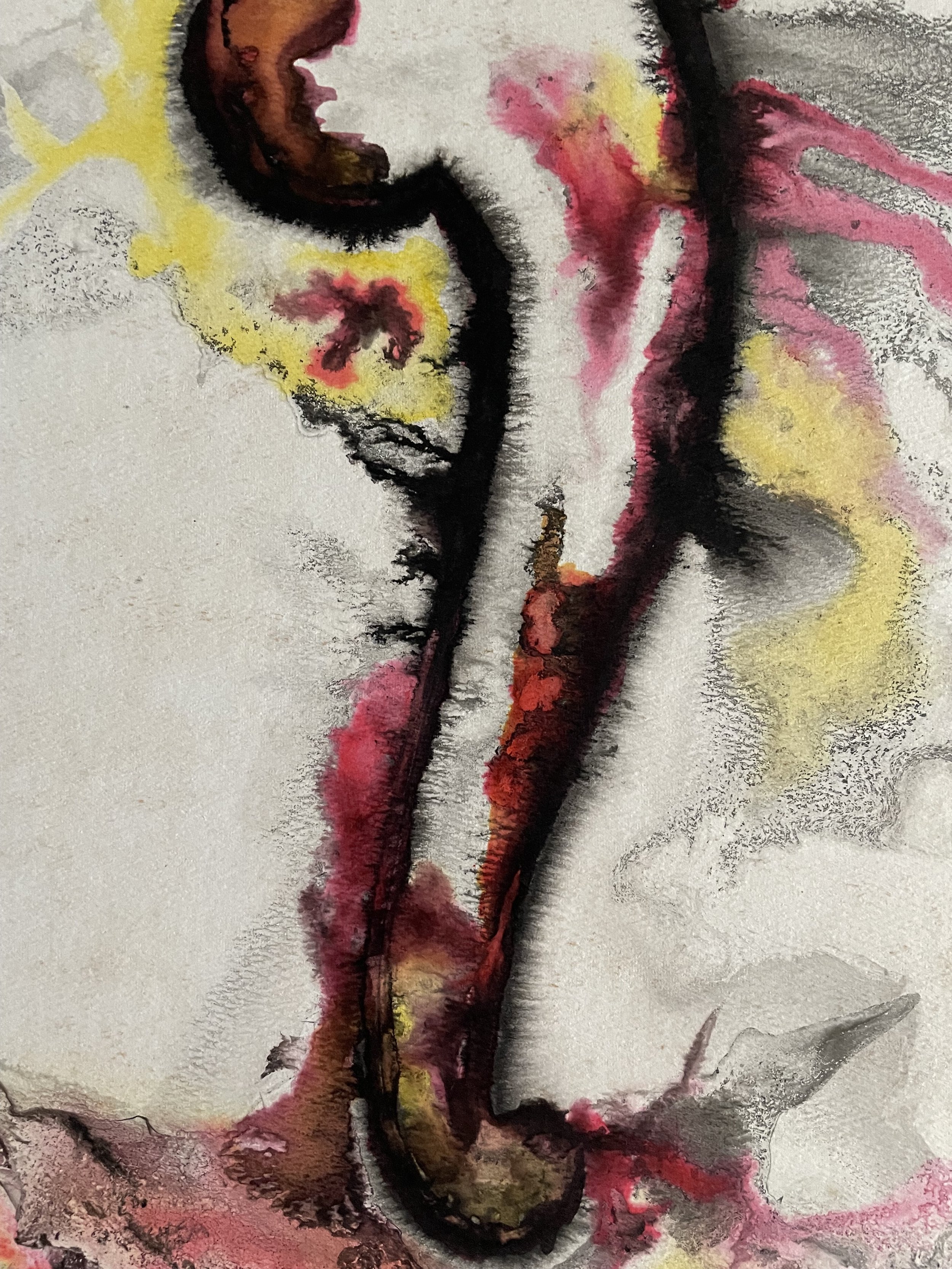
Flowers & Crystals (Fleurs), Suzanne Duchamp (1889–1963), 1929, color etching & aquatint, 22x16 in, ed. 15/200.
A documented 1929 color etching and aquatint by Suzanne Duchamp, titled Flowers & Crystals (also known as Fleurs), issued in an edition of 200. This intaglio print—bearing a deep plate mark and incised “Suzanne Duchamp” signature within the matrix—reflects Duchamp’s refined Cubist structure and Dada-era conceptual sensibility. Historically associated with the Villon-engraved edition published in Paris, this impression represents an important interwar avant-garde work on paper.
Artwork Description
Flowers & Crystals (c.1929) presents a vibrant bouquet arranged in a sharply faceted vessel suggestive of cut crystal. The composition balances organic floral movement with geometric containment: blossoms in saturated reds, yellows, blues, and violets emerge from a prismatic bowl rendered in angular, Cubist planes. The theatrical curtain and subtly sketched framing elements create a staged interior, transforming a still life into a constructed visual argument—an approach consistent with Suzanne Duchamp’s intellectualized modernism.
This composition reads as a modern still life staged like a private performance: a bouquet of saturated blooms (cobalt, saffron, vermilion, violet) bursts from a sharply faceted bowl whose prismatic pattern suggests cut glass or “crystal” geometry. The surrounding space is deliberately ambiguous—part tabletop, part curtain, part figure—so the image oscillates between domestic calm and theatrical artifice. That tension is very much in Duchamp’s orbit: an insistence that the everyday can be re-coded through design, language, and framing.
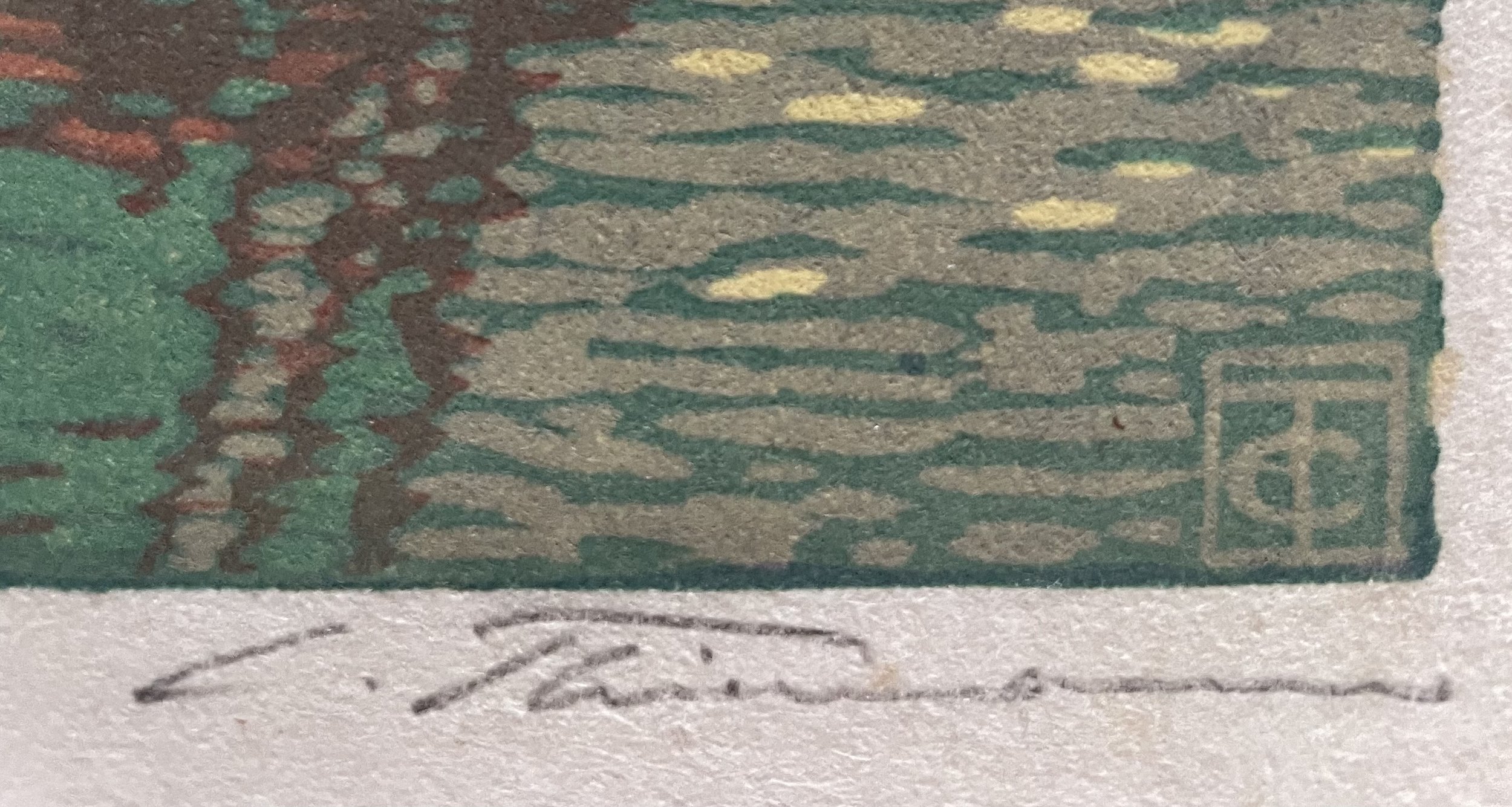
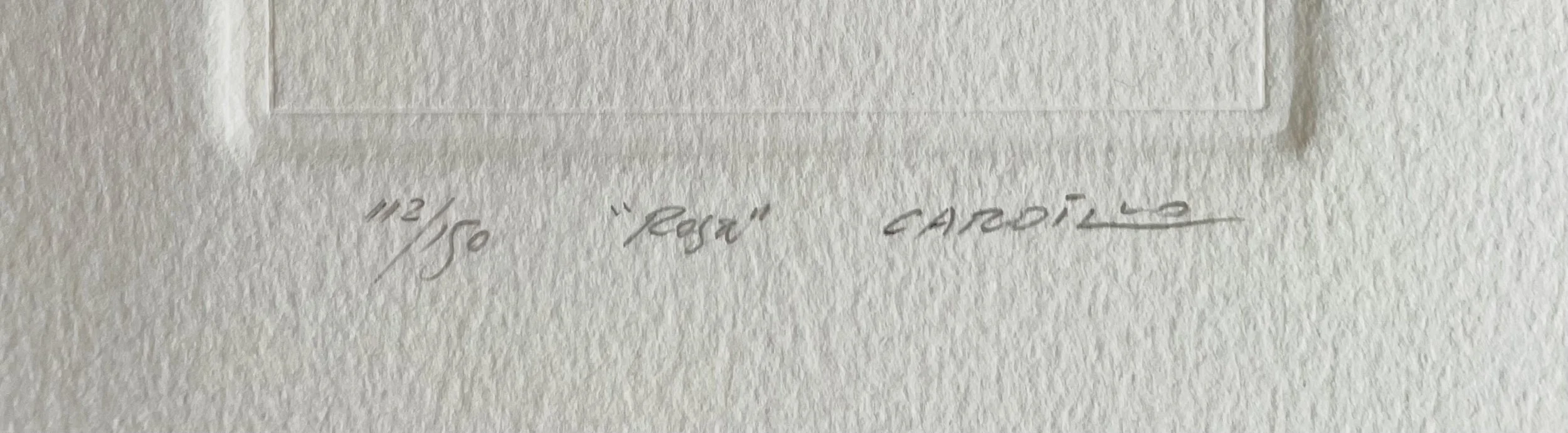
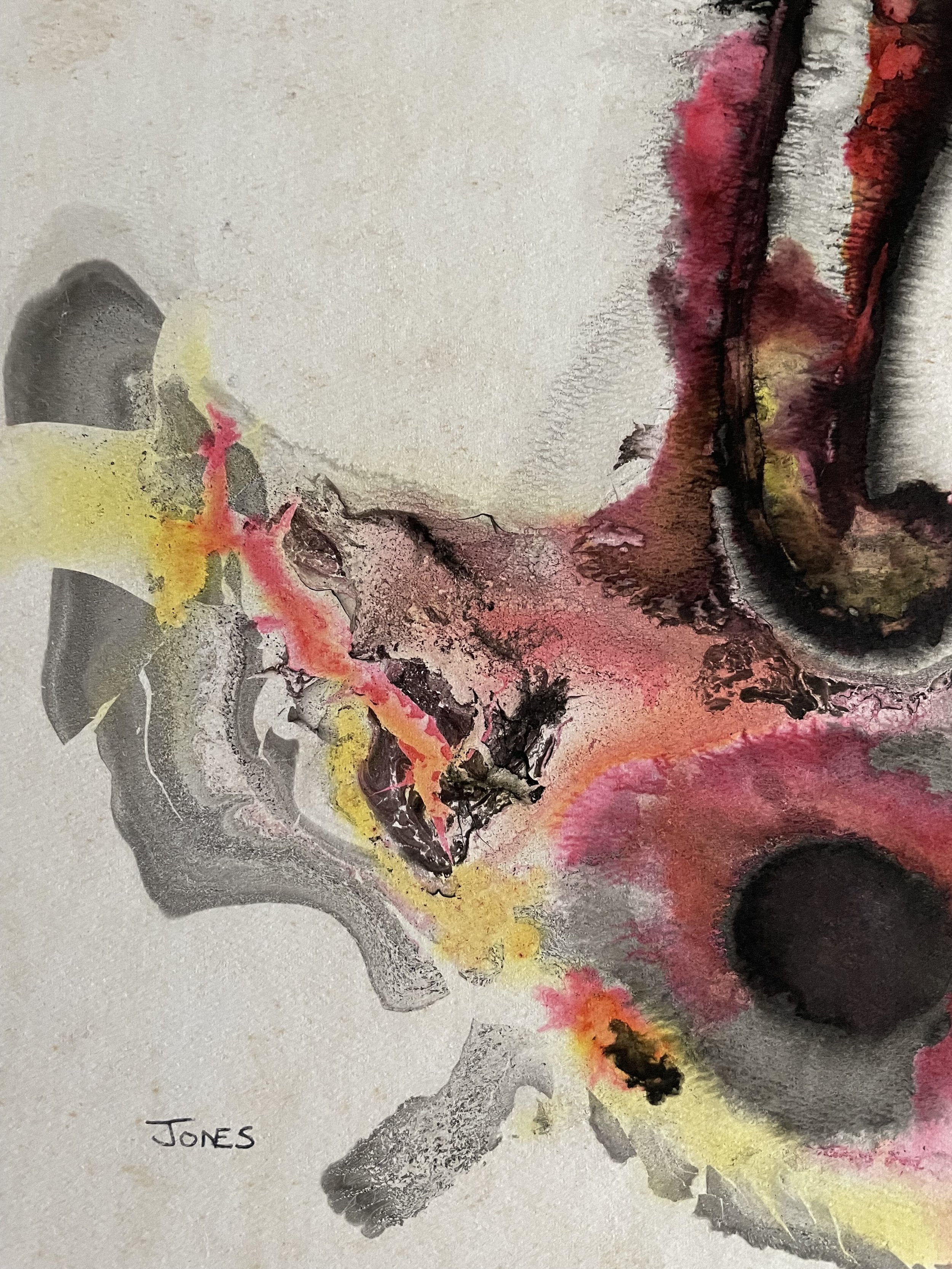
Physical examination confirms this is an intaglio print (etching and aquatint), not a lithograph. The sheet exhibits a clear, deep plate mark enclosing the image area—definitive evidence of intaglio printing. The name “Suzanne Duchamp” appears incised within the plate at the lower left and prints as part of the matrix rather than as a pencil signature. The edition number 15/200 appears in pencil in the margin, consistent with a documented 1929 edition of 200 impressions.
Scholarly print documentation describes a 1929 edition engraved in etching and aquatint after Suzanne Duchamp and published by Bernheim-Jeune, Paris, with a print run of 200 impressions. That source records the work as an intaglio print rather than lithograph and confirms the edition size. While some references attribute engraving to Jacques Villon, the plate of this impression bears only the incised “Suzanne Duchamp” and no visible “Villon” inscription; therefore, this listing carefully associates the work with the documented Villon-related edition without asserting plate authorship beyond what is physically present.
The work stands at the intersection of Cubist structure and Dada sensibility—domestic subject rendered with structural irony and conceptual poise.
Artist Biography
Suzanne Duchamp (1889–1963) was a French avant-garde painter and printmaker whose work bridges Cubism and Dada with intellectual clarity and formal elegance. Born into the Duchamp artistic family—sister to Marcel Duchamp, Jacques Villon, and Raymond Duchamp-Villon—she forged an independent practice that has increasingly been recognized as central to early 20th-century modernism rather than peripheral to it.
In the 1910s and 1920s, Duchamp developed a distinctive visual language that combined fractured Cubist spatial logic with textual nuance and conceptual ambiguity. Her works often operate as visual propositions: objects staged as signs, interiors treated as coded spaces, still lifes transformed into intellectual constructions. Unlike purely analytical Cubism, Duchamp’s compositions carry emotional restraint and philosophical wit—quietly destabilizing expectations of function, gendered space, and representation.
By 1929—the year of Flowers & Crystals—she was working within Parisian avant-garde networks that included Dada circles and progressive publishers such as Bernheim-Jeune. Her printmaking from this period reflects a disciplined structural clarity paired with painterly color modulation through aquatint.
In recent decades, major institutional reassessments of Dada and interwar modernism have significantly elevated Duchamp’s standing. Museums and scholarship increasingly situate her as a major voice in conceptual modernism, not simply in relation to Marcel Duchamp but as an artist who independently explored language, symbol, and abstraction in ways that prefigured later conceptual practices.
As of 2026, Suzanne Duchamp’s works on paper and paintings continue to gain scholarly and market recognition as collectors and institutions correct historical omissions in early modernist narratives.
Suzanne Duchamp (1889–1963) stands as one of the most intellectually refined figures within the French avant-garde of the early twentieth century—a painter, draftswoman, and maker of hybrid image-texts whose work braided Cubism’s fractured space with Dada’s conceptual provocation. Born into the Duchamp family (with siblings including Marcel Duchamp, Jacques Villon, and Raymond Duchamp-Villon), she developed an independent practice that is finally receiving the scale of attention it deserves: not as an “adjacent” Duchamp, but as an artist who built a distinct grammar of symbols, puns, and visual staging to examine modern life and modern perception.
Her best work often behaves like an argument you can look at. Suzanne Duchamp did not simply adopt the look of the avant-garde; she tested its claims—how images make meaning, how titles redirect interpretation, how the “real” object becomes a sign. Scholars frequently emphasize her dialogue with the readymade and with language-based strategies: works that sit at the boundary of painting and idea, where word, emblem, and form are fused into a single, poised construction. That conceptual intelligence is not cold; it is elegant, pointed, and often quietly humorous, the way a perfectly chosen phrase can turn a scene inside out.
Within the Paris networks of the 1910s–1930s (and in relation to her husband, artist Jean Crotti), her practice moved through Cubist structure, Dada logic, and a personal iconography that frequently staged the domestic sphere as a site of modern performance—objects, interiors, and “still lifes” treated as coded tableaux. When you look at a Duchamp still life, you’re not only seeing flowers or vessels; you’re seeing how she choreographs attention, how she uses contour and void, color and restraint, to make a familiar motif operate like a thought experiment.
By 2026, a broader re-reading of Dada and the interwar avant-garde has continued to elevate artists who historically were footnoted inside male-centered narratives. Duchamp’s growing visibility—through museum scholarship and renewed market interest—fits this wider correction: her work holds up not as a historical curiosity, but as a sophisticated contribution to the conceptual foundations of modern art.
Suzanne Duchamp (1889–1963)
Flowers & Crystals (Fleurs), 1929
Color etching and aquatint, 22 x 16 in
Edition 15/200
Plate-inscribed “Suzanne Duchamp”; pronounced plate mark.
Associated with documented 1929 Bernheim-Jeune edition.
Certificate of Authentication
Artist: Suzanne Duchamp (French, 1889–1963)
Title: Flowers & Crystals (Fleurs)
Date: 1929
Medium: Color etching and aquatint (intaglio)
Dimensions: 22 x 16 inches (sheet)
Edition: 15/200
Plate mark: Deep intaglio plate impression visible
Plate inscription: “Suzanne Duchamp” (incised within matrix)
This work is consistent with the documented 1929 edition of 200 impressions described in scholarly print references.
Provenance: Mitch Morse Gallery (acquired NYC, United States and Europe) → Artfind Gallery, Washington DC (current owner)
Condition
Visible age toning across sheet; mat burn along previous framing line; minor surface soiling; plate mark intact and strong; margins show handling wear consistent with age. No obvious tears or major losses visible from supplied images. Recommend conservation-grade framing and optional archival surface cleaning by paper conservator.
Provenance
Mitch Morse Gallery (NYC; acquired in United States and Europe)
→ Artfind Gallery, Washington DC (current owner)
Scholarly Appendix: Supporting Evidence for Medium, Edition, and Attribution Context
Key point
For Flowers & Crystals (Fleurs), the work is documented in print scholarship and cataloguing as an intaglio print in color (etching + aquatint), issued in a numbered edition of 200, and that cataloguers describe it as “after Suzanne Duchamp” in relation to Jacques Villon’s print oeuvre.
Primary scholarly-style reference
An Academia-hosted reference titled The prints of Jacques Villon. Vol 1. Interpretation works includes an entry for: “Jacques Villon (Gaston Duchamp, dit) (1875–1963) — Fleurs. 1929. Gravé à l’eau-forte et à l’aquatinte d’après Suzanne Duchamp… Ginestet et Pouillon 667… Impression en couleurs… numérotée et signée au crayon par Suzanne Duchamp.” This directly supports (1) the 1929 date, (2) the etching + aquatint classification, (3) the “after Suzanne Duchamp” relationship used in print cataloguing, and (4) that impressions were numbered and signed in pencil in at least some catalogued examples.
Independent corroboration from auction-cataloguing language
An Invaluable sold-prices listing reproduces the same standard French catalogue phrasing for Fleurs (1929): “Gravé à l’eau-forte et à l’aquatinte d’après Suzanne Duchamp… Ginestet et Pouillon 667,” describing a color impression and noting it is numbered and signed by Suzanne Duchamp in pencil (for the catalogued example). While Invaluable is a secondary aggregator, this is useful as corroboration of how the print is routinely catalogued in the market when tied to the Ginestet & Pouillon numbering.
Museum / catalogue raisonné anchor for the “Ginestet & Pouillon” reference
The National Gallery of Art record for Flowers (Fleurs) provides bibliography pointing to the standard Jacques Villon print catalogues, including Ginestet & Pouillon’s catalogue raisonné of Villon’s prints and illustrations (1979), which is the same reference system cited in the scholarly and auction descriptions (“Ginestet et Pouillon 667”). This supports use of the Ginestet & Pouillon reference in a museum-style note.
Physical, object-based evidence
My observation of a pronounced plate mark and the incised ‘Suzanne Duchamp’ within the plate area is fully consistent with intaglio production and supports listing the medium as etching/aquatint rather than lithograph (which typically does not emboss a plate mark). This object evidence aligns with the scholarly descriptions above.
Flowers & Crystals (Fleurs), Suzanne Duchamp (1889–1963), 1929, color etching & aquatint, 22x16 in, ed. 15/200.
A documented 1929 color etching and aquatint by Suzanne Duchamp, titled Flowers & Crystals (also known as Fleurs), issued in an edition of 200. This intaglio print—bearing a deep plate mark and incised “Suzanne Duchamp” signature within the matrix—reflects Duchamp’s refined Cubist structure and Dada-era conceptual sensibility. Historically associated with the Villon-engraved edition published in Paris, this impression represents an important interwar avant-garde work on paper.
Artwork Description
Flowers & Crystals (c.1929) presents a vibrant bouquet arranged in a sharply faceted vessel suggestive of cut crystal. The composition balances organic floral movement with geometric containment: blossoms in saturated reds, yellows, blues, and violets emerge from a prismatic bowl rendered in angular, Cubist planes. The theatrical curtain and subtly sketched framing elements create a staged interior, transforming a still life into a constructed visual argument—an approach consistent with Suzanne Duchamp’s intellectualized modernism.
This composition reads as a modern still life staged like a private performance: a bouquet of saturated blooms (cobalt, saffron, vermilion, violet) bursts from a sharply faceted bowl whose prismatic pattern suggests cut glass or “crystal” geometry. The surrounding space is deliberately ambiguous—part tabletop, part curtain, part figure—so the image oscillates between domestic calm and theatrical artifice. That tension is very much in Duchamp’s orbit: an insistence that the everyday can be re-coded through design, language, and framing.
Physical examination confirms this is an intaglio print (etching and aquatint), not a lithograph. The sheet exhibits a clear, deep plate mark enclosing the image area—definitive evidence of intaglio printing. The name “Suzanne Duchamp” appears incised within the plate at the lower left and prints as part of the matrix rather than as a pencil signature. The edition number 15/200 appears in pencil in the margin, consistent with a documented 1929 edition of 200 impressions.
Scholarly print documentation describes a 1929 edition engraved in etching and aquatint after Suzanne Duchamp and published by Bernheim-Jeune, Paris, with a print run of 200 impressions. That source records the work as an intaglio print rather than lithograph and confirms the edition size. While some references attribute engraving to Jacques Villon, the plate of this impression bears only the incised “Suzanne Duchamp” and no visible “Villon” inscription; therefore, this listing carefully associates the work with the documented Villon-related edition without asserting plate authorship beyond what is physically present.
The work stands at the intersection of Cubist structure and Dada sensibility—domestic subject rendered with structural irony and conceptual poise.
Artist Biography
Suzanne Duchamp (1889–1963) was a French avant-garde painter and printmaker whose work bridges Cubism and Dada with intellectual clarity and formal elegance. Born into the Duchamp artistic family—sister to Marcel Duchamp, Jacques Villon, and Raymond Duchamp-Villon—she forged an independent practice that has increasingly been recognized as central to early 20th-century modernism rather than peripheral to it.
In the 1910s and 1920s, Duchamp developed a distinctive visual language that combined fractured Cubist spatial logic with textual nuance and conceptual ambiguity. Her works often operate as visual propositions: objects staged as signs, interiors treated as coded spaces, still lifes transformed into intellectual constructions. Unlike purely analytical Cubism, Duchamp’s compositions carry emotional restraint and philosophical wit—quietly destabilizing expectations of function, gendered space, and representation.
By 1929—the year of Flowers & Crystals—she was working within Parisian avant-garde networks that included Dada circles and progressive publishers such as Bernheim-Jeune. Her printmaking from this period reflects a disciplined structural clarity paired with painterly color modulation through aquatint.
In recent decades, major institutional reassessments of Dada and interwar modernism have significantly elevated Duchamp’s standing. Museums and scholarship increasingly situate her as a major voice in conceptual modernism, not simply in relation to Marcel Duchamp but as an artist who independently explored language, symbol, and abstraction in ways that prefigured later conceptual practices.
As of 2026, Suzanne Duchamp’s works on paper and paintings continue to gain scholarly and market recognition as collectors and institutions correct historical omissions in early modernist narratives.
Suzanne Duchamp (1889–1963) stands as one of the most intellectually refined figures within the French avant-garde of the early twentieth century—a painter, draftswoman, and maker of hybrid image-texts whose work braided Cubism’s fractured space with Dada’s conceptual provocation. Born into the Duchamp family (with siblings including Marcel Duchamp, Jacques Villon, and Raymond Duchamp-Villon), she developed an independent practice that is finally receiving the scale of attention it deserves: not as an “adjacent” Duchamp, but as an artist who built a distinct grammar of symbols, puns, and visual staging to examine modern life and modern perception.
Her best work often behaves like an argument you can look at. Suzanne Duchamp did not simply adopt the look of the avant-garde; she tested its claims—how images make meaning, how titles redirect interpretation, how the “real” object becomes a sign. Scholars frequently emphasize her dialogue with the readymade and with language-based strategies: works that sit at the boundary of painting and idea, where word, emblem, and form are fused into a single, poised construction. That conceptual intelligence is not cold; it is elegant, pointed, and often quietly humorous, the way a perfectly chosen phrase can turn a scene inside out.
Within the Paris networks of the 1910s–1930s (and in relation to her husband, artist Jean Crotti), her practice moved through Cubist structure, Dada logic, and a personal iconography that frequently staged the domestic sphere as a site of modern performance—objects, interiors, and “still lifes” treated as coded tableaux. When you look at a Duchamp still life, you’re not only seeing flowers or vessels; you’re seeing how she choreographs attention, how she uses contour and void, color and restraint, to make a familiar motif operate like a thought experiment.
By 2026, a broader re-reading of Dada and the interwar avant-garde has continued to elevate artists who historically were footnoted inside male-centered narratives. Duchamp’s growing visibility—through museum scholarship and renewed market interest—fits this wider correction: her work holds up not as a historical curiosity, but as a sophisticated contribution to the conceptual foundations of modern art.
Suzanne Duchamp (1889–1963)
Flowers & Crystals (Fleurs), 1929
Color etching and aquatint, 22 x 16 in
Edition 15/200
Plate-inscribed “Suzanne Duchamp”; pronounced plate mark.
Associated with documented 1929 Bernheim-Jeune edition.
Certificate of Authentication
Artist: Suzanne Duchamp (French, 1889–1963)
Title: Flowers & Crystals (Fleurs)
Date: 1929
Medium: Color etching and aquatint (intaglio)
Dimensions: 22 x 16 inches (sheet)
Edition: 15/200
Plate mark: Deep intaglio plate impression visible
Plate inscription: “Suzanne Duchamp” (incised within matrix)
This work is consistent with the documented 1929 edition of 200 impressions described in scholarly print references.
Provenance: Mitch Morse Gallery (acquired NYC, United States and Europe) → Artfind Gallery, Washington DC (current owner)
Condition
Visible age toning across sheet; mat burn along previous framing line; minor surface soiling; plate mark intact and strong; margins show handling wear consistent with age. No obvious tears or major losses visible from supplied images. Recommend conservation-grade framing and optional archival surface cleaning by paper conservator.
Provenance
Mitch Morse Gallery (NYC; acquired in United States and Europe)
→ Artfind Gallery, Washington DC (current owner)
Scholarly Appendix: Supporting Evidence for Medium, Edition, and Attribution Context
Key point
For Flowers & Crystals (Fleurs), the work is documented in print scholarship and cataloguing as an intaglio print in color (etching + aquatint), issued in a numbered edition of 200, and that cataloguers describe it as “after Suzanne Duchamp” in relation to Jacques Villon’s print oeuvre.
Primary scholarly-style reference
An Academia-hosted reference titled The prints of Jacques Villon. Vol 1. Interpretation works includes an entry for: “Jacques Villon (Gaston Duchamp, dit) (1875–1963) — Fleurs. 1929. Gravé à l’eau-forte et à l’aquatinte d’après Suzanne Duchamp… Ginestet et Pouillon 667… Impression en couleurs… numérotée et signée au crayon par Suzanne Duchamp.” This directly supports (1) the 1929 date, (2) the etching + aquatint classification, (3) the “after Suzanne Duchamp” relationship used in print cataloguing, and (4) that impressions were numbered and signed in pencil in at least some catalogued examples.
Independent corroboration from auction-cataloguing language
An Invaluable sold-prices listing reproduces the same standard French catalogue phrasing for Fleurs (1929): “Gravé à l’eau-forte et à l’aquatinte d’après Suzanne Duchamp… Ginestet et Pouillon 667,” describing a color impression and noting it is numbered and signed by Suzanne Duchamp in pencil (for the catalogued example). While Invaluable is a secondary aggregator, this is useful as corroboration of how the print is routinely catalogued in the market when tied to the Ginestet & Pouillon numbering.
Museum / catalogue raisonné anchor for the “Ginestet & Pouillon” reference
The National Gallery of Art record for Flowers (Fleurs) provides bibliography pointing to the standard Jacques Villon print catalogues, including Ginestet & Pouillon’s catalogue raisonné of Villon’s prints and illustrations (1979), which is the same reference system cited in the scholarly and auction descriptions (“Ginestet et Pouillon 667”). This supports use of the Ginestet & Pouillon reference in a museum-style note.
Physical, object-based evidence
My observation of a pronounced plate mark and the incised ‘Suzanne Duchamp’ within the plate area is fully consistent with intaglio production and supports listing the medium as etching/aquatint rather than lithograph (which typically does not emboss a plate mark). This object evidence aligns with the scholarly descriptions above.
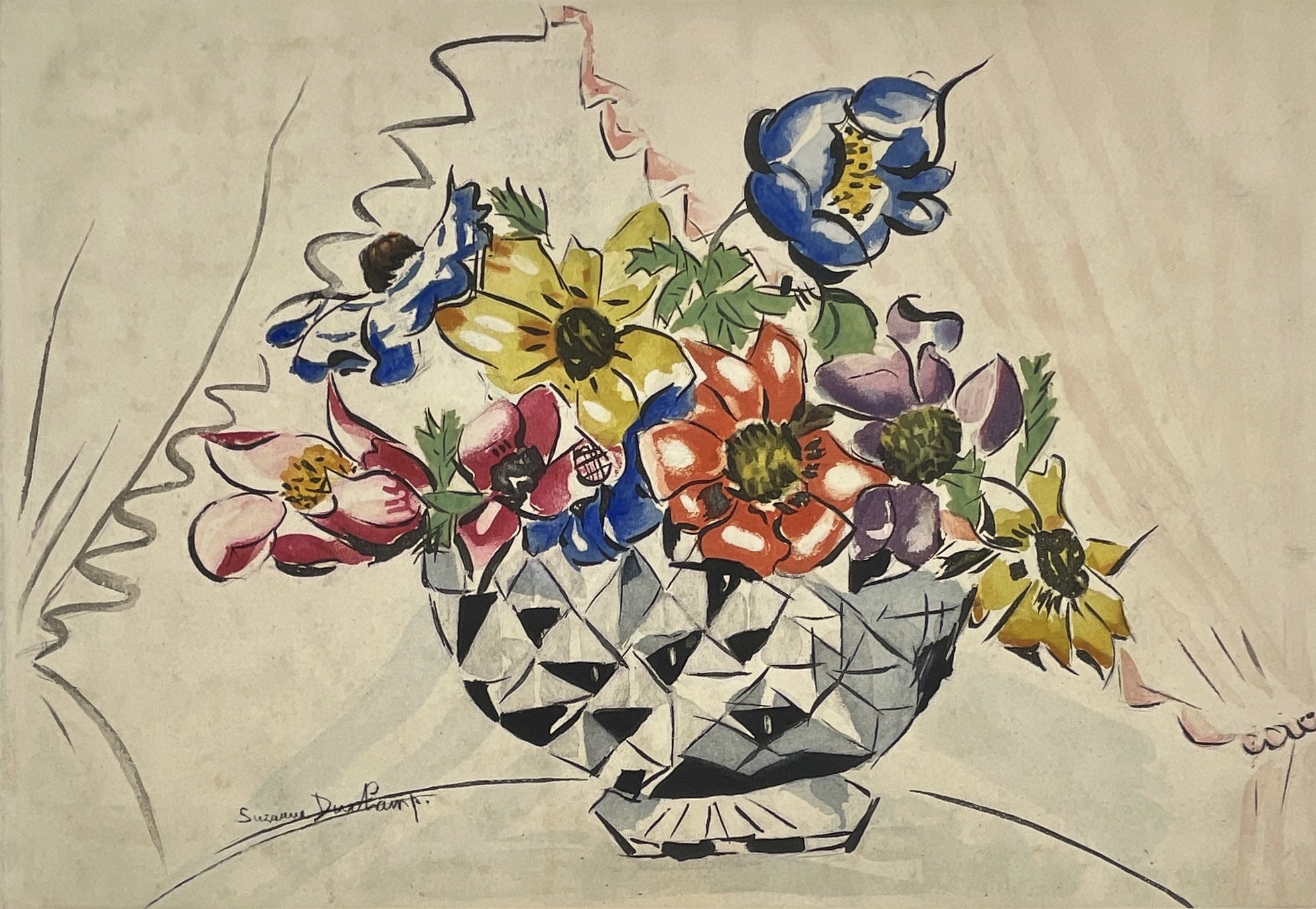 Image 1 of 8
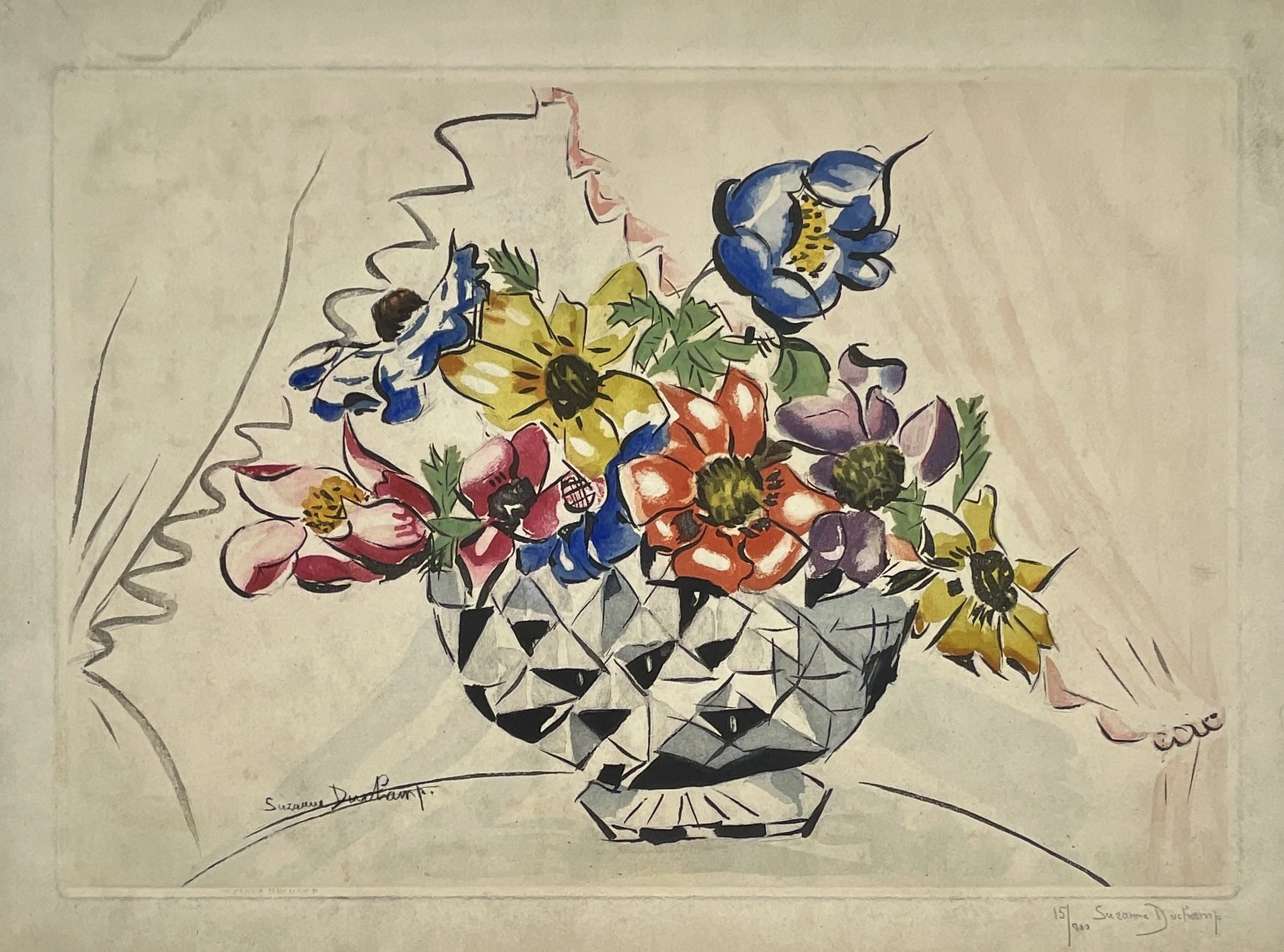 Image 2 of 8
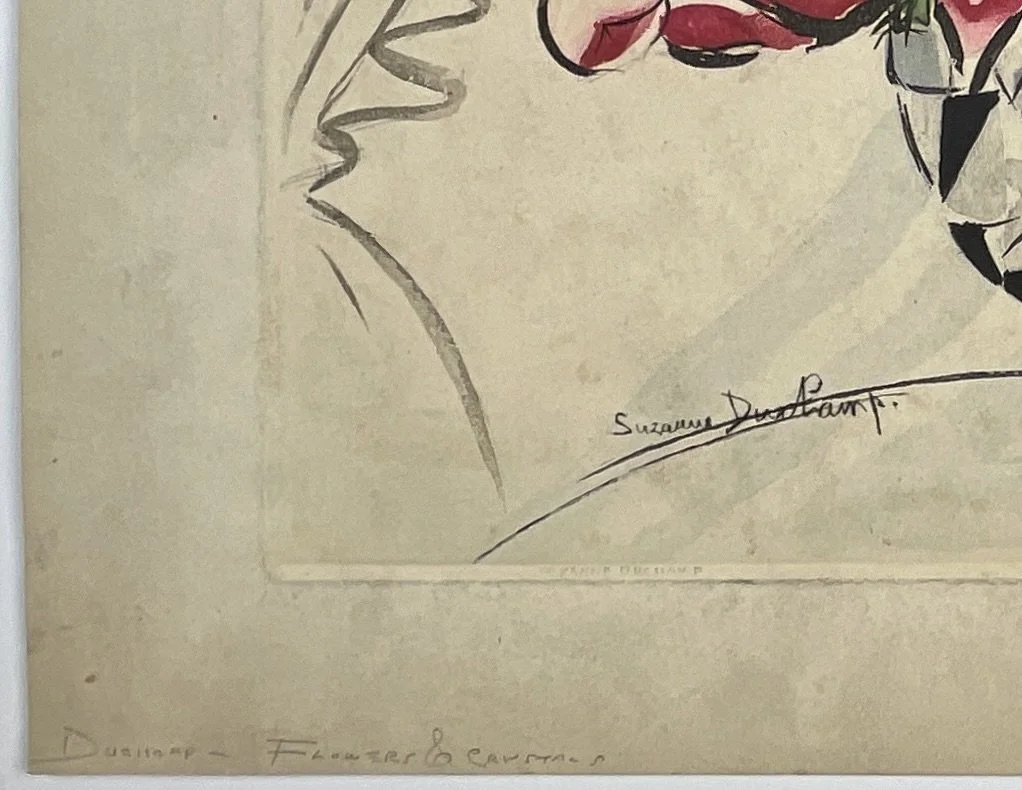 Image 3 of 8
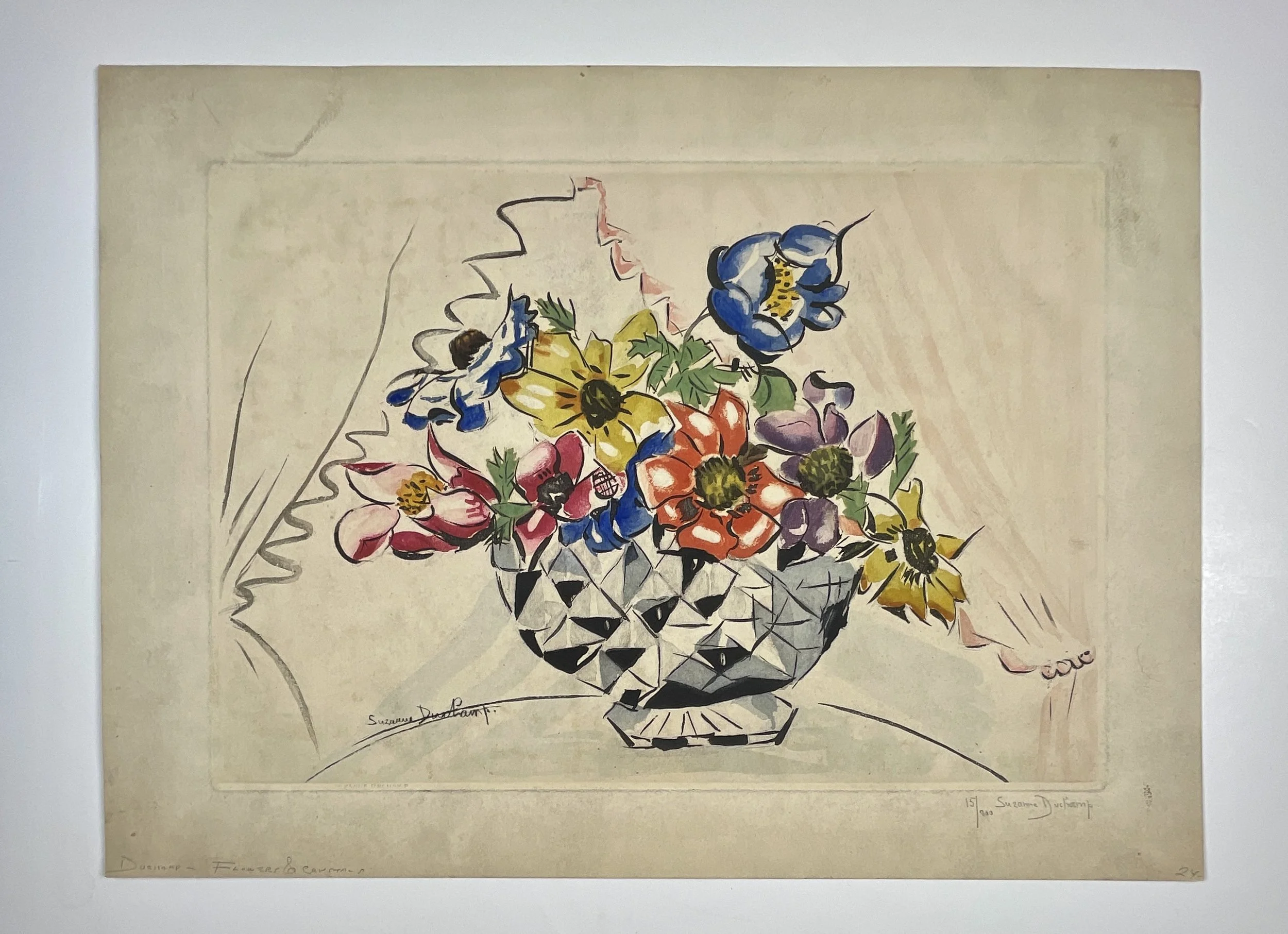 Image 4 of 8
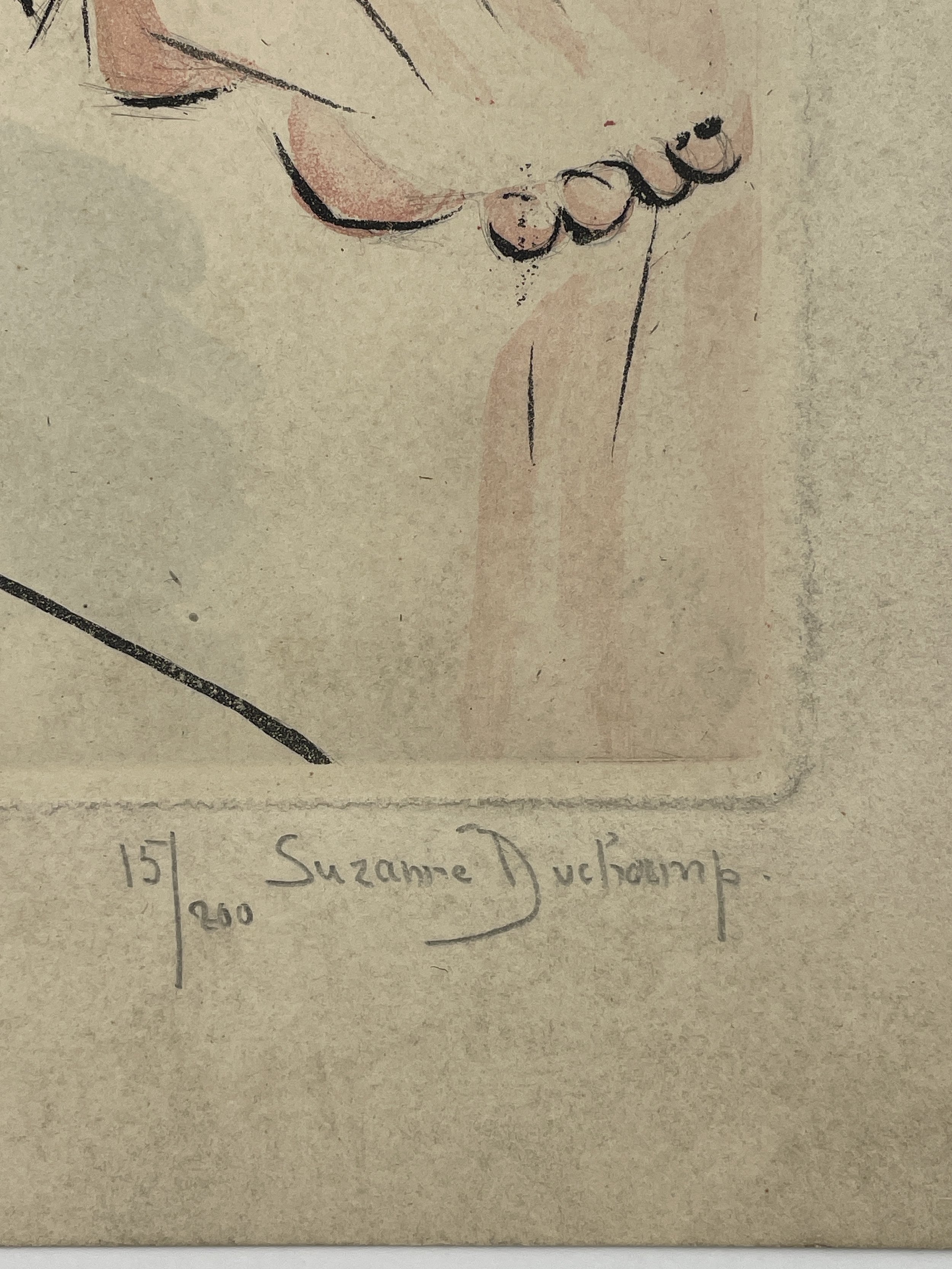 Image 5 of 8
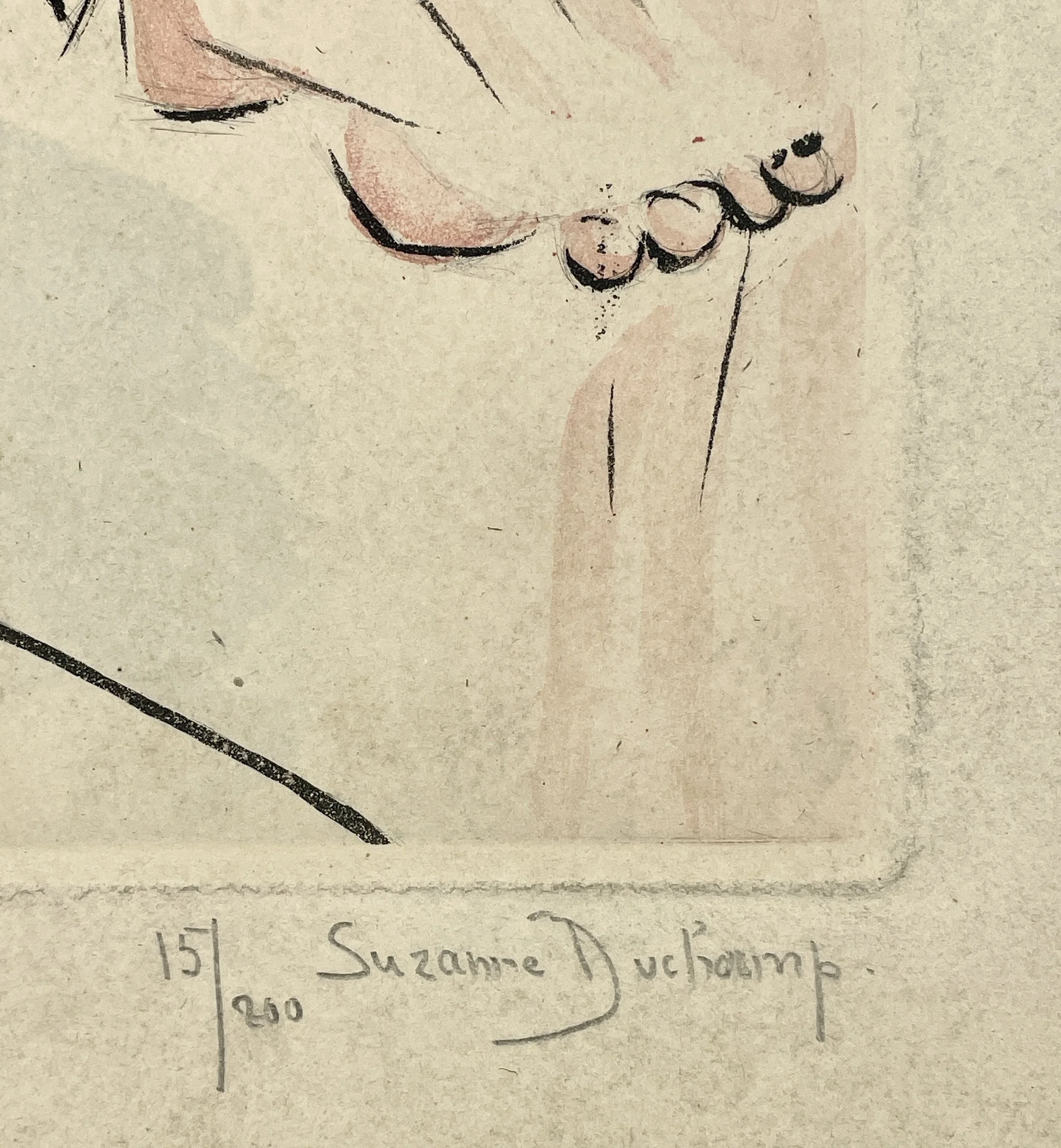 Image 6 of 8
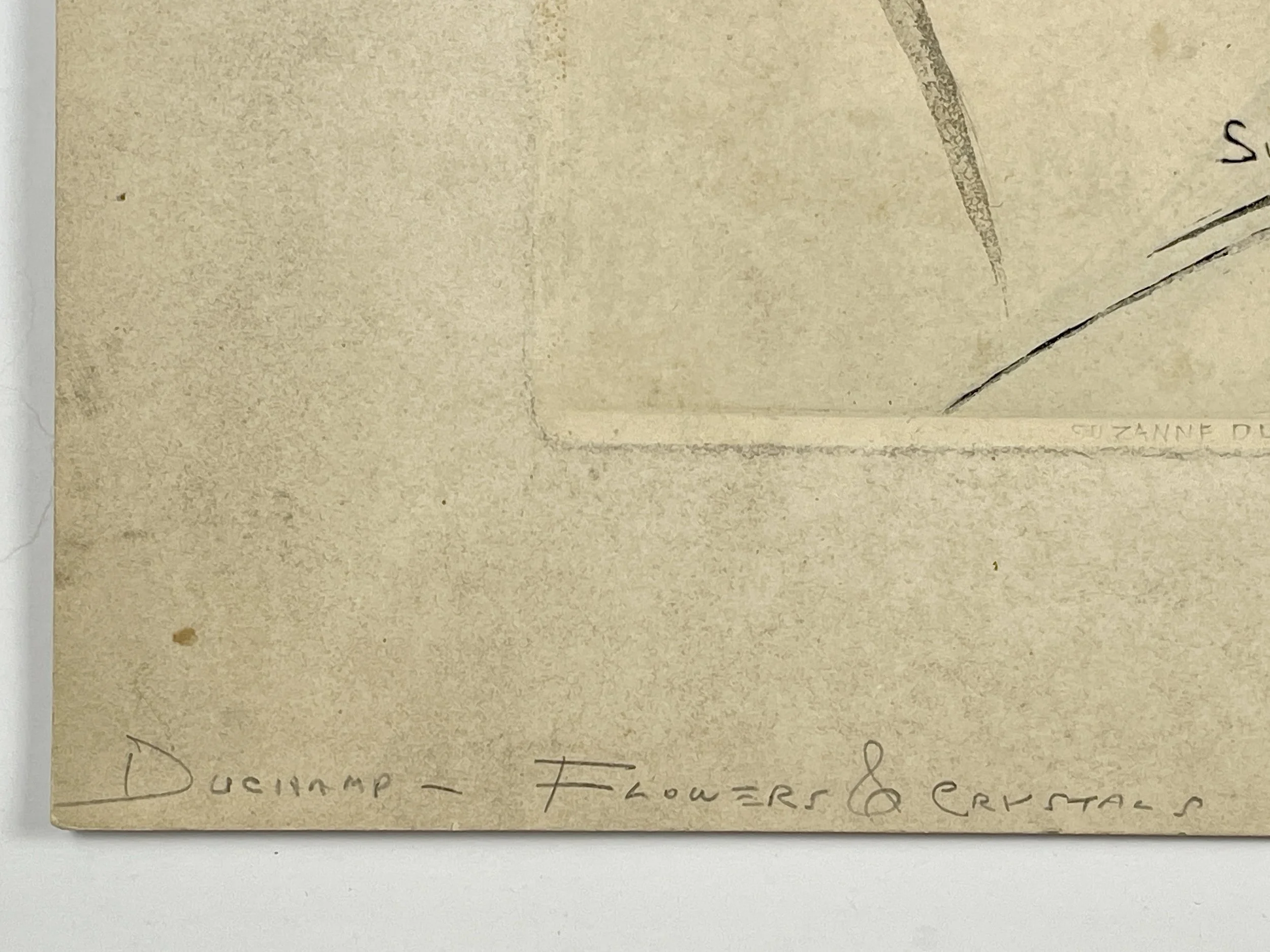 Image 7 of 8
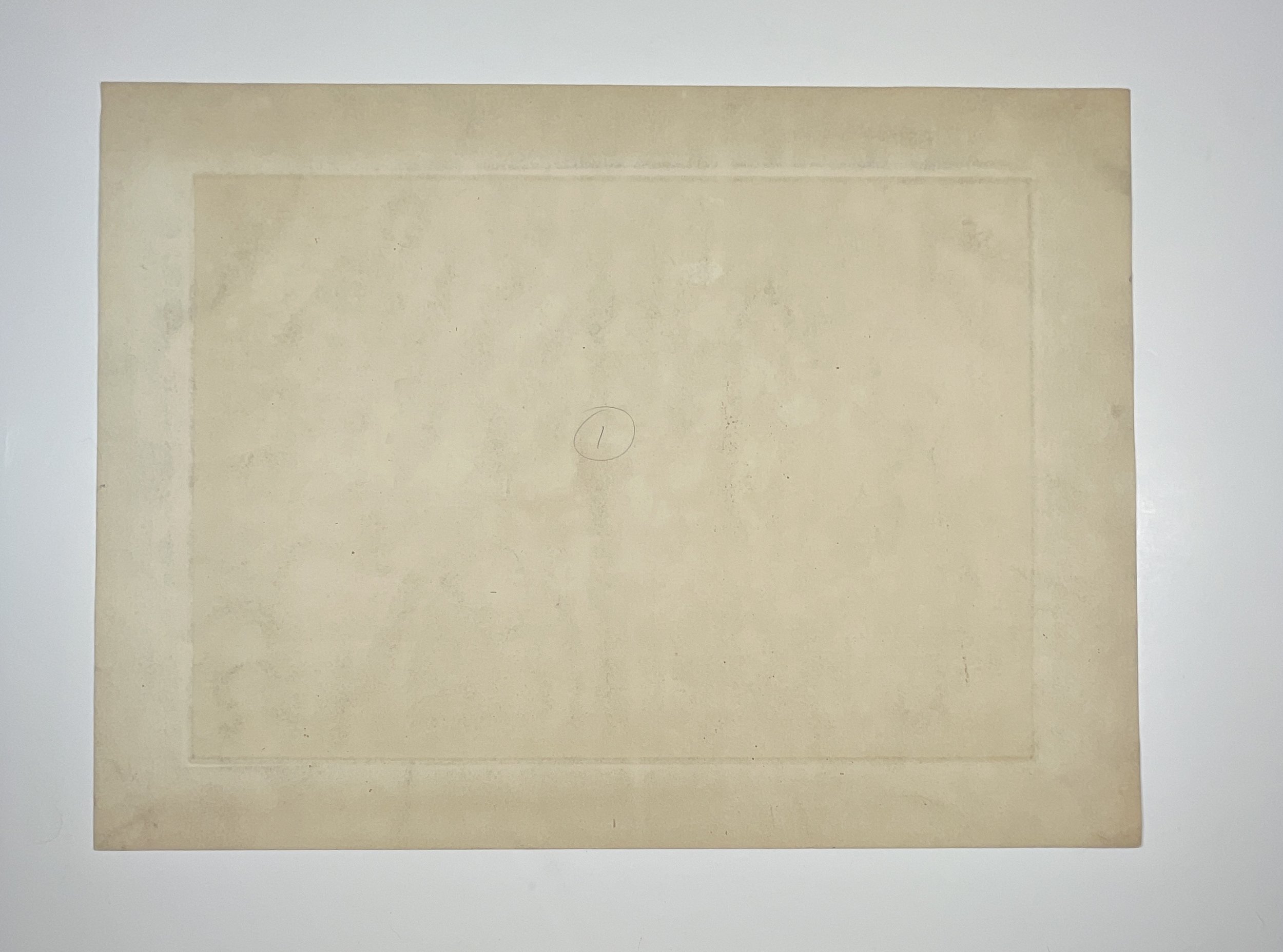 Image 8 of 8