 Image 1 of 5
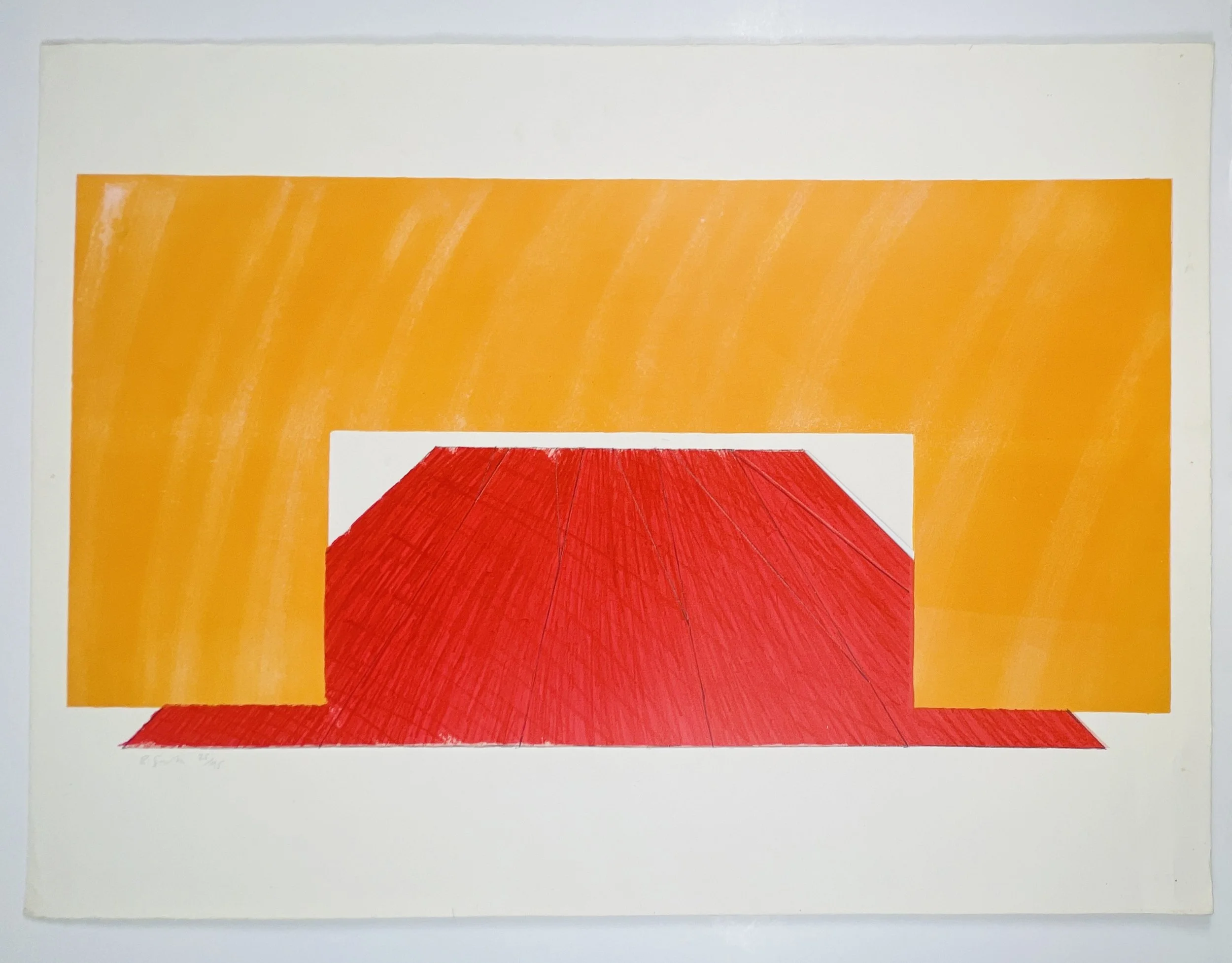 Image 2 of 5
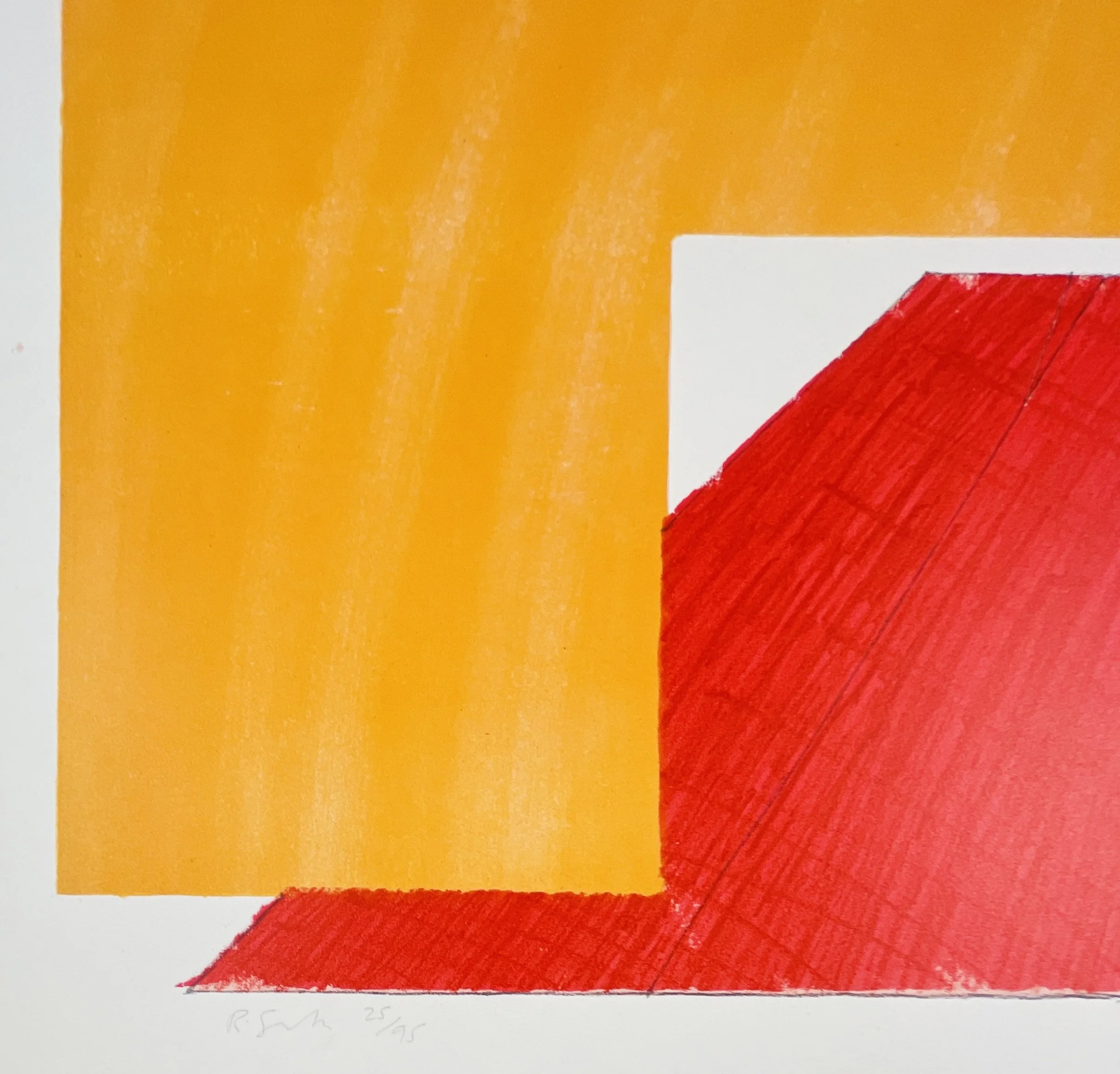 Image 3 of 5
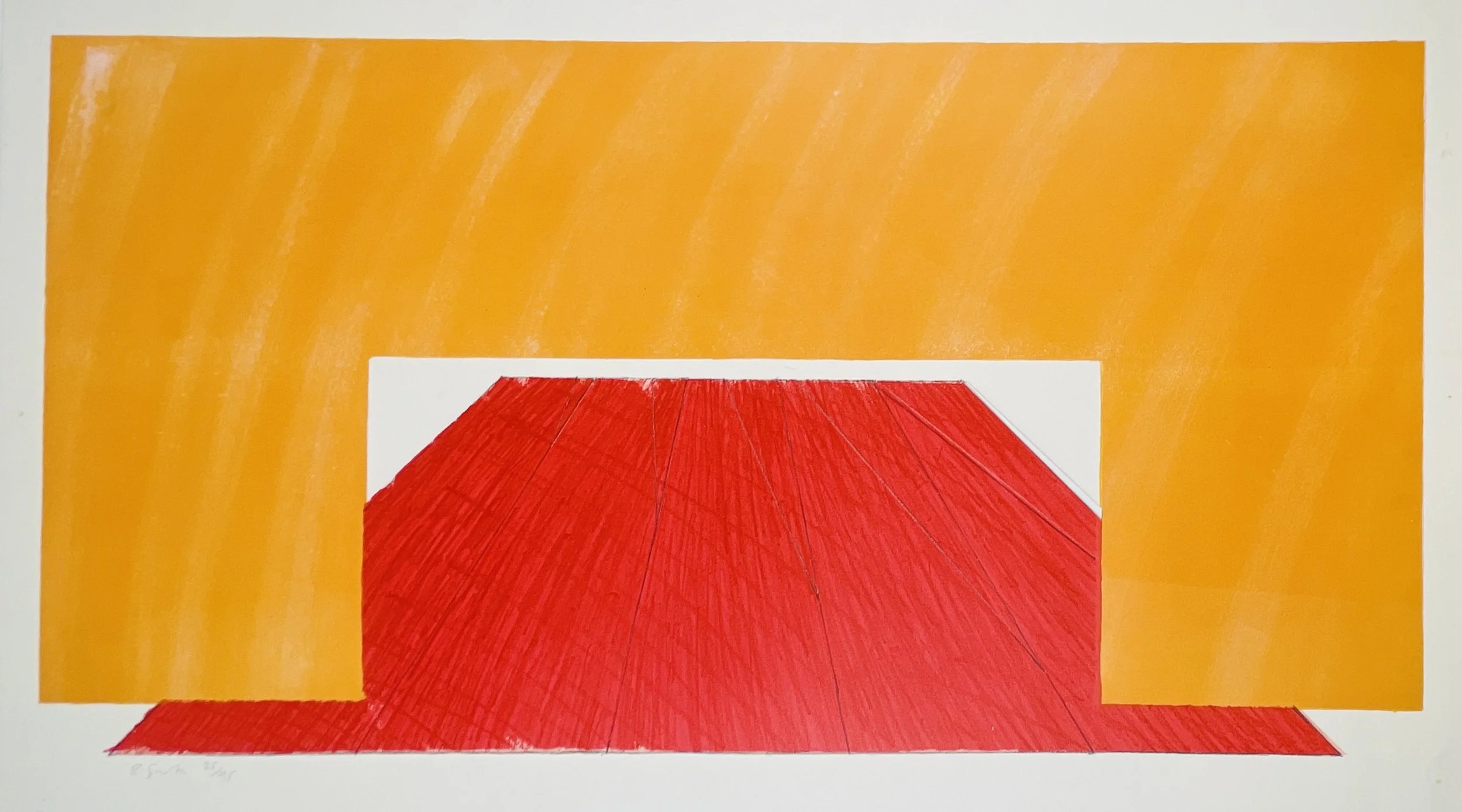 Image 4 of 5
 Image 5 of 5
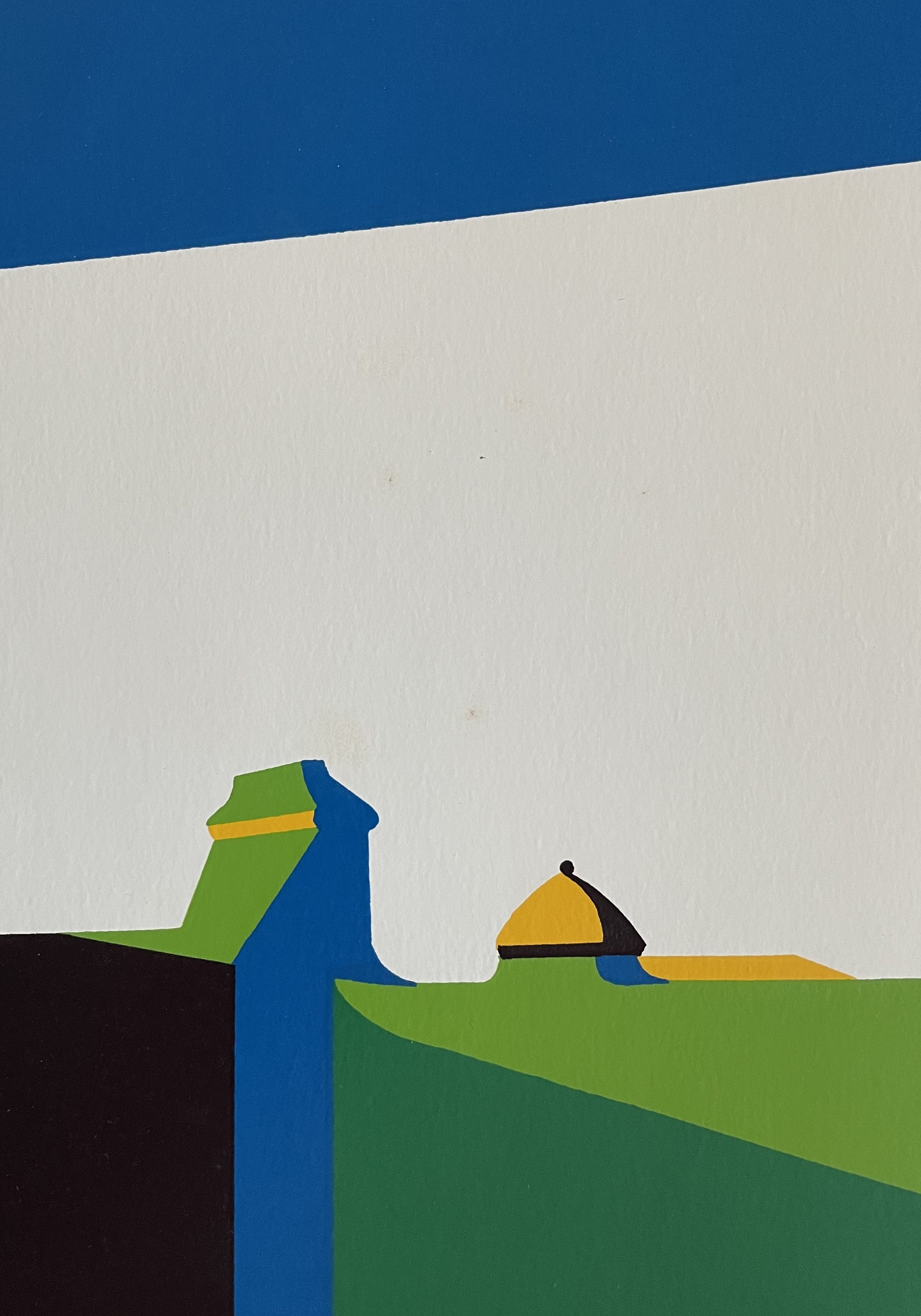
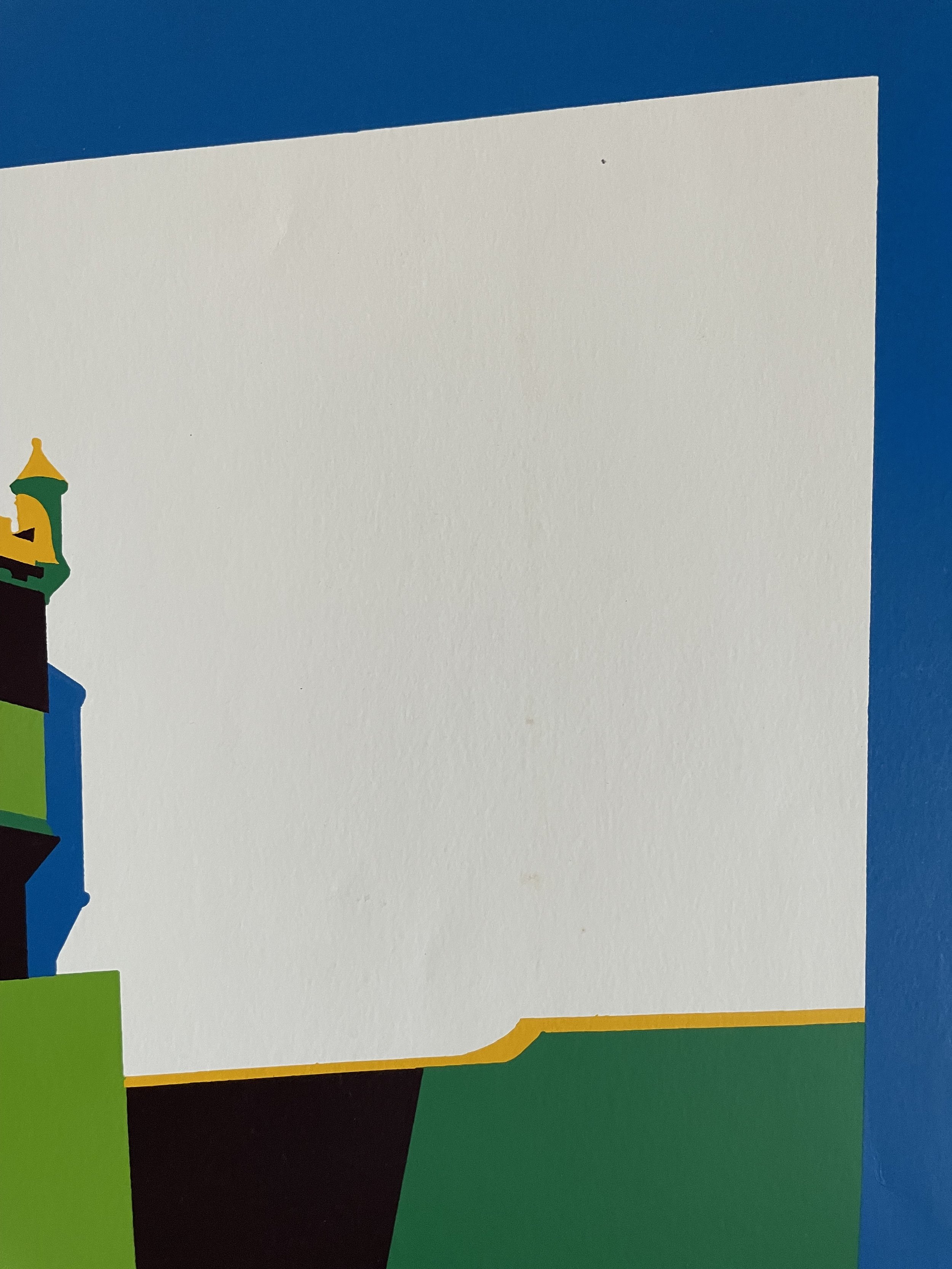
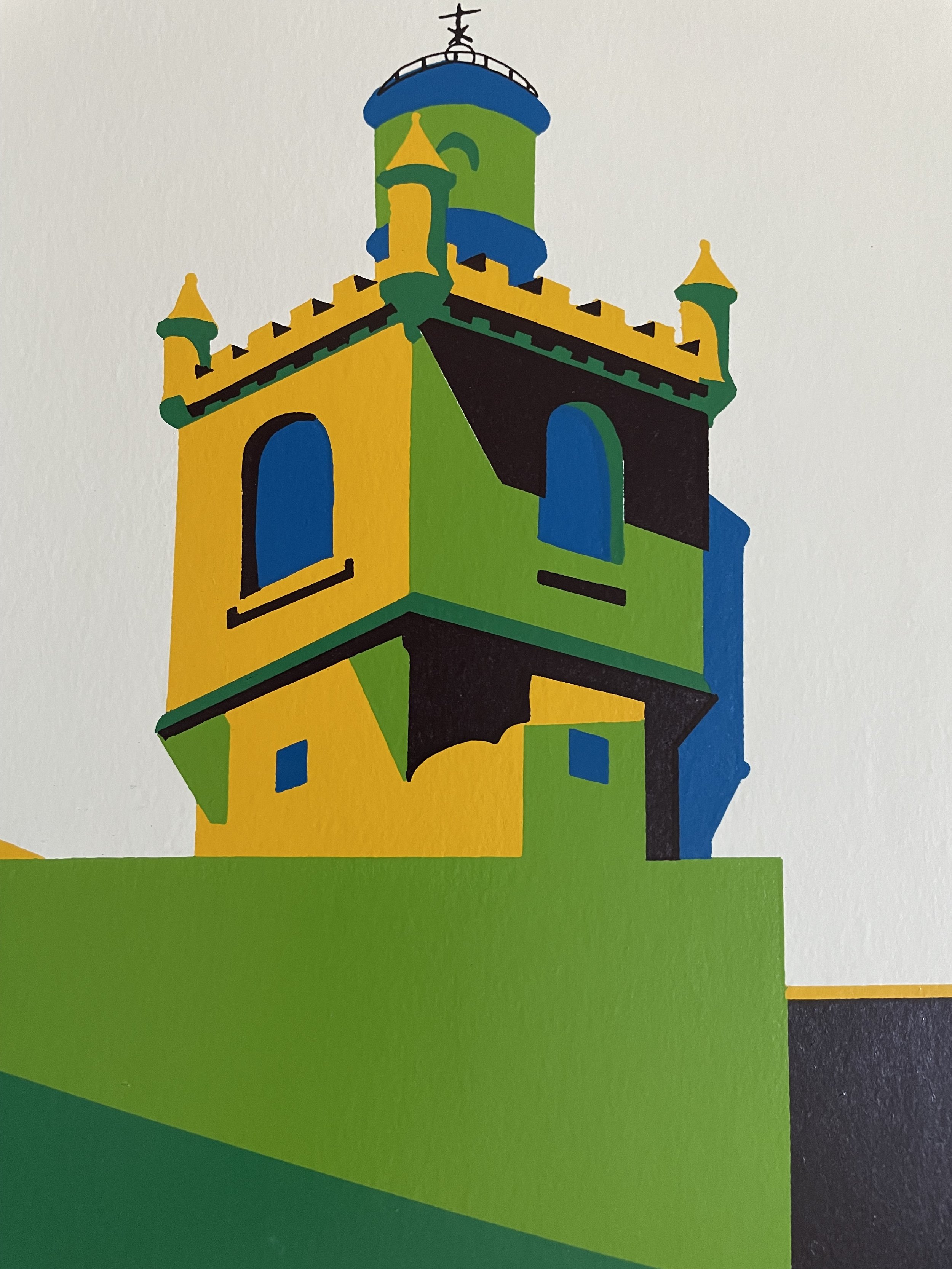
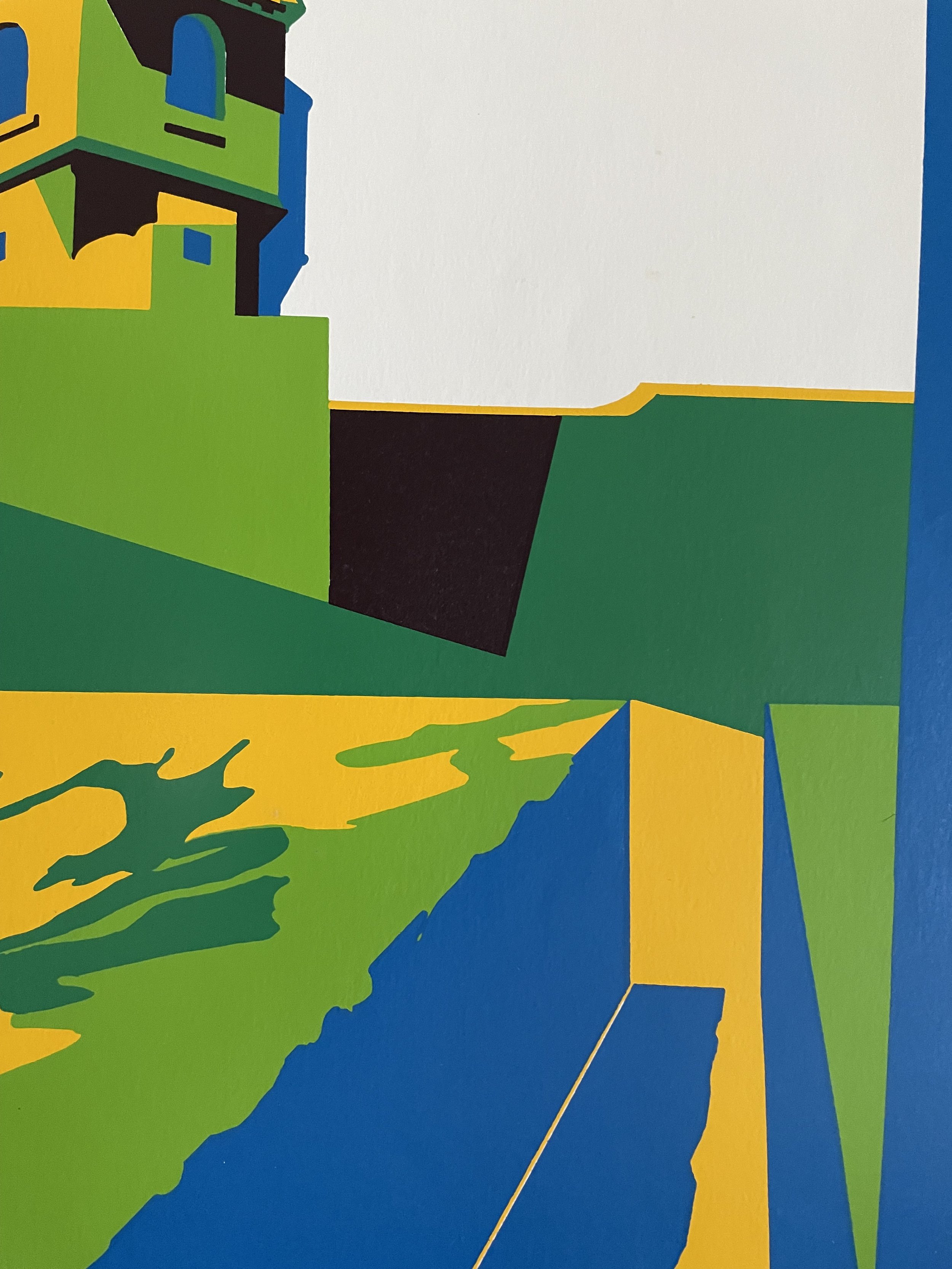
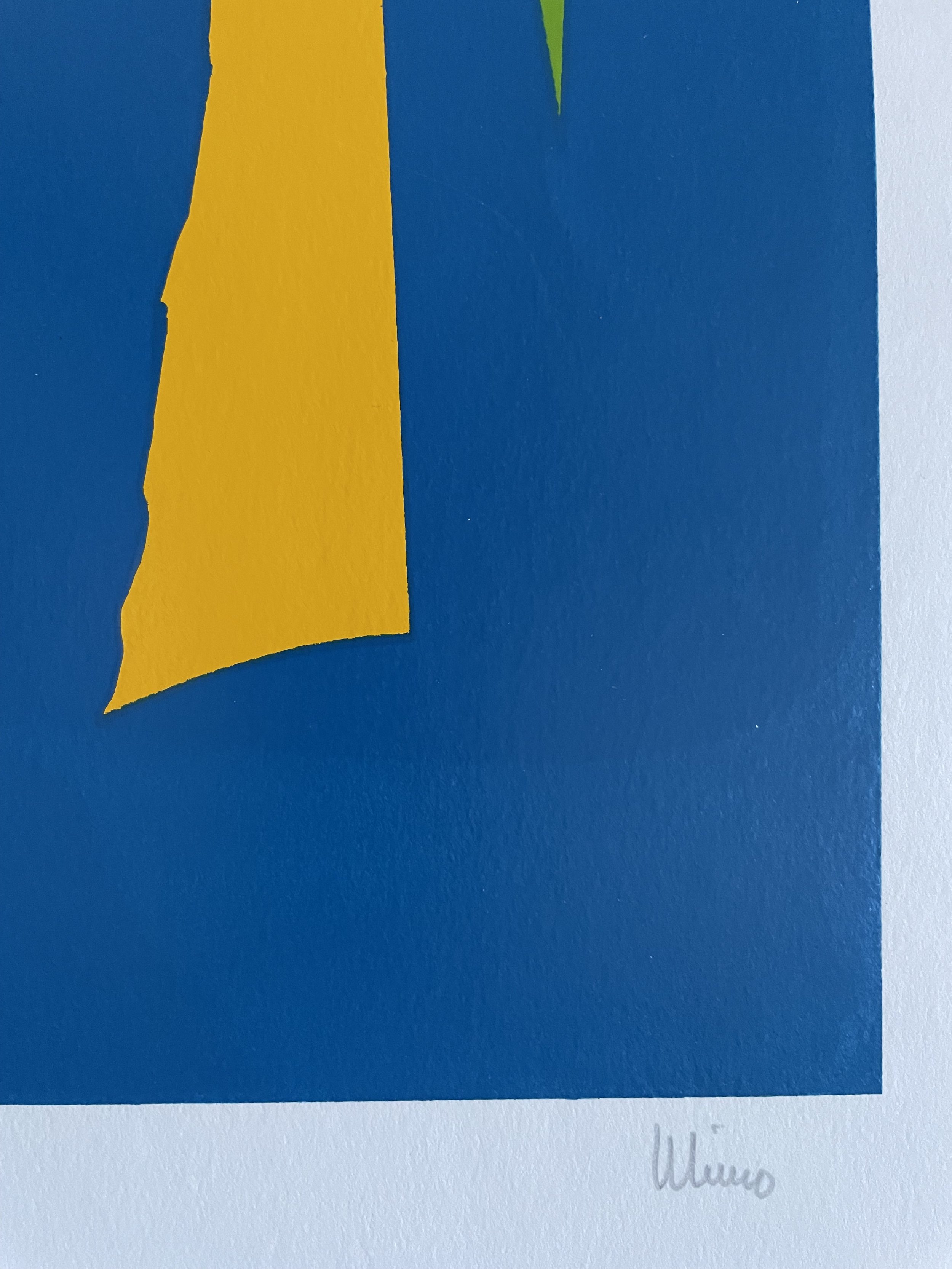
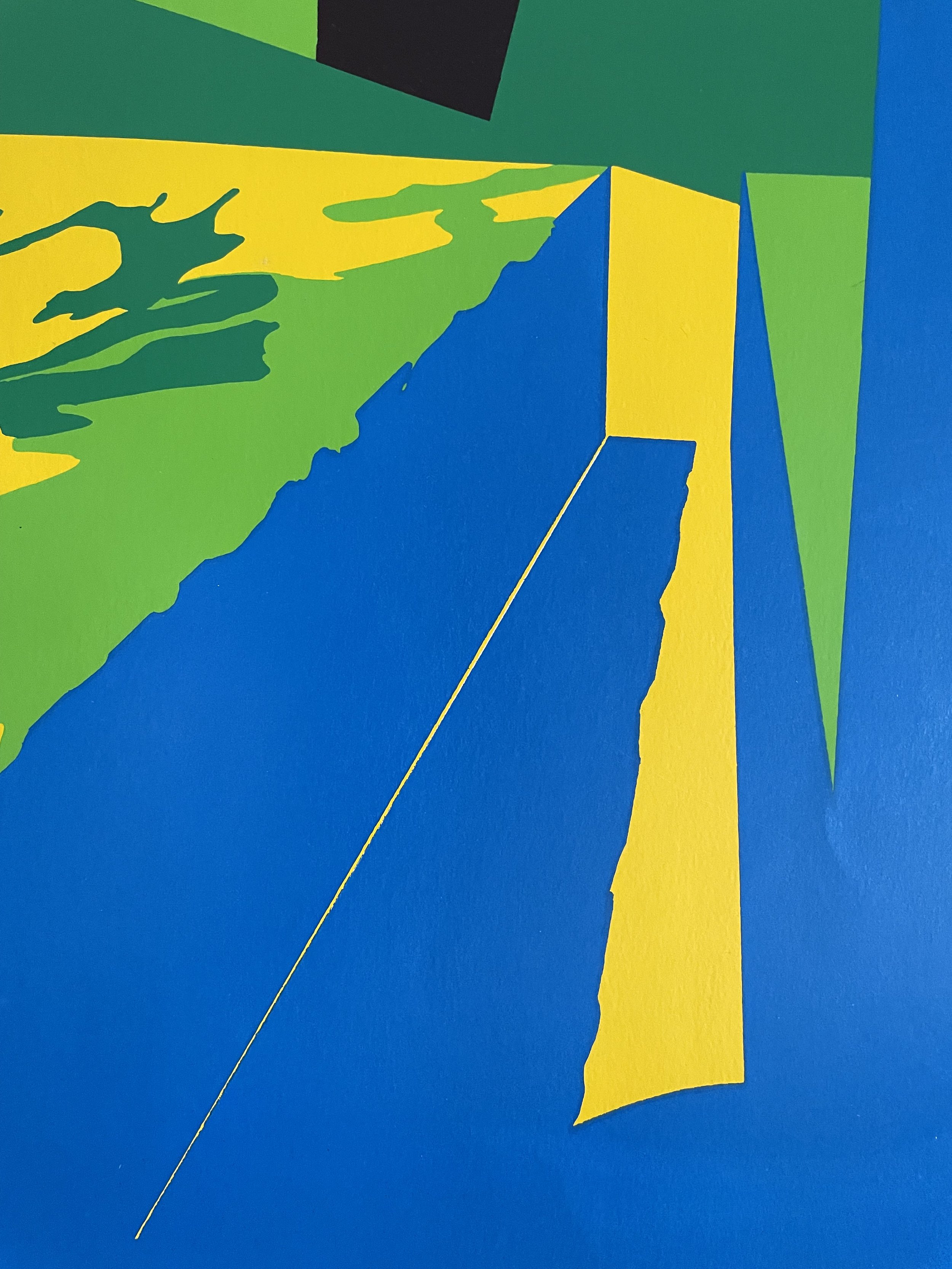
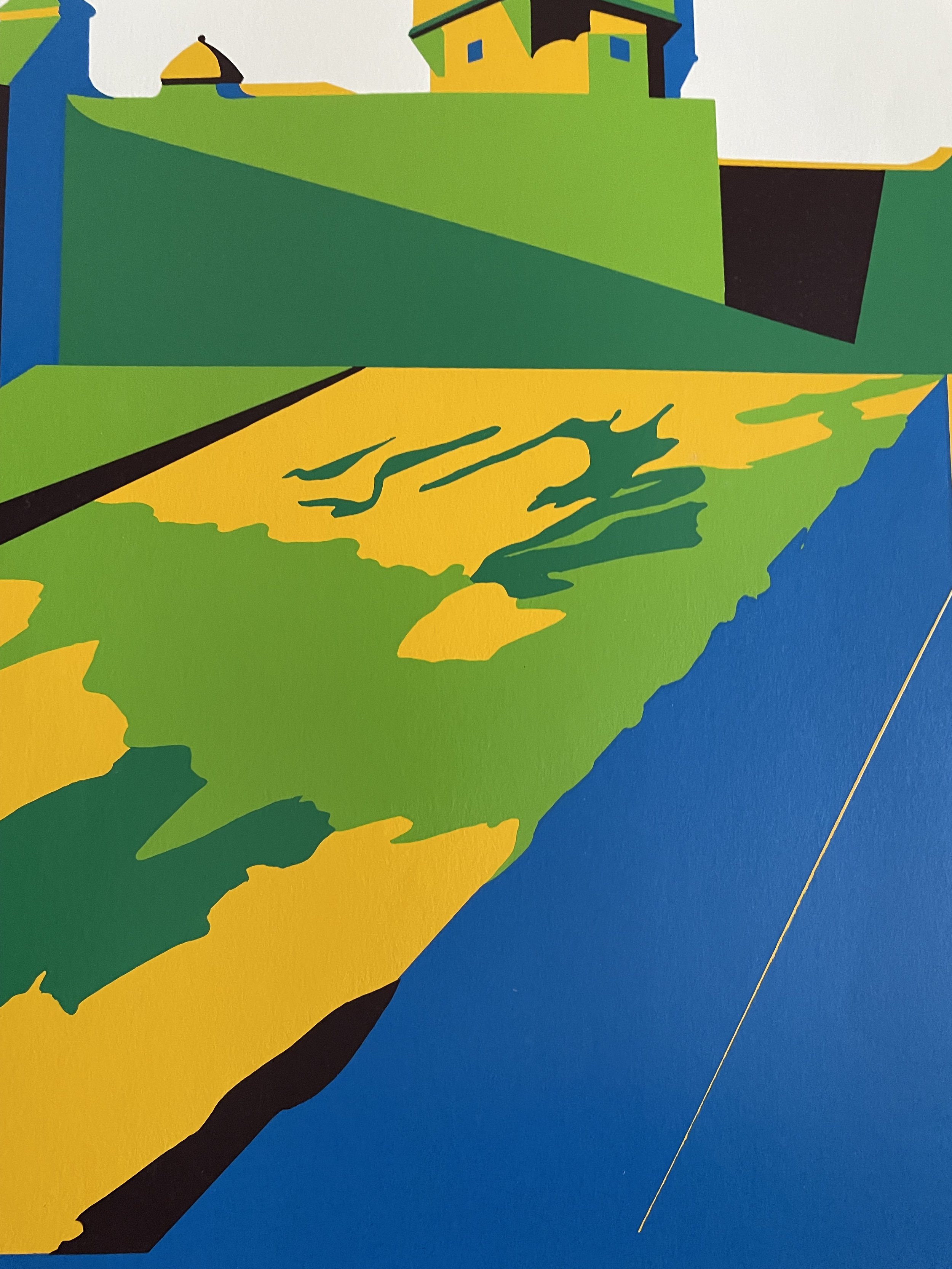
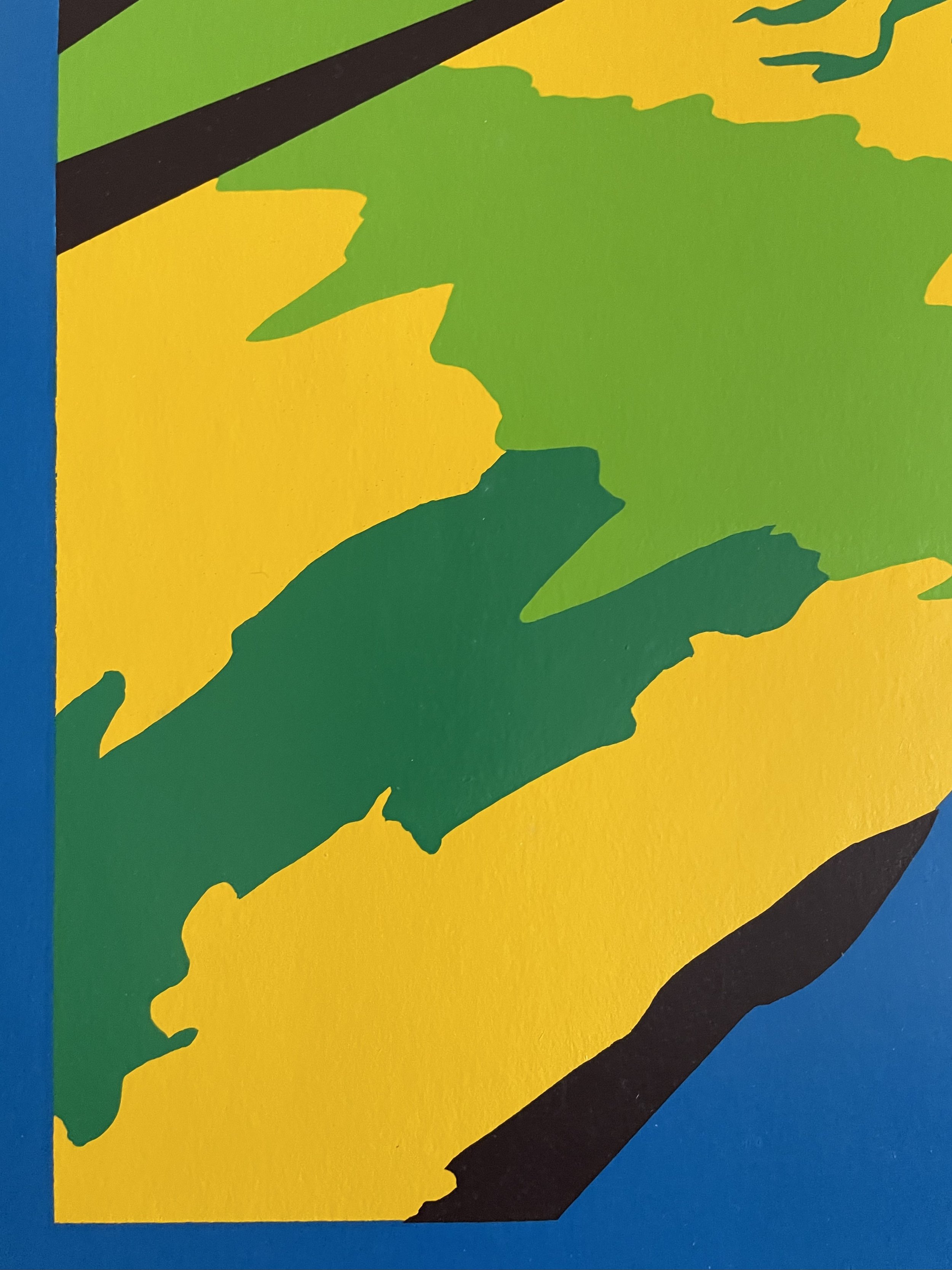
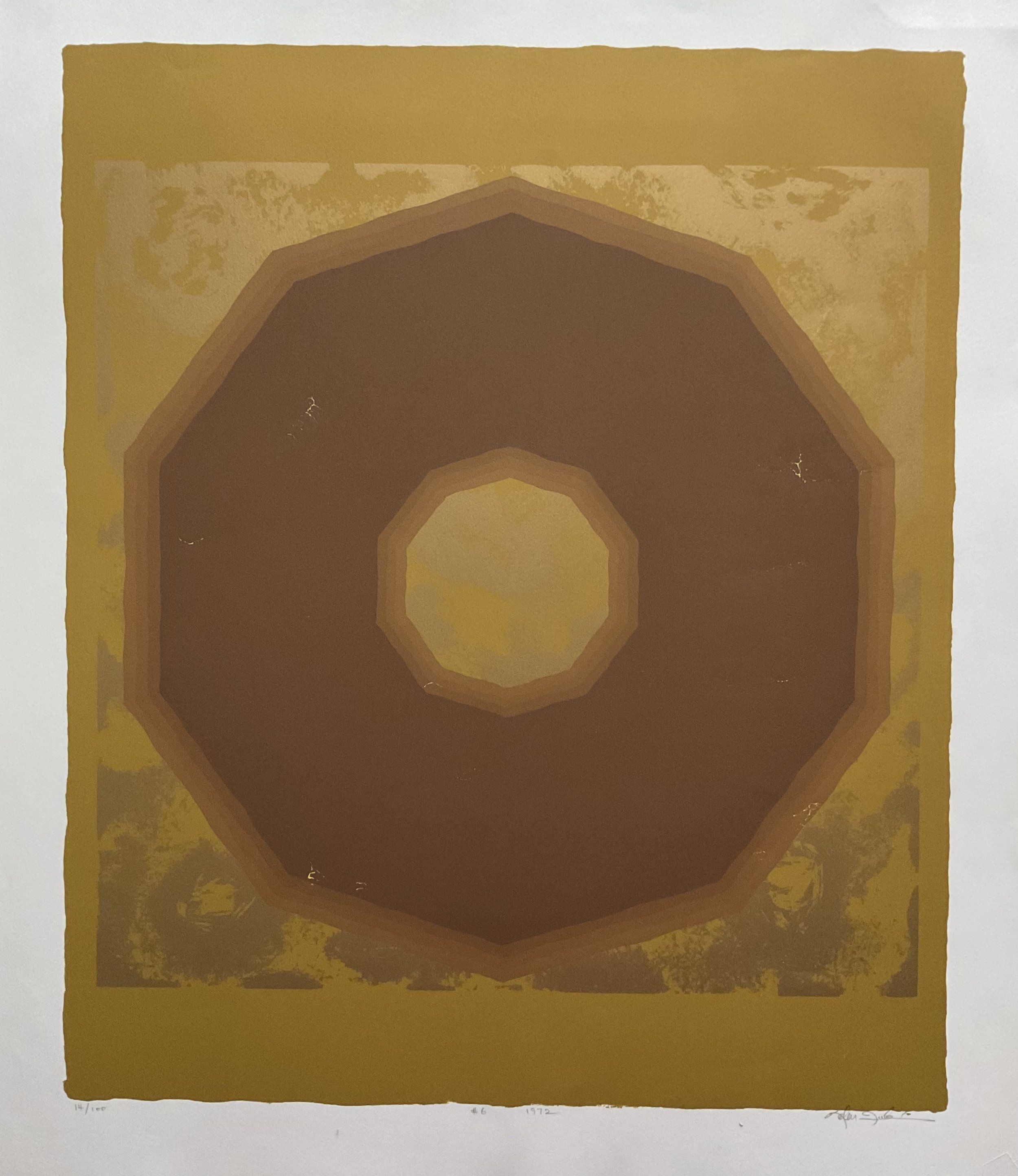
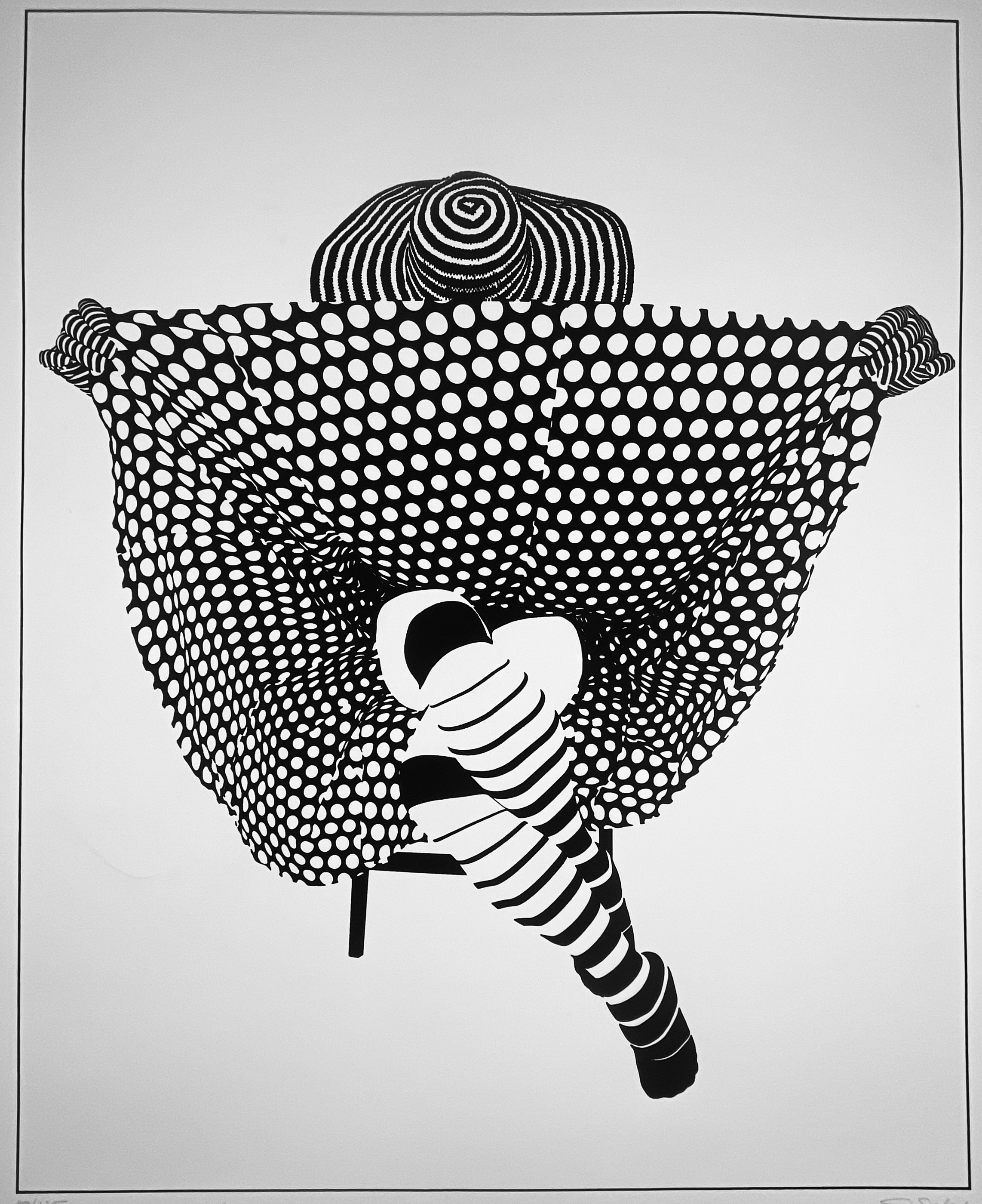
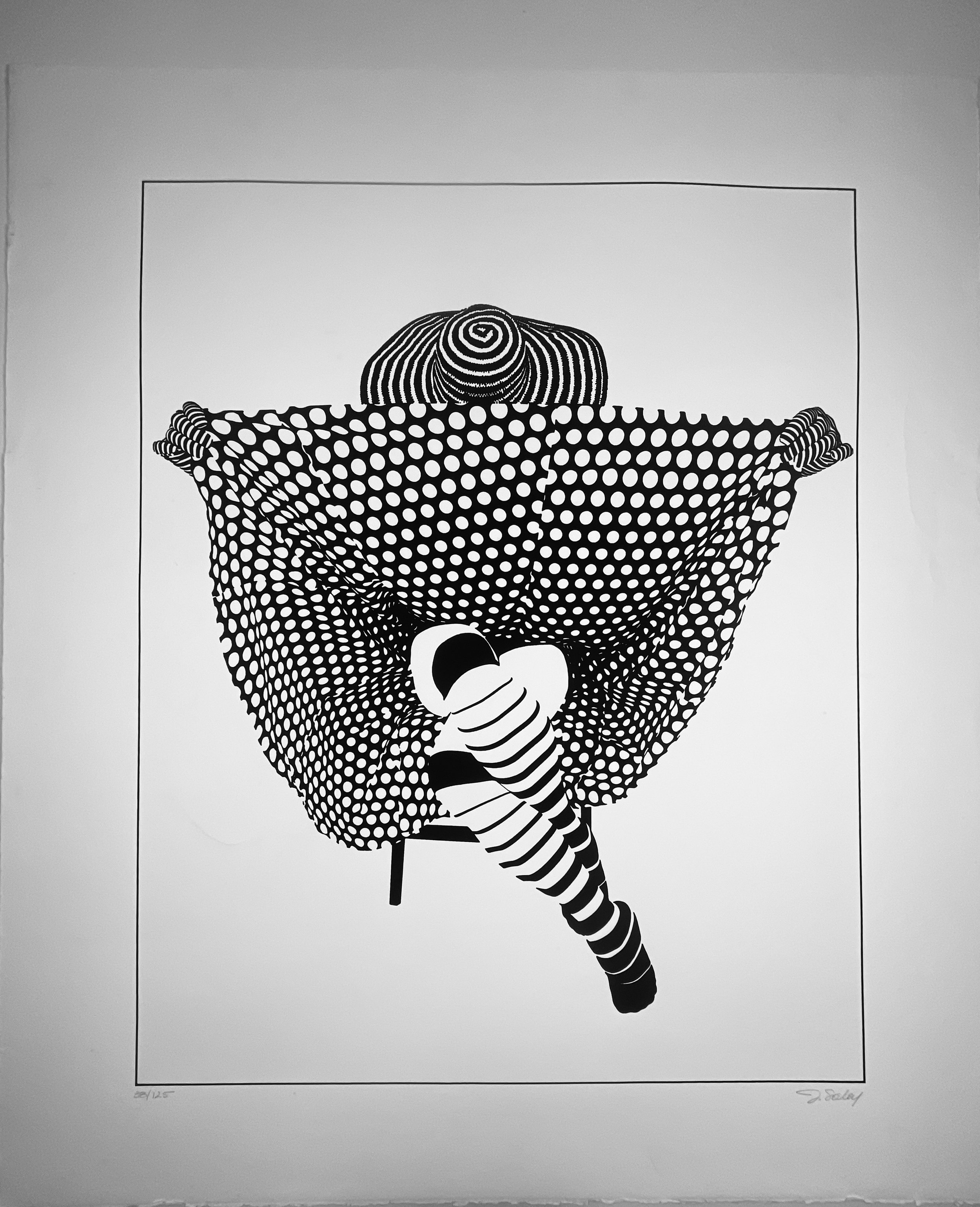
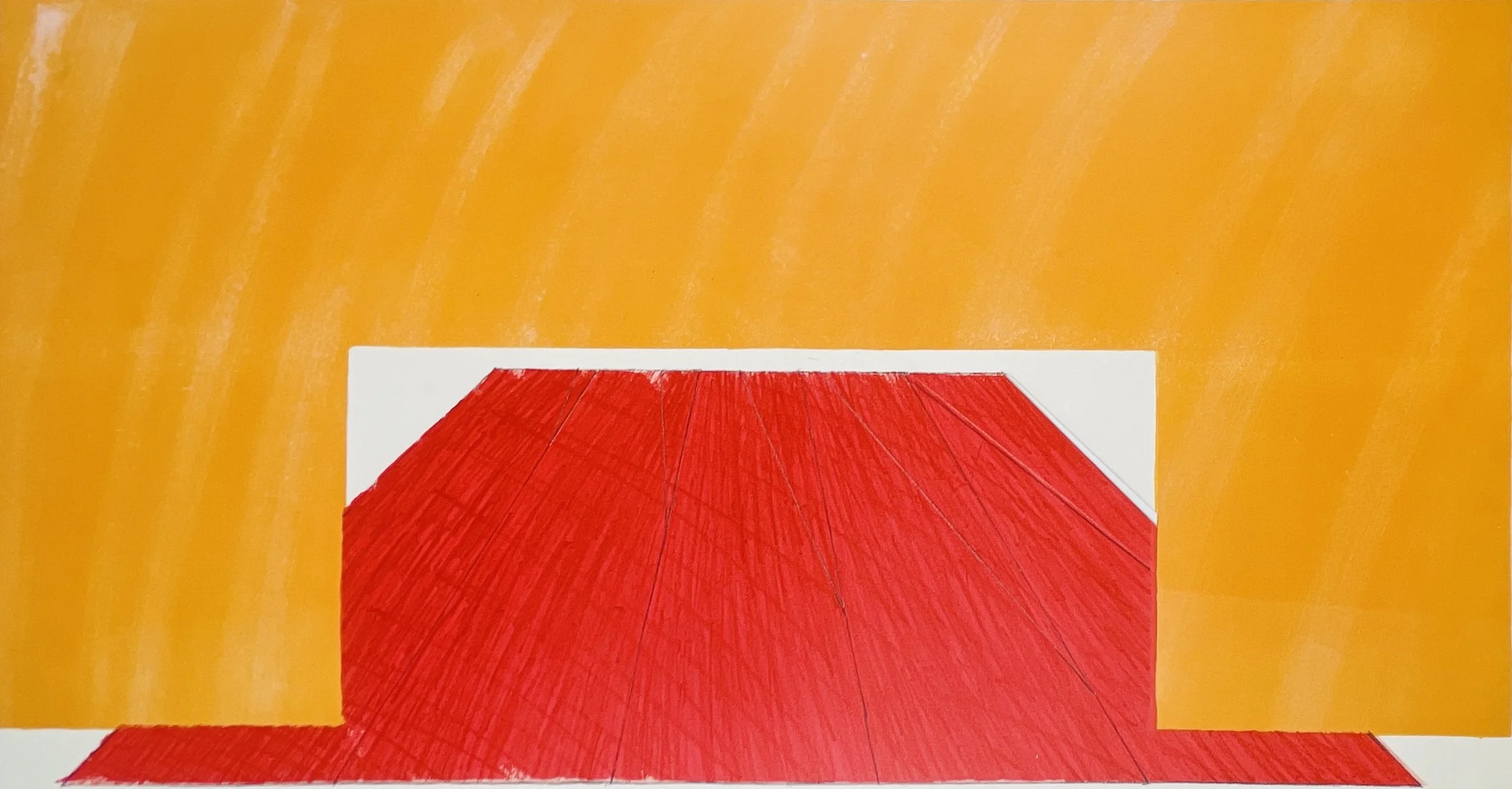
Untitled (Architectural Form), Richard Smith (1931–2016), c.1970s serigraph, 30 x 22 in., signed lower left, edition 25/95, geometric abstraction.
A striking limited-edition serigraph by British modernist Richard Smith, numbered 25/95 and signed by the artist. This bold geometric composition features a vivid red architectural form set against a luminous yellow field, reflecting Smith’s celebrated investigations into dimensional illusion, spatial structure, and color-field abstraction. The work exemplifies Smith’s innovative approach to printmaking during the 1970s when he translated sculptural ideas of structure and surface into graphic media. Published within the professional printmaking circles associated with Art Spectrum and distributed through Mitch Morse Gallery.
Artwork Description
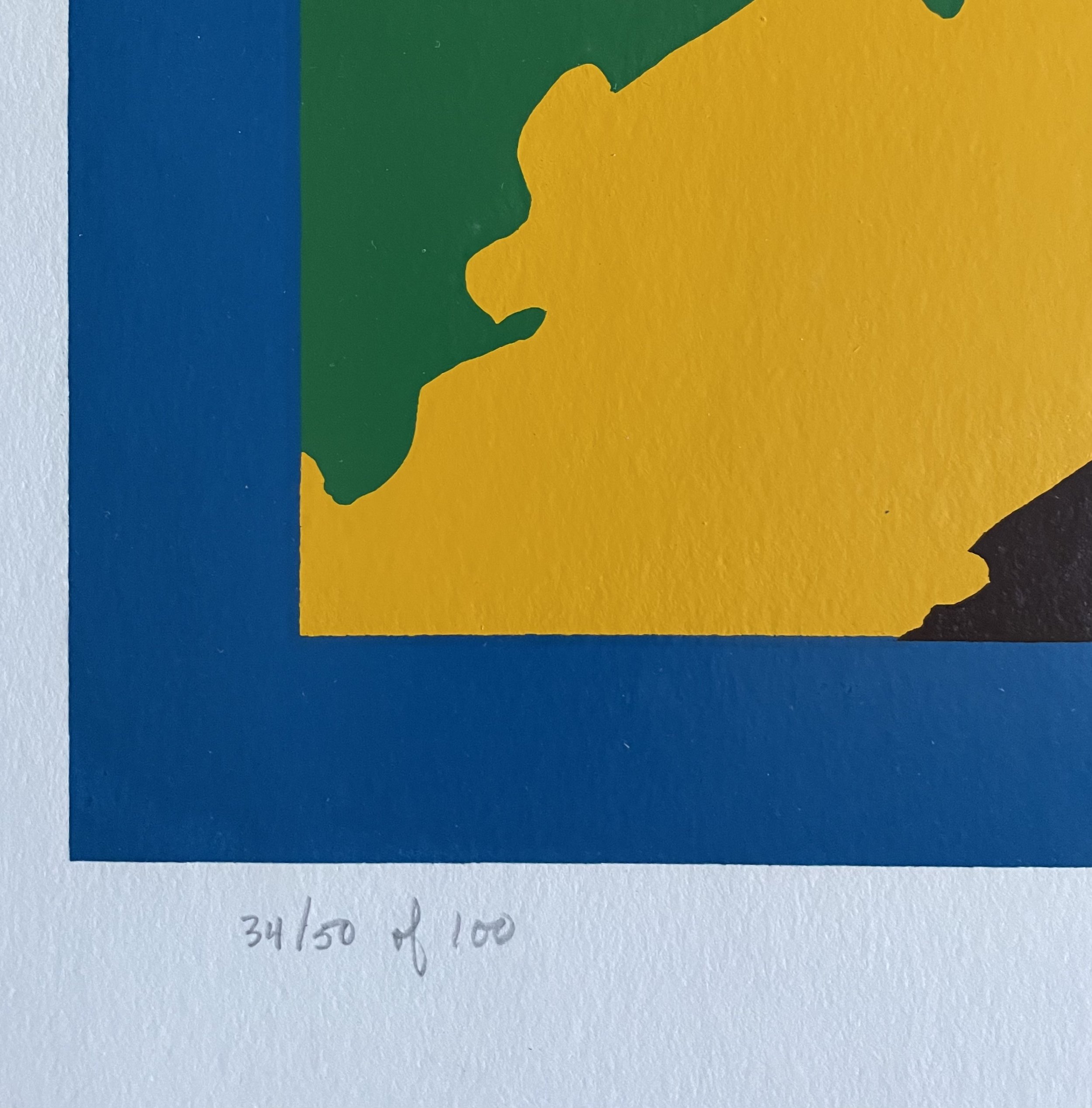
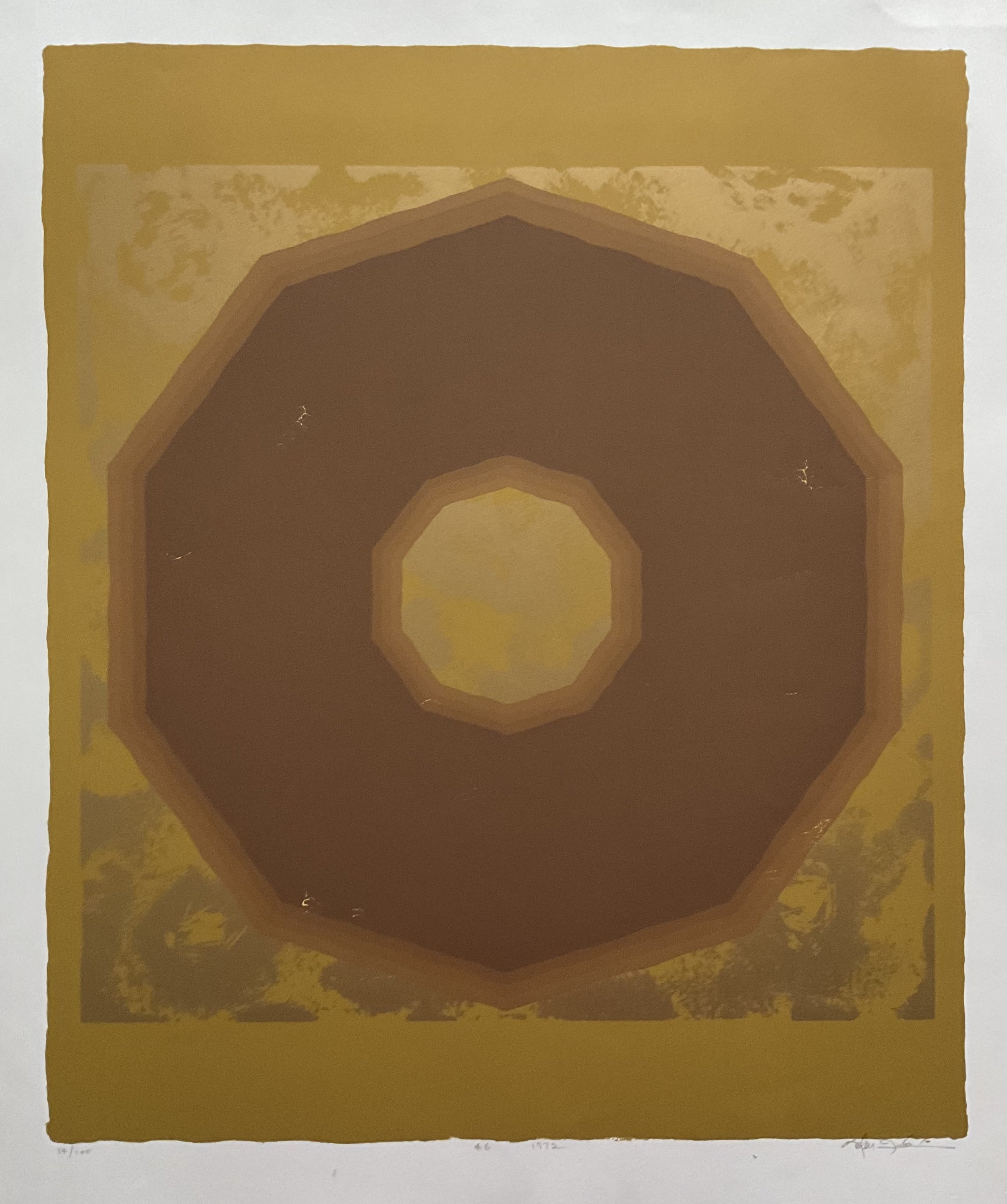
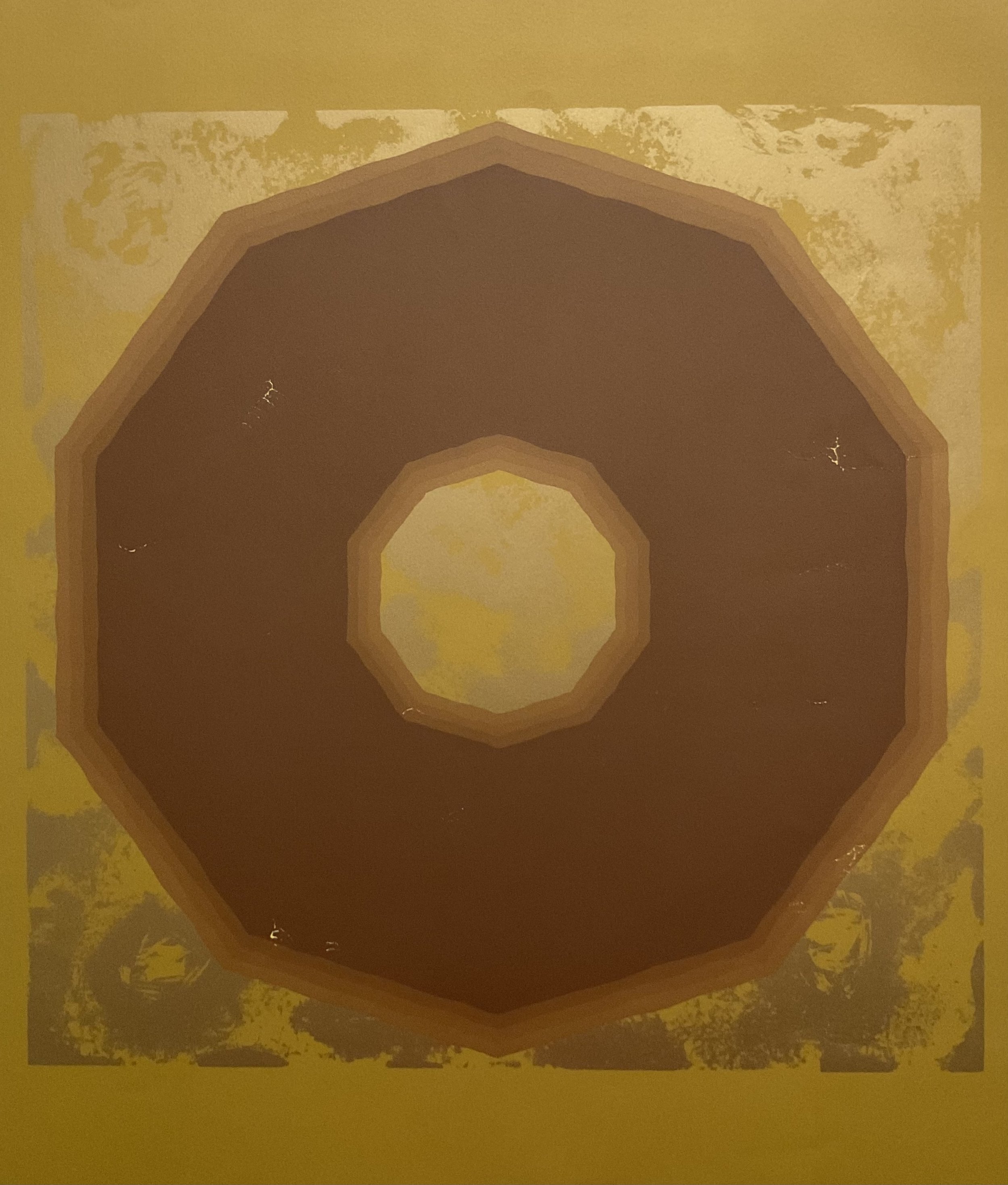
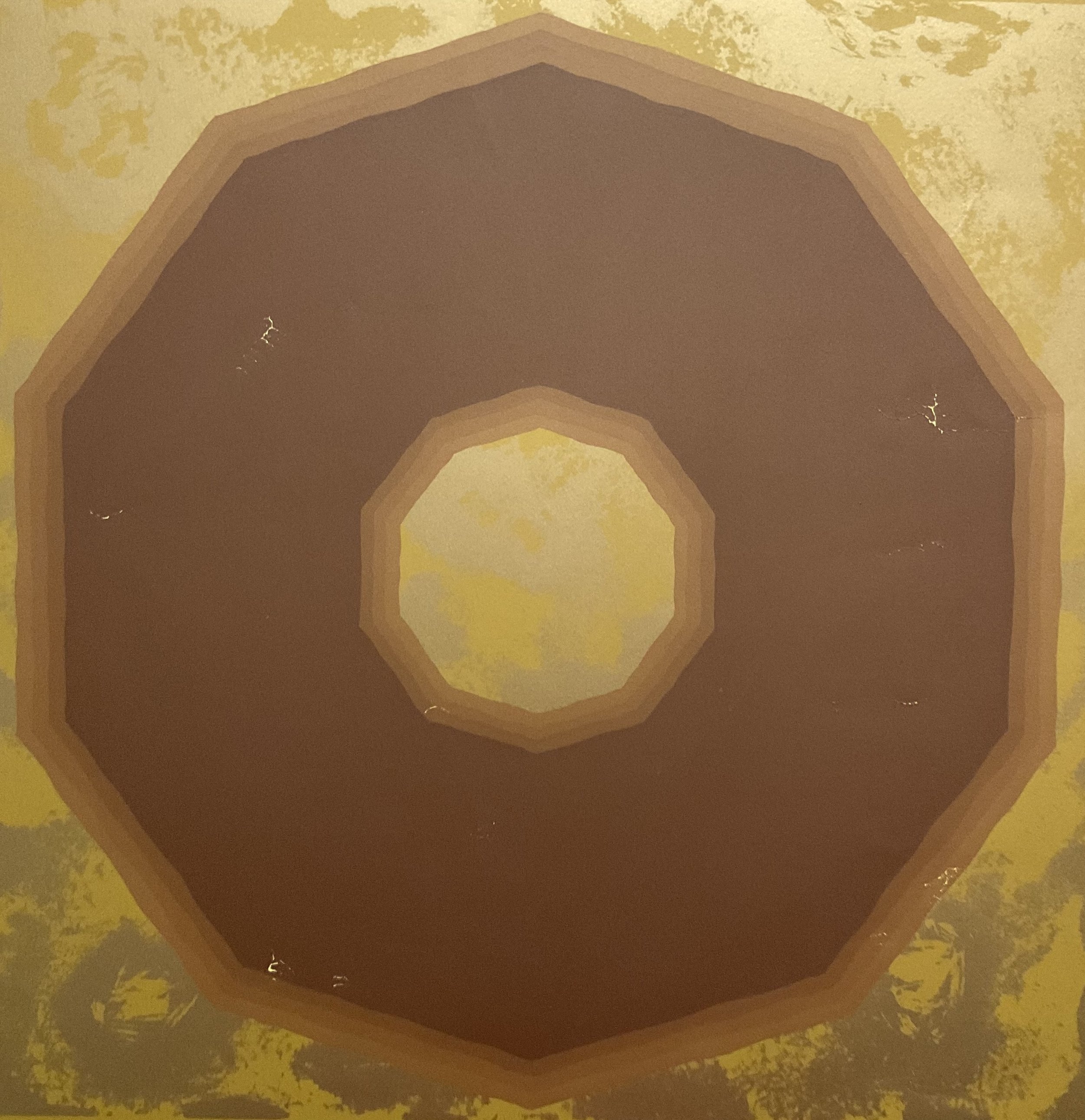
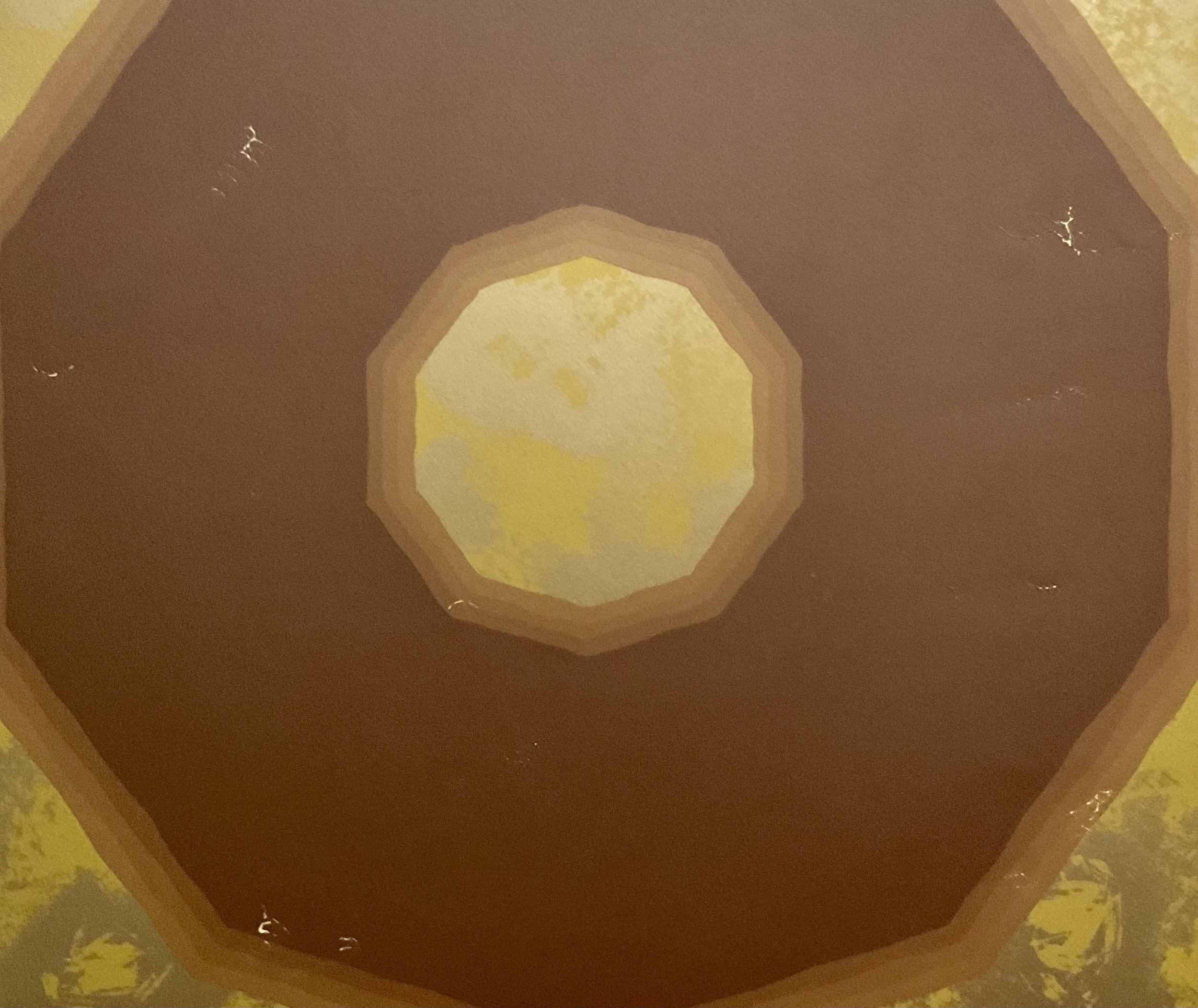
This dynamic serigraph by Richard Smith presents a powerful exploration of spatial illusion and architectural abstraction. A saturated field of warm yellow fills the background, subtly textured with soft tonal variations that evoke light moving across a surface. Emerging from this field is a bold red geometric form resembling a stepped platform or architectural plane, its sharply angled perspective creating the illusion of depth and volume.
The composition reflects Smith’s longstanding fascination with the intersection of painting, sculpture, and architectural structure. The red form appears simultaneously flat and dimensional, as if projecting forward from the surface of the paper while remaining part of the two-dimensional plane. Fine directional marks within the red area suggest structural tension and emphasize the implied perspective lines, guiding the viewer’s eye toward the center of the composition.
Executed as a serigraph, the work demonstrates the medium’s capacity for luminous color saturation and crisp graphic edges. Smith was particularly drawn to screenprinting during the 1960s and 1970s because it allowed him to translate the bold surfaces and constructed forms of his shaped canvases into prints that retained their clarity and sculptural presence.
The composition belongs to a body of work in which Smith explored geometric volumes reminiscent of packaging, architectural fragments, and folded planes. His imagery often evokes the visual language of modern design and commercial display while maintaining the contemplative sensibility of high modernist abstraction.
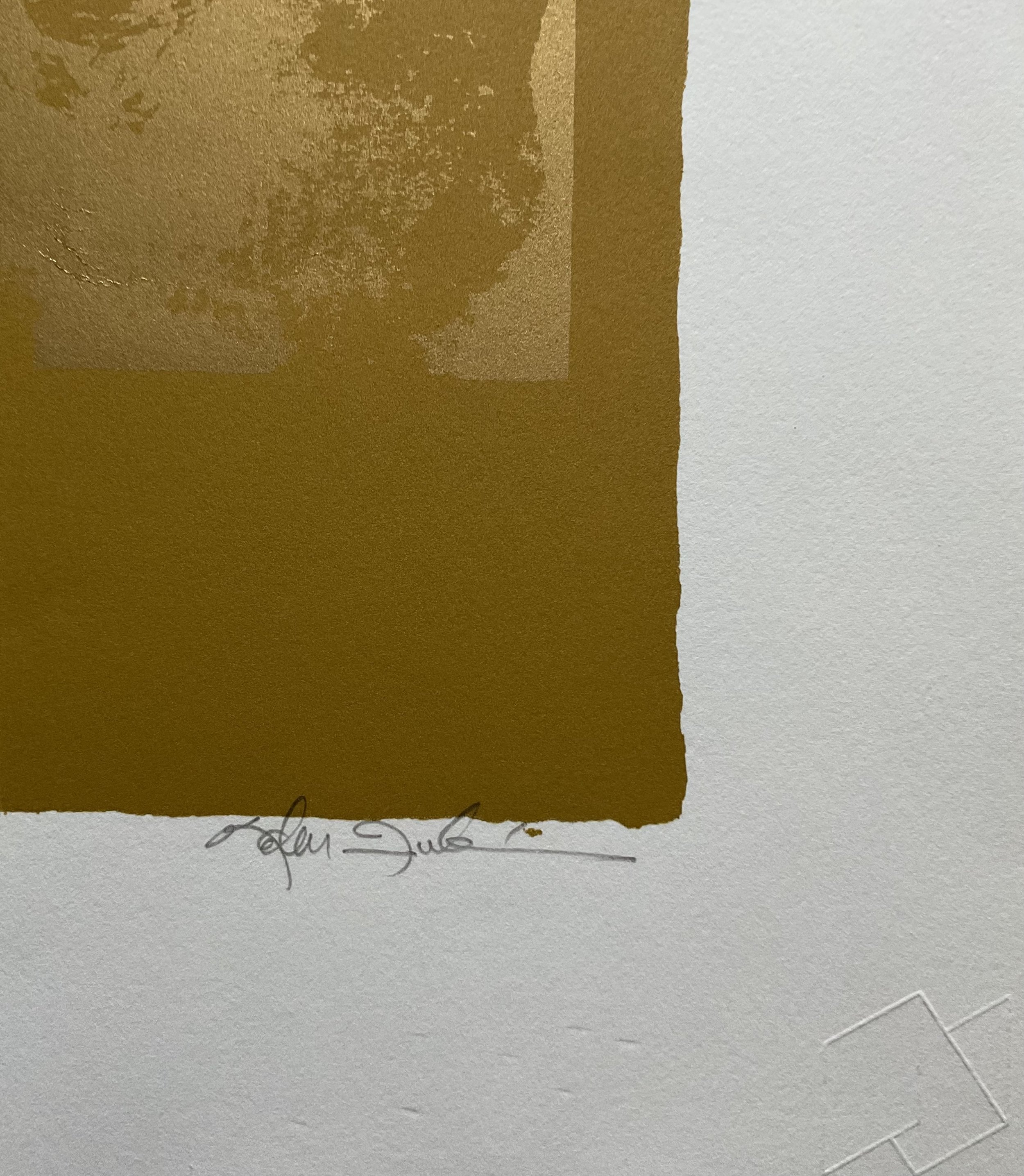
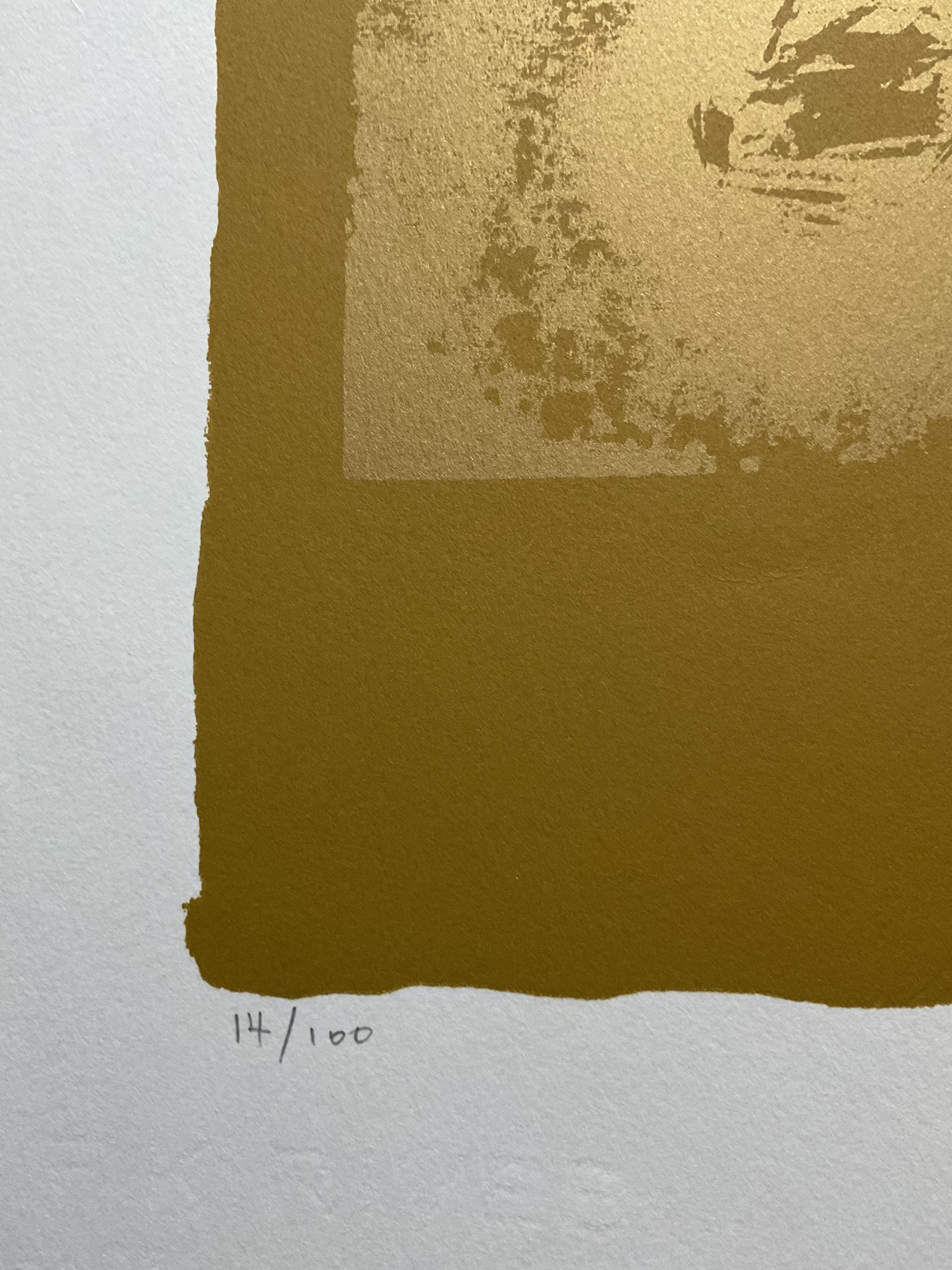
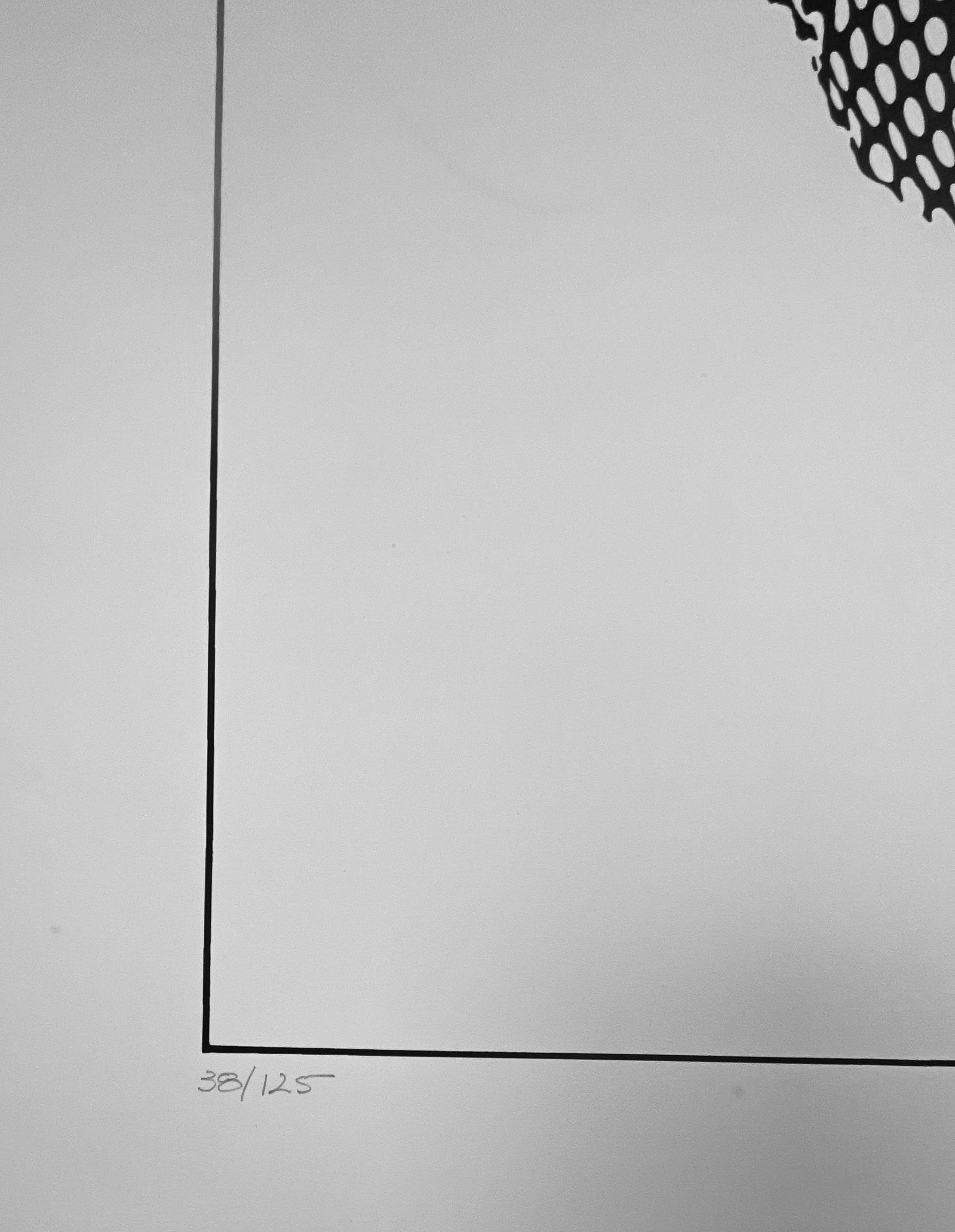
Signed in pencil by the artist and numbered 25/95, the print represents a sophisticated example of late twentieth-century British abstract printmaking and reflects Smith’s unique ability to transform simple geometric structures into visually compelling spatial experiences.
Medium: Serigraph (screenprint)
Dimensions: 30 x 22 inches
Edition: 25/95
Signature: Signed in pencil lower left
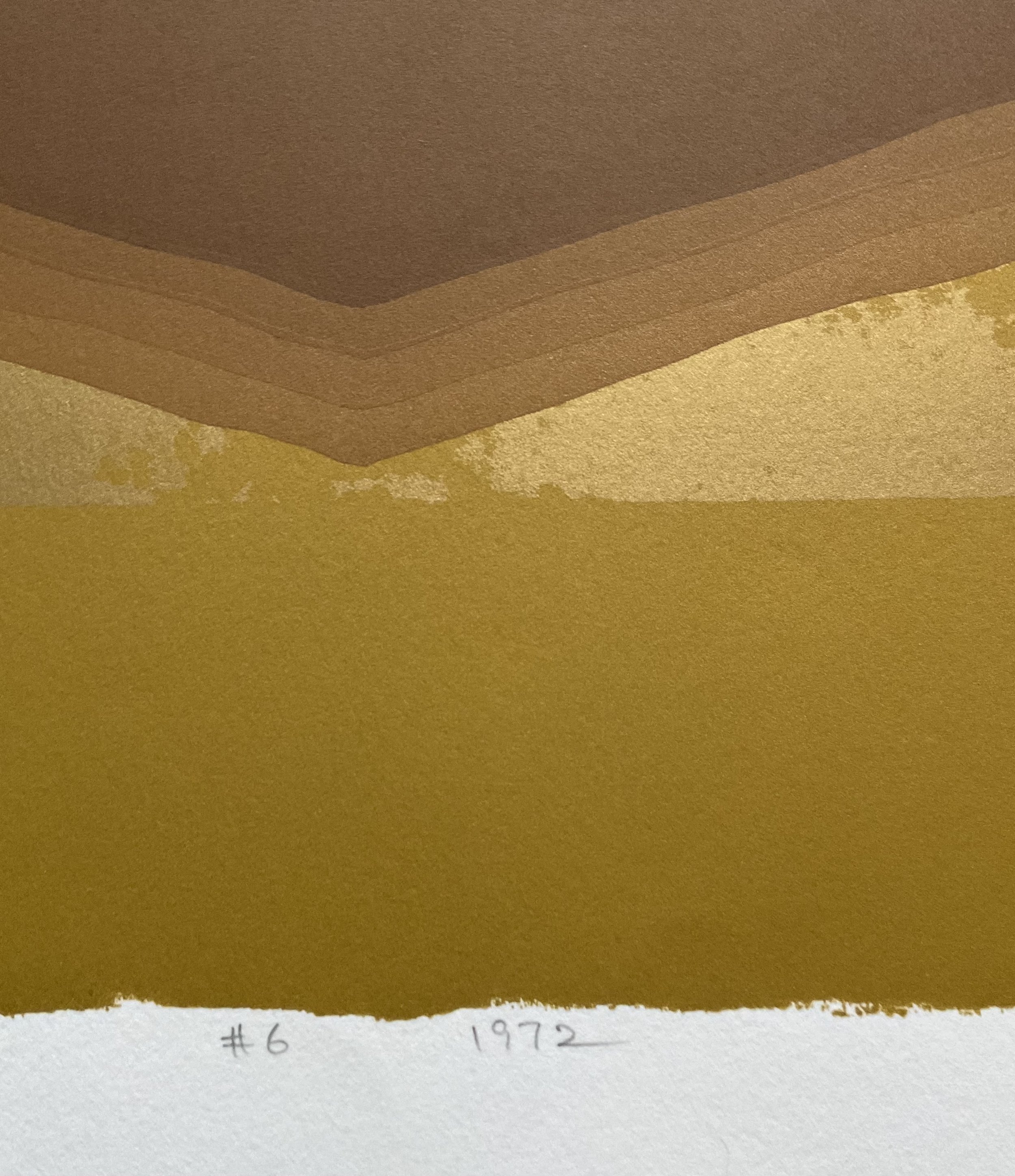
Date: circa 1970s
Artist Biography
Richard Smith (1931–2016) was a major figure in postwar British abstraction whose work expanded the boundaries between painting, sculpture, and architectural form. Born in Letchworth Garden City, Hertfordshire, England, Smith studied at the St. Albans School of Art from 1948 to 1950 and later at the Royal College of Art in London from 1954 to 1957, where his contemporaries included several artists who would help redefine British modernism in the decades following World War II.
Early in his career Smith became fascinated with the visual language of American culture—particularly commercial packaging, advertising graphics, and large-scale color imagery. A Harkness Fellowship enabled him to travel to the United States in 1959–1961, an experience that proved transformative. During this period he encountered the work of artists associated with Color Field painting and Abstract Expressionism, including Barnett Newman, Mark Rothko, and Morris Louis. These influences encouraged Smith to expand the scale of his work and explore color as a spatial force rather than simply a surface element.
By the early 1960s Smith had begun developing the shaped canvases and dimensional paintings for which he became internationally known. Instead of traditional rectangular formats, he constructed works that projected outward from the wall or folded around corners, transforming painting into a hybrid object that existed somewhere between painting and sculpture. These innovations placed him at the forefront of a generation of artists redefining the physical possibilities of painting.
Smith represented Great Britain at the 1966 Venice Biennale and his work entered major museum collections worldwide, including the Tate, the Museum of Modern Art in New York, the Guggenheim Museum, and the Art Institute of Chicago. Throughout the 1960s and 1970s he continued to experiment with inflatable structures, sculptural canvases, and spatially complex works that pushed painting into three-dimensional territory.
Printmaking played an important role in Smith’s practice as well. Serigraphy allowed him to translate the bold color relationships and architectural geometries of his paintings into graphic works on paper. His prints often feature simplified structural forms—angled planes, folded surfaces, and geometric volumes—that echo the conceptual language of his sculptural canvases. Through printmaking he could explore spatial illusion in a more distilled format while retaining the vibrant color and structural clarity characteristic of his larger works.
Over a career spanning more than five decades, Smith’s work evolved continuously while remaining rooted in his central interest: the relationship between surface, structure, and space. His investigations helped bridge the gap between painting and sculpture and positioned him among the most inventive abstract artists of the postwar era.
Today Richard Smith’s work is widely recognized as a crucial contribution to international modernism. His paintings, prints, and constructed works remain in major museum collections and continue to influence contemporary artists exploring the boundaries of dimensional painting and spatial abstraction.
Richard Smith (1931–2016)
Untitled (Architectural Form)
Serigraph on paper
30 x 22 inches
Signed lower left
Edition 25/95
Circa 1970s
Certificate of Authentication
Artist: Richard Smith (1931–2016)
Title: Untitled (Architectural Form)
Medium: Serigraph on paper
Dimensions: 30 x 22 inches
Edition: 25/95
Signature: Hand-signed by the artist
This document certifies that the artwork described above is an authentic limited-edition serigraph by Richard Smith.
Condition
Very good overall condition. Strong color saturation with clean margins. Minor handling wear consistent with age and storage may be present. No significant structural damage observed.
Provenance
Art Spectrum / Mitch Morse Gallery, Inc., New York
Acquired by Mitch Morse Gallery in New York and Europe
Private Collection
Artfind Gallery, Washington DC (current owner)
Citations
Tate Museum artist archive
Museum of Modern Art collection records
Guggenheim Museum artist biography
Oxford Art Online / Grove Art Dictionary entries on Richard Smith
Venice Biennale archives on British Pavilion representation
Untitled (Architectural Form), Richard Smith (1931–2016), c.1970s serigraph, 30 x 22 in., signed lower left, edition 25/95, geometric abstraction.
A striking limited-edition serigraph by British modernist Richard Smith, numbered 25/95 and signed by the artist. This bold geometric composition features a vivid red architectural form set against a luminous yellow field, reflecting Smith’s celebrated investigations into dimensional illusion, spatial structure, and color-field abstraction. The work exemplifies Smith’s innovative approach to printmaking during the 1970s when he translated sculptural ideas of structure and surface into graphic media. Published within the professional printmaking circles associated with Art Spectrum and distributed through Mitch Morse Gallery.
Artwork Description
This dynamic serigraph by Richard Smith presents a powerful exploration of spatial illusion and architectural abstraction. A saturated field of warm yellow fills the background, subtly textured with soft tonal variations that evoke light moving across a surface. Emerging from this field is a bold red geometric form resembling a stepped platform or architectural plane, its sharply angled perspective creating the illusion of depth and volume.
The composition reflects Smith’s longstanding fascination with the intersection of painting, sculpture, and architectural structure. The red form appears simultaneously flat and dimensional, as if projecting forward from the surface of the paper while remaining part of the two-dimensional plane. Fine directional marks within the red area suggest structural tension and emphasize the implied perspective lines, guiding the viewer’s eye toward the center of the composition.
Executed as a serigraph, the work demonstrates the medium’s capacity for luminous color saturation and crisp graphic edges. Smith was particularly drawn to screenprinting during the 1960s and 1970s because it allowed him to translate the bold surfaces and constructed forms of his shaped canvases into prints that retained their clarity and sculptural presence.
The composition belongs to a body of work in which Smith explored geometric volumes reminiscent of packaging, architectural fragments, and folded planes. His imagery often evokes the visual language of modern design and commercial display while maintaining the contemplative sensibility of high modernist abstraction.
Signed in pencil by the artist and numbered 25/95, the print represents a sophisticated example of late twentieth-century British abstract printmaking and reflects Smith’s unique ability to transform simple geometric structures into visually compelling spatial experiences.
Medium: Serigraph (screenprint)
Dimensions: 30 x 22 inches
Edition: 25/95
Signature: Signed in pencil lower left
Date: circa 1970s
Artist Biography
Richard Smith (1931–2016) was a major figure in postwar British abstraction whose work expanded the boundaries between painting, sculpture, and architectural form. Born in Letchworth Garden City, Hertfordshire, England, Smith studied at the St. Albans School of Art from 1948 to 1950 and later at the Royal College of Art in London from 1954 to 1957, where his contemporaries included several artists who would help redefine British modernism in the decades following World War II.
Early in his career Smith became fascinated with the visual language of American culture—particularly commercial packaging, advertising graphics, and large-scale color imagery. A Harkness Fellowship enabled him to travel to the United States in 1959–1961, an experience that proved transformative. During this period he encountered the work of artists associated with Color Field painting and Abstract Expressionism, including Barnett Newman, Mark Rothko, and Morris Louis. These influences encouraged Smith to expand the scale of his work and explore color as a spatial force rather than simply a surface element.
By the early 1960s Smith had begun developing the shaped canvases and dimensional paintings for which he became internationally known. Instead of traditional rectangular formats, he constructed works that projected outward from the wall or folded around corners, transforming painting into a hybrid object that existed somewhere between painting and sculpture. These innovations placed him at the forefront of a generation of artists redefining the physical possibilities of painting.
Smith represented Great Britain at the 1966 Venice Biennale and his work entered major museum collections worldwide, including the Tate, the Museum of Modern Art in New York, the Guggenheim Museum, and the Art Institute of Chicago. Throughout the 1960s and 1970s he continued to experiment with inflatable structures, sculptural canvases, and spatially complex works that pushed painting into three-dimensional territory.
Printmaking played an important role in Smith’s practice as well. Serigraphy allowed him to translate the bold color relationships and architectural geometries of his paintings into graphic works on paper. His prints often feature simplified structural forms—angled planes, folded surfaces, and geometric volumes—that echo the conceptual language of his sculptural canvases. Through printmaking he could explore spatial illusion in a more distilled format while retaining the vibrant color and structural clarity characteristic of his larger works.
Over a career spanning more than five decades, Smith’s work evolved continuously while remaining rooted in his central interest: the relationship between surface, structure, and space. His investigations helped bridge the gap between painting and sculpture and positioned him among the most inventive abstract artists of the postwar era.
Today Richard Smith’s work is widely recognized as a crucial contribution to international modernism. His paintings, prints, and constructed works remain in major museum collections and continue to influence contemporary artists exploring the boundaries of dimensional painting and spatial abstraction.
Richard Smith (1931–2016)
Untitled (Architectural Form)
Serigraph on paper
30 x 22 inches
Signed lower left
Edition 25/95
Circa 1970s
Certificate of Authentication
Artist: Richard Smith (1931–2016)
Title: Untitled (Architectural Form)
Medium: Serigraph on paper
Dimensions: 30 x 22 inches
Edition: 25/95
Signature: Hand-signed by the artist
This document certifies that the artwork described above is an authentic limited-edition serigraph by Richard Smith.
Condition
Very good overall condition. Strong color saturation with clean margins. Minor handling wear consistent with age and storage may be present. No significant structural damage observed.
Provenance
Art Spectrum / Mitch Morse Gallery, Inc., New York
Acquired by Mitch Morse Gallery in New York and Europe
Private Collection
Artfind Gallery, Washington DC (current owner)
Citations
Tate Museum artist archive
Museum of Modern Art collection records
Guggenheim Museum artist biography
Oxford Art Online / Grove Art Dictionary entries on Richard Smith
Venice Biennale archives on British Pavilion representation