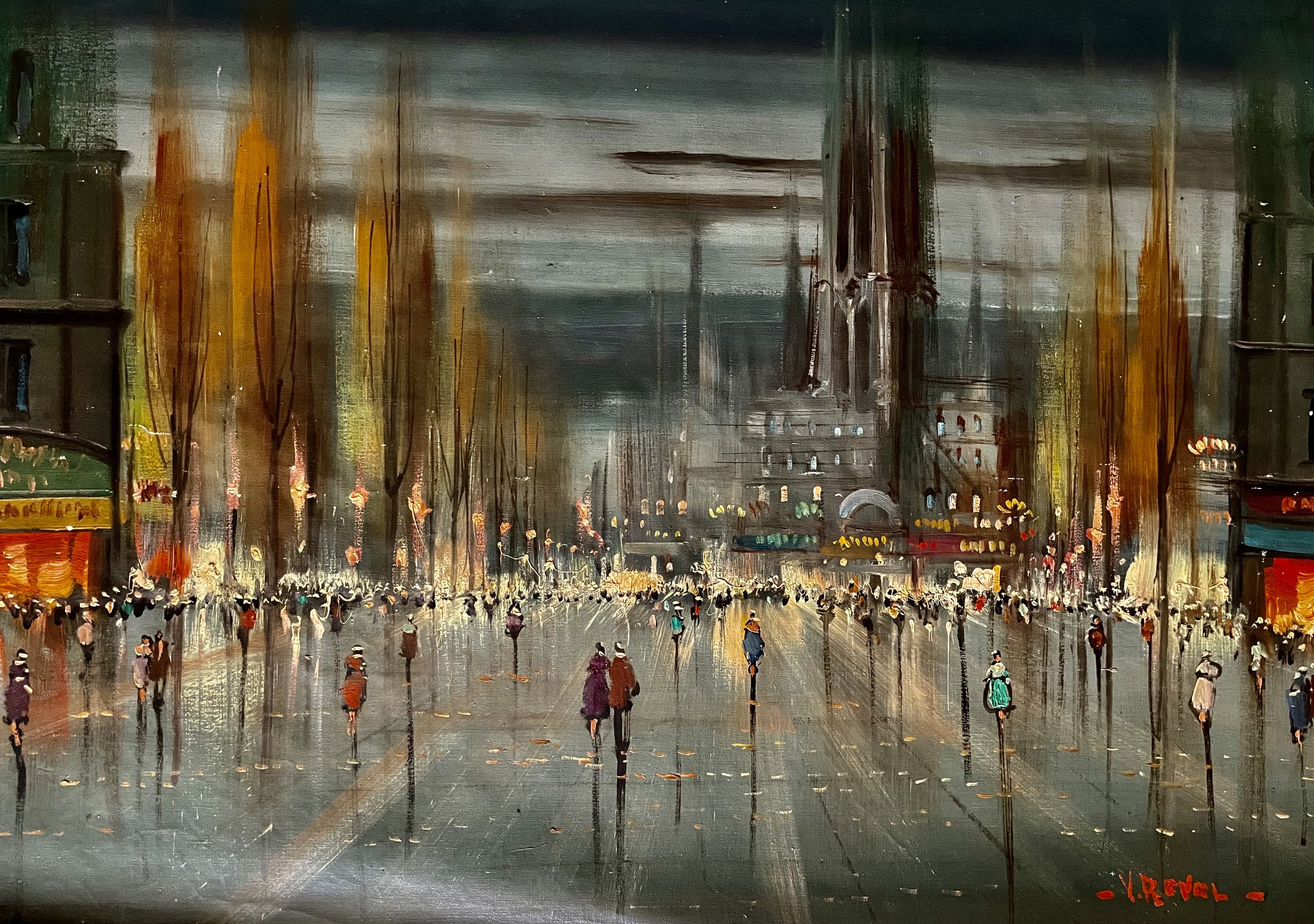
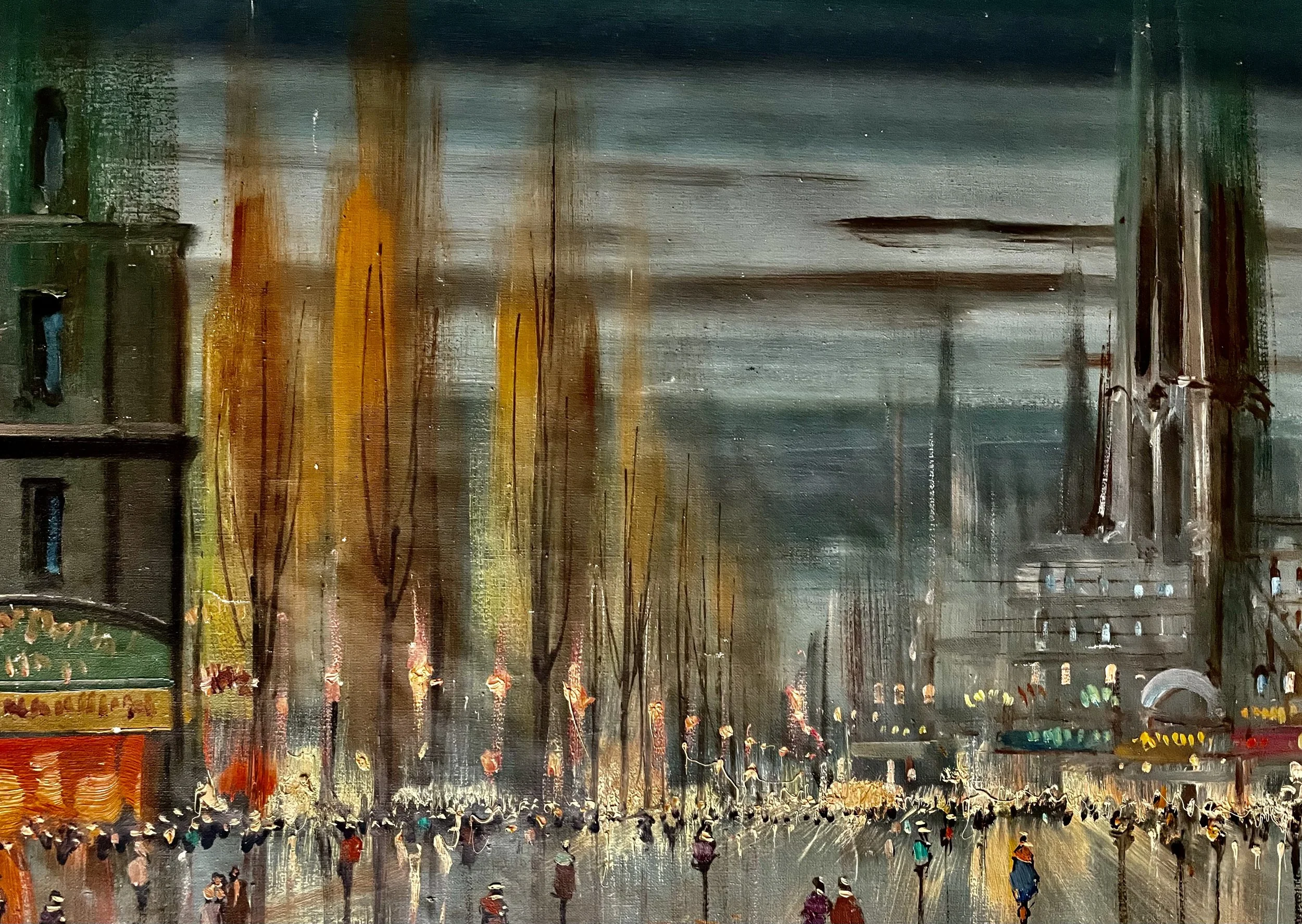
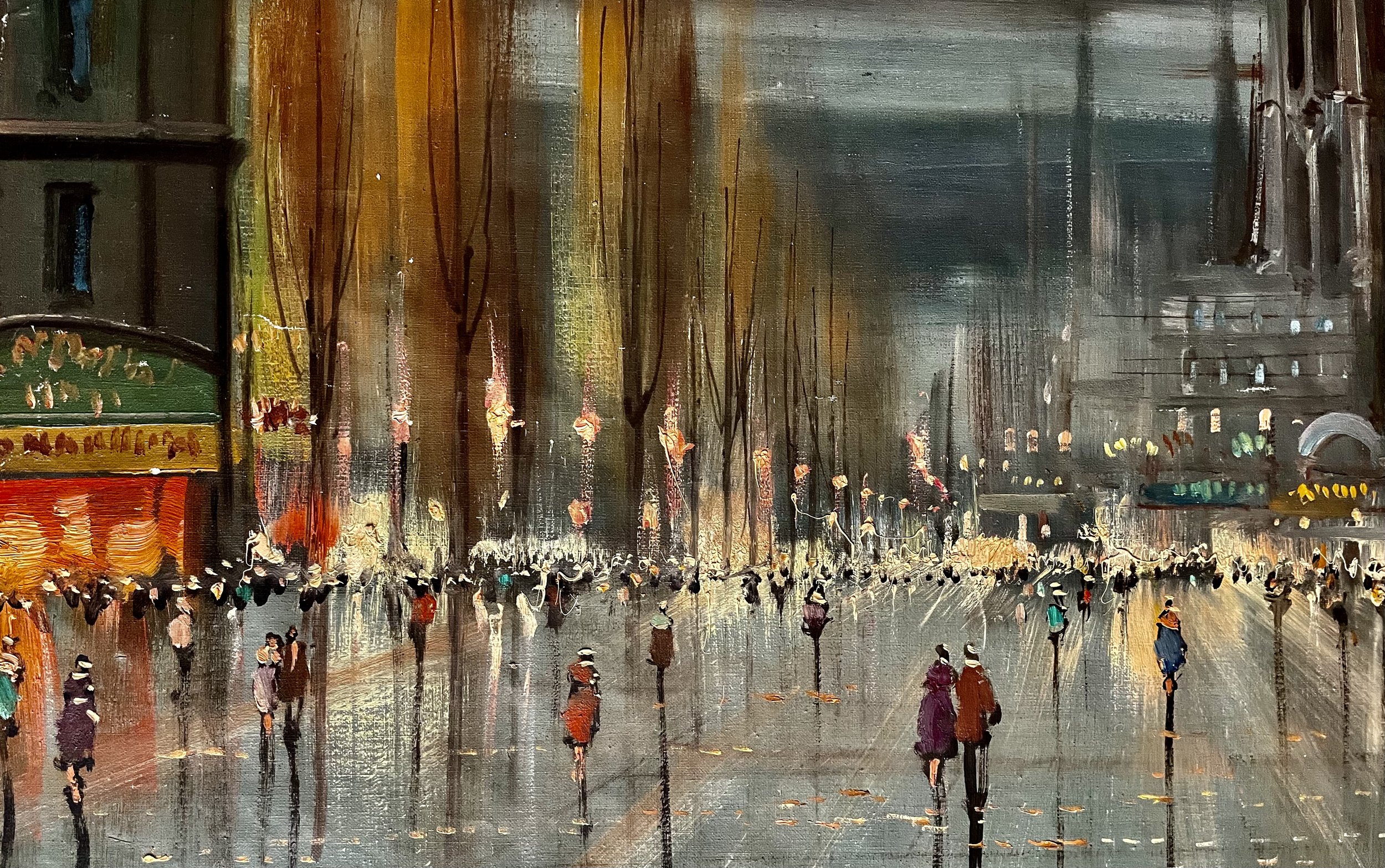
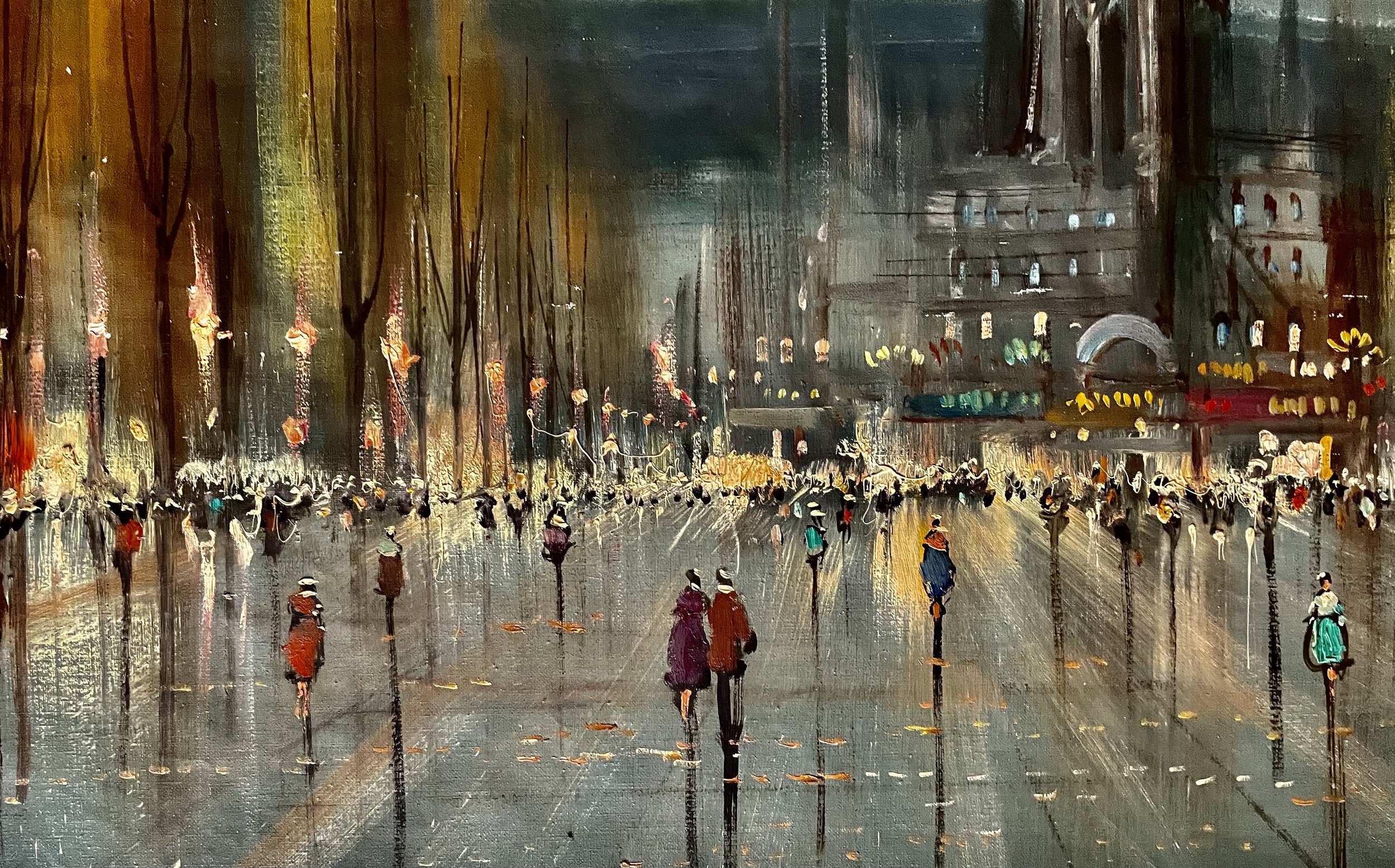
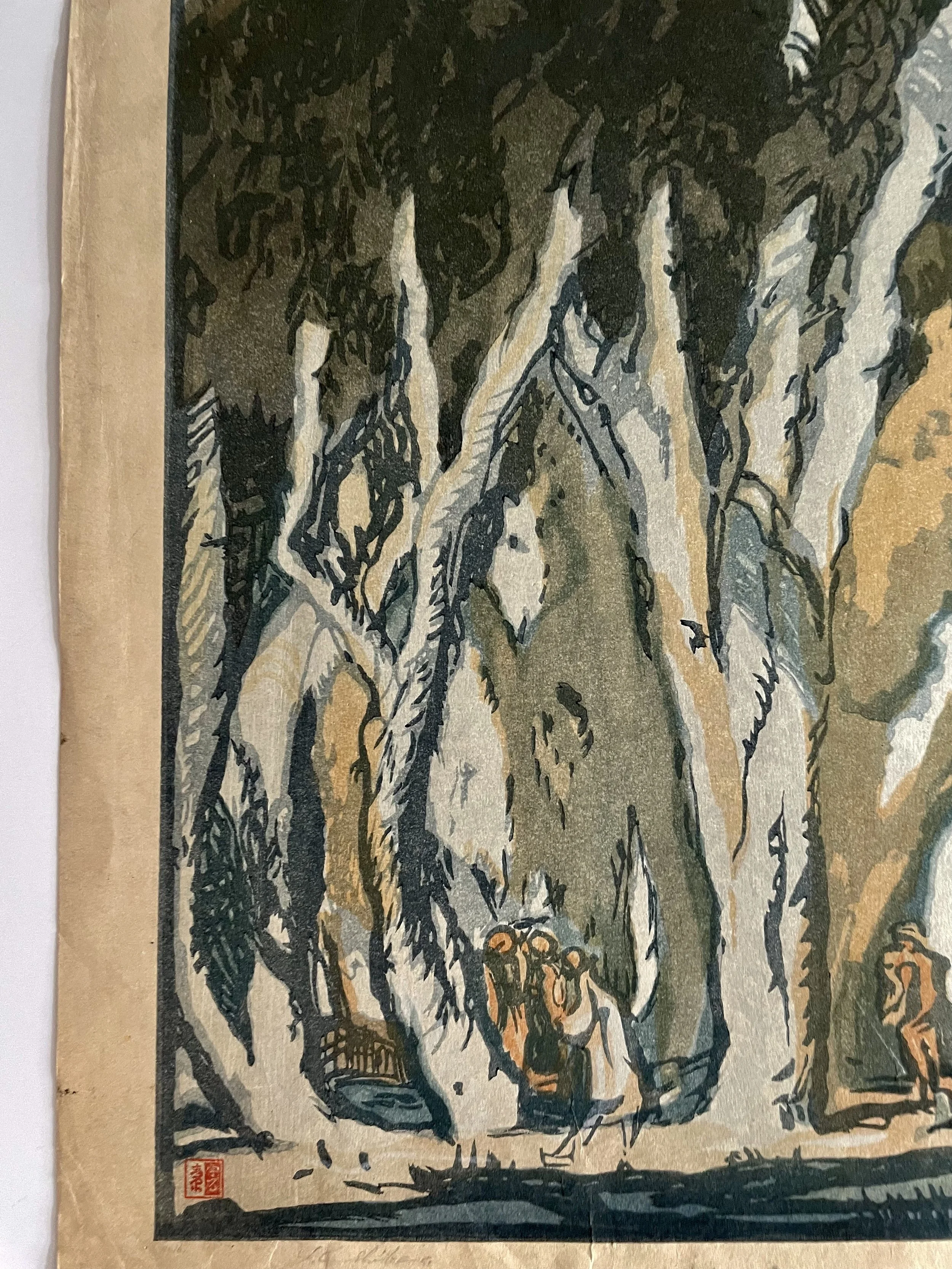
 Image 1 of 5
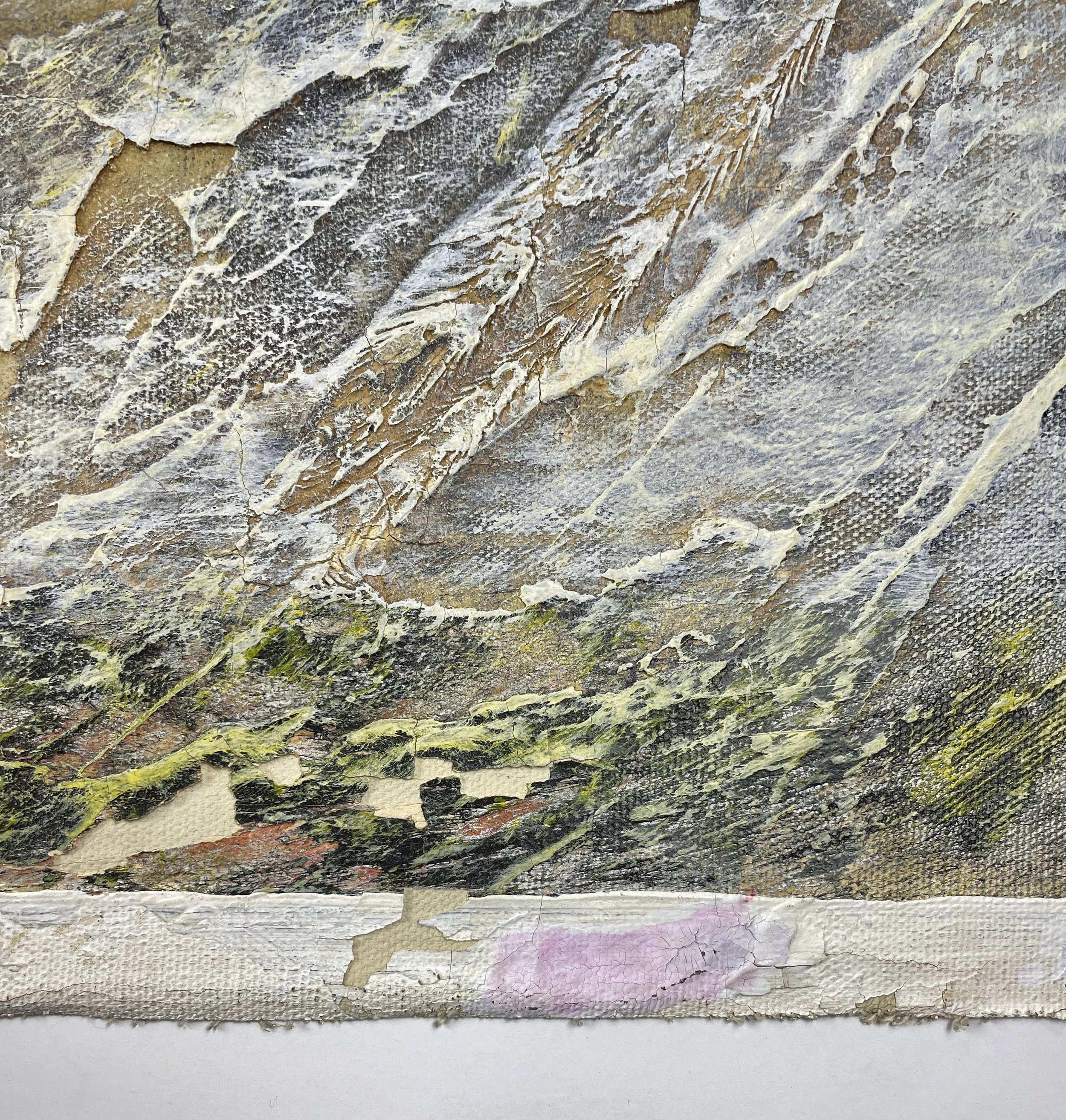 Image 2 of 5
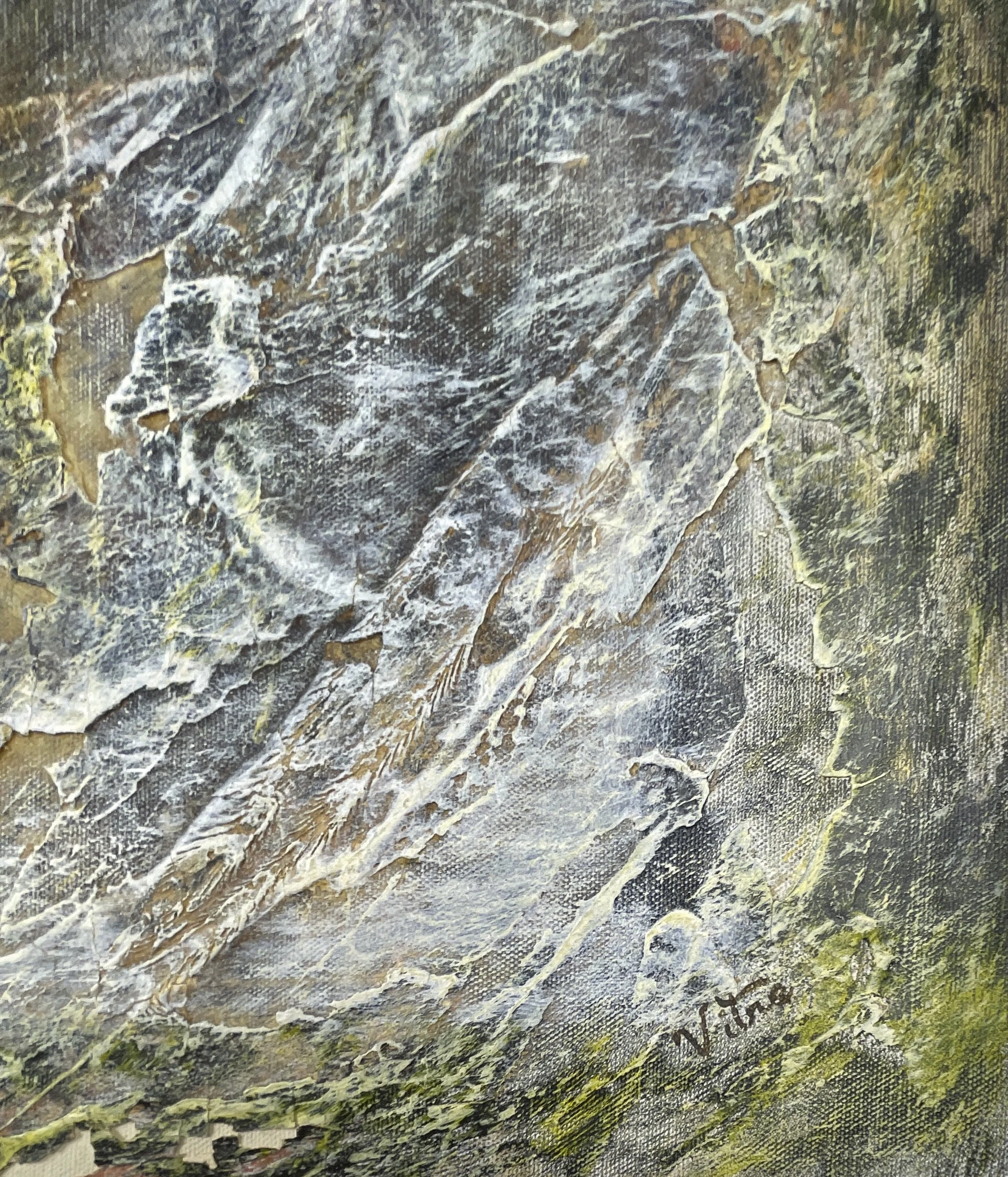 Image 3 of 5
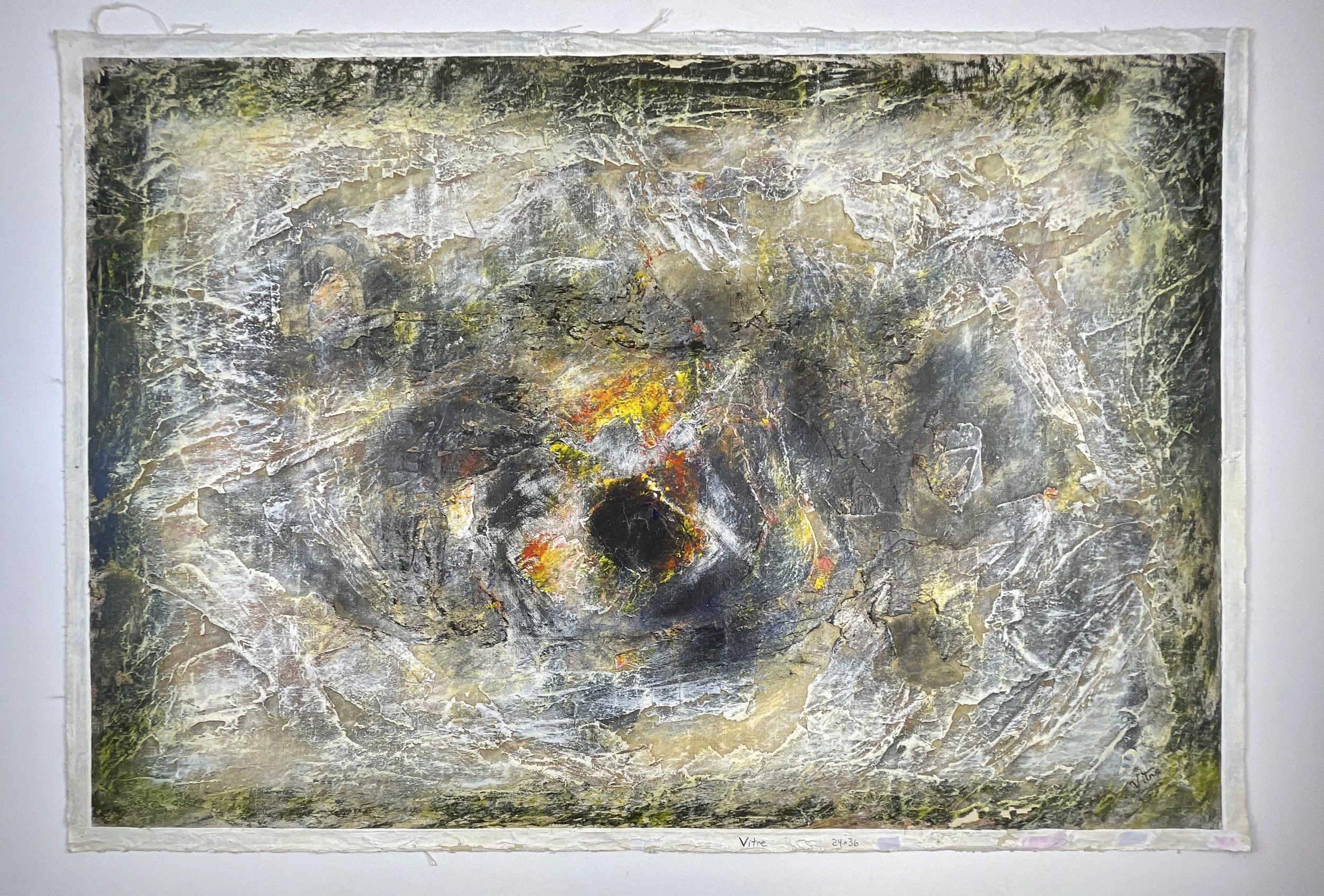 Image 4 of 5
 Image 5 of 5
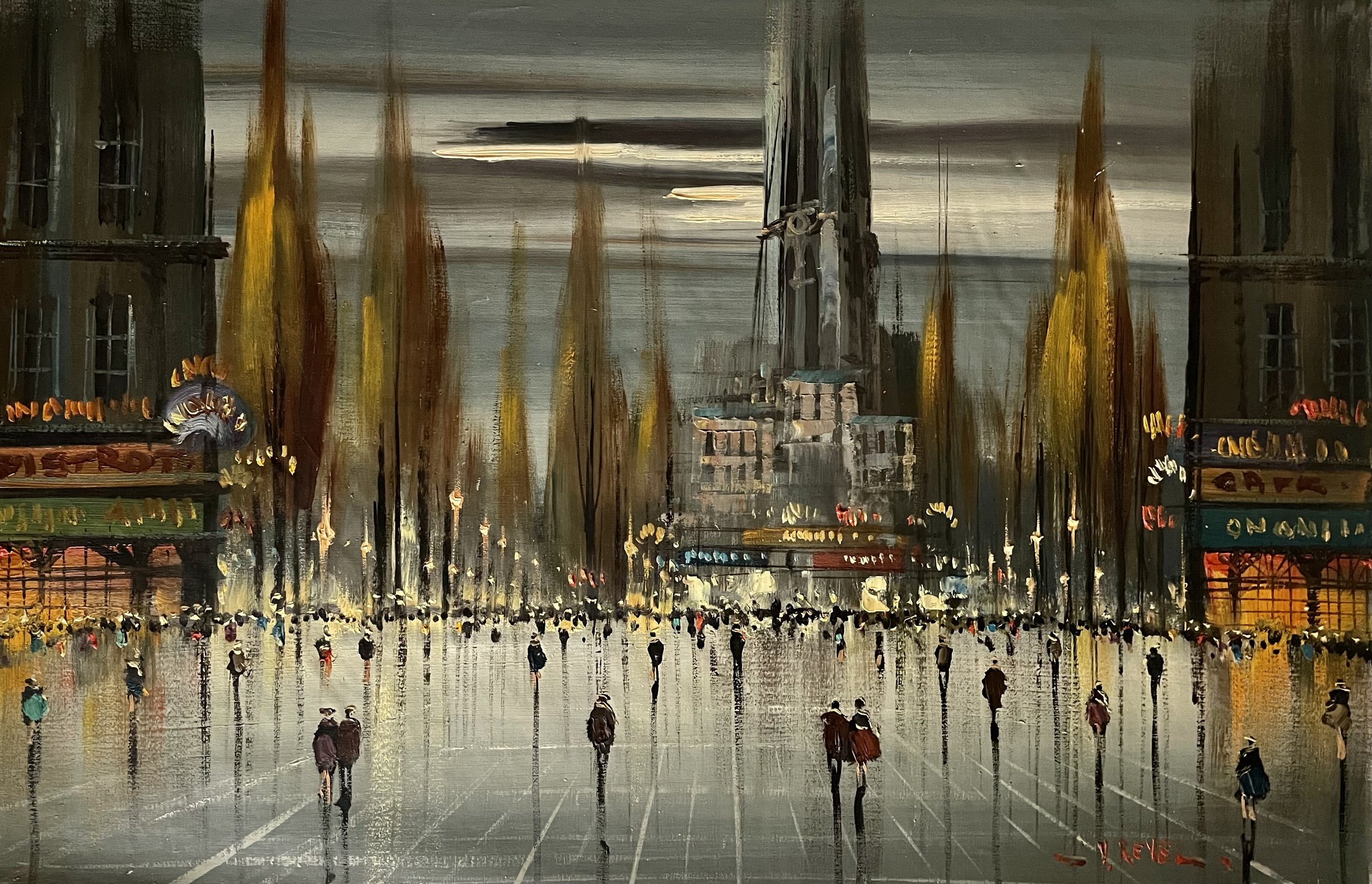
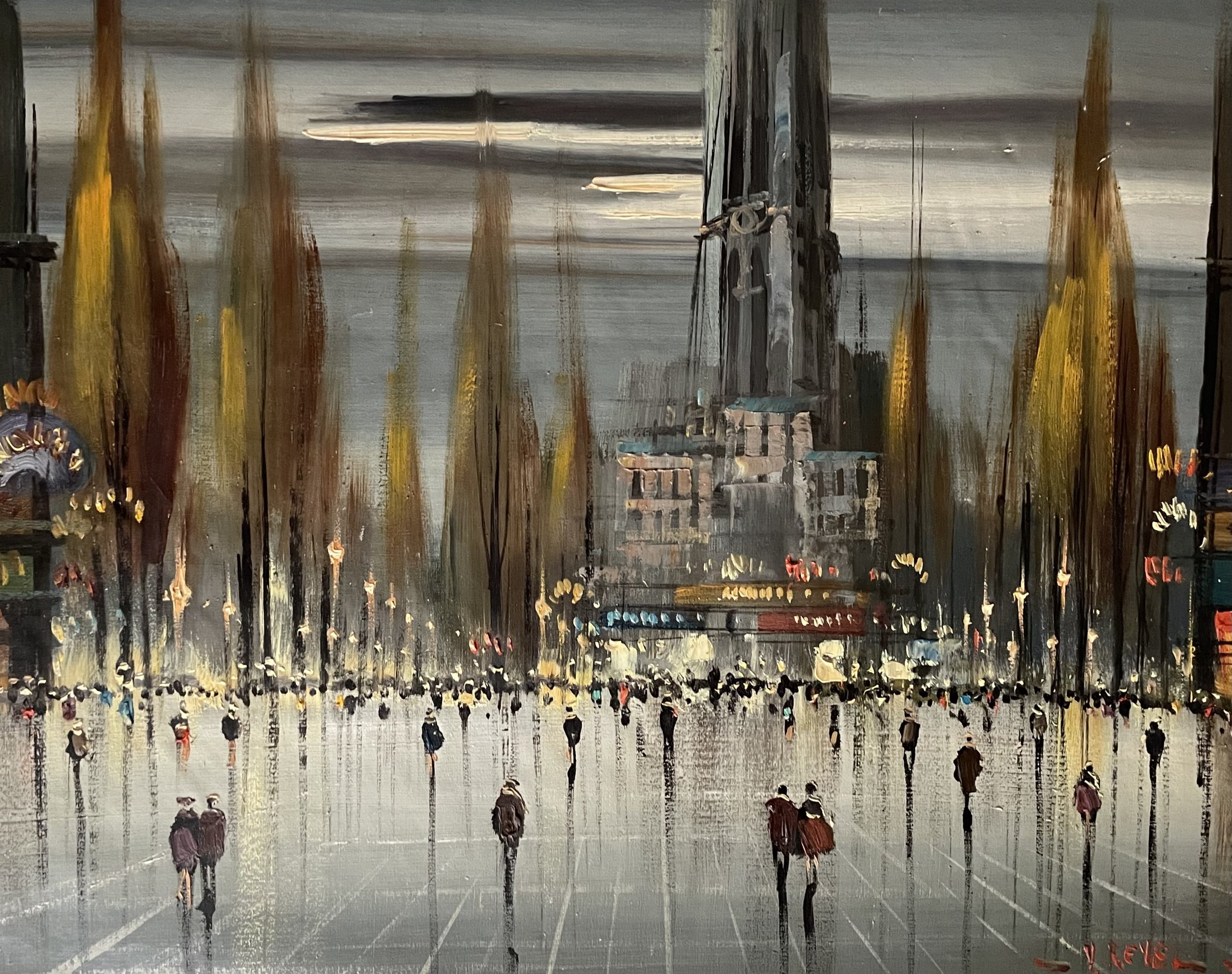
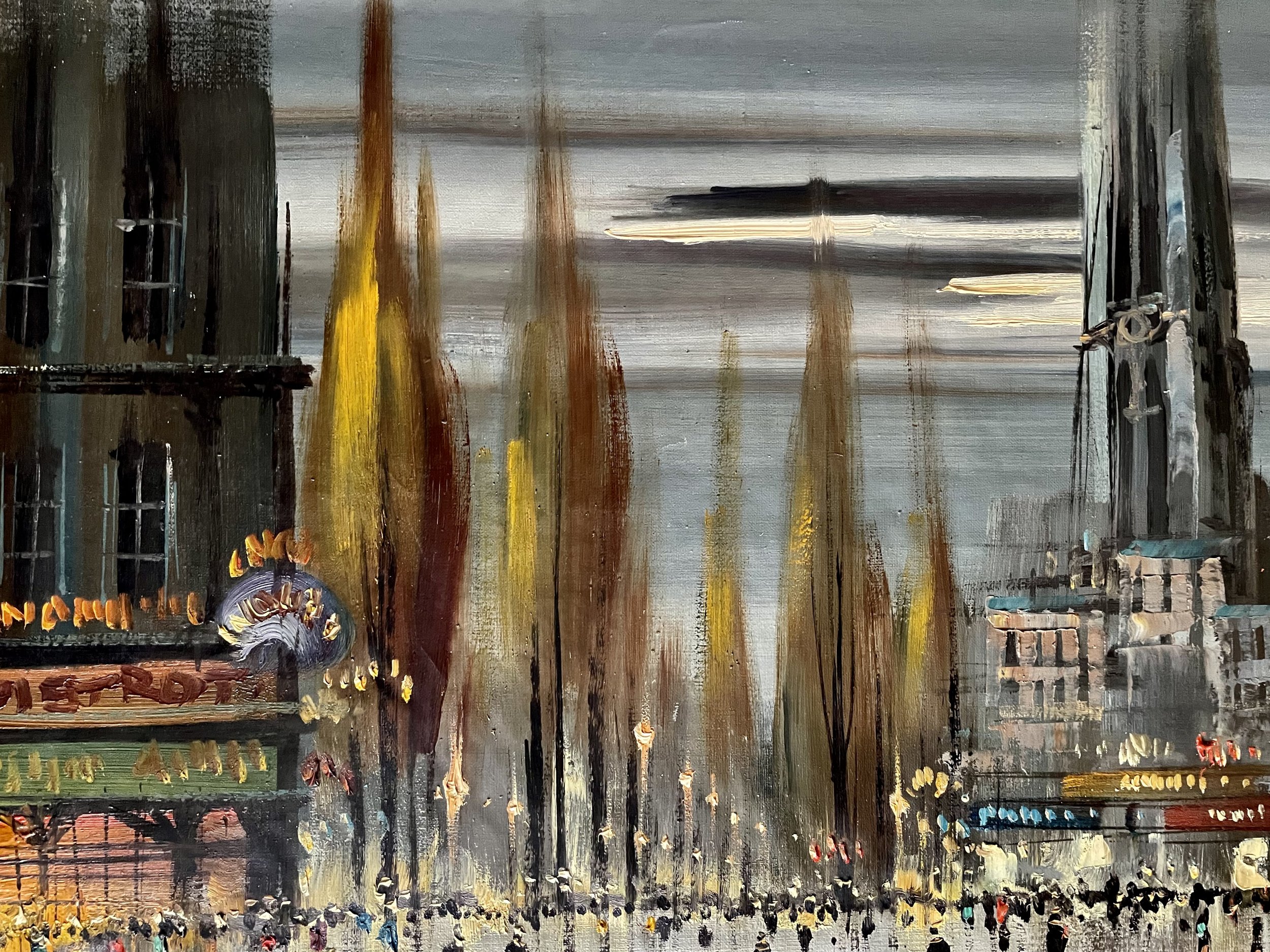
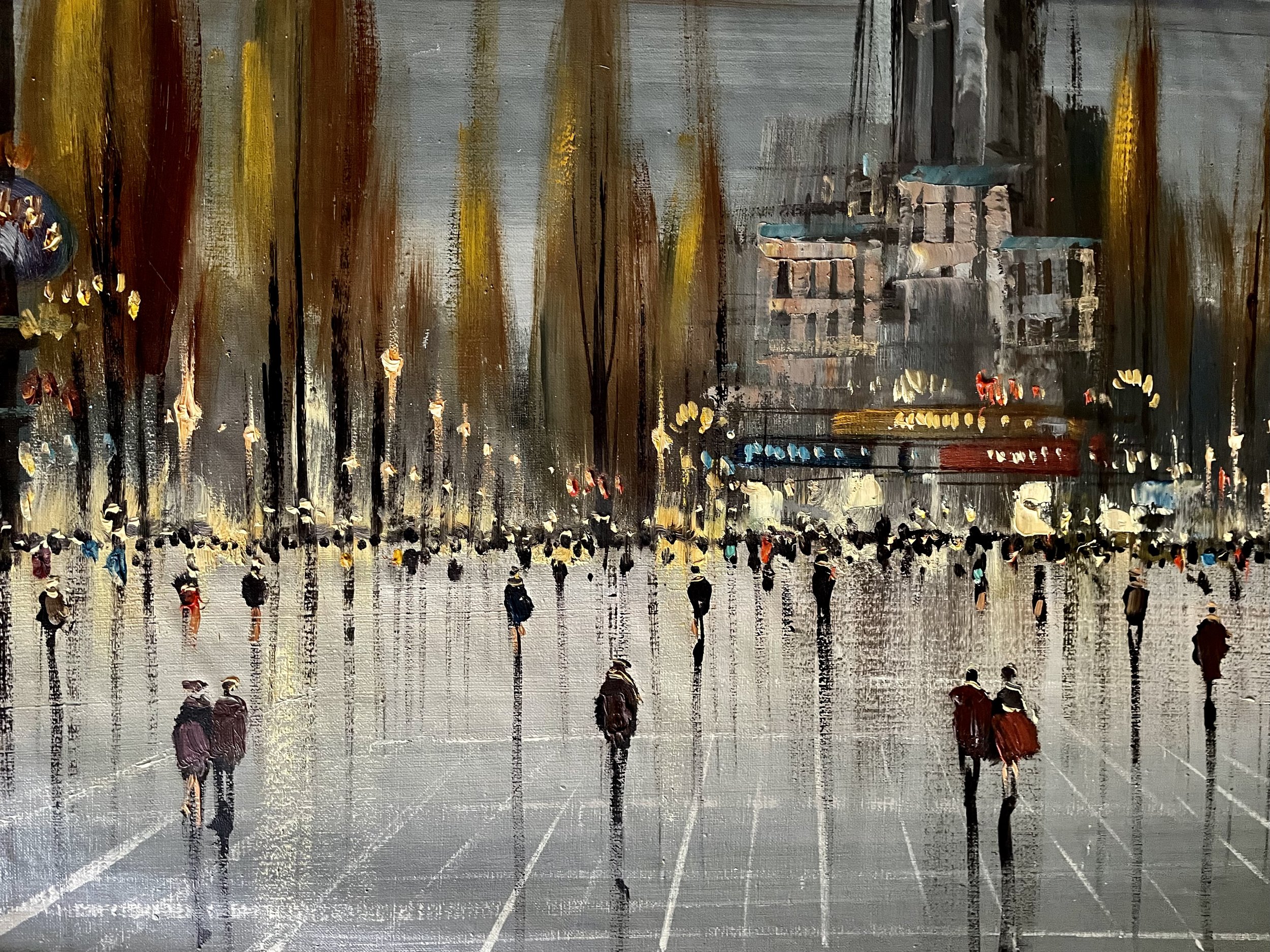
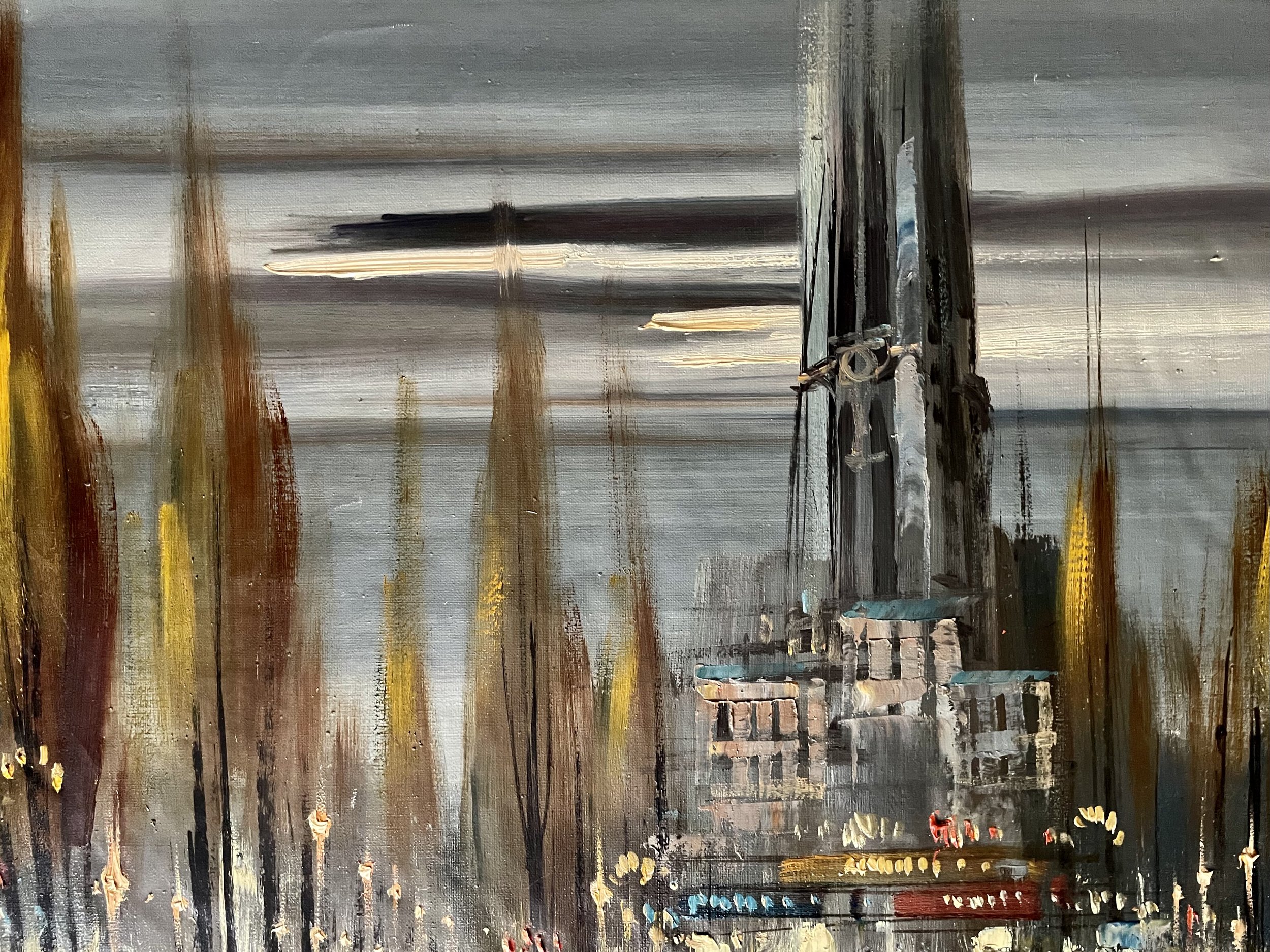
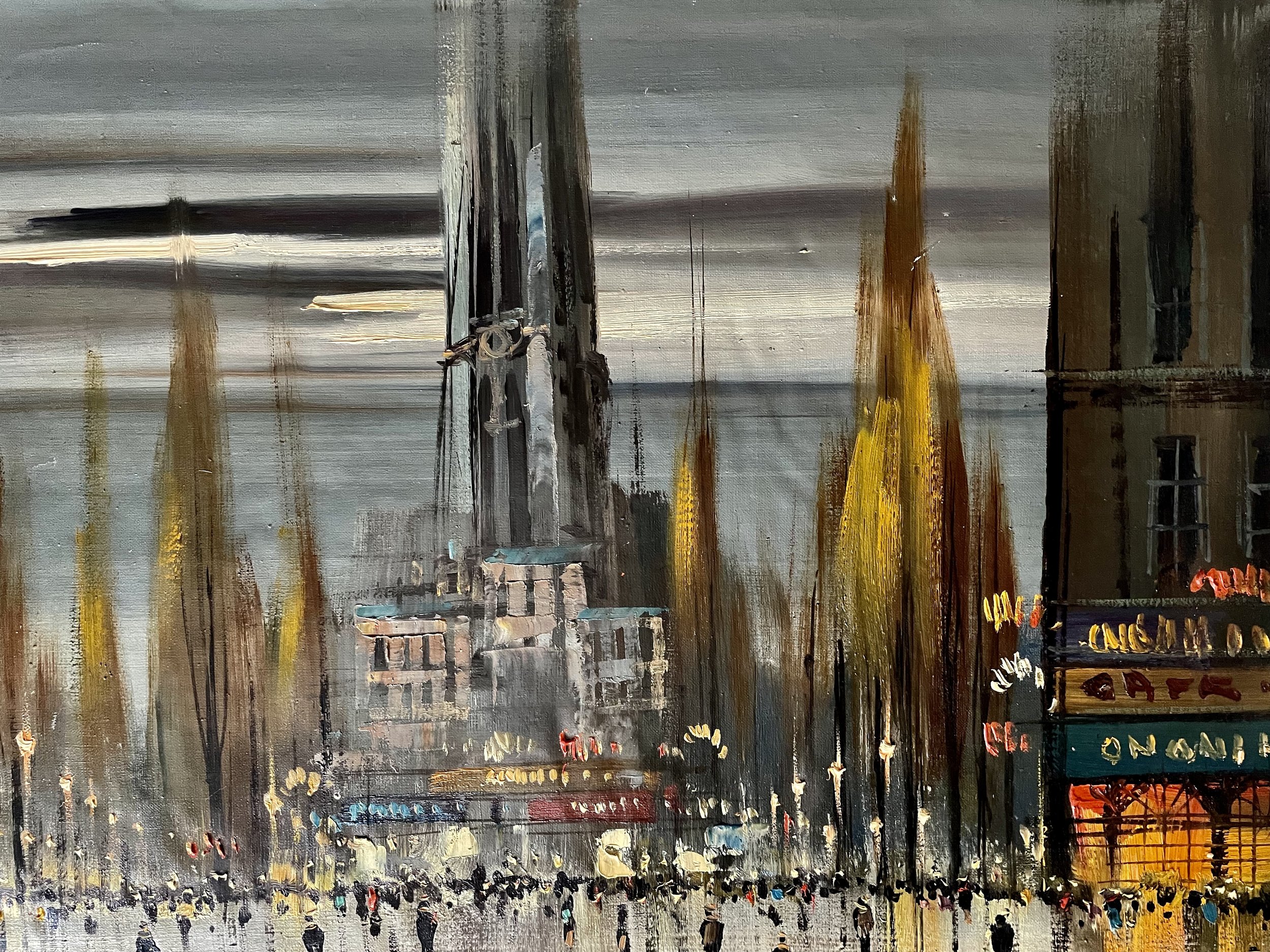
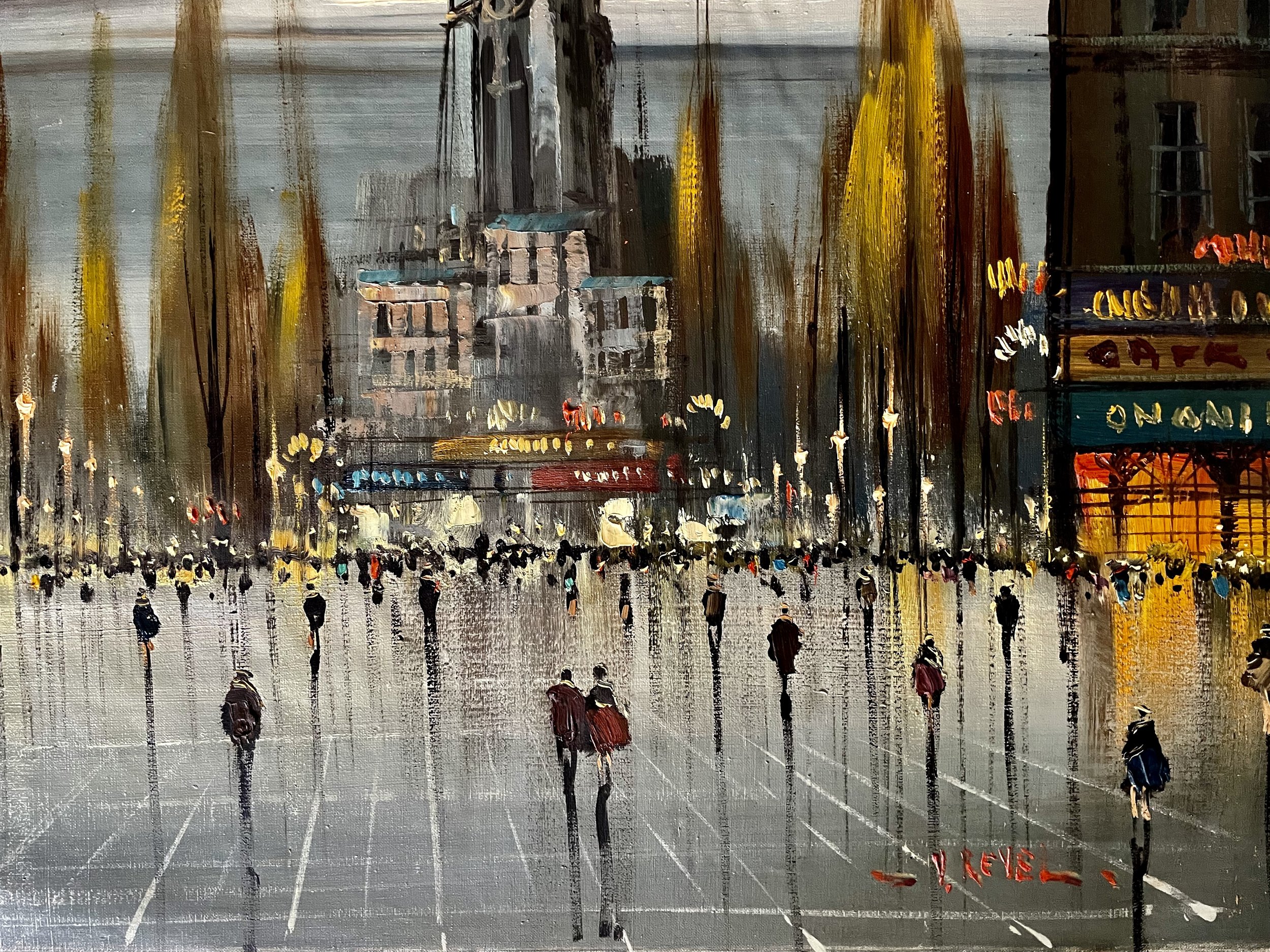
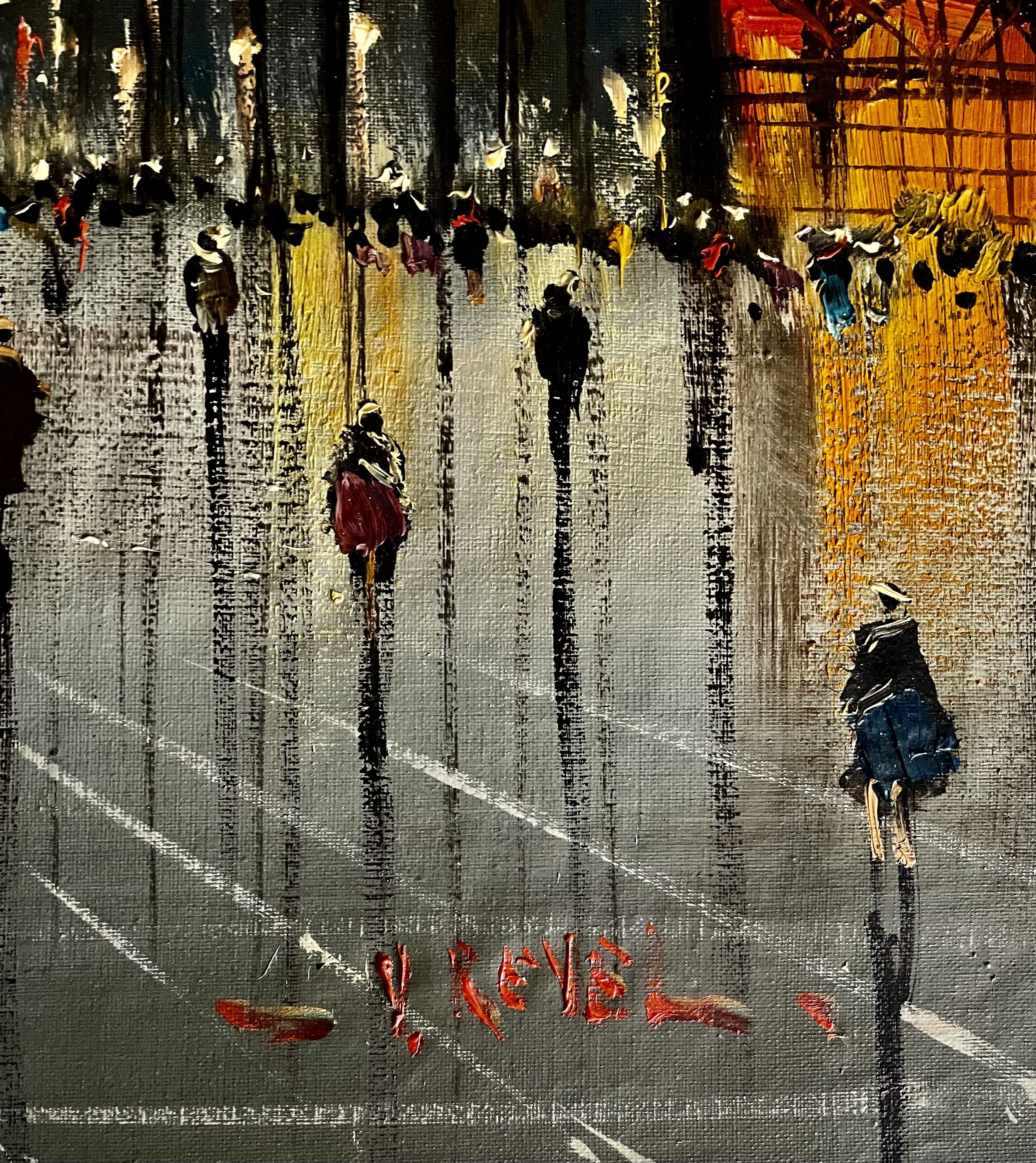
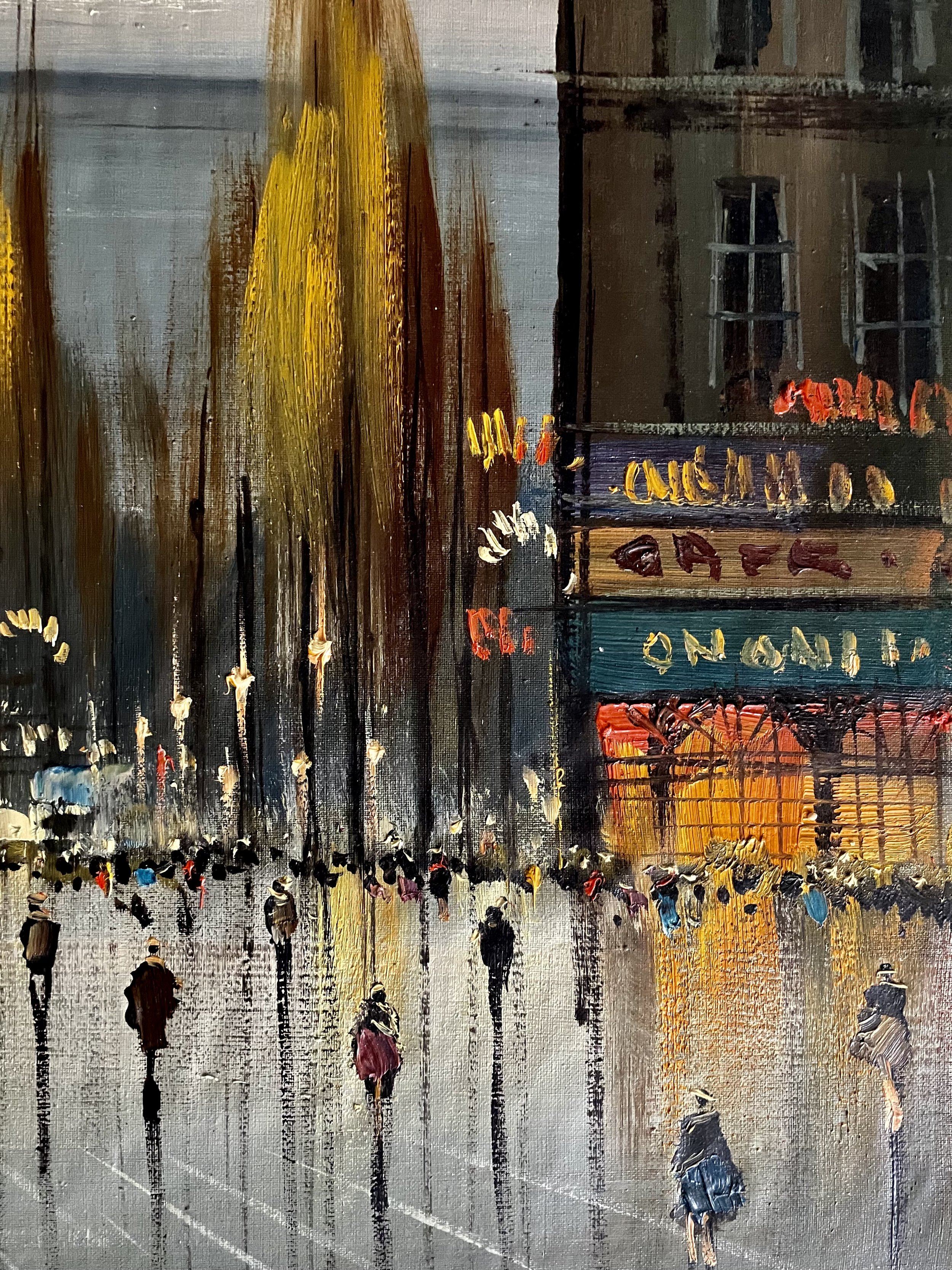
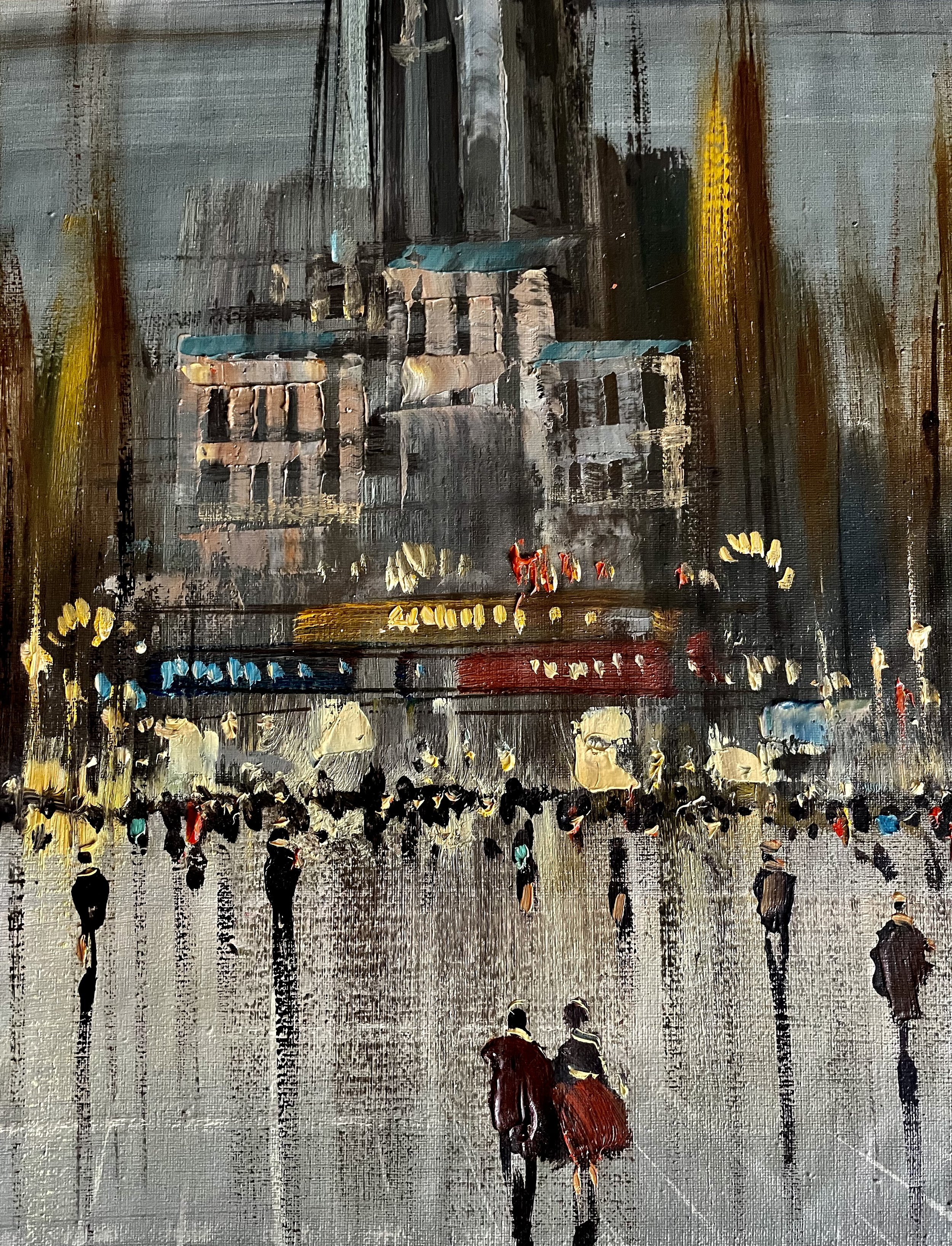
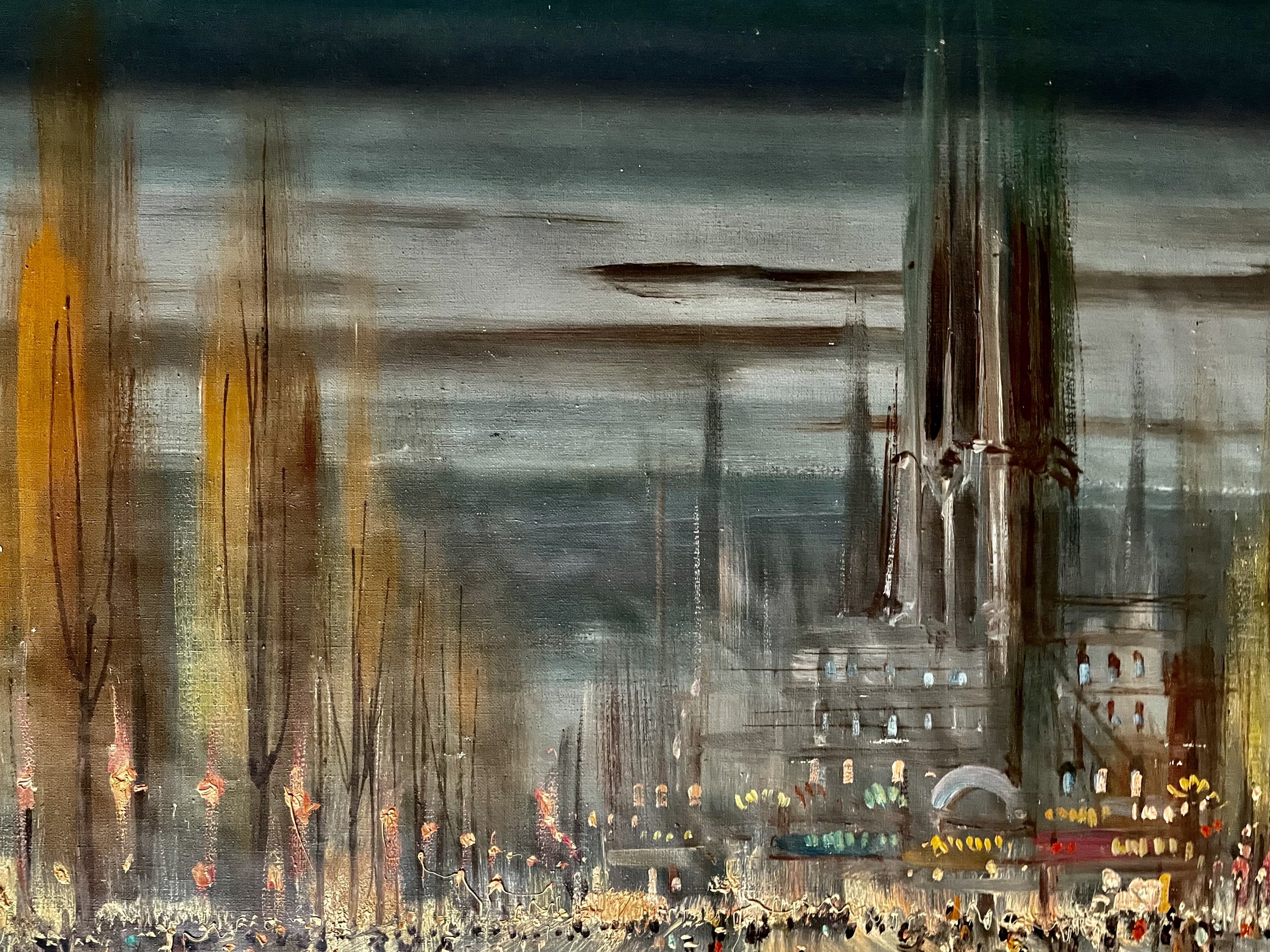
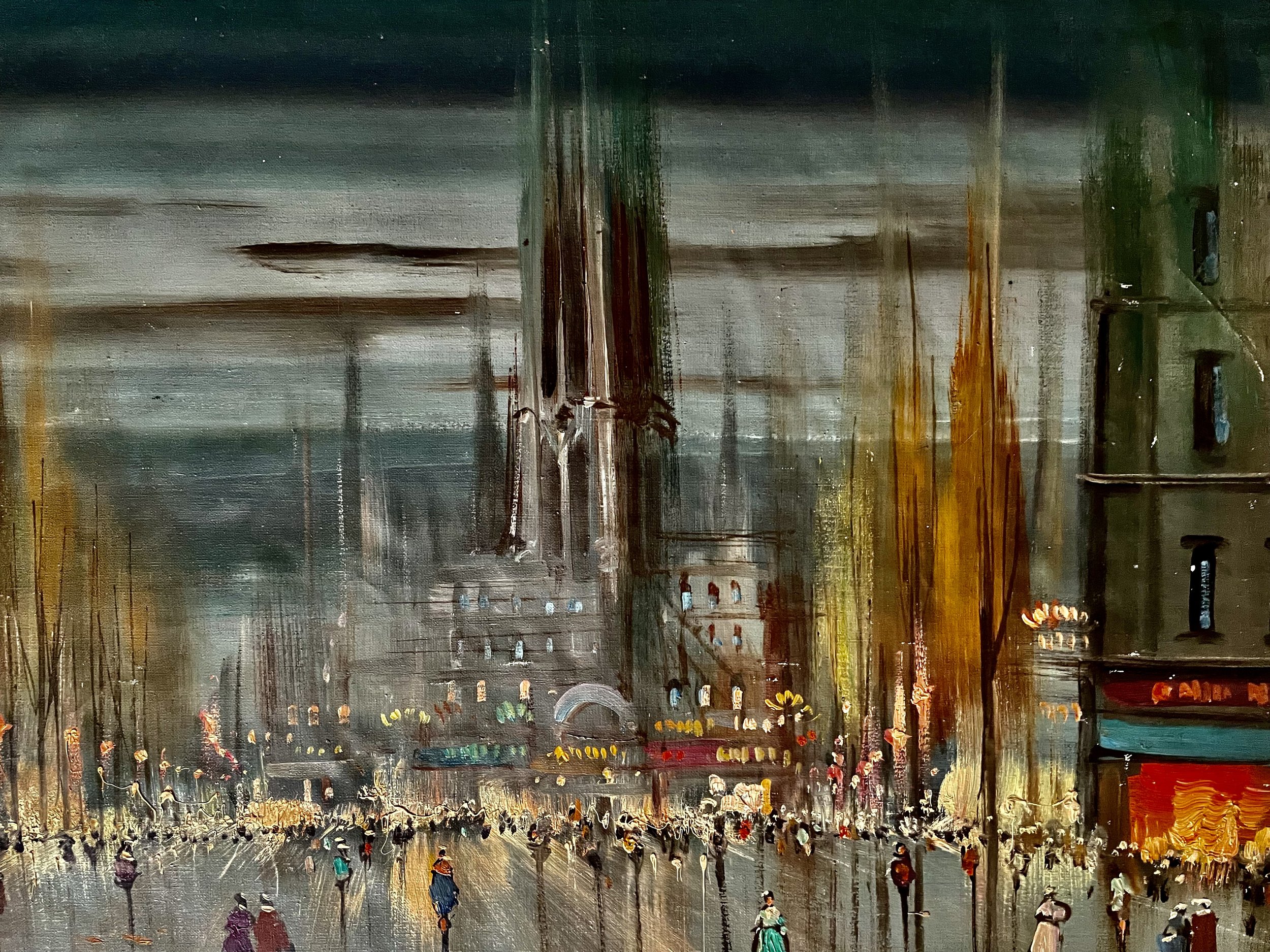
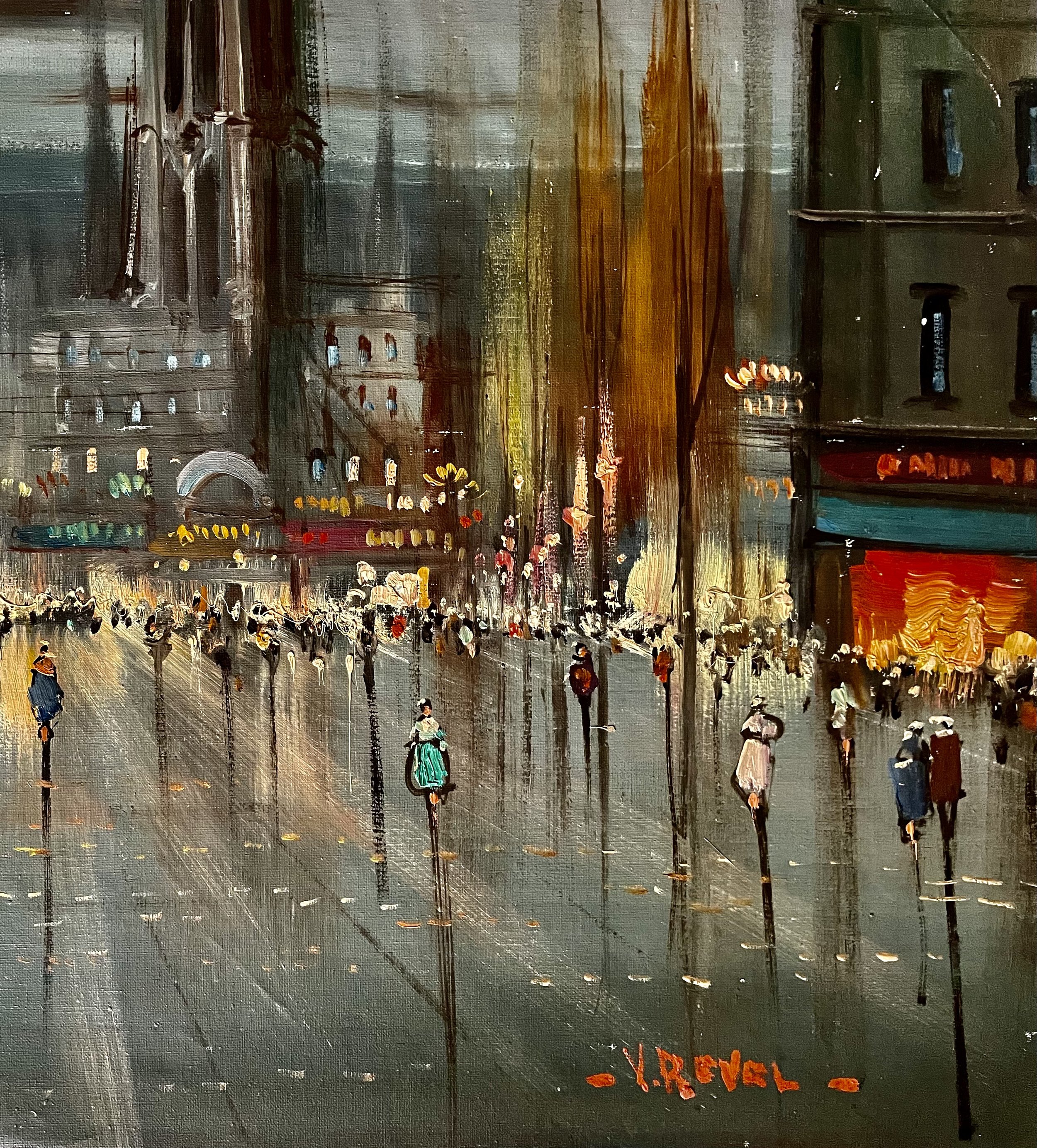
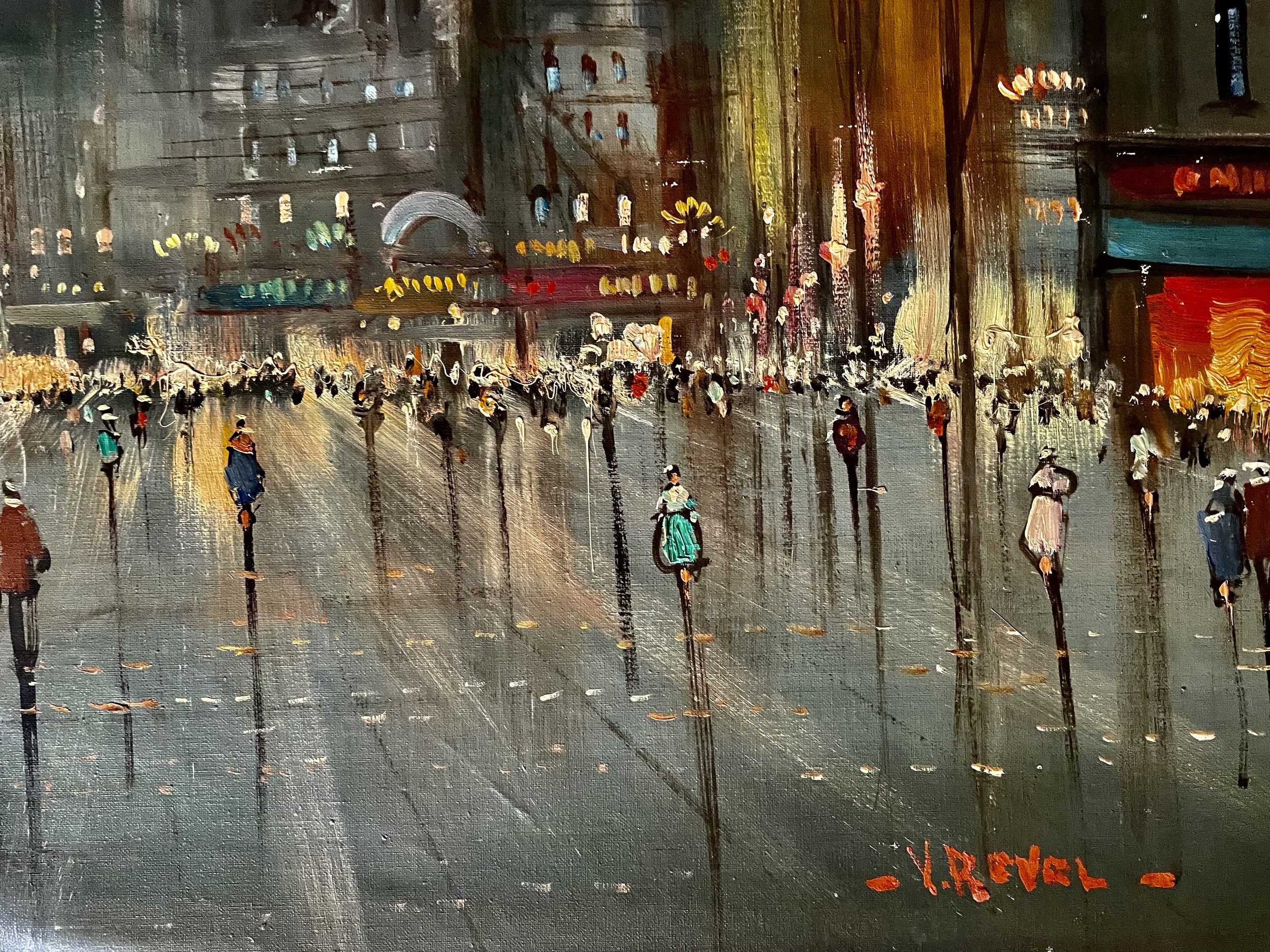
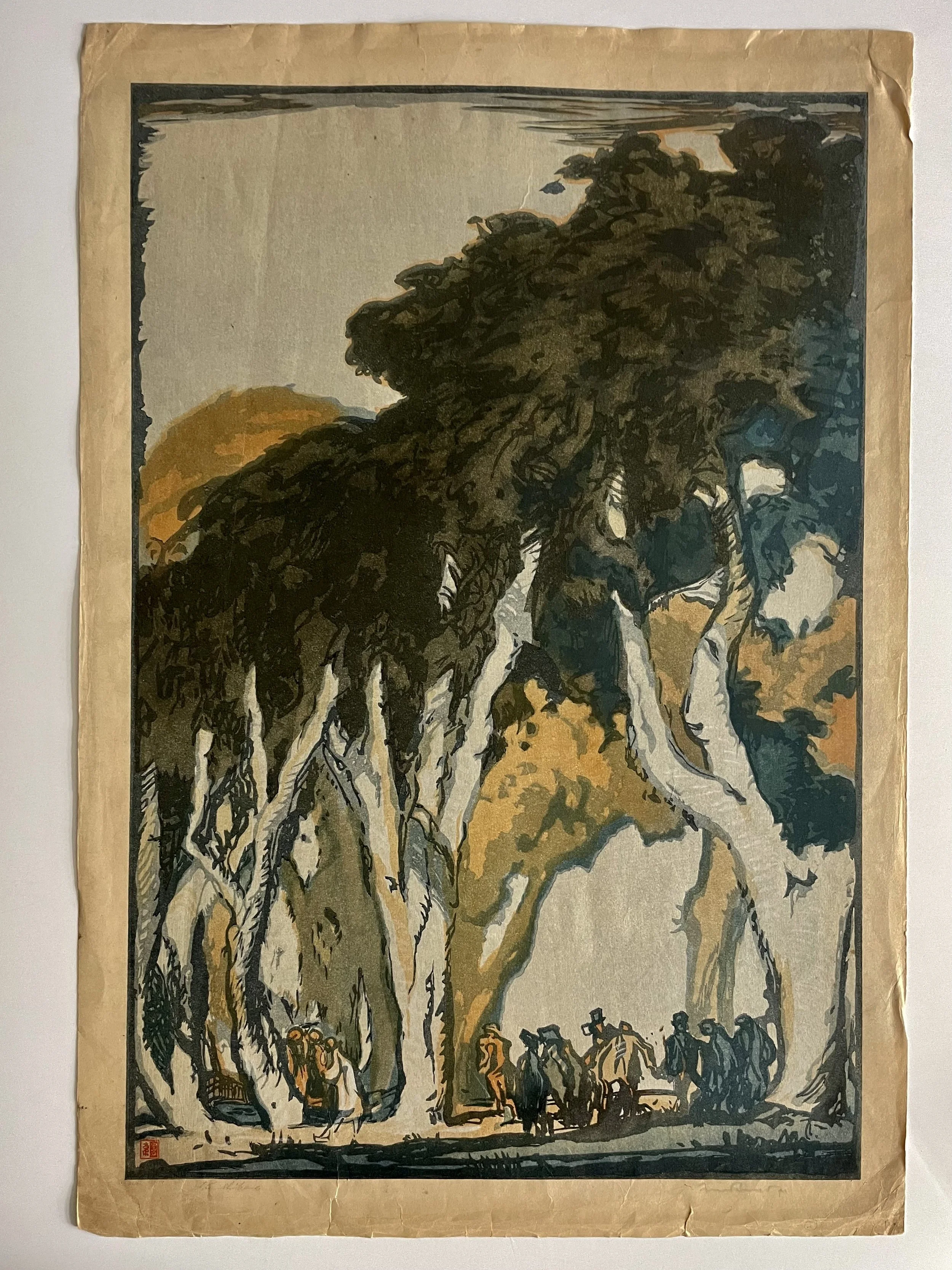
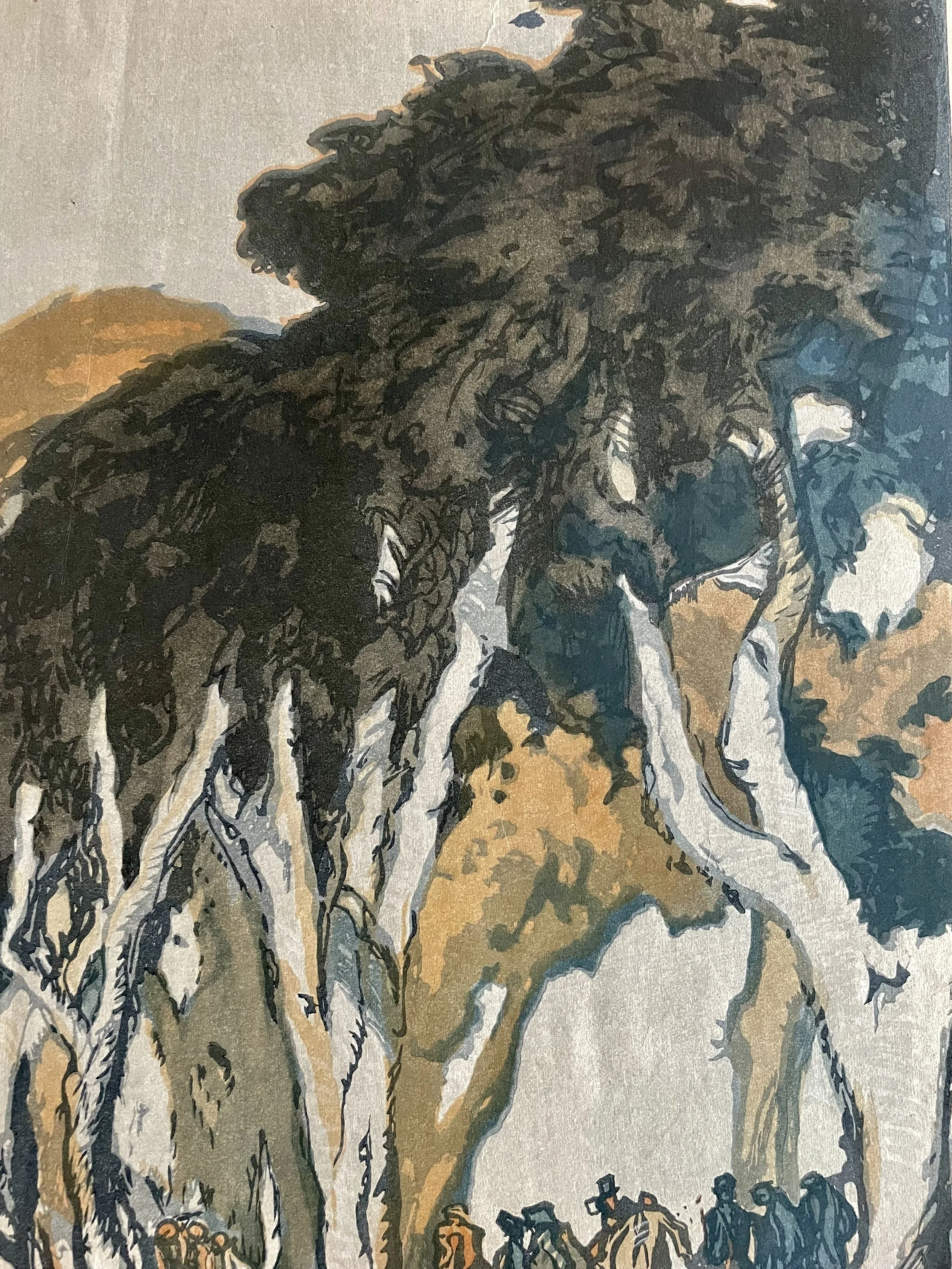
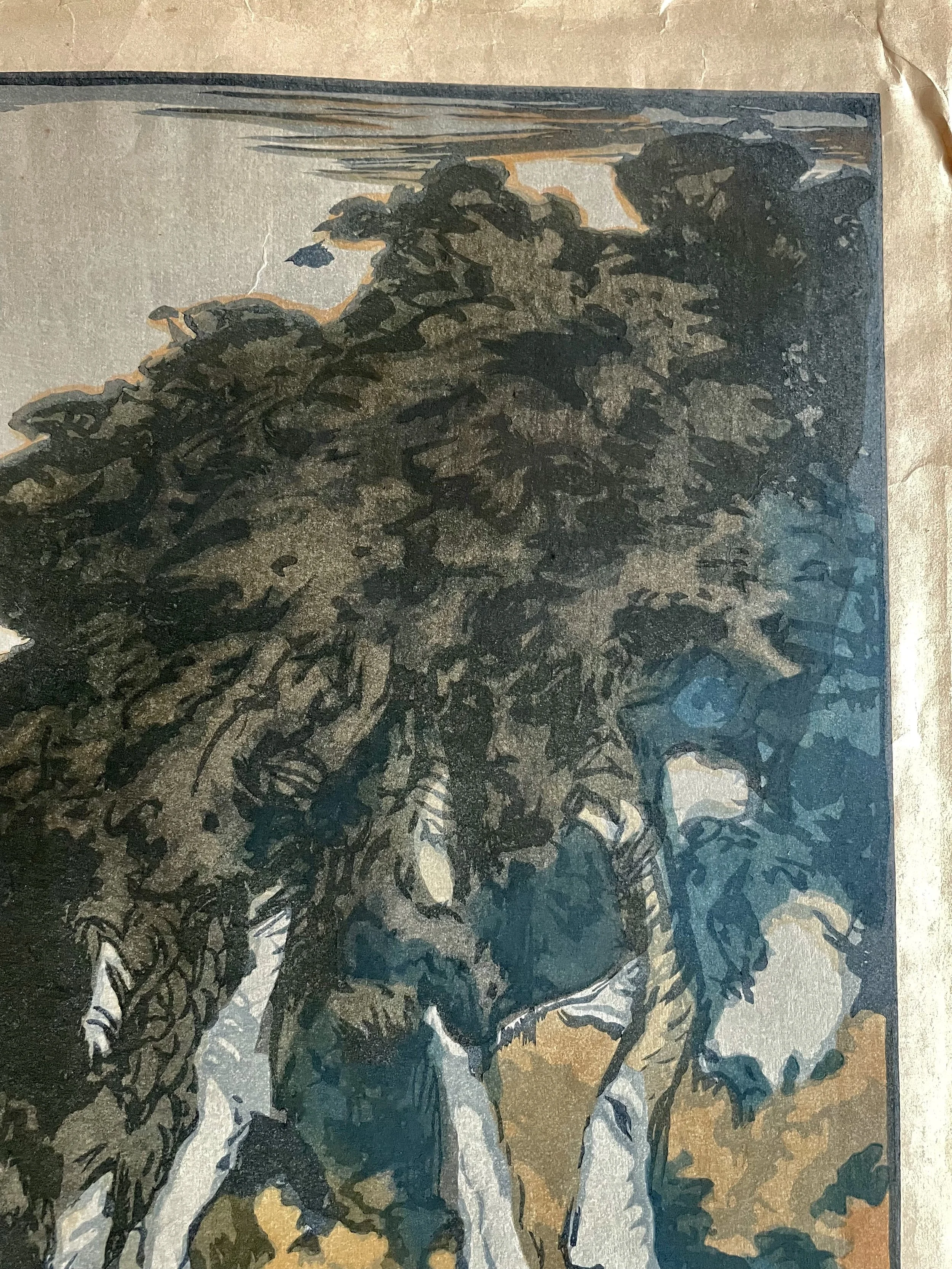
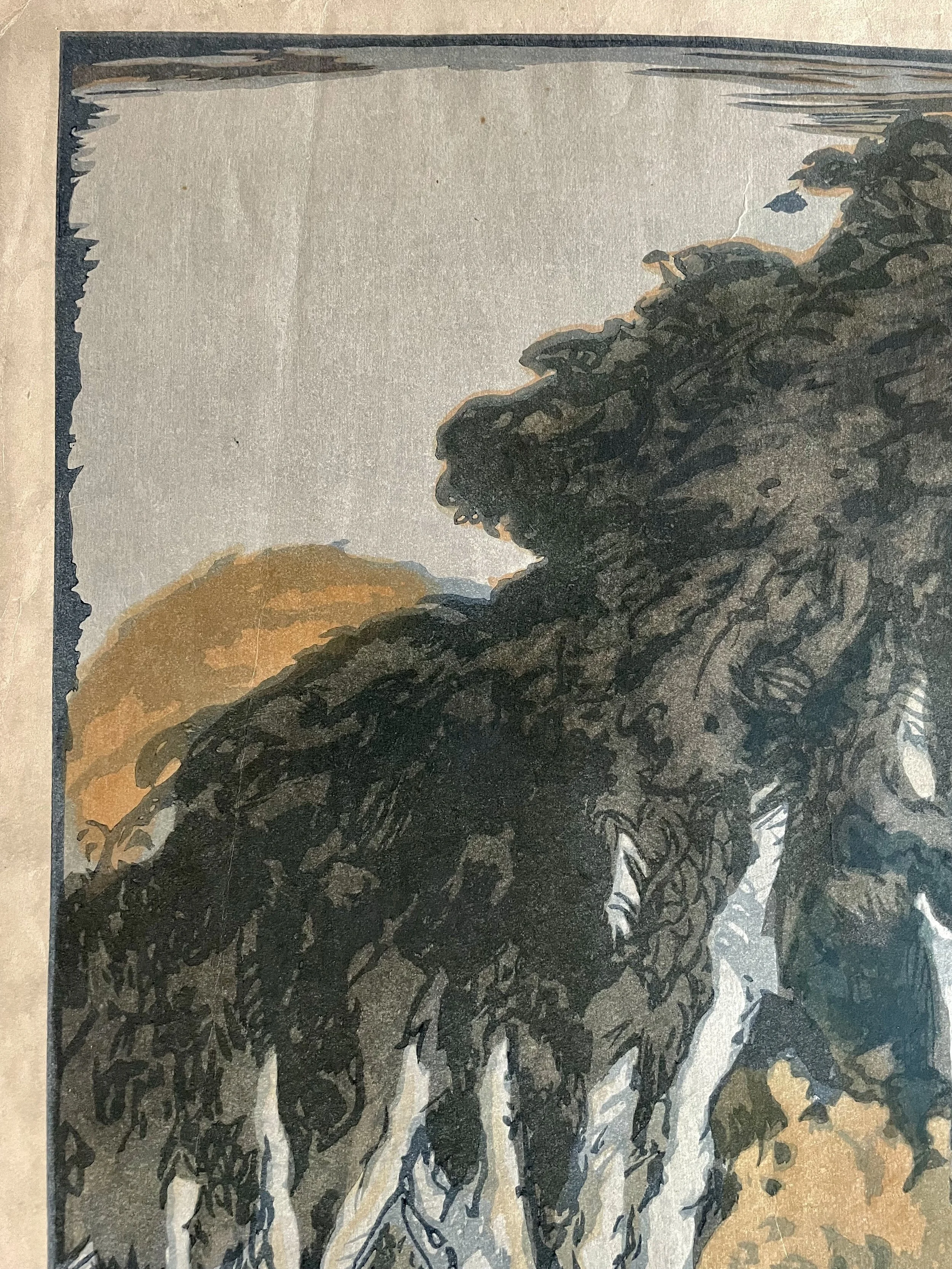
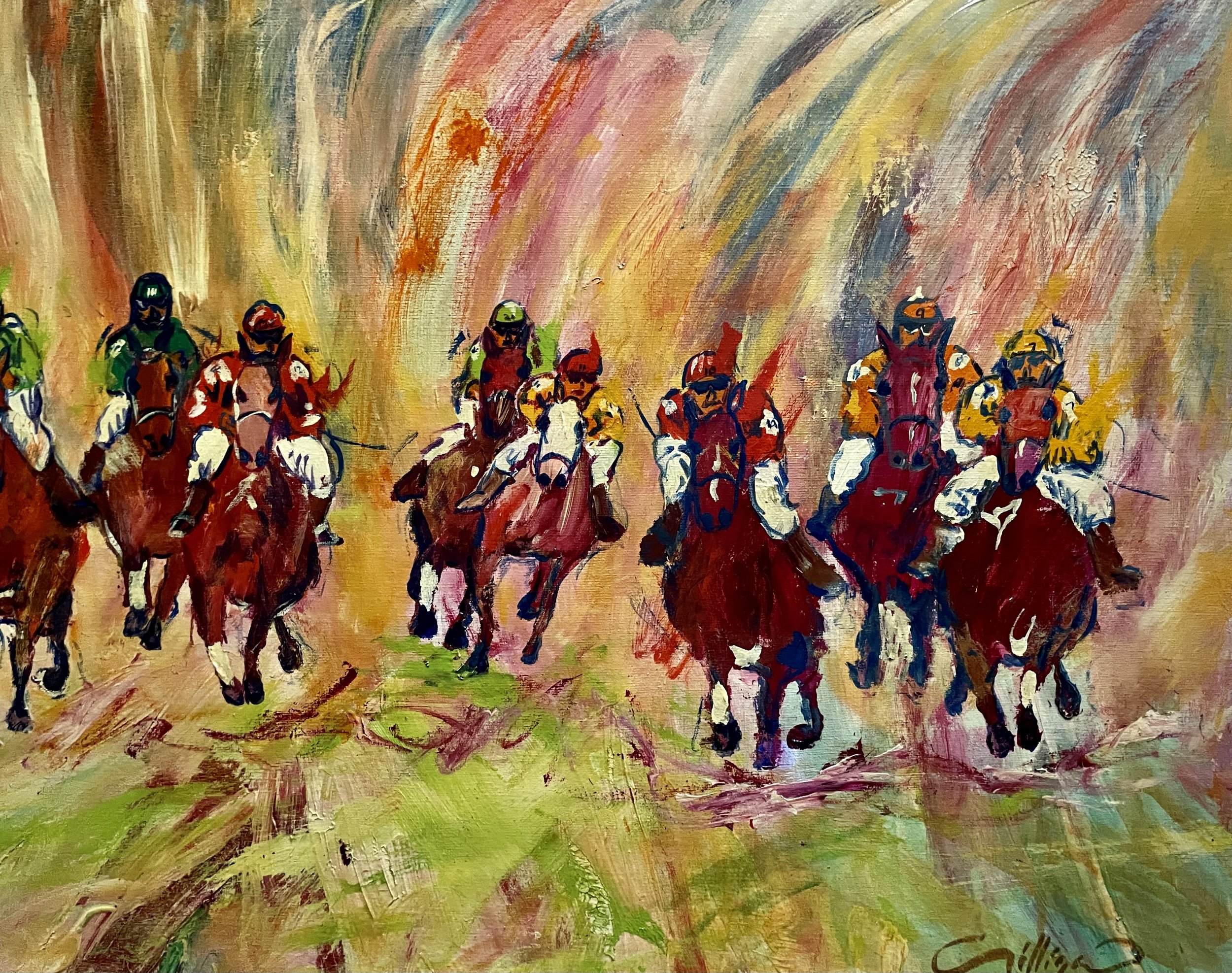
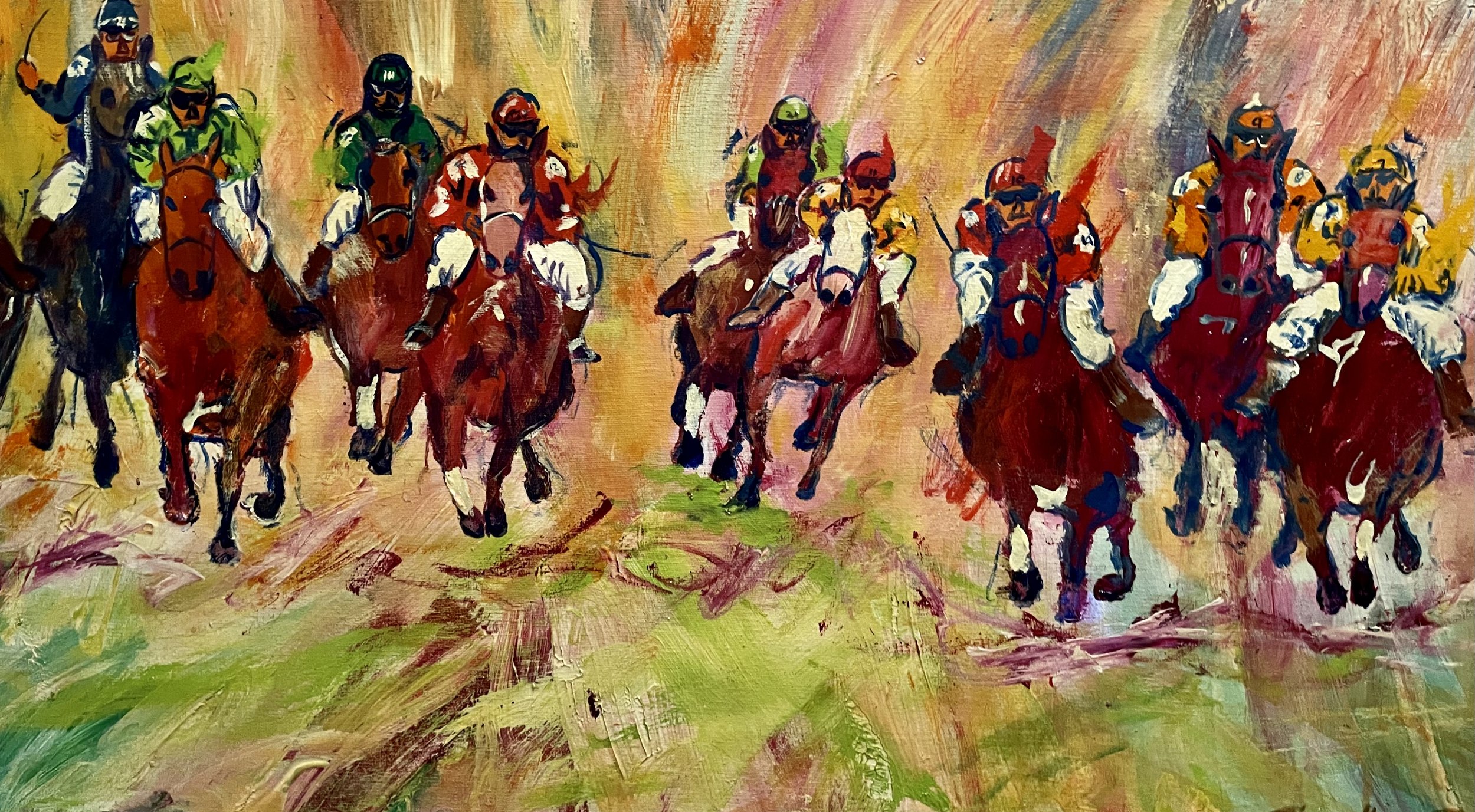
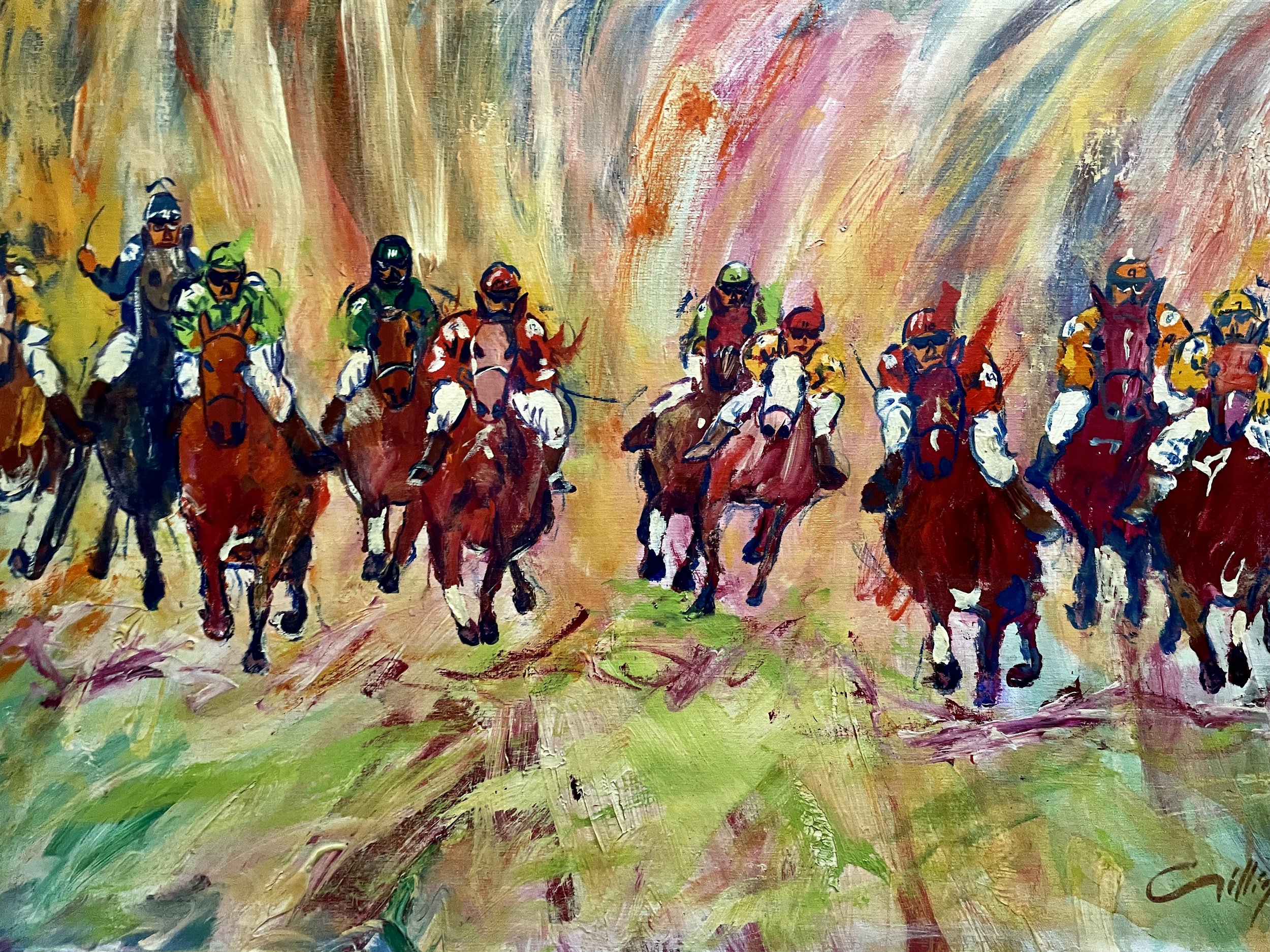
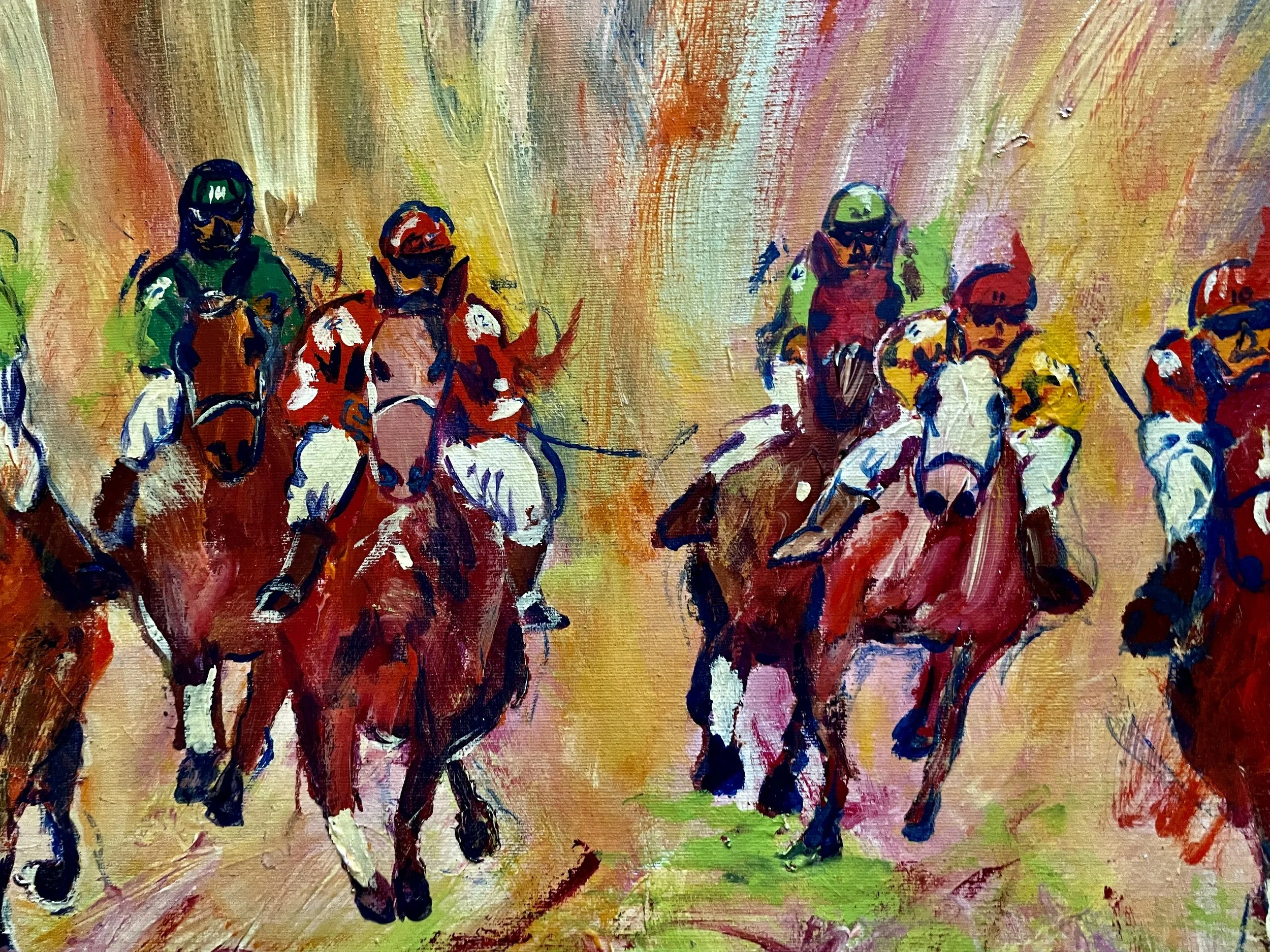
Vitre (20th century), c.1965–1975, heavy impasto mixed media on canvas, 36 × 24 in., signed lower right.
Dramatic mid-century abstract by Vitre executed in heavy impasto and mixed media on canvas. Textured geological composition with volcanic color accents and layered surface relief, characteristic of experimental 1960s–1970s material abstraction.
Artwork Description
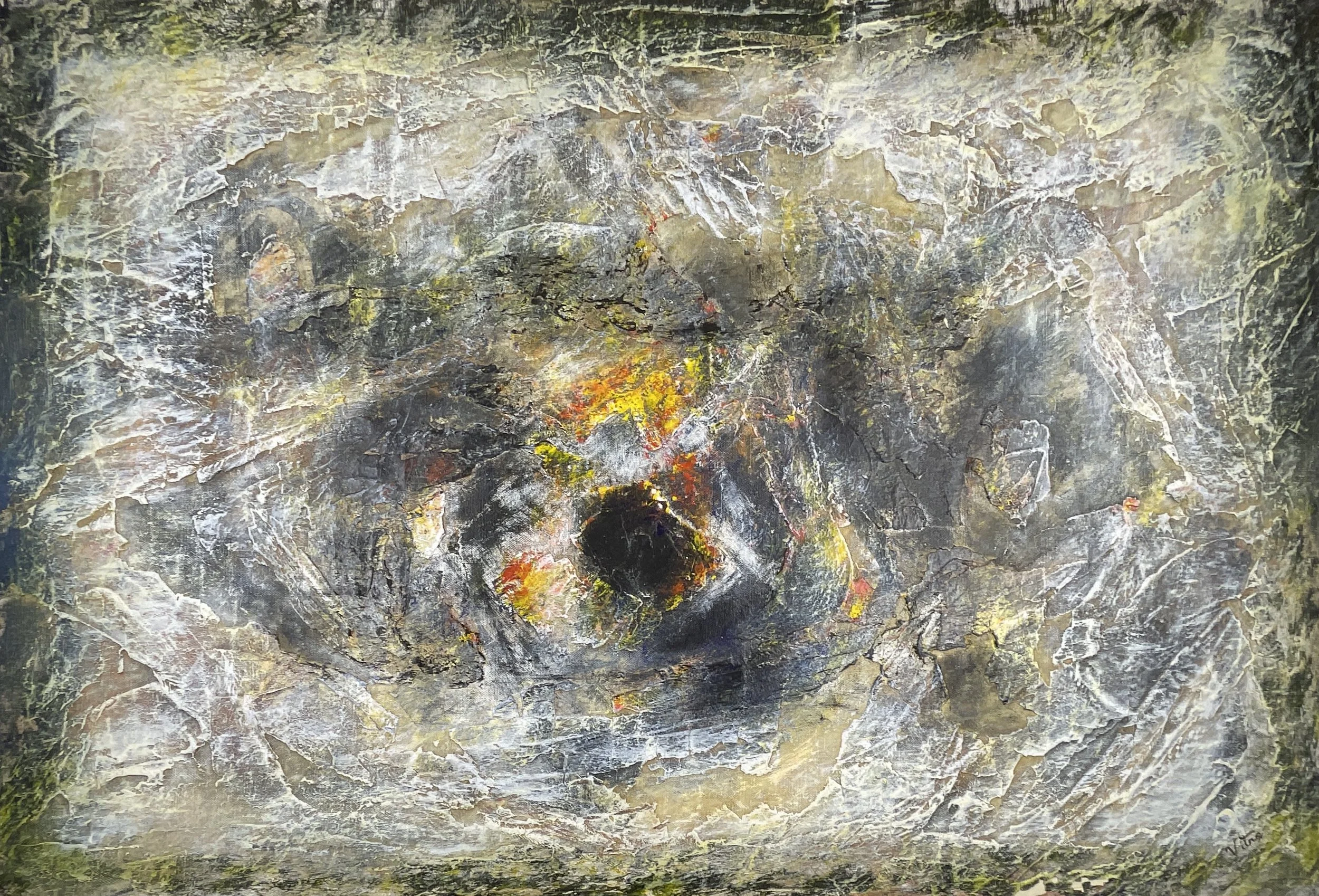
This powerful abstract composition attributed to Vitre is a striking example of mid-twentieth-century material abstraction, built through thick layers of impasto and mixed media that transform the canvas into a sculptural surface. The work measures 36 × 24 inches and is signed “Vitre” at the lower right.
The composition centers around a dark circular void surrounded by a ring of luminous color—fiery tones of yellow, orange, and red that appear to glow from within the layered structure of the painting. This central formation resembles a volcanic vent or geological rupture, a dramatic focal point that anchors the entire composition.
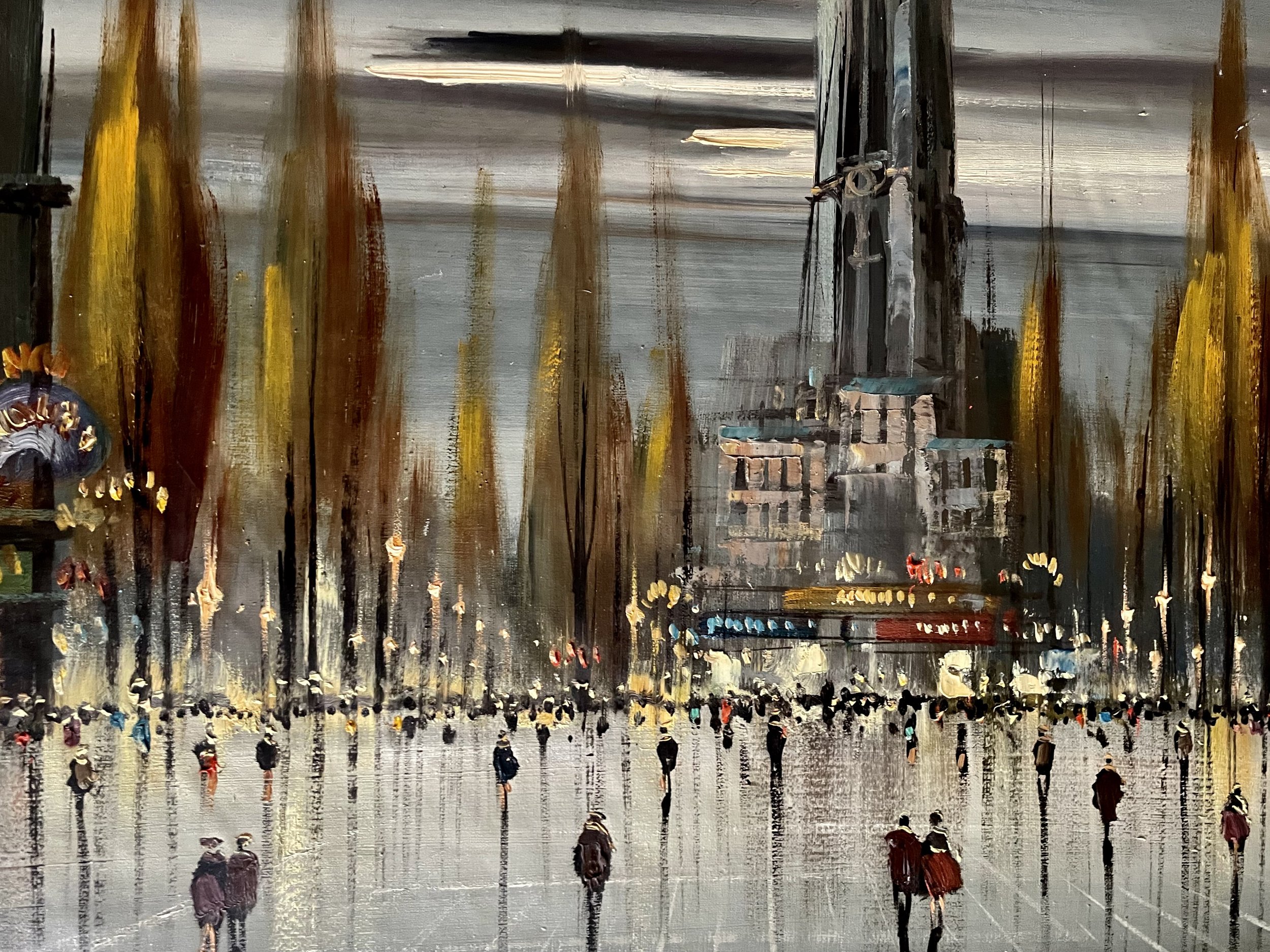
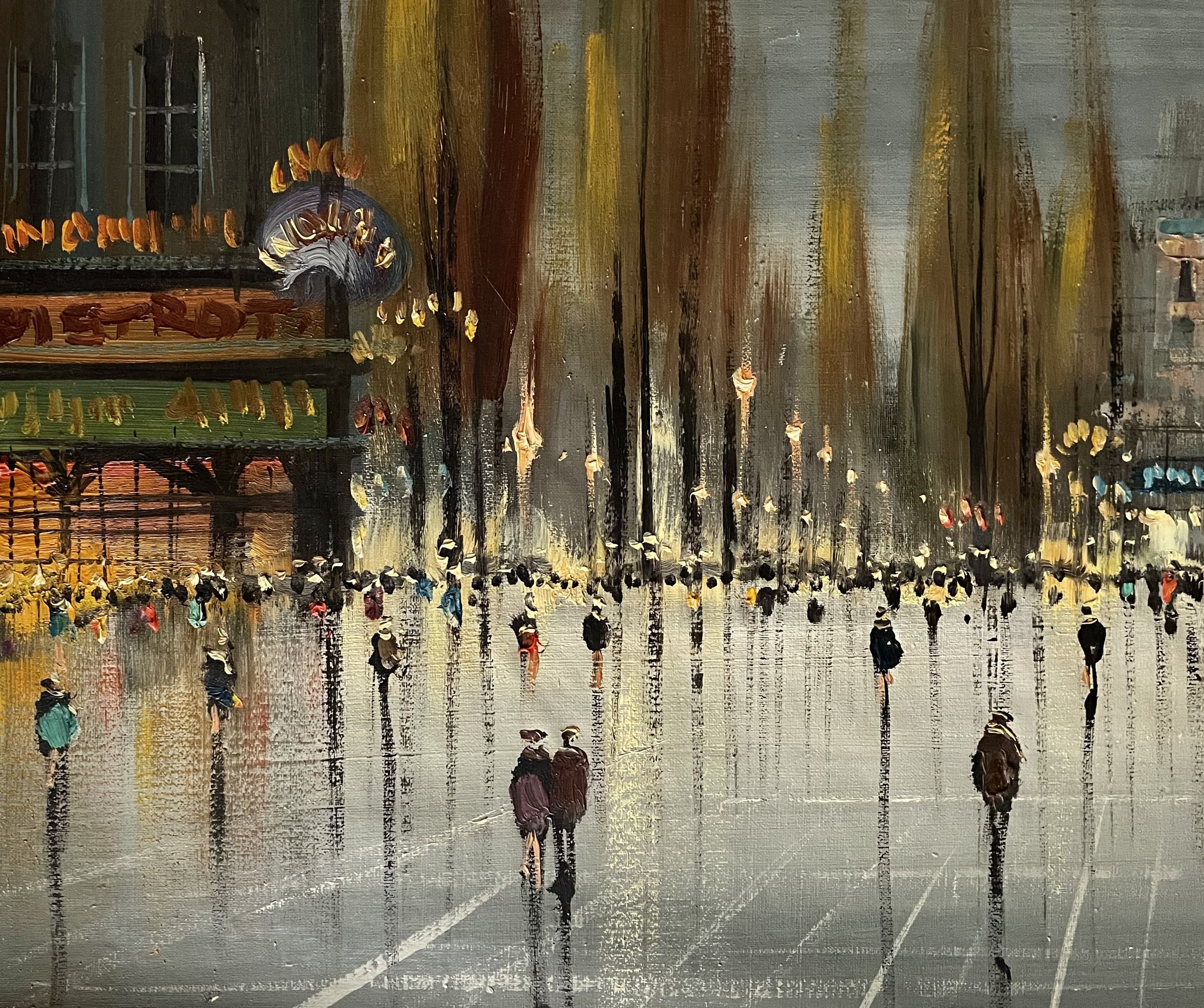
Surrounding this center, the surface breaks into fractured planes of white, gray, and earth-toned pigment applied in thick, uneven layers. The impasto forms jagged ridges and scraped textures that resemble fractured stone, glacial ice, or tectonic plates shifting across the surface. In several areas the pigment has been dragged or lifted away, exposing earlier layers beneath and revealing the woven structure of the canvas.
The artist has used palette knives and heavy textural mediums to create raised surfaces that produce dramatic relief. The effect is both painterly and sculptural; light catches the irregular ridges and edges of the paint, emphasizing the depth and complexity of the layered construction.
The palette is restrained but expressive. Cool greys and whites dominate the upper field, suggesting mineral surfaces or weathered rock, while mossy greens and earthy browns appear along the edges of the composition. These organic tones reinforce the impression of a natural landscape seen through an abstract lens. The fiery pigments surrounding the central void provide a powerful chromatic contrast that suggests heat, energy, and internal pressure.
This type of heavily textured abstraction became increasingly prominent during the late 1950s through the 1970s, when artists began experimenting with materials beyond traditional brushwork. Many painters explored the physicality of paint itself, incorporating plaster, gesso, sand, and thick acrylic mediums to build tactile surfaces. The resulting works emphasized texture, process, and material presence as much as image.
The condition of the surface shows areas of minor paint loss and chipping consistent with thick impasto works of this period. These areas reveal the depth of the material layers and attest to the artist’s aggressive textural technique.
Overall, the painting reads as a dramatic geological abstraction—a meditation on erosion, rupture, and natural energy rendered through bold physical manipulation of paint and surface.
Artist Biography
Vitre appears to have been active during the mid-twentieth century, producing highly textured abstract works that align with the broader movement of material abstraction that gained prominence in Europe and the United States during the postwar decades. While documentation on the artist remains limited, the surviving works attributed to Vitre demonstrate a clear engagement with the experimental approaches to surface and material that defined avant-garde painting in the 1950s through the 1970s.
During this period many artists rejected purely illusionistic painting in favor of emphasizing the physical presence of the artwork itself. Paint was no longer treated simply as a medium for depicting images but as a substance capable of building relief, texture, and sculptural form. This shift led to a wide range of experimental techniques involving thick impasto, palette-knife construction, and the incorporation of unconventional materials.
The painting attributed to Vitre demonstrates many of these characteristics. The surface is constructed through layers of dense material applied and manipulated to create cracked, fractured textures reminiscent of geological formations. The approach reflects the influence of material-focused movements such as Art Informel in Europe and certain strands of American abstract expressionism that explored the tactile qualities of paint.
Artists working in this direction often sought to evoke elemental forces—erosion, volcanic activity, weathering, and tectonic pressure—through purely abstract means. Rather than depicting a literal landscape, they created surfaces that behaved like natural terrain. The work attributed to Vitre strongly embodies this concept: the painting reads almost like a cross-section of earth, ice, and molten material rendered through layered pigment.
The presence of the signature “Vitre” suggests a professional artist active within the mid-century gallery system. Works of this scale and technical complexity were commonly circulated through galleries in New York and Europe during the height of postwar abstract experimentation. The provenance associated with Mitch Morse Gallery indicates that the work was acquired within that international gallery network that frequently represented contemporary artists working in experimental abstraction.
Although the artist’s biography remains partially undocumented, the painting itself stands as an impressive example of mid-century textural abstraction. Its dramatic impasto technique, geological imagery, and restrained but powerful color structure place it firmly within the artistic explorations that shaped modern abstract painting during the postwar decades.
Vitre abstract impasto painting, mixed media on canvas, signed, heavily textured geological abstraction with volcanic color center, 36 × 24 in.
Certificate of Authentication
Artist: Vitre
Title: Vitre (attributed)
Medium: Heavy impasto mixed media on canvas
Dimensions: 36 × 24 inches
Signature: Signed lower right
Date: circa 1965–1975
This work is believed to be an original painting by the artist Vitre based on the visible signature and stylistic characteristics consistent with mid-century material abstraction.
Condition
Good vintage condition overall. The painting features heavy impasto construction with several small areas of paint loss and chipping consistent with thick textured surfaces from this period. Canvas support remains stable and the surface retains strong visual presence.
Provenance
Artist studio or early private collection
Mitch Morse Gallery, New York (artist’s agent, publisher of original graphics, art dealer and distributor)
Private collection acquired through Mitch Morse Gallery
Artfind Gallery, Washington DC (current owner)
All works acquired through Mitch Morse Gallery, which sourced artworks in New York, the United States, and Europe.
Provenance Note: Mitch Morse Gallery Collection
This artwork originates from the inventory of Mitch Morse Gallery, a respected New York–based gallery and publisher active during the mid-to-late 20th century. Mitch Morse was an established figure in the American art market, serving as an artist’s agent, publisher of original graphics, art dealer, distributor, and fine art restorer. He was also a Design Affiliate of A.S.I.D., listed in Who’s Who in the East, and a guest lecturer in graphics at New York University, with appearances on radio and television discussing art and design.
Through his gallery and associated publishing operations, Morse acquired paintings, prints, and original works from artists and studios across New York, Europe, and international art markets, assembling a broad inventory representing a wide range of artistic traditions and mediums. Works from this collection circulated through galleries and collectors throughout the United States.
The present painting was acquired through this network and is now held in the collection of Artfind Gallery, Washington DC, continuing the documented chain of gallery provenance from Mitch Morse’s original acquisitions.
Vitre (20th century), c.1965–1975, heavy impasto mixed media on canvas, 36 × 24 in., signed lower right.
Dramatic mid-century abstract by Vitre executed in heavy impasto and mixed media on canvas. Textured geological composition with volcanic color accents and layered surface relief, characteristic of experimental 1960s–1970s material abstraction.
Artwork Description
This powerful abstract composition attributed to Vitre is a striking example of mid-twentieth-century material abstraction, built through thick layers of impasto and mixed media that transform the canvas into a sculptural surface. The work measures 36 × 24 inches and is signed “Vitre” at the lower right.
The composition centers around a dark circular void surrounded by a ring of luminous color—fiery tones of yellow, orange, and red that appear to glow from within the layered structure of the painting. This central formation resembles a volcanic vent or geological rupture, a dramatic focal point that anchors the entire composition.
Surrounding this center, the surface breaks into fractured planes of white, gray, and earth-toned pigment applied in thick, uneven layers. The impasto forms jagged ridges and scraped textures that resemble fractured stone, glacial ice, or tectonic plates shifting across the surface. In several areas the pigment has been dragged or lifted away, exposing earlier layers beneath and revealing the woven structure of the canvas.
The artist has used palette knives and heavy textural mediums to create raised surfaces that produce dramatic relief. The effect is both painterly and sculptural; light catches the irregular ridges and edges of the paint, emphasizing the depth and complexity of the layered construction.
The palette is restrained but expressive. Cool greys and whites dominate the upper field, suggesting mineral surfaces or weathered rock, while mossy greens and earthy browns appear along the edges of the composition. These organic tones reinforce the impression of a natural landscape seen through an abstract lens. The fiery pigments surrounding the central void provide a powerful chromatic contrast that suggests heat, energy, and internal pressure.
This type of heavily textured abstraction became increasingly prominent during the late 1950s through the 1970s, when artists began experimenting with materials beyond traditional brushwork. Many painters explored the physicality of paint itself, incorporating plaster, gesso, sand, and thick acrylic mediums to build tactile surfaces. The resulting works emphasized texture, process, and material presence as much as image.
The condition of the surface shows areas of minor paint loss and chipping consistent with thick impasto works of this period. These areas reveal the depth of the material layers and attest to the artist’s aggressive textural technique.
Overall, the painting reads as a dramatic geological abstraction—a meditation on erosion, rupture, and natural energy rendered through bold physical manipulation of paint and surface.
Artist Biography
Vitre appears to have been active during the mid-twentieth century, producing highly textured abstract works that align with the broader movement of material abstraction that gained prominence in Europe and the United States during the postwar decades. While documentation on the artist remains limited, the surviving works attributed to Vitre demonstrate a clear engagement with the experimental approaches to surface and material that defined avant-garde painting in the 1950s through the 1970s.
During this period many artists rejected purely illusionistic painting in favor of emphasizing the physical presence of the artwork itself. Paint was no longer treated simply as a medium for depicting images but as a substance capable of building relief, texture, and sculptural form. This shift led to a wide range of experimental techniques involving thick impasto, palette-knife construction, and the incorporation of unconventional materials.
The painting attributed to Vitre demonstrates many of these characteristics. The surface is constructed through layers of dense material applied and manipulated to create cracked, fractured textures reminiscent of geological formations. The approach reflects the influence of material-focused movements such as Art Informel in Europe and certain strands of American abstract expressionism that explored the tactile qualities of paint.
Artists working in this direction often sought to evoke elemental forces—erosion, volcanic activity, weathering, and tectonic pressure—through purely abstract means. Rather than depicting a literal landscape, they created surfaces that behaved like natural terrain. The work attributed to Vitre strongly embodies this concept: the painting reads almost like a cross-section of earth, ice, and molten material rendered through layered pigment.
The presence of the signature “Vitre” suggests a professional artist active within the mid-century gallery system. Works of this scale and technical complexity were commonly circulated through galleries in New York and Europe during the height of postwar abstract experimentation. The provenance associated with Mitch Morse Gallery indicates that the work was acquired within that international gallery network that frequently represented contemporary artists working in experimental abstraction.
Although the artist’s biography remains partially undocumented, the painting itself stands as an impressive example of mid-century textural abstraction. Its dramatic impasto technique, geological imagery, and restrained but powerful color structure place it firmly within the artistic explorations that shaped modern abstract painting during the postwar decades.
Vitre abstract impasto painting, mixed media on canvas, signed, heavily textured geological abstraction with volcanic color center, 36 × 24 in.
Certificate of Authentication
Artist: Vitre
Title: Vitre (attributed)
Medium: Heavy impasto mixed media on canvas
Dimensions: 36 × 24 inches
Signature: Signed lower right
Date: circa 1965–1975
This work is believed to be an original painting by the artist Vitre based on the visible signature and stylistic characteristics consistent with mid-century material abstraction.
Condition
Good vintage condition overall. The painting features heavy impasto construction with several small areas of paint loss and chipping consistent with thick textured surfaces from this period. Canvas support remains stable and the surface retains strong visual presence.
Provenance
Artist studio or early private collection
Mitch Morse Gallery, New York (artist’s agent, publisher of original graphics, art dealer and distributor)
Private collection acquired through Mitch Morse Gallery
Artfind Gallery, Washington DC (current owner)
All works acquired through Mitch Morse Gallery, which sourced artworks in New York, the United States, and Europe.
Provenance Note: Mitch Morse Gallery Collection
This artwork originates from the inventory of Mitch Morse Gallery, a respected New York–based gallery and publisher active during the mid-to-late 20th century. Mitch Morse was an established figure in the American art market, serving as an artist’s agent, publisher of original graphics, art dealer, distributor, and fine art restorer. He was also a Design Affiliate of A.S.I.D., listed in Who’s Who in the East, and a guest lecturer in graphics at New York University, with appearances on radio and television discussing art and design.
Through his gallery and associated publishing operations, Morse acquired paintings, prints, and original works from artists and studios across New York, Europe, and international art markets, assembling a broad inventory representing a wide range of artistic traditions and mediums. Works from this collection circulated through galleries and collectors throughout the United States.
The present painting was acquired through this network and is now held in the collection of Artfind Gallery, Washington DC, continuing the documented chain of gallery provenance from Mitch Morse’s original acquisitions.