 Image 1 of 5
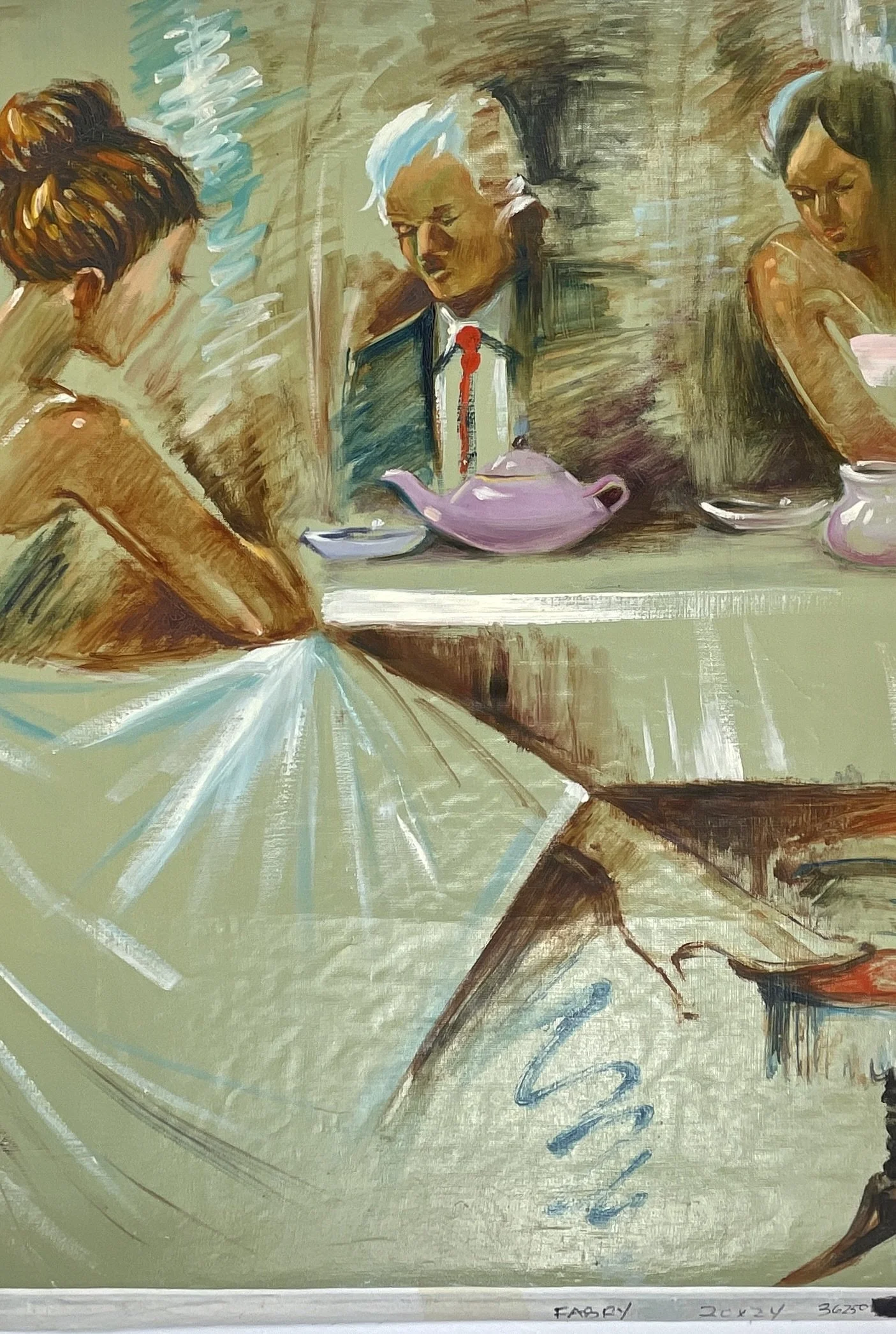 Image 2 of 5
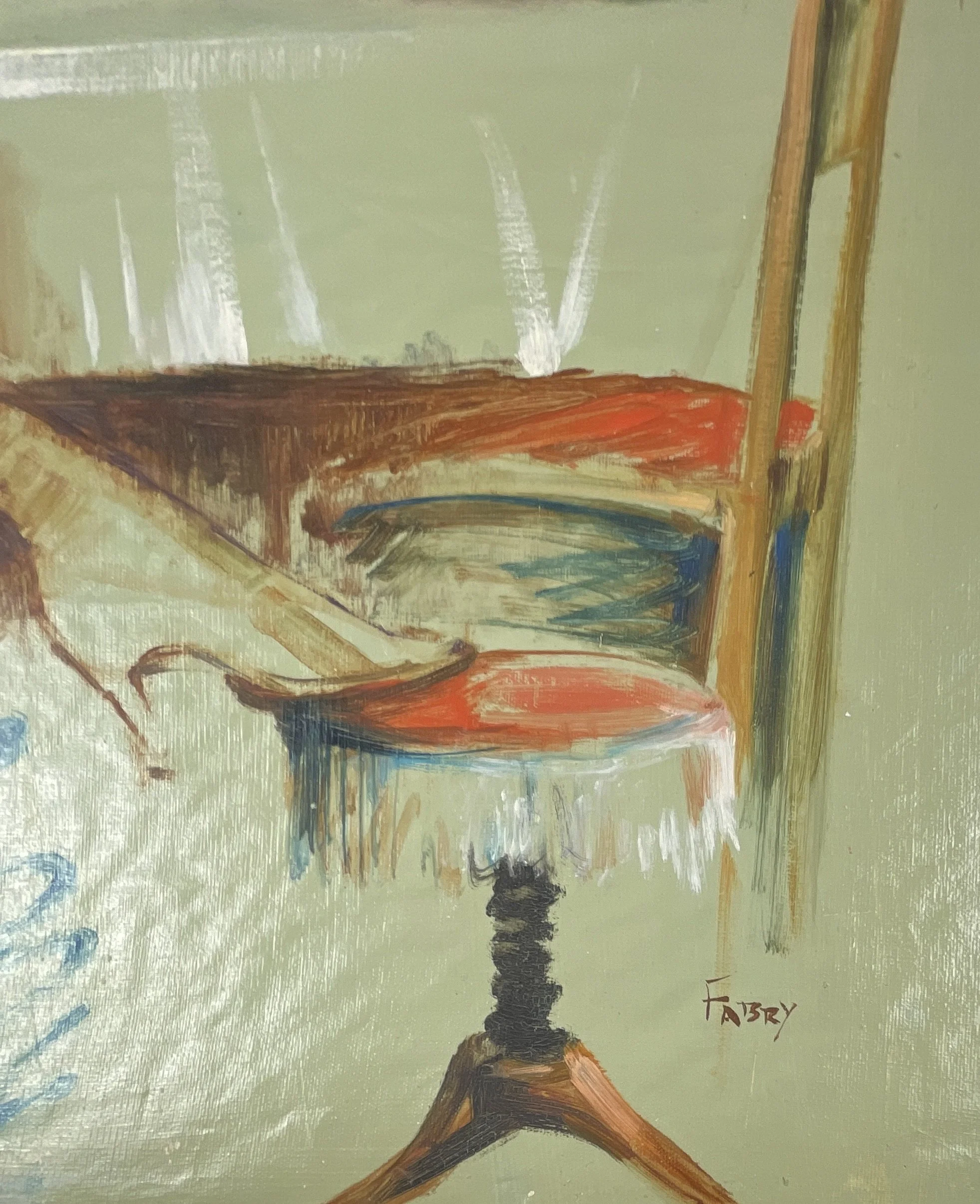 Image 3 of 5
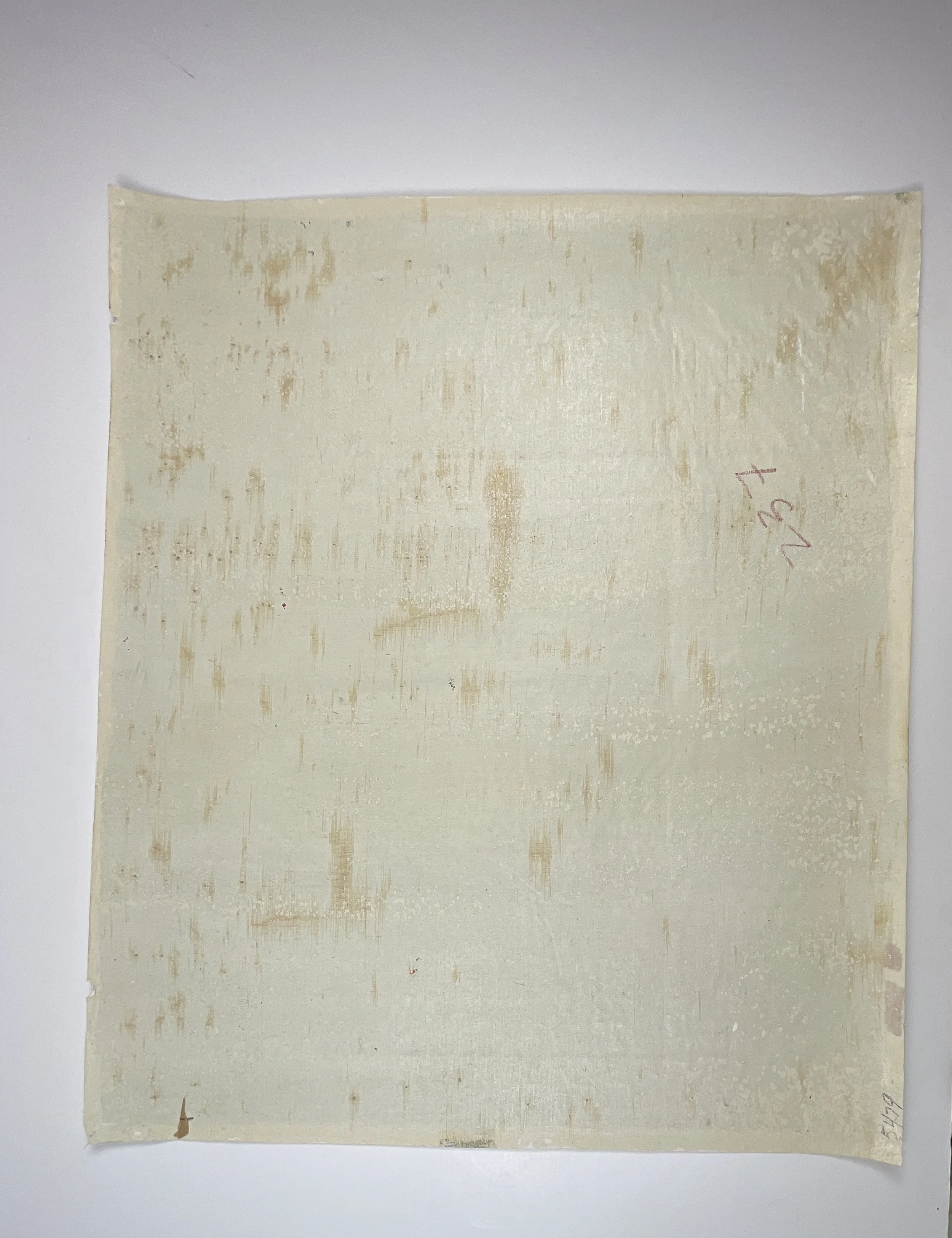 Image 4 of 5
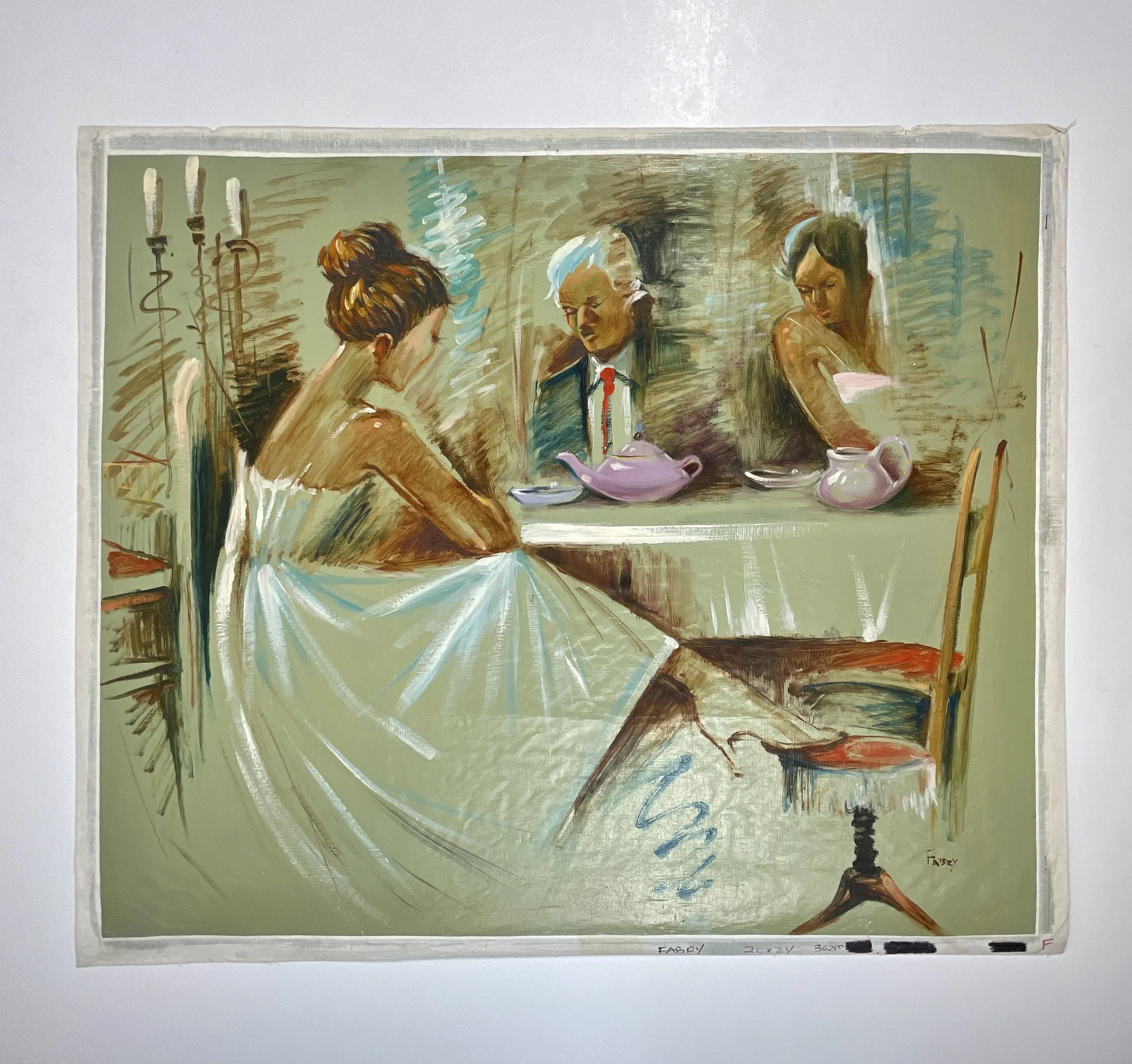 Image 5 of 5
At the Dressing Table (attributed), Fabry, c.1960s–1970s, oil on very thin canvas, 24x20 in, signed lower right
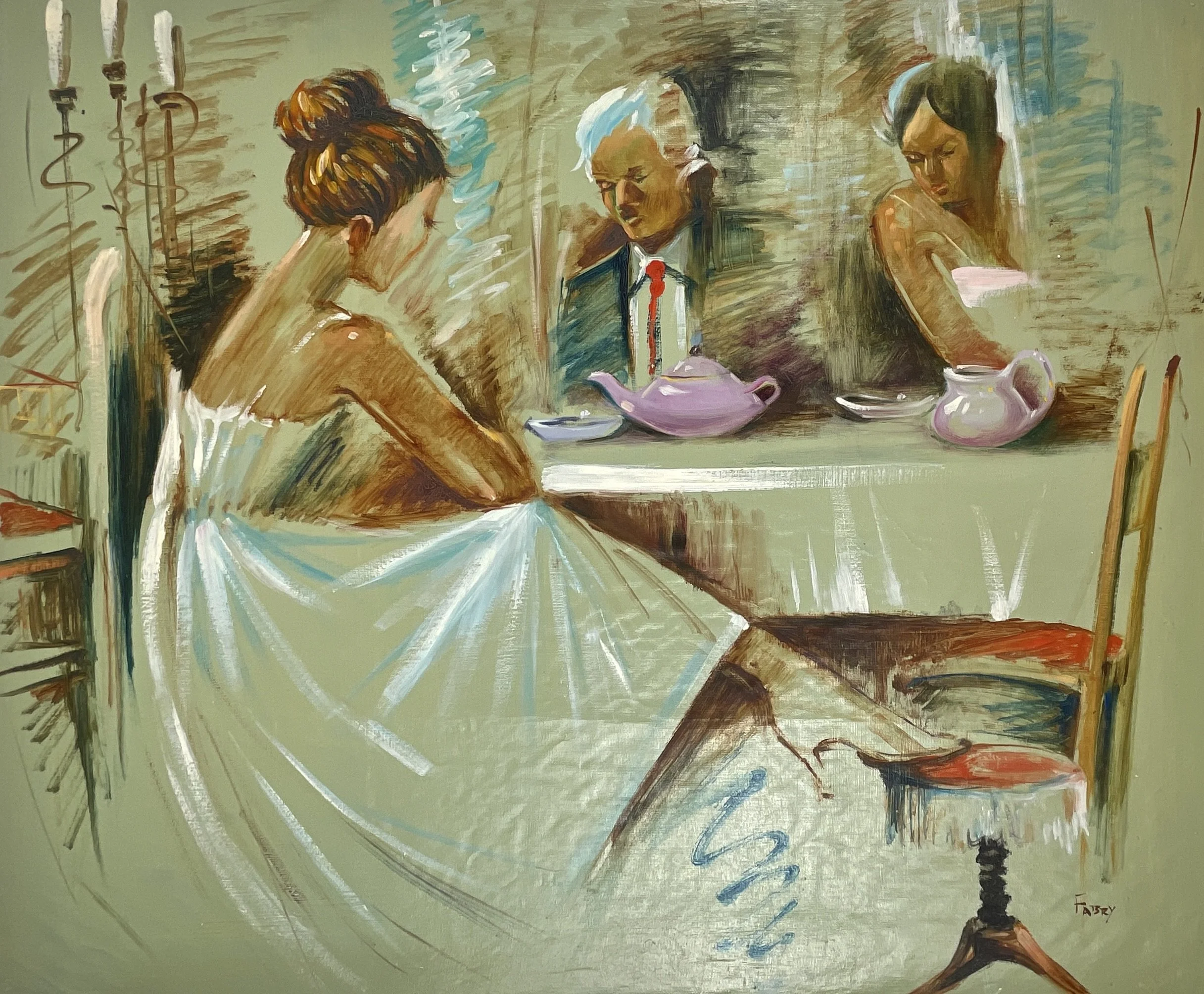
An expressive mid-century figurative interior painting by Fabry, oil on very thin canvas, measuring 24 x 20 inches and signed lower right. This psychologically charged composition depicts a ballerina seated before a mirror with a suited gentleman reflected behind her, alongside still life elements including a lavender teapot and porcelain pitcher. Acquired through Mitch Morse Gallery and now held by Artfind Gallery, Washington DC.
Artwork Description
This compelling interior scene presents a young ballerina seated at a dressing table, her back partially turned as she contemplates her reflection. The composition is structured around a mirror that fractures the narrative space: the dancer occupies the foreground, while a suited older gentleman appears in reflection, and a second female figure emerges on the right, creating an atmosphere of layered observation and psychological tension.
The palette is subdued yet luminous, dominated by celadon green, warm umber, and pale turquoise. The dancer’s white costume is rendered with sweeping, gestural brushstrokes that convey movement and light, contrasting against the earthy tonal background. The red tie of the male figure introduces a striking accent, subtly directing the eye and intensifying the emotional narrative.
Still life elements—a lavender teapot, saucer, and pitcher—anchor the composition, reinforcing themes of domesticity and ritual. The brushwork is confident and expressive, with visible strokes and scumbled passages suggesting mid-century European modernist influence. The canvas is notably thin, almost fabric-like, and retains raw, unlined characteristics consistent with studio works of the period.
Signed “Fabry” lower right. The verso reveals age-related toning and surface wear consistent with thin canvas support. The work likely dates to the 1960s or early 1970s based on stylistic and material qualities.
The painting explores introspection, performance, and dual identity—the private self and the reflected persona—rendered through painterly immediacy rather than strict realism.
Artist Biography
Fabry remains a somewhat elusive figure in the secondary market, represented primarily through works distributed via mid-20th century American galleries and European sources. Based on the materials, stylistic approach, and provenance through Mitch Morse Gallery, Fabry appears to have been active during the mid-century modern period, working in expressive figurative interiors and psychologically charged narrative compositions.
The work suggests academic training in figure drawing, particularly in the handling of anatomy and spatial composition. The gestural brushwork and tonal layering align with post-war European modernist traditions that balanced representation with expressive abstraction.
Through the Mitch Morse Gallery network—known for sourcing original works in New York City, across the United States, and throughout Europe—Fabry’s paintings entered American collections during the later 20th century. Mitch Morse, A.S.I.D., design affiliate and fine art dealer, frequently acquired works reflecting strong craftsmanship and narrative depth, characteristics evident here.
While Fabry does not appear widely documented in major museum holdings, the body of work circulating through private galleries suggests a consistent focus on intimate interiors, theatrical subjects, and emotionally layered figuration. The repeated motif of mirrors, seated women, and quiet domestic settings indicates an artist concerned with duality—public presence versus private contemplation.
The thin canvas support seen here is consistent with European studio practice in the mid-20th century, often favored for its economy and immediacy. The painterly handling suggests an artist comfortable balancing sketch-like spontaneity with carefully composed narrative structure.
As of 2026, Fabry’s works remain attractive to collectors seeking mid-century European figurative painting outside mainstream names. The combination of expressive brushwork, narrative tension, and authentic period materials positions these works within the broader conversation of post-war interior figuration.
Fabry
At the Dressing Table (attributed)
Oil on very thin canvas
24 x 20 inches
Signed lower right
Certificate of Authentication
This certifies that At the Dressing Table is an original oil painting on very thin canvas by Fabry.
Medium: Oil on very thin canvas
Dimensions: 24 x 20 inches
Signature: Signed lower right “Fabry”
Provenance: Mitch Morse Gallery; Artfind Gallery, Washington DC
Guaranteed authentic.
Condition
Good vintage condition with visible age-related toning and surface wear consistent with thin, unlined canvas. Minor edge fraying and discoloration on verso. Paint layer stable with no major losses observed.
Provenance
Mitch Morse Gallery (acquired in NYC, United States and Europe)
Private Collection
Artfind Gallery, Washington DC (Current Owner)
At the Dressing Table (attributed), Fabry, c.1960s–1970s, oil on very thin canvas, 24x20 in, signed lower right
An expressive mid-century figurative interior painting by Fabry, oil on very thin canvas, measuring 24 x 20 inches and signed lower right. This psychologically charged composition depicts a ballerina seated before a mirror with a suited gentleman reflected behind her, alongside still life elements including a lavender teapot and porcelain pitcher. Acquired through Mitch Morse Gallery and now held by Artfind Gallery, Washington DC.
Artwork Description
This compelling interior scene presents a young ballerina seated at a dressing table, her back partially turned as she contemplates her reflection. The composition is structured around a mirror that fractures the narrative space: the dancer occupies the foreground, while a suited older gentleman appears in reflection, and a second female figure emerges on the right, creating an atmosphere of layered observation and psychological tension.
The palette is subdued yet luminous, dominated by celadon green, warm umber, and pale turquoise. The dancer’s white costume is rendered with sweeping, gestural brushstrokes that convey movement and light, contrasting against the earthy tonal background. The red tie of the male figure introduces a striking accent, subtly directing the eye and intensifying the emotional narrative.
Still life elements—a lavender teapot, saucer, and pitcher—anchor the composition, reinforcing themes of domesticity and ritual. The brushwork is confident and expressive, with visible strokes and scumbled passages suggesting mid-century European modernist influence. The canvas is notably thin, almost fabric-like, and retains raw, unlined characteristics consistent with studio works of the period.
Signed “Fabry” lower right. The verso reveals age-related toning and surface wear consistent with thin canvas support. The work likely dates to the 1960s or early 1970s based on stylistic and material qualities.
The painting explores introspection, performance, and dual identity—the private self and the reflected persona—rendered through painterly immediacy rather than strict realism.
Artist Biography
Fabry remains a somewhat elusive figure in the secondary market, represented primarily through works distributed via mid-20th century American galleries and European sources. Based on the materials, stylistic approach, and provenance through Mitch Morse Gallery, Fabry appears to have been active during the mid-century modern period, working in expressive figurative interiors and psychologically charged narrative compositions.
The work suggests academic training in figure drawing, particularly in the handling of anatomy and spatial composition. The gestural brushwork and tonal layering align with post-war European modernist traditions that balanced representation with expressive abstraction.
Through the Mitch Morse Gallery network—known for sourcing original works in New York City, across the United States, and throughout Europe—Fabry’s paintings entered American collections during the later 20th century. Mitch Morse, A.S.I.D., design affiliate and fine art dealer, frequently acquired works reflecting strong craftsmanship and narrative depth, characteristics evident here.
While Fabry does not appear widely documented in major museum holdings, the body of work circulating through private galleries suggests a consistent focus on intimate interiors, theatrical subjects, and emotionally layered figuration. The repeated motif of mirrors, seated women, and quiet domestic settings indicates an artist concerned with duality—public presence versus private contemplation.
The thin canvas support seen here is consistent with European studio practice in the mid-20th century, often favored for its economy and immediacy. The painterly handling suggests an artist comfortable balancing sketch-like spontaneity with carefully composed narrative structure.
As of 2026, Fabry’s works remain attractive to collectors seeking mid-century European figurative painting outside mainstream names. The combination of expressive brushwork, narrative tension, and authentic period materials positions these works within the broader conversation of post-war interior figuration.
Fabry
At the Dressing Table (attributed)
Oil on very thin canvas
24 x 20 inches
Signed lower right
Certificate of Authentication
This certifies that At the Dressing Table is an original oil painting on very thin canvas by Fabry.
Medium: Oil on very thin canvas
Dimensions: 24 x 20 inches
Signature: Signed lower right “Fabry”
Provenance: Mitch Morse Gallery; Artfind Gallery, Washington DC
Guaranteed authentic.
Condition
Good vintage condition with visible age-related toning and surface wear consistent with thin, unlined canvas. Minor edge fraying and discoloration on verso. Paint layer stable with no major losses observed.
Provenance
Mitch Morse Gallery (acquired in NYC, United States and Europe)
Private Collection
Artfind Gallery, Washington DC (Current Owner)