 Image 1 of 5
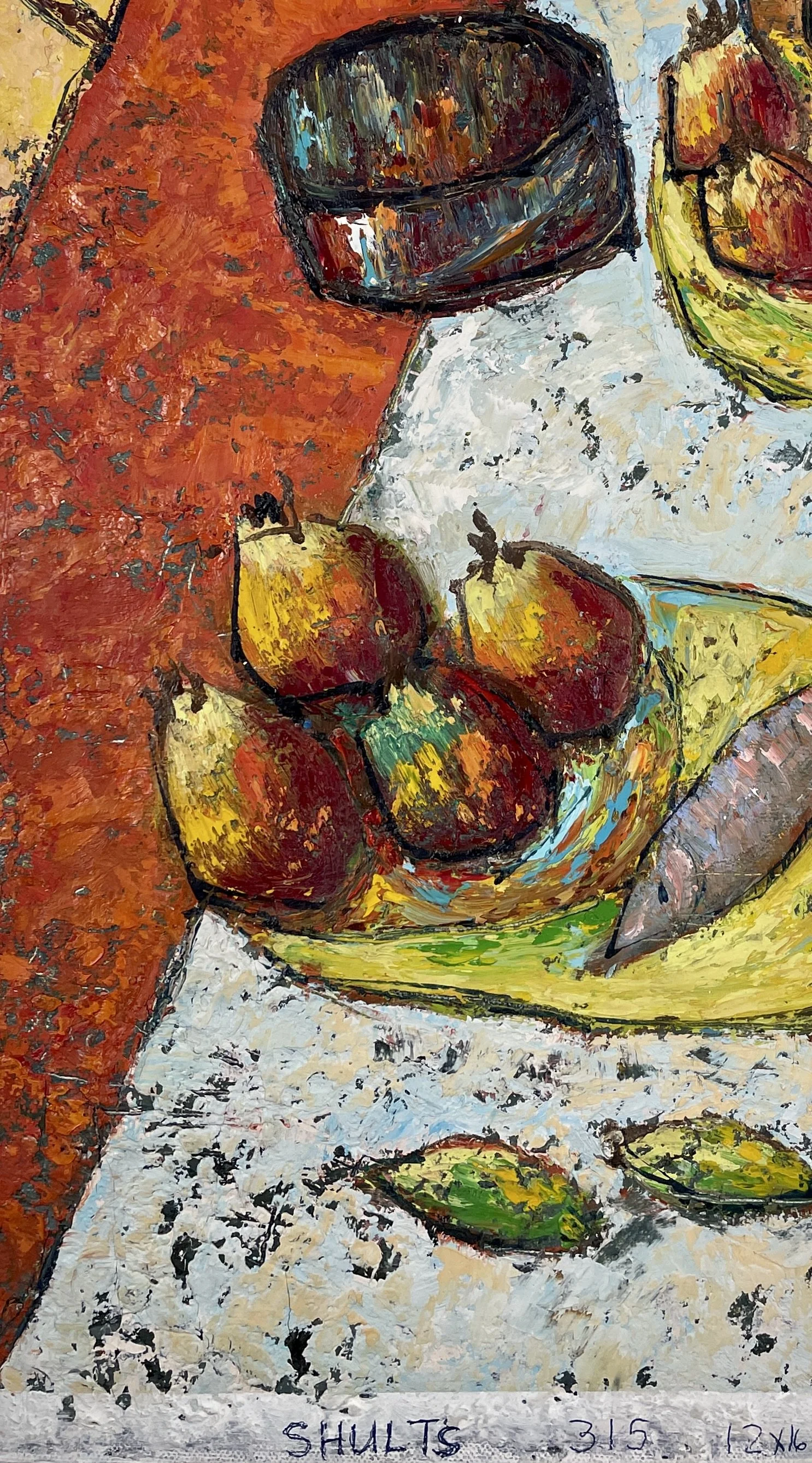 Image 2 of 5
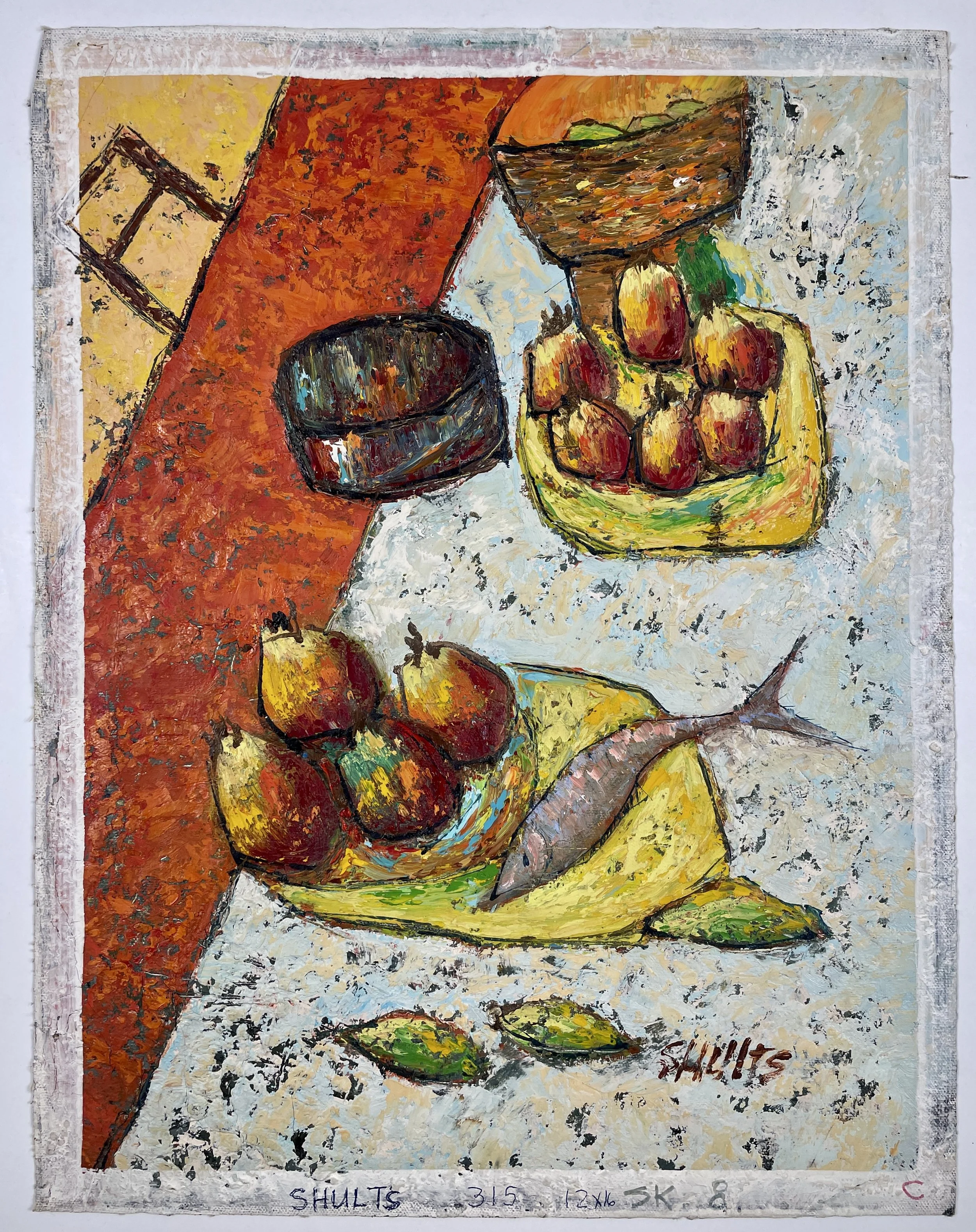 Image 3 of 5
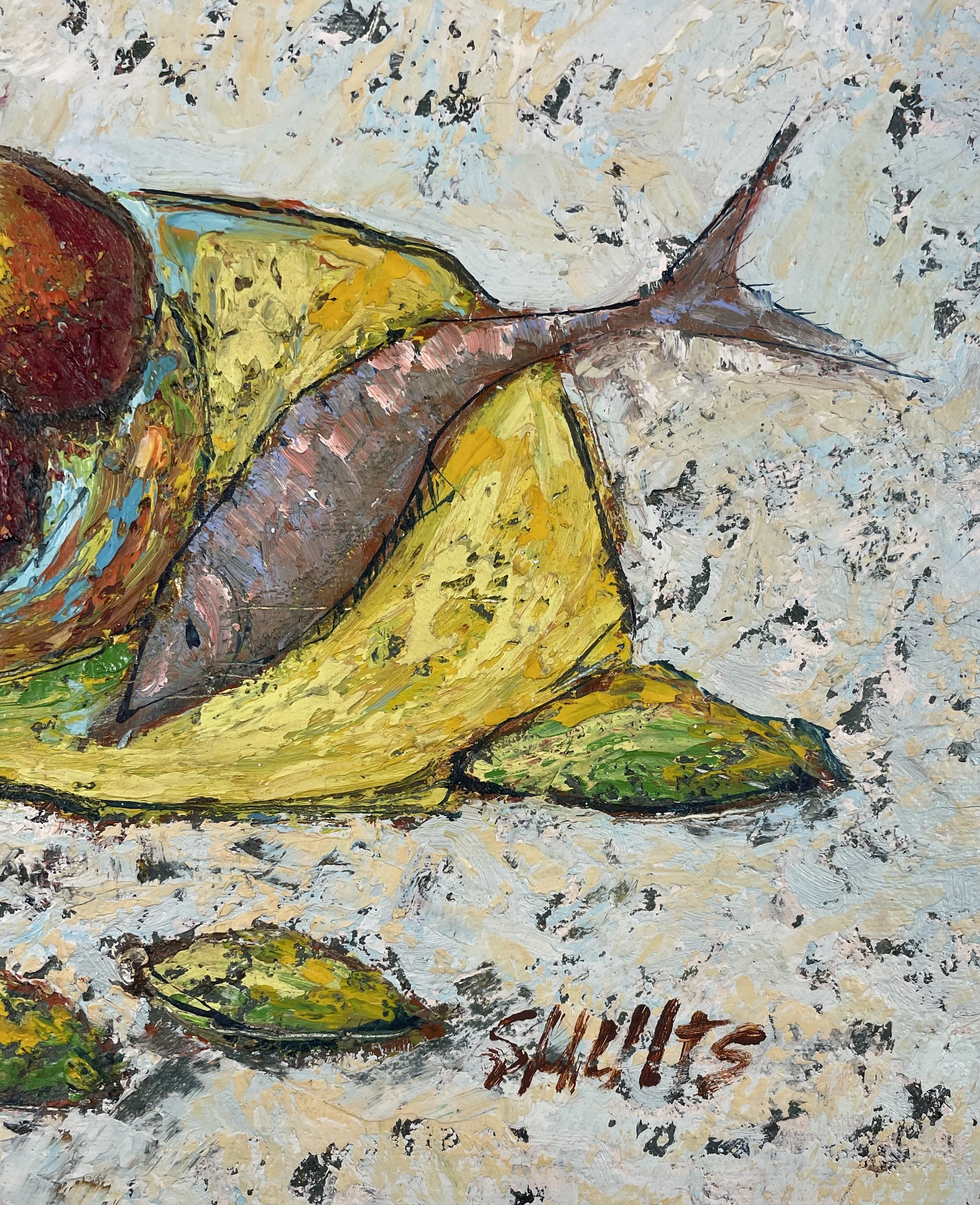 Image 4 of 5
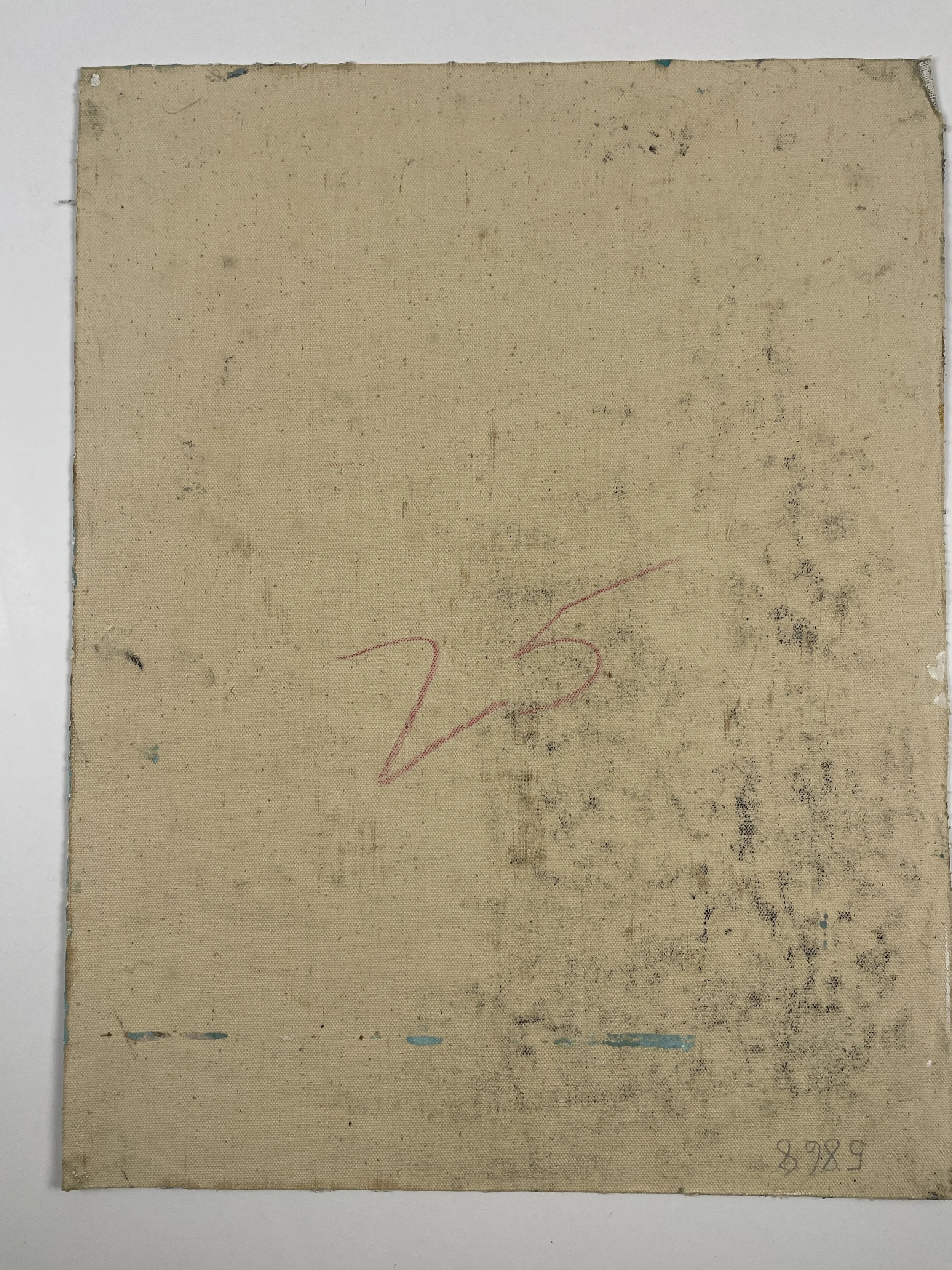 Image 5 of 5
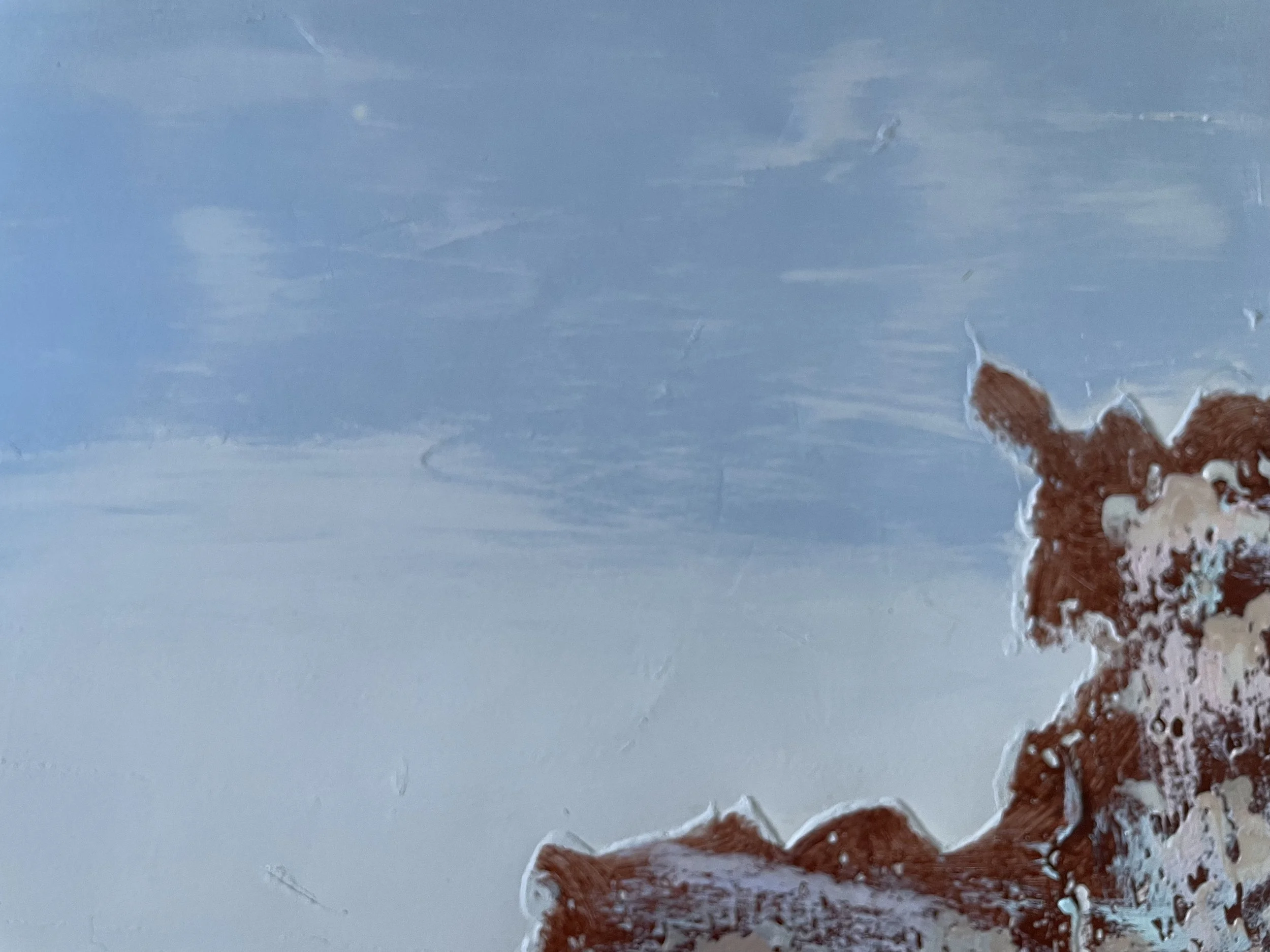
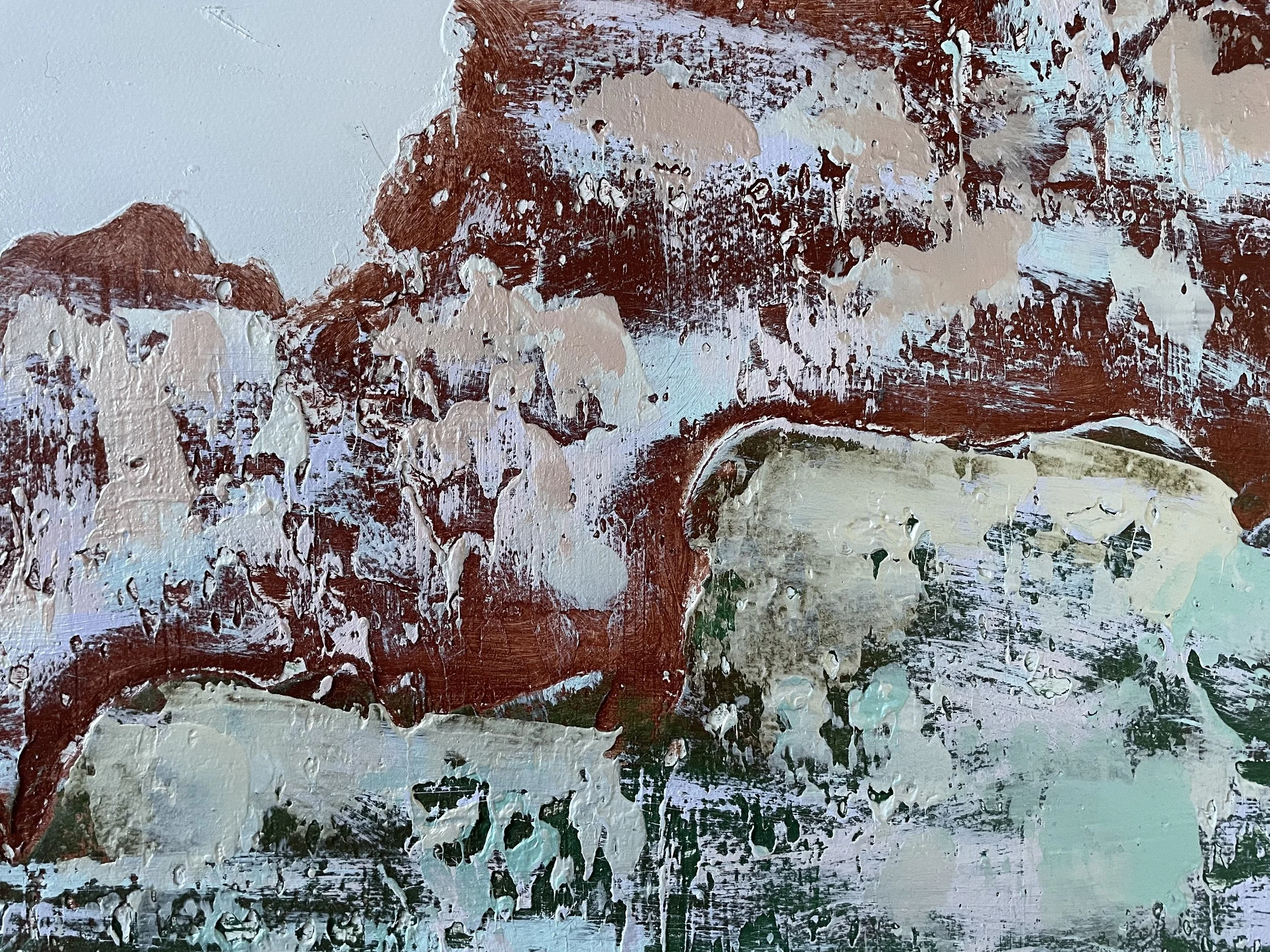
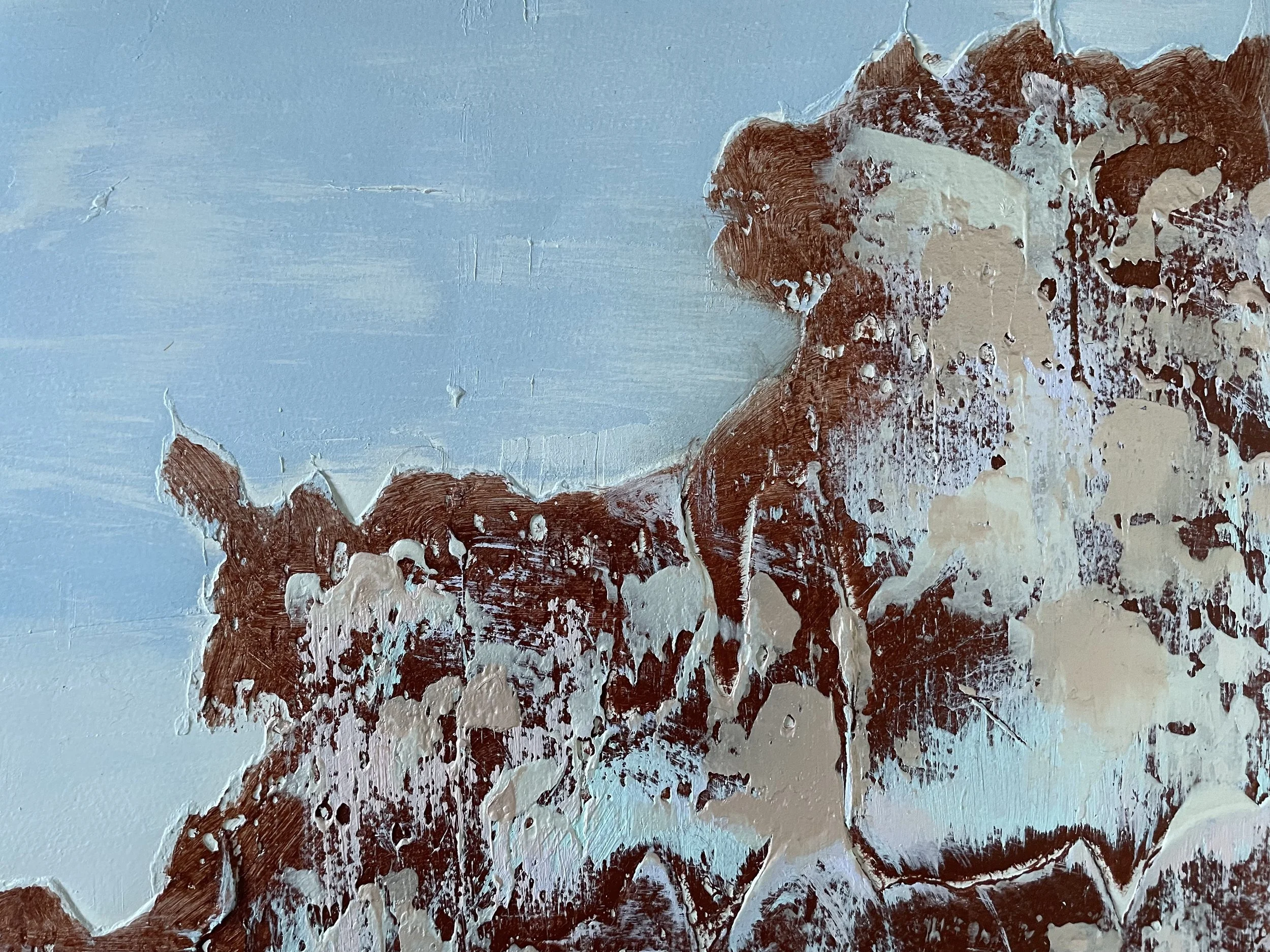
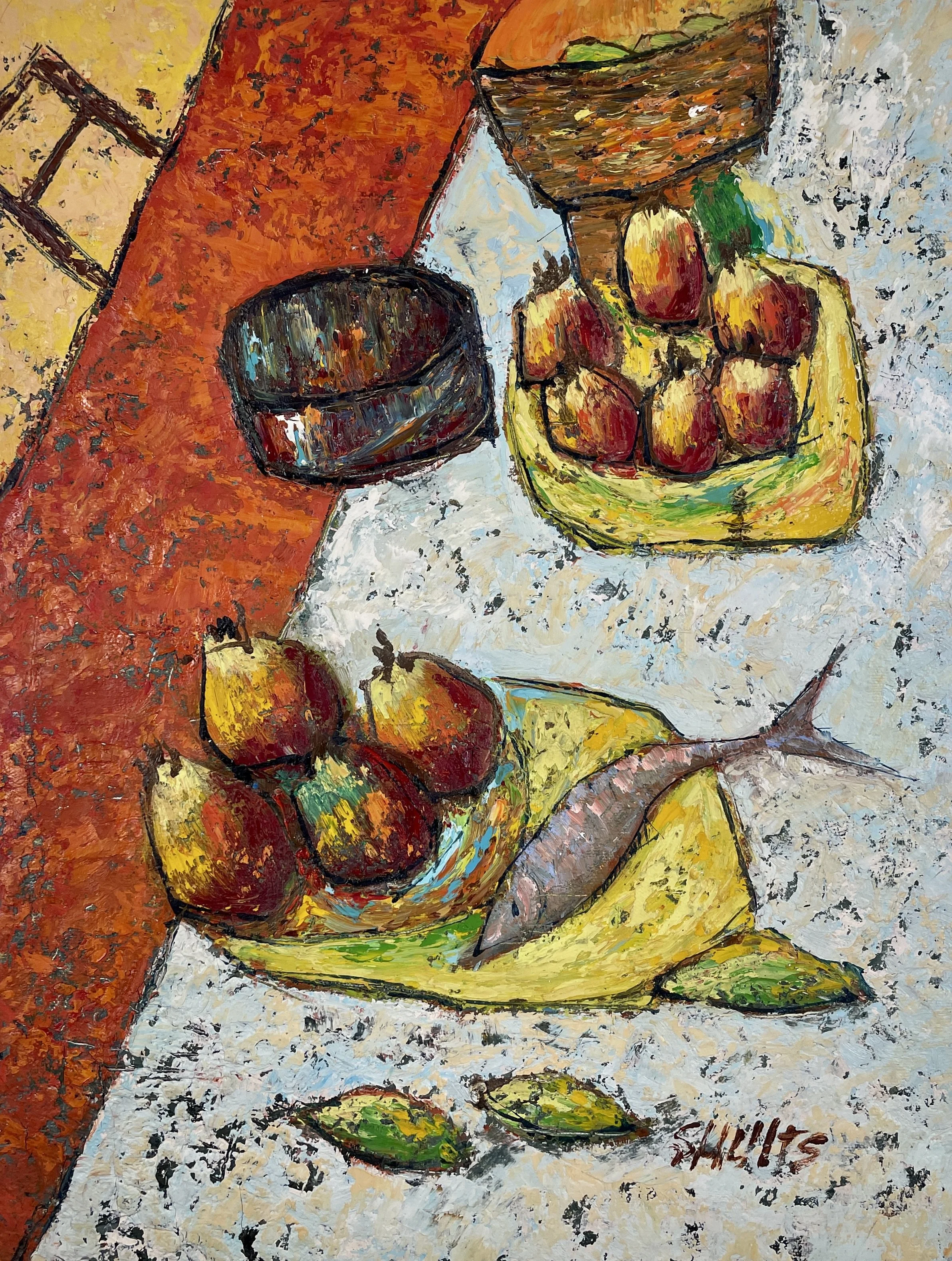
Market Still Life with Fish and Fruit (attributed title), Shults (artist not fully identified), c.1960–1975, thick impasto oil on canvas, 12 x 16 inches, signed lower right.
A richly textured mid-century modern still life rendered in heavy impasto oil on canvas, depicting a vibrant arrangement of fruit and fish on a table with expressive palette-knife surfaces and bold color contrasts. Signed “Shults,” this composition reflects the expressive decorative painting tradition of the mid-twentieth century, combining elements of market still life, modernist color theory, and tactile painterly technique.
Artwork Description
Market Still Life with Fish and Fruit is an expressive still life composition painted with dramatic impasto and bold color contrasts, a hallmark of mid-twentieth-century decorative modernism. The artist arranges an assortment of fruit and a freshly caught fish across a table surface, transforming a traditional still life subject into a lively and dynamic composition through color and texture.
The lower half of the painting presents a grouping of pears resting in a shallow bowl, their forms built with thick layers of yellow, crimson, and burnt orange pigment. The fruit appears almost sculptural due to the heavy application of paint, which has been applied with a palette knife or stiff brush. The thick impasto catches the light, producing subtle variations in color and shadow across the fruit surfaces.
Beside the bowl lies a silver fish placed diagonally across a draped yellow cloth. The fish introduces a striking visual counterpoint to the warm tones of the fruit. Cool grey and violet tones create the reflective sheen of the fish’s body, while delicate touches of pink and blue accentuate its natural iridescence.
In the upper portion of the composition, a second grouping of fruit sits beneath a wooden vessel or basket. The forms are simplified and slightly abstracted, allowing color relationships rather than strict realism to drive the composition. This approach reflects the influence of modernist still life painting, in which the arrangement of shapes and color fields becomes as important as the subject itself.
The background is divided diagonally between a deep orange plane and a cool textured field of pale blue and white. This bold division of space adds visual tension and anchors the composition structurally. The orange plane amplifies the warmth of the fruit while the cooler background highlights the sculptural impasto.
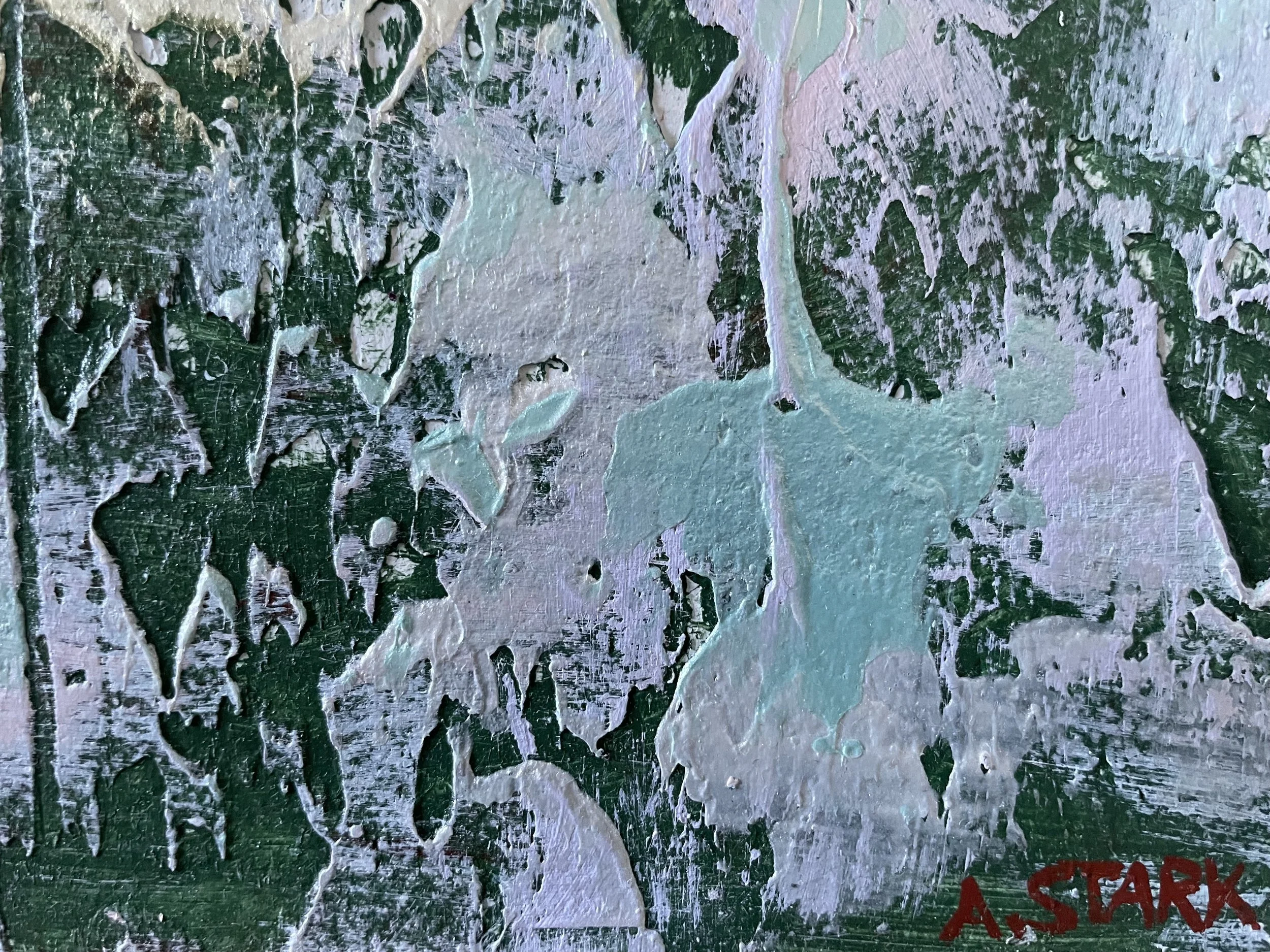
The entire surface of the painting is alive with tactile texture. Paint is applied thickly and confidently, with visible strokes and palette-knife ridges creating a surface that is both painterly and sculptural. This technique aligns with the impasto traditions used by many modernist painters who sought to emphasize the material presence of paint itself.
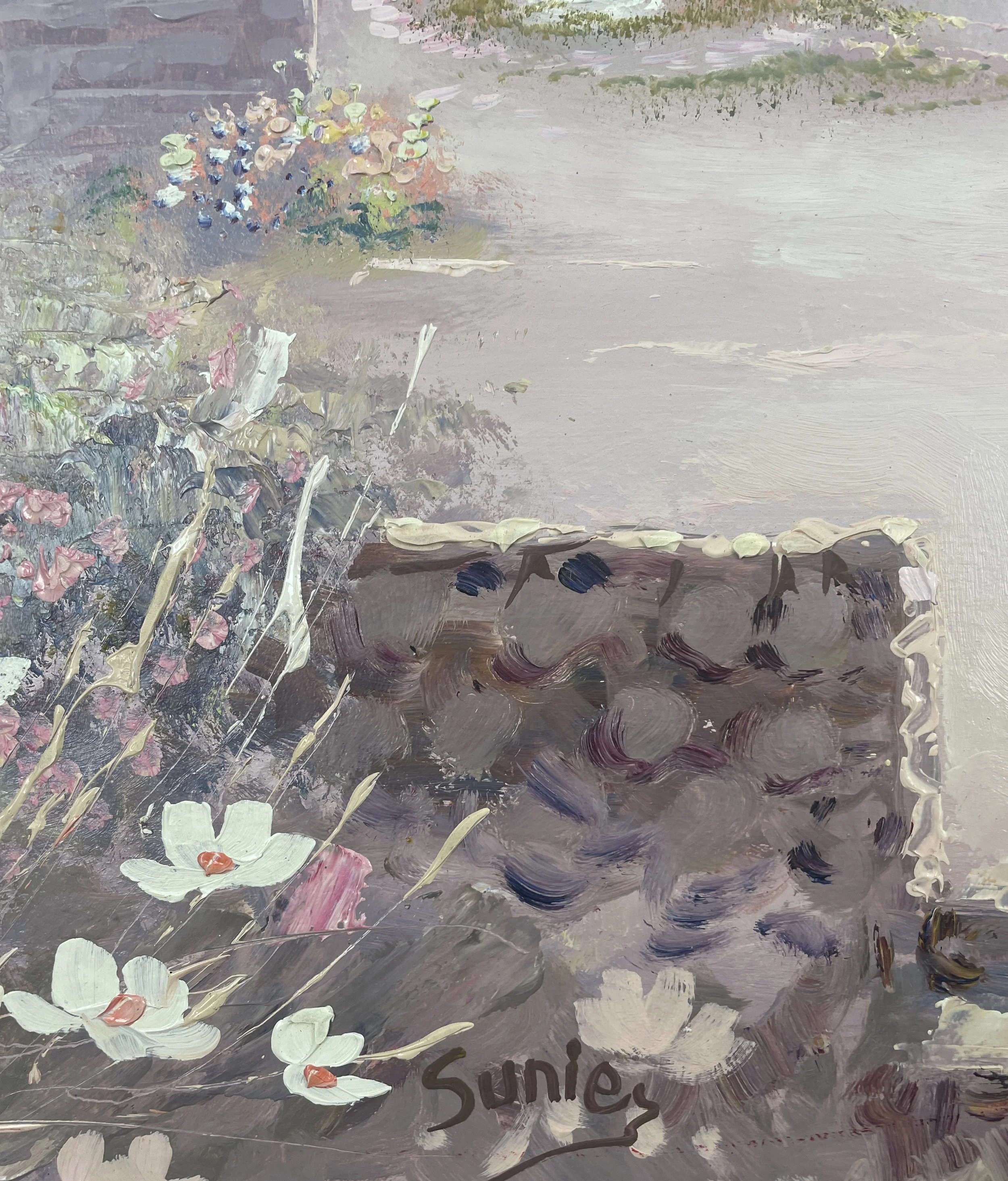
The work is signed “Shults” in the lower right corner. On the reverse margin of the canvas, studio notations appear including “SHULTS 315 12x16,” suggesting a catalog or inventory number used during studio handling or gallery distribution.
While the artist’s identity has not yet been definitively confirmed, the work reflects the broader mid-century studio tradition of expressive still life painting, where everyday subjects such as fruit, fish, and vessels were transformed through bold color, abstraction, and textured paint application.
Artist Biography
Shults (artist not fully identified) appears to have been an active painter during the mid-twentieth century, producing expressive still life compositions characterized by heavy impasto surfaces, bold color harmonies, and simplified forms.
Although documentation about the artist remains limited, the surviving work attributed to Shults demonstrates familiarity with the painterly traditions that developed across Europe and the United States during the mid-1900s. During this period, many studio painters embraced expressive brushwork and thickly layered paint inspired by earlier movements such as Post-Impressionism and Fauvism.
Artists including Vincent van Gogh, Chaïm Soutine, and later modernist painters emphasized the expressive qualities of paint itself, encouraging a generation of mid-century artists to experiment with texture and surface. The impasto technique seen in this painting reflects that lineage. Rather than blending pigments into smooth transitions, paint is applied thickly, allowing strokes and palette-knife marks to remain visible.
Still life subjects such as fruit, vessels, and fish have long served as a foundation of artistic training and experimentation. In twentieth-century studios these traditional themes were often reinterpreted with modernist color and composition. The still life became less about precise realism and more about exploring structure, balance, and painterly energy.
The compositional structure of this work—dividing the background into strong geometric color fields—suggests the influence of modern design aesthetics that were widely adopted in mid-century painting. These visual strategies allowed artists to maintain recognizable subject matter while introducing abstraction and expressive color.
The inscription on the reverse of the canvas, including the notation “315,” may indicate an inventory or studio reference number used when the work passed through gallery distribution. Such markings were common in mid-century commercial galleries that handled decorative modernist paintings for collectors and interior designers.
Today paintings of this type are appreciated for their strong decorative presence, expressive surfaces, and connection to the broader modernist still life tradition that flourished throughout the twentieth century.
Shults (artist not fully identified)
Market Still Life with Fish and Fruit
Oil on canvas, heavy impasto
12 x 16 inches
Signed lower right
Mid-century modern expressive still life with fruit and fish rendered in bold impasto.
Certificate of Authentication
Certificate of Authenticity
Artist: Shults (artist not fully identified)
Title: Market Still Life with Fish and Fruit
Medium: Oil on Canvas
Dimensions: 12 x 16 inches
Signature: Signed “Shults” lower right
This document certifies that the artwork described above is an original oil painting attributed to the artist known as Shults.
Condition
Good vintage condition consistent with age. Heavy impasto surface remains stable with no major losses observed. Minor edge wear and light canvas handling marks visible along margins. Surface retains strong color and texture.
Provenance
Mitch Morse Gallery, New York
Acquired by Mitch Morse Gallery through sources in New York, the United States, and Europe
Private Collection
Artfind Gallery, Washington DC (current owner)
Citations
Benezit Dictionary of Artists
Oxford Art Online – Still Life Painting
The Metropolitan Museum of Art – Techniques of Impasto Painting
Smithsonian Archives of American Art – Studio Painting Practices
International Foundation for Art Research – Artist Attribution Standards
Market Still Life with Fish and Fruit (attributed title), Shults (artist not fully identified), c.1960–1975, thick impasto oil on canvas, 12 x 16 inches, signed lower right.
A richly textured mid-century modern still life rendered in heavy impasto oil on canvas, depicting a vibrant arrangement of fruit and fish on a table with expressive palette-knife surfaces and bold color contrasts. Signed “Shults,” this composition reflects the expressive decorative painting tradition of the mid-twentieth century, combining elements of market still life, modernist color theory, and tactile painterly technique.
Artwork Description
Market Still Life with Fish and Fruit is an expressive still life composition painted with dramatic impasto and bold color contrasts, a hallmark of mid-twentieth-century decorative modernism. The artist arranges an assortment of fruit and a freshly caught fish across a table surface, transforming a traditional still life subject into a lively and dynamic composition through color and texture.
The lower half of the painting presents a grouping of pears resting in a shallow bowl, their forms built with thick layers of yellow, crimson, and burnt orange pigment. The fruit appears almost sculptural due to the heavy application of paint, which has been applied with a palette knife or stiff brush. The thick impasto catches the light, producing subtle variations in color and shadow across the fruit surfaces.
Beside the bowl lies a silver fish placed diagonally across a draped yellow cloth. The fish introduces a striking visual counterpoint to the warm tones of the fruit. Cool grey and violet tones create the reflective sheen of the fish’s body, while delicate touches of pink and blue accentuate its natural iridescence.
In the upper portion of the composition, a second grouping of fruit sits beneath a wooden vessel or basket. The forms are simplified and slightly abstracted, allowing color relationships rather than strict realism to drive the composition. This approach reflects the influence of modernist still life painting, in which the arrangement of shapes and color fields becomes as important as the subject itself.
The background is divided diagonally between a deep orange plane and a cool textured field of pale blue and white. This bold division of space adds visual tension and anchors the composition structurally. The orange plane amplifies the warmth of the fruit while the cooler background highlights the sculptural impasto.
The entire surface of the painting is alive with tactile texture. Paint is applied thickly and confidently, with visible strokes and palette-knife ridges creating a surface that is both painterly and sculptural. This technique aligns with the impasto traditions used by many modernist painters who sought to emphasize the material presence of paint itself.
The work is signed “Shults” in the lower right corner. On the reverse margin of the canvas, studio notations appear including “SHULTS 315 12x16,” suggesting a catalog or inventory number used during studio handling or gallery distribution.
While the artist’s identity has not yet been definitively confirmed, the work reflects the broader mid-century studio tradition of expressive still life painting, where everyday subjects such as fruit, fish, and vessels were transformed through bold color, abstraction, and textured paint application.
Artist Biography
Shults (artist not fully identified) appears to have been an active painter during the mid-twentieth century, producing expressive still life compositions characterized by heavy impasto surfaces, bold color harmonies, and simplified forms.
Although documentation about the artist remains limited, the surviving work attributed to Shults demonstrates familiarity with the painterly traditions that developed across Europe and the United States during the mid-1900s. During this period, many studio painters embraced expressive brushwork and thickly layered paint inspired by earlier movements such as Post-Impressionism and Fauvism.
Artists including Vincent van Gogh, Chaïm Soutine, and later modernist painters emphasized the expressive qualities of paint itself, encouraging a generation of mid-century artists to experiment with texture and surface. The impasto technique seen in this painting reflects that lineage. Rather than blending pigments into smooth transitions, paint is applied thickly, allowing strokes and palette-knife marks to remain visible.
Still life subjects such as fruit, vessels, and fish have long served as a foundation of artistic training and experimentation. In twentieth-century studios these traditional themes were often reinterpreted with modernist color and composition. The still life became less about precise realism and more about exploring structure, balance, and painterly energy.
The compositional structure of this work—dividing the background into strong geometric color fields—suggests the influence of modern design aesthetics that were widely adopted in mid-century painting. These visual strategies allowed artists to maintain recognizable subject matter while introducing abstraction and expressive color.
The inscription on the reverse of the canvas, including the notation “315,” may indicate an inventory or studio reference number used when the work passed through gallery distribution. Such markings were common in mid-century commercial galleries that handled decorative modernist paintings for collectors and interior designers.
Today paintings of this type are appreciated for their strong decorative presence, expressive surfaces, and connection to the broader modernist still life tradition that flourished throughout the twentieth century.
Shults (artist not fully identified)
Market Still Life with Fish and Fruit
Oil on canvas, heavy impasto
12 x 16 inches
Signed lower right
Mid-century modern expressive still life with fruit and fish rendered in bold impasto.
Certificate of Authentication
Certificate of Authenticity
Artist: Shults (artist not fully identified)
Title: Market Still Life with Fish and Fruit
Medium: Oil on Canvas
Dimensions: 12 x 16 inches
Signature: Signed “Shults” lower right
This document certifies that the artwork described above is an original oil painting attributed to the artist known as Shults.
Condition
Good vintage condition consistent with age. Heavy impasto surface remains stable with no major losses observed. Minor edge wear and light canvas handling marks visible along margins. Surface retains strong color and texture.
Provenance
Mitch Morse Gallery, New York
Acquired by Mitch Morse Gallery through sources in New York, the United States, and Europe
Private Collection
Artfind Gallery, Washington DC (current owner)
Citations
Benezit Dictionary of Artists
Oxford Art Online – Still Life Painting
The Metropolitan Museum of Art – Techniques of Impasto Painting
Smithsonian Archives of American Art – Studio Painting Practices
International Foundation for Art Research – Artist Attribution Standards