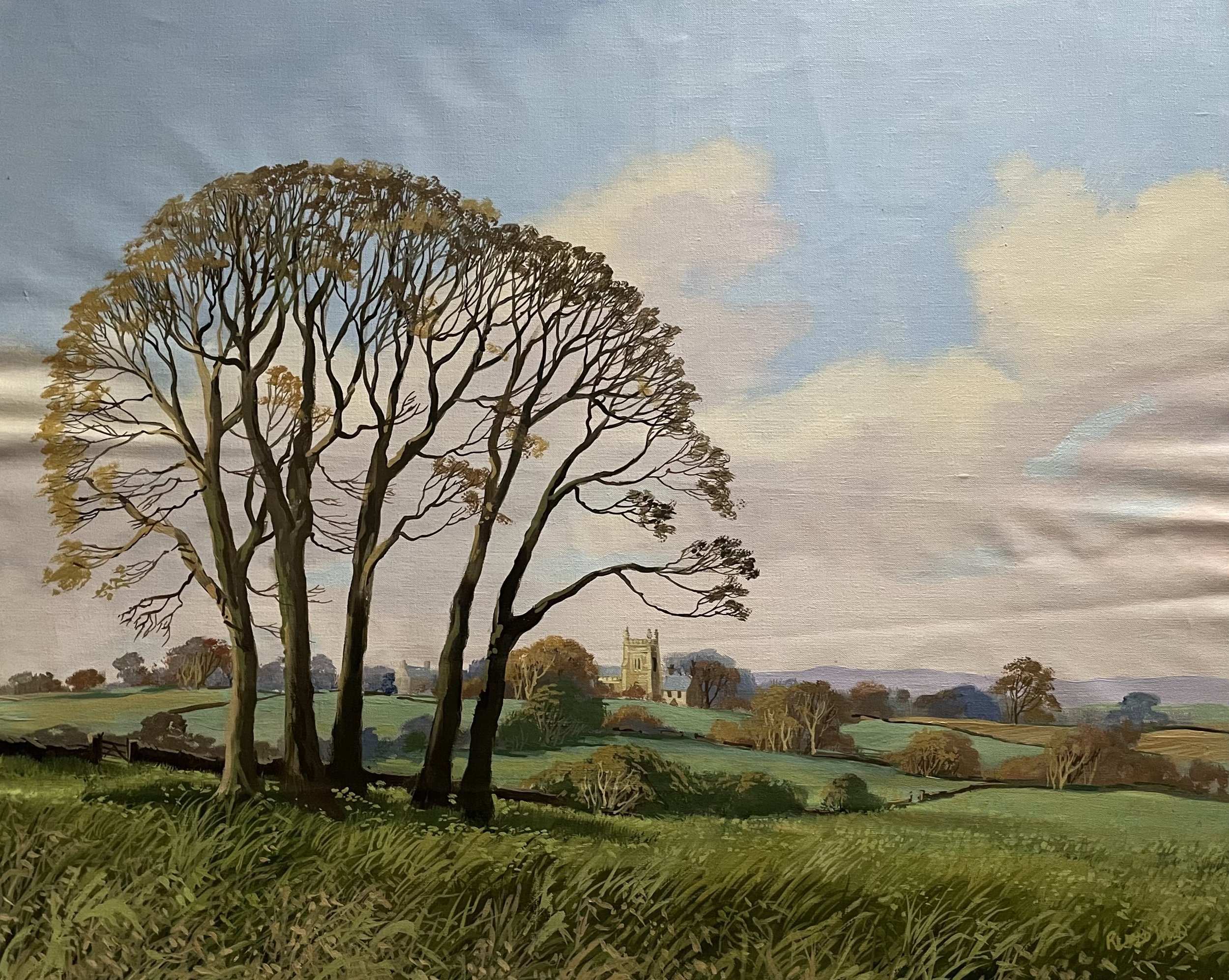
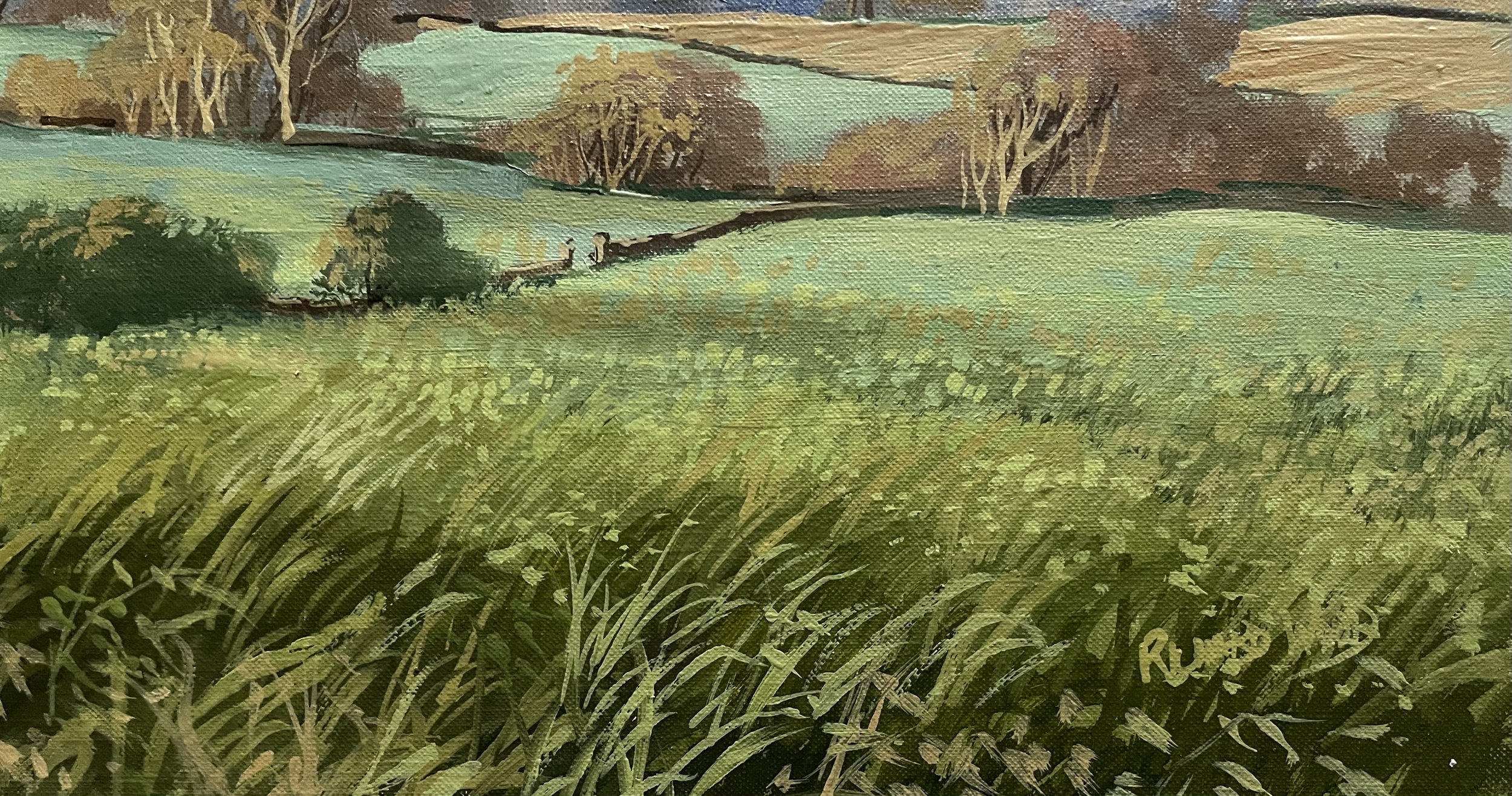
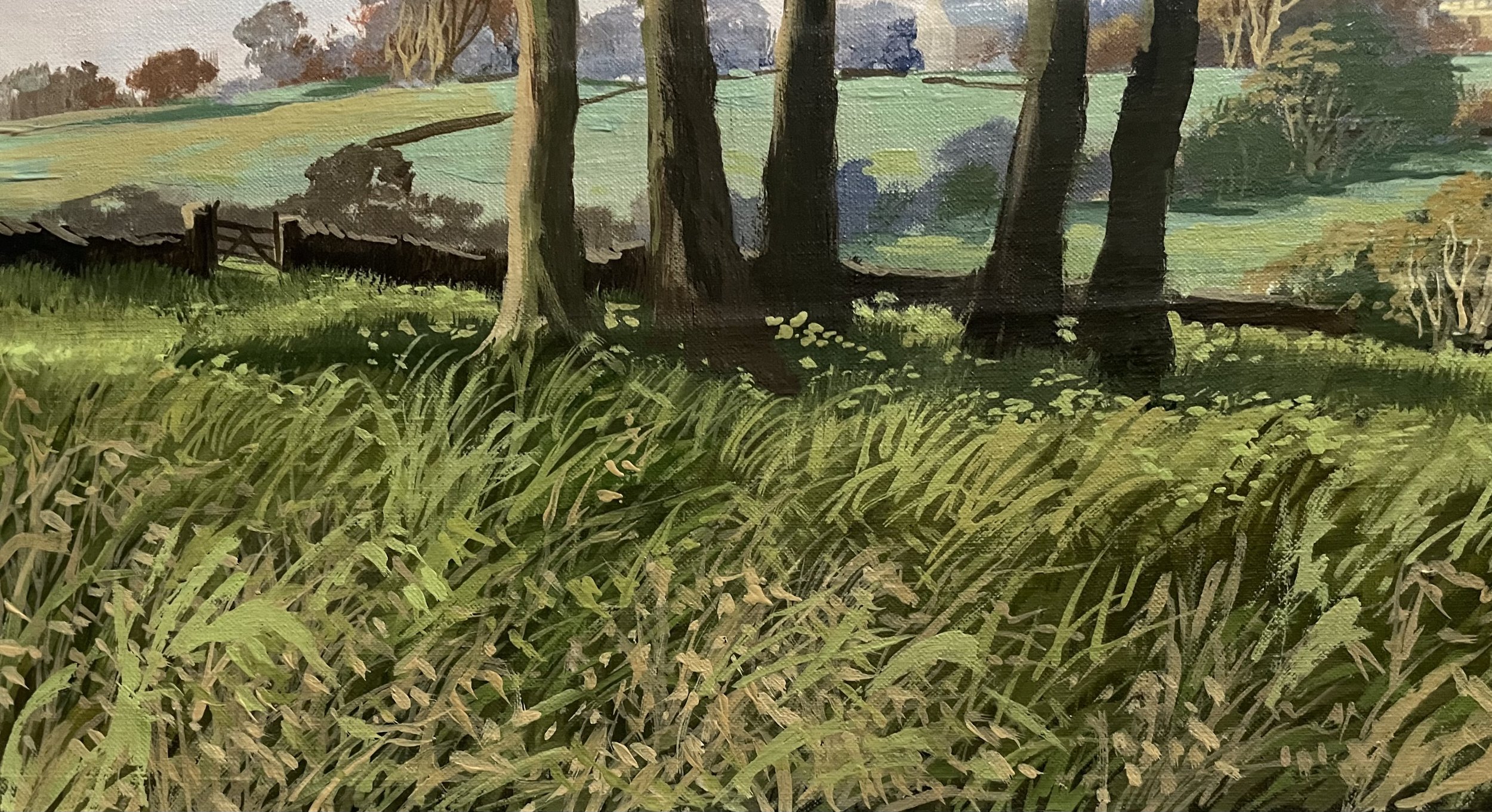
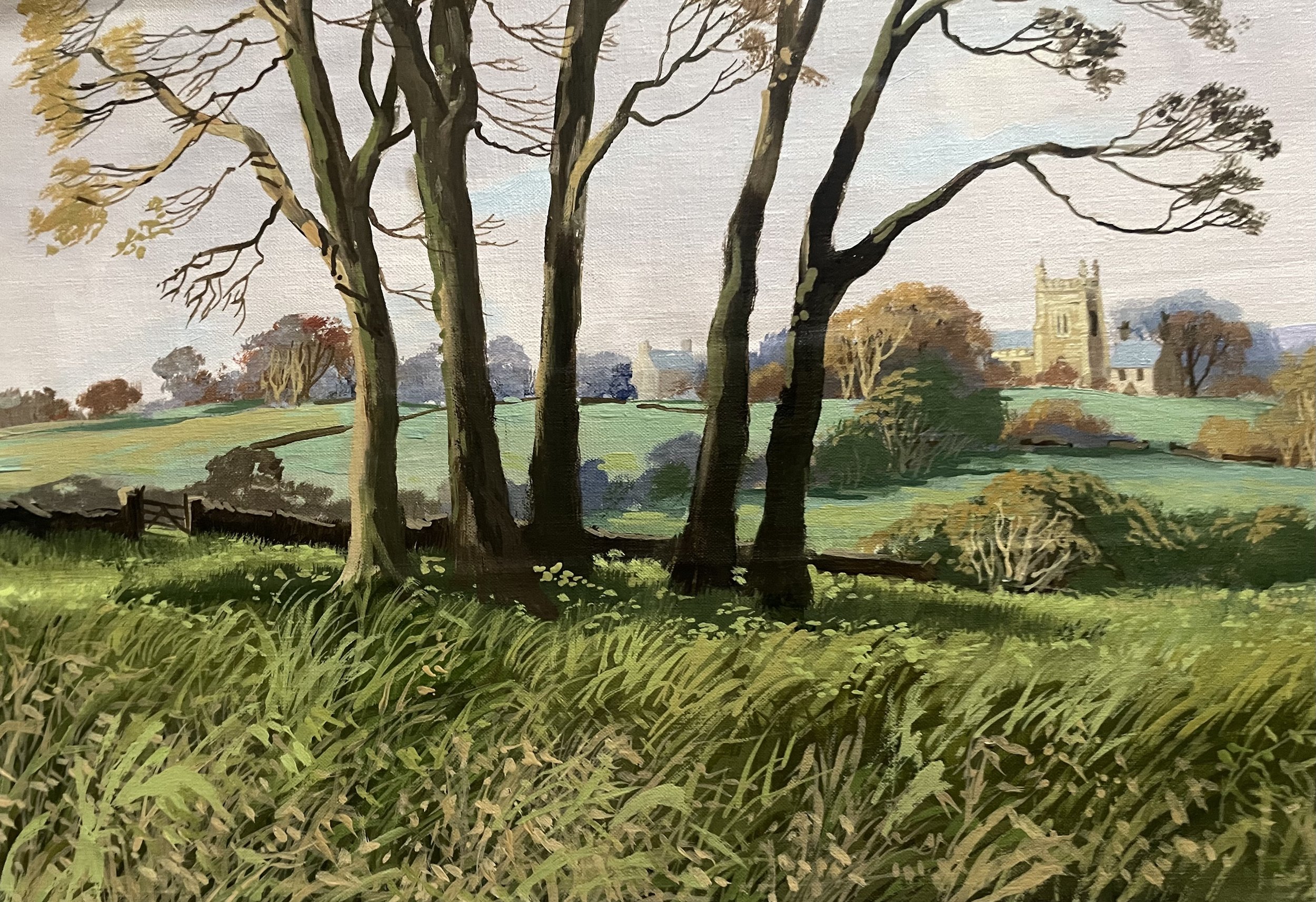
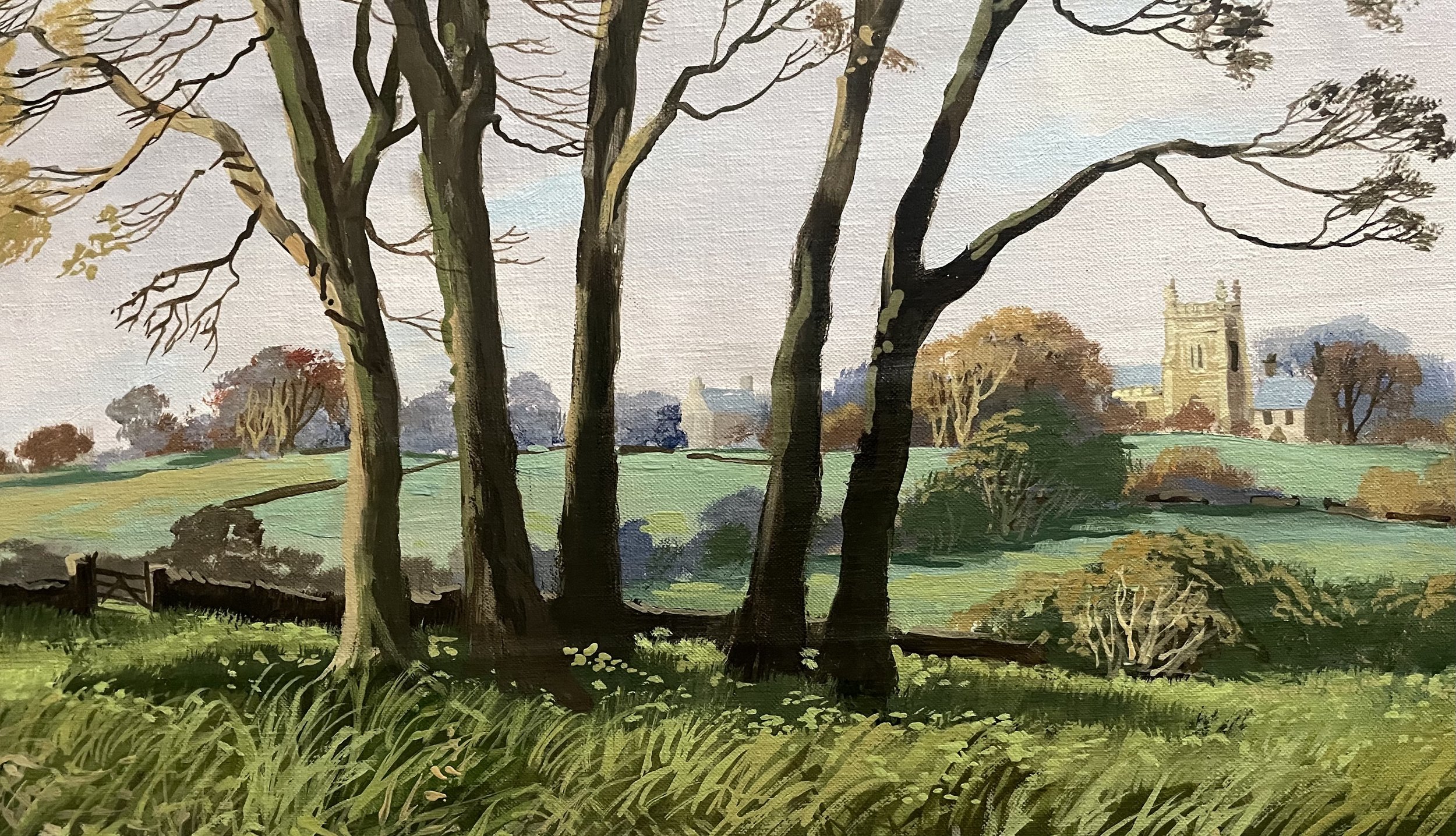
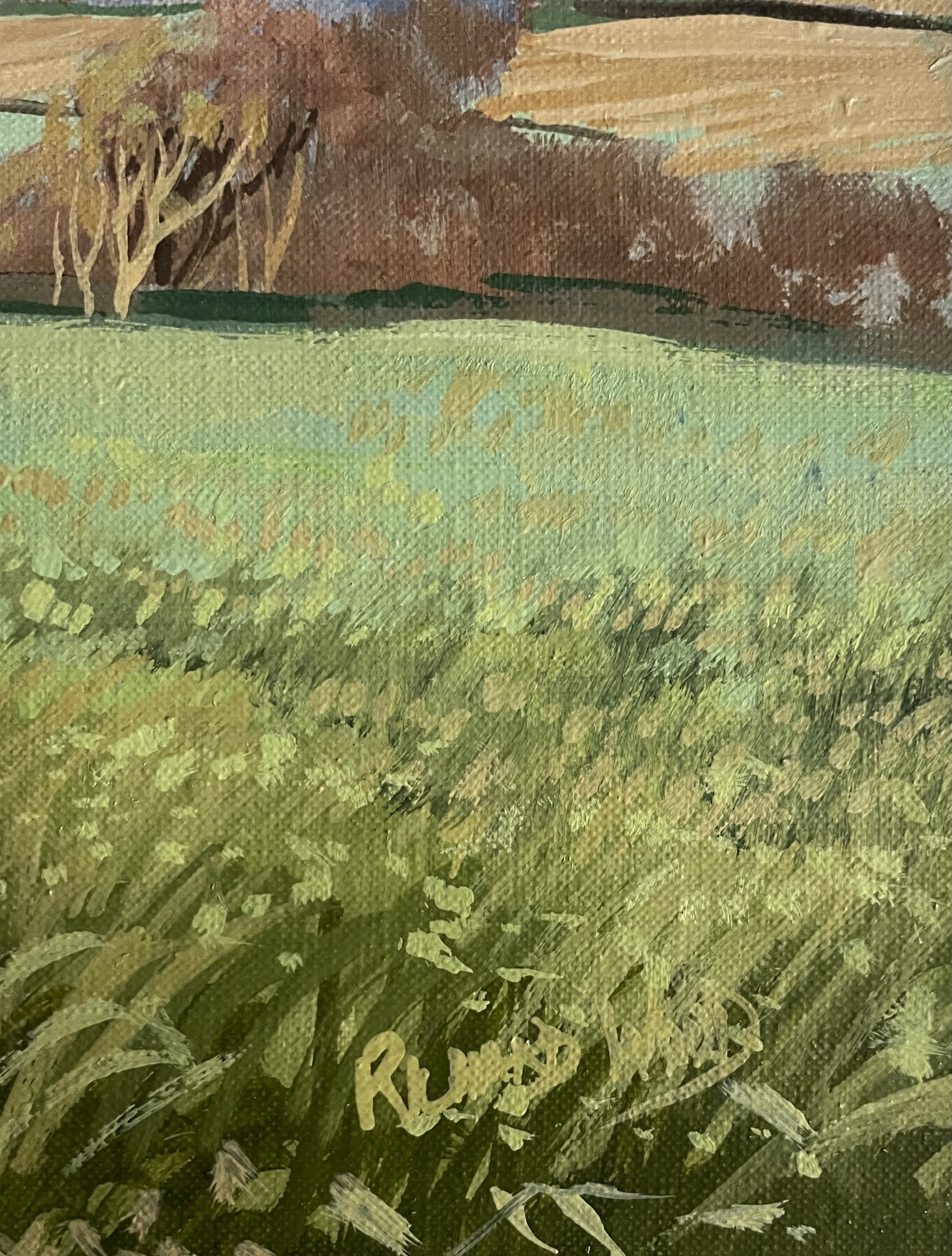
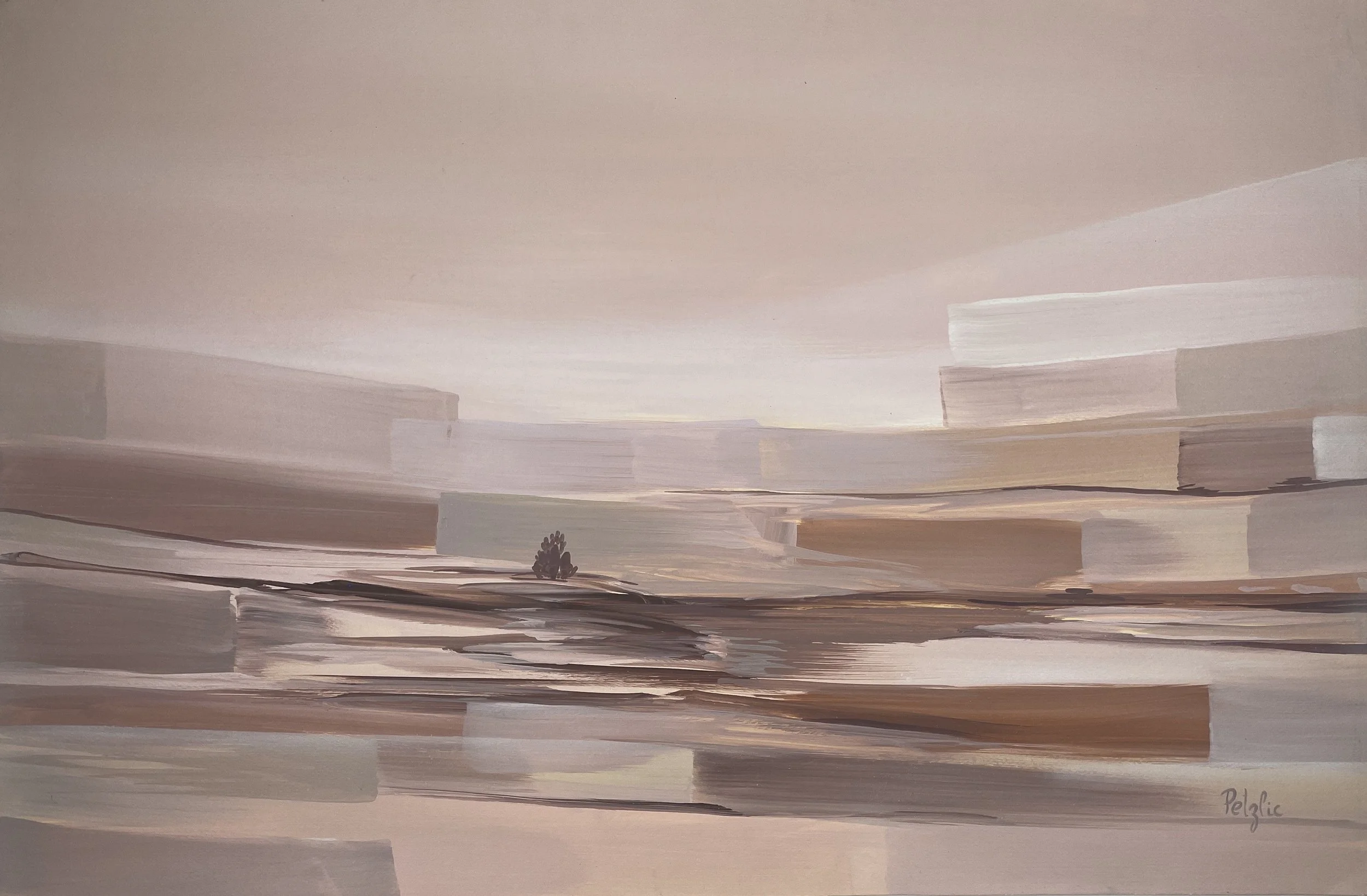
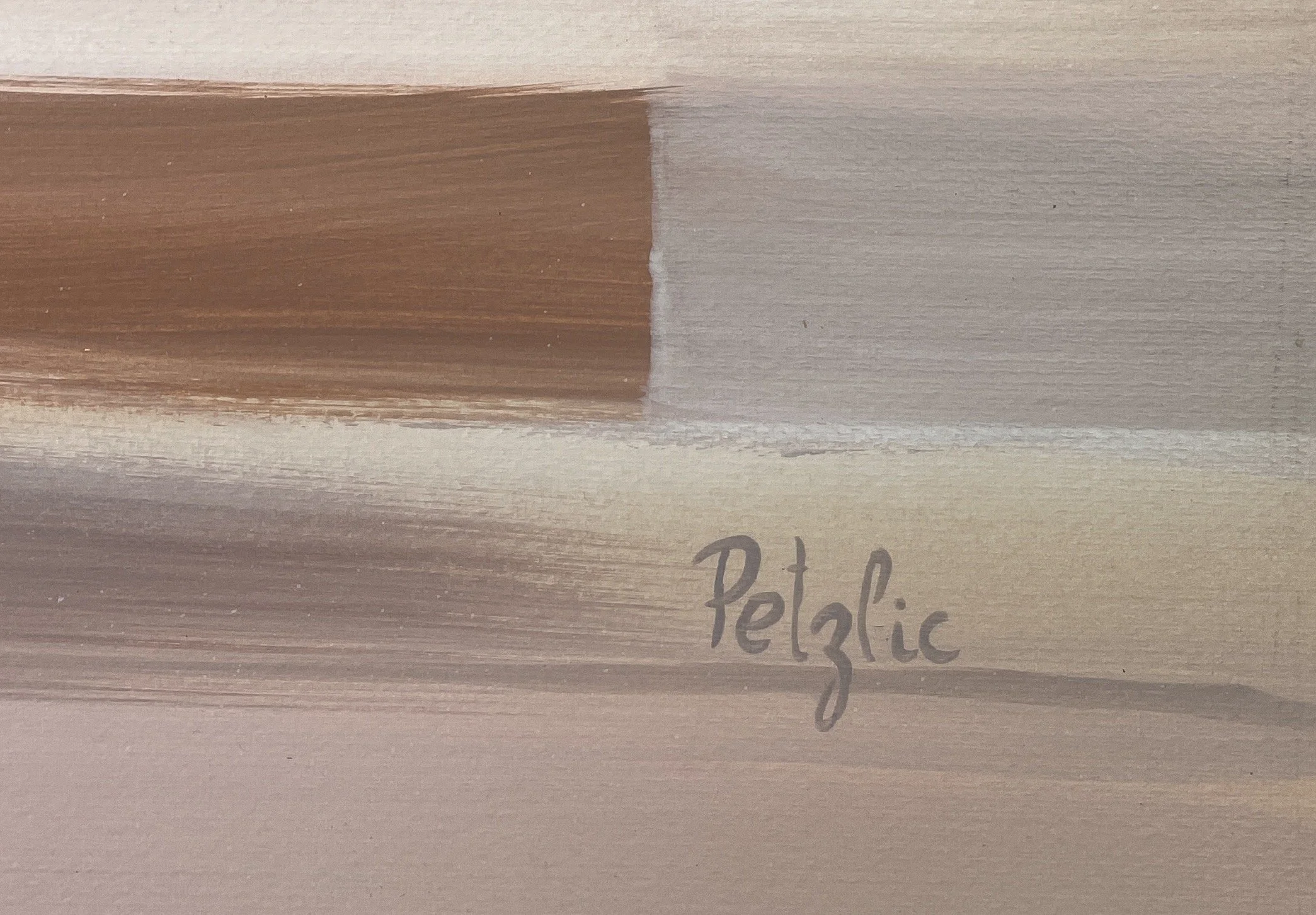
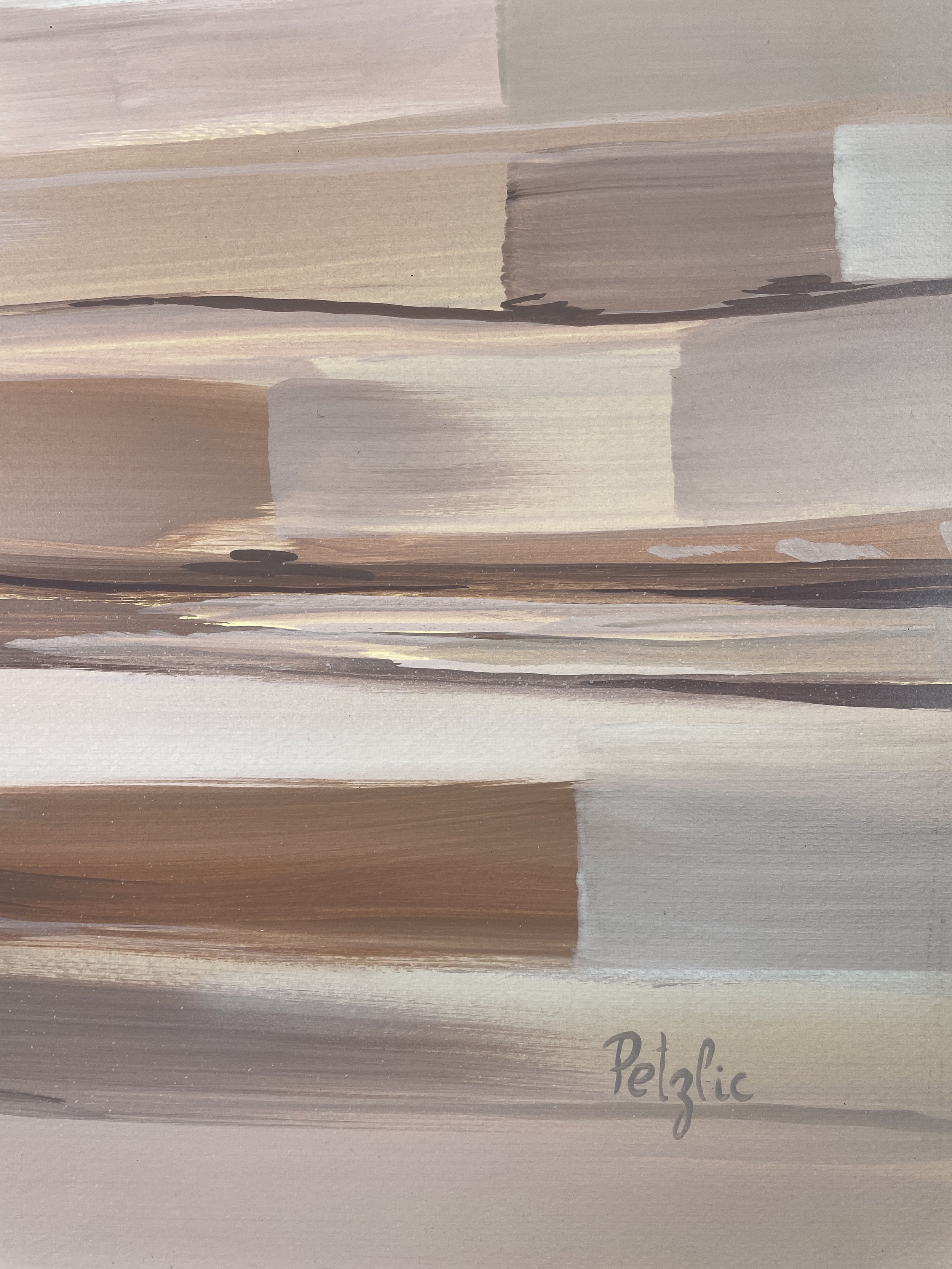
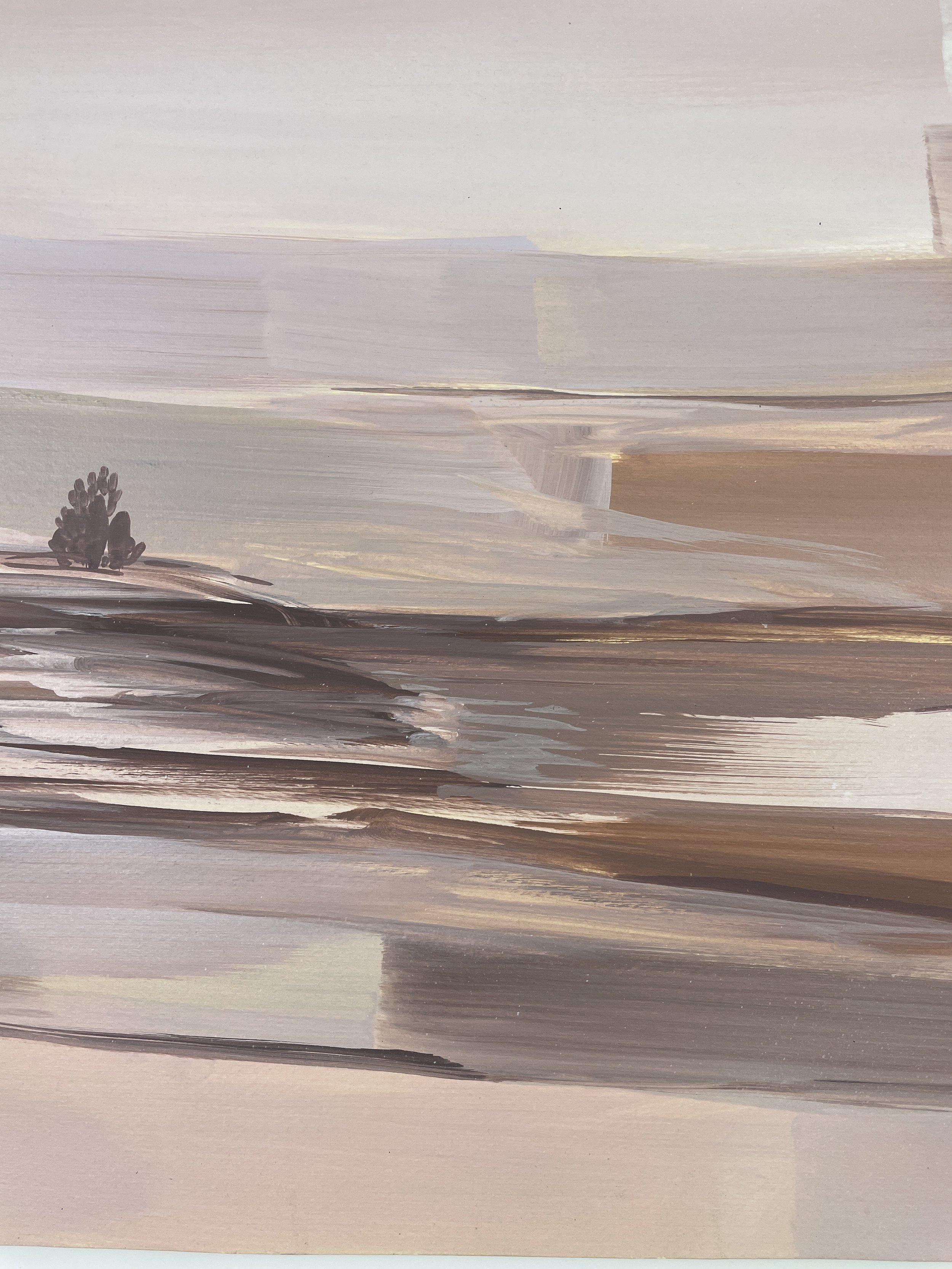
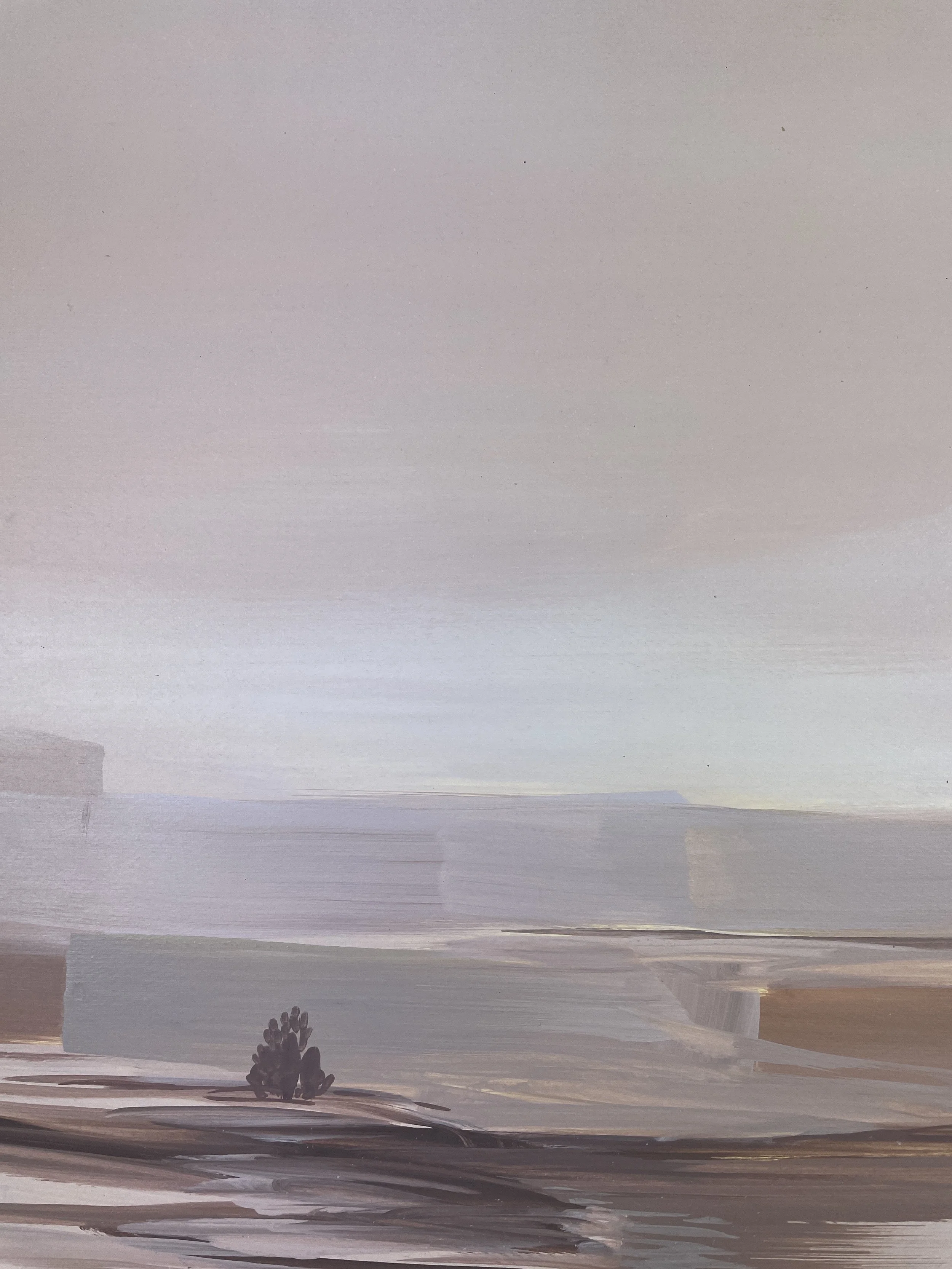
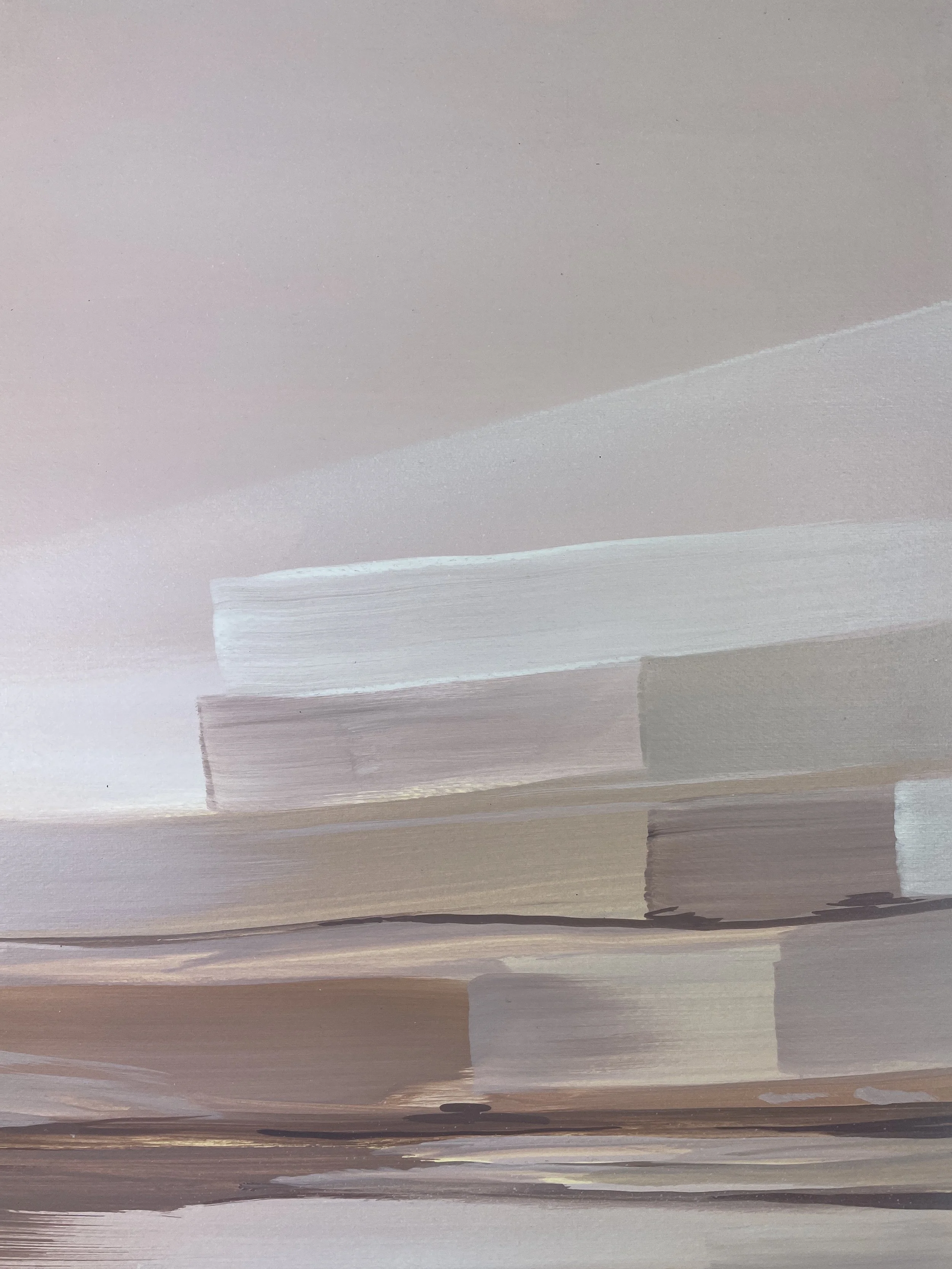
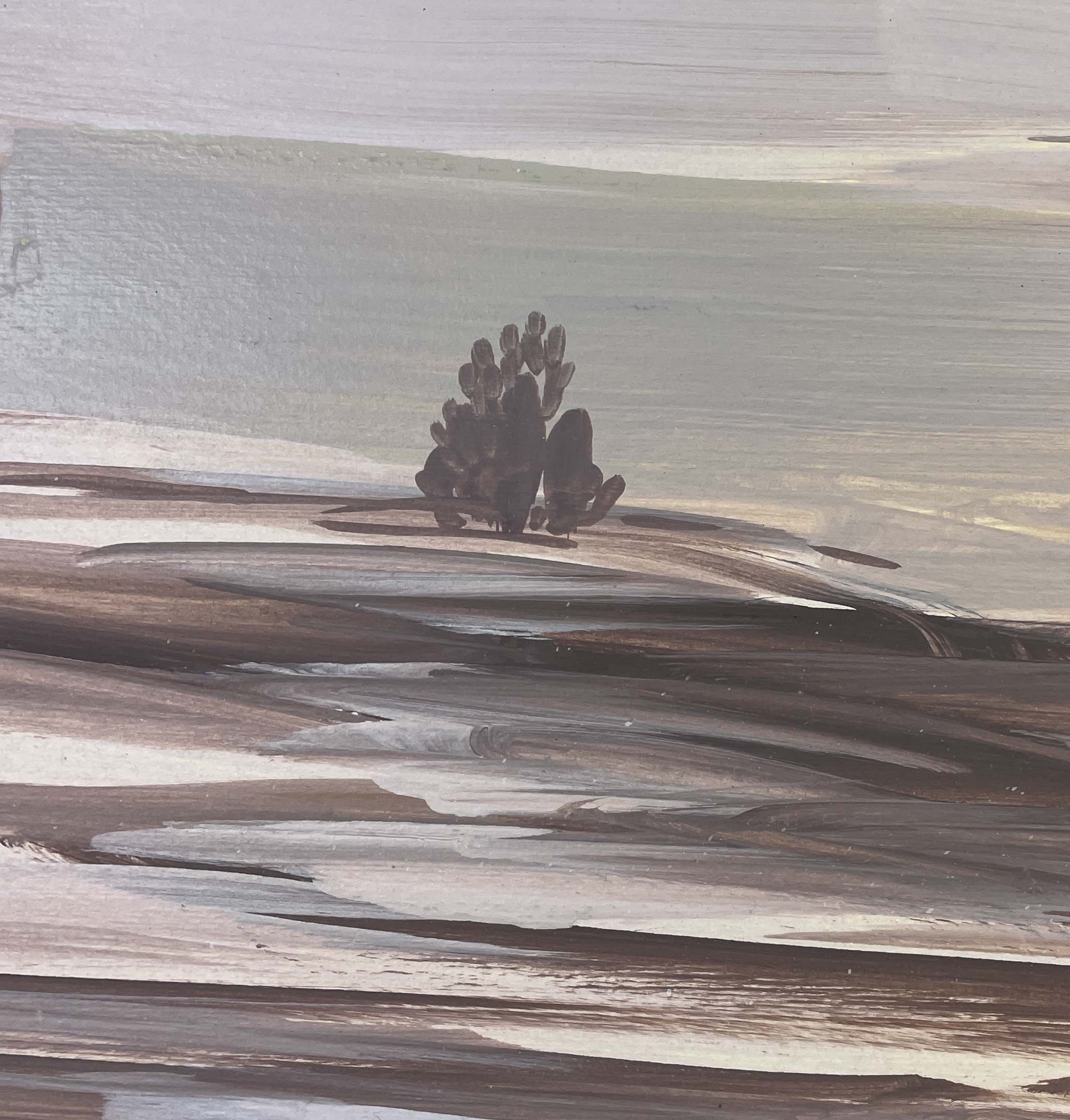
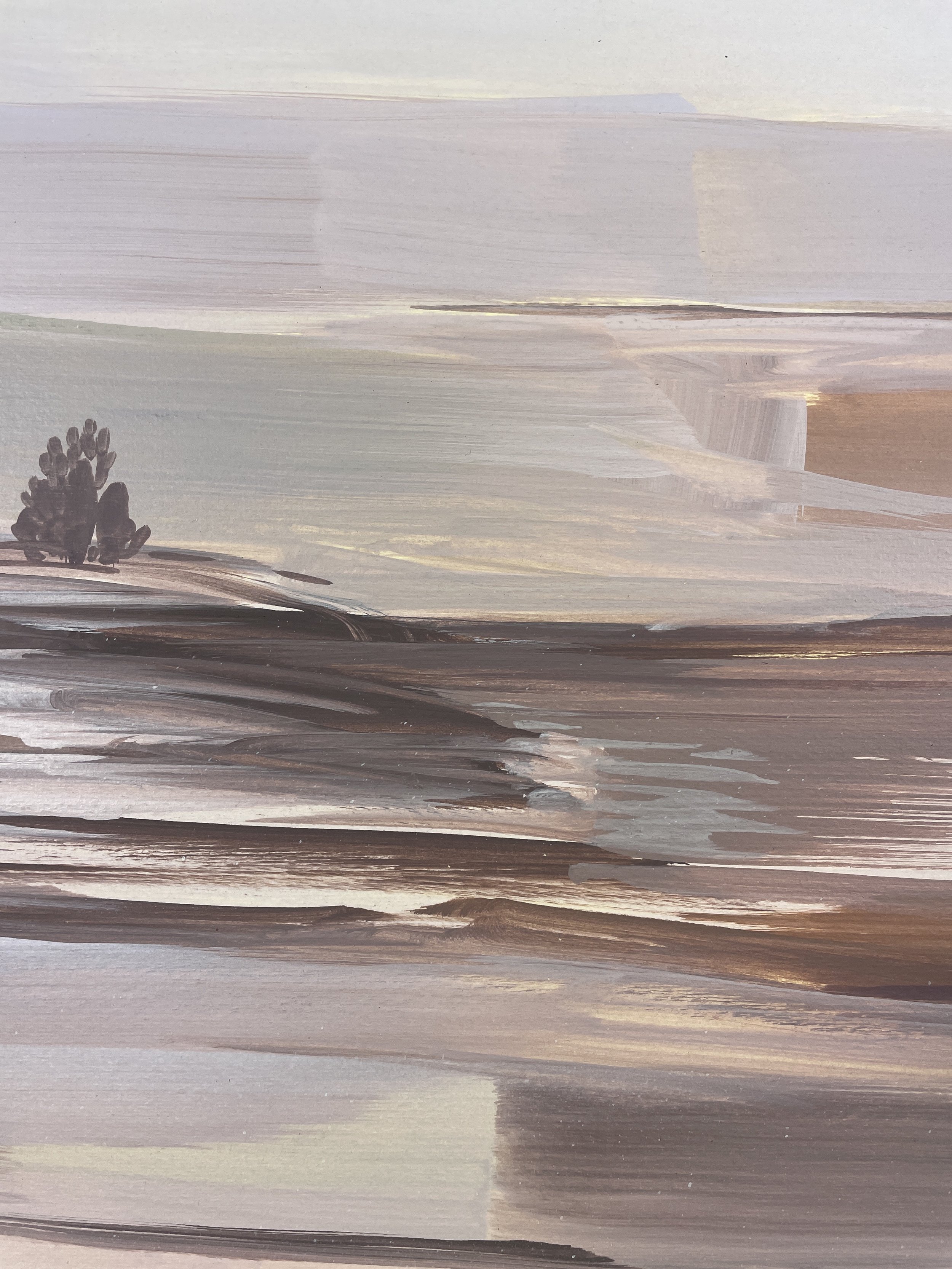
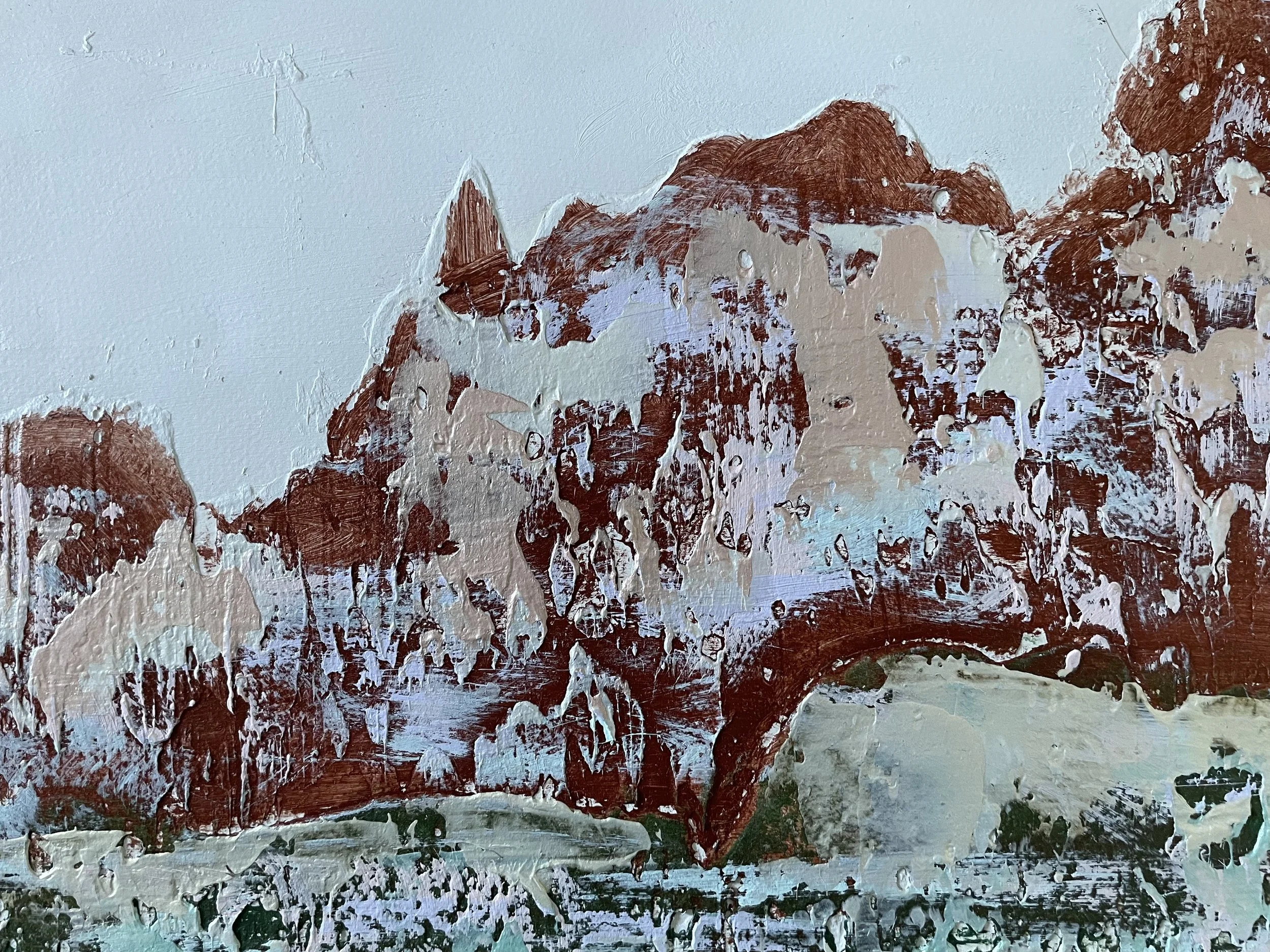
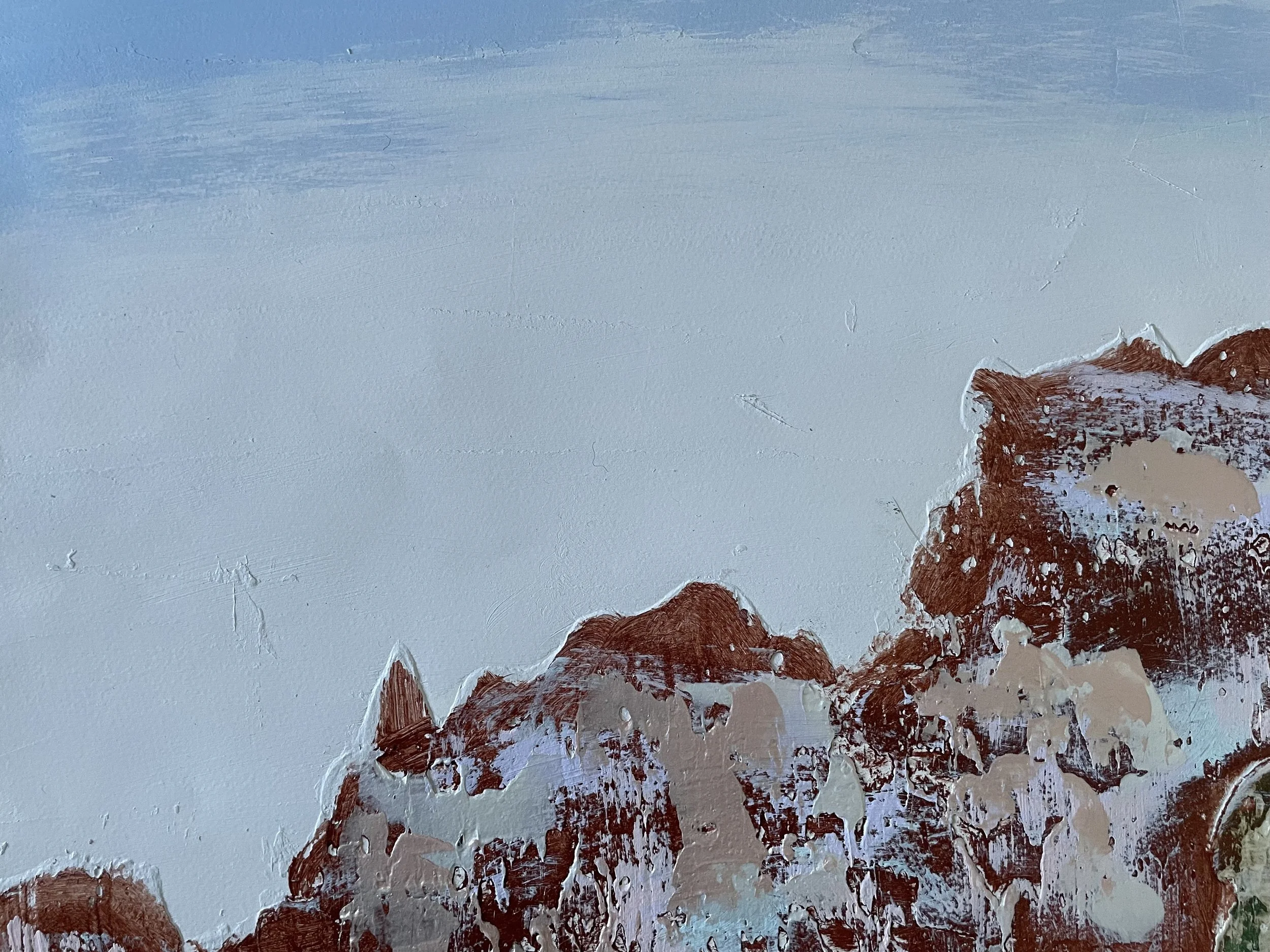
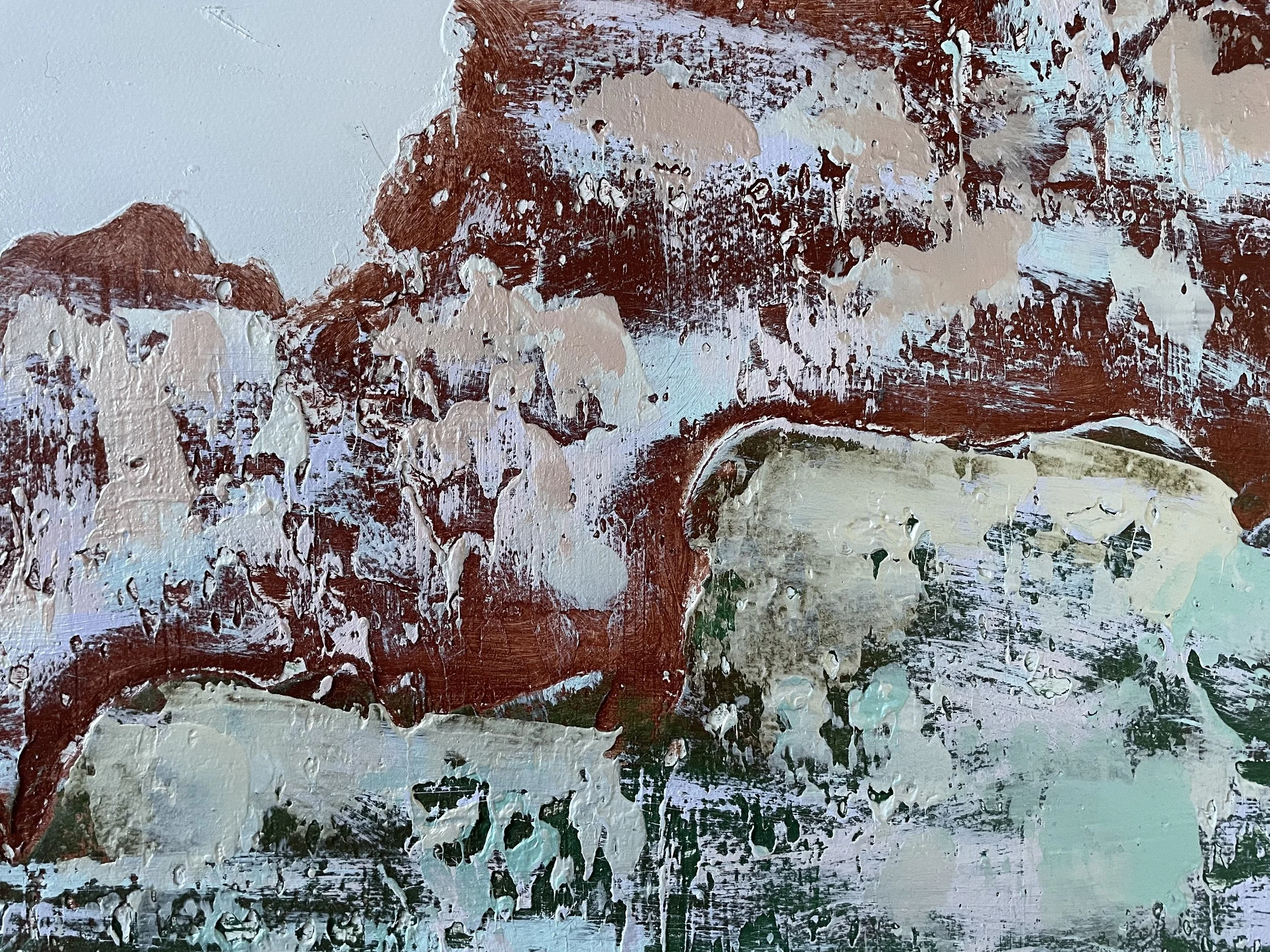
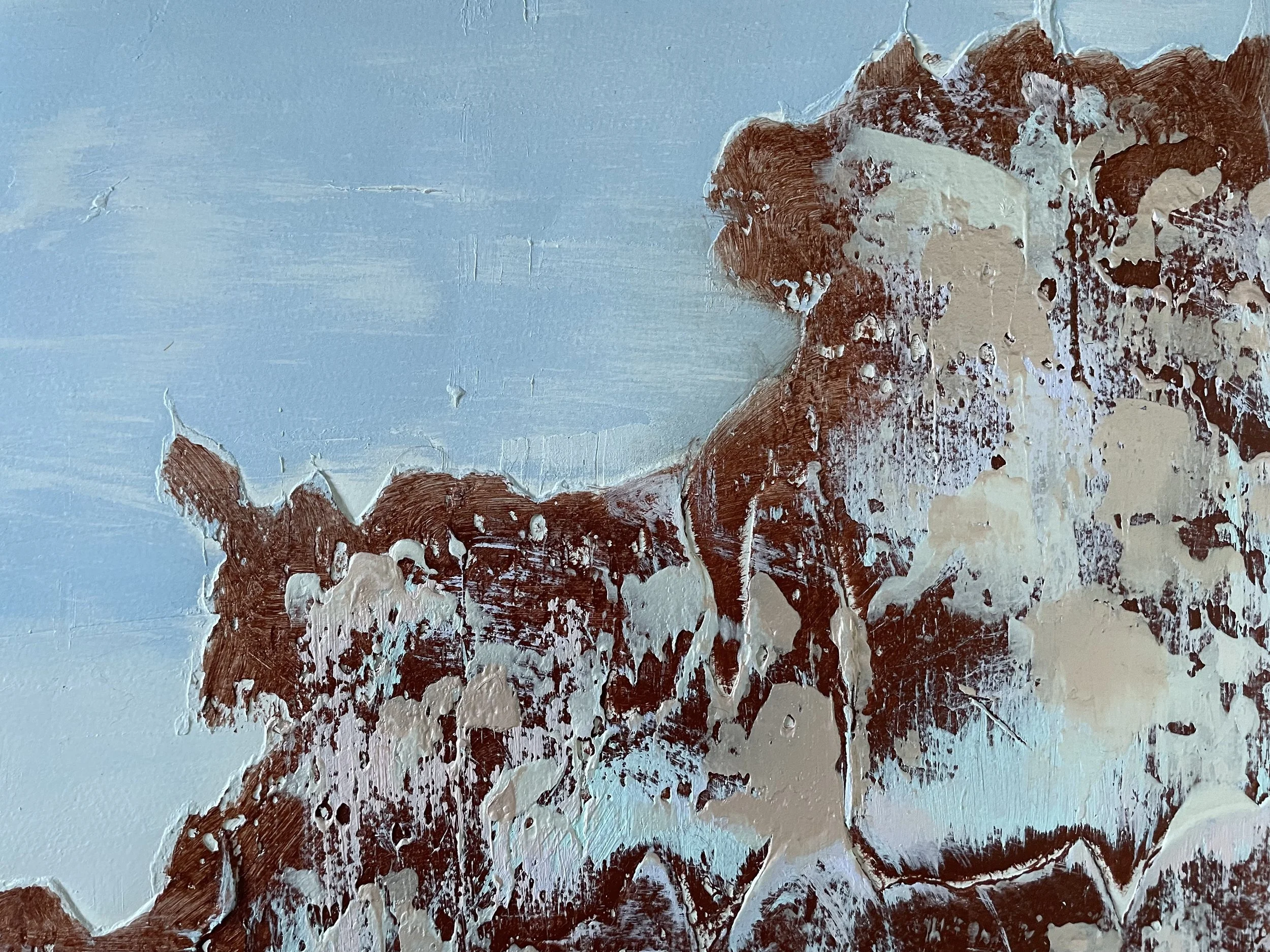
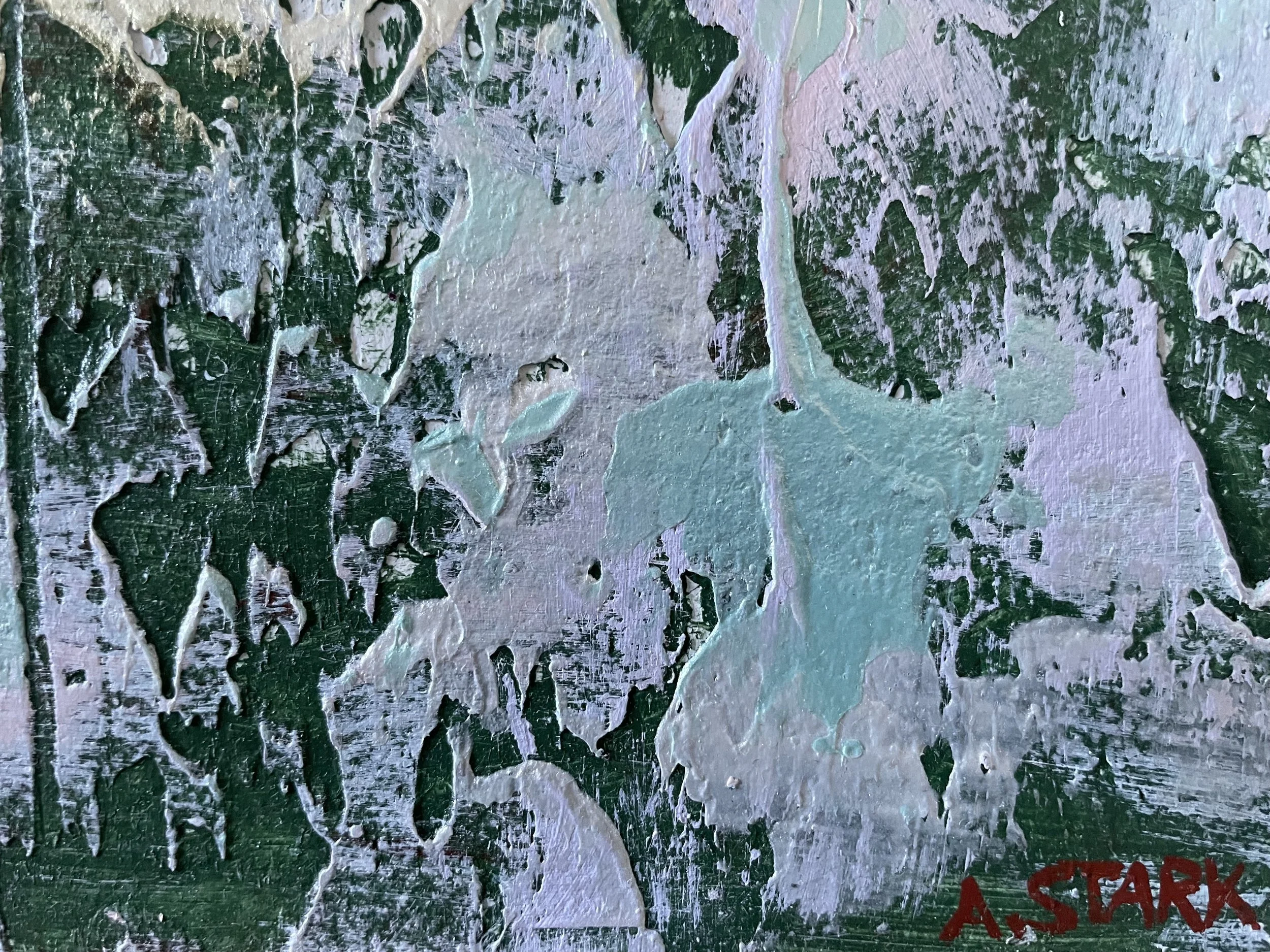
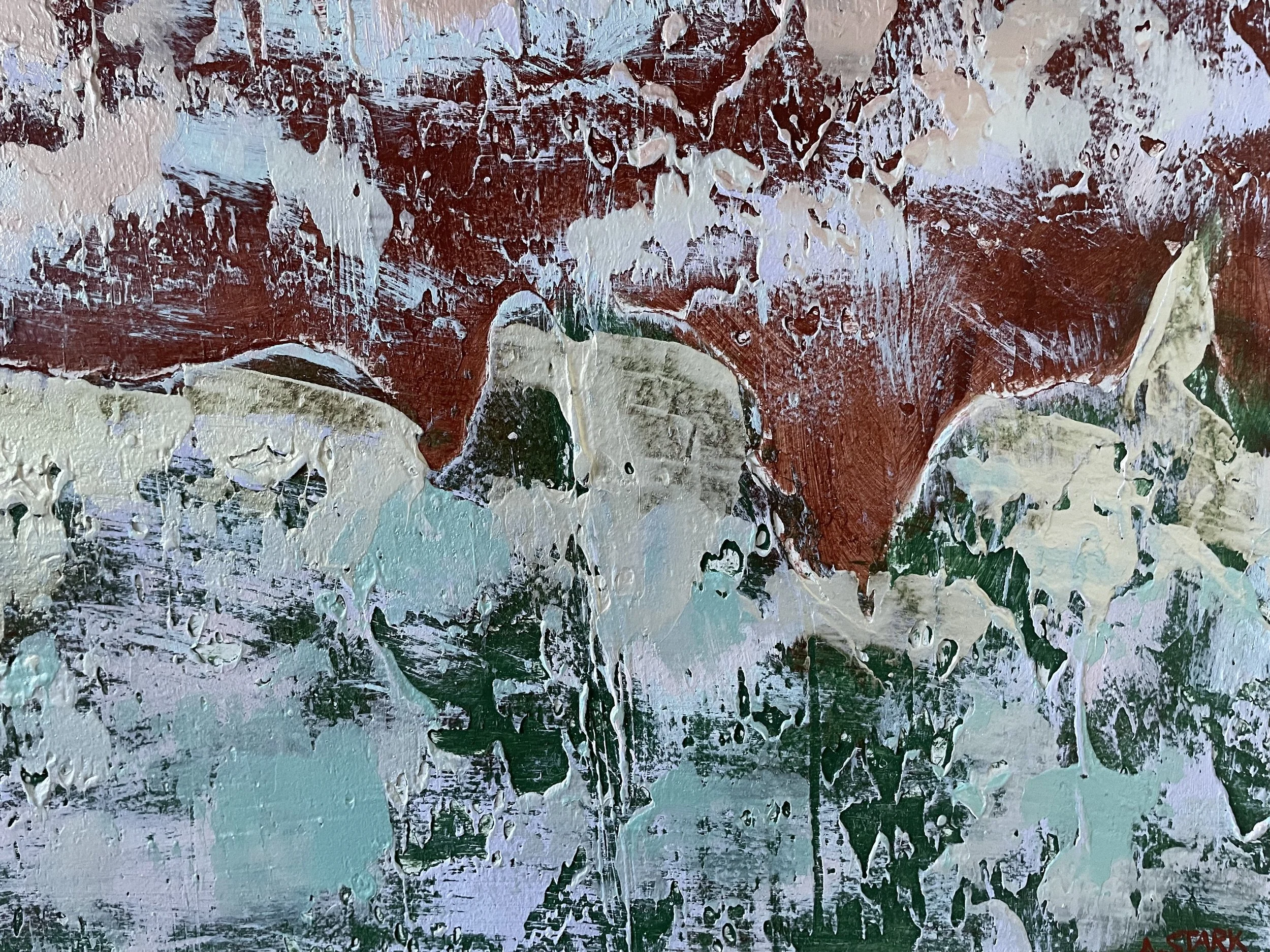
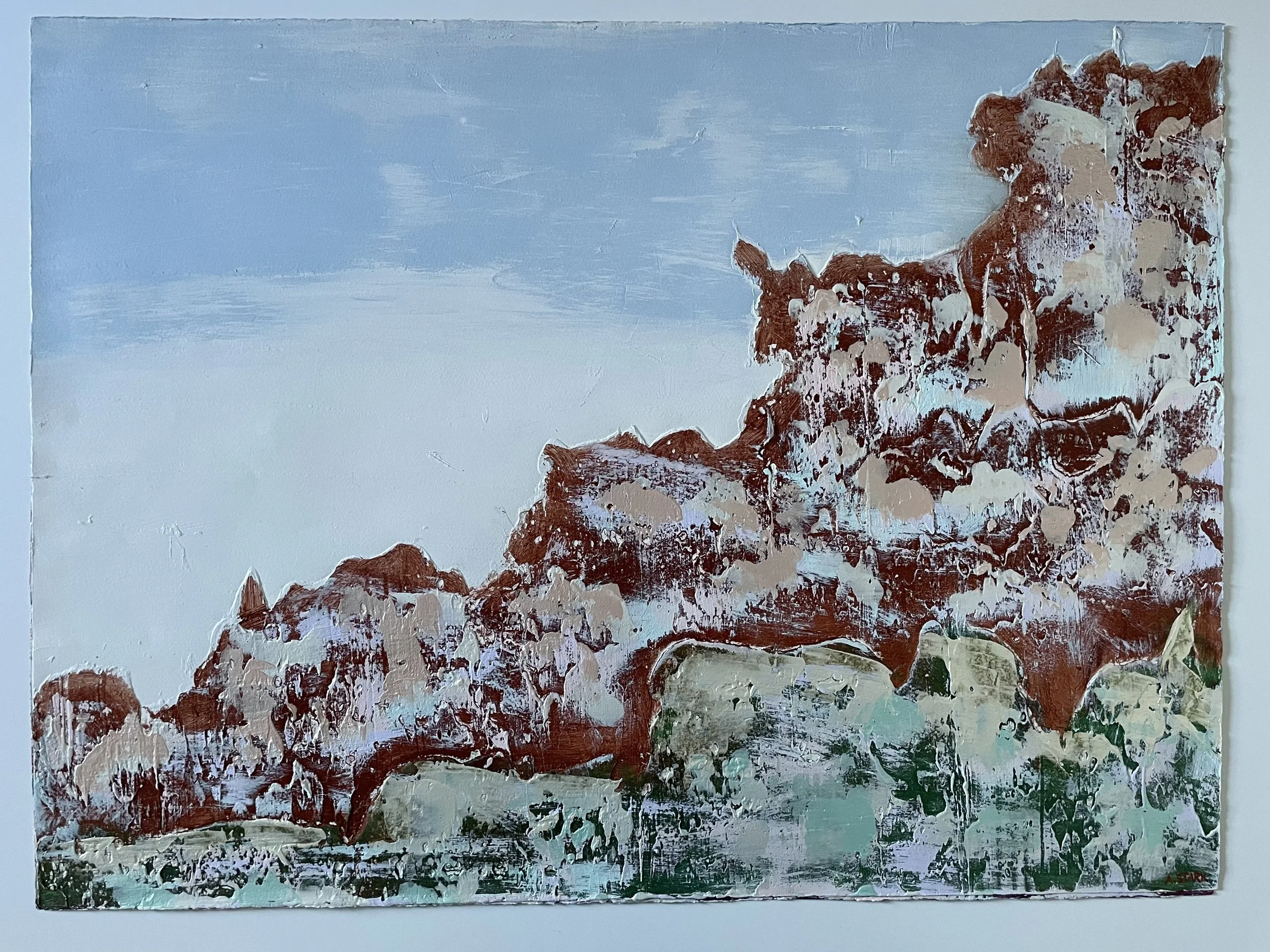
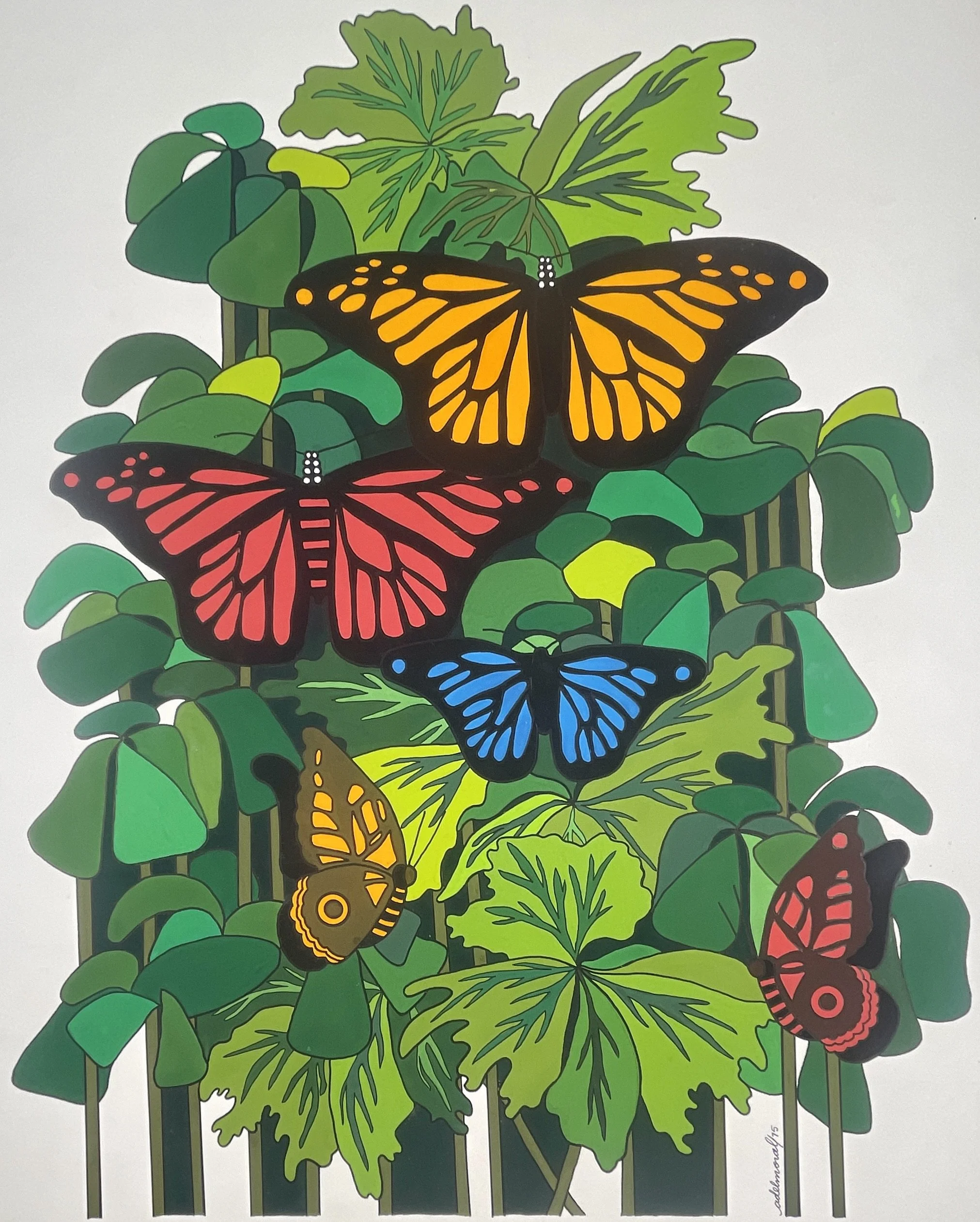
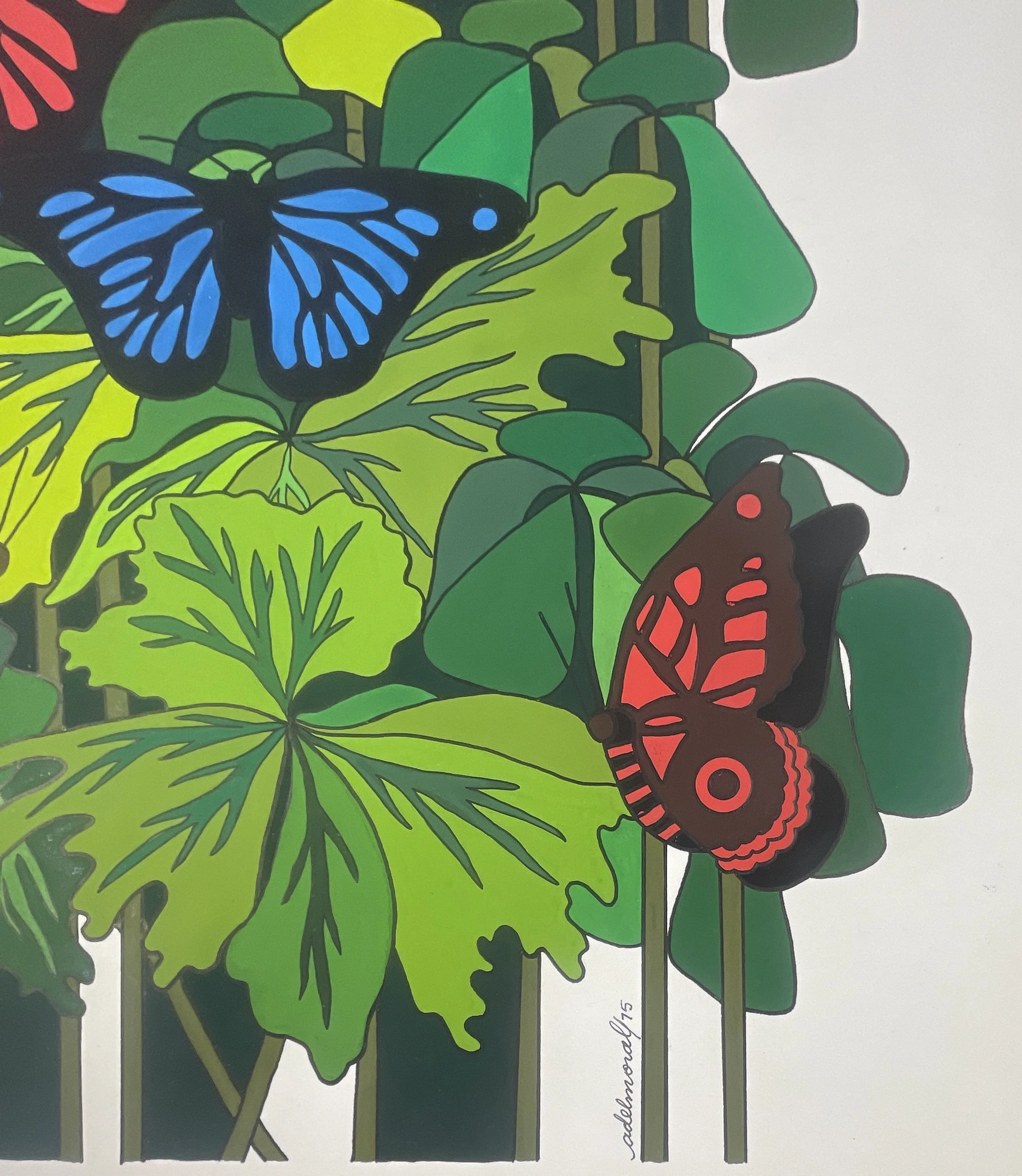
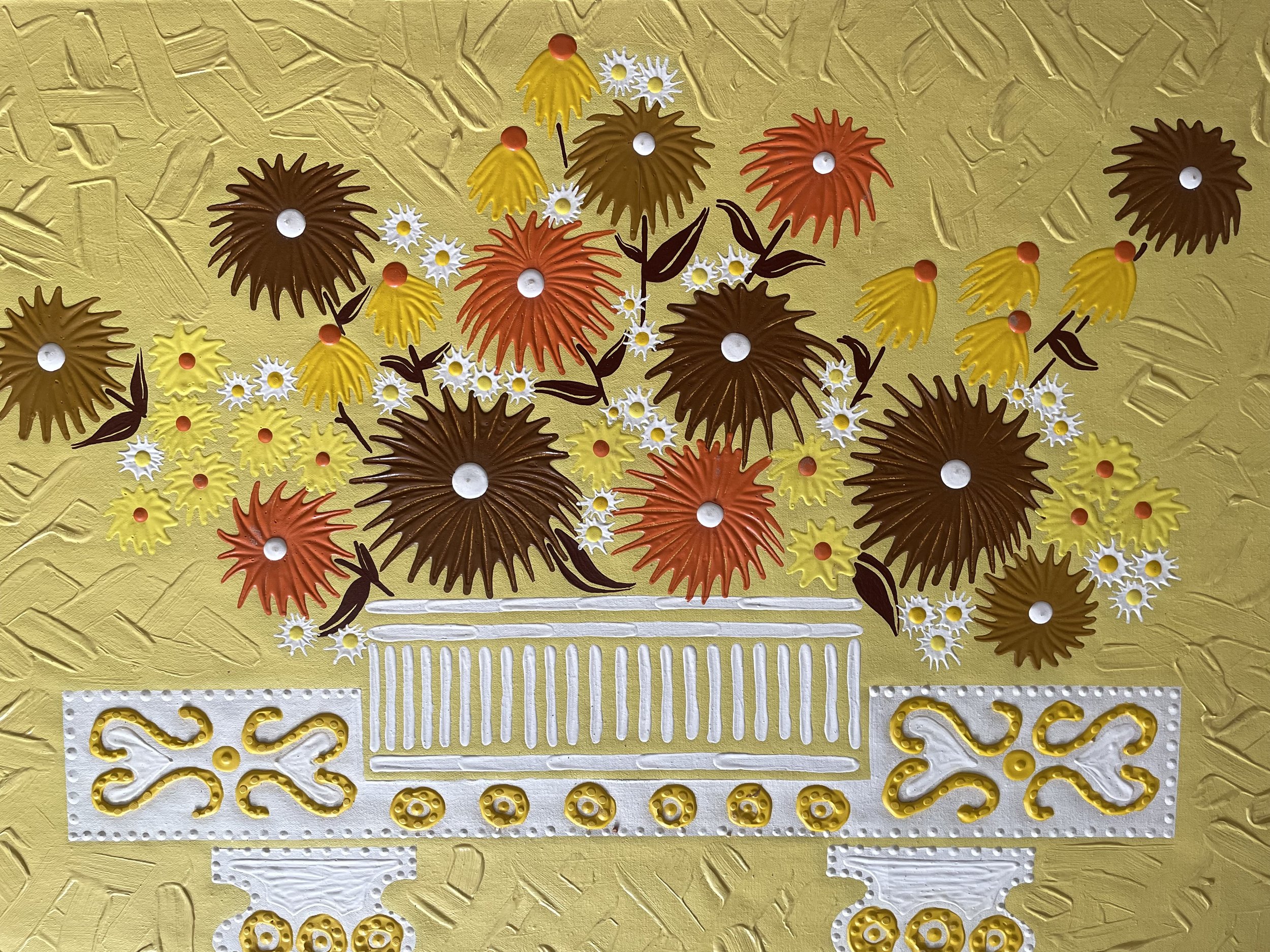
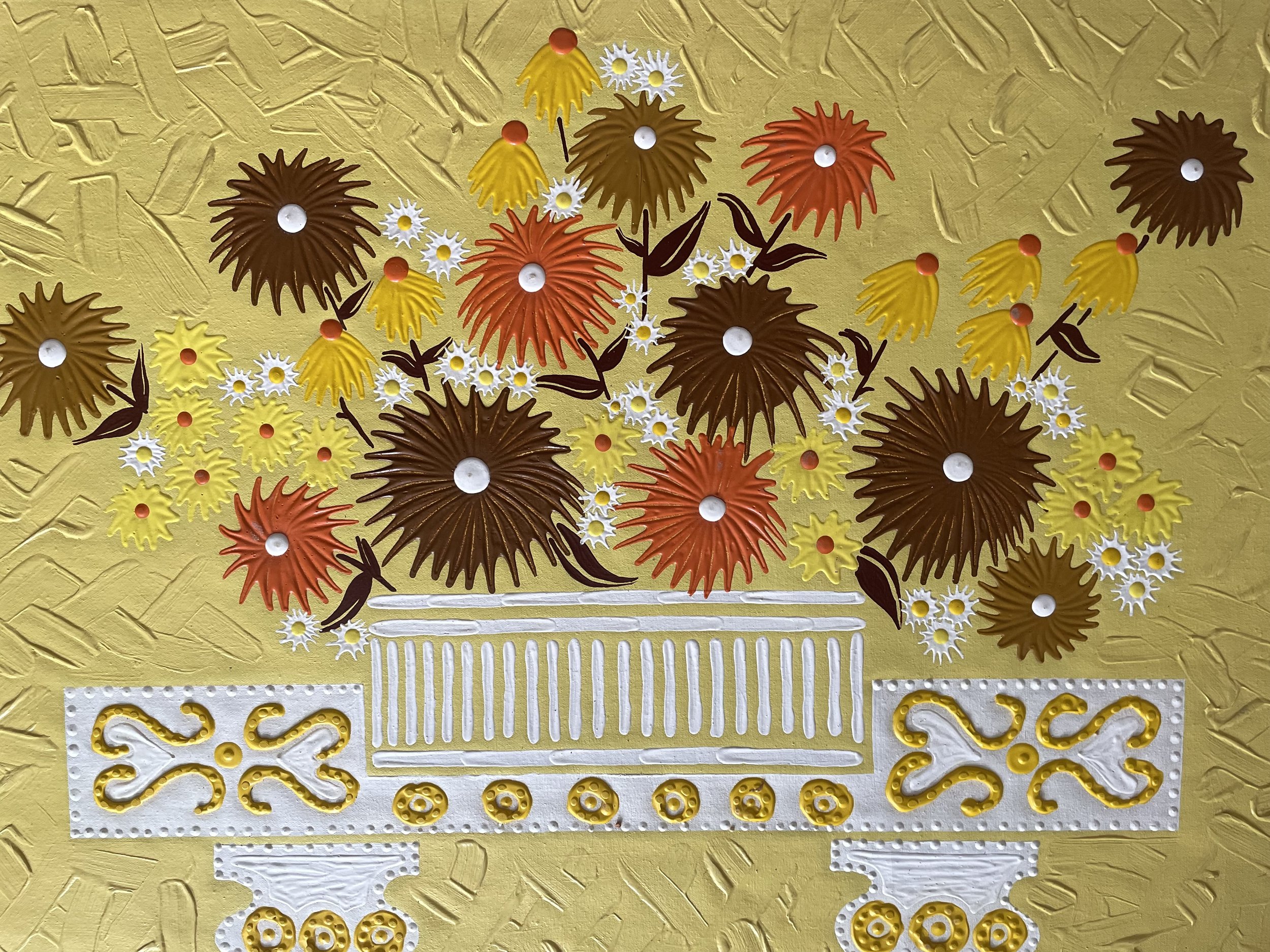
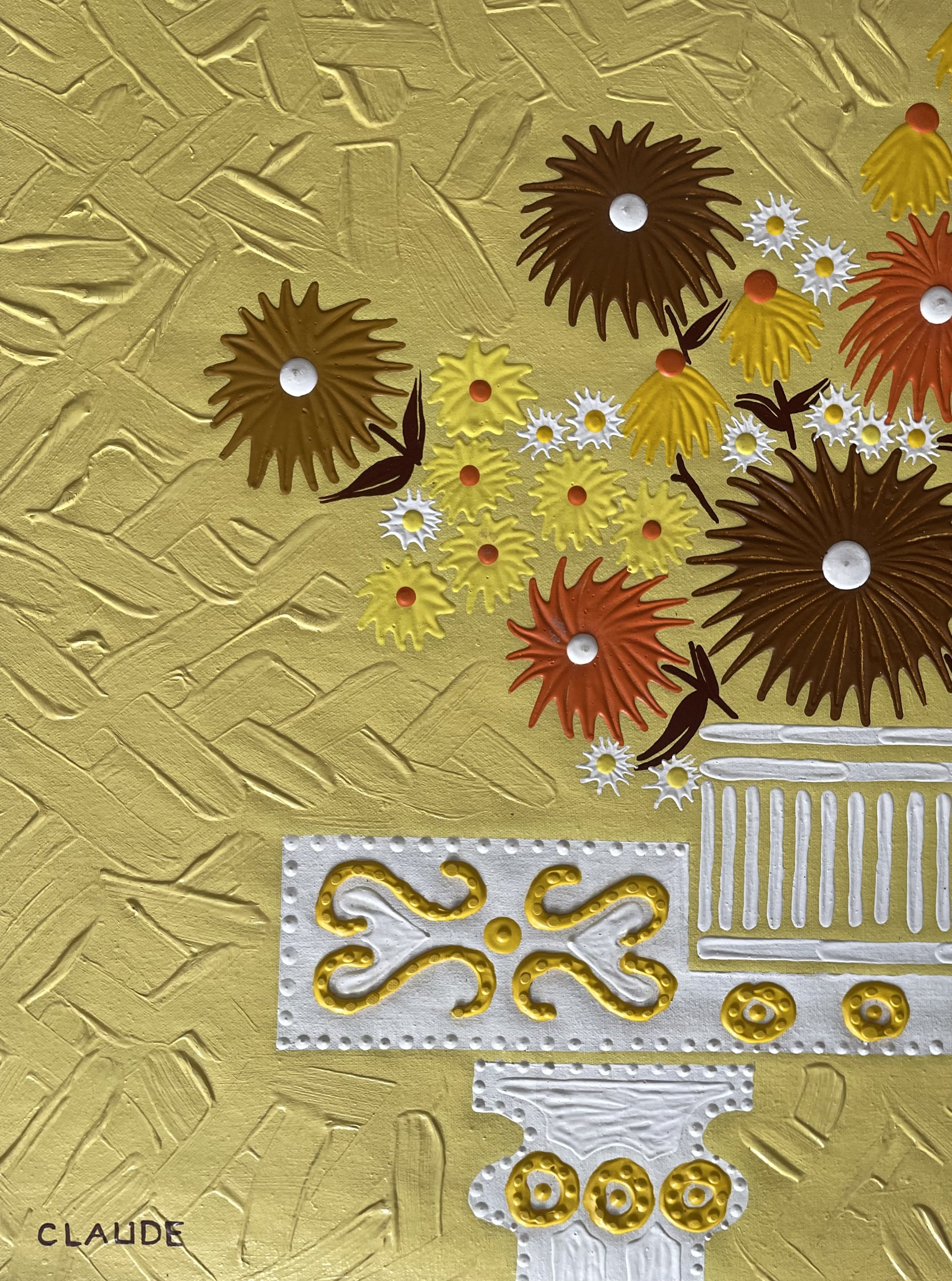
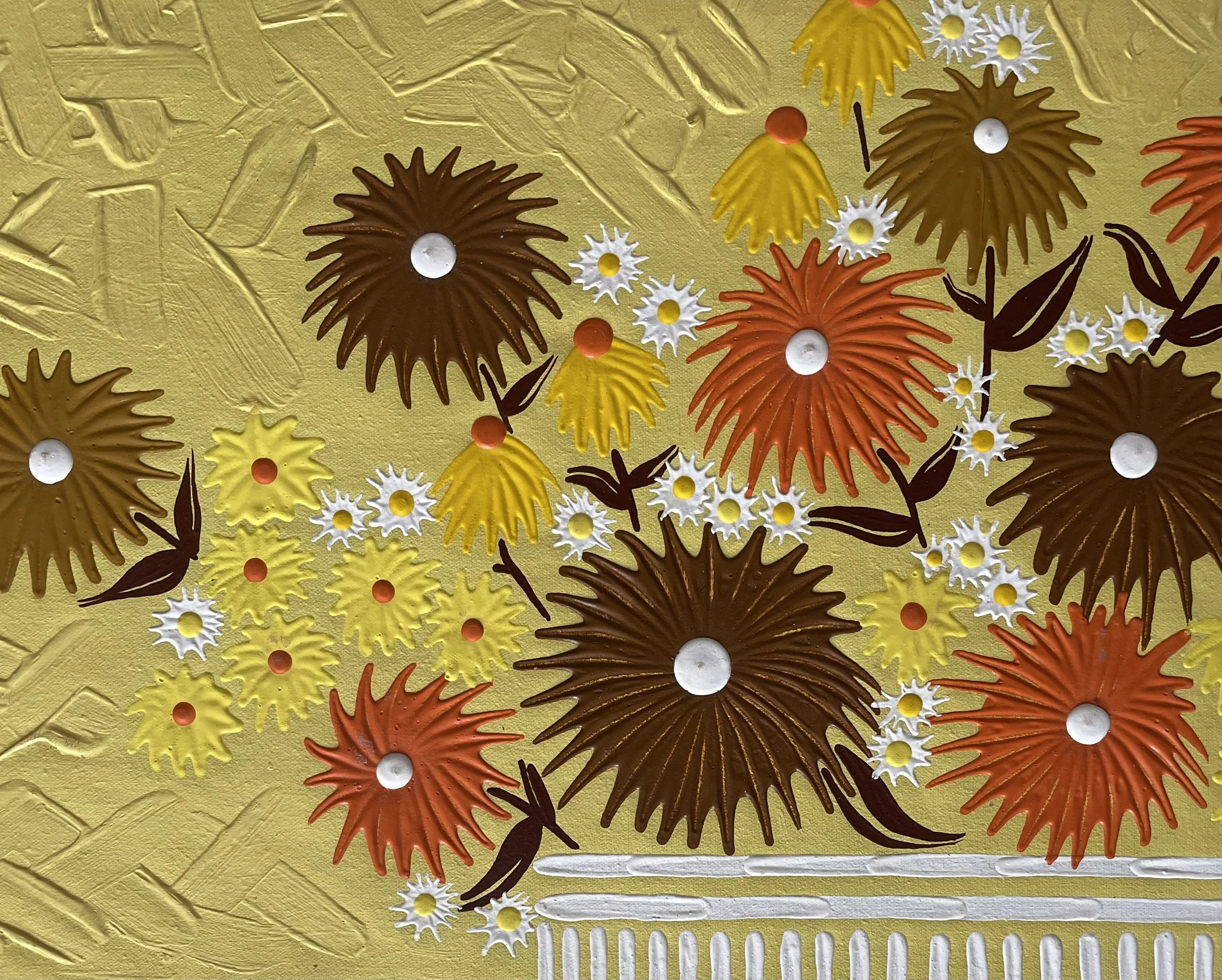
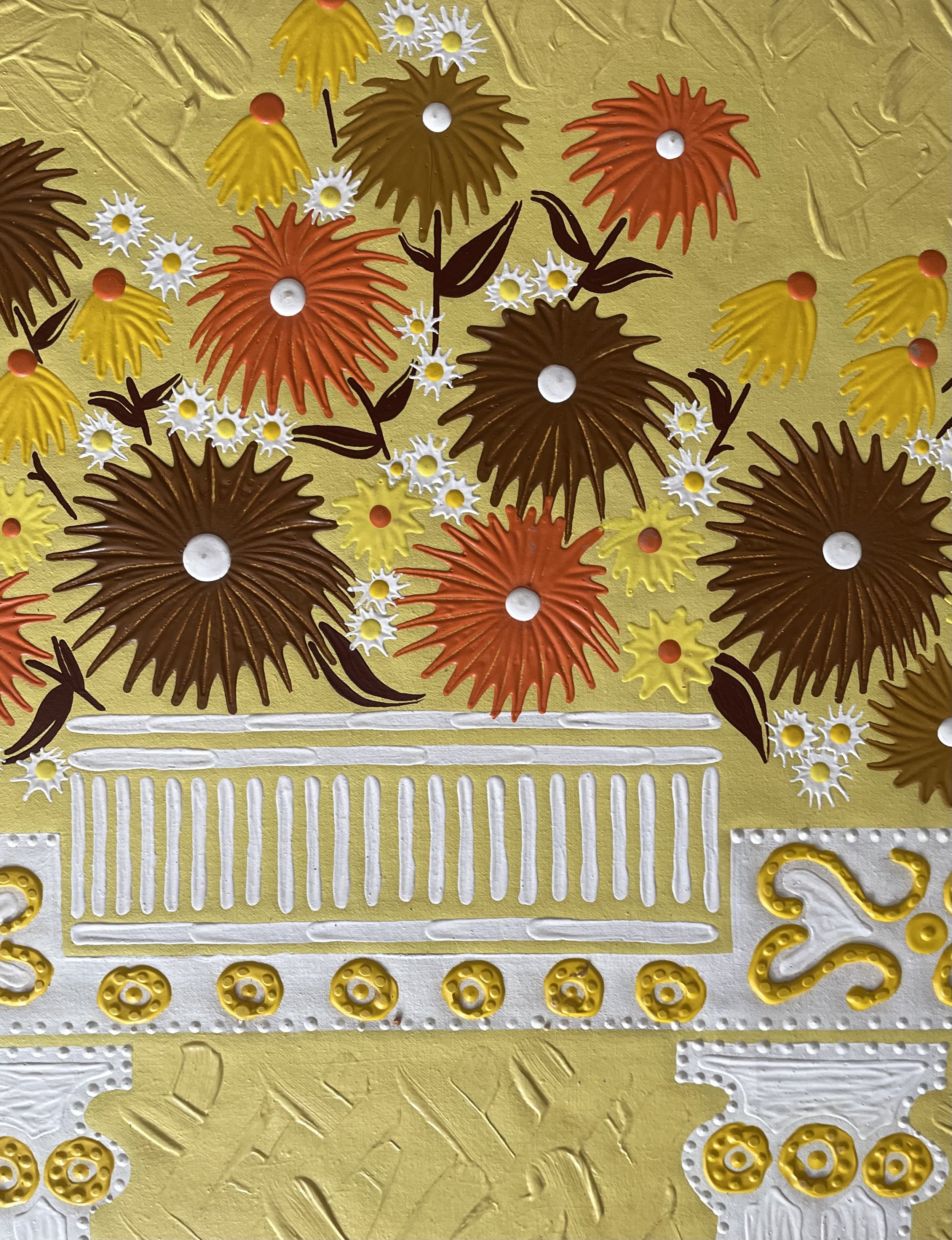
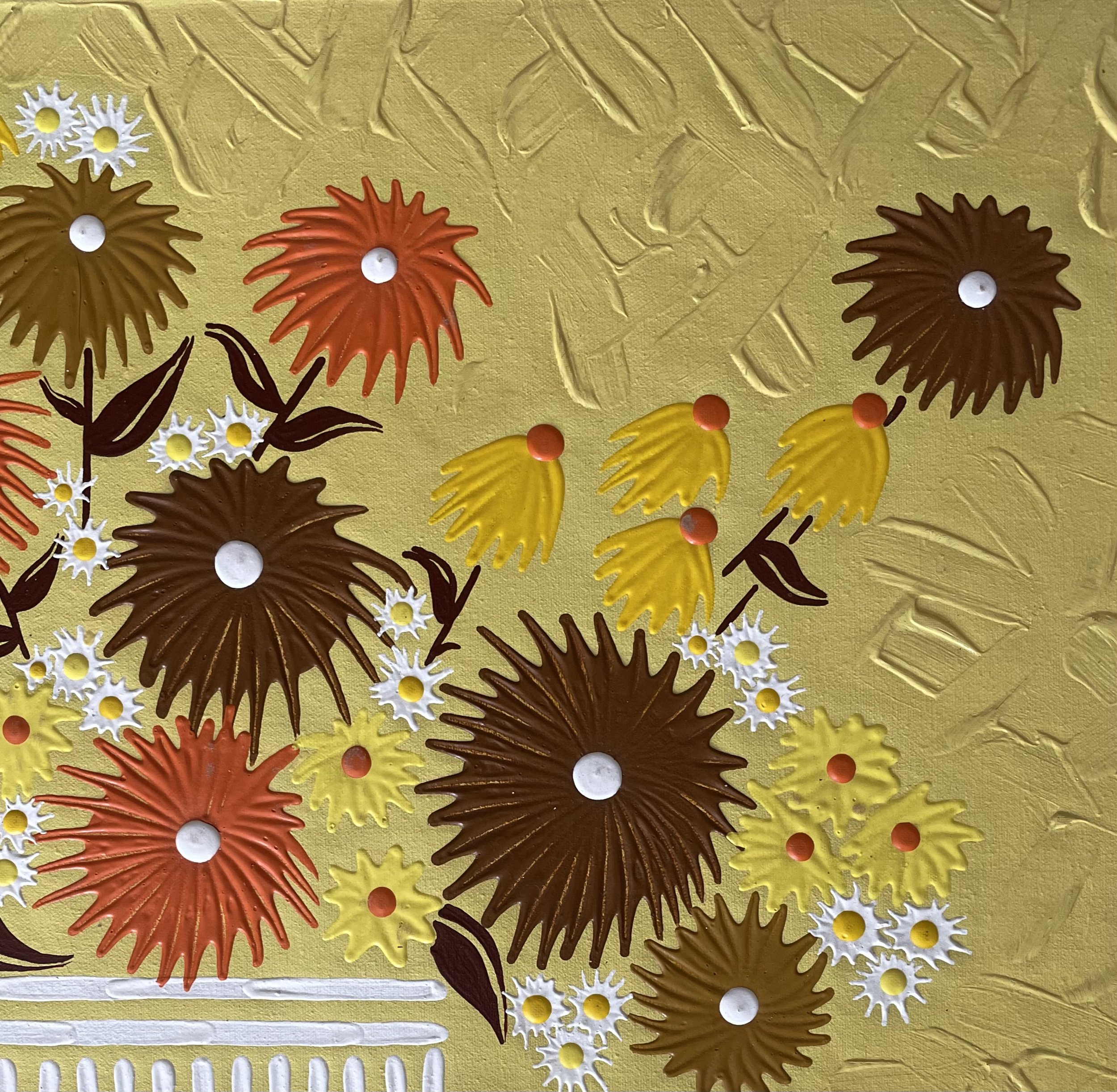
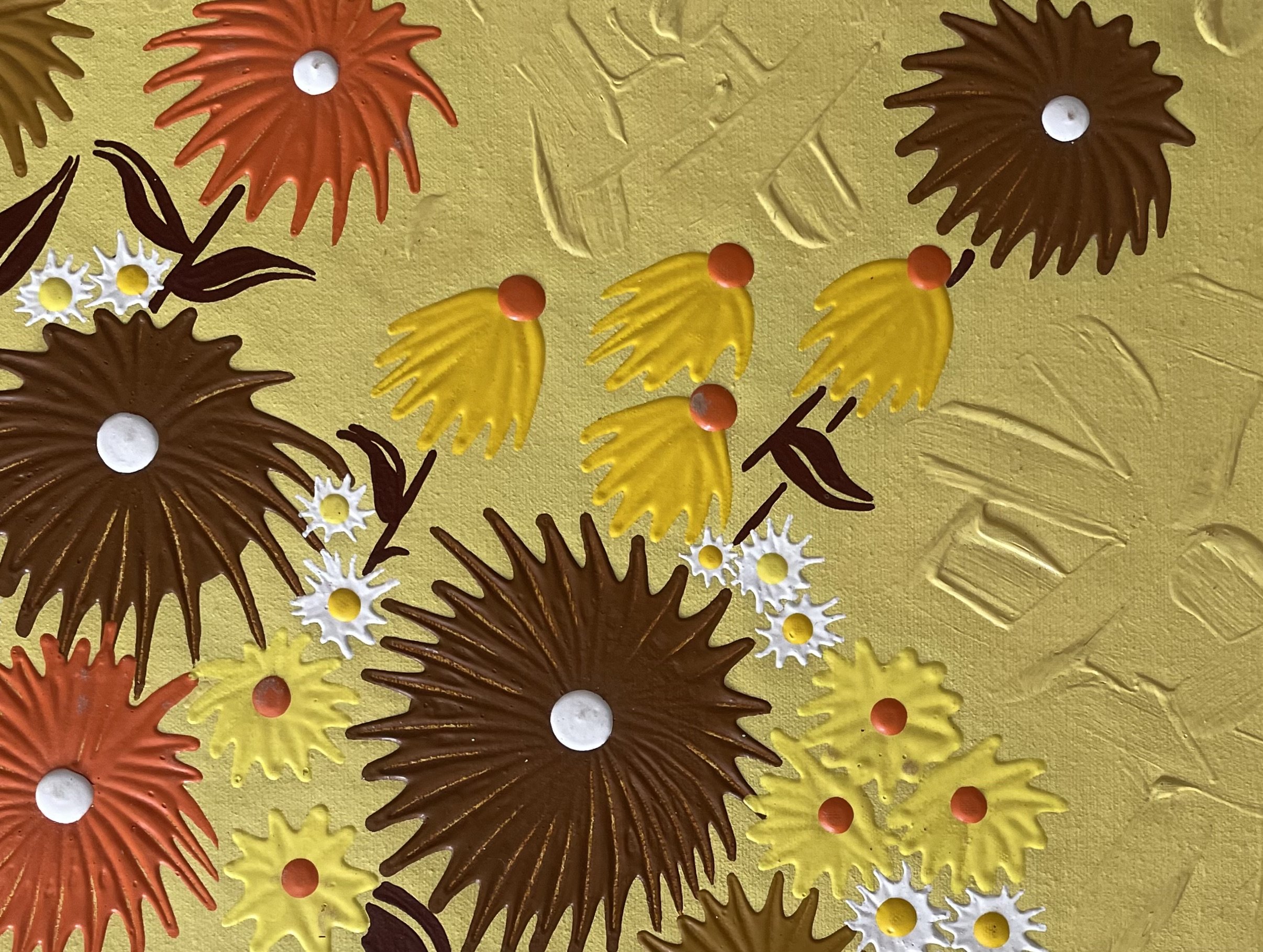
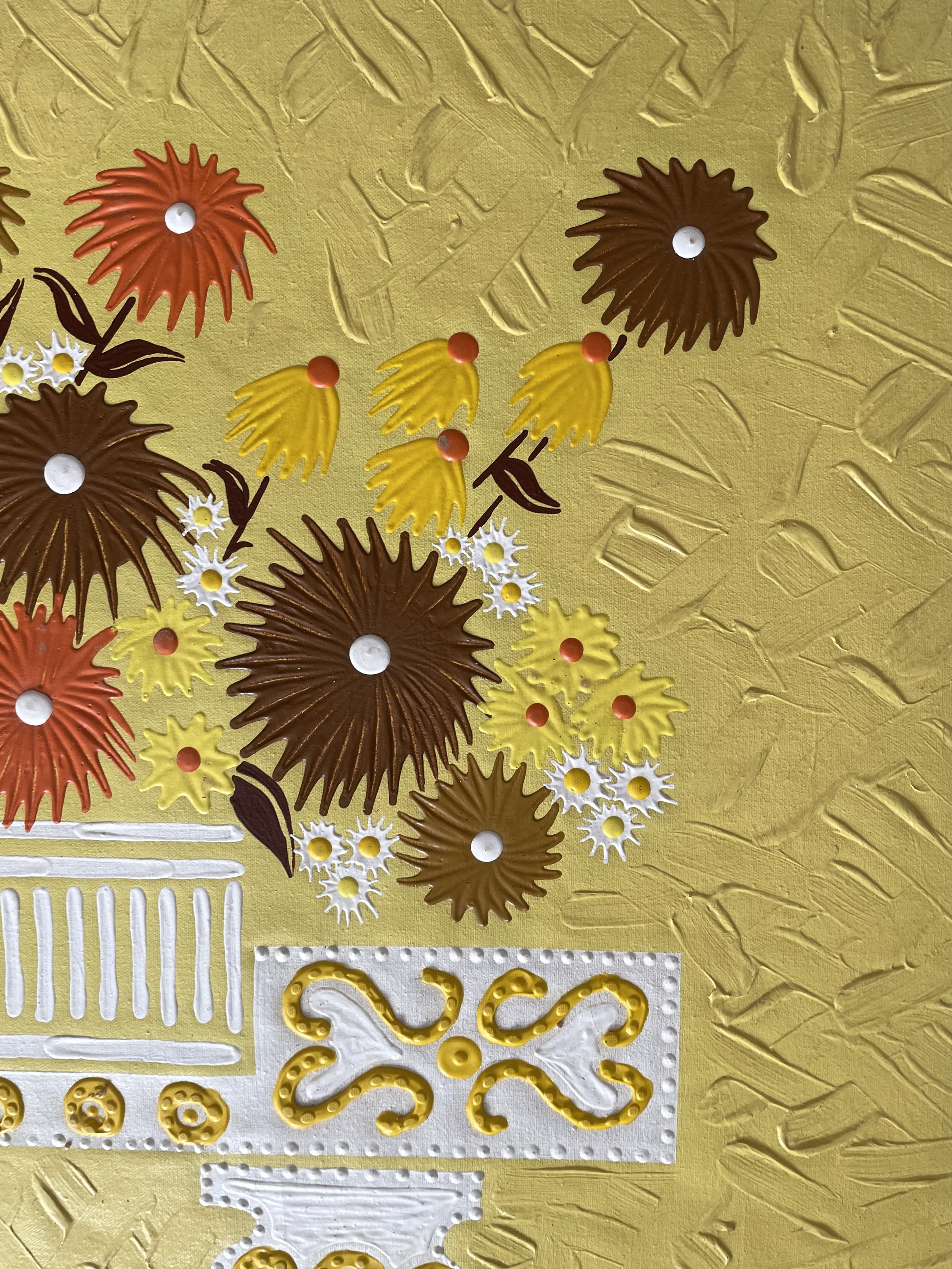
Harbor Boats (attributed), Armond Fields (1928–1995), c.1970s, serigraph on canvas, 40 × 30 in., signed lower right.
A bold modern harbor composition by American artist Armond Fields depicting moored fishing boats before a colorful waterfront village. Executed as a limited edition serigraph on canvas, the work reflects Fields’ distinctive modernist style defined by strong graphic color fields, architectural forms, and rhythmic coastal imagery.
Artwork Description
This striking harbor scene by Armond Fields presents a cluster of small boats resting quietly in shallow harbor water before a hillside town rendered in vivid geometric color blocks. The composition is structured with strong graphic clarity, emphasizing bold contrasts between light and shadow while maintaining a carefully balanced arrangement of forms.
In the foreground, several wooden boats float in calm reflective water. Their hulls are painted in bright yellows and warm oranges, with shadows and reflections forming dark rhythmic shapes across the water’s surface. The arrangement of the boats creates a visual pathway into the composition, guiding the viewer’s eye toward the architecture beyond.
The background features a tightly packed waterfront village constructed from simplified architectural forms. Houses are stacked along the hillside, rendered in saturated tones of yellow, orange, red, and white. Windows and rooflines appear as graphic accents rather than detailed architectural features, reinforcing the modernist design structure of the image.
Fields’ compositions often rely on flattened spatial perspective and high-contrast color relationships. In this work, the harbor water forms a broad dark plane that separates the boats from the village, creating a dramatic contrast that highlights the brightly colored structures.
The work is executed as a serigraph (screenprint) printed on canvas. In this technique, individual colors are applied sequentially through layered screens, producing crisp edges and uniform color fields characteristic of Fields’ graphic style. Registration marks visible along the margins further confirm the screenprinting process.
Armond Fields’ harbor and architectural scenes became widely recognized during the 1970s and 1980s for their ability to merge modernist design with approachable coastal subject matter. The present composition exemplifies that balance between modern graphic structure and familiar maritime imagery.
Artist Biography
Armond Fields (1928–1995) was an American painter and printmaker known for his modernist architectural and harbor scenes rendered in bold graphic color relationships.
A native of Chicago, Fields was raised in the Midwest and pursued extensive academic study before turning fully to his artistic career. He earned degrees from three universities: the University of Wisconsin (B.S.), the University of Illinois (M.A.), and the University of Chicago (PhD).
After several successful years working in the business world in marketing and market research, Fields made a decisive career change in 1970. He relocated to Los Angeles in order to devote himself entirely to his artistic work.
Fields quickly gained recognition through gallery exhibitions across the United States. His one-man shows included exhibitions at Withold K Gallery in Beverly Hills (1972), Woodward Gallery in Long Beach (1973 and 1974), Cooper Gallery in Los Angeles (1973), and Lynn Kottler Gallery in New York (1974). His work was also shown internationally at the Commonwealth Institute Gallery in Edinburgh, Scotland in 1974.
In addition to these solo exhibitions, Fields’ work appeared in numerous permanent exhibitions and galleries including Ankrum Gallery in Los Angeles, Fine Arts Gallery in Palm Springs, Art Wagon Gallery in Scottsdale, Cooper Gallery in Los Angeles, Triforium Galleries in San Diego, Gallery Paton in Edinburgh, Vaccarino Arte Contemporanea in Florence, Italy, and Windsor Gallery in Los Angeles.
Fields’ artwork entered a number of permanent collections including Sam Houston University, Hal Mann Laboratories, Continental Telephone, Sears Roebuck & Co., J.D. Power & Associates, M.S.I. International, International Industries, The Bank of Chicago, and the U.S. Consulate in Edinburgh. His work also appeared in numerous private collections throughout the United States and internationally.
Fields became especially known for his modernist harbor scenes and architectural landscapes. His compositions typically simplify buildings, boats, and urban structures into geometric shapes and strong color planes. This approach reflects mid-twentieth-century design influences and the broader movement toward graphic abstraction in contemporary printmaking.
During the 1970s and 1980s, Fields produced a series of limited edition serigraphs that were distributed through galleries and print publishers. These works allowed collectors to acquire his distinctive imagery in vibrant multi-color prints that retained the bold visual qualities of his paintings.
Today Armond Fields’ work remains recognizable for its strong design clarity, bright architectural palettes, and stylized maritime themes. His prints and paintings represent a distinctive contribution to the American modern decorative print movement of the late twentieth century.
Armond Fields (1928–1995)
Harbor Boats (attributed)
Serigraph on canvas
40 × 30 inches
Signed lower right
Modernist harbor scene with colorful boats and coastal village.
Certificate of Authentication
Artist: Armond Fields (1928–1995)
Title: Harbor Boats (attributed)
Medium: Serigraph on canvas
Dimensions: 40 × 30 inches
Signature: Signed lower right
This artwork has been examined and catalogued by Artfind Gallery, Washington DC. Based on stylistic analysis and printing characteristics, the work is attributed to Armond Fields and identified as a limited edition serigraph printed on canvas.
Artfind Gallery
Washington, DC
Condition
Good vintage condition. Minor edge wear and handling marks along margins consistent with prior mounting or stretching. Surface colors remain vibrant. Registration marks visible along the upper margin consistent with the serigraph printing process.
Provenance
Private collection
Acquired by Mitch Morse Gallery, New York
Art Spectrum division of Mitch Morse Gallery Inc.
Acquired through gallery networks in New York, United States and Europe
Artfind Gallery, Washington DC (current owner)
Harbor Boats (attributed), Armond Fields (1928–1995), c.1970s, serigraph on canvas, 40 × 30 in., signed lower right.
A bold modern harbor composition by American artist Armond Fields depicting moored fishing boats before a colorful waterfront village. Executed as a limited edition serigraph on canvas, the work reflects Fields’ distinctive modernist style defined by strong graphic color fields, architectural forms, and rhythmic coastal imagery.
Artwork Description
This striking harbor scene by Armond Fields presents a cluster of small boats resting quietly in shallow harbor water before a hillside town rendered in vivid geometric color blocks. The composition is structured with strong graphic clarity, emphasizing bold contrasts between light and shadow while maintaining a carefully balanced arrangement of forms.
In the foreground, several wooden boats float in calm reflective water. Their hulls are painted in bright yellows and warm oranges, with shadows and reflections forming dark rhythmic shapes across the water’s surface. The arrangement of the boats creates a visual pathway into the composition, guiding the viewer’s eye toward the architecture beyond.
The background features a tightly packed waterfront village constructed from simplified architectural forms. Houses are stacked along the hillside, rendered in saturated tones of yellow, orange, red, and white. Windows and rooflines appear as graphic accents rather than detailed architectural features, reinforcing the modernist design structure of the image.
Fields’ compositions often rely on flattened spatial perspective and high-contrast color relationships. In this work, the harbor water forms a broad dark plane that separates the boats from the village, creating a dramatic contrast that highlights the brightly colored structures.
The work is executed as a serigraph (screenprint) printed on canvas. In this technique, individual colors are applied sequentially through layered screens, producing crisp edges and uniform color fields characteristic of Fields’ graphic style. Registration marks visible along the margins further confirm the screenprinting process.
Armond Fields’ harbor and architectural scenes became widely recognized during the 1970s and 1980s for their ability to merge modernist design with approachable coastal subject matter. The present composition exemplifies that balance between modern graphic structure and familiar maritime imagery.
Artist Biography
Armond Fields (1928–1995) was an American painter and printmaker known for his modernist architectural and harbor scenes rendered in bold graphic color relationships.
A native of Chicago, Fields was raised in the Midwest and pursued extensive academic study before turning fully to his artistic career. He earned degrees from three universities: the University of Wisconsin (B.S.), the University of Illinois (M.A.), and the University of Chicago (PhD).
After several successful years working in the business world in marketing and market research, Fields made a decisive career change in 1970. He relocated to Los Angeles in order to devote himself entirely to his artistic work.
Fields quickly gained recognition through gallery exhibitions across the United States. His one-man shows included exhibitions at Withold K Gallery in Beverly Hills (1972), Woodward Gallery in Long Beach (1973 and 1974), Cooper Gallery in Los Angeles (1973), and Lynn Kottler Gallery in New York (1974). His work was also shown internationally at the Commonwealth Institute Gallery in Edinburgh, Scotland in 1974.
In addition to these solo exhibitions, Fields’ work appeared in numerous permanent exhibitions and galleries including Ankrum Gallery in Los Angeles, Fine Arts Gallery in Palm Springs, Art Wagon Gallery in Scottsdale, Cooper Gallery in Los Angeles, Triforium Galleries in San Diego, Gallery Paton in Edinburgh, Vaccarino Arte Contemporanea in Florence, Italy, and Windsor Gallery in Los Angeles.
Fields’ artwork entered a number of permanent collections including Sam Houston University, Hal Mann Laboratories, Continental Telephone, Sears Roebuck & Co., J.D. Power & Associates, M.S.I. International, International Industries, The Bank of Chicago, and the U.S. Consulate in Edinburgh. His work also appeared in numerous private collections throughout the United States and internationally.
Fields became especially known for his modernist harbor scenes and architectural landscapes. His compositions typically simplify buildings, boats, and urban structures into geometric shapes and strong color planes. This approach reflects mid-twentieth-century design influences and the broader movement toward graphic abstraction in contemporary printmaking.
During the 1970s and 1980s, Fields produced a series of limited edition serigraphs that were distributed through galleries and print publishers. These works allowed collectors to acquire his distinctive imagery in vibrant multi-color prints that retained the bold visual qualities of his paintings.
Today Armond Fields’ work remains recognizable for its strong design clarity, bright architectural palettes, and stylized maritime themes. His prints and paintings represent a distinctive contribution to the American modern decorative print movement of the late twentieth century.
Armond Fields (1928–1995)
Harbor Boats (attributed)
Serigraph on canvas
40 × 30 inches
Signed lower right
Modernist harbor scene with colorful boats and coastal village.
Certificate of Authentication
Artist: Armond Fields (1928–1995)
Title: Harbor Boats (attributed)
Medium: Serigraph on canvas
Dimensions: 40 × 30 inches
Signature: Signed lower right
This artwork has been examined and catalogued by Artfind Gallery, Washington DC. Based on stylistic analysis and printing characteristics, the work is attributed to Armond Fields and identified as a limited edition serigraph printed on canvas.
Artfind Gallery
Washington, DC
Condition
Good vintage condition. Minor edge wear and handling marks along margins consistent with prior mounting or stretching. Surface colors remain vibrant. Registration marks visible along the upper margin consistent with the serigraph printing process.
Provenance
Private collection
Acquired by Mitch Morse Gallery, New York
Art Spectrum division of Mitch Morse Gallery Inc.
Acquired through gallery networks in New York, United States and Europe
Artfind Gallery, Washington DC (current owner)
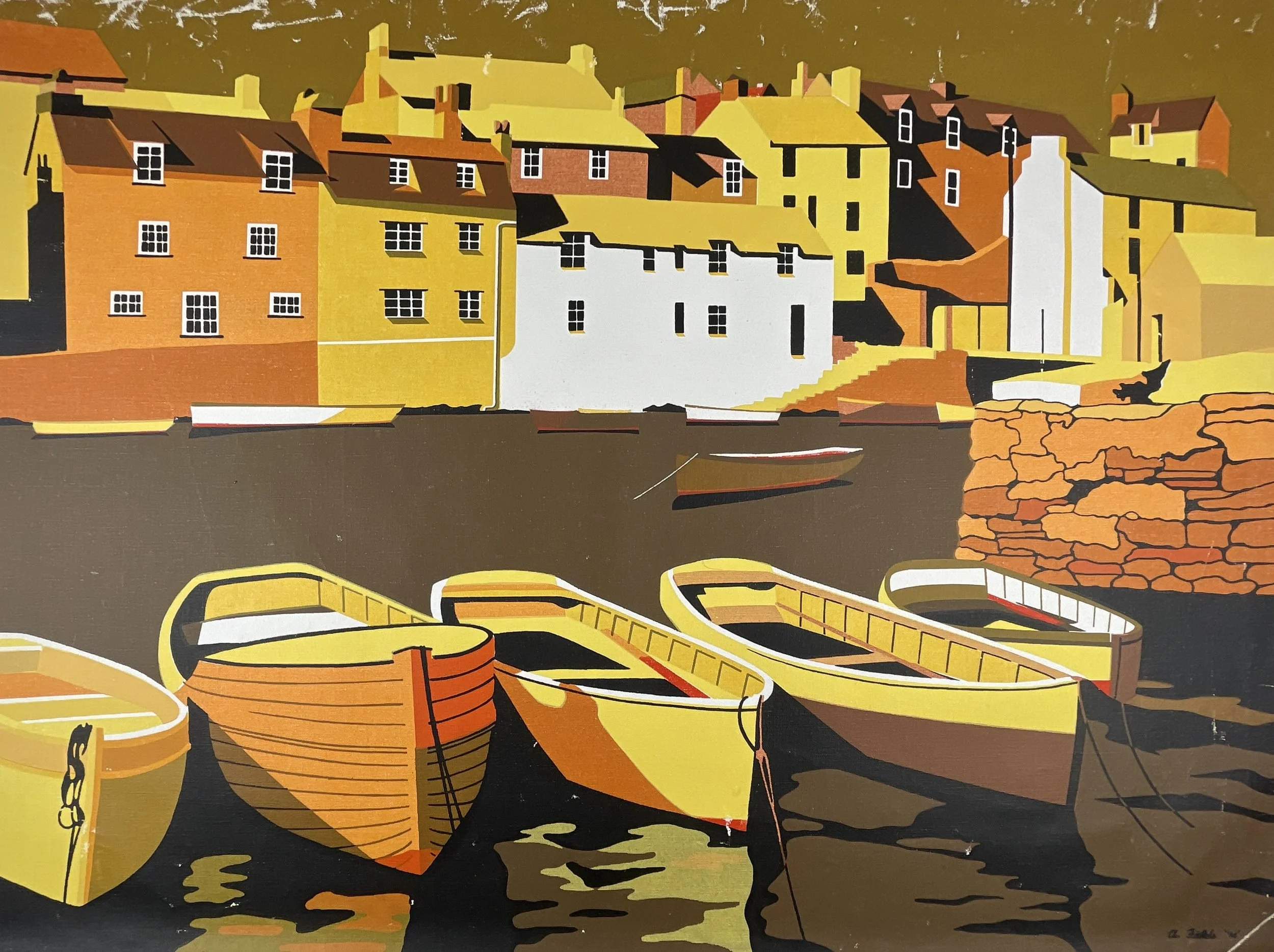 Image 1 of 4
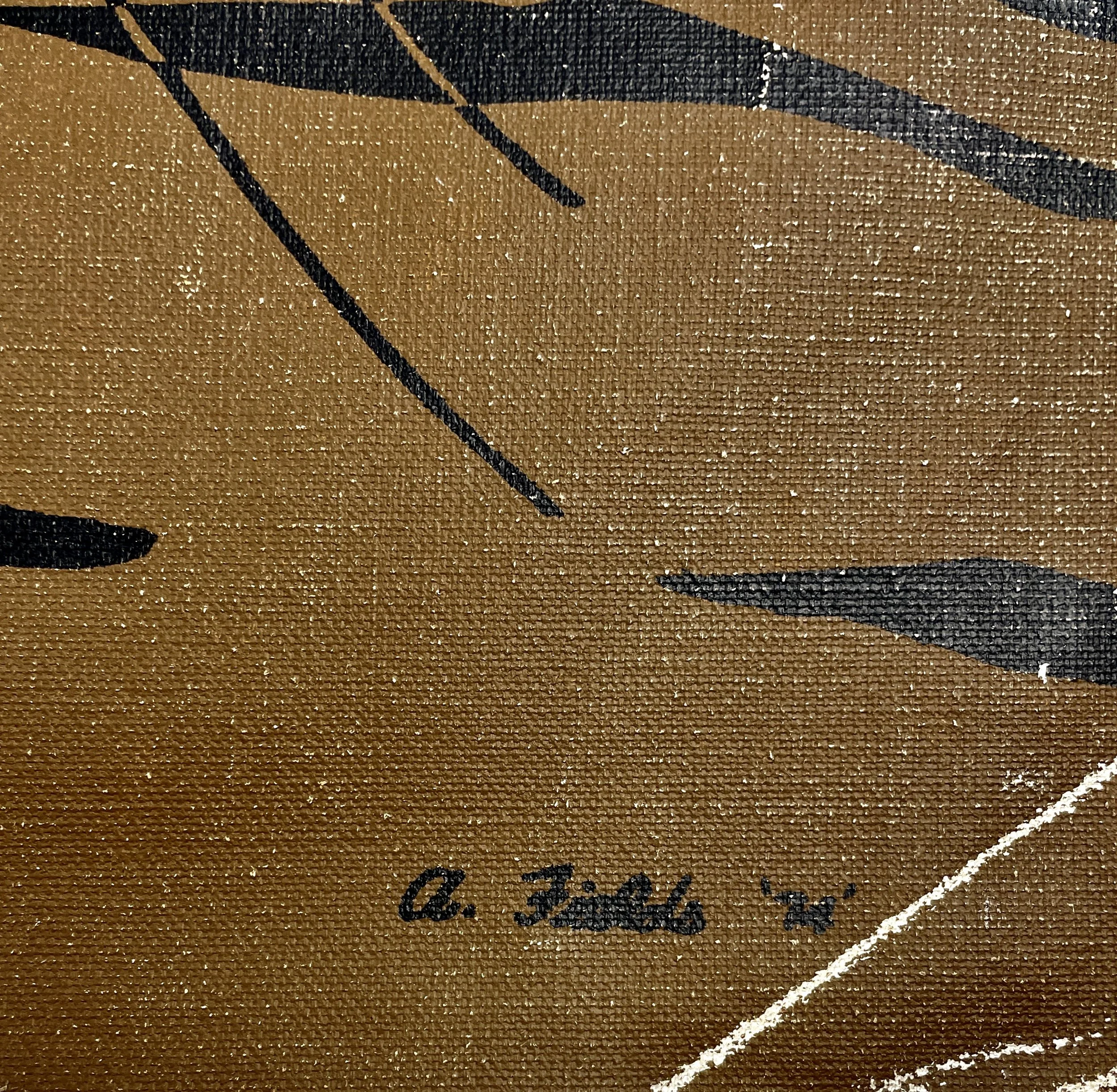 Image 2 of 4
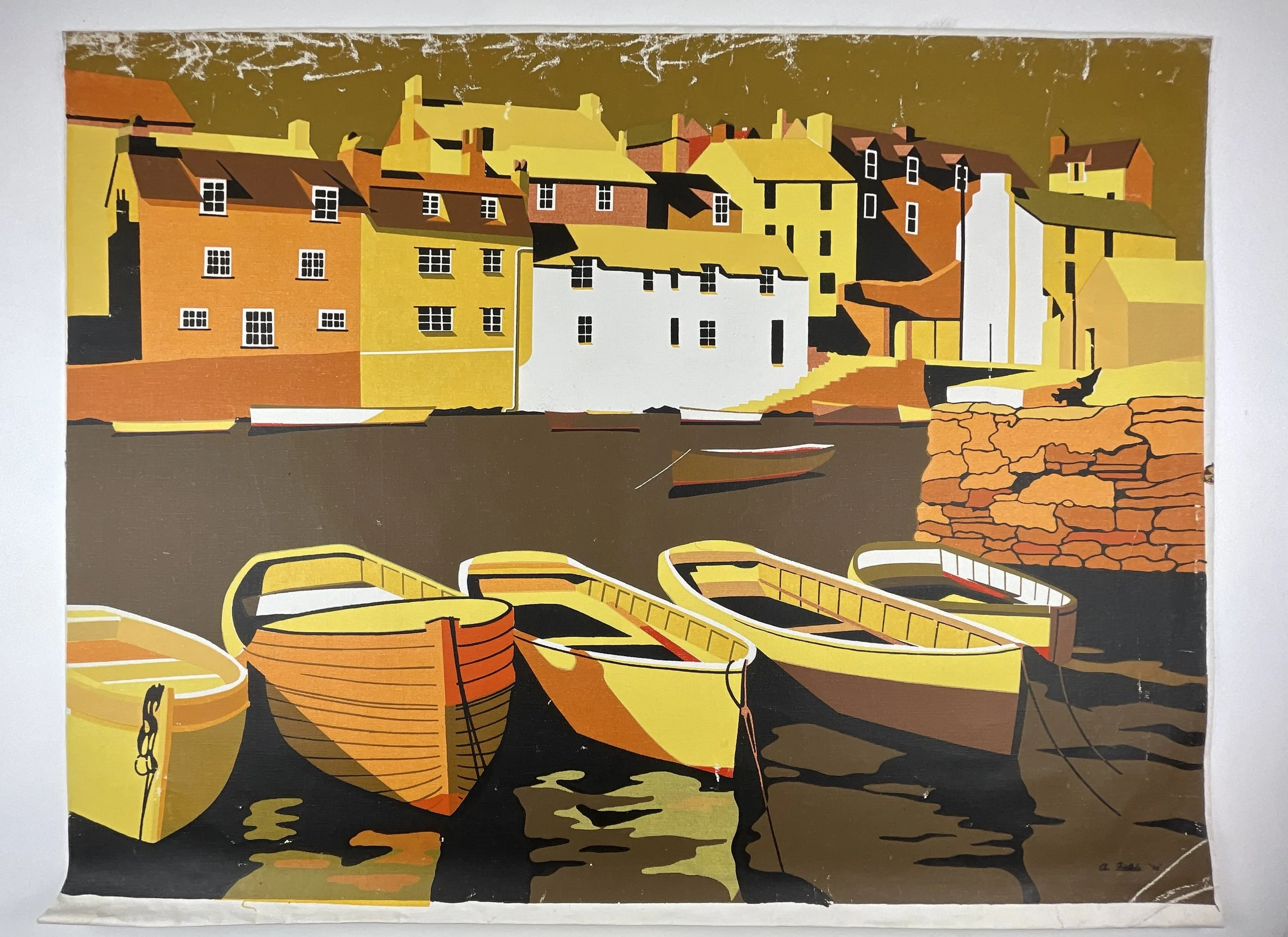 Image 3 of 4
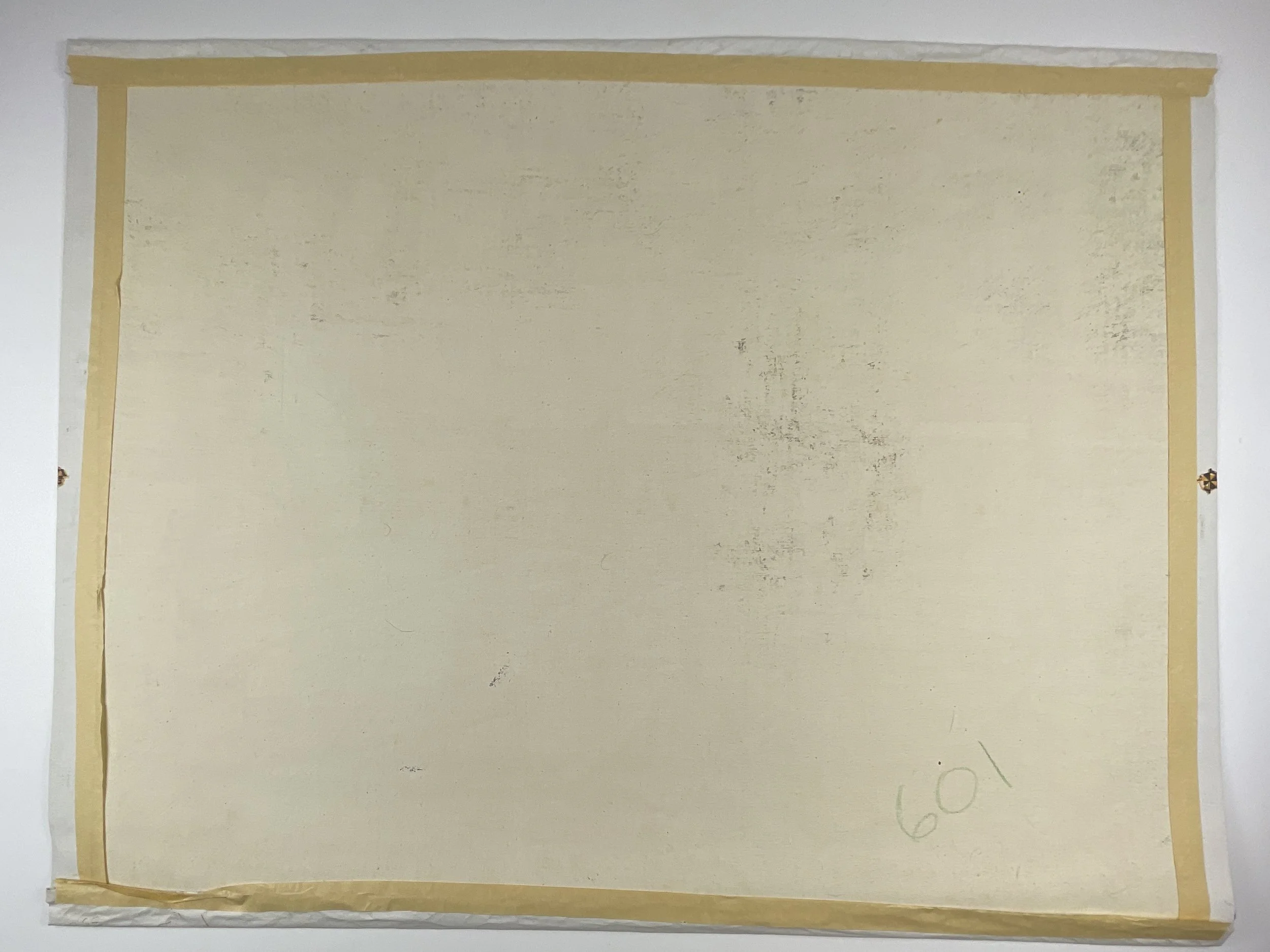 Image 4 of 4